
Navigating the New Landscape of Elderly Care
Finding the right caregivers for elderly loved ones is a significant undertaking. It's often emotionally charged and can be overwhelming. Understanding the current realities of the caregiving landscape is essential for making informed choices for your family. One of the biggest challenges families face today is the caregiver shortage, impacting access to quality care.
This shortage isn't simply about finding any caregiver; it's about finding the right one. Demographic shifts are changing how we approach elderly care. The aging population has created a demand for caregivers that far exceeds the available workforce.
This increasing demand requires families to explore diverse care options and understand their implications. The rising costs of professional care further complicate the search process.
However, a significant trend has emerged amidst these challenges. The number of family caregivers supporting older adults has grown considerably. Between 2011 and 2022, this number increased by almost one-third, from 18.2 million to 24.1 million in the U.S. Find more detailed statistics here.
This rise is partially due to seniors' desire to age in place, with 82% preferring to remain in their homes. This emphasizes the importance of home care and the growing role of family members in providing support.
Embracing a Realistic Approach to Finding Caregivers
Starting the search for elderly care often involves a mix of emotions. Anxiety, uncertainty, hope, and determination are all common feelings. Acknowledging these feelings and adopting a realistic approach is important.
This means recognizing that finding the right caregiver takes time and flexibility. Exploring all available options and preparing for potential challenges are key. Families can find solutions that truly benefit their loved ones by taking these steps.
A realistic approach enables a more informed and effective search. It involves adapting to the evolving landscape of elder care and embracing solutions that prioritize the needs of both the elderly individual and their family.
Identifying What Your Loved One Actually Needs
Before searching for caregivers for elderly loved ones, it's essential to understand their specific needs. This involves more than a simple checklist; it requires a comprehensive assessment of their current situation. This evaluation process, often used by geriatric care managers, considers various aspects of your loved one's life.
Assessing Physical and Cognitive Needs
Begin by evaluating their physical capabilities. Can they perform everyday tasks like bathing, dressing, or eating independently? Consider their mobility. Do they need help with walking, navigating stairs, or getting in and out of bed? These physical limitations will determine the level of support a caregiver should provide.
Also, assess their cognitive needs. Are they experiencing memory loss, confusion, or difficulty making decisions? These factors indicate whether they need specialized care, such as care for dementia.
Evaluating Emotional and Social Well-being
Beyond physical and cognitive needs, consider their emotional well-being. Are they experiencing loneliness, isolation, or depression? A caregiver can offer companionship and emotional support, significantly improving their quality of life.
Their social needs should also be part of the care plan. Do they value regular social interaction? A caregiver can facilitate social activities and help them maintain connections with friends and family.
Determining Care Frequency and Type
Once you understand their needs, determine the necessary care frequency. Will they need assistance for a few hours a week, several hours a day, or 24/7 care? This decision depends on the severity of their needs and your family's capacity to provide support.
It's also important to distinguish between companionship and medical support. Some individuals primarily need companionship and help with daily tasks, while others require medical assistance, such as medication management or wound care. Planning for the future can also include considering life insurance for seniors.
To help you compare different caregiving options, the table below outlines various services based on need level, cost, and suitability.
Understanding the differences between online and offline caregiver hiring can also be beneficial. The infographic below compares key data points, including the percentage of caregivers hired through each method, average search time, and average hourly rate.
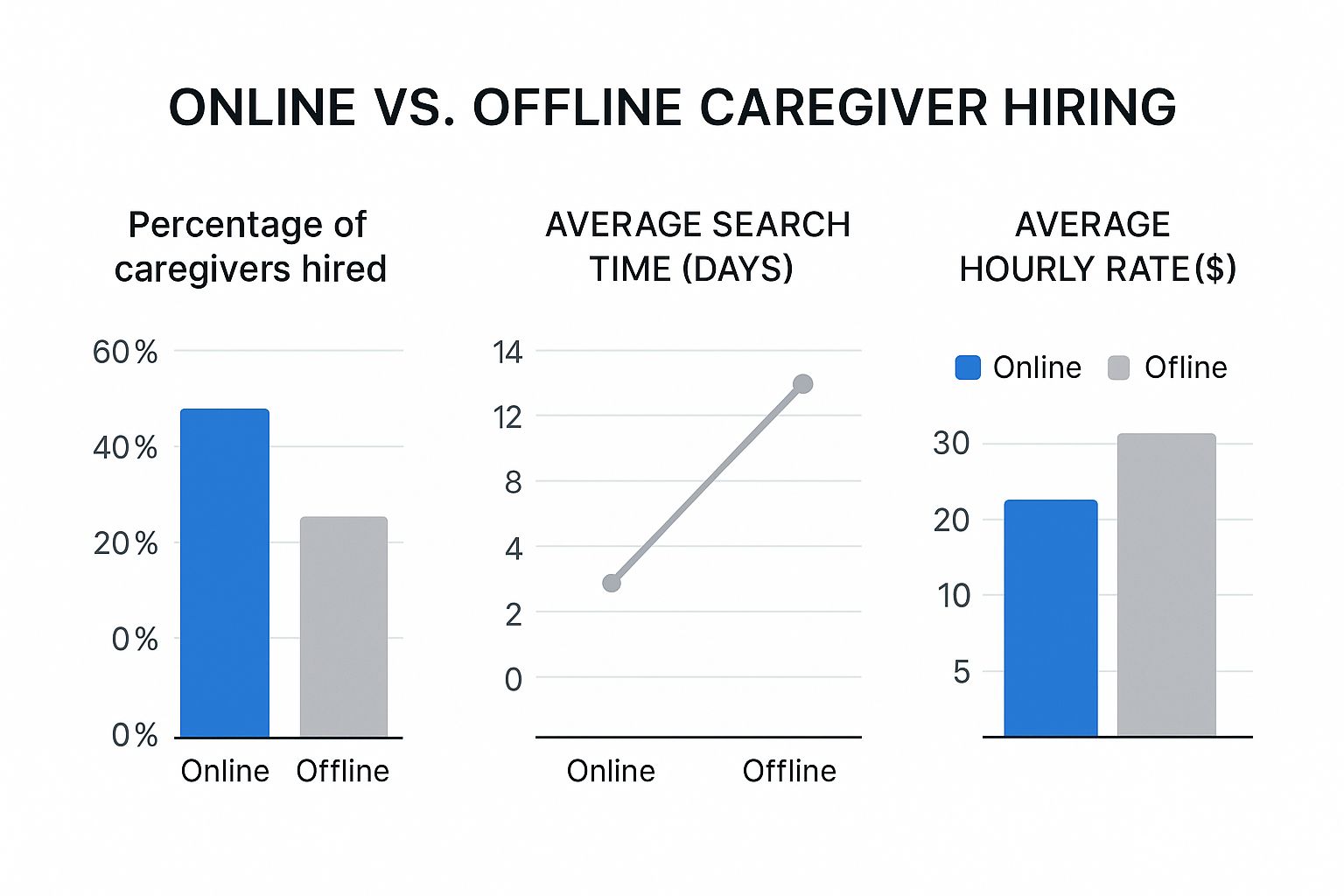
As the infographic shows, online hiring offers a quicker search, while offline methods often lead to lower hourly rates. This information can be valuable as you weigh the pros and cons of different approaches.
Types of Elderly Care Services by Need Level
This table compares different types of caregiving services based on the level of care required, helping families match their specific needs with the appropriate care solution.
| Care Need Level | Type of Caregiver | Services Provided | Typical Cost Range | Best For |
|---|---|---|---|---|
| Low (Independent with some assistance) | Companion Caregiver | Light housekeeping, meal preparation, transportation, companionship | $20-$35/hour | Seniors who need help with daily tasks but are otherwise independent |
| Moderate (Needs assistance with several ADLs) | Home Health Aide | Bathing, dressing, grooming, medication reminders, meal preparation, light housekeeping | $25-$40/hour | Seniors who need help with personal care and some household tasks |
| High (Needs significant assistance with most ADLs) | Certified Nursing Assistant (CNA) | Bathing, dressing, grooming, toileting, medication management, mobility assistance | $30-$50/hour | Seniors who need extensive help with personal care and medical tasks |
| 24/7 Care (Needs around-the-clock supervision and care) | Live-in Caregiver | All aspects of personal care, housekeeping, meal preparation, companionship, and supervision | $200-$400/day | Seniors who need continuous care and supervision |
This table provides a general overview, and actual costs and services may vary. It's important to discuss your specific needs with a care provider to get a personalized quote.
Finally, create a realistic care plan. This plan should detail the caregiver's tasks, the schedule, and any contingency plans. Remember, a care plan should be flexible and adaptable to your loved one's changing needs.
Understanding Your Caregiver Options (Beyond the Basics)
When considering care for elderly loved ones, many families initially think of just two options: hiring through an agency or finding an independent caregiver. However, the landscape of elder care is far more diverse. Understanding the full range of options is key to finding the best fit for your family's needs.
This section explores the various caregiving paths available, offering insights for families navigating this often complex process. We'll draw on the experiences of both industry experts and families who have been through this journey themselves. We'll also examine some of the newer care models that offer greater flexibility and cater to a wider array of needs.
Exploring Specialized Care Options
Often, families require caregivers with specific skills and training. This is especially important when dealing with conditions like dementia, which necessitates a specialized approach to care. Caregivers experienced in dementia care can offer targeted support, addressing behavioral changes and cognitive decline.
Another increasingly popular option is the hybrid approach. This combines the strengths of family caregiving with the support of professional caregivers. It allows family members to remain actively involved in their loved one's care while receiving assistance with tasks that might be physically or emotionally demanding. This model is particularly beneficial for those exploring in-home care options. For more information, see this resource on How to Find In-Home Care for the Elderly.
Considering Emerging Care Models
The demand for elder care continues to grow, leading to the development of new and innovative care models. This growth is fueled in part by expanding market demand. The market for elderly care services is expected to reach $1,540.82 billion by 2029, growing at a CAGR of 8.0%. This growth is driven by factors like increased life expectancy and a preference for home-based care. Learn more about this market growth.
Many of these new care models use technology, such as telehealth and remote monitoring, to improve care coordination and provide better oversight. This can enhance safety and offer reassurance to families living at a distance. These technologies also support the growing demand for personalized care tailored to individual needs.
Evaluating Options Based on Personality and Preferences
Choosing a caregiver is not simply about meeting medical needs; it's also about finding someone who is a good personal fit. While many agency brochures highlight practical aspects, they sometimes overlook this vital element. Honest discussions and careful assessments are essential.
Different families prioritize different qualities. Some might focus on experience and credentials, while others might prioritize compassion, patience, and the ability to connect with their loved one. Understanding your own priorities will help guide your search and ensure you find the best caregiver for your unique circumstances.
Finding and Vetting Caregivers Who Actually Care
Understanding the caregiving landscape and your loved one's needs is the first step. Next comes the crucial task of finding and vetting potential caregivers. This process goes beyond simply finding someone with the right qualifications; it's about finding someone who truly cares. It's about finding a caregiver who connects with your loved one on a personal level. This requires a strategic and thoughtful approach.
Exploring Effective Sourcing Strategies
Finding a trustworthy caregiver often involves exploring several avenues. While online platforms can be a starting point, consider tapping into the power of community networks.
Senior centers, local churches, and community support groups can be invaluable resources. These groups often have connections to caregivers within your local area. These local connections can provide a sense of community and support. Support groups specifically designed for caregivers are also excellent resources. Learn more about finding caregiver support groups.
Professional referrals can also be extremely helpful. Geriatric care managers, doctors, and home health agencies often have networks of trusted caregivers they can recommend. These referrals often come with a degree of pre-vetting, simplifying your search process. Talking to friends, family, and neighbors can also lead to discovering excellent caregivers within your existing social circle. These personal recommendations often come with firsthand experiences and valuable insights.
Mastering the Art of Caregiver Interviews
Once you've identified potential caregivers, the interview process becomes paramount. This is your opportunity to truly assess their character and suitability. This goes beyond simply verifying credentials; it’s about understanding their personality, values, and approach to caregiving.
Begin by asking open-ended questions. Encourage potential caregivers to share their experiences and philosophies. For example, ask them about a challenging caregiving situation they faced and how they resolved it. This can reveal their problem-solving abilities and how they handle difficult circumstances.
Look for caregivers who demonstrate genuine empathy, patience, and active listening. These qualities are essential for fostering a strong and trusting relationship with your loved one. Inquire about their experience working with individuals who have similar needs to your loved one. This will help you determine if they possess the relevant skills and expertise.
Conducting Thorough Background Checks and Verification
Before making any hiring decisions, thorough background checks are essential. This includes verifying work history, checking for any criminal records, and confirming certifications and licenses.
Don’t rely solely on self-reported information. Contact previous employers to verify the information provided. Request copies of certifications and licenses. Thorough verification protects your loved one and gives you peace of mind. The checklist below provides a comprehensive overview of the vetting process.
To help you navigate this crucial stage, we've compiled a helpful resource:
Caregiver Vetting Checklist: A comprehensive checklist of steps to follow when evaluating potential caregivers, helping ensure thorough assessment of qualifications, background, and fit.
| Vetting Category | Essential Steps | Documents to Request | Questions to Ask | Red Flags |
|---|---|---|---|---|
| Background Check | Conduct a criminal background check and check the sex offender registry. | N/A | Have you ever been convicted of a crime? | Any criminal history, especially involving vulnerable individuals. |
| References | Contact at least three professional references. | List of references with contact information. | What are the caregiver’s strengths and weaknesses? | Inability to provide references or negative feedback from references. |
| Certifications | Verify licenses and certifications, such as Certified Nursing Assistant (CNA) or Home Health Aide (HHA). | Copies of licenses and certifications. | What type of training and certifications do you have? | Expired or missing certifications. |
| Experience | Inquire about specific experience related to your loved one's needs. | Resume or CV. | Tell me about your experience caring for someone with [specific condition]. | Lack of relevant experience. |
This checklist ensures a thorough evaluation of potential caregivers, covering background, qualifications, and overall suitability.
Trust your instincts throughout this process. If something doesn't feel right, investigate further. This is an important decision, and you should feel completely confident in your choice. A trial period with the selected caregiver can be beneficial. This allows you to assess their compatibility with your loved one and their ability to provide the necessary care. It also allows for adjustments to the care plan as needed. Finding the right caregiver is a journey that requires careful consideration, diligence, and a commitment to your loved one's well-being. For more guidance on managing the complexities of caregiving, see this helpful resource: Caregiving: How to Stop Avoiding and Start Living.
The Home Care Revolution: Beyond Traditional Options

The home care industry is constantly adapting to the evolving needs of families. This goes beyond simply finding a caregiver. It's about addressing systemic issues and creating new approaches to care. This includes finding ways to manage the shortage of caregivers and using technology to enhance care management.
Addressing The Caregiver Shortage
One of the biggest obstacles facing the home care industry is the ongoing shortage of qualified caregivers. Leading agencies are tackling this challenge head-on with new initiatives. Many are investing in caregiver training programs to provide new caregivers with essential skills. They are also prioritizing caregiver retention by offering competitive wages, benefits, and professional development opportunities. These efforts aim to attract and keep skilled professionals in the field. You can learn more here: Home Care For Elderly.
Implementing Technology For Better Oversight
Technology is playing a key role in modernizing home care. Many agencies now use technology to improve communication, simplify scheduling, and increase oversight. For example, remote monitoring systems can track vital signs and activity levels. This allows for early intervention if needed and keeps family members informed. Technology also facilitates communication between caregivers, clients, and families. This increased transparency helps build trust and keeps everyone coordinated.
Creating Hybrid Care Models
Hybrid care models are becoming increasingly popular. These models blend the advantages of professional care with the support of family caregivers. This approach allows family members to stay involved in their loved one's care while receiving professional help with demanding tasks. This shared responsibility is particularly helpful for families managing complex care situations. It also recognizes the vital emotional support and personal connection family members provide. The U.S. home care market is growing rapidly and is estimated to reach $225 billion by 2025. This growth is driven by the aging population's preference for receiving care at home, which allows them to maintain their independence and quality of life. Find more detailed statistics here.
Ensuring Quality and Consistency
Beyond these developments, families need effective ways to evaluate home care agencies. This means going beyond marketing and carefully reviewing service agreements. Regular communication with the agency is also important. This ensures that any concerns are addressed promptly. Consistent communication helps maintain quality care and allows for proactive management of staffing issues. Open communication fosters a collaborative relationship and ensures that everyone is aligned on the care plan.
Making Care Affordable Without Compromising Quality
The financial aspect of caregiving can be overwhelming. Many families are surprised by the costs associated with caring for elderly loved ones. However, providing quality care doesn't have to deplete your savings. This section explores practical ways to manage caregiving costs, incorporating advice from financial advisors specializing in elder care.
Exploring Financial Resources and Options
Many families creatively combine different financial resources. Long-term care insurance can be helpful, potentially covering some in-home or facility expenses. Understanding your policy is key. What services are covered? What are the policy limitations? These are important questions to consider. You can find more information on long term care insurance cost. Exploring Veterans benefits can also provide financial aid for eligible seniors.
Medicaid is another option that families sometimes overlook. Although eligibility requirements can be complicated, it's worth exploring if your loved one qualifies. Because many financial advisors aren't familiar with the details of Medicaid, consulting a specialist is recommended. You can learn more in our article on Senior Care Financial Assistance.
Understanding Insurance Coverage and Tax Incentives
Knowing what your insurance covers is crucial. Some policies cover many services, while others have restrictions. For example, some policies might cover skilled nursing care but not companionship services. Understanding the difference can prevent unexpected expenses.
Exploring tax incentives can also lower the overall cost of caregiving. Certain elder care expenses might be tax-deductible. A tax advisor specializing in elder care can help identify these opportunities.
Evaluating Value vs. Price
It's easy to think that higher-priced care is better, but this isn't always true. Evaluating value involves looking beyond the cost. Consider the caregiver's experience, qualifications, and personality. A less expensive caregiver offering excellent personalized care might be a better fit than a more expensive caregiver with a generic approach.
Creating a Sustainable Care Budget
Openly discussing finances with family members is essential. This helps everyone understand the financial situation and allows for collaborative decisions. Creating a sustainable care budget requires considering available resources, anticipated expenses, and potential future needs. This proactive planning helps avoid financial strain and ensures your loved one receives the best possible care within your budget.
Building Relationships That Ensure Exceptional Care
Finding the right caregiver is a crucial first step. However, the real journey begins with building a strong, positive relationship. This relationship directly impacts the quality of care your loved one receives. It's like building a house: a solid foundation is essential for long-term stability. In caregiving, that foundation is the relationship between the caregiver, your loved one, and your family.
Establishing Clear Communication and Expectations
Open and honest communication is paramount. Clearly outlining expectations from the outset helps prevent misunderstandings. This involves discussing the specific tasks the caregiver will handle, preferred communication methods, and any house rules. For example, establish a daily or weekly check-in time to discuss any changes or concerns. This proactive approach allows for adjustments to the care plan as needed.
Establishing clear expectations doesn't mean micromanaging. Give caregivers the autonomy to perform their duties while providing the necessary support. This balance fosters trust and empowers caregivers to provide the best possible care. Understanding the financial implications is also crucial. For helpful information on managing costs, you might consider exploring resources like long term care insurance cost.
Resolving Conflicts and Showing Appreciation
Disagreements or conflicts are bound to arise in any relationship. Addressing these issues promptly and respectfully is essential. Establish a clear process for resolving conflicts, focusing on open dialogue and finding mutually agreeable solutions. This proactive approach can prevent minor disagreements from escalating and impacting the quality of care.
Showing appreciation is vital. Caregivers dedicate their time and energy to caring for your loved one. Expressing gratitude, both verbally and through gestures like small gifts, can significantly impact their morale. A little appreciation goes a long way in fostering a positive work environment and reducing caregiver turnover.
Developing Adaptable Care Plans and Setting Boundaries
Creating a dynamic care plan is key to long-term success. This plan should adapt to your loved one's evolving needs. Regularly review and update the care plan with the caregiver and your loved one. Consider any changes in their physical, cognitive, or emotional well-being. This collaborative approach ensures the plan remains relevant and effective.
Establishing appropriate boundaries is also crucial for both the caregiver and your family. Clearly define roles and responsibilities. This helps maintain professionalism and prevents burnout. Respecting boundaries protects everyone involved and creates a healthier caregiving environment.
Managing Transitions Smoothly
Transitions, such as a change in caregiver, can be challenging. When such changes occur, manage the transition carefully, ensuring a smooth handover of responsibilities. Open communication and clear documentation are essential for a seamless transition and minimizing disruption for your loved one.
Facilitating a positive relationship between the caregiver and your loved one is paramount. Encourage open communication and shared activities that foster connection. This positive dynamic creates a more comfortable and supportive environment for everyone involved. Building a genuine connection between caregiver and recipient enhances the quality of care provided.
Are you ready to explore personalized care options? Contact Caring Hands Senior Services today at https://caringhandsseniorservices.org to learn how we can help create a supportive and enriching care experience tailored to your family's needs.