
When you hear "home health services," what comes to mind? For many, it's a bit of a gray area. Is it just having someone help around the house? Not quite.
Think of home health services as skilled medical care brought directly to your doorstep. It’s prescribed by a doctor to help you recover from an illness, injury, or surgery, all within the familiar comfort of your own home. This isn't long-term daily support; it's a specific, goal-oriented plan to get you back on your feet.
Bringing Clinical Care Into Your Home
Let’s try an analogy. Imagine your car needs a major engine overhaul after a big accident. You'd take it to a specialized shop—that’s your hospital stay. But once the heavy lifting is done, you don't keep the car at the shop forever. Instead, a skilled mechanic might come to your garage for fine-tuning and specialized adjustments to get it running perfectly again.
That's exactly how home health services work. They are the skilled mechanics for your recovery journey.
These services aren't about daily chores or companionship. They are a prescribed, short-term bridge from the hospital back to independence. A team of licensed professionals—like nurses, physical therapists, and occupational therapists—visits your home with a clear set of goals defined by your doctor. The entire process is temporary and focused on real results, like healing a wound, regaining mobility after surgery, or learning to manage a new condition like diabetes.
Key Characteristics Of Home Health Services
This kind of care is becoming more important than ever. With aging populations and a rise in chronic illnesses, the demand for home-based clinical care is growing fast. In fact, the global market is projected to hit USD 1.6 trillion by 2035. You can read more about the trends shaping the home care services market to see just how much this field is expanding. It just makes sense—people recover better in a familiar, comfortable setting.
To help you get a clear picture of what defines this type of care, we've put together a quick summary table.
Home Health Services at a Glance
This table breaks down the core components of home health services, making it easy to understand what sets this type of care apart.
| Characteristic | Description |
|---|---|
| Service Type | Skilled, clinical, and medical in nature. Includes services like nursing care, physical therapy, and speech therapy. |
| Provider | Licensed and certified professionals, such as Registered Nurses (RNs), Physical Therapists (PTs), and Occupational Therapists (OTs). |
| Requirement | Must be ordered by a physician as part of a formal plan of care. |
| Duration | Typically short-term and intermittent, focused on achieving specific recovery goals. |
| Payment | Primarily covered by Medicare, Medicaid, and private health insurance plans. |
At the end of the day, it all boils down to one central idea.
The fundamental purpose of home health is rehabilitation and recovery. It’s a structured, clinical intervention designed to restore function and empower patients to manage their health independently at home, ultimately preventing rehospitalization and promoting long-term well-being.
The Clinical Services You Can Receive at Home
When a doctor orders home health services, they’re essentially dispatching a personalized medical team right to your doorstep. This isn’t just about making life easier; it’s a proven strategy for recovery, bringing sophisticated clinical support into the one place you heal best—your own home.
Think of it as having a specialized pit crew for your health. Each professional has a specific role, but they all work in sync to get you safely and confidently back on your feet.
Skilled Nursing Care
The heart of most home health plans is skilled nursing care. A Registered Nurse (RN) or Licensed Practical Nurse (LPN) brings hospital-grade expertise into your living room. Their job goes far beyond just taking your vitals; they are your personal health coach, advocate, and hands-on clinician.
This level of care is essential for managing conditions that demand a professional's eye.
For instance, if you’ve just been diagnosed with diabetes, a nurse won’t simply give you an insulin shot. They'll sit down with you and your family, teaching you how to check your blood sugar, manage your diet, and use your medications correctly. The goal is to empower you to take back control of your health.
Other common tasks for a skilled nurse include:
- Wound Care: Properly cleaning and dressing surgical sites or complex wounds to prevent infection and speed up healing.
- Medication Management: Administering IV drugs, injections, or overseeing a complex pill schedule to ensure everything is taken safely and effectively.
- Patient and Caregiver Education: Showing family members how to operate medical equipment like oxygen tanks or feeding tubes.
Physical Therapy
After a major surgery like a hip replacement or a setback like a fall, getting your strength and mobility back is everything. That’s where physical therapy (PT) comes in. A physical therapist works with you to restore movement, improve your balance, and get rid of pain, all within the familiar layout of your home.
Imagine recovering from knee surgery. A physical therapist will guide you through exercises not just in theory, but using your own staircase, your favorite armchair, and your hallways. This real-world practice is incredibly valuable because it helps you learn to safely navigate the exact environment you live in every single day.
The real goal of in-home physical therapy isn't just to heal an injury. It's to help you get back to your daily life safely and independently, drastically reducing the risk of another fall or injury down the road.
Occupational Therapy
While physical therapy gets your body moving again, occupational therapy (OT) helps you rebuild the skills you need for everyday life—what experts call "activities of daily living" (or ADLs). Think of an occupational therapist as a creative problem-solver who helps you relearn how to do essential tasks for yourself.
Take someone recovering from a stroke who has lost some function on one side. An occupational therapist might work with them in their own kitchen, figuring out new ways to cook a simple meal. They might bring in special utensils or suggest rearranging items to make them easier to reach.
The work of an OT is incredibly practical:
- Helping a patient relearn how to get dressed or bathe safely on their own.
- Teaching someone with a heart condition how to conserve their energy.
- Recommending simple home modifications, like installing grab bars in the shower.
Speech-Language Pathology
Recovery isn't always just about the body. After a stroke, a brain injury, or even some illnesses, people can struggle with communication or even just swallowing. A speech-language pathologist (SLP), often called a speech therapist, steps in to address these critical functions.
Their work is deeply personal. An SLP might help a patient who has trouble swallowing (dysphagia) by teaching them exercises to strengthen their throat muscles and suggesting different food textures to prevent choking. They also work with people to find their voice again—to speak clearly, understand conversations, and express themselves—reconnecting them with the people and world they love.
Understanding Home Health vs. Home Care
When families start looking for support at home, one of the first and most common points of confusion is the difference between "home health" and "home care." They sound almost identical, but they fill completely different needs. Getting this wrong from the start can lead to frustrating delays in getting your loved one the right kind of help.
Let's clear it up. Think of home health services as bringing the clinic to your living room. A team of medical professionals visits to provide treatment and therapy to help someone recover from an illness, injury, or surgery. On the other hand, home care is like having a trusted assistant for daily life, offering non-medical support with tasks like bathing, cooking, or just providing companionship.
The Medical and Non-Medical Divide
The core difference is simple: home health is medical. It has to be prescribed by a doctor as part of a formal treatment plan and is carried out by licensed professionals like nurses and therapists. It’s typically a short-term service focused on rehabilitation and is often covered by Medicare or private insurance.
Home care, in contrast, is entirely non-medical. The focus is on helping with Activities of Daily Living (ADLs) and keeping your loved one safe and comfortable. You don't need a doctor's order, and families usually arrange and pay for it directly.
This visual shows how specific needs after a hospital stay lead to different kinds of home-based rehabilitation services.
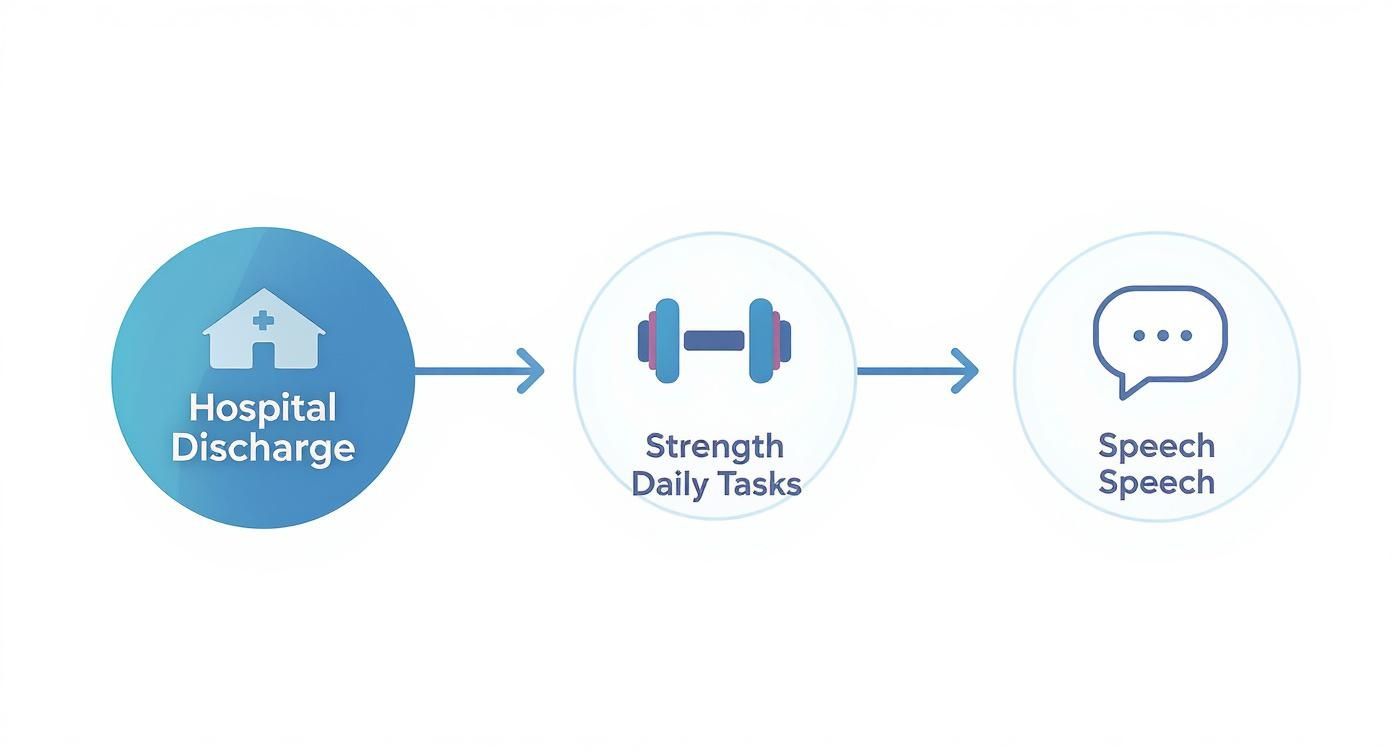
As the flowchart shows, recovery isn't one-size-fits-all. It's a structured process where the right therapies are chosen to meet very specific post-discharge goals.
A Side-By-Side Comparison
To really nail down the distinction, a simple table can make all the difference. This side-by-side view cuts through the confusion, highlighting the key contrasts between skilled home health and non-medical home care.
Comparing Home Health and Home Care
| Feature | Home Health Services (Clinical) | Home Care (Non-Clinical) |
|---|---|---|
| Scope of Services | Skilled nursing, physical therapy, occupational therapy, speech therapy, wound care. | Personal care (bathing, dressing), meal prep, light housekeeping, companionship, errands. |
| Who Provides Care | Licensed professionals: Registered Nurses (RNs), Physical Therapists (PTs), etc. | Certified Home Health Aides (CHHAs), caregivers, companions. |
| Doctor's Order | Required. Part of a formal, physician-approved plan of care. | Not Required. Services are arranged directly by the family as needed. |
| Payment Source | Primarily Medicare, Medicaid, and private health insurance. | Primarily private pay (out-of-pocket). Some long-term care insurance may cover it. |
| Main Goal | To treat an illness or injury, improve function, and promote recovery. | To provide assistance with daily living, ensure safety, and enhance quality of life. |
Getting this difference right is the most critical first step you can take. To dig even deeper, you can learn more about the core differences between home health and home care to see which path is the best fit for your family. Making the right choice from the beginning ensures your loved one receives the exact level of support they need to either recover medically or live safely and comfortably at home.
How to Qualify and Pay for Home Health Services
Figuring out how to access and pay for home health services can feel like you’ve been handed a complex puzzle without the picture on the box. But once you understand the key requirements—especially those from Medicare, the biggest payer for these services in the country—the pieces start to fit together.
Think of it like getting a prescription from your doctor. You need that official order to get the medicine, and in the same way, you need to meet specific criteria to unlock home health benefits. The good news? If you check all the boxes, services like skilled nursing and physical therapy can be 100% covered.
Medicare: The Primary Payer
For most older adults, Medicare is the first stop for funding home health care. To qualify, you have to meet several conditions at the same time. Missing even one can lead to a denial, so it’s critical to know what they are.
These rules exist to make sure home health is used for its intended purpose: short-term, skilled medical care to help you recover. It’s not a stand-in for long-term care or just a little help around the house.
Here are the essential criteria:
- You’re Under a Doctor’s Care: A doctor must create and regularly review a formal plan of care, confirming that the services are medically necessary for your condition.
- You Need Skilled Services: You must require intermittent skilled nursing or therapy (physical, speech, or occupational). This is the medical piece of the puzzle.
- You Use a Certified Agency: The care must come from a home health agency that is officially certified by Medicare.
- You Are Homebound: Your doctor has to certify that you’re “homebound.” This one causes the most confusion, by far.
To get a complete breakdown of what each of these points means in practice, you can explore our detailed guide on understanding Medicare home health requirements.
What Does "Homebound" Actually Mean?
Let’s clear this up, because the term “homebound” is constantly misunderstood. It doesn’t mean you’re confined to your bed or can never, ever leave the house. Not at all.
It simply means that leaving home takes a considerable and taxing effort.
A patient is considered homebound if they have trouble leaving their home without help (like using a wheelchair, walker, or getting assistance from another person) or if their doctor believes their health could get worse if they leave home.
So, trips to the doctor, religious services, or even an occasional visit to the barbershop are perfectly fine. The key is that these outings are infrequent and brief. The focus remains on getting better in the comfort of your own home.
Other Payment and Coverage Options
While Medicare is the most common route, it isn't the only one. There are a few other paths that can help cover the cost of home health services, though their rules and coverage levels are all a bit different.
- Medicaid: For people with limited income and resources, state Medicaid programs are a vital resource and often cover home health services. The rules are different in every state. For a deeper look, it helps to consult guides on state-specific eligibility rules.
- Private Health Insurance: Many private or employer-sponsored health plans will cover home health care, especially after a hospital stay or surgery. You'll need to call your insurance provider directly to get the details on your specific coverage, copays, and whether you need pre-authorization.
- Veterans Affairs (VA) Benefits: Eligible veterans may be able to get home health care through the Department of Veterans Affairs. These benefits are usually part of a larger care plan managed within the VA healthcare system.
- Private Pay: If someone doesn't qualify for other programs or just needs more services than what’s covered, paying out-of-pocket is always an option. This gives you the most flexibility, but you're responsible for the full cost.
The best first step is always a conversation with your doctor or a hospital discharge planner. They can confirm your medical need and point you toward the right payment source for your unique situation.
How to Arrange Home Health Services in New Jersey
Alright, you understand what home health care is and who generally pays for it. That's the first big hurdle. Now, let’s get practical and walk through how to actually get these services set up for you or a loved one here in New Jersey.
This isn't something you have to figure out on your own. The process is designed to start with the medical professionals who already know your situation best.
Start with a Physician Referral
Everything in home health care hinges on one key concept: medical necessity.
The very first step is always a conversation with a doctor. This could be a primary care physician, a specialist overseeing a chronic condition, or a surgeon after a recent operation. They are the ones who evaluate the patient’s health and determine if skilled care at home is the appropriate next step. If they agree, they’ll write an official order or referral. This document is the key that unlocks your benefits, whether you’re using Medicare, Medicaid, or private insurance.
Think of the doctor's order as the official prescription for care. Without it, a Medicare-certified agency cannot begin services, and insurance will not cover the costs. This step confirms that the care is not just for convenience but is a vital part of a medical treatment plan.
Partner with Hospital Discharge Planners
If your loved one is currently in a hospital or a rehab facility, the discharge planner or social worker is about to become your best friend. Their entire job is to create a safe and seamless bridge from the facility back to home.
These professionals are experts in the local healthcare system. They'll coordinate directly with the doctor to get the home health referral in place, provide a list of certified local agencies, and can even make the first calls to get the ball rolling before discharge.
The need for these services is growing fast. The global home health care agency market is projected to hit USD 551.1 billion by 2032. This isn't just a local trend; it shows a major shift toward getting sophisticated medical care right in the comfort of home. You can discover more insights about the home health agency market on coherentmarketinsights.com.
Select a Medicare-Certified Agency
Once you have that doctor's order, you have the right to choose which home health agency you want to work with. While the hospital might give you a list of agencies they trust, the final decision is always yours. It’s critical to pick an agency that is certified by Medicare, as this guarantees they meet strict federal standards for health and safety.
This is a big decision. You're inviting skilled professionals into your home during a vulnerable time, so doing a little homework goes a long way. Feeling confident and comfortable with your chosen agency can genuinely impact the healing process.
To help you find the right fit, use this checklist when you start making calls.
Questions to Ask a Potential Home Health Agency
- Are you Medicare-certified? This is non-negotiable. It’s the first question you should ask to ensure they meet federal quality standards.
- How do you handle emergencies? What’s their after-hours protocol? Is there a nurse on call 24/7 if a medical issue comes up?
- What is your process for creating a plan of care? You want an agency that involves the patient, family, and doctor in setting goals for recovery.
- Are all your clinicians licensed, bonded, and insured? This is a basic protection for everyone involved.
- How do you communicate updates with the family and the doctor? Good agencies have a system for regular, clear communication so everyone stays on the same page.
- Who will I be speaking with if I have questions or concerns? Find out if you'll have a dedicated case manager or a single point of contact.
Navigating the system in New Jersey, from finding reputable agencies to understanding state-specific programs, can feel overwhelming. If you're planning to use Medicaid, for instance, getting familiar with the state's waiver programs is essential. Our guide on the New Jersey Medicaid waiver can provide specific details to help you tap into these benefits.
Working with a local expert like NJ Caregiving cuts through the confusion. We help families navigate the New Jersey healthcare maze every day, connecting them with vetted, high-quality providers. Our deep knowledge of the local system means we can help you find the perfect fit for your loved one's needs, giving you peace of mind when it matters most.
Key Benefits of Receiving Medical Care at Home
There's a special kind of power in blending expert medical care with the comfort of home. When you bring clinical support directly to a person's own space, the entire dynamic of recovery changes for the better, creating positive outcomes that are hard to replicate in a hospital setting.

This isn't just about convenience. It’s about healing in a place filled with personal memories, established routines, and the people you love. Being in that low-stress environment can make a world of difference, often speeding up recovery while boosting a patient's mental and emotional health.
A Safer and More Independent Recovery
One of the biggest advantages of getting care at home is the dramatically lower risk of infection. Hospitals, for all their sterile procedures, are still places where germs can spread. Healing at home creates a much safer bubble for a compromised immune system to focus on getting stronger.
This approach is also a huge catalyst for independence. Therapists work with patients in their own living spaces—helping them navigate their own hallways, use their own kitchen, and practice on their own stairs. This real-world therapy builds confidence and practical skills far more effectively than exercises in a generic facility. It's about empowering people to get back to their lives, faster.
Preventing Hospital Readmissions
Beyond the personal benefits, home health plays a vital role in preventing costly and stressful hospital readmissions. When a patient is discharged with a solid home health plan, a skilled team is there to manage their condition, watch for complications, and make sure they're following doctor's orders.
By providing proactive, skilled oversight during that critical post-discharge window, home health services act as a vital safety net. This continuous care helps catch potential issues before they escalate, breaking the cycle of rehospitalization that can be so draining for patients and their families.
Think about someone recovering from knee replacement surgery. Instead of a long stay in a rehab facility, they go home. A physical therapist visits three times a week to guide them through exercises using their own couch and chairs for support. A nurse stops by to check the incision and help manage pain medication.
Surrounded by family, sleeping in their own bed, and eating food they actually enjoy, the patient feels more motivated and less anxious. This personalized environment leads to a quicker, more comfortable recovery and helps them avoid the stress and setbacks of another hospital stay. This is the heart of what home health services do: they deliver better outcomes where people want to be most—at home.
Common Questions About Home Health Services
Even after you get the basics of what home health services are, a lot of practical questions naturally pop up. Getting straight answers is the best way to feel confident as you start arranging care for a family member.
Let’s walk through some of the most common questions we hear from families navigating this process.
How Long Do Home Health Services Usually Last?
This is a big point of confusion for many. Unlike long-term care, home health isn't meant to go on forever. Think of it as a short-term, goal-oriented service designed to help someone recover from a specific illness, surgery, or injury.
The length of service depends entirely on the doctor’s plan of care and how well the patient is progressing. For instance, a physical therapist might visit for six weeks to help someone regain strength after a hip replacement. Once those specific goals are met, the services wrap up.
Can I Choose My Own Home Health Agency?
Absolutely. It's not just a nice-to-have; it's your right. Under Medicare rules, patients are entitled to choose any certified home health agency that serves their area.
A hospital discharge planner might hand you a list of agencies they work with, but you are never required to pick from that list. This freedom is crucial because it allows you to do your own research, read reviews, and select a provider you truly feel comfortable with—the one that’s the best fit for your family.
Your right to choose your provider is a fundamental patient right. It empowers you to select an agency that aligns with your values and has a strong reputation for quality care in your community.
What Does Being Homebound Actually Mean?
The word "homebound" sounds a lot more restrictive than it really is. It doesn't mean you're forbidden from ever leaving the house.
What it actually means is that leaving home requires a considerable and taxing effort. The occasional, short trip for a doctor’s appointment, a religious service, or even getting a haircut is generally fine. The key factor is that these outings are infrequent and that the patient's condition makes getting out of the house a real challenge.
Families also often ask about the privacy of their medical information. It's a valid concern, and you should know that home health providers must follow very strict regulations. For a deeper look at these requirements, you can review this 8-point HIPAA compliance audit checklist.
At NJ Caregiving, we help New Jersey families navigate these questions with clarity and compassion every day. If you need guidance on arranging home health care, contact us today to learn how we can support you.