

The signs of depression in seniors can be tricky. They often show up as small changes in mood or behavior—maybe it's a nagging fatigue, a new tendency to skip social events, or aches and pains that have no clear cause. Too often, these are brushed off as just a normal part of getting older.
But here’s the most important thing to remember: depression is not a standard part of aging. It’s a real, treatable condition that deserves our full attention.
Why Depression in Seniors Is Often Missed
Spotting depression in an older adult isn't like noticing a sudden fever. It’s more like a slow leak in a tire—the changes are gradual and easy to dismiss as just "slowing down" or even as side effects from medication. This is one of the biggest challenges for families and caregivers.
Unlike the deep sadness we might associate with depression in younger people, senior depression can wear a mask. Research from the National Institute of Mental Health shows that older adults often experience it differently. Instead of talking about feeling sad, they might complain about memory lapses, physical ailments, or simply withdraw from the world. Because these symptoms overlap so much with other age-related health problems, the real issue—depression—frequently goes undiagnosed.
The myth that feeling down is just a part of getting old is incredibly harmful. It stops countless seniors from getting the help they need. The first step is recognizing that persistent emotional, physical, and behavioral shifts aren't normal.
It’s easy to get tangled in the what-ifs and what’s-normal of aging. Let's clear up a few common misconceptions.
Common Myths vs. Reality of Aging and Depression
| Common Myth About Aging | The Reality of Depression in Seniors |
|---|---|
| "It's normal to be sad and lonely when you're old." | While life changes can bring sadness, persistent hopelessness or emptiness that lasts for weeks is a key sign of depression. |
| "Slowing down and losing interest in things is just what happens." | A complete withdrawal from cherished hobbies and friends isn't "just aging." It’s often a behavioral red flag for depression. |
| "All older people have aches, pains, and sleep problems." | Unexplained physical complaints, chronic fatigue, or significant changes in sleep patterns can be physical symptoms of depression, not just old age. |
| "Memory loss is an inevitable part of getting older." | While some minor forgetfulness can be normal, significant cognitive issues can sometimes be a primary symptom of depression in seniors. |
Seeing the reality behind these myths helps us know what to look for and when to be concerned.
Understanding the Warning Flags
To really get a handle on this, it helps to group the signs of depression into three main buckets.
- Emotional Flags: Think persistent sadness, but also look for irritability, apathy (a total lack of interest), or feelings of worthlessness that stick around for weeks on end.
- Physical Clues: Keep an eye out for unexplained aches and pains, big shifts in sleep or appetite, and a deep-seated fatigue that no amount of rest seems to fix.
- Behavioral Red Flags: This is where you might see someone pull away from friends and family, neglect personal hygiene, or completely abandon hobbies they used to love.
This infographic does a great job of showing how all these different signs are connected.
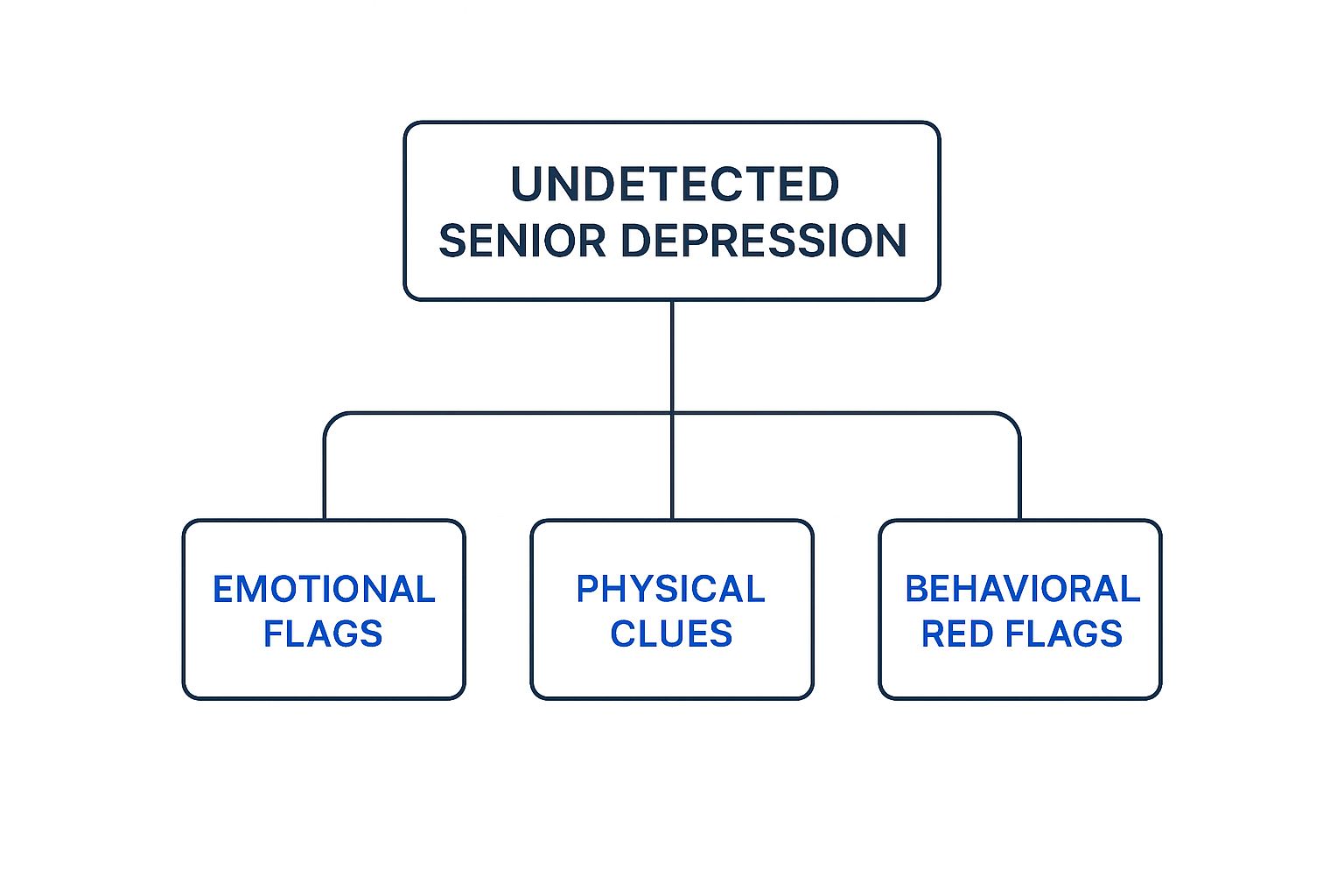
As you can see, depression isn't just one thing. It's a complex issue that touches every part of a senior's well-being—their emotions, their physical health, and their daily actions.
Identifying Subtle Emotional and Cognitive Shifts

When we think of depression, we often picture visible sadness and crying. But in older adults, the emotional signs can be far more subtle and easily missed. Instead of obvious sorrow, you might notice a quiet fading of their personality—like the light that once defined them has started to dim. This slow retreat from their own life is one of the most important things to watch for.
A key emotional sign is something called anhedonia, which is the clinical term for losing pleasure in activities that used to bring joy. Think about a grandfather who was once a passionate gardener but now lets his beloved roses wither. Or a grandmother who lived for her weekly bridge game but suddenly has no interest, offering vague excuses each time she's invited. This isn't just a bad mood; it's a profound inability to feel joy.
Another powerful indicator is a persistent feeling of apathy. This goes way beyond simple boredom. It’s an emotional flatness where nothing seems to matter—not good news, not bad news, not even a visit from family. It’s as if they've disengaged from life itself. This often comes with feelings of worthlessness, helplessness, or intense guilt over minor things, creating a deeply negative story they tell themselves.
The Overlap Between Depression and Cognitive Decline
One of the trickiest parts of recognizing depression in seniors is how much its symptoms can look like cognitive decline. It's easy to see memory lapses or confusion and immediately jump to fearing dementia or Alzheimer's. But depression itself can directly impact cognitive functions, causing what's sometimes called "pseudodementia."
This means the memory and focus problems are a symptom of the mood disorder, not a permanent brain disease.
Depression can seriously impair an older adult's ability to concentrate, process information, and remember things. This mental slowdown is often a direct result of the emotional exhaustion caused by the illness, not necessarily a sign of irreversible cognitive decline.
These cognitive signs can show up in a few common ways:
- Difficulty Focusing: A senior might struggle to follow a conversation, lose their place while reading, or find it impossible to handle simple tasks like paying bills.
- Memory Problems: They might forget appointments, names, or recent events. A key difference from dementia is that they are often very distressed and aware of these memory lapses.
- Chronic Indecisiveness: Simple choices, like what to eat for lunch or what to wear, can feel overwhelming and paralyzing. This indecision usually comes from a lack of energy and confidence.
The most important thing to remember is that when the underlying depression is treated, these cognitive symptoms often get much better. The grandfather who gave up his daily crossword because it felt "too hard" might just pick it up again once his mood improves. This is why a thorough medical evaluation is so critical. Figuring out if it’s depression or dementia ensures your loved one gets the right treatment—the one that paves the way for recovery, not resignation.
Decoding the Physical Symptoms of Depression

While we often think of depression in terms of emotions, in seniors, it frequently wears a physical disguise. It's far more common for an older adult to schedule a doctor's visit for a persistent backache than it is to talk about feeling sad or empty. This is exactly why recognizing the physical side of depression is so vital for family and caregivers.
These aren't "imagined" pains. They are very real, physical symptoms triggered by emotional distress. The mind-body connection is incredibly strong, and a struggling mind can absolutely cause or worsen physical ailments. If we dismiss these complaints as just a normal part of getting older, the root cause—the depression—can go untreated for months, or even years.
Learning to spot this connection is the first step toward getting your loved one the right kind of help.
Unexplained Aches and Pains
One of the most common red flags is the sudden appearance of chronic aches and pains that just don't have a clear medical cause. What makes these so frustrating is that they often don't respond to typical treatments like pain medication or physical therapy.
Think about it: Your loved one suddenly has nagging headaches, a back that won't quit aching, or constant stomach trouble. They see multiple doctors, go through all the tests, and try different prescriptions, but nothing seems to touch the pain. This is a huge sign that the problem might not be purely physical.
When physical pain has no obvious source and resists standard treatment, it's often the body's way of sounding an alarm for emotional distress. The pain is real, but its origin may be psychological.
Drastic Changes in Sleep and Appetite
Our sleep and appetite are deeply wired to our mental state. When depression takes hold, it can throw both completely out of whack, usually by pushing them to one extreme or the other. For a senior, this kind of disruption can be especially draining.
Keep an eye out for these key patterns:
- Sleep Disturbances: This can mean insomnia (trouble falling or staying asleep) or hypersomnia (sleeping much more than usual). Maybe they start waking up at 3 a.m. and can't get back to sleep. Or perhaps they spend most of the day in bed, yet still feel exhausted. To learn more, it can be helpful to explore common sleep disorders in elderly individuals, as they often overlap with depression.
- Appetite and Weight Changes: Depression can either crush a person's appetite, leading to unintentional weight loss, or it can spark cravings for comfort foods, leading to weight gain. A sudden disinterest in meals they once loved—or a new habit of constant snacking—are both important clues.
Profound and Persistent Fatigue
This isn't your everyday tiredness that a good night's sleep can fix. The fatigue that comes with depression is a profound, bone-deep exhaustion that can make even the smallest tasks feel like climbing a mountain. It’s a constant state of having no energy that depletes a person's physical and mental reserves.
A senior struggling with this might say they feel "weighed down" or completely "wiped out," even if they haven't done anything strenuous. They might stop going to their weekly card game or tending their garden simply because they don't have the energy. This overwhelming fatigue is a core physical symptom of depression and a clear signal that something is wrong.
Noticing Changes in Behavior and Social Habits

Depression doesn’t just live inside a person’s head; it changes how they move through the world. For older adults, these shifts in behavior are often the most visible signs that something is wrong. A once-busy social calendar might suddenly clear up, and the daily rhythms that gave life structure and meaning can start to fade away.
These changes aren't about being lazy or suddenly deciding they don't like their family anymore. Think of it as the outward sign of a deep, internal exhaustion. The energy it takes to socialize, keep the house tidy, or even take care of basic needs becomes too much to handle, leading to a slow retreat from life itself.
Picking up on this pattern is the first step. It’s not about a single missed phone call but a consistent drift into isolation that points to a much deeper struggle.
The Retreat from Social Connections
One of the most powerful red flags for depression in seniors is social withdrawal. This goes far beyond just wanting a quiet afternoon to themselves. It’s a persistent pulling away from friends, family, and activities that used to bring them real joy.
This withdrawal can show up in a few different ways:
- Ignoring communication: They might stop answering the phone, let texts go unread, or pretend they aren't home when someone drops by.
- Declining invitations: Offers to join family dinners, go to a community event, or grab coffee with a friend are met with vague excuses time and time again.
- Abandoning groups: They may suddenly drop out of their book club, stop attending church services, or quit their weekly card game without any explanation.
This retreat creates a vicious cycle. Loneliness is a huge risk factor for depression, so as a senior pulls away from others, that loneliness grows, which in turn can make the depression even worse. Keeping those social threads intact is vital. Sometimes, just having a dedicated visitor can make all the difference. To see how one-on-one support can help, you can explore the benefits of professional companion care services.
Neglecting Personal and Household Routines
Depression is a notorious thief of energy and motivation, making even the simplest daily tasks feel like climbing a mountain. This often results in a noticeable drop in personal care and the tidiness of their home. This isn't a choice; it's a matter of capacity.
Keep an eye out for changes in these areas:
- Personal Hygiene: A decline in grooming habits is common. This might look like infrequent showering, wearing the same outfit for days, or letting hair and dental care slide.
- Household Chores: A home that was once neat can become cluttered and messy. Mail piles up unopened, dishes sit in the sink, and laundry goes undone.
- Medication Management: Forgetting to take medications—or taking the wrong doses—can also be a sign of the mental fog that often comes with depression.
When a senior's home or personal appearance starts to decline, it's often a distress signal. The external environment can become a mirror of their internal state of exhaustion and hopelessness.
You might also notice them becoming more irritable or engaging in risky behaviors, like drinking more alcohol than usual. These are often misguided attempts to self-medicate or just cope with the overwhelming emotional pain. Seeing these behavioral flags for what they are—symptoms of an illness, not character flaws—is the first step toward giving them the compassionate support they need.
How to Start the Conversation and Find Help
https://www.youtube.com/embed/GyU0QTJ0WGI
Seeing the signs of depression in an older loved one is the first major step. But figuring out what to do next can feel incredibly daunting. Bringing up mental health takes a lot of care and sensitivity, especially with a generation that wasn’t always comfortable talking about these things.
The key is to open a door for them, not to push them through it.
Think of it as starting a conversation out of love. Find a quiet, private moment when you’re both feeling calm. You’ll want to frame your concerns around what you’ve observed, not what you’ve diagnosed. For example, instead of saying, "You seem depressed," you could try something gentler. "I've noticed you haven't been enjoying your gardening lately, and I'm worried about you. How have you been feeling?"
This approach feels less like an accusation and more like a genuine expression of concern. It focuses on specific behaviors they can recognize. Your job here is to listen more than you talk and to validate their feelings, even if you don't completely get it.
Finding the Right Professional Support
Once you’ve opened that door, the next step is to gently guide them toward professional help. A great starting point is their primary care physician. This is a familiar face in a familiar setting, which is far less intimidating than jumping straight to a mental health specialist.
A doctor can perform a thorough evaluation to:
- Rule out other medical conditions: Many physical issues, from vitamin deficiencies to medication side effects, can actually mimic the signs of depression in seniors.
- Provide a professional assessment: A physician is equipped to screen for depression and figure out if the symptoms need further attention.
- Offer a referral: If necessary, they can connect your loved one with a geriatric psychiatrist or therapist who truly understands the needs of older adults.
The most important message you can give them is that asking for help is a sign of incredible strength, not weakness. Reassure them that depression is a treatable medical condition, just like high blood pressure or diabetes, and that they don’t have to face it alone.
Exploring Treatment and Support Options
After a diagnosis, there are many different paths to feeling better. The most effective treatment plans usually combine a few different strategies, all tailored to the individual. Building the right support system is absolutely crucial for recovery.
Here are some of the most common and effective options available:
- Psychotherapy: Sometimes called "talk therapy," this can be a game-changer. Cognitive-behavioral therapy (CBT), for instance, helps seniors learn to identify and reframe negative thought patterns.
- Medication: Antidepressants can be very effective, but they must be managed carefully by a doctor. Older adults are often more sensitive to side effects, so close monitoring is key.
- Support Groups: There’s real power in connecting with others who are going through similar struggles. It fights off isolation and builds a sense of community.
- Community Resources: Check out local senior centers, non-profits, or even faith-based groups. They often have programs and social events designed to combat loneliness.
Trying to sort through all the options can feel overwhelming, but you’re not alone. To get a better handle on the different types of professional support out there, you can explore guides on mental health services for seniors to see what might be the best fit. Your encouragement and support can be the one thing that helps them take that brave first step toward healing.
Common Questions About Depression in Seniors
When you're caring for an older loved one, it's easy to have questions about their mental health. Knowing the difference between the normal ups and downs of aging and the real signs of depression is one of the most important things a caregiver can learn. Here, we’ll tackle some of the most frequent concerns to help you support the senior in your life.
Depression is a serious issue for older adults, affecting about 14.1% of those aged 70 and over across the globe. The reasons are often tied to major life events—the loss of a spouse, a sudden change in independence, financial worries, or simple loneliness. In fact, social isolation impacts roughly a quarter of all seniors. The World Health Organization has great information on this topic, and their findings really drive home why this conversation is so critical.
With that in mind, let's dive into the questions we hear most often.
Is Depression Just a Normal Part of Getting Older?
This is probably the biggest myth out there, and the answer is a clear and simple no. It’s completely normal to feel sad when life gets tough. But a deep, persistent feeling of hopelessness or total lack of interest that drags on for weeks isn't a standard part of aging.
Think of it like an old car. You expect it to have some dings and scratches from years on the road, but you wouldn't say a flat tire or a dead engine is "just part of the car getting old." That's a specific problem that needs fixing. Depression is the same—it's a treatable medical condition, not something you just have to accept.
How Is Depression in Seniors Different from Depression in Younger Adults?
Depression can look very different in an older person. While a younger adult might talk openly about feeling sad or down, a senior is far more likely to focus on physical complaints.
- Physical Aches and Pains: They might constantly talk about unexplained headaches, stomach issues, or general body aches that have no clear cause.
- Fuzzy Thinking: Memory lapses and trouble concentrating can become so noticeable that everyone, including the senior, starts to worry about dementia.
- Irritability and Grumpiness: Instead of sadness, you might see a loved one become uncharacteristically cranky, agitated, or quick to anger over small things.
The key takeaway is that depression in older adults often wears a disguise. It masquerades as physical problems, so you have to look past the surface to see the emotional pain underneath.
Can Other Medical Conditions Cause Symptoms of Depression?
Absolutely. This is exactly why the first and most important step is always a full check-up with their doctor. So many other health issues can create symptoms that look almost identical to depression.
A few common culprits include:
- Thyroid Problems: An out-of-balance thyroid can wreak havoc on mood and energy levels.
- Vitamin Deficiencies: Something as simple as low Vitamin B12 can lead to confusion and depressive feelings.
- Medication Side Effects: Many prescriptions common among seniors can list depression as a possible side effect.
- Chronic Illness: Living with conditions like heart disease, diabetes, or Parkinson's can take a significant toll on mental health.
A doctor can run the right tests to rule these things out. It’s a crucial step because treating a thyroid issue is worlds away from treating clinical depression. Getting the diagnosis right is the only way to get them on the path to feeling better.
At NJ Caregiving, we understand that a senior's well-being is about more than just physical health. Our compassionate in-home care services are designed to provide the companionship and support needed to fight isolation and boost mental health. If you're looking for dedicated care for a loved one in Mercer County, please visit us at https://njcaregiving.com.