

For many older adults, the moment comes when they have to hand over the car keys. It can feel like a huge step backward, almost like a wall going up between them and the rest of the world. But this change doesn’t have to lead to isolation or a loss of independence.
That's where professional senior transportation comes in. It's much more than just a ride; think of it as a personalized service designed specifically for an older adult's safety, comfort, and dignity. It's the key that unlocks the door to everything that still matters in life.
Keeping Independence with Senior Transportation
This isn't your average taxi or rideshare service. A specialized transportation service understands the unique needs of seniors. It’s built to make sure your loved one can reliably get to critical doctor's appointments and still enjoy the simple things that bring them joy, like visiting friends or going to a community event.
These services are the bridge that connects living at home with staying active in the community.
The biggest benefits are clear:
- Maintaining social connections with friends, family, and favorite local spots.
- Ensuring consistent access to medical appointments and essential healthcare.
- Promoting autonomy by making it easy to run errands like grocery shopping or banking.
When you reframe transportation as a tool for empowerment, it becomes a proactive way to improve a loved one's quality of life. This guide will walk you through the different types of services out there and help you figure out how to choose the right one for your family.
What Are Senior Transportation Services?

When driving is no longer a safe option for an older adult, it can feel like their world is shrinking. That’s where senior transportation services come in. Think of it less like a standard taxi or rideshare and more like a personal chauffeur service designed from the ground up with the safety and unique needs of seniors in mind.
It’s a specialized support system that closes a critical gap. Unlike typical ride-hailing apps, these providers are all about non-emergency trips handled with a much higher level of care. Drivers are often specially trained to assist passengers, and vehicles might be equipped with features like ramps or lifts to accommodate walkers and wheelchairs. This focus on reliability and hands-on assistance is what gives families genuine peace of mind.
Door-Through-Door Assistance and More
The real difference-maker is the level of assistance provided. While some services offer a simple curb-to-curb pickup, many go much further to ensure a senior is safe and comfortable from start to finish.
- Door-to-Door Service: In this model, the driver will meet the senior at their front door and personally escort them to the vehicle.
- Door-Through-Door Service: This is the most comprehensive level of support. The driver helps the senior from inside their home, assists them into the vehicle, and then walks with them all the way to their destination's entrance, making sure they get inside safely.
This personalized approach is what truly defines senior transportation. It’s not just about getting from point A to point B; it’s about providing a safe, dignified, and supportive journey every step of the way. Our in-home care services often coordinate directly with these providers to create a seamless care experience.
The need for these services is only growing. As our global population ages, with projections suggesting 2.1 billion people will be over 60 by 2050, the demand for specialized, reliable transit solutions is becoming more critical than ever.
What Kinds of Trips Do Senior Transportation Services Cover?
When we think about senior transportation, it’s easy to picture just a simple ride to a doctor's appointment. But in reality, these services are much more comprehensive. They’re designed to support a senior’s entire lifestyle, ensuring they can handle not just critical healthcare needs but also the everyday tasks and social outings that keep them independent and connected.
By looking at the different ways these services are used, families can really start to see how they form a complete support system. The most common uses for senior transportation services fit into three main areas, each one vital to a senior’s overall well-being.
From Medical Appointments to Social Outings
At its core, senior transportation provides reliable rides for all of life's necessities. On the medical side, this means safe, on-time arrivals for doctor’s visits, physical therapy, or recurring treatments like dialysis. For day-to-day living, it means help with essential errands like getting groceries, picking up prescriptions from the pharmacy, or handling business at the bank.
But it doesn't stop there. These services are also a crucial link to social connection. They make it possible for your loved one to visit family and friends, attend church services, or participate in activities at the local senior center. This kind of support is incredibly important for preventing loneliness and boosting mental and emotional health.
The image below gives a great overview of the different ways these services can operate.
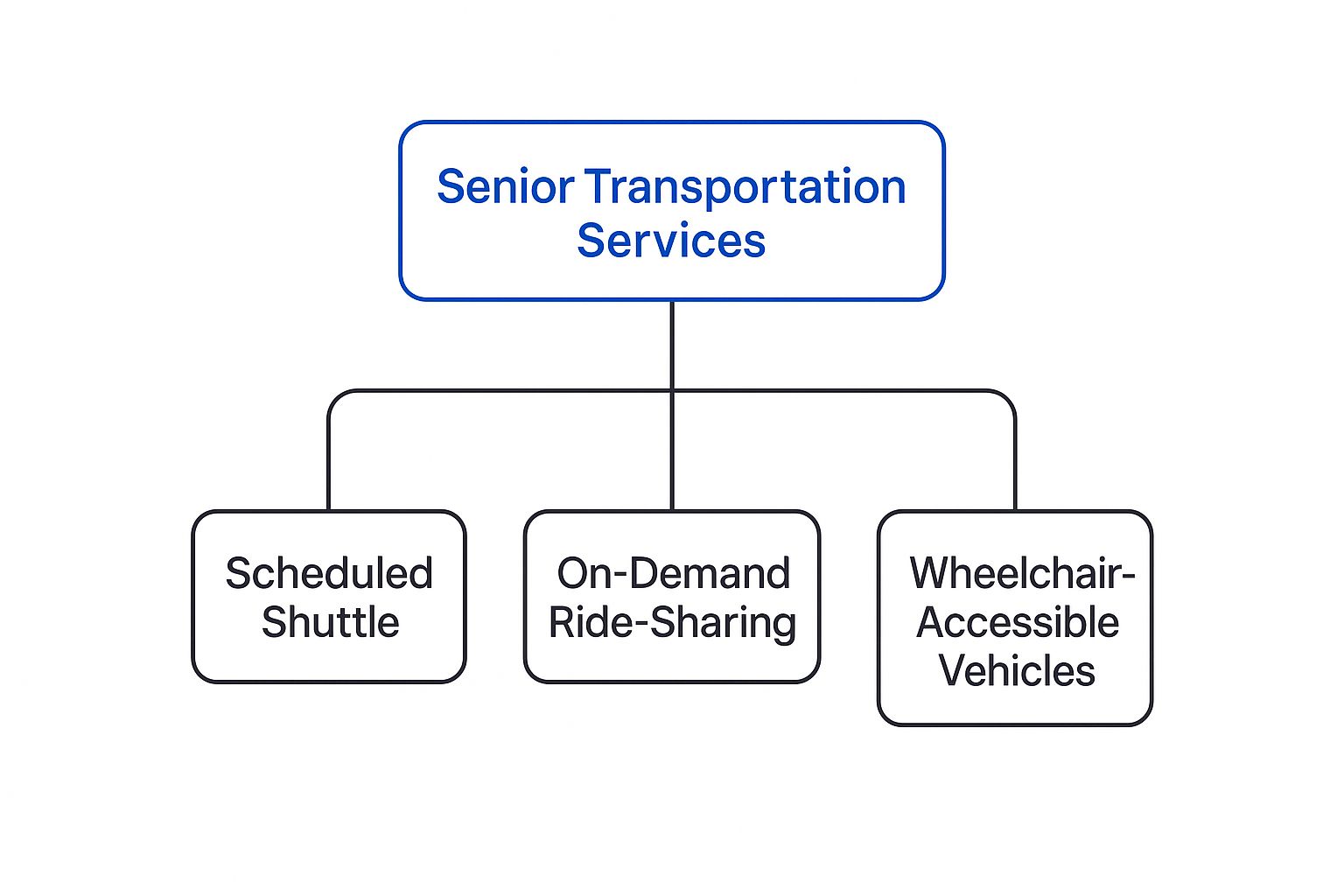
As you can see, a provider might offer everything from scheduled group shuttles and on-demand private rides to specialized vehicles that can accommodate wheelchairs or other mobility aids.
To help you visualize how these services fit into daily life, here’s a quick breakdown of the most common trips.
Common Uses for Senior Transportation Services
The table below connects the type of trip to common destinations and shows the real-world benefit it provides.
| Service Category | Common Destinations & Purposes | Key Benefit |
|---|---|---|
| Medical | Doctor's Offices, Hospitals, Therapy Centers | Ensures consistent access to critical healthcare. |
| Daily Errands | Grocery Stores, Pharmacies, Banks | Promotes autonomy and self-sufficiency. |
| Social & Personal | Family Homes, Community Centers, Salons | Fosters social connection and enhances quality of life. |
Ultimately, by covering such a wide range of needs, senior transportation becomes much more than just a ride. It’s a foundational service that supports a person’s health, independence, and happiness.
The Critical Role of Medical Transportation

While senior transportation services can get you to the grocery store or a social club, one of their most vital roles is getting you to the doctor. This is often called Non-Emergency Medical Transportation (NEMT), and it’s much more than just a convenience. It's a key piece of the healthcare puzzle, making sure that simply not having a ride is never a reason to miss crucial medical care.
For any senior managing a chronic illness, recovering from a procedure, or just keeping up with regular check-ups, getting to an appointment isn't optional. NEMT provides a safe, dependable way to reach doctor’s offices, physical therapy sessions, dialysis centers, and other essential health appointments.
You can think of it as the logistical backbone of a senior’s healthcare plan. It’s the support that makes consistent treatment and preventative care a reality, which is absolutely essential for managing health and preventing bigger problems down the line.
Specialized Care for Health-Related Travel
What truly sets NEMT apart is how specialized it is. These services are specifically designed for passengers who might have unique health or mobility needs. They aren't just a taxi service; they're an extension of the care experience.
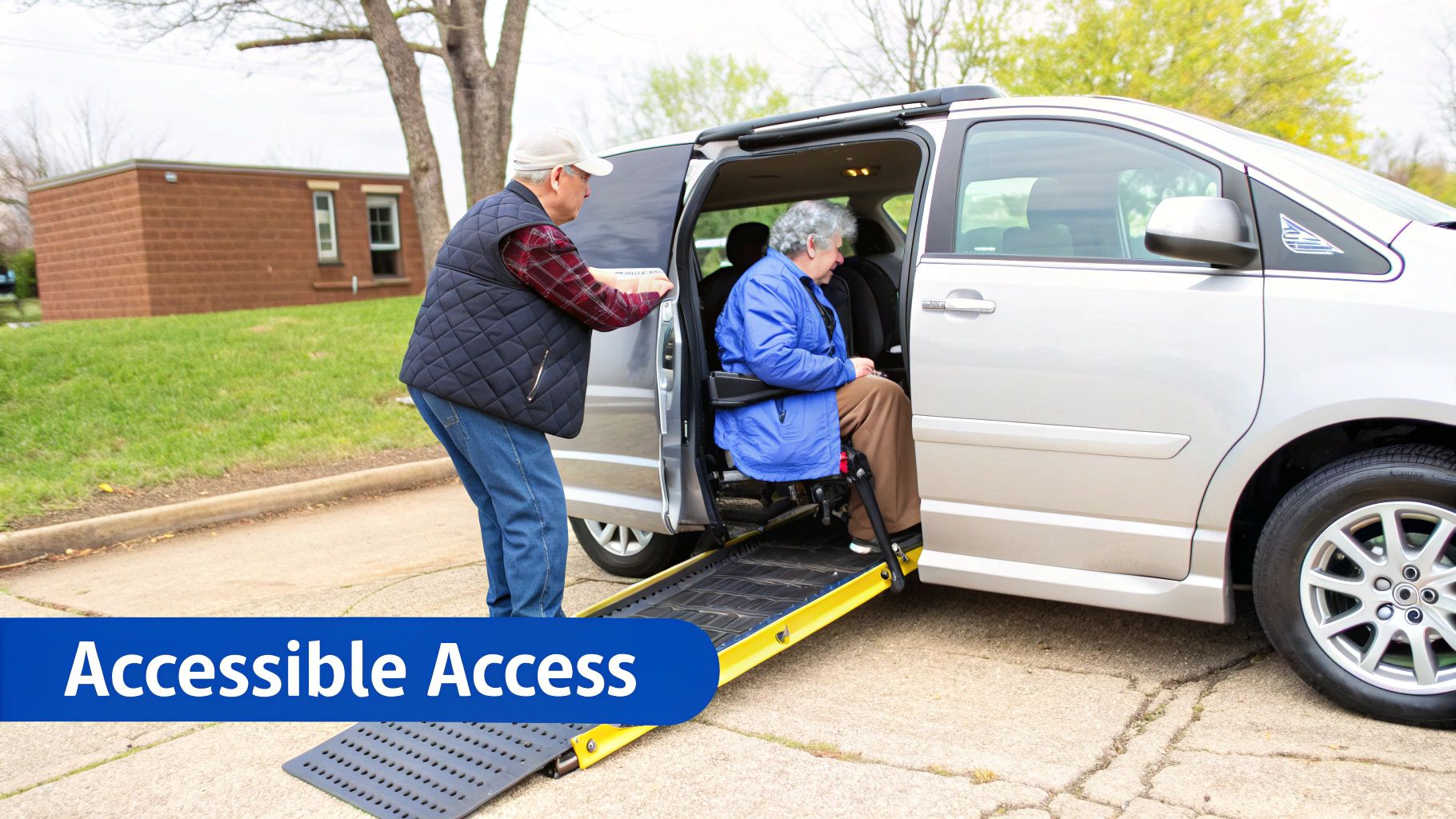
- Wheelchair-Accessible Vehicles: Many providers operate vehicles outfitted with ramps or hydraulic lifts, ensuring safe and comfortable transport for passengers using wheelchairs or walkers.
- Trained Drivers: The drivers aren't just behind the wheel. They receive training in how to assist passengers safely, basic first aid, and other protocols so they can offer support with both skill and compassion.
- Reliability for Appointments: When it comes to medical appointments, being on time is everything. NEMT services are built around punctuality to make sure clients arrive for their scheduled appointments without fail.
This focus on specialized care transforms the service from a simple ride into a vital healthcare lifeline. It ensures that a lack of transportation never stands in the way of a senior's well-being.
The demand for this kind of support is growing fast. The global healthcare transportation market was valued at around USD 92.1 billion in 2025 and is projected to keep expanding as our population ages and more people manage chronic conditions. You can discover more insights about this growing market and its projections.
How to Choose the Right Transportation Provider
Picking the right transportation provider is a huge decision. It directly impacts your loved one’s safety, comfort, and independence. You can think of it like hiring any other professional to work with your family—you really need to do your homework to make sure they're qualified, reliable, and a good fit.
Let's be honest, not all senior transportation services are the same. That's why a thorough look is so important.
A great place to start is with the people behind the wheel. The driver is the person you’re trusting with a family member's well-being. Ask about their qualifications and how they're screened. Any provider worth their salt will be completely open about their hiring standards.
The core of a great service is trust. This trust is built on a foundation of rigorous safety checks, comprehensive training, and a proven track record of dependability. Never hesitate to ask for specifics.
Look for companies that run extensive background checks on every single driver. You should also ask about specialized training. Do their drivers know passenger assistance techniques, first aid, CPR, or have they completed senior sensitivity training? These skills can make all the difference.
Key Questions for Evaluating a Provider
Beyond the driver's qualifications, you need to get a feel for the company's overall operation. Use this checklist to guide your conversations and help you compare different options side-by-side.
- Vehicle Safety and Accessibility: Are the vehicles inspected and maintained on a regular basis? More importantly, do they have the features you need, like wheelchair ramps, lifts, or simple grab bars?
- Reliability and Punctuality: What’s their on-time record like? Don't be shy about asking for references from other clients or even facilities they work with.
- Level of Assistance: This one is crucial. You need to clarify what "assistance" actually means to them. Are they a simple curb-to-curb service, or do they offer door-through-door assistance? The latter means the driver will actually escort your loved one from inside their home all the way to their destination's entrance.
- Insurance and Licensing: Is the company fully licensed and insured to operate in your city and state? Ask to see proof of their commercial liability insurance.
Making a smart choice comes down to knowing exactly what you need and understanding how different services can meet those needs. For families coordinating various types of support, our guide on integrating care services offers some great insights for creating a seamless plan. By carefully vetting each provider, you'll find a dependable partner that gives you both security and peace of mind.
Understanding Costs and Finding Financial Help
Let's talk about the financial side of things. It's easy to assume that senior transportation services will be expensive, but you might be surprised by how many affordable options are out there. The first step is just getting a handle on how providers typically charge—it could be per trip, by the mile, or even by the hour. Always make sure to ask about their pricing structure right up front.
While many families do pay privately, you don't always have to shoulder the entire cost on your own. There are quite a few programs and even insurance plans that can lend a hand, making these essential services much more manageable for your budget.
The key is knowing where to look for support. Don’t assume you have to bear the entire cost alone; resources are available to help manage or even eliminate these expenses.
Exploring Your Financial Aid Options
When it comes to covering the costs of general rides or non-emergency medical transportation (NEMT), you have several avenues to explore. Before you commit to any service, it’s worth taking the time to investigate these potential sources of funding:
- Medicare Advantage Plans: Some Medicare Advantage (Part C) plans actually include transportation benefits for non-emergency medical appointments. It's a great perk, so be sure to check the details of your specific plan to see what’s covered.
- State Medicaid Programs: Medicaid is one of the biggest sources of funding for NEMT. Because eligibility rules and services can differ quite a bit from state to state, your best bet is to contact your local Medicaid office for the most accurate information.
- Long-Term Care Insurance: If your loved one has a long-term care policy, take a close look at it. It might include benefits that help pay for transportation to medical visits or personal care appointments.
- VA Benefits: The Department of Veterans Affairs (VA) often provides transportation help for eligible veterans, ensuring they can get to their VA medical appointments without a problem.
Beyond these larger programs, don’t forget to look local. Many public transit authorities work with their city or county to offer subsidized Dial-A-Ride or paratransit services specifically for seniors. These programs are fantastic for helping older adults stay independent and connected to their community.
Non-profits and your local Area Agency on Aging are also incredible resources that frequently offer transportation for free or at a very low cost. To get a better sense of how to weave all these different supports together, check out our guide on creating a comprehensive care plan.
Your Top Questions About Senior Transportation, Answered
When you're looking into transportation for a loved one, a lot of questions come up. Let's walk through some of the most common ones we hear from families just like yours.
Are These Services Really Safer Than a Standard Rideshare?
Yes, absolutely. These services are built from the ground up with a senior's safety and comfort in mind.
Drivers aren't just anyone—they go through background checks and often get special training on how to properly assist passengers who might have trouble moving around. Plus, the vehicles themselves are different. Unlike your typical rideshare car, many are equipped with accessibility features like ramps or lifts, which makes getting in and out much more secure.
How Far in Advance Should I Be Booking a Ride?
It’s always a good idea to book at least 24 to 48 hours ahead of time. This is especially true for those can't-miss medical appointments or if you need a recurring ride set up.
While some companies might be able to squeeze in a same-day request, you can't always count on it. Scheduling in advance gives you peace of mind and guarantees they'll have the right kind of vehicle ready when you need it.
A great perk is that many services will let a caregiver or family member ride along, usually at no extra charge. Just be sure to ask about their policy when you call to book so everyone has a comfortable seat.
