

When you're caring for an elderly parent, respite care offers a planned, temporary break for you, the primary caregiver. It’s a chance to step away and recharge, knowing your loved one is in professional, compassionate hands. Think of it as a vital "water station" in the long marathon of caregiving.
What Is Respite Care and Why It Matters
Being a caregiver is one of the most demanding, yet deeply rewarding, roles anyone can take on. It’s a journey of love and dedication, but let's be honest—it comes with a heavy toll. The constant responsibility can lead to stress and, if you're not careful, complete burnout, which makes it nearly impossible to provide the best care. This is precisely why respite care isn't a luxury; it's an absolute necessity.
Think of your energy like a battery. Every single day, you pour a significant amount of that energy into helping your loved one, offering companionship, and managing their health. If you never get a chance to plug in and recharge, that battery is going to run dry. Respite care is your charger, giving you the power to keep going with patience and a clear head.
To give you a quick reference, here are the core ideas we'll be covering.
Quick Overview of Respite Care Fundamentals
| Key Aspect | Brief Explanation |
|---|---|
| What It Is | A short-term break for primary caregivers. |
| Who It's For | Family caregivers of seniors or individuals with chronic conditions. |
| Why It's Needed | To prevent caregiver burnout, reduce stress, and improve well-being. |
| Key Benefit | Ensures the senior receives continuous, quality care while the caregiver rests. |
| Common Misconception | It is not a sign of failure, but a sign of a smart, sustainable care plan. |
This table provides a snapshot, but understanding the mindset behind using respite care is just as important.
It Is Not a Sign of Failure
One of the biggest emotional hurdles for caregivers is the guilt that comes with asking for help. So many of us feel that needing a break means we're failing or aren't devoted enough to our parents. Nothing could be further from the truth.
Accepting help isn't a sign of weakness; it's a sign of wisdom. A proactive caregiver knows their own well-being is directly tied to the quality of care their loved one receives. Respite care is a tool for sustainability, not an act of surrender.
Recognizing your own limits and taking steps to avoid burnout is what a smart, responsible caregiver does. It shows you’re committed to the long-term health and happiness of both yourself and your parent.
A Proactive Strategy for Sustainable Caregiving
It’s far more effective to think of respite care as a proactive wellness strategy, not a last-ditch effort when you're already in crisis mode. If you wait until you're completely overwhelmed, you risk your own health and a potential dip in the quality of care you can provide. By scheduling regular breaks, you can maintain your health, nurture your other relationships, and hold onto your personal interests.
This forward-thinking approach truly benefits everyone:
- For the Caregiver: You get a much-needed chance to rest, run personal errands, spend quality time with your kids or spouse, or just enjoy a quiet afternoon to yourself. This dramatically reduces stress and helps prevent the resentment that can creep in over time.
- For the Elderly Parent: Your parent gets a chance to interact with new people, which can be a refreshing change of pace. A different routine and new activities can be mentally stimulating and genuinely enjoyable for them.
Ultimately, building respite care for elderly parents into your family's routine creates a healthier, more positive environment for everyone. It reinforces the idea that caregiving is a team effort and ensures that you, the primary caregiver, can remain healthy, happy, and ready to provide loving support for the long haul.
The Benefits for Both Caregivers and Seniors

It’s easy to think of respite care as just "taking a break," but its true power lies in how it strengthens the entire family. For the person doing the caregiving, it’s a lifeline. It’s the chance to reclaim the parts of yourself that get pushed aside in the daily routine of looking after a parent—like going to your kid's school play, focusing on a big project at work, or simply getting a full night of sleep without one ear open.
These breaks aren't a luxury; they're a vital defense against the very real risk of caregiver burnout. Stepping away for a bit allows you to recharge, preserving the physical and emotional stamina you need to provide patient, loving care for the long haul.
And the need for this kind of support is only getting bigger. As our population ages, the demand for long-term care is set to skyrocket. Just look at dementia cases, which are projected to jump from 47 million in 2015 to 75 million by 2030. With a staggering 73% of long-term care currently provided by unpaid family members, services that offer temporary relief are more essential than ever. You can explore more data on the rising need for caregiver support to see the full picture.
Preventing Burnout and Reducing Stress
Caregiver burnout isn't just feeling tired; it's a deep physical, emotional, and mental exhaustion. It happens when you feel completely overwhelmed and emotionally drained, unable to keep up with the constant demands of caregiving. Think of your emotional energy like a well—if you only ever draw water out without letting the rain fill it back up, it will eventually run dry. Respite care is that much-needed rain.
Scheduling these breaks lets you manage stress before it becomes unmanageable. It gives you a chance to release the pressure, leading to a more balanced state of mind that directly benefits your parent.
A rested caregiver is a more patient, present, and effective caregiver. The break isn't just for you; it's a crucial component of maintaining a high standard of care for your loved one.
This time away can be used to:
- Reconnect with Your Own Life: Nurture your marriage, spend quality time with your kids, or just meet a friend for coffee. These connections are fuel for your own well-being.
- Manage Personal Health: Go to your own doctor's appointments, hit the gym, or simply rest. You can't pour from an empty cup, and your health is the foundation of everything.
- Handle Other Responsibilities: Tackle personal finances, household chores, or work obligations without the constant worry in the back of your mind.
Enhancing Quality of Life for Seniors
For your parent, respite care is far more than just having a temporary replacement. It's an opportunity for enrichment. A new, professional caregiver can bring fresh energy and a different perspective into the home, breaking up the monotony of the same old daily routine.
This change of pace provides valuable social and mental stimulation that can do wonders for their mood and overall happiness.
Examples of Senior Benefits:
- New Social Interactions: A respite caregiver is a new person to talk to, share stories with, and build a friendly rapport. This kind of social connection is a powerful tool against loneliness and isolation.
- Engaging Activities: Professional caregivers are often trained in activities designed for seniors—things like memory games, gentle exercises, or new hobbies that keep their minds sharp and engaged.
- A Different Care Perspective: Sometimes, a fresh pair of eyes can spot small opportunities to improve comfort or daily routines that a family member, who is so close to the situation, might not notice.
Ultimately, respite care for elderly parents is a true win-win. It protects your own well-being so you can be the best caregiver possible, while also enriching your parent’s life with new experiences and social connections. It transforms caregiving from a grueling solo marathon into a supported team effort.
Exploring Your Respite Care Options
When you start looking into respite care, the different options can feel a bit overwhelming. But finding the right fit is simpler than it seems. It's all about matching the service to your parent’s personality, their specific health needs, and, just as importantly, the kind of break you need.
Let’s walk through the most common choices. The goal here is to find a type of respite care for elderly parents that feels good for everyone. Some seniors feel most secure at home, while others might actually love the chance to be in a more social, active setting.
In-Home Respite Care: The Comfort of Home
For many families, having a professional caregiver come to their parent’s home is the perfect solution. It allows your loved one to stay in a familiar, comfortable space, which is a huge plus. This continuity minimizes stress and is especially helpful for seniors who have dementia or find it difficult to get around.
An in-home caregiver can help with all sorts of things, like:
- Personal Care: Assistance with bathing, dressing, and other daily routines.
- Companionship: Simply being there to talk, play a game of cards, or take a short walk.
- Meal Preparation: Making sure your parent is eating well-balanced, nutritious meals.
- Medication Reminders: A gentle nudge to help them stay on schedule with their prescriptions.
This option is incredibly flexible. You can book someone for a few hours to run errands, a whole day to catch up on work, or even overnight to get a solid night's rest.
Adult Day Centers: A Social and Structured Setting
Does your parent seem a bit lonely or isolated? An adult day center could be just what they need. These centers offer a safe, supervised environment where seniors can participate in planned activities, make new friends, and even access health services.
Think of it as a social club for older adults. A typical day might involve group exercise, music therapy, arts and crafts, or shared meals. It’s a fantastic way to give yourself a break while your parent gets the mental and social boost they need to thrive. Plus, many centers provide transportation, which takes one more thing off your plate.
Short-Term Residential Stays: When You Need a Longer Break
Sometimes, a few hours just won't cut it. If you’re going on vacation, recovering from a medical procedure, or just feel completely burned out and need a longer rest, a short-term residential stay is a lifesaver. Your parent can stay temporarily in an assisted living facility or nursing home.
This option provides 24/7 care and supervision, giving you total peace of mind while you're away. It also gives your parent a chance to try out life in a residential community without any long-term commitment. It’s a completely safe and supportive environment with professionals on hand around the clock.
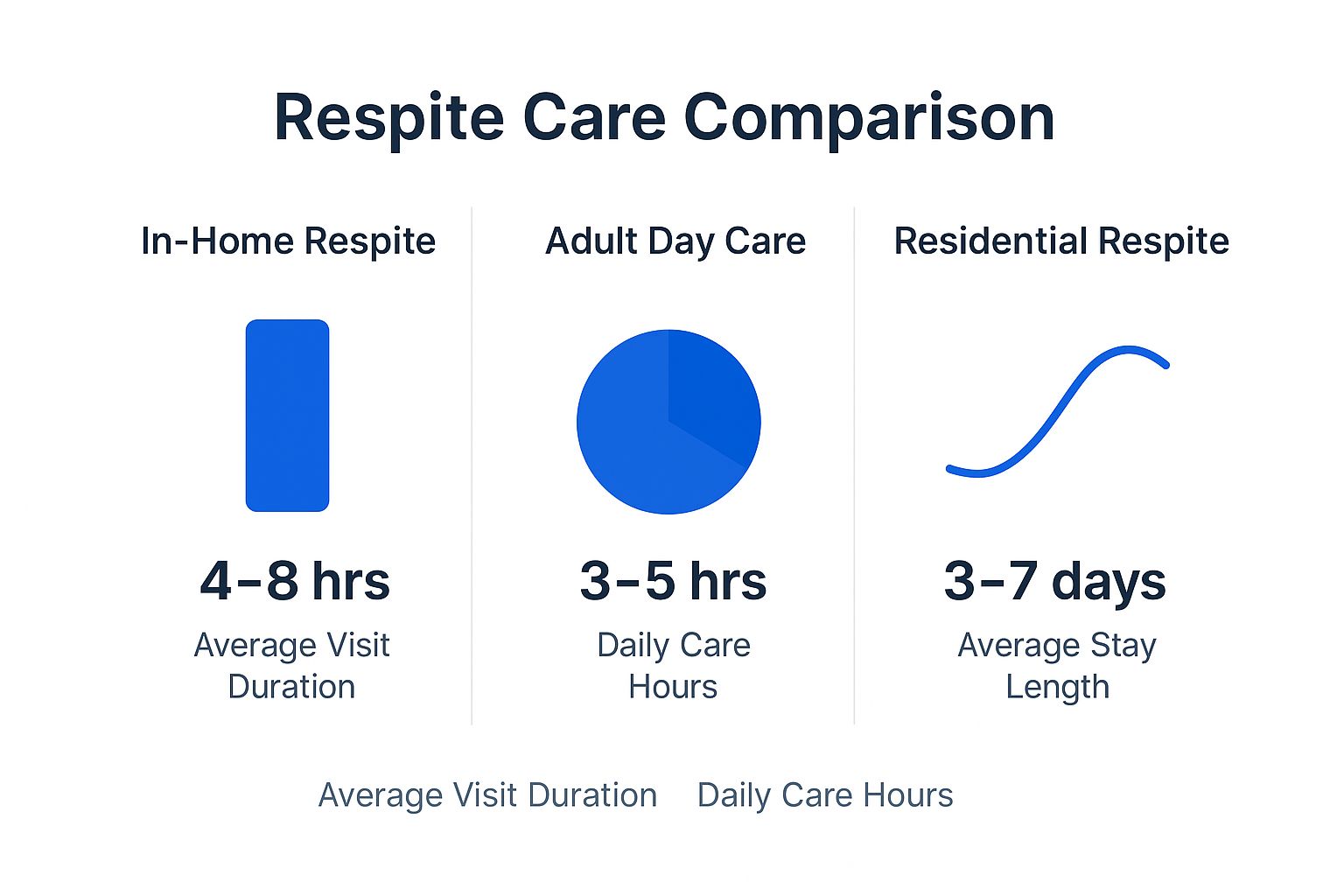
To help you visualize how these options compare, here's a simple breakdown.
Comparing Respite Care Options at a Glance
Choosing the right respite care really comes down to your family's unique situation. This table breaks down the key differences between the main types of care to help you see which one might be the best fit.
| Type of Care | Best For | Typical Duration | Key Feature |
|---|---|---|---|
| In-Home Care | Seniors who are most comfortable in their own home or have mobility issues. | A few hours to 24-hour care | One-on-one attention and care in a familiar setting. |
| Adult Day Center | Seniors who are social, mobile, and would benefit from structured activities. | A full or half-day during weekdays | Social interaction and engagement with peers. |
| Residential Stay | Caregivers needing a break for a vacation, work, or personal reasons. | A few days to several weeks | 24/7 professional supervision and medical support. |
Ultimately, the best choice provides security and enjoyment for your parent while giving you the meaningful break you deserve.
The right respite option strikes a balance. It supports your parent’s comfort and independence while giving you the space you need to recharge and be the best caregiver you can be.
No matter which path you’re considering, the first step is seeing what’s available nearby. For families in New Jersey, exploring local providers makes the process much more manageable. To get started, you can learn more about finding respite care near me and get tips on what to look for in a top-notch agency.
How to Navigate Costs and Find Financial Help

Let's be honest: one of the first questions on every family's mind when considering respite care for elderly parents is, "How much is this going to cost?" It's a completely valid concern. But what many people don't realize is that with a bit of research, high-quality care can be far more accessible than you might think.
The price tag for respite care isn't one-size-fits-all. It really depends on the type of service, where you live, and the specific level of care your loved one needs. For example, in-home care is usually charged by the hour. An adult day center might have a set daily fee, while a short stay in a residential facility often comes with an all-inclusive daily or weekly rate.
The demand for this kind of flexible, temporary care is growing fast. The global market for elderly respite care is expected to jump from USD 342.86 million in 2025 to USD 448.15 million by 2030. This isn't just a business trend; it shows a real shift in understanding just how critical these services are for preventing caregiver burnout.
Uncovering Financial Assistance Options
The good news is you don't have to shoulder the entire financial burden alone. There are several programs and policies in place specifically to help families afford the care they need. It all comes down to knowing where to look.
Here are some of the most common places to start your search for financial help:
- Medicare: Original Medicare (Part A and B) typically doesn't cover long-term custodial care. However, it can cover short-term respite stays in a skilled nursing facility, but usually only under very specific circumstances, like if your parent is also receiving Medicare-covered hospice care.
- Medicaid: This is often a game-changer for eligible seniors with limited income. Many states have waiver programs that can help pay for services like in-home respite or adult day care, which helps seniors stay in their own homes and communities longer.
- Veterans Benefits: If your parent served in the military, the Department of Veterans Affairs (VA) is a fantastic resource. The VA provides up to 30 days of respite care each year, which can be used for in-home help, a stay at a VA community living center, or at an adult day health care facility.
- Long-Term Care Insurance: Did your parent plan ahead with a long-term care insurance policy? If so, it very likely includes coverage for respite care. Pull out the policy and read the fine print to understand the daily benefit amounts, coverage limits, and any waiting periods before the benefits kick in.
Navigating these programs can feel like a puzzle, but don't give up. Every program has its own rules, so your best first step is to contact local agencies for clear, personalized advice on what your family might qualify for.
Tapping into Local and Non-Profit Resources
Sometimes the best help is right in your own backyard. Beyond the big federal and state programs, local organizations are often an incredible source of support because they know the community's unique needs.
A great place to begin is your local Area Agency on Aging (AAA). Think of them as a central information hub for all things senior care. They can point you toward local respite grants, caregiver support groups, and other invaluable resources you might not find otherwise.
Don't forget to look into non-profits, too. Many organizations focused on specific conditions, like the Alzheimer's Association or the American Cancer Society, offer grants or vouchers to help families cover the cost of respite care.
Remember, you're not in this alone. Taking the time to explore these options is a vital part of creating a care plan that works for everyone—your parent and you. For a deeper dive into local programs, check out our guide on finding financial assistance for caregivers. With the right information, you can find a solution that brings peace of mind and gives you that much-needed break.
Choosing the Right Respite Care Provider
Handing over your parent's care, even for a short while, is a huge deal. You need to find someone who gives you total peace of mind, so you can actually relax and recharge without a single worry. This isn't just about filling a gap in the schedule; it's about finding the right person or agency to provide compassionate, professional respite care for elderly parents.
Think of it like hiring a skilled artisan for a delicate project in your home. You wouldn’t just go with the first name that pops up. You’d want to see their work, check their credentials, and talk to people who have used them before. The same level of care is crucial here.
Start with a Clear Needs Assessment
Before you even start looking, take a moment to map out exactly what your parent needs. Getting this down on paper will be your guide, helping you zero in on providers who are a genuine fit. A vague request for "some help" often leads to a poor match.
Your assessment should be pretty specific. Think about:
- Medical Needs: Does your parent need medication reminders? Help getting around safely? Are you managing a specific condition like dementia or diabetes that requires specialized knowledge?
- Personal Care: What about the basics? Do they need help with bathing, getting dressed, or making meals?
- Social and Emotional Needs: Is companionship the main thing? Are they looking for someone to chat with, do a puzzle, or just be a friendly presence in the house?
Once you have this list, you can immediately filter out providers who don't offer the services you need. This one step will save you a ton of time and frustration.
Verify Credentials and Experience
Once you have a shortlist, it’s time to do a little homework. Any reputable agency or caregiver will be completely open about their qualifications and happy to show you their documentation. This is your most important safety check.
A provider's willingness to share their credentials openly is a strong indicator of their professionalism and trustworthiness. If you encounter resistance or vague answers, consider it a red flag and move on.
Here’s what you should be looking for:
- Licensing and Certification: Make sure the agency is licensed by the state. Individual caregivers should have the right certifications, like being a Certified Home Health Aide (CHHA).
- Background Checks: Good agencies run thorough national criminal background checks on every single employee. Ask them to confirm this is standard practice.
- Insurance and Bonding: The agency absolutely must be fully insured and bonded. This protects you and your family from any liability if there's an accident.
This due diligence is what stands between you and an unqualified or untrustworthy provider. For a more detailed walkthrough, our guide on how to choose a home care agency has a great checklist to follow.
Ask the Right Questions During the Interview
The interview is where you get to see beyond the paperwork. This is your chance to get a real feel for their philosophy and approach. Whether you're talking to an agency manager or an independent caregiver, have your questions ready.
Try asking things like:
- Staff Training: What kind of ongoing training do your caregivers get, especially for conditions like Alzheimer's or Parkinson's?
- Emergency Protocols: What happens if there's a medical emergency or a fall in the home? What’s your procedure?
- Communication: How will you keep me in the loop? Do you use a logbook, daily texts, or a quick phone call at the end of the day?
- Caregiver Matching: How do you decide which caregiver is the right fit for my parent's personality and specific needs?
The answers to these questions will tell you everything you need to know about their professionalism and commitment. It’s also interesting to see how elder care is changing globally. The Asia Pacific region, for example, is now the fastest-growing market for elder care, expanding at a CAGR of about 6.5%. Countries like Japan are even using AI monitoring and robotic caregivers to support their aging population, which shows a worldwide move toward more innovative and reliable care solutions. Learn more about the evolving elder care market on datamintelligence.com.
Common Questions About Respite Care

Stepping into the world of respite care for elderly parents often comes with a flood of questions. That’s completely normal. It’s a significant step, and feeling a mix of hope and nervousness is part of the process. I’ve put this section together to tackle those common concerns head-on, giving you clear, practical answers so you can move forward with confidence.
Think of this as your roadmap for those initial uncertainties. We'll walk through some of the most frequent challenges families run into, from what to do when a parent is reluctant, to how to prepare for that very first visit from a new caregiver. The whole idea is to replace anxiety with clarity and get you ready for this positive new chapter.
How Do I Handle a Parent Who Is Resistant to Outside Help?
This is probably the single biggest—and most emotionally loaded—hurdle for caregivers. It’s tough. Your parent might view bringing in outside help as a sign they’re losing independence or as an invasion of their privacy. The secret is to approach the conversation with empathy, patience, and a focus on how this helps everyone involved.
Instead of framing it as, "You need a caregiver," try shifting the perspective to, "I need some support so I can continue to be the best son/daughter for you." This small change moves the focus from their perceived decline to your own well-being, which can make the idea much easier to digest.
Here are a few strategies that I’ve seen work wonders:
- Start Small: Don't go all-in at once. Introduce the idea of help for a specific, low-stakes task. Maybe it’s just for an afternoon a week so you can get your grocery shopping done without feeling rushed.
- Involve Them in the Choice: Giving your parent a sense of control is huge. Let them be part of the process of interviewing and choosing the caregiver. When they feel they have a say in who comes into their home, they are far more likely to get on board.
- Emphasize the Positive: Focus on the good stuff! Talk about the companionship a caregiver can offer or the new activities they could enjoy together, not just the help with daily chores.
What Should I Do If the Caregiver Isn't a Good Match?
Finding the right personality fit is just as crucial as finding someone with the right skills. Sometimes, despite everyone's best efforts, the connection between your parent and the caregiver just doesn't click. If this happens, don’t panic. It's a normal part of the process, and any good agency will be ready to help you sort it out.
The first thing to do is call the agency right away and provide specific, constructive feedback. Try to explain what isn't working. Is it a communication issue? A personality clash? The more detail you can provide, the easier it will be for them to find a more suitable match.
"A successful caregiving relationship is built on trust and rapport. Never feel guilty about asking for a change if the initial match isn't right. A professional agency’s priority is to find a caregiver who makes your parent feel safe, comfortable, and respected."
Remember, the endgame here is a positive, lasting relationship. It’s absolutely worth taking the time to find that perfect person who becomes a trusted and welcome presence in your parent's life.
How Often Should We Use Respite Services?
There’s no magic number here. The right frequency for respite care is completely unique to your family’s situation, your parent’s needs, and your own limits. The key is to be honest with yourself about what you need. Please don't fall into the common trap of waiting until you’re at your breaking point to finally schedule a break.
It helps to think of respite care as a preventative tool, not just an emergency service. Using it to schedule regular, planned breaks is far more effective for preventing burnout than trying to find last-minute help when you're already overwhelmed.
When figuring out a schedule, think about these things:
- Your Stress Level: How are you really doing? If you’re constantly feeling worn out, irritable, or spread too thin, you probably need more frequent breaks.
- Your Parent's Needs: Does your loved one need constant supervision, or are they fairly independent? The higher their level of need, the more support you're going to require.
- Your Other Obligations: Are you juggling a demanding job, raising kids, or managing other responsibilities that are all competing for your time and energy?
A lot of families find that starting with one or two short sessions a week is a great way to ease into it. From there, you can adjust the schedule as everyone gets more comfortable with the new routine.
How Can I Prepare My Parent for the First Session?
A little bit of prep work can make all the difference in making that first respite visit a positive and smooth experience. Your goal is to help the new caregiver feel less like a stranger and more like a welcome guest.
Start by simply talking to your parent about who is coming over and when they’ll be there. Keep it light and positive. You could say something like, "Mary is coming on Tuesday to hang out with you for a bit while I run to the store."
For that first visit, it’s a great idea to be there for the beginning of the session. You can make a warm introduction, help get the conversation started, and just create a comfortable atmosphere. Point out where the coffee is, mention your dad’s favorite game shows, or share a funny story to break the ice. This simple gesture can melt away a lot of the initial anxiety and set the foundation for a wonderful relationship.
At NJ Caregiving, we understand that every family's journey is unique. We are dedicated to providing compassionate, professional in-home care that brings peace of mind to caregivers and enhances the quality of life for seniors. If you're ready to explore how respite care can support your family in Princeton, NJ, and the surrounding Mercer County area, we invite you to connect with our team.
Find the support you and your parent deserve by visiting us at https://njcaregiving.com.