

When you're caring for a loved one with dementia, the journey can feel like a marathon. Respite care is your planned "water station"—a crucial, temporary break from the intense demands of your role. It’s not about stopping; it's a strategic pause to refuel so you can keep going with renewed strength.
Think of it as a proactive, non-negotiable part of a healthy, sustainable care plan. It's built to support the well-being of everyone involved: you and the person you're caring for.
Why Respite Care Is a Lifeline for Dementia Caregivers

Caring for someone with dementia is an incredible act of love, but let's be honest—it comes with its own unique set of physical and emotional challenges. The constant need for watchfulness, paired with the emotional toll of seeing a loved one change, can lead to serious stress. Respite care was designed specifically for this reality.
It isn't about giving up or walking away. By taking these scheduled breaks, you can head off burnout at the pass, manage your own health needs, and come back to your caregiving role with more patience and a clearer head. You can get a deeper look into how these breaks work in our guide on what is respite care for elderly individuals.
Moving Past the Guilt
Let’s talk about one of the biggest roadblocks families face: guilt. So many caregivers feel like they're failing or abandoning their loved one if they take a break. They worry that no one else can provide the same level of care. It's time to reframe that thinking.
Think of it this way: On an airplane, they tell you to put on your own oxygen mask before helping others. Respite care is your oxygen mask. It ensures you have the strength and clarity needed to provide the best possible support.
This approach isn't just for you; it directly benefits the person with dementia. A caregiver who is rested and supported is far better equipped to handle challenging behaviors, offer compassionate help, and maintain a positive, calm home environment.
The Growing Need for Support
The reality is, the need for this kind of support is becoming more critical every day. In 2020, about 55 million people worldwide were living with dementia. That number is projected to explode, reaching 78 million by 2030 and a staggering 139 million by 2050.
The vast majority of that care falls on the shoulders of unpaid family members who are under immense pressure. This is where respite care provides a structured solution. For a global perspective on these trends, the World Health Organization's website offers comprehensive data.
To see just how it helps everyone, here's a quick summary.
Respite Care At a Glance
| Core Function | Primary Goal for the Caregiver | Benefit for the Person with Dementia |
|---|---|---|
| Temporary Relief | Provides a chance to rest, recharge, and prevent burnout. | A safe, stable environment while their primary caregiver is away. |
| Personal Time | Allows time for errands, appointments, or social activities. | New opportunities for social engagement and mental stimulation. |
| Improved Well-being | Reduces stress and improves the caregiver’s mental and physical health. | Interaction with new people and activities, which can reduce agitation. |
Ultimately, taking a break isn’t a sign of weakness. It's a powerful step toward ensuring you can provide high-quality, long-term care for the person who depends on you most.
Recognizing the Signs of Caregiver Burnout
As a caregiver for someone with dementia, you are the anchor in their world. But even the strongest anchors get worn down by the constant pull of the tide. Caregiver burnout isn’t some dramatic, sudden collapse; it’s a slow, quiet erosion of your energy, patience, and well-being.
Seeing the early signs isn’t a weakness—it's the most powerful thing you can do to protect both yourself and your loved one.
Think of your personal energy like a phone battery. Each day, you start with a full charge, but the demands of dementia care can drain it much faster than it can recharge. Burnout is what happens when you’re consistently running on low power, ignoring the warning signs until the whole system just shuts down.
The sheer scale of this commitment is immense. In the United States alone, nearly 12 million family members provide an estimated 19.2 billion hours of unpaid care annually for people with dementia. You can explore the full impact of these contributions in this report from the Alzheimer's Association on caregiving statistics.
Common Warning Lights on Your Dashboard
Burnout often whispers before it shouts. It shows up as subtle changes in your mood, health, and outlook that are all too easy to dismiss as just a "bad day." But when those bad days start stringing together, it's time to pay close attention.
- Persistent Irritability: You find yourself getting frustrated over small things that never used to bother you, like a spilled drink or a question you've heard a dozen times already.
- Loss of Interest: Hobbies and activities you once loved now just feel like another chore. That weekly phone call with a friend or your favorite TV show no longer brings you any joy.
- Changes in Sleep: You’re either struggling to fall asleep, waking up constantly, or sleeping way more than usual but never feeling rested.
- Emotional and Physical Exhaustion: This is a deep-seated tiredness that sleep can't seem to fix. You might feel drained, hopeless, or just plain detached from everything around you.
Acknowledging these symptoms is the first and most critical step. It’s about understanding that you cannot pour from an empty cup. Recognizing your own needs is fundamental to providing sustainable, compassionate care.
For many, these feelings also lead to pulling away from others. You might start declining invitations or avoiding conversations with friends because it feels too hard to explain what you're going through, or to pretend everything is okay.
Shifting from Exhaustion to Empowerment
Once you recognize these signs, you can start to take back control. This doesn't mean you need to completely overhaul your life. Often, it's the small, intentional actions that make the biggest difference in refilling your energy reserves.
For instance, many caregivers find that even short, consistent breaks from respite care dementia services can completely reset their emotional state. Learning how to manage your stress is key, and our guide on how to prevent caregiver burnout offers practical strategies you can start using right away.
To actively combat the stress and anxiety, exploring structured programs like Mindfulness Based Stress Reduction (MBSR) can also provide invaluable tools for managing the emotional weight of caregiving. These techniques help you stay present and reduce those overwhelming feelings that can build up over time.
The goal isn't to eliminate challenges—it's to build resilience, allowing you to navigate the realities of dementia care without losing yourself in the process.
Exploring Your Respite Care Options
When you're looking for the right support for a loved one with dementia, it’s not a one-size-fits-all situation. The world of respite care dementia support is less like a single product and more like a customizable toolkit. Each option has its own unique strengths, letting you pick and choose what works best for your family's needs, your loved one's personality, and your own peace of mind.
Think of it like choosing a school for a child. You wouldn't just pick one at random; you'd look at the environment, the structure, and the social opportunities. The same thoughtful approach applies here, making sure the experience is a positive one for everyone involved.
The infographic below highlights a few key signs of burnout. If these feel familiar, it might be time to take a serious look at these care options.
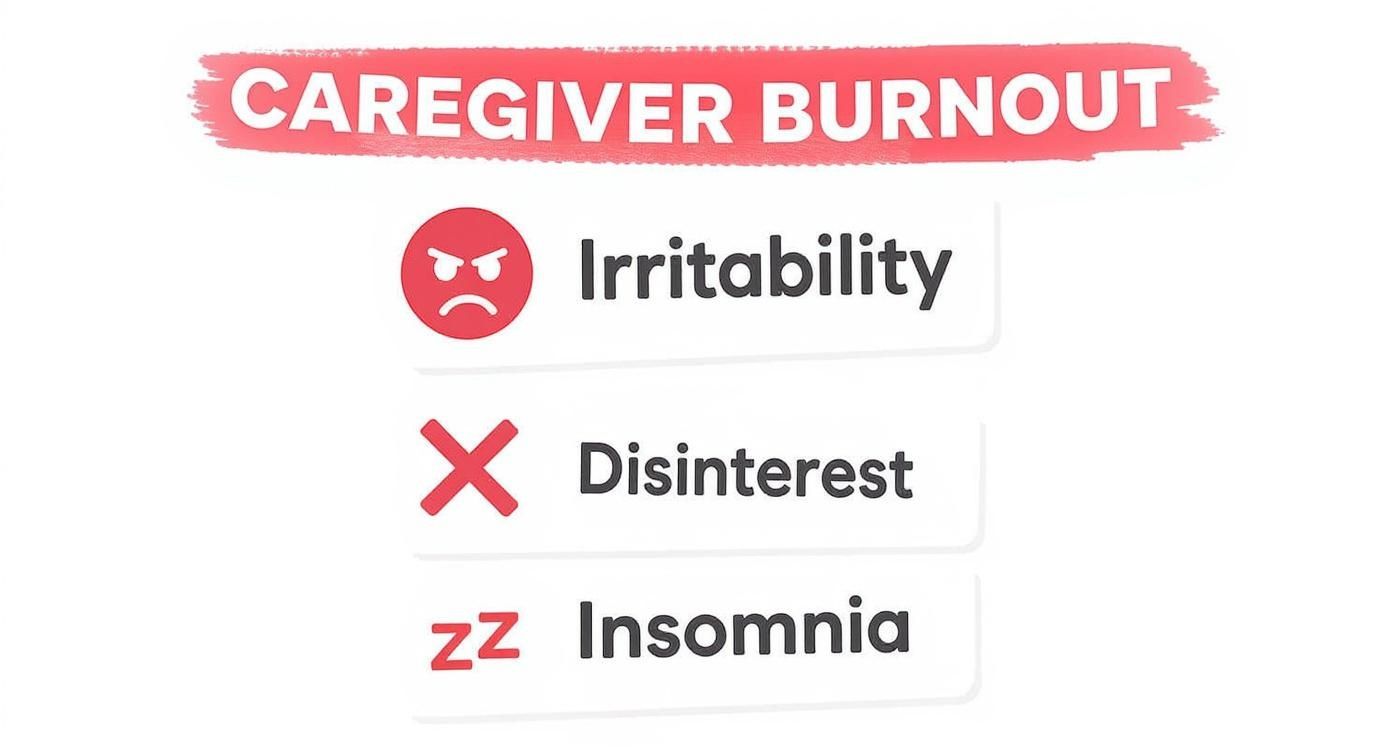
Catching these emotional and physical red flags is the first step toward getting the structured breaks that different respite models are designed to provide.
In-Home Respite Care
For many families, in-home care is the natural first choice. Why? It keeps the person with dementia in their most familiar, comfortable space: their own home. A trained professional comes directly to you for a set number of hours or days to take over your caregiving duties.
This consistency is a huge plus. It minimizes disruption to your loved one's routine, which is so important for managing the anxiety that often comes with dementia. It gives you the freedom to step away—whether it’s for a few hours to run errands or a full day to recharge—knowing they are safe and secure right where they belong.
Adult Day Centers
Adult day centers are another fantastic option, offering both a change of scenery and structured social time. These centers create a safe, supervised environment where people with dementia can join activities specifically designed to stimulate their minds and bodies.
You can think of it as a social club with specialized support. The day is often filled with things like:
- Music and art therapy to spark joy and self-expression.
- Gentle exercise programs to help maintain mobility and physical health.
- Group games and social events to build connections and combat isolation.
This setup is a true win-win. Your loved one gets valuable social interaction and mental stimulation, and you get a consistent, reliable block of time to focus on your own life and needs.
Short-Term Residential Stays
Sometimes you need a longer break, like for a family vacation or even a personal health procedure. That's where short-term stays in a residential facility become an invaluable resource. Communities specializing in assisted living or memory care often offer overnight respite for anywhere from a few days to several weeks.
This model provides comprehensive, 24/7 care in a completely secure setting. While it does mean a temporary change of environment, it also offers the highest level of support, giving you a complete and total break from all caregiving responsibilities. If you're considering facility-based care, it's always wise to understand how to recognize signs of neglect to ensure your loved one is in the best hands.
This option allows for a true reset. It’s an opportunity to fully step away and recharge, knowing your loved one is receiving professional, round-the-clock supervision and support.
Comparing Respite Care Options
To help you visualize which path might be right for you, here’s a simple side-by-side comparison of the options we've covered.
| Type of Care | Best For | Environment | Typical Duration |
|---|---|---|---|
| In-Home Care | Maintaining routine and minimizing disruption for the person with dementia. | Your own home, offering maximum comfort and familiarity. | A few hours to a full day, or occasionally overnight. |
| Adult Day Center | Providing social interaction and structured activities in a new setting. | A community-based center designed for group engagement. | A set block of hours during the day, usually on weekdays. |
| Residential Stay | Needing a longer, more comprehensive break for a vacation or personal matter. | An assisted living or memory care facility with 24/7 staffing. | A few days to several weeks. |
In the end, the best respite care dementia plan might actually be a blend of these services. You could use an adult day center a few times a week and bring in an in-home caregiver for a weekend afternoon. The goal is to find the right balance that supports both your well-being and your loved one's needs.
How to Find Respite Care in New Jersey
Navigating the world of respite care dementia services in New Jersey can feel like trying to read a map in the dark. You know where you need to go—a much-needed break—but figuring out the path forward isn't always obvious.
The good news is that New Jersey has a strong network of resources built to guide you. The key is knowing exactly where to start your search, so you can connect directly with local experts who get the specific challenges dementia caregivers in your community face.
Your Local Starting Points
For most New Jersey families, the journey to finding reliable respite care starts with a single phone call or a visit to a few key websites. These organizations are your boots-on-the-ground support system.
Here are the best places to start:
- Area Agencies on Aging (AAAs): Every county in New Jersey has an AAA, also known as the Aging and Disability Resource Connection (ADRC). Think of them as the central hub for all things related to senior services. They can give you a list of vetted providers—from in-home agencies to adult day centers—and clue you in on state-funded programs you might qualify for.
- Alzheimer’s Association, Greater New Jersey Chapter: This group is an invaluable ally. Their team can offer personalized advice, connect you with local support groups, and recommend dementia-specific respite services that truly understand the unique challenges of memory care.
- New Jersey 2-1-1: If you’re not sure where else to turn, this free, confidential referral service can point you toward a wide range of health and human services, including local respite care options.
Starting with these trusted sources helps you cut through the noise of a generic internet search and get straight to the help that matters. For a more direct look at what's available, you can also explore our guide on finding respite care near me.
Understanding the Financial Side
One of the first questions on every caregiver's mind is, "How are we going to pay for this?" The cost is a real concern, but in New Jersey, you have several options that can help lighten the financial load. It's not just about paying out of pocket; public funding and other benefits are out there.
The demand for these services is huge. In fact, the dementia and Alzheimer's segment makes up 40.1% of the entire global respite care market. North America leads the way with a 39.3% market share, largely thanks to government programs like Medicare and Medicaid that help subsidize these essential services. You can discover more insights about the respite care market on coherentmarketinsights.com.
What this means for you is that support is often more accessible than you might think.
Navigating the financial aid system requires patience, but it's a critical step in making respite care a sustainable part of your caregiving plan. Don't assume you won't qualify without exploring the options.
Here are the main financial avenues to look into in New Jersey:
- Medicaid and Waivers: New Jersey's Medicaid Managed Long Term Services and Supports (MLTSS) program is a game-changer. If your loved one is eligible for Medicaid, MLTSS can cover a wide range of services, including in-home respite and adult day programs, helping them stay at home instead of moving to a nursing facility.
- Medicare: While Original Medicare doesn't typically cover long-term respite, it might help with a short-term stay in a skilled nursing facility after a hospital visit. Some Medicare Advantage plans offer more flexible respite benefits, so it’s always worth checking your specific policy.
- Veterans' Benefits: If your loved one is a veteran, the VA has several helpful programs. Respite care might be included in the standard medical benefits package, and initiatives like the Veteran-Directed Care program give you a budget to manage services yourself.
- State and County Programs: New Jersey offers state-funded programs like the Statewide Respite Care Program, which provides a subsidy to eligible caregivers to help pay for short-term breaks. Your local AAA/ADRC is the best place to find out about and apply for these programs.
By methodically working through these local resources and financial aid options, you can turn the idea of respite care from a wish into a real, affordable plan. The support is there—you just have to know where to find it.
Preparing for a Smooth and Positive Transition
For someone living with dementia, a predictable routine isn't just a nice-to-have—it's a lifeline. It provides comfort, security, and a sense of normalcy in a world that can often feel confusing. So, bringing a new person or place into the mix, even temporarily, can feel like a major disruption.
But it doesn't have to be. With some thoughtful preparation, you can transform the start of respite care dementia services from a moment of stress into a genuinely smooth and positive experience for everyone.

The goal here is simple: bridge the gap between what you know about your loved one and what the new caregiver needs to know. A little planning goes a very long way in setting everyone up for a truly restful break.
Create a Simple Caregiver Guide
Think of it as creating a "user manual" for your loved one. This guide doesn't need to be an epic novel. Just a few pages of clear, simple notes can make all the difference in the world, empowering the respite provider to step in with confidence from the very first minute.
This guide is their quick-reference tool, covering the essentials of daily life. What makes your loved one's day go smoothly? What are the small details that bring them comfort?
Here’s a quick checklist of what to include:
- Daily Routine: Jot down their typical wake-up and bedtimes, meal schedules, and any standing appointments, like a mid-morning walk or their favorite afternoon TV show.
- Food and Drink Preferences: List their favorite meals and snacks, anything they really dislike, and reminders about staying hydrated. Little details, like whether they prefer coffee with milk or tea without sugar, are golden.
- Communication Style: How do they communicate best? Do they respond well to simple, one-step directions? Are visual cues helpful?
- Comfort and Calming Techniques: What soothes them when they feel anxious or agitated? This could be listening to a particular genre of music, flipping through a family photo album, or simply having someone hold their hand quietly.
This isn't just a list of instructions; it’s an act of trust. It helps the new caregiver connect with your loved one on a personal level, right from the start.
Gentle Communication and Introduction Strategies
How you talk about respite care can dramatically affect how your loved one accepts it. The key is to be gentle, positive, and consistently reassuring. Frame the new caregiver as a friendly helper or the day center as a pleasant new place to visit.
The transition to respite care isn't about separation; it's about expanding your loved one's circle of support. A positive introduction helps them see the new caregiver as an ally, not a replacement.
Try to avoid long, complicated explanations that might just add to the confusion. Instead, stick with simple language that focuses on the benefits for them.
Tips for a Positive Introduction
- Start Small and Build Up: If you can, begin with short visits. Have the in-home caregiver come for just an hour or two while you're still in the house. For an adult day center, maybe try a brief visit together before their first full day. This gradual exposure helps build familiarity and keeps anxiety low.
- Focus on the Positives: Emphasize the enjoyable parts. You could say something like, "Mary is coming over to chat with you for a bit while I run to the store," or "We're going to visit a friendly place where you can listen to some great music."
- Provide Reassurance: Always let them know when you'll be back. A simple, "I'll be back right after lunch," gives them a clear and comforting timeline to hold onto.
- Share Information in Advance: Have a quick chat with the respite provider before they arrive. Share a few key insights from your caregiver guide so they’re ready with a good conversation starter or a favorite activity. It’s the easiest way to help them create an instant connection.
By taking these compassionate, practical steps, you can minimize stress and make sure the transition to respite care is a calm and supportive experience for the person you care about most.
Making the Most of Your Well-Deserved Break
You’ve done the hard work of finding and arranging respite care dementia support. The calendar is marked, the care professional is prepped, and your break is finally here. So, what now? It’s completely normal to feel a sudden, confusing mix of emotions—relief, freedom, and maybe even a surprising wave of guilt.
This time isn't just a luxury; it’s a critical part of your caregiving strategy. Think of it as preventative maintenance for the most important person in your loved one’s life: you. The goal isn’t just to step away, but to intentionally refill your own cup so you can come back with renewed energy and patience.
Giving Yourself Permission to Recharge
The first step is often the hardest—giving yourself permission to truly let go. Many caregivers spend their first few breaks glued to their phones, checking in constantly or worrying about what’s happening at home. But you have to remind yourself that you put a trusted plan in place for this exact reason.
Self-care isn't selfish; it's the very foundation of providing excellent, sustainable care. When you return refreshed, you are a more present, resilient, and compassionate caregiver.
Embracing this time allows you to shift from merely surviving to actively thriving in your role. The benefits of this mental and emotional reset are felt by both you and the person you care for.
Practical Ideas for Your Break
Your break doesn’t need to be a grand vacation or an elaborate plan. Honestly, the most effective respite is often about reconnecting with the small, simple parts of your life that get pushed to the side. Even just a few hours can make a world of difference.
Here are a few ideas, from quiet moments alone to reconnecting with your community:
- Tend to Your Own Needs: Finally schedule that doctor or dentist appointment you've been putting off. Go for a long walk, get a haircut, or just sit in a quiet room with a good book and a hot cup of coffee.
- Reconnect Socially: Call a friend you haven't spoken to in ages. Meet someone for lunch or a walk in the park. Rebuilding those social connections is vital for fighting the isolation that so often comes with caregiving.
- Tackle Your To-Do List: Use the uninterrupted time to run errands, organize that messy closet, or handle paperwork without feeling rushed. Checking these items off your list can lower your background stress level in a big way.
- Do Absolutely Nothing: Sometimes, the most restorative thing you can do is to simply rest. Take a nap, watch a movie, or sit outside and enjoy the quiet. Don’t feel pressured to be productive; your only job right now is to recharge in whatever way feels best for you.
Ultimately, how you use your break is entirely up to you. The key is to make a conscious choice to focus on your own well-being. This intentional rest is what fuels your ability to continue providing the loving, dedicated care your family member deserves.
Answering Your Top Questions About Respite Care
Deciding to explore respite care for a loved one with dementia always brings up a flood of questions. That’s completely natural. As a caregiver, your world revolves around their well-being, so feeling a mix of hope and worry is part of the process. Let's tackle some of the most common concerns we hear from families every day.
One of the biggest hurdles is always trust. “How can I possibly trust a stranger with the person I care for so deeply?” This question comes right from the heart, a place of love and protection. The trick is to shift your mindset from hiring a “stranger” to partnering with a trained, compassionate professional.
Building Trust with a New Caregiver
You’re not just handing over the reins blindly; you’re in the driver’s seat. Finding the right person or agency is a proactive process, and taking these steps can bring incredible peace of mind.
- Check Credentials Thoroughly: Reputable New Jersey agencies perform extensive background checks, confirm certifications, and require ongoing, dementia-specific training for their teams.
- Conduct a Detailed Interview: Go beyond the basics. Ask about their direct experience with dementia, how they approach challenging behaviors, and what they genuinely enjoy about this kind of work.
- Request and Contact References: There's nothing more powerful than hearing directly from other families who have been in your shoes. It’s one of the best ways to build real confidence.
Another deep-seated fear is the emotional toll: “Will they feel like I’ve abandoned them?” This is a powerful worry, but one that can be eased with thoughtful communication. People with dementia are incredibly sensitive to emotions, so how you introduce this new support system really matters.
Respite care isn’t about leaving someone behind; it’s about expanding their circle of support. Think of it as an act of love that ensures they always have a well-rested, patient caregiver to rely on—you.
Framing the new caregiver as a "friend who's coming to visit" or an adult day center as a "club with fun activities" can help build a positive connection from the start. Starting with short, supervised visits also helps the transition feel more like a welcome routine and less like a sudden change.
Finding the Right Frequency for Breaks
Finally, caregivers often wonder, "How often should I even use respite care?" There’s no magic number here. The answer depends entirely on your unique situation and stress level. The key thing to remember is that consistency often matters more than duration.
Even just a few hours of help each week can do more to prevent burnout than waiting for a crisis to take a long break. It's okay to start small, see how it feels for both of you, and adjust from there. You’ll eventually find a rhythm that supports your well-being and your loved one’s needs perfectly.
At NJ Caregiving, we understand these concerns because we work with families just like yours every day. If you're in Princeton, Hamilton, or elsewhere in Mercer County and are ready to explore your options for compassionate, professional respite care, our team is here to help. Find out how we can support your caregiving journey at https://njcaregiving.com.
