
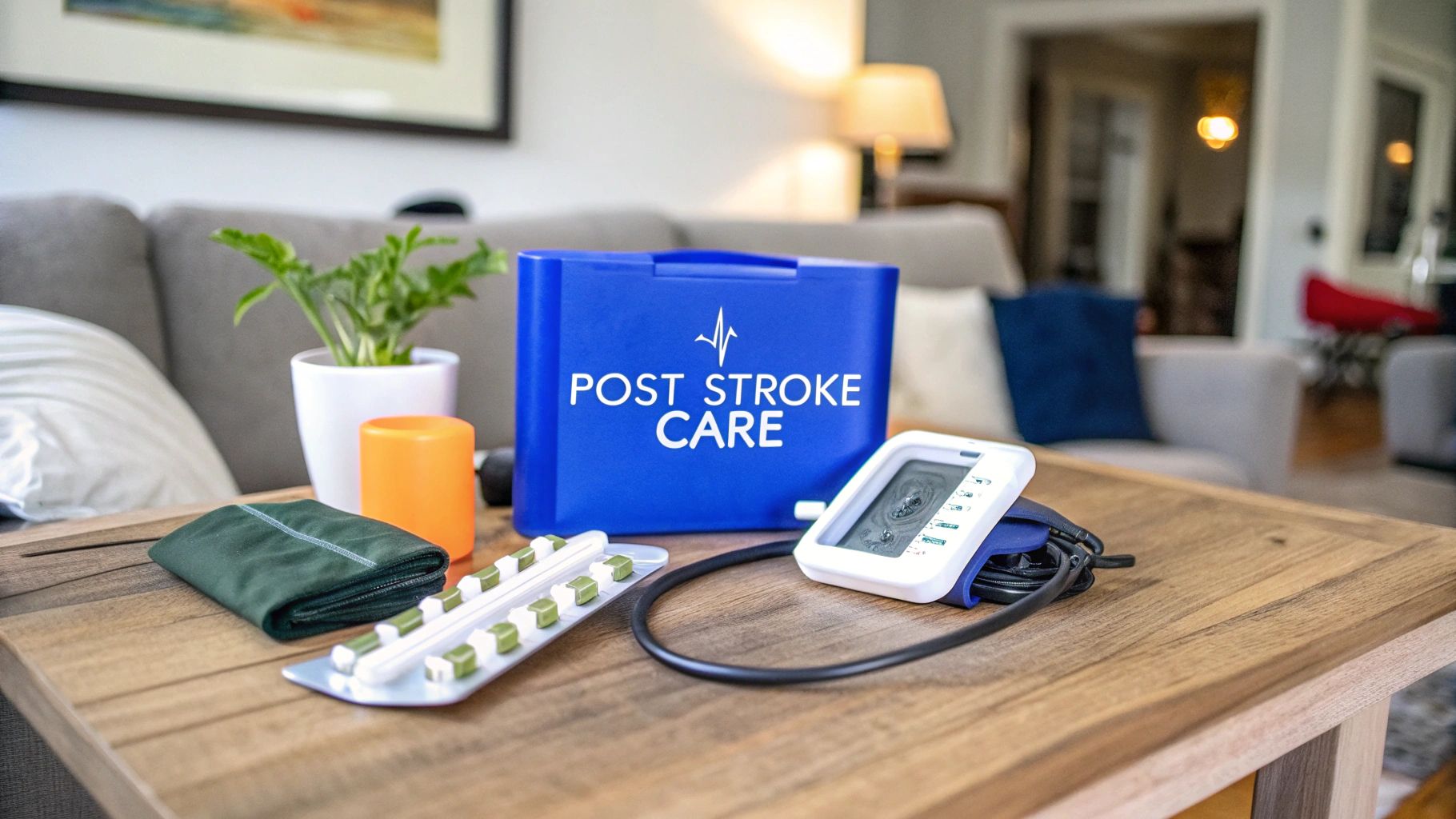
Bringing a loved one home after a stroke is a huge moment. It’s when the real journey of recovery truly begins. The focus of post stroke care at home is all about creating an environment that’s safe, supportive, and predictable, allowing healing to continue long after leaving the hospital. It’s a team effort, aimed at rebuilding both independence and confidence.
The First Days Home After a Stroke

That transition from the structured, 24/7 world of a hospital back to the quiet of home can feel pretty jarring. Those initial days are a real mix of emotions—hope, a lot of uncertainty, and a list of practical things to figure out. This isn't about seeing dramatic improvements overnight. It’s about finding a new normal, one built on a foundation of safety, patience, and consistency.
This shift toward recovering at home is becoming more and more common. A major study found that between 1999 and 2020, the percentage of stroke patients who spent their final days at home jumped from just 8.44% to an impressive 29.31%. It just goes to show how much people value healing in a familiar, comforting space, surrounded by the people they love. You can learn more about these findings from Georgetown University.
Setting the Stage for a Successful Recovery
Your first priority is to make your home a sanctuary for healing. This doesn't mean you need to do a massive renovation. It's more about thoughtful prep work—minimizing risks and making things as comfortable as possible. A solid home recovery plan really stands on four key pillars that all work together.
- Safety and Accessibility: Making simple modifications to the home to prevent falls and accommodate any new mobility challenges.
- Medical Management: Staying on top of medication schedules and keeping a close eye out for any warning signs.
- Daily Rehabilitation: Weaving physical, occupational, and speech therapy exercises into the daily routine.
- Emotional Well-being: Offering encouragement and fostering a calm, low-stress atmosphere.
Think of it like building a supportive framework. Just like a house needs a solid foundation to stand, a stroke survivor needs a safe environment and a predictable routine to start regaining their strength and abilities.
The goal isn’t to recreate the hospital at home. It's to create a space where independence can be safely rediscovered, one small step at a time. This journey requires patience, adapting to a new rhythm of life.
Navigating the Emotional and Practical Hurdles
The emotional side of post-stroke recovery is every bit as important as the physical one. It’s completely normal for both the survivor and their family caregivers to feel a whole spectrum of emotions, from frustration and sadness to hope and sheer determination. Just acknowledging that these feelings are part of the process is a huge step.
And the practical challenges are just as real. Juggling medication times, therapy appointments, and personal care can feel like a full-time job. This is where a structured, yet flexible, daily plan becomes your best friend. The first few days are all about establishing this new rhythm, figuring out what works, and building that foundation for the long road ahead. Every small win, whether it’s taking a few steps or clearly communicating a need, is a major milestone worth celebrating.
Creating a Safe and Accessible Home for Recovery
A home should always feel like a sanctuary, but that’s never more true than when someone is recovering from a stroke. Your main job in post-stroke home care is to shift the living space from a potential obstacle course into a place that truly supports healing. One of the biggest risks for stroke survivors is falling, which makes simple home modifications an incredibly powerful tool for preventing accidents and encouraging independence.
Don't think of this as a massive, expensive renovation. It's more like a series of small, strategic adjustments that have a huge impact. By taking a look at each room, you can spot and fix common hazards, creating an environment where your loved one can move around with much more confidence. The whole idea is to create clear pathways, add reliable support, and make sure everyday items are easy to grab.
Prioritizing High-Risk Areas
Let’s be honest, some rooms are just trickier than others. The bathroom and the bedroom usually top the list because of what goes on in them. Making these two spaces as safe as possible is the best place to start.
-
The Bathroom: With all its wet surfaces, this can be the most dangerous room in the house. The fix? Install grab bars in the shower and right next to the toilet. Put non-slip mats down inside the tub and on the floor. Things like a shower chair or bench and a raised toilet seat can make a world of difference, reducing the effort and risk of bathing and using the toilet.
-
The Bedroom: This space needs to be calm and clutter-free. Make sure there’s a wide, clear path from the door to the bed, and from the bed to the bathroom. It’s also a good idea to adjust the bed height so their feet can be planted firmly on the floor before they try to stand up. That little change makes getting in and out of bed so much safer.
Tackling these two rooms first addresses the most immediate dangers. For a deeper dive into making your entire home safer, a professional can offer fantastic guidance. A comprehensive senior home safety assessment can uncover those hidden risks you might not have noticed and give you solutions tailored to your home.
Making the Entire Home Safer
Beyond the bathroom and bedroom, a few key safety principles apply to the whole house. These changes are all about making it easier to navigate—especially for someone using a walker or wheelchair—and cutting down the chances of a trip or fall.
Here’s a practical, room-by-room look at what you can do to transform your home into a safer space for a stroke survivor.
Essential Home Safety Modification Checklist
| Area of Home | Essential Safety Modifications | Recommended Products/Aids |
|---|---|---|
| Living Room/Family Room | Remove throw rugs; secure edges of area rugs. Widen pathways by rearranging furniture. Ensure good lighting and keep cords out of walkways. | Non-slip rug tape, cordless phones, remote-controlled lighting, cord concealers. |
| Kitchen | Move frequently used items to lower, easy-to-reach shelves. Ensure the floor is non-slip. Check for good lighting over countertops. | Long-handled reachers/grabbers, anti-fatigue mats, under-cabinet lighting. |
| Bedroom | Create clear paths to the door and bathroom. Secure a lamp on the nightstand. Adjust bed to a safe height. | Bedside commode, bed rails, touch-activated lamps, nightlights. |
| Bathroom | Install grab bars in the shower and by the toilet. Use non-slip mats. Add a raised toilet seat and a shower chair/bench. | Sturdy grab bars (not suction cups), non-slip bath mat, shower bench, handheld shower head. |
| Hallways & Stairs | Install handrails on both sides of stairs. Ensure bright lighting in hallways and stairwells. Remove all clutter. | Sturdy handrails, bright LED bulbs, nightlights, stair treads for traction. |
This checklist is a great starting point. Every small adjustment you make contributes to a much larger sense of security and freedom for your loved one.
The ultimate goal is to remove friction from the environment. Every modification, no matter how small, should make it easier for the survivor to perform daily tasks safely and with less assistance, which is a huge boost to their morale and progress.
Consider these simple but effective changes:
- Light It Up: Swap out dim bulbs for brighter ones, paying close attention to hallways, stairs, and entryways. A few well-placed nightlights can make those nighttime trips to the bathroom much safer.
- Secure Floors: Small throw rugs are a major tripping hazard—it’s often best to just get rid of them. For larger area rugs, use double-sided tape or a non-slip backing to make sure they are anchored down and won’t slide.
- Clear the Way: Widen your walkways. This might mean moving a coffee table, clearing out some clutter, or taping electrical cords down along the baseboards. This is absolutely critical if a walker or wheelchair is involved.
- Organize for Easy Access: In the kitchen, move the plates, glasses, and snacks they use most often to lower shelves so they don’t have to stretch or climb. In the living room, make sure the phone and a list of emergency contacts are right next to their favorite chair.
By working through these areas one by one, you’re not just making a house safer; you’re building a home that actively helps the recovery process. Each change brings renewed confidence and a smoother journey back to independence.
Managing Daily Medical and Rehabilitation Needs
A successful recovery is built on a foundation of consistent daily care. After a stroke, the path forward runs on two parallel tracks: diligent medical management and dedicated rehabilitation. Think of them as the two oars of a boat—you need to use both in perfect sync to move ahead. This approach ensures the body stays medically stable while the brain and muscles are actively retrained to get back function.
Proper medication management is one of the most critical parts of post stroke care at home. Stroke survivors often come home with a complex list of prescriptions, like blood thinners, blood pressure medications, and statins. All of these are designed to prevent another stroke from happening. Sticking to the schedule isn't just a suggestion; it's an absolute necessity. Missing doses can weaken this vital protective shield.
Simple tools can make a huge difference. A weekly pill organizer, daily alarms on a phone, or a medication management app can turn a confusing task into a simple routine. Even a clear, visible chart on the fridge can help everyone involved in care stay on the same page.
Recognizing Warning Signs and Monitoring Health
Staying vigilant is your first line of defense. Caregivers need to be comfortable monitoring vital signs, especially blood pressure, and must know how to spot the warning signs of another stroke. Having a reliable blood pressure cuff at home and taking regular readings gives the medical team valuable data to work with.
It is absolutely essential that everyone in the home learns and remembers the F.A.S.T. method for identifying a stroke.
- F – Face Drooping: Does one side of the face seem to droop or feel numb? Ask the person to smile. Is it lopsided?
- A – Arm Weakness: Is one arm weak or numb? Ask them to raise both arms. Does one arm drift downward?
- S – Speech Difficulty: Is their speech slurred? Are they having trouble speaking or are they hard to understand?
- T – Time to Call 911: If you see any of these signs, even if they seem to go away, call for emergency help right away.
Quick recognition and immediate action can dramatically change the outcome. Think of F.A.S.T. as your emergency action plan. It’s a simple tool that empowers you to respond correctly when every single second counts.
The Role of In-Home Rehabilitation Therapy
While medical stability is the foundation, rehabilitation is the framework for rebuilding a life. Bringing therapy into the home means specialists can work with the survivor in the exact environment where they need to use their skills every day. The three main types of therapists each have a distinct and crucial role.
1. Physical Therapy (PT): A physical therapist is like a biomechanics coach, zeroing in on rebuilding strength, balance, and mobility. They guide survivors through exercises to get back the ability to stand, walk, and move around their home safely. Recovery is a journey, and including safe and structured cardiac rehab exercises at home can be a great way to boost strength and function.
2. Occupational Therapy (OT): An occupational therapist is focused on helping survivors relearn the practical skills needed for daily life—what we call Activities of Daily Living (ADLs). This is all about regaining independence in tasks like getting dressed, bathing, preparing a meal, or eating. For a deeper dive into this area, check out our guide on occupational therapy for stroke patients.
3. Speech-Language Pathology (SLP): A speech therapist tackles issues with communication (aphasia) and swallowing (dysphagia). They use targeted exercises to help recover language skills and, just as importantly, ensure the person can eat and drink safely to prevent serious complications like pneumonia.
The chart below shows how simple changes around the house can support the goals of therapy.
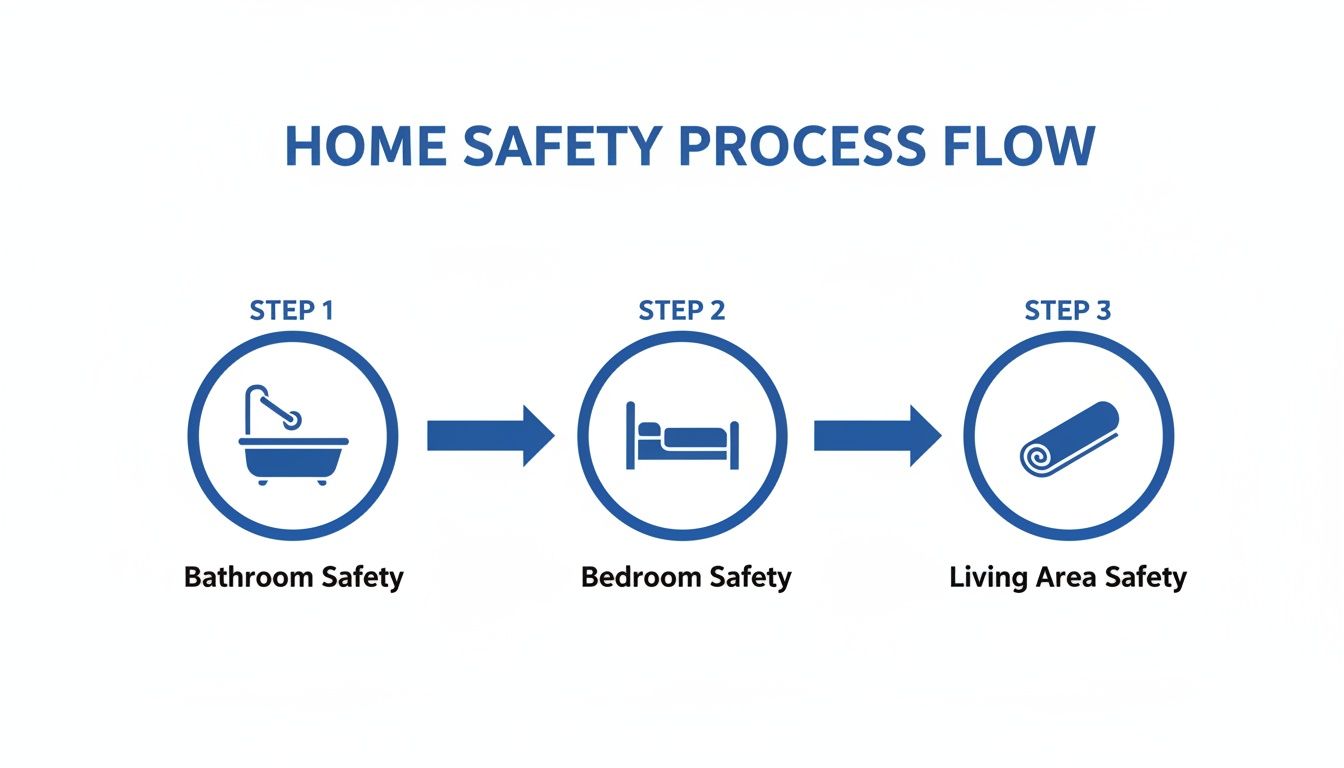
As you can see, making the bathroom, bedroom, and living areas safer has a direct impact on a survivor's ability to practice moving and doing daily activities.
This is where a professional caregiver becomes invaluable. They act as the bridge between therapy sessions, helping the survivor consistently practice their prescribed exercises and use new strategies. That daily reinforcement is what turns a therapist’s instructions into real, lasting progress.
Supporting Nutrition and Cognitive Well-Being
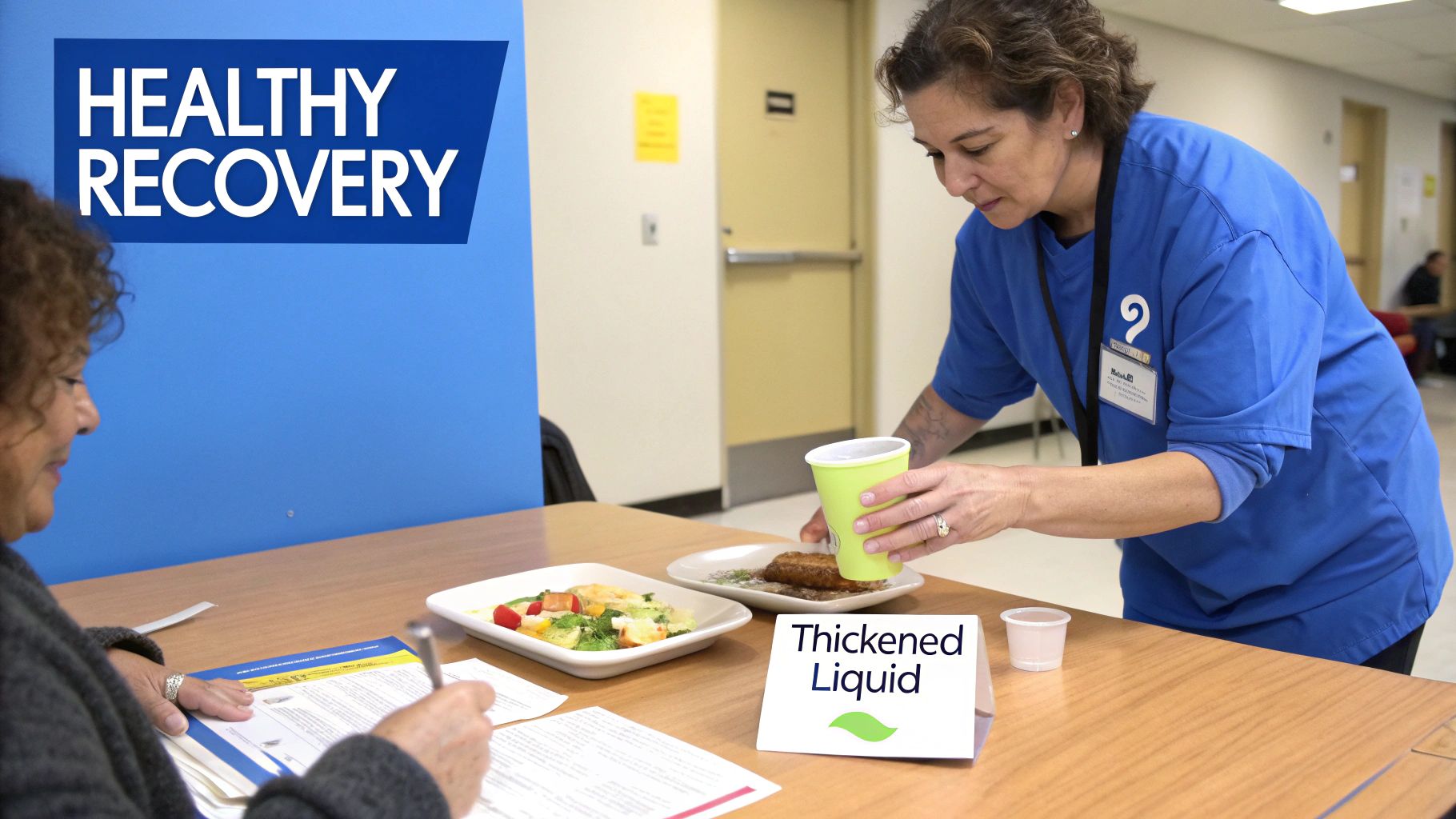
True recovery from a stroke is a whole-person journey that goes far beyond just physical exercises. The brain is working overtime to heal and repair itself, which demands a tremendous amount of energy. This makes nutrition a critical pillar of successful post stroke care at home.
At the same time, we have to address the less visible challenges that come with a stroke—the cognitive and emotional hurdles. It's about fueling the body for repair while patiently supporting the mind as it rebuilds its pathways. This dual focus is key to helping your loved one regain both physical strength and mental well-being.
Navigating Swallowing Difficulties and Proper Nutrition
One of the most common and serious issues after a stroke is dysphagia, the medical term for trouble swallowing. Just like an arm or leg, the muscles that control swallowing can be weakened, making eating and drinking a real challenge.
When swallowing isn't working right, food or liquid can go down the wrong pipe and end up in the lungs. This is called aspiration, and it can lead to dangerous complications like pneumonia. A speech-language pathologist is the expert here; they'll assess swallowing safety and recommend the right food and liquid textures.
Here’s how you’ll likely manage this at home:
- Modify Food Textures: This usually means pureeing, grinding, or mincing solid foods so they’re much easier and safer to swallow.
- Use Thickened Liquids: Thin liquids like water or juice move fast and can be hard to control. You can add special thickeners to create nectar-thick or honey-thick consistencies that move slower, giving your loved one more time to swallow safely.
- Ensure Proper Positioning: Always have them sit fully upright for every meal and for at least 30 minutes afterward. Gravity is your friend here, helping to prevent aspiration.
Beyond just swallowing safety, the kind of food they eat is crucial for preventing another stroke. A heart-healthy diet is absolutely non-negotiable. Good nutrition is vital for healing, and exploring specialized nutrition therapy can offer tailored guidance to optimize their recovery.
Supporting Cognitive and Communication Challenges
A stroke can really shake up cognitive functions, impacting everything from memory to how a person communicates. One of the most frequent communication disorders is aphasia, which can disrupt the ability to speak, understand what's being said, read, or write.
Think of it this way: your brain is a library, and a stroke just knocked over a bunch of bookshelves. The books—your thoughts and words—are all still there, but they're scattered and hard to find. Aphasia is a lot like that. The ideas exist, but getting them out in an organized way is a struggle.
Patience is your most powerful tool when supporting someone with aphasia. Creating a low-stress, encouraging environment can make a world of difference, reducing frustration for everyone.
Here are a few compassionate strategies that really help:
- Simplify Your Language: Stick to short, simple sentences. Speak slowly and clearly.
- Use Visual Aids: Don't be afraid to use gestures, point to pictures, or write down keywords to bridge the gap.
- Ask Yes/No Questions: These are much easier to answer than open-ended questions that require forming a whole sentence.
- Allow Plenty of Time: This is a big one. Give them time to find their words. Don't interrupt or try to finish their sentences for them.
Memory issues are also very common. Simple tools like Post-it notes, a large-print calendar for appointments, and a consistent daily routine can provide much-needed structure and cut down on confusion.
Addressing Emotional Well-Being
The emotional fallout from a stroke can be huge. It's completely normal for survivors to feel frustrated, anxious, or depressed as they come to terms with new limitations. They are essentially grieving the life they had before the stroke.
Your role in creating a supportive emotional atmosphere is a core part of post stroke care at home. This means celebrating the small wins, offering constant encouragement, and just being a patient listener.
It’s also important to watch for signs of prolonged depression—things like withdrawing from others, persistent sadness, or losing interest in everything. If you see these signs, it's time to talk to their doctor. Support groups can also be a lifeline, connecting both survivors and caregivers with people who truly get what you're going through.
How Professional In-Home Care Supports Recovery
While the love and support from family are irreplaceable, the realities of post stroke care at home can quickly become overwhelming. This is where a professional caregiver comes in—not as a replacement for family, but as a skilled partner who can completely change the recovery experience for everyone. Their role is about much more than a checklist of duties; they bring expertise, consistency, and compassionate support right when you need it most.
Think of a professional caregiver as the conductor of the daily recovery orchestra. They make sure every moving part—from medication schedules and therapy exercises to personal care and meals—works together in harmony. This steady, guiding hand provides the structure and safety essential for making real progress.
A Day in the Life with Professional Support
So, what does this look like day-to-day? A professional caregiver might start the morning by assisting with routines like bathing and dressing, which can be tough and even risky without proper training. They ensure medications are taken correctly and on time, immediately lifting a major source of stress from the family’s shoulders.
Throughout the day, they act as an extension of the therapy team. They’ll encourage the stroke survivor to practice exercises assigned by their physical or occupational therapist, helping to reinforce those new skills and build momentum between official appointments. They can also prepare nutritious meals that meet specific dietary needs or swallowing precautions.
This kind of detailed, in-home support is driving a huge shift in recovery management. In fact, the global stroke rehabilitation market is growing fast, largely because home-based services allow survivors to heal in a familiar, comfortable setting. This approach not only prevents physical decline but also continues the progress made in the hospital and can even lower overall medical costs. You can discover more about the growing stroke rehabilitation market and see the data for yourself.
More Than Just Medical Tasks
Beyond the practical help, one of the biggest benefits a professional caregiver brings is companionship. Recovering from a stroke can be an incredibly isolating journey. Feelings of loneliness or depression can actually get in the way of progress. A caregiver provides conversation, encouragement, and a friendly face that fights that isolation and boosts emotional well-being.
They’re also trained observers. A professional can spot subtle shifts in a person's condition—like increased fatigue or a slight change in speech—that might otherwise be missed. Catching these things early is crucial for preventing complications and ensuring a safe transition home from the hospital, which dramatically reduces the risk of being readmitted.
A professional caregiver does more than just manage tasks; they create an environment where recovery can thrive. By handling the complex daily logistics, they empower the family to focus on what matters most: providing love and emotional support.
The Lifeline of Respite for Family Caregivers
For family members, a professional caregiver is an absolute lifeline. The physical and emotional weight of caring for a loved one after a stroke can easily lead to burnout, which doesn't help anyone. Bringing in a trained professional allows family caregivers to step back, rest, and recharge.
This break isn't a luxury—it's a necessity. It gives you the space to manage your other responsibilities, take care of your own health, and just be a daughter, son, or spouse again, instead of only a caregiver. That balance is the key to sustaining a positive, healthy family dynamic throughout the long recovery journey.
Professional services can range from simple companionship to more intensive support. For those who need medical oversight, it’s important to understand the different levels of care available. Learning what home health nursing is can help you figure out when skilled medical care at home is the right choice.
Finding Financial and Community Resources
Bringing a loved one home after a stroke is a huge adjustment, not just emotionally and physically, but financially too. The costs can feel overwhelming, but you're not in this alone. Knowing where to look for help is the first step toward creating a care plan that’s sustainable for the long haul.
Think of it less like a single, massive problem and more like piecing together a puzzle. By combining different sources of funding and support, you can build a strong financial and emotional foundation for your family. This isn't just about managing care; it's about becoming a savvy advocate for your loved one.
How to Get Financial Help for Home Care
Many families are surprised to find out that programs like Medicaid can cover a big chunk of at-home care costs. People often confuse it with Medicare, which is geared more toward short-term, skilled medical needs after a hospital stay. Medicaid, on the other hand, is designed to help with long-term personal care.
- Medicaid Waivers: New Jersey has specific Medicaid waiver programs that help seniors and people with disabilities get the care they need at home, rather than in a nursing facility. Eligibility is usually based on a combination of medical need and financial limits (income and assets).
- Private Insurance: If your loved one has a long-term care insurance policy, it’s time to pull out the paperwork. Read it carefully to see what it covers for in-home help, how much it pays per day, and what you need to do to qualify.
It's a common misconception that qualifying for assistance is impossible or that the paperwork is too much to handle. The reality is, these programs were created for families in exactly your situation, and getting some expert guidance can make the whole process feel much less intimidating.
Don't Overlook Your Community's Support System
Money is just one part of the equation. The emotional toll of being a caregiver is real, and feeling isolated can lead to burnout fast. Your local community is often full of resources designed to support both stroke survivors and their families.
Getting connected with others who are on a similar journey can be a game-changer. You'll get practical tips and a sense of camaraderie from people who truly get what you’re going through. This network can become one of your most valuable sources of strength.
Here’s what to look for in your area:
- Stroke Support Groups: These are safe spaces where survivors and caregivers can talk openly about their struggles and celebrate their wins. That peer-to-peer connection is incredibly powerful for your mental health.
- Local Area Agency on Aging: Think of this as your command center for senior services. They can point you toward everything from meal delivery and transportation to caregiver training and respite care programs.
- Senior Centers: These aren’t just for bingo anymore. They offer social events, gentle fitness classes, and other programs that help a stroke survivor stay active and engaged in a safe, friendly environment.
When you blend financial aid with strong community ties, you create a safety net for your entire family. It ensures you never have to walk this path alone and gives you the stability needed for a successful recovery at home.
Answering Your Questions About Home Stroke Care
When you're sorting out the details of bringing a loved one home after a stroke, a lot of practical questions come up. Getting clear, direct answers can make all the difference, helping your family feel more prepared for the road ahead. Let's tackle some of the most common concerns we hear from families.
Our aim here is to give you straightforward guidance that builds on the core principles of creating a safe, supportive space for recovery.
How Many Hours of Care Does a Stroke Survivor Really Need?
There’s no magic number here. The right amount of care hinges entirely on the stroke's severity and what your loved one can and can't do for themselves. Some folks might just need a few hours of help each day with things like making meals or getting dressed.
On the other hand, someone with major mobility challenges or cognitive difficulties might need 24/7 supervision to keep them safe. The best starting point is always a professional in-home care assessment. It’s the most accurate way to figure out the right level of support.
What's the Difference Between Home Health and In-Home Care?
It’s easy to get these two mixed up because the terms sound so similar, but they describe two very different services that often work hand-in-hand.
Home health care is clinical, medical support prescribed by a doctor. Think skilled nursing, physical therapy, or occupational therapy sessions. It's typically short-term. In-home care, however, is all about long-term, non-medical help with daily life—things like personal care, companionship, and help around the house.
How Can We Avoid Caregiver Burnout?
This is a big one. Preventing caregiver burnout isn't just a nice idea; it’s absolutely essential for providing good, sustainable post stroke care at home. When the primary caregiver is running on empty, the quality of care can start to slip.
Here are a few key strategies to protect your own well-being:
- Set Realistic Expectations: You have to understand that stroke recovery is a marathon, not a sprint. There will be good days and bad days.
- Accept Help: Don't try to be a superhero. Lean on friends, family, and professional services when they offer support.
- Use Respite Care: Scheduling regular breaks for yourself isn't selfish—it's necessary. Take time to rest and recharge.
Remember, taking care of yourself is one of the most important things you can do for your loved one.
If you're creating a care plan for a loved one in Mercer County, NJ Caregiving is here to help. Our compassionate professionals can provide the support your family needs. Visit us at https://njcaregiving.com to learn more.
