

When someone has a stroke, their world can be turned upside down. Simple, everyday tasks that were once second nature suddenly feel like enormous hurdles. This is where occupational therapy (OT) steps in, acting as a crucial bridge between hospital recovery and returning to a meaningful, independent life.
How OT Helps Reclaim Life After a Stroke
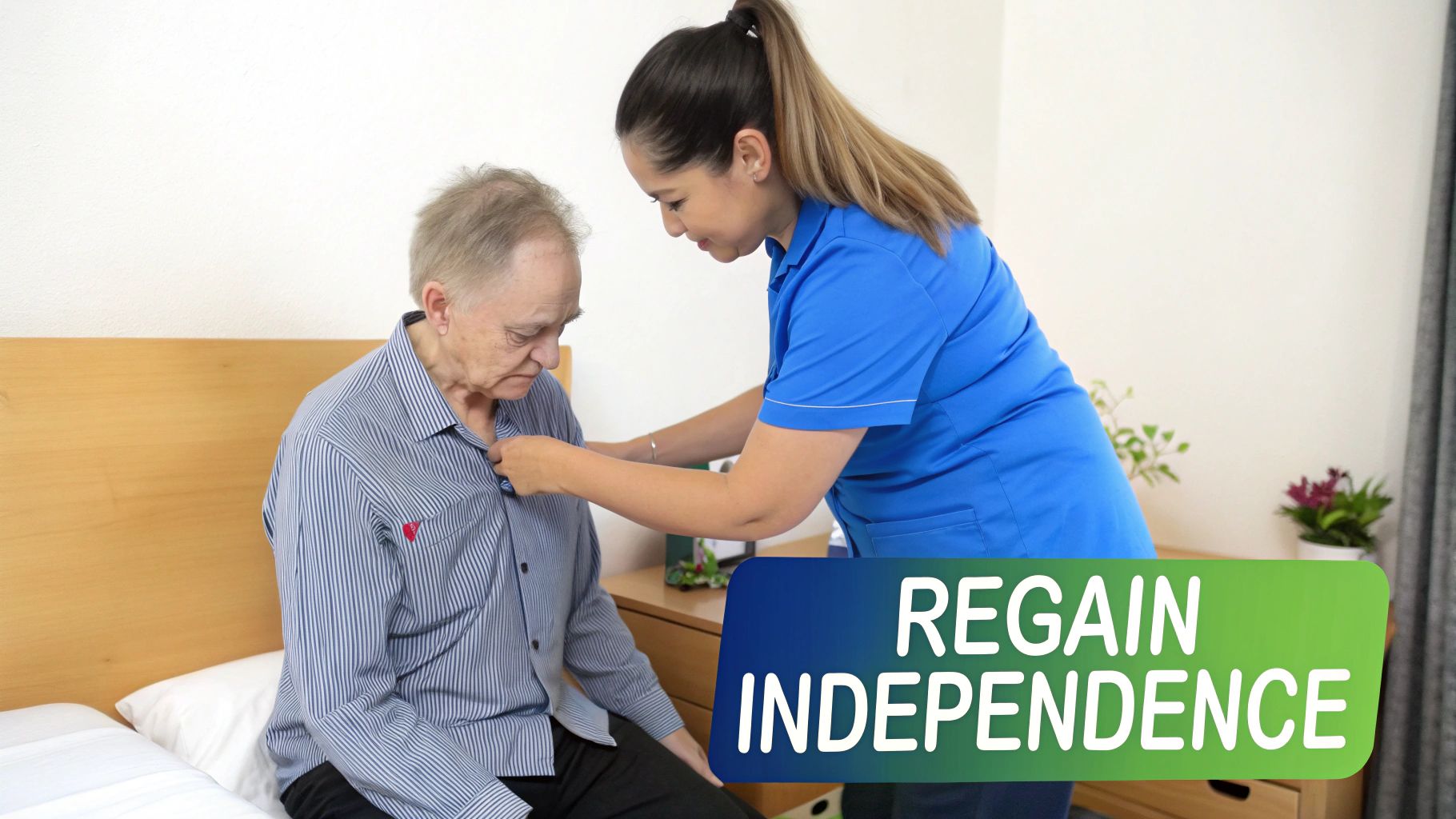
It’s best to think of an occupational therapist as a practical, hands-on coach for stroke recovery. Their entire focus is helping you get back to doing the things that matter most to you—the daily “occupations” that make up your life.
These aren’t just about a job. They’re the fundamental building blocks of our days, from getting dressed in the morning to enjoying a favorite hobby.
Redefining Daily Activities
An occupational therapist’s job is to figure out creative solutions to new challenges. They work closely with stroke survivors to break down complex activities into smaller, more manageable steps, tailoring strategies to overcome any new limitations.
Their work is incredibly personal and touches on nearly every part of a person's routine.
Some of the key areas they focus on include:
- Self-Care Routines: Relearning how to safely bathe, get dressed, groom, and eat on your own.
- Home Management: Finding new ways to cook, clean, and manage the household that work with new abilities.
- Community Re-engagement: Building back the skills and confidence to go grocery shopping, manage finances, or even return to work.
- Leisure and Hobbies: Discovering how to adapt and continue enjoying the pastimes you love, which is vital for emotional well-being.
This is so much more than just physical exercises; it's about practical problem-solving. An OT might introduce adaptive tools, like a one-handed cutting board or a simple button hook, or teach entirely new techniques for getting a task done.
An occupational therapist's real purpose is to help a stroke survivor answer the question, "How can I live my life to the fullest, despite these changes?" It’s all about restoring function, rebuilding confidence, and reclaiming who you are.
Ultimately, occupational therapy is a collaborative and empowering process. By focusing on practical, achievable goals, it helps turn a feeling of helplessness into a clear plan for moving forward. This support doesn't just teach you how to do things again—it restores the belief that you can. That shift in mindset is often the most powerful step toward a full and independent life after a stroke.
The Core Goals of Post-Stroke Occupational Therapy
After a stroke, getting back to "normal" feels like the ultimate goal, but what does that really mean? For an occupational therapist (OT), it means focusing on the unique, personal activities that give a person their sense of identity and independence.
There’s no one-size-fits-all plan here. An OT works with a stroke survivor to figure out what matters most to them. From there, they build a roadmap to reclaim those meaningful parts of life, one step at a time.
This journey is typically broken down into two major focus areas, helping everyone stay on track toward rebuilding a full, functional life.
Rebuilding Self-Care with Activities of Daily Living
The first stop on the road to recovery is mastering Activities of Daily Living, or ADLs. These are the fundamental self-care tasks we all do every day without a second thought—until a stroke makes them feel monumental.
Think of ADLs as the building blocks of independence. An OT patiently and creatively works with survivors to get these skills back.
Common ADL goals include:
- Dressing and Grooming: Relearning how to button a shirt, tie shoes, or brush teeth, often with new one-handed techniques or adaptive tools.
- Bathing and Toileting: Finding safe ways to get in and out of the shower, use the toilet, and manage personal hygiene with privacy and dignity.
- Eating and Swallowing: Working on the coordination to use utensils, bring food to the mouth, and swallow safely without risk of choking.
- Functional Mobility: Mastering the ability to move safely from a bed to a chair or from sitting to standing—a vital skill for preventing falls at home.
Regaining control over these basic routines is a huge confidence booster. It’s the foundation for everything else, reducing reliance on others and restoring a sense of self-sufficiency.
Expanding Independence with Instrumental Activities
Once the basics of self-care are getting stronger, the focus shifts to a more complex set of skills: Instrumental Activities of Daily Living (IADLs). If ADLs are about caring for your body, IADLs are about managing your life.
These tasks require more planning, organization, and problem-solving. They’re what allow someone to truly live independently in their home and community. For a closer look, you can read our guide on what are instrumental activities of daily living.
"A person's most meaningful 'occupations' are often found within IADLs. It's not just about surviving; it's about thriving. Helping someone cook their favorite meal again or manage their own finances is where true quality of life is restored."
Examples of common IADL goals after a stroke include:
- Meal Preparation: Planning a simple meal, safely using kitchen appliances, and following a recipe.
- Home Management: Tackling light housekeeping, doing a load of laundry, or keeping the home tidy.
- Financial Management: Getting back to paying bills, using a debit card, or managing a bank account.
- Communication Management: Using a smartphone or computer to send an email or make a call.
- Community Mobility: Figuring out how to use public transportation, arrange a ride, or navigate a trip to the grocery store.
To give you a clearer picture, here’s how these focus areas break down in practice.
Key Focus Areas in Occupational Therapy After Stroke
This table shows the main goals of OT and the specific skills targeted in each area.
| Focus Area | Description | Example Activities |
|---|---|---|
| Activities of Daily Living (ADLs) | Essential self-care tasks for personal independence. These are the foundational skills needed to care for oneself. | Bathing, dressing, grooming, eating, toileting, moving safely between a bed and chair. |
| Instrumental Activities of Daily Living (IADLs) | More complex tasks needed to live independently within the home and community, requiring higher cognitive function. | Cooking, cleaning, managing finances, using a phone, grocery shopping, managing medications. |
| Cognitive Skills | Rebuilding mental processes like memory, problem-solving, and attention that are crucial for safety and independence. | Using memory aids, sequencing tasks (like following a recipe), money management exercises. |
| Motor Skills & Sensation | Restoring movement, strength, coordination, and the ability to feel touch or temperature in affected limbs. | Fine motor exercises (buttoning), gross motor tasks (reaching for an item), sensory re-education. |
| Vision & Perception | Addressing visual field loss, double vision, or problems with spatial awareness that can impact safety and daily tasks. | Visual scanning exercises, adapting the environment (e.g., using colored tape on stairs), spatial reasoning puzzles. |
By targeting each of these areas, occupational therapy creates a holistic plan that addresses the full impact of a stroke, not just the physical symptoms.
This work is absolutely vital. With over 13 million new strokes occurring worldwide in 2016 alone, countless survivors and their families depend on this kind of rehabilitation. Occupational therapy provides the proven strategies needed to overcome the physical, cognitive, and emotional hurdles on the path back to independence.
Common OT Interventions and Therapeutic Activities
An occupational therapy session is anything but a one-size-fits-all checklist. Think of an OT’s "toolkit" as a vast collection of creative strategies, each one hand-picked to tackle the specific challenges a stroke survivor is facing. These activities aren't just about rebuilding strength; they’re designed to retrain the brain and body to work together on the tasks that matter most.
At the heart of it all is neuroplasticity—the brain's incredible ability to rewire itself after an injury. Every therapeutic activity, from picking up a fork to following a recipe, stimulates this process. It's all about forging new neural pathways to take over for the ones that were damaged.
This infographic breaks down how OT interventions are always aimed at getting back to independence in Activities of Daily Living (ADLs) and Instrumental Activities of Daily Living (IADLs).
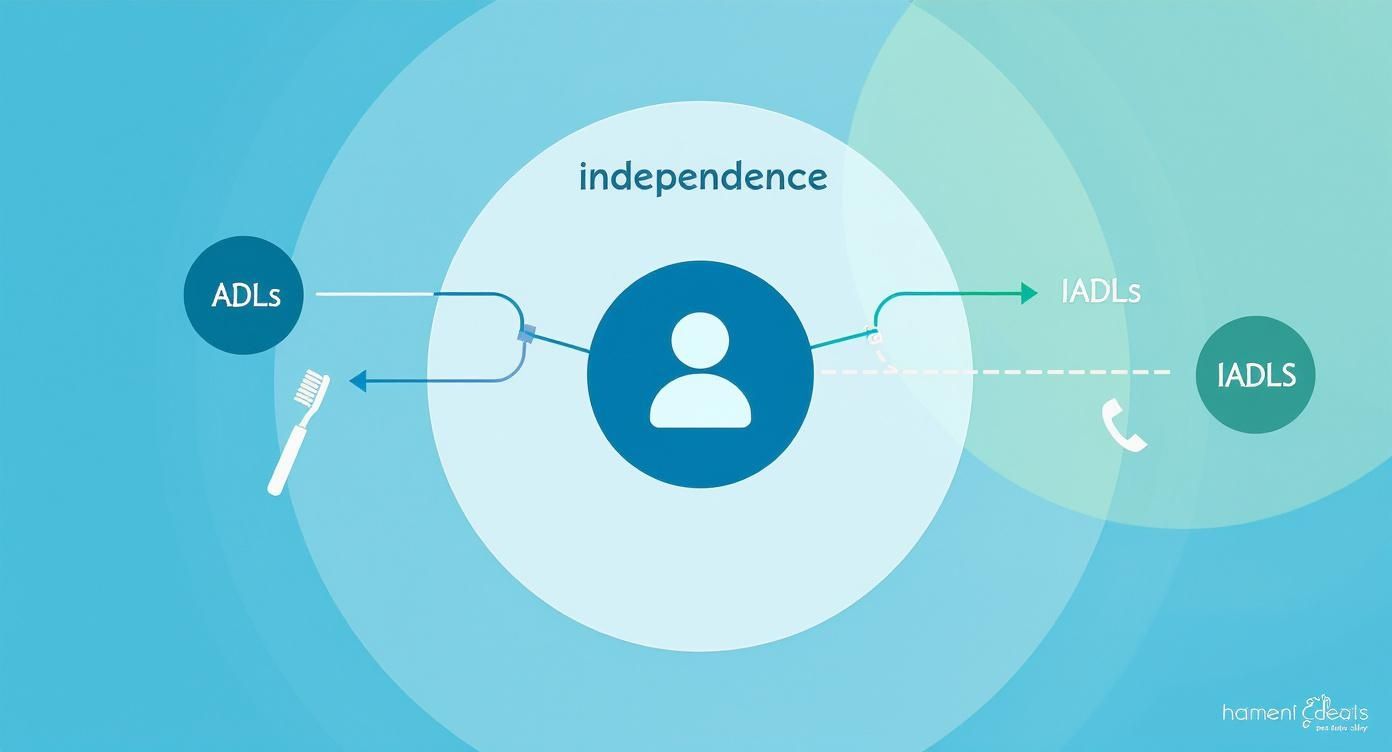
As you can see, every single activity, whether it's practicing with a toothbrush or learning to use a phone again, is a deliberate step toward self-sufficiency and a better quality of life.
Rebuilding Motor Skills and Coordination
After a stroke, it's common to deal with weakness (hemiparesis) or even paralysis (hemiplegia) on one side of the body. OT interventions dive right in, focusing on improving both gross motor skills (big movements like reaching for a cup) and fine motor skills (small, precise movements like buttoning a shirt).
Therapists make these improvements functional through task-oriented training. This might involve:
- Repetitive Task Practice: This is all about repetition. Think lifting a cup to your mouth or opening and closing jars over and over again. This repetition is what strengthens those new neural pathways.
- Weight-Bearing Exercises: Gently putting weight on the affected arm or leg helps improve muscle tone and, just as importantly, sends crucial sensory feedback to the brain.
- Balance and Mobility Training: Activities that challenge balance, like reaching for things while standing, are absolutely vital for moving around safely. OTs often use standardized assessments related to sit to stand test norms to track progress and guide their therapy plans.
Specialized Therapeutic Techniques
For those with more significant impairments, OTs often pull out some specialized techniques to kickstart recovery. Two of the most powerful, evidence-based approaches are Constraint-Induced Movement Therapy and Mirror Therapy.
Constraint-Induced Movement Therapy (CIMT)
This is a pretty intensive technique. It involves restraining the unaffected arm or hand, often with a special mitt, for several hours a day. This forces the person to use their weaker, stroke-affected arm for all sorts of tasks. It's tough, but CIMT has been shown to drive major brain reorganization and produce incredible results.
Mirror Therapy
This one is fascinating. The person places their affected hand behind a mirror and their healthy hand in front of it. As they move their healthy hand, they watch its reflection, which creates a powerful visual illusion that their affected hand is moving perfectly. This visual feedback can actually "trick" the brain into firing up the motor pathways on the weaker side, helping to improve movement.
Enhancing Cognitive and Perceptual Abilities
A stroke isn't just a physical event; it can also throw a wrench into cognitive functions like memory, attention, and problem-solving. In fact, research shows about half of all TIA patients report subtle cognitive issues that can stick around for months.
An occupational therapist’s job is to bridge the gap between cognitive struggles and real-world function. They don't just hand out puzzles; they teach practical strategies to work around challenges and succeed in daily life.
Cognitive rehab is always woven into functional tasks. For instance:
- Memory and Attention: A therapist might guide a patient through a multi-step recipe. This requires remembering ingredients, following steps in order, and staying focused on the task at hand.
- Problem-Solving: Working on a simulated budget or figuring out a bus route helps rebuild the executive function skills needed to manage life independently.
- Visual-Perceptual Skills: Sometimes a stroke causes visual neglect, where a person is simply unaware of one side of their space. OTs use scanning exercises and environmental cues (like a bright strip of tape) to retrain the brain to pay attention to everything.
Training in Daily Living with Adaptive Strategies
At the end of the day, all the progress made in the clinic has to translate to independence at home. A huge part of occupational therapy for stroke patients is simply practicing daily activities, often with new techniques or adaptive equipment. You can complement this work by reviewing our recommended stroke recovery exercises at home.
This hands-on training might look like:
- Learning how to get dressed using only one hand.
- Using special utensils with built-up handles to make them easier to grip.
- Installing a shower chair and grab bars for safe bathing.
- Using a pill organizer to manage medications without mistakes.
By blending motor, cognitive, and adaptive strategies, occupational therapy creates a complete, personalized roadmap to help stroke survivors reclaim their ability to do the things that make life meaningful.
Why Early and Consistent Therapy Is So Important
When someone has a stroke, their brain immediately gets to work on repairs. In the days and weeks that follow, the brain enters a heightened state of healing, driven by a powerful process called neuroplasticity.
Think of your brain like a vast city grid, with well-traveled roads for every single thing you do—from tying your shoes to making a cup of coffee. A stroke is like an earthquake that collapses some of these main roads. Neuroplasticity is the brain's incredible ability to build new detours and side streets, allowing traffic to bypass the damage and find a new way to its destination.
This road-building process is most active in the first few months after a stroke. Starting occupational therapy for stroke patients as soon as possible is the best way to capitalize on this natural healing window. Each therapy session acts like a team of skilled engineers, guiding the brain to build the most efficient and sturdy new pathways.
Capitalizing on the Brain's Healing Window
Jumping into therapy early means a therapist can start rebuilding skills while the brain is primed for change. If you wait too long, the brain's natural repair crew starts to pack up, and bad habits—like relying only on the unaffected side—can become deeply ingrained and much harder to undo.
But getting an early start is only half the battle. Consistency is the other crucial piece. A therapy session here and there is like watering a plant once a month; you can’t expect much growth. Regular, frequent sessions provide the repeated practice the brain needs to make new motor and cognitive skills stick.
The brain learns by doing something over and over. Consistent occupational therapy provides the structured repetition needed to turn a clumsy new movement into an automatic, natural skill. It reinforces those new neural pathways until they become the brain's new go-to.
This consistent practice also helps prevent something called "learned non-use." This is a common problem where a stroke survivor gives up on using their affected arm or leg because it’s just too hard, causing the limb to get even weaker over time.
The Impact of Therapy Frequency on Long-Term Outcomes
The "dose" of therapy—how often it happens and for how long—makes a huge difference in recovery. It’s not about endless hours, but about a steady, purposeful frequency.
Recent research drives this point home. A nationwide study showed that stroke survivors who had more frequent rehab therapy within the first six months had much better long-term results. For those with severe disabilities, getting more frequent therapy was linked to a 25% reduction in mortality rates. This reveals a powerful connection between consistent effort and lasting health. You can learn more about these important stroke rehabilitation findings.
What happens in those first few months truly sets the foundation for the years ahead. The benefits of starting early and staying consistent are clear:
- Maximizing Functional Independence: Building a strong base early on makes it easier to regain independence in daily life down the road.
- Preventing Complications: Staying active with a therapist helps prevent secondary problems like stiff muscles, joint pain, and even blood clots.
- Boosting Confidence and Motivation: Seeing progress—no matter how small—is a huge motivator. It fuels the recovery journey and supports mental well-being.
Ultimately, early and consistent occupational therapy is an investment in a better future. It delivers the right support when the brain needs it most, empowering stroke survivors to reclaim their lives.
Adapting Your Home for Safety and Independence
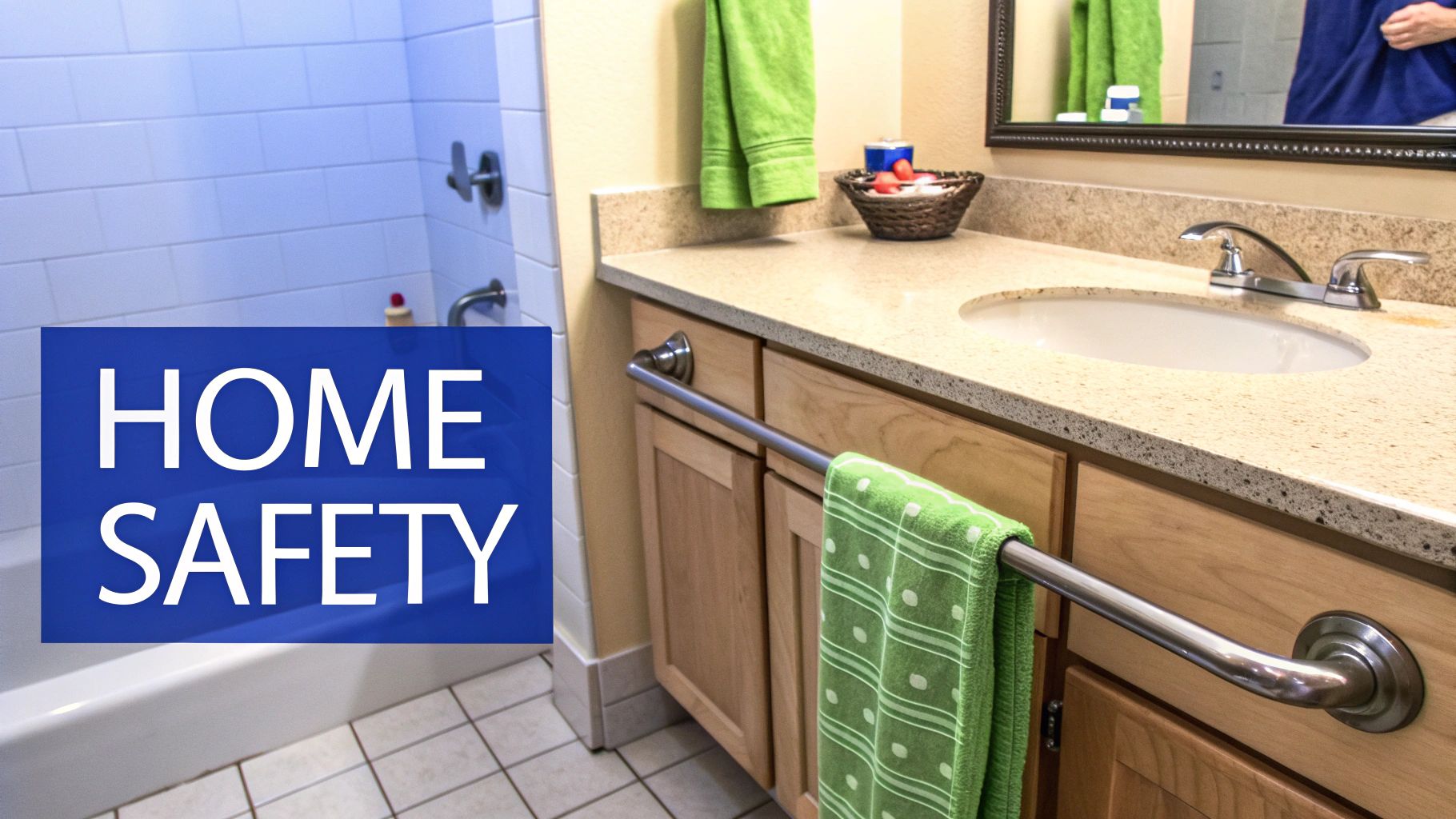
Real, lasting recovery from a stroke happens when the skills learned in therapy sessions start to work in the real world. A huge part of an OT’s job is to look at a person’s home and figure out how to transform it from a place of potential hazards into a supportive, empowering environment.
This process always starts with a careful look at the living space. An OT will walk through every room, spotting barriers and suggesting practical changes that make daily routines safer and less frustrating. It’s all about creating a setting where a stroke survivor can confidently put their new skills to use without worrying about falls.
The idea isn’t to make a home feel like a hospital. It's about making smart, often simple, tweaks that foster self-reliance and give everyone in the family more peace of mind.
Room-by-Room Modifications for a Safer Home
An occupational therapist’s advice is always personalized, but some modifications are almost universally helpful in key areas of the home. These changes can make an enormous difference in preventing accidents and rebuilding confidence.
The Bathroom
This room is usually the top priority. With its wet surfaces and tight corners, it can be a high-risk area for falls.
- Install Grab Bars: These are non-negotiable. Placing them inside the shower and next to the toilet provides crucial, stable support.
- Use a Shower Chair or Tub Bench: This allows someone to sit while bathing, which saves energy and drastically cuts down the risk of a slip.
- Add a Raised Toilet Seat: This simple device makes getting on and off the toilet much easier, which can be a real struggle after a stroke.
- Place Non-Slip Mats: You'll want one inside the tub or shower and another on the floor just outside it.
The Kitchen
Being able to prepare a simple meal is a major step toward independence. An OT can offer great ideas for making the kitchen manageable again.
- Rearrange for Easy Access: Move frequently used dishes, pots, and pantry items to lower shelves or countertops. This simple change eliminates the need for risky reaching or bending.
- Introduce Adaptive Equipment: There are some fantastic tools out there. Things like one-handed cutting boards, rocker knives, and automatic jar openers can make food prep possible even with limited hand function.
- Ensure Good Lighting: Bright, clear light over countertops and the stove is essential for preventing accidents and making tasks easier to see.
For a more comprehensive look at home safety, it’s always a good idea to perform a detailed evaluation. You can learn more about what that entails by reading up on a senior home safety assessment to pinpoint potential risks.
The Role of Assistive Technology and Durable Medical Equipment
Beyond physical changes to the home, occupational therapy for stroke patients often involves recommending specific tools to bridge the gap between a person’s current abilities and their daily goals. This is where assistive technology (AT) and durable medical equipment (DME) come into play.
Think of these items as personalized support systems that make everyday tasks less of a battle. An OT is an expert at matching the right tool to the right person for the right task.
An OT doesn’t just hand you a piece of equipment; they teach you how to integrate it into your life. The best tool is one that feels like a natural extension of your abilities, not a constant reminder of your limitations.
A few common recommendations might include:
- A long-handled shoe horn or a sock aid to make getting dressed easier.
- Specialized utensils with built-up, weighted, or angled handles to help with eating.
- A bed rail that provides a secure handhold for getting in and out of bed.
- A rolling walker or cane for extra stability when moving around the house.
When you're thinking about long-term functionality, considering universal design principles can help ensure the space remains accessible for years to come. This forward-thinking approach creates an environment that supports independence for the long haul. Ultimately, these home adaptations are a powerful part of the recovery process, creating a safe foundation for a stroke survivor to confidently rebuild their life.
Supporting Mental Wellbeing Through Recovery
Let's be honest: recovering from a stroke isn't just a physical battle. It’s an emotional marathon. The mental side of things—the frustration, the anxiety, the sadness—can be just as tough as learning to use your body again. This is where occupational therapy for stroke patients really shines, because it weaves mental and emotional support into everything we do.
An OT is more than a therapist; they're a guide. They help you navigate these overwhelming feelings not by just talking, but by doing. We know that having a sense of purpose is one of the best ways to push back against despair. Getting you back into activities that matter to you is how we help you rebuild your sense of self and find joy again.
Building Confidence Through Meaningful Goals
A huge part of an OT’s strategy is breaking things down into small, realistic, and achievable goals. We shift the focus away from what's been lost and onto what can be regained, one step at a time. This might be something as simple as making your own cup of coffee in the morning or spending ten minutes in the garden.
Each small win builds on the last. It’s proof that progress is happening, and it’s a powerful way to fight back against feelings of helplessness. These successes slowly but surely restore the confidence that the stroke tried to take away.
True independence is a state of mind just as much as a physical capability. Occupational therapy helps rebuild emotional resilience by focusing on what a person can do, empowering them to see a future beyond their current limitations.
This approach is so important for long-term emotional health. It helps you develop real-world coping strategies for your new normal, turning frustration into proactive problem-solving. An OT might introduce simple mindfulness techniques or help you build a daily routine that carves out time for hobbies you love—things that are absolutely vital for your mental wellbeing.
The Importance of Connection and Access
Getting back to your social life and feeling connected to others is another key piece of the puzzle. An OT can help you find safe and comfortable ways to return to hobbies, volunteer work, or just spending time with family. It's all about fighting the isolation that so often creeps in after a stroke. This compassionate, whole-person view recognizes that emotional health is the foundation that all other recovery is built on.
Unfortunately, getting this kind of essential care is still a challenge for many around the world. About 35% of stroke survivors in lower-income countries don't receive any physical or occupational therapy in the crucial first three months. This has a huge impact on both their physical and mental recovery. To see more on this, you can discover insights about post-stroke rehabilitation outcomes. Making sure every survivor has support for their mind and their body is what a truly successful recovery is all about.
Answering Your Questions About Post-Stroke OT
When a loved one is recovering from a stroke, it's natural for families to have a lot of questions. Navigating the world of rehabilitation can feel overwhelming, but getting clear answers helps everyone feel more prepared for the journey ahead.
Here are some of the most common questions we hear about occupational therapy.
What’s the Difference Between OT and PT?
This is a big one. While occupational therapy (OT) and physical therapy (PT) often work hand-in-hand, they have very different jobs in stroke recovery. A simple way to think about it is that PT helps you get there, and OT helps you function once you’ve arrived.
Physical therapy is all about building back large-scale mobility, strength, and balance. A physical therapist will focus on foundational movements like standing up from a chair, improving your walking, and rebuilding strength in your limbs.
Occupational therapy, on the other hand, zooms in on helping you regain independence in the "occupations" of daily life. This isn't just about your job—it's everything that occupies your time, from self-care tasks like dressing and bathing to more complex activities like cooking a meal, managing finances, or getting back to a favorite hobby.
How Long Will Occupational Therapy Last?
There’s no one-size-fits-all answer here. The duration of OT really depends on the individual, and the timeline is tailored to their specific needs and progress.
Several factors come into play:
- The severity of the stroke and how it impacts physical and cognitive skills.
- The individual's rate of progress and how they respond to therapy.
- The specific goals set by the patient and their therapist.
- The person’s overall health and any other conditions they may have.
Some people might reach their goals in a few months. For others with more significant challenges, therapy might be beneficial for a year or even longer. Your OT will constantly assess progress and adjust the plan to make sure it’s always working for you.
How Can Family Members Best Offer Support?
Family support is one of the most powerful tools in stroke recovery. The key is to be an active, informed, and encouraging partner without accidentally taking over tasks your loved one needs to practice for themselves.
Attend therapy sessions when you can. This is the best way to understand the exercises and strategies the therapist is teaching. At home, you can gently encourage your loved one to practice these skills, creating a safe and supportive environment.
Helping with home modifications recommended by the OT and providing consistent emotional support also makes a huge difference. Remember to celebrate every small victory—they all add up to big progress.
At NJ Caregiving, we understand the road to recovery after a stroke. Our professional in-home care services are designed to help your loved one continue their progress safely and comfortably at home. To learn how our caregivers can support your family, visit us at njcaregiving.com.