
When a loved one is diagnosed with a serious illness, the entire family’s world can feel like it’s been turned upside down. It’s a time filled with questions, stress, and a deep desire to provide the best possible comfort. This is where palliative home care comes in, offering a specialized layer of support focused squarely on improving quality of life, right in the comfort and familiarity of home.
It’s about relieving symptoms and stress, ensuring your loved one can live with dignity at any stage of their illness, often while they are still receiving curative treatments.
What Palliative Home Care Really Means for Your Family

Let's get past the clinical jargon. Think of palliative home care less as a single service and more as a complete support system that wraps around your entire family. It's a philosophy of care that puts comfort first, managing symptoms so your loved one can live more fully, despite their diagnosis.
This approach is all about adding another layer of support, not taking anything away. A lot of people confuse it with hospice, but they’re very different. Hospice is for the final months of life, whereas palliative care can begin the moment a serious diagnosis is made and continue for years, working hand-in-hand with the doctors pursuing a cure.
A Team-Based Approach to Comfort
The real strength of palliative home care is its multidisciplinary team. We're not talking about a single nurse visiting every so often. This is a coordinated effort, bringing together various professionals to tackle the full spectrum of challenges that a serious illness throws your way.
Your family’s dedicated team may include:
- Skilled Nurses who are experts in managing pain and other difficult symptoms.
- Home Health Aides to help with personal care, getting around the house, and other daily tasks.
- Social Workers who can help you navigate the healthcare maze and connect you with community resources.
- Therapists (like physical or occupational therapists) to help maintain as much function and independence as possible.
This team approach ensures that care isn’t fragmented. Instead, everyone works together to ease the physical, emotional, and practical burdens on both the patient and their family caregivers here in the Princeton area. Dealing with the emotional toll is also critical, and families can find support through dedicated grief counselling services.
To give you a clearer picture, here’s a quick summary of what you can expect.
Palliative Home Care at a Glance
| Care Aspect | What It Means for Your Family |
|---|---|
| Symptom Management | Your loved one gets expert help with pain, nausea, fatigue, and other symptoms to improve their daily comfort. |
| Emotional & Spiritual Support | The care team addresses anxiety, depression, and spiritual concerns for both the patient and the family. |
| Care Coordination | Everyone is on the same page—doctors, specialists, and caregivers—simplifying communication for you. |
| Family Caregiver Support | You get guidance, resources, and respite to help you manage the demands of caregiving without burning out. |
Essentially, the goal is to provide a holistic support system that addresses every aspect of well-being, not just the medical chart.
More Than Just Medical Care
Palliative care understands that a person is more than their illness. It's a proactive choice to prioritize quality of life—today, tomorrow, and for as long as possible. And this focus has become more important than ever.
The global demand for palliative care skyrocketed by 74% over the past three decades, reaching a staggering 73.5 million people in need by 2021. This surge is driven by aging populations and the rise of chronic illnesses.
This growing need highlights just how valuable it is to receive compassionate, specialized support where people feel most secure: right at home.
Clarifying Palliative Care vs. Hospice Care
One of the biggest hurdles families face is understanding the difference between palliative care and hospice. This confusion is completely normal, but it can cause unnecessary stress and prevent a loved one from getting the support they truly need, right when they need it.
Let's clear this up. While both focus on comfort, they serve very different purposes and operate on different timelines.
Think of it this way: palliative care is like adding a specialized support crew to your existing medical team. Your loved one continues their journey with their doctors, pursuing treatments to fight their illness. The palliative team works alongside them, managing pain, stress, and symptoms to make the road smoother and improve their quality of life every single day.
Hospice, on the other hand, comes into play when the journey's destination changes. When curative treatments are no longer the goal, the focus shifts entirely to comfort and dignity. It's about ensuring the final chapter is as peaceful and meaningful as possible.
Key Differences in Timing and Goals
The most critical distinction is when each type of care can start. Palliative home care can begin the moment someone is diagnosed with a serious illness like cancer, heart failure, or COPD. It has nothing to do with prognosis—it can be provided for years, working hand-in-hand with aggressive treatments like chemotherapy or physical therapy.
The primary goal of palliative care is to improve the quality of life at any stage of illness. It's about living as well as possible, for as long as possible, by managing symptoms and providing support.
In contrast, hospice care is for individuals who have a life expectancy of six months or less, as certified by a physician, and have decided to stop seeking curative treatments. The entire focus moves from fighting the illness to ensuring a peaceful, comfortable end-of-life experience.
Can You Have Both at the Same Time?
This is a common question, and the answer is generally no, because they're designed for different phases of care. A person receiving palliative support may eventually transition to hospice if their illness progresses and their goals shift from treatment to pure comfort.
To make it even clearer, this side-by-side comparison should help.
Palliative Care vs. Hospice Care: A Clear Comparison
Sorting through care options during a stressful time is tough. This table breaks down the core differences to help your family make the most informed decision.
| Feature | Palliative Home Care | Hospice Care |
|---|---|---|
| Timing | Can begin at any stage of a serious illness, from diagnosis onward. | Typically begins when life expectancy is six months or less. |
| Treatment | Provided alongside curative treatments (chemotherapy, surgery, etc.). | Provided when curative treatments have stopped. |
| Goal | To relieve symptoms, reduce stress, and improve quality of life during treatment. | To provide comfort, dignity, and peace at the end of life. |
| Duration | Can be provided for years, depending on the patient's needs. | Focused on the final months of life. |
Understanding this key distinction between palliative care and hospice care is the first step toward getting the right help.
Choosing palliative care isn't about giving up. Far from it. It's about adding a powerful layer of support to make each day better. To dive deeper, you can also read our dedicated guide on what palliative care is versus hospice. Knowing the difference empowers you to advocate for the right care at the right time, without hesitation.
The Core Services That Improve Daily Life
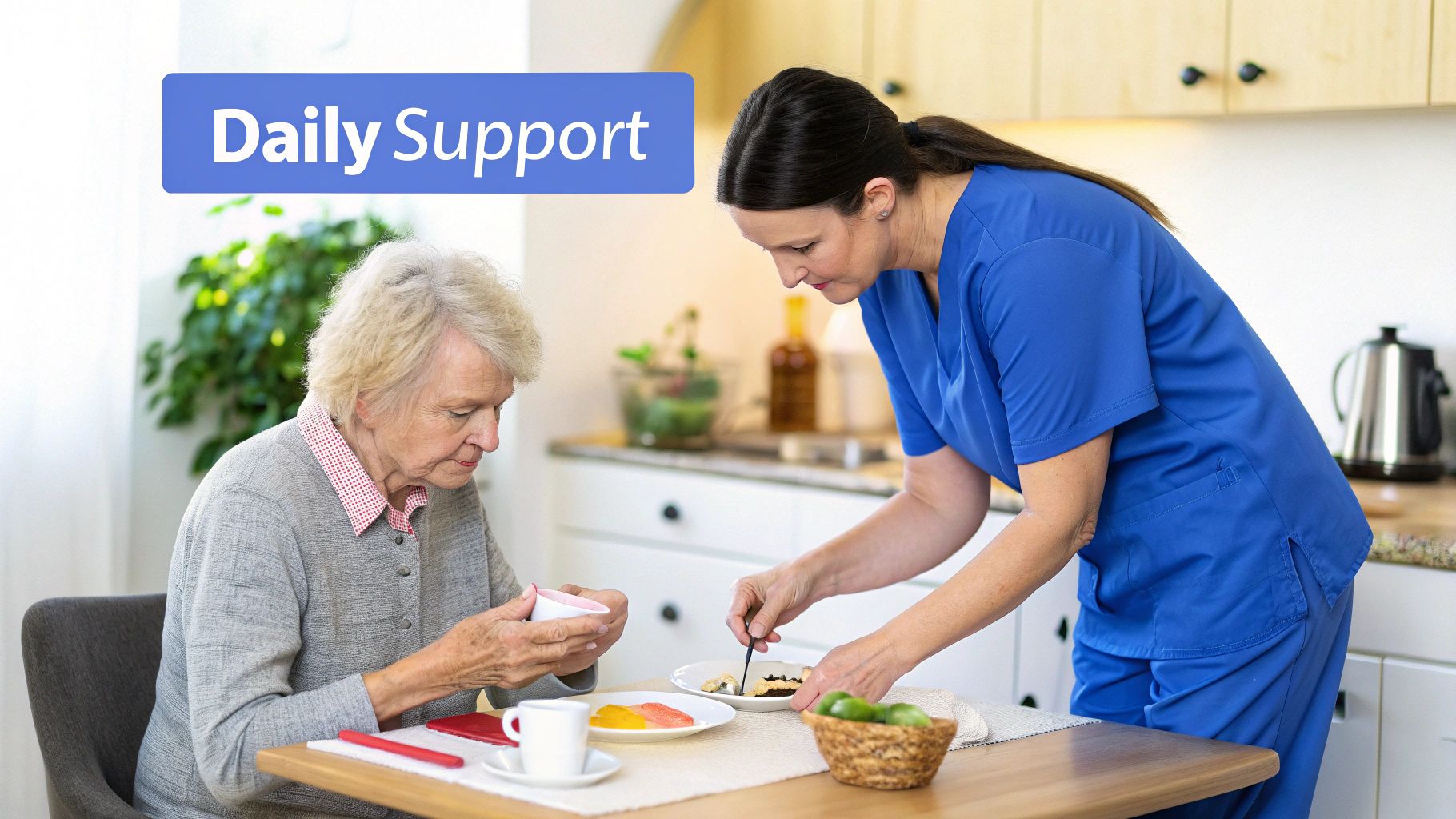
When you arrange for palliative home care, you're not just getting a single service. You're bringing in a complete support system designed to tackle the challenges of a serious illness from every possible angle. It's a proactive approach that delivers real, day-to-day improvements in comfort and well-being.
While every care plan is personalized, the services generally fit into four key areas. Each one is vital for easing the load and boosting your loved one’s quality of life right where they want to be—at home.
Expert Pain and Symptom Management
The heart of palliative care is providing relief. A serious illness often comes with a whole host of difficult symptoms, from chronic pain and shortness of breath to nausea and fatigue. These things can drain a person's energy, steal their joy, and make it hard just to get through the day.
The palliative home care team includes skilled nurses who are experts at managing these complex issues. They work hand-in-hand with your loved one’s regular doctors to find the right mix of medications, therapies, and other strategies to bring comfort.
Think of a Princeton resident with COPD who struggles with constant breathlessness and the anxiety that comes with it. The care team can introduce breathing techniques, manage medications, and offer emotional support, all of which helps them feel more in control and less distressed in their own living room.
Dignified Personal Care and Daily Living Support
When you're dealing with a serious illness, even simple daily tasks can feel overwhelming. This is where the compassionate help of a home health aide makes all the difference. They provide hands-on assistance while always putting dignity and independence first.
This support is shaped around specific needs but can include a wide range of tasks:
- Personal Hygiene: Gentle help with bathing, getting dressed, grooming, and using the bathroom.
- Mobility Support: Helping your loved one move safely around the house, get from a bed to a chair, or take short, supported walks.
- Meal Preparation: Making sure nutritious meals are ready to go, following any dietary needs and personal tastes.
- Light Housekeeping: Keeping the living space clean, tidy, and safe to prevent falls or other accidents.
This practical help not only keeps your loved one safe and comfortable but also frees up family members to focus on what matters most—spending quality time together.
Compassionate Emotional and Spiritual Support
A serious diagnosis doesn't just affect the body; it weighs heavily on the mind and spirit, too. Palliative care gets this, and it builds emotional and spiritual support right into the care plan.
"Palliative care is a way to help mitigate the discomfort that often comes with chronic illness. It's available to anyone in any stage of illness, and it is always beneficial."
Care teams often have social workers or counselors who can help patients and their families work through feelings of anxiety, depression, or fear. They create a safe space to talk, process what's happening, and find healthy coping strategies. For those who want it, they can also connect the family with spiritual advisors or chaplains to explore questions of meaning and find sources of comfort.
Essential Family and Caregiver Support
Palliative home care isn’t just for the patient—it’s for the whole family. Taking care of a loved one is a demanding job, and caregiver burnout is a very real risk. The team provides crucial support to help family members stay healthy and strong.
This often comes in the form of respite care, where a professional caregiver steps in to give you a much-needed break. A daughter caring for her father with Alzheimer's can use this time to run errands, go to her own appointments, or just rest, knowing her dad is in good hands.
This holistic approach is why home-based models are growing so fast to meet global demand. Palliative home care services bring relief where it's needed most, with specialized services worldwide projected to grow by 35.6% by 2025 to serve 10.4 million patients. This model is changing healthcare for the better. You can learn more about the findings and global impact of these services to see how they are improving quality of life for families everywhere.
Who Is the Right Candidate for This Type of Care?
One of the biggest myths out there is that palliative care is only for cancer patients or for someone in their final days. This is a huge misunderstanding, and unfortunately, it stops many families from getting an incredible source of comfort and support much, much earlier.
The truth is, palliative home care is for anyone living with the symptoms and stress of a serious illness, no matter their diagnosis or how their future looks. It’s not about giving up hope. Think of it as adding another layer of specialized care focused entirely on improving quality of life, right here and now.
This support can be a game-changer for months or even years. It helps people live more comfortably while they continue getting medical treatments for their condition. It’s a support system for the journey, not just the destination, helping manage the day-to-day burdens so your loved one can focus on what really matters to them.
Individuals Managing Chronic Conditions
Many of the folks who benefit most from palliative home care are navigating the daily realities of a long-term chronic illness. These conditions often come with a whole host of persistent symptoms—like pain, constant fatigue, or shortness of breath—that can really get in the way of daily life and independence.
Ideal candidates often include individuals diagnosed with:
- Heart conditions like congestive heart failure (CHF)
- Lung diseases such as chronic obstructive pulmonary disease (COPD)
- Neurological disorders like Parkinson’s disease, multiple sclerosis (MS), or ALS
- Kidney or liver disease
- Dementia and Alzheimer’s disease
- HIV/AIDS
For example, think about a senior in Hamilton whose severe arthritis makes simple tasks like getting dressed or making a meal incredibly painful. A palliative home care team can bring in expert pain management to ease that discomfort, along with practical help from a home health aide. This allows them to stay where they want to be: safely and comfortably in their own home.
Those Recovering from a Major Health Event
Coming home after a major surgery, a stroke, or another big medical event brings its own set of challenges. While the primary doctors are focused on the long-term recovery plan, a palliative care team can step in to manage the immediate, and often difficult, aftermath.
This means helping with post-op pain, managing the tricky side effects of new medications, and providing the physical and emotional support needed to get through a long and sometimes frustrating rehabilitation. The goal is simple: make the recovery period less stressful and more comfortable, which can absolutely lead to a better outcome overall.
Palliative care is available to anyone in any stage of a serious illness. It’s a way to help mitigate the discomfort that often comes with a chronic condition, and it is always beneficial.
This extra layer of care ensures that symptoms don't derail the healing process, letting the individual put all their energy into getting better.
Anyone Facing a Decline in Health and Independence
Perhaps the clearest sign that it’s time to think about palliative home care is when you notice a loved one’s overall health, function, and independence starting to slip because of their illness.
This might look like:
- Frequent trips to the emergency room or being readmitted to the hospital
- Symptoms that just won’t get under control, like persistent pain, nausea, or anxiety
- Increasing trouble with daily activities like bathing, dressing, or just moving around
- Significant weight loss or a loss of appetite
- Growing emotional distress or a sense of being overwhelmed—for both them and you
If you’re seeing these signs in a loved one here in Mercer County, it’s a strong signal that their needs have become too complex for their regular doctors to handle alone. Bringing in a palliative care team provides the specialized, holistic support needed to tackle these challenges head-on, improving comfort and bringing back a sense of control for the whole family.
Navigating Costs and Coverage in New Jersey
Let's be honest: one of the first questions that pops into anyone's head when considering care is, "How are we going to pay for this?" It’s a completely normal, and often stressful, part of the process. The financial side of palliative home care in New Jersey can feel like a maze, but breaking down your options can bring a huge sense of relief.
Our goal here is to clear up the confusion around costs and coverage. When you understand how different programs work, you can get the support your family needs without adding unnecessary financial strain. That way, you can focus on what really matters—your loved one’s comfort.
Medicare Coverage for Palliative Care
For most families, Medicare is the starting point. It’s crucial to know that while Medicare is a big help, it doesn't cover every aspect of palliative care. The coverage is split between its different parts, primarily Part A and Part B.
- Medicare Part A (Hospital Insurance): Think of this as your inpatient coverage. It helps pay for palliative services when someone is in a hospital or a skilled nursing facility.
- Medicare Part B (Medical Insurance): This is for outpatient services, which is where most palliative home care falls. It covers things like doctor's appointments, meetings with palliative specialists, and essential medical equipment for the home.
Here’s the catch: Medicare does not typically cover long-term custodial care. This means it won’t pay for a non-medical home health aide to help with daily activities like bathing, getting dressed, or making meals. You can learn more in our detailed guide on what Medicare pays for in palliative care. This common gap is exactly where other programs, like Medicaid, are designed to step in.
New Jersey Medicaid and MLTSS
In New Jersey, Medicaid is a lifeline for many families needing help with the costs of long-term care at home. The state’s main program for this is called Managed Long-Term Services and Supports (MLTSS).
MLTSS is specifically set up to help eligible seniors and people with disabilities get the care they need right in their own homes, helping them avoid moving to a nursing facility.
MLTSS often picks up where Medicare leaves off, covering the very services that are excluded, like personal care from a home health aide. It creates a much more complete safety net for someone who needs ongoing support to stay at home safely.
Figuring out if you’re eligible for Medicaid and MLTSS can feel like a heavy lift, since it’s based on specific income and asset limits. This is where partnering with a knowledgeable home care agency makes all the difference. An agency like NJ Caregiving can walk you through the requirements and the application process, making a confusing system feel much more straightforward.
Private Insurance and Other Options
Beyond government programs, there are a few other ways to fund palliative home care. Each has its own rules, and coverage can vary quite a bit.
-
Private Health Insurance: Like Medicare, most private insurance plans will cover the medical parts of palliative care—things like doctor consultations or skilled nursing visits. But coverage for long-term personal care is all over the map, so you’ll need to check your specific policy.
-
Long-Term Care Insurance: If your loved one has a long-term care insurance policy, this is often the most direct way to pay for in-home help. These policies are built to cover the costs of daily living support that traditional health insurance and Medicare don’t.
-
Private Pay: For families who don't qualify for other programs or who simply want more flexibility and control, paying out-of-pocket is always an option. This gives you the most freedom to choose the exact type and amount of care you want.
The demand for these services is only growing. The global palliative care market was valued at USD 152.85 billion in 2025 and is expected to more than double to USD 363.36 billion by 2034. This boom is driven by an aging population and the increase in chronic illnesses, showing just how essential home-based care models are becoming. Understanding your financial options is the first step toward getting this vital support for your family.
How to Arrange Palliative Home Care in Mercer County
When your family decides it's time to add an extra layer of support, figuring out the next steps can feel a bit overwhelming. The good news is that initiating palliative home care is a straightforward process designed to be supportive, not stressful.
Here’s a simple roadmap to guide you through arranging care in the Princeton and greater Mercer County area, making sure you feel confident and in control at every turn.
Step 1: Consult with Your Doctor
Your first stop should be a conversation with your loved one’s primary physician or specialist. A doctor can provide a formal recommendation or referral for palliative care, which is incredibly helpful for insurance purposes and making sure everyone is on the same page.
This conversation ensures the entire medical team is aligned. Your doctor can share crucial medical history and treatment goals, which helps the palliative care team seamlessly integrate their support without stepping on any toes.
Step 2: Reach Out for an Initial Conversation
With a doctor's recommendation in hand, the next move is to contact a reputable home care agency. Think of this initial call as a no-pressure opportunity to ask questions, share what’s on your mind, and just get a feel for the agency.
You can talk openly about your loved one’s condition, the challenges your family is facing, and what you’re hoping to gain from in-home support. A compassionate care coordinator will simply listen and explain how their services can make a real difference.
Step 3: The Comprehensive In-Home Assessment
After that first chat, the agency will schedule a comprehensive in-home assessment. This is a critical step. A dedicated care manager or registered nurse will visit your loved one’s home to get a deep, firsthand understanding of the situation.
This is far more than just a medical check-up. The assessor is there to look at the whole picture:
- Physical Needs: What are the pain levels? Are there mobility challenges? Where is help needed with daily tasks?
- Emotional Well-being: What are the sources of stress or anxiety for both your loved one and the family?
- Home Environment: Is the home set up safely? Are there any modifications that could make life easier?
- Family Goals: What does a "good day" look like for you? What are your biggest priorities?
This holistic assessment is the foundation for creating a care plan that actually works. It's also at this stage that you'll want to understand the different avenues for payment. This flow chart shows how various coverage options like Medicare, New Jersey Medicaid, and private insurance often work together.
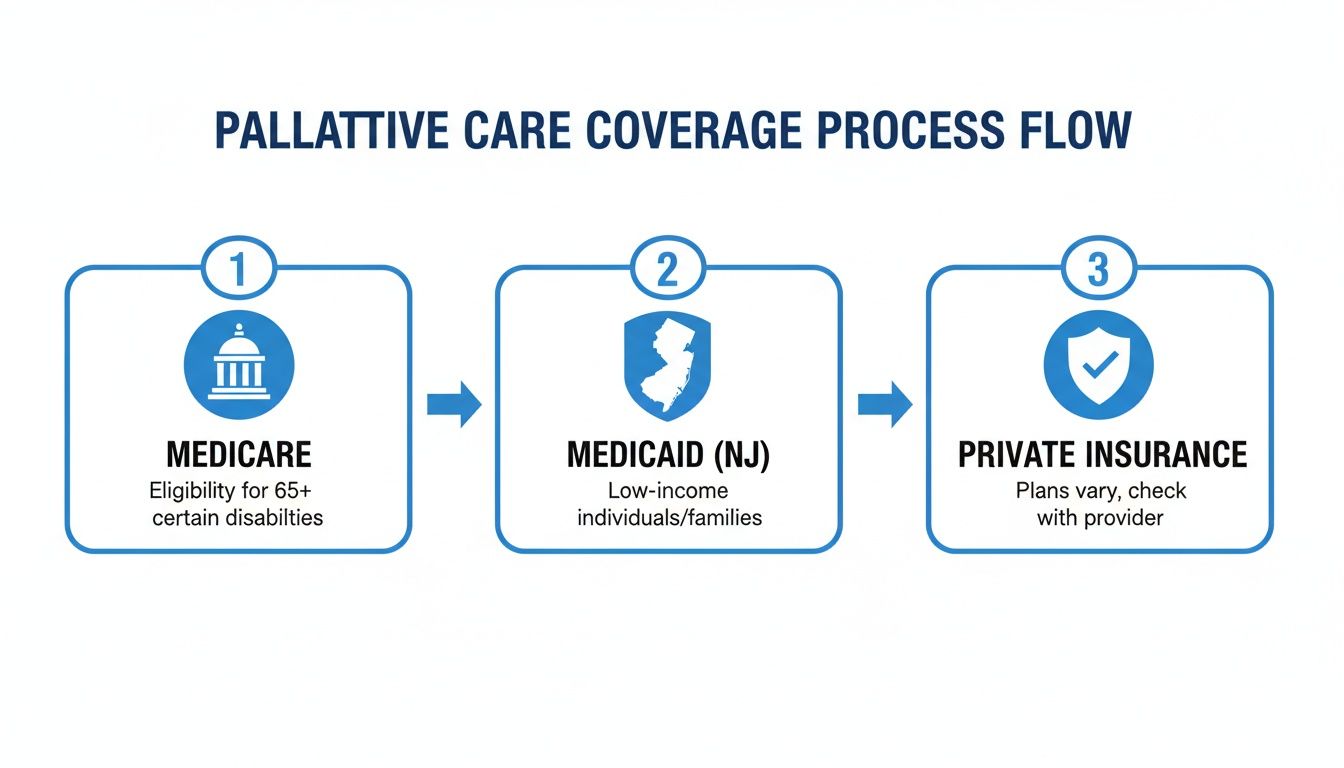
As the visual shows, while Medicare often covers the medical side of things, programs like Medicaid or private insurance can step in to fill the gaps for personal care.
Step 4: Create a Personalized Care Plan
Using all the insights from the assessment, the care manager will sit down with your family to develop a truly personalized care plan. This is a collaborative document—it outlines the specific services to be provided, the schedule of care, and the exact goals you want to achieve.
A great care plan is flexible. It should be a living document that can be adjusted as your loved one's needs change, ensuring the support they receive is always relevant and effective.
Step 5: Match with the Right Caregiver
Finally, the agency will thoughtfully match your loved one with a caregiver. This goes far beyond just skills and availability; it’s about finding the right personality fit. A successful caregiver relationship is built on trust, respect, and a genuine connection.
Once you’re ready to begin, a professional provider of home care in Princeton, NJ can guide you through each of these steps, making the entire process feel manageable and clear from the start.
Your Palliative Home Care Questions, Answered
When you start looking into care options, a lot of questions pop up. That’s completely normal. Getting straightforward answers is the best way to feel confident you're making the right choice for your family. Here are a few of the most common questions we hear from families right here in the Princeton area.
Can My Mother Keep Her Long-Time Cardiologist?
Yes, absolutely. This is one of the cornerstones of palliative care, and it’s a non-negotiable one. Palliative support is designed to be an extra layer of help, not a replacement for the doctors your family knows and trusts.
Think of the palliative team as expert collaborators. They work hand-in-hand with your mom's cardiologist, oncologist, or primary doctor to make sure everyone is on the same page. This teamwork often leads to even better care because the in-home team can share valuable, day-to-day insights with her specialists.
How Quickly Can We Get Help Started?
We know that when you need help, you usually need it now. The process for starting palliative home care is built to be fast and responsive.
In most cases, a good agency can have services up and running within 24 to 48 hours after the first in-home assessment. This quick start means your loved one gets relief from symptoms and your family gets much-needed support almost immediately, without any long, stressful waits.
The goal is to bring comfort and support into the home as soon as possible. A streamlined assessment and planning process allows care to begin swiftly, addressing immediate needs for symptom management and family assistance.
Getting help in place quickly is key to stabilizing a tough situation at home.
What If My Father's Health Improves?
That would be fantastic news, and it's a scenario palliative care is perfectly designed for. The biggest strength of a palliative plan is its flexibility. It’s not a one-way street; it’s a dynamic support system that adapts as your loved one's condition changes.
If your dad's health gets better, his care plan simply adjusts. Services can be scaled back, put on pause for a while, or stopped completely if they're no longer needed. The plan is always centered on what he needs today, ensuring the support is always relevant and helpful.
Is 24/7 Care an Option?
It certainly is. Every family’s situation is different, and care plans are built to match. Whether your loved one needs help for just a few hours a week or requires continuous, round-the-clock monitoring and support, the care can be completely customized.
This level of personalization ensures you get the exact amount of help needed to keep your loved one safe, comfortable, and well-cared for at home, giving everyone peace of mind.
Figuring all of this out can feel overwhelming, but you don’t have to do it by yourself. The team at NJ Caregiving is here to answer your questions and help you find the right support for your family in Mercer County. To learn more or schedule a no-obligation chat, get in touch with us at https://njcaregiving.com.
