

An online support group for caregivers is a virtual community where people caring for their loved ones can connect, share what they’re going through, and lift each other up. These groups are more than just forums; they’re a digital lifeline, offering around-the-clock access to a network of peers who truly understand the unique challenges of caregiving.
Why Online Support Is a Lifeline for Caregivers
Caregiving is often a quiet, isolating journey. It’s a role filled with immense love and dedication, but it’s also marked by stress, exhaustion, and the feeling that no one quite gets your daily reality.
Let’s think about Maria, who cares for her father with dementia. Her days are a blur of doctor's appointments, medication schedules, and navigating his confusion, leaving her with almost no time for herself.
Her friends mean well, but they can’t fully grasp the emotional weight of watching a parent slowly fade. Their advice, like "you really should take a break," feels disconnected from her life. How could she, when her father depends on her for everything? This feeling of being profoundly alone is a common thread among the more than 43 million unpaid caregivers in the U.S.
Discovering a Digital Tribe
One sleepless night, scrolling through her phone, Maria stumbled upon an online support group for people caring for family members with dementia. She was hesitant at first, but she joined and just started reading the posts. Right away, she saw people sharing the exact same frustrations she felt—the guilt, the fleeting moments of joy, the bureaucratic headaches.
For the first time in months, she didn't feel alone. She had found a tribe.
This story gets to the heart of what an online support group for caregivers is all about: creating a safe, accessible space for connection and validation. These groups aren’t clinical tools. They’re compassionate communities built on shared, lived experiences. They offer:
- Emotional Solace: A judgment-free zone to vent, grieve, and celebrate the small wins with people who just get it.
- Practical Solutions: Real-world advice from peers on everything from managing difficult behaviors to navigating insurance paperwork.
- Renewed Strength: The simple act of being understood can replenish your emotional reserves, helping you find the strength to keep going.
"An online support group transforms the solitary path of caregiving into a shared journey. It's where you find your people—the ones who don't need an explanation because they are living a similar story."
This guide is about helping you find that lifeline.
How Online Caregiver Support Groups Actually Work

Think of an online caregiver support group like a virtual coffee shop that’s always open, 24/7. Inside, you don’t need to explain yourself. Everyone there just gets it—they share a deep, unspoken understanding of your daily life. This is the heart of these digital communities, designed to fit into the often unpredictable schedule of a caregiver.
These groups aren't a one-size-fits-all solution. They live on all sorts of platforms, and each one offers a different way to connect. That flexibility means you can find support in a way that feels comfortable and accessible to you, right when you need it most.
Common Formats You Will Find
The way a group is set up usually gives you a good idea of what to expect. Most of these online communities fall into a few main categories:
- Active Forums and Message Boards: These are like ongoing conversations that never end. Members can post questions, share their stories, or jump in with advice anytime. It's a fantastic way to get multiple perspectives on a tough situation.
- Scheduled Video Calls: These are your virtual meetups. A group might get together on Zoom once a week to talk about a specific topic with a facilitator or simply to check in and see a friendly face. It adds a much more personal touch.
- Private Social Media Groups: Platforms like Facebook host thousands of private groups just for caregivers. They're often very specific (like "Caregivers for Spouses with Alzheimer's") and offer a constant feed of shared articles, personal updates, and quick tips.
The real power of an online support group for caregivers is its ability to provide a judgment-free zone for the raw, unfiltered discussions that formal support systems often miss.
This constant availability is what makes these groups so valuable. They fill a critical void by creating a space for honest conversations about the hard moments, turning shared vulnerability into a source of incredible strength.
The Foundation of Shared Experience
At their core, these groups work because they're built on a foundation of mutual understanding. The main goal isn’t to give out professional medical advice. It’s about providing real social and emotional backing from people who are walking the same path.
Research backs this up. In one study looking at a peer support forum, over 65% of all posts were about giving social support. Members offered each other everything from practical tips on managing medications to much-needed emotional encouragement. You can read more about how these online forums facilitate caregiver support and find other insights in the full study.
This give-and-take is what builds a powerful sense of community. The ability to ask a question at 3 a.m. and get a comforting, helpful reply from someone who’s been there is priceless. That round-the-clock accessibility, combined with a bit of anonymity, encourages the kind of honest sharing that helps chip away at feelings of isolation and burnout.
The Real Benefits of Finding Your Virtual Tribe
It's one thing to join an online caregiver support group, but it's another thing entirely to feel its impact. The benefits run deep and really boil down to three key things: emotional validation, practical wisdom, and real social connection. These groups quickly become a vital part of a caregiver's toolkit.
Imagine, for a moment, having a place where you don't have to explain the exhaustion in your voice. A place where you don't feel guilty for wanting just one hour to yourself. That's the power of finding your people.
When you connect with others who are in the trenches of caregiving right alongside you, that overwhelming sense of isolation starts to lift. Just being heard by someone who gets it can be incredibly validating, chipping away at the loneliness that creeps into this role.
Finding Your Emotional Footing
The emotional weight of caregiving is immense, and trying to carry it all on your own just isn't sustainable. An online community gives you a safe space to talk about your frustrations, your grief, and even the small, unexpected moments of joy, all without worrying about being judged.
"In a caregiver group, you realize your feelings are not only valid but shared. That recognition is the first step toward healing the hidden wounds of caregiving."
This shared space makes you feel normal again. For example, talking about caregiver burnout isn’t just venting—it's a group of people acknowledging that your struggle is real and deserves to be seen. It's a huge part of protecting your own mental health. To learn more about this, you can explore our detailed guide on caregiver mental health.
Gaining Practical, Real-World Advice
Beyond the emotional comfort, these groups are an absolute goldmine of practical, been-there-done-that advice. This kind of hands-on information can be a game-changer when you're stuck on a problem that feels impossible to solve.
Members often share firsthand knowledge that you just won't find in official guides or pamphlets. This might include:
- Navigating Bureaucracy: Real tips for getting a straight answer from an insurance company or filling out tricky government assistance forms.
- Managing Specific Conditions: Smart strategies for handling difficult dementia-related behaviors or juggling a complex medication schedule.
- Finding Local Resources: Honest recommendations for a reliable home health aide or a good adult day care center in your specific town.
Tapping into this collective wisdom saves you a ton of time, energy, and stress. You don't have to figure everything out from scratch; you can learn from the experiences of hundreds of others who've already walked that path.
Building Friendships That Last
Finally, these groups often spark genuine friendships that go far beyond the computer screen. The bonds you form when you're being open and vulnerable with one another can be incredibly strong.
These relationships offer a unique kind of social support. Your friends in the group become your biggest cheerleaders, celebrating the small wins and offering a shoulder to lean on during the truly tough days. What might start as a simple online chat can grow into a deep friendship with people who have become your most trusted allies on this journey.
How to Choose the Right Online Support Group
Not all digital communities offer the same level of safety and support, which makes your choice an important one. Finding the right online support group for caregivers is a lot like finding the perfect key for a lock; the right fit opens up a world of comfort, understanding, and much-needed resources.
A great group can feel like a sanctuary, a safe place to land after a hard day. On the flip side, a poorly managed or negative group can just add another layer of stress to your life—something no caregiver needs.
The goal is to find a space that feels protective, genuinely helpful, and understands your unique situation. This means looking past the group's name and really paying attention to how it operates and the atmosphere it fosters.
This decision-tree infographic can help you quickly figure out if a group aligns with what you truly need.
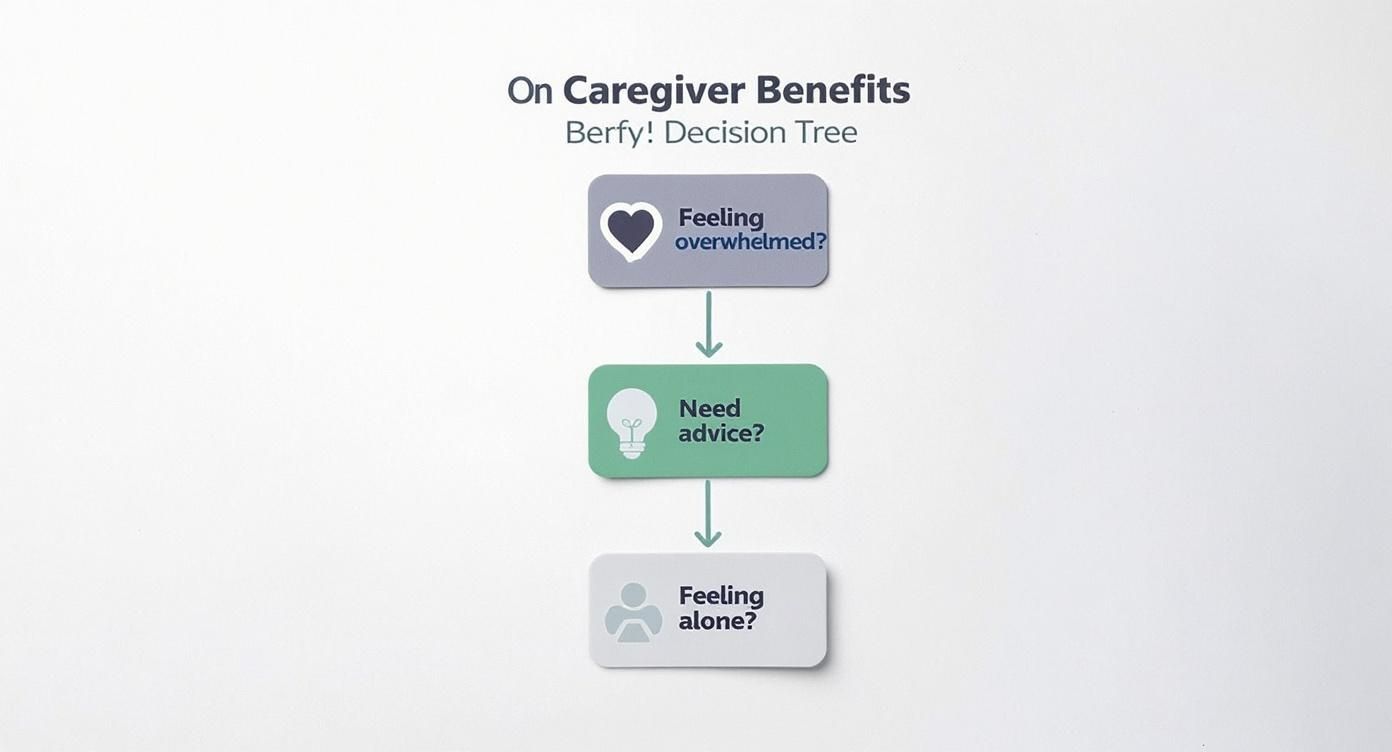
As the visual guide shows, most caregivers are driven by feelings of overwhelm, loneliness, or the simple need for practical advice. A good community is built to address those exact feelings head-on.
Essential Features of a Supportive Online Group
To make a good choice, it helps to know what you’re looking for. A few key features are strong signals of a well-run and truly supportive environment. Think of this table as a checklist to help you evaluate any group you're considering.
| Feature | Why It Matters | What to Look For |
|---|---|---|
| Active & Empathetic Moderation | Moderators keep the space safe. They steer conversations away from negativity and ensure everyone feels heard and respected. | Moderators who are present, engaged, and enforce community rules fairly. You can often see their names listed as admins. |
| Clear Community Guidelines | Rules about respect, confidentiality, and what’s not allowed (like unverified medical claims) show the group is serious about creating a constructive environment. | A pinned post or "About" section that clearly lays out the rules of engagement. |
| Strong Privacy Settings | A "private" or "closed" group ensures that only approved members can see what you post. This is vital for feeling safe enough to share personal experiences. | Look for the group's privacy status on its main page. It should clearly say "Private" or "Closed." |
| A Specific, Relevant Focus | While general groups are helpful, sometimes you need advice tailored to your exact situation, like caring for someone with a specific condition. | Groups dedicated to a condition (e.g., Alzheimer's, Parkinson's) or a relationship (e.g., caring for a spouse or parent). |
These elements are the building blocks of a truly beneficial community. A group that has them in place is intentionally structured to be a safe harbor for its members.
Red Flags to Watch Out For
Just as important as knowing what to look for is knowing what to avoid. A few warning signs can tell you a group might be more harmful than helpful.
Be cautious if you see:
- Unmoderated negativity or constant arguments between members.
- Aggressive promotion of products or unverified “cures.”
- A general feeling of judgment or competition among members.
- A lack of clear rules or moderators.
If a group makes you feel anxious, judged, or even more isolated, trust your instincts. It's not the right place for you. Your emotional well-being is the top priority, and the right online support group for caregivers will always enhance it, not take away from it.
Where to Find Your Caregiver Community Online
Knowing you need support is the first step, but figuring out where to find it can feel like a whole other challenge. The good news is there are countless communities out there. The bad news? The sheer number of options can be overwhelming.
A great way to start looking for an online support group for caregivers is to begin with trusted, well-known organizations. Think of them as lighthouses in the digital sea, guiding you toward safe harbors where the information is credible and the communities are well-moderated. We can sort these resources into a few key categories to make your search much more focused.
And the need for these spaces is absolutely massive. In the U.S. alone, roughly 43.5 million caregivers have provided unpaid care over the past year. This is an incredibly diverse group of people facing all sorts of unique challenges. For example, some communities like LGBTQ+ caregivers report higher levels of social isolation, which makes finding targeted online support even more vital.
Start with Disease-Specific Organizations
If your loved one is managing a specific illness like Alzheimer's, Parkinson's, or cancer, your best bet is to start with the national non-profits dedicated to that condition. These organizations are the experts in their fields, and they almost always host their own private, secure forums or online support groups.
- Alzheimer's Association: Their platform, ALZConnected®, is a specialized online community with dedicated forums for caregivers, people living with the disease, and anyone else affected.
- American Cancer Society: They host the Cancer Survivors Network®, a space where caregivers can connect with others who truly understand the unique journey of a cancer diagnosis.
- Michael J. Fox Foundation for Parkinson's Research: This foundation helps connect individuals and their families to both local and online resources, including valuable peer-to-peer support networks.
Explore General Caregiver Networks
For broader support that isn't tied to a single illness, general caregiver networks are invaluable. These organizations focus on the universal parts of the caregiving experience—everything from managing your own stress to navigating the dizzying healthcare system. The Family Caregiver Alliance, for instance, offers a whole variety of online groups covering different topics and caregiving situations.
You can also explore our comprehensive list of support groups for caregivers to find even more options.
These established platforms provide a structured and safe environment. They are typically moderated by professionals or trained volunteers, which ensures discussions remain supportive and constructive. That layer of oversight is so important for protecting you from misinformation and negativity.
Curated Social Media and App-Based Groups
Beyond the big organizational websites, you can find thriving communities on social media platforms like Facebook. Just search for private or "closed" groups using specific keywords like "dementia caregivers" or "caring for elderly parents." While these can be wonderful, always check for active moderation and clear community rules before you jump in.
And don't forget about blogs. Many organizations and individuals maintain active blogs filled with personal stories and practical advice. For a deeper dive into specific topics, resources like DontForgetDad's blog offer valuable perspectives that can make you feel so much less alone on this journey. These kinds of resources are a great complement to the interactive nature of a support group, offering more insightful, reflective content.
Making Your First Connection in a New Group

Taking that first step to join the conversation in a new group can feel like the hardest part. It's completely normal to feel a little anxious, wondering if you'll overshare or just not knowing what to say.
The key is to remember that every single person in that community was new at some point. The best approach is to ease in gently, building your confidence one small action at a time until you feel comfortable.
Start by Listening
Before you write a single word, spend some time just reading. Think of it as getting a feel for the room. Pay attention to the tone of the conversations, see what kinds of topics people are discussing, and notice how members offer support to one another.
This simple act of "listening" is more powerful than you might think. It helps you get a sense of the community’s culture and, more importantly, shows you that your own struggles are shared by so many others. It's an incredibly validating first step.
Your presence is a form of participation. Simply reading and absorbing the shared experiences of others can begin to chip away at the feeling of isolation long before you make your first post.
This initial phase is especially helpful for caregivers shouldering greater responsibilities. In fact, research shows that those caring for individuals with complex neurological or psychological conditions are more likely to engage with and benefit from an online support group for caregivers. You can discover more about caregiver engagement patterns in this study.
Crafting Your First Post
When you feel ready to introduce yourself, there’s no need to share your entire life story. A brief, simple introduction is the perfect way to break the ice and let people know you're there.
You could try a simple approach like this:
- Start with a friendly hello: "Hi everyone, I'm new here."
- Give a little context: "I'm caring for my mom, who has Parkinson's."
- Explain what brought you here: "I'm hoping to connect with others who understand the daily challenges."
This is a low-pressure way to start, and it often invites a warm, welcoming response. From there, you can begin offering gentle support to others. A simple, heartfelt "I'm so sorry you're going through that" or "Thank you for sharing, I've felt that way too" can make a world of difference to another member—and to you.
Common Questions About Online Caregiver Support
Even with all the clear benefits, it's totally normal to have a few questions before jumping into an online community. Thinking through some of the practical stuff can help you feel more confident as you start looking for the right online support group for caregivers.
Let's tackle some of the most common questions caregivers ask before joining.
Are My Conversations Private and Secure?
This is a big one, and a completely valid concern. You need to feel safe sharing what's on your mind. Reputable groups, especially the ones run by established health organizations, take privacy very seriously. They typically use secure platforms and have strict rules about confidentiality.
Always aim for groups that are listed as "private" or "closed." That just means only approved members can see what's being posted. Before you share anything deeply personal, it’s always a good idea to skim the group's community guidelines. And if your group uses live video calls, it's smart to master video conferencing security with proven strategies to keep everyone’s information safe.
How Much Time Do I Need to Commit?
Here's the beautiful thing about online support: there's absolutely no minimum time commitment. The whole point is to reduce your stress, not add another item to your to-do list.
Some caregivers like to pop in for a few minutes every day to see what's new. Others might only post a question once a week when a specific challenge comes up. You can even get a ton of value just by reading what others are sharing, which gives you that sense of connection without needing to actively participate. If you're struggling to find those few minutes for yourself, you might want to look into respite care for caregivers.
Remember, the goal is support, not another obligation. Use the group as much or as little as feels right for you and your schedule. The resource is there whenever you need it.
What if I Care for Someone with a Rare Condition?
Caring for someone with a rare condition can feel incredibly isolating, but the internet is a powerful tool for connecting with the few other people who truly get it. A great first step is to search for national or even international organizations dedicated to that specific condition. They almost always host their own forums or private groups.
You can also use platforms like Facebook and search for the specific name of the condition. You might be surprised to find small, dedicated communities that are full of incredibly knowledgeable people who can offer highly relevant peer support.
At NJ Caregiving, we understand that finding the right support is a crucial part of the caregiving journey. For personalized, professional in-home assistance, visit us at https://njcaregiving.com to see how we can help.
