
When you hear "in-home elder care," it's easy to picture a loss of independence. But the reality is the exact opposite. Think of it as the very support system that preserves independence, allowing seniors to keep thriving in the comfort and familiarity of their own home. It’s about bringing compassionate, skilled help through the front door, not moving to a facility.
What Exactly Is In-Home Elder Care?
At its heart, in-home elder care is about empowering older adults to age in place safely and with dignity. It's not a rigid service but a flexible framework of support that adapts to an individual's unique situation, evolving as their needs change over time.
Imagine a gardener tending to a beloved plant. If the plant starts to struggle, the gardener doesn't just uproot it and stick it in a greenhouse. Instead, they give it exactly what it needs to flourish right where it is—the right amount of water, sunlight, and maybe a little support to keep it strong. In-home care works on the same principle.
A Spectrum of Personalized Support
This isn't a one-size-fits-all solution. In-home care is a spectrum, ranging from simple companionship a few hours a week to complex, round-the-clock medical management. This ensures every person gets the precise level of help they actually need.
The support can include a mix of services:
- Companionship and Social Interaction: Just having someone to talk to, play a game of cards with, or share a meal can make a world of difference in combating loneliness.
- Assistance with Daily Living: This is help with the everyday tasks that may have become a challenge, like bathing, getting dressed, preparing meals, or light housekeeping.
- Skilled Medical Care: A licensed nurse can provide professional services like medication management, wound care, or monitoring a chronic condition right at home.
This adaptability is what makes in-home care so powerful. It honors a senior’s desire for autonomy while giving their family invaluable peace of mind. A key aspect of this compassionate care involves ensuring daily comfort and managing minor discomforts. Sometimes, simple solutions like microwavable hand warmers designed for seniors can significantly enhance an elder's quality of life.
More Than Just Tasks
Beyond the practical help, these services provide a crucial emotional and social foundation. A consistent, friendly caregiver becomes a trusted confidant and a vital link to the outside world, especially for seniors who can't get out as much as they used to.
The goal is to create a nurturing environment where older adults feel safe, respected, and socially connected—all without leaving the home they love. It transforms daily challenges into manageable routines, fostering a higher quality of life.
Ultimately, choosing in-home elder care is a proactive step toward maintaining a cherished lifestyle. It’s a true partnership between caregivers, seniors, and their families, all working together to support health, happiness, and independence where it matters most: at home.
Understanding The Different Types Of In Home Care
Trying to figure out the world of in home elder care services can feel like learning a whole new language. Between all the different terms and levels of support, it’s easy to get overwhelmed. But getting a handle on these options is the first step to finding the perfect fit for your loved one, making sure they get the right support to live well at home.
These services aren’t a one-size-fits-all package. Think of it more like a menu of options you can mix and match to build a completely personalized care plan—one designed around an individual's specific health needs, lifestyle, and what makes them comfortable.
This personalized approach is growing fast. The U.S. home care market is expected to hit $155.9 billion in 2025, with around 12 million Americans getting care at home each year. Since a whopping 86% of them are 65 or older, having clear, distinct service types is more important now than ever.
The image below breaks down why in-home care is such a powerful choice for families.
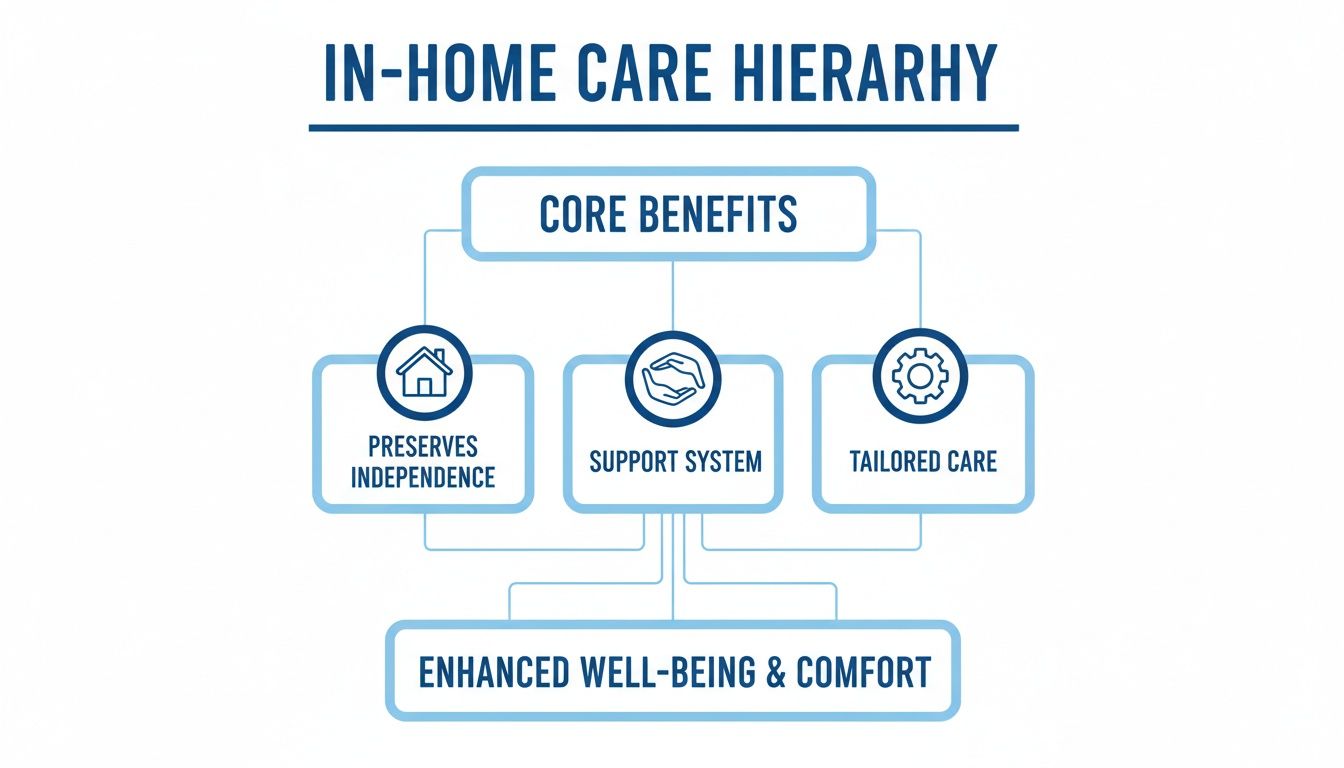
As you can see, it all comes down to preserving independence, offering a reliable support system, and creating a plan that’s just right for them. When those pieces come together, a senior’s comfort and well-being get a real boost.
To help you see the differences more clearly, here's a quick comparison of the main types of in-home elder care.
Comparing In Home Elder Care Service Types
| Service Type | Key Responsibilities | Best For Seniors Who Need… |
|---|---|---|
| Personal Care & Companionship | Help with daily activities (bathing, dressing, meals), light housekeeping, errands, and social interaction. | A helping hand with their daily routine, more social connection, or basic safety supervision. |
| Skilled Nursing Care | Medical tasks like wound care, medication administration (injections), IV therapy, and vital signs monitoring. | To manage a chronic illness, recover from surgery or hospitalization, or require clinical oversight at home. |
| Dementia & Alzheimer's Care | Specialized support including creating routines, managing behaviors, engaging in memory activities, and ensuring a safe environment. | A structured, calming, and consistent environment to manage cognitive decline and memory loss safely. |
This table gives you a snapshot, but let's dive into what each of these really means for your family.
Personal Care And Companionship
This is often where families start. It’s the foundational layer of in-home support, focusing on the Activities of Daily Living (ADLs) and making sure your loved one isn’t lonely. It's the helping hand that makes mornings a little easier and the friendly face that brightens up the afternoon.
Personal care is all about hands-on assistance with tasks that have become a challenge due to age or mobility. This can include help with bathing, dressing, grooming, or using the restroom—all provided with the utmost respect for their privacy and dignity.
Companionship care, on the other hand, tackles the emotional and social needs that are just as critical as physical health. It’s about sharing stories over a cup of tea, playing a board game, or having someone to go with on errands. If you want to dig deeper, we have a detailed guide on what non-medical home care includes.
Together, these services are a powerful way to fight isolation while ensuring a safe and comfortable home. They’re a great fit for seniors who are still mostly independent but could use a little help with their daily routine or would just love some more social connection.
Skilled Nursing Care
When medical needs get more complex, skilled nursing care is the next step up. This type of care is provided by a licensed Registered Nurse (RN) or Licensed Practical Nurse (LPN) and covers medical tasks that a non-licensed caregiver legally can't perform.
Think of it as bringing the clinic right into the living room. It's designed for someone recovering from surgery, managing a serious chronic illness, or needing specialized medical attention to stay out of the hospital.
Some key skilled nursing services include:
- Medication Management: Administering medications, including injections, and making sure the dosages and schedules are followed perfectly.
- Wound Care: Professionally dressing and caring for surgical wounds or pressure sores to prevent infection and promote healing.
- Medical Monitoring: Tracking vital signs, blood sugar levels, and other key health metrics for conditions like diabetes or congestive heart failure.
- Catheter and Ostomy Care: Providing the technical, hands-on assistance required for these specific medical devices.
This level of care is absolutely crucial for a safe transition from the hospital back to home and for managing ongoing health conditions with confidence.
Specialized Alzheimer’s And Dementia Care
Caring for someone with Alzheimer’s or another form of dementia takes a special kind of person with a unique set of skills, patience, and empathy. Specialized dementia care is all about creating an environment that is safe, stable, and calming for someone experiencing cognitive decline and memory loss.
Caregivers trained in this area know how to manage dementia-related behaviors, gently redirect confusion, and engage clients in activities that can stimulate their minds and help them hold on to their sense of self. The entire focus is on consistency, routine, and creating small moments of joy and connection.
This specialized support not only improves the client's quality of life but also gives their families much-needed respite and priceless peace of mind.
Choosing Between Home Care and Assisted Living
When it's time to decide on the best care for an aging loved one, the conversation often boils down to two main choices: in-home elder care services or an assisted living community. While they both exist to provide support, they couldn't be more different in their approach. Getting a handle on these differences is the first step toward making a choice that truly fits your family.
People mix these terms up all the time, but the core difference is pretty simple. Think of it this way: in-home care is like hiring a personal chef who comes to your own kitchen, uses your pans, and cooks a meal just for you. Assisted living is more like moving into a great hotel with a restaurant downstairs that serves wonderful meals in a communal dining room.
One brings the support directly to you; the other asks you to move to where the support is. This single distinction ripples out to affect everything from daily independence and cost to social life.
The Focus on Independence and Environment
The biggest difference, without a doubt, is where the care is provided. In-home care happens right in a senior's own home—a place filled with a lifetime of memories, comforts, and routines. The entire model is built to preserve the maximum level of independence and familiarity.
Assisted living, on the other hand, involves moving into a residential community. While these facilities are designed to feel homey, it’s still a major change of scenery. This move offers a built-in social life and takes away the hassle of home maintenance, but it also means getting used to a new apartment and a new community.
The central question is whether the goal is to bring support into an existing lifestyle or to move into a lifestyle where support is an integrated feature.
For so many seniors, staying home is what matters most. In fact, nearly 90% of seniors say they want to age in place, which makes in-home elder care services the go-to option for those who cherish their home and neighborhood connections.
Comparing Social and Medical Support Structures
The social vibe of each option is also worlds apart. Assisted living communities offer a ready-made social scene with planned activities, shared meals, and group outings. For a senior who's feeling a bit isolated and enjoys being around others, this can be a fantastic solution.
In-home care creates a much more personal, one-on-one connection. A caregiver becomes a trusted companion, focusing entirely on your loved one’s interests and needs. This is often a better fit for seniors who prefer quieter company or want to keep up with their existing local friendships.
Medically, both can provide great support, but they deliver it differently.
- Assisted Living: Usually has nurses on-site or on-call to help with medications and handle basic medical needs.
- In-Home Care: Can bring a dedicated caregiver or a skilled nurse right to the door to manage everything from daily pills to complex care after a hospital stay.
A Look at Cost and Financial Flexibility
When it comes to the budget, the two models work very differently. Assisted living typically has a set monthly fee that covers housing, meals, utilities, and a basic level of care. If more help is needed, the price goes up.
In-home care gives you much more control. You pay only for the exact hours and services you need, whether that's just a few hours of companionship a week or round-the-clock skilled nursing. This lets you create a plan that can easily scale up or down as needs change, giving you direct control over your spending.
Ultimately, the choice comes down to weighing the appeal of a built-in community against the powerful comfort of being at home.
How to Navigate the Cost of In Home Elder Care
Figuring out the financial side of in-home care is a huge piece of the puzzle when planning for a loved one's future. The numbers can feel overwhelming at first, but once you get a handle on the different ways to pay, you can build a strategy that actually works for your family without causing constant stress.
Think of it like putting together a financial toolkit. You might pull from a few different sources—personal savings, an insurance policy, or a government program. The trick is knowing which tools you have and how they can work together to create a solid support system.
Exploring Private Pay Options
The most straightforward route is private pay. This simply means using personal funds like savings, pensions, retirement accounts, or other family assets to cover the cost of care.
This approach gives you the most freedom and flexibility. You can choose any provider you like and customize a care plan on your own terms, without jumping through hoops to meet an insurer's or agency's eligibility rules. It's a popular choice for families who want total control over the care their loved one receives. For a deeper dive into making this work, our guide on how to pay for home care is a great resource.
Understanding Long-Term Care Insurance
If your loved one planned ahead, they might have a long-term care (LTC) insurance policy. These plans are designed specifically to cover services like in-home care when someone can no longer manage a certain number of Activities of Daily Living (ADLs), like bathing or dressing, on their own.
Got a policy? It's time to read the fine print. Here’s what you need to look for:
- Elimination Period: This is basically a waiting period before the benefits kick in. It could be anywhere from 30 to 90 days, so you’ll need to cover costs out-of-pocket during this time.
- Daily or Monthly Benefit: The policy will have a cap on how much it pays out per day or month. Know this number so you can budget accordingly.
- Covered Services: Make sure the policy explicitly covers the in home elder care services you actually need, whether it's hands-on personal care or skilled nursing.
Activating the policy usually requires a doctor's sign-off, so it’s smart to get that process started as soon as you know care is on the horizon.
Leveraging Government and Veterans Programs
Don't overlook government programs. They can offer significant financial help, but each comes with its own set of rules. Getting to know them can unlock some incredibly valuable support.
Medicare
This is a big one, but it's often misunderstood. Original Medicare is not designed to pay for long-term, non-medical personal care. However, it’s a key player for short-term, skilled home health care, especially right after a hospital stay or to manage a specific medical issue.
For skilled services, Medicare is a major source of funding. It dominates payments for home health, covering 42% of visits and typically funding up to 28 hours per week, which can be extended to 35 hours in certain situations. This highlights a powerful financial support system for eligible seniors needing clinical care at home. Discover more insights about these home health statistics on boosthomehealth.com.
Medicaid
For seniors with limited income and assets, Medicaid can be a lifesaver. Through programs often called Home and Community-Based Services (HCBS) waivers, Medicaid can cover personal care, companionship, and other non-medical services. The whole point is to help people get the care they need at home and avoid moving into a nursing facility. Eligibility is based on both medical need and financial status, and the rules vary from state to state.
Veterans Affairs (VA) Benefits
Veterans and their surviving spouses may qualify for special benefits to help pay for in-home care. The most well-known program is the Aid and Attendance benefit. It's an extra monthly payment added to a VA pension for those who need help with daily activities. You can use these funds to hire a caregiver, making it a fantastic resource for those who served our country.
Finding a High-Quality In Home Care Provider
Handing over the care of a loved one is one of the biggest decisions a family can make. Choosing an in-home care provider isn't something to be rushed; it’s about finding a true partner in care. This means you need to look past the sales pitch and dig into the agency's actual practices, standards, and values.
Think of it this way: you're hiring for the most important job in the world—because you are. You need an agency that isn’t just capable, but one that is deeply committed to providing compassionate, reliable support. This search is all about making sure your loved one gets safe, dignified, and professional care right in the comfort of their own home.
Vetting Agencies With Key Questions
Before you sign on with any provider of in home elder care services, it’s crucial to ask the kind of detailed questions that show you how an agency really works. A quality provider will welcome the questions and give you straight answers. Your mission is to understand their process for hiring, training, and managing their team.
Here are the critical questions every family should have on their list:
- How do you screen your caregivers? You're looking for a multi-step process that includes thorough background checks (both state and national), calls to references, and face-to-face interviews.
- What kind of training do your caregivers receive? A good agency invests in its people. That means an initial orientation followed by ongoing education, especially for specialized needs like dementia or Alzheimer's care.
- Are your caregivers certified and insured? At a minimum, caregivers should be certified (as a Certified Home Health Aide, or CHHA, is standard), and the agency must carry liability insurance and be bonded. This protects you.
These questions are the bedrock of your search, helping you quickly tell the truly professional providers from the rest.
With client satisfaction for home care services hitting an impressive 91%, the industry's growth is no surprise. It’s a direct response to the wishes of nearly 90% of seniors who want to age in place. This just highlights how important it is to find a provider who can live up to those high expectations. You can find more details in these home care industry statistics on nchstats.com.
Looking Deeper Into Operational Excellence
Beyond the caregivers themselves, the agency’s day-to-day operations are just as vital. These are the details that determine how reliable and consistent the care will be, especially when something unexpected happens. A well-run agency always has a plan B.
Make sure to focus on these practical, behind-the-scenes aspects:
- Backup Caregiver Plans: What’s the protocol if the main caregiver gets sick or has an emergency? A professional agency will have a clear system for sending a qualified substitute, ensuring care is never interrupted.
- Communication Policy: How will the agency keep you in the loop? Ask about their system for regular updates—is it a dedicated care coordinator, a shared online portal, or routine check-in calls?
- Emergency Protocols: In case of a medical emergency or even a natural disaster, what's the plan? The agency should have clear, written procedures that every caregiver is trained to follow to keep your loved one safe.
- Supervision and Quality Checks: Who is making sure the care is top-notch? Reputable agencies have a nursing supervisor or care manager who conducts regular in-home visits to check on the quality of care and update the plan as needs change.
Ultimately, finding the right provider is all about building trust. By asking these tough but essential questions, you can move forward with real confidence, knowing you’ve chosen a partner who is fully prepared to provide the safe, compassionate, and reliable in home elder care services your family deserves.
Finding Local Care in Mercer County and Princeton
When it comes to choosing care for a loved one, it’s a decision that hits close to home—literally. For families right here in our community, wading through the options for in home elder care services can feel overwhelming. But finding a trusted partner who truly knows the area, from Princeton to Hamilton and beyond, makes all the difference. This isn’t just about finding a caregiver; it’s about connecting with a team that has deep roots in Mercer County.
We’re not just a service provider operating in the area; we're your neighbors. That local connection means we can offer a level of care that’s not only highly personalized but also deeply familiar with the resources and unique character of our community.
Your Trusted Partner for Princeton Home Care
Working with a local agency means you have an advocate on your side who gets it. They understand the specific needs of seniors living here.
Whether it’s arranging for a companion to join your mom for a walk through Palmer Square or providing more intensive skilled nursing care in a quiet suburban home, our services are built to fit the real lives of our clients. We offer a full spectrum of support, so as your family’s needs change over time, the care can adapt right along with them. No need to start the search all over again.
Because we’re based here, our team is always responsive and easy to reach. Our caregivers know the best local routes, are familiar with area hospitals and doctor's offices, and can help your loved one stay plugged into the community they’ve known and loved for years. We believe that connection is a huge part of what makes for exceptional in-home elder care.
A truly local provider doesn't just work in the community; they are part of its fabric. This connection ensures a deeper understanding of a family’s needs and a more personal commitment to their well-being.
Start the Conversation with Us Today
We know that taking the first step is often the hardest part. You don’t have to figure it all out alone. Our team is here to listen to your story, understand what makes your situation unique, and help you map out a care plan that brings you real peace of mind.
We take a lot of pride in our compassionate, one-on-one approach to home care in Princeton, NJ. We are genuinely dedicated to helping local families navigate this journey with confidence and support.
Ready to learn more about how we can help your loved one thrive right where they belong—at home? Reach out to us today for a complimentary consultation. Let’s start the conversation about creating a safe, supportive, and dignified care experience for your family, right here in Mercer County.
Common Questions About In Home Care Services
Deciding on in-home care for an older family member is a huge step, and it’s completely normal to have a lot of questions about how it all works. Getting clear, straightforward answers helps you feel confident that you’re making the right choice.
Let’s walk through some of the most common concerns families have when they first start looking into care. You’ll find the process is often more flexible and personal than you might think.
How Quickly Can We Start Services?
This is usually the first thing families ask, especially when they need help right away. In most situations, care can begin very quickly, often within 24 to 48 hours after your first conversation with the agency.
The first step is a thorough in-home assessment. A care manager or nurse will meet with you and your loved one to really understand their needs, daily routines, and even their personality. This meeting is all about creating a personalized care plan. Once you approve that plan, the agency can get to work matching your loved one with a caregiver who has the right skills and temperament.
If you're dealing with an urgent situation, like an unexpected discharge from the hospital, most agencies can fast-track this process to make sure a caregiver is there to help with a safe transition home.
What Happens If a Caregiver Is Not the Right Fit?
The relationship between a client and their caregiver is built on trust and comfort. It's incredibly personal. A good personality match is just as critical as the caregiver's professional skills.
Any reputable agency knows this and has a plan for when the first pairing just doesn’t click. If you or your loved one feels the connection isn't quite right—for any reason at all—you should never hesitate to bring it up.
Your peace of mind is the top priority. A professional home care agency will never make you feel stuck with a caregiver. They will listen to your feedback and promptly find a new caregiver who is a better match, ensuring the transition is seamless and stress-free.
Speaking up is the key to building a successful and happy long-term care relationship. It’s a normal part of the process.
Can We Adjust the Care Plan as Needs Change?
Absolutely. In fact, you should expect to. Life happens, and a senior's needs can shift over time because of an illness, a recovery, or just the natural course of aging. A care plan that can't change is a plan that won't work.
Think of the care plan as a living document. Good in home elder care services are designed to be flexible. Here are just a few reasons you might need to make adjustments:
- After a Hospital Stay: Your loved one might temporarily need more hands-on personal support or even skilled nursing care as they recover.
- Health Improvements: On the flip side, as someone regains strength and independence, you might be able to scale back the hours or level of care.
- Changes in Condition: A progressive illness could mean needing more hours or shifting to a more specialized type of support, like dementia care.
- Family Schedule Changes: You may need to adjust the caregiver’s schedule to fit around a family vacation or a change in your work hours.
Regular check-ins with the agency's care manager are standard practice. This open line of communication ensures the care your loved one receives always matches what they need right now.
At NJ Caregiving, we're here to give you the answers and support your family deserves. We know how important it is to find compassionate, reliable care right here in Mercer County. If you're ready to see how our personalized in-home elder care can help your loved one live comfortably and safely at home, please contact us at NJ Caregiving for a no-obligation chat.
