
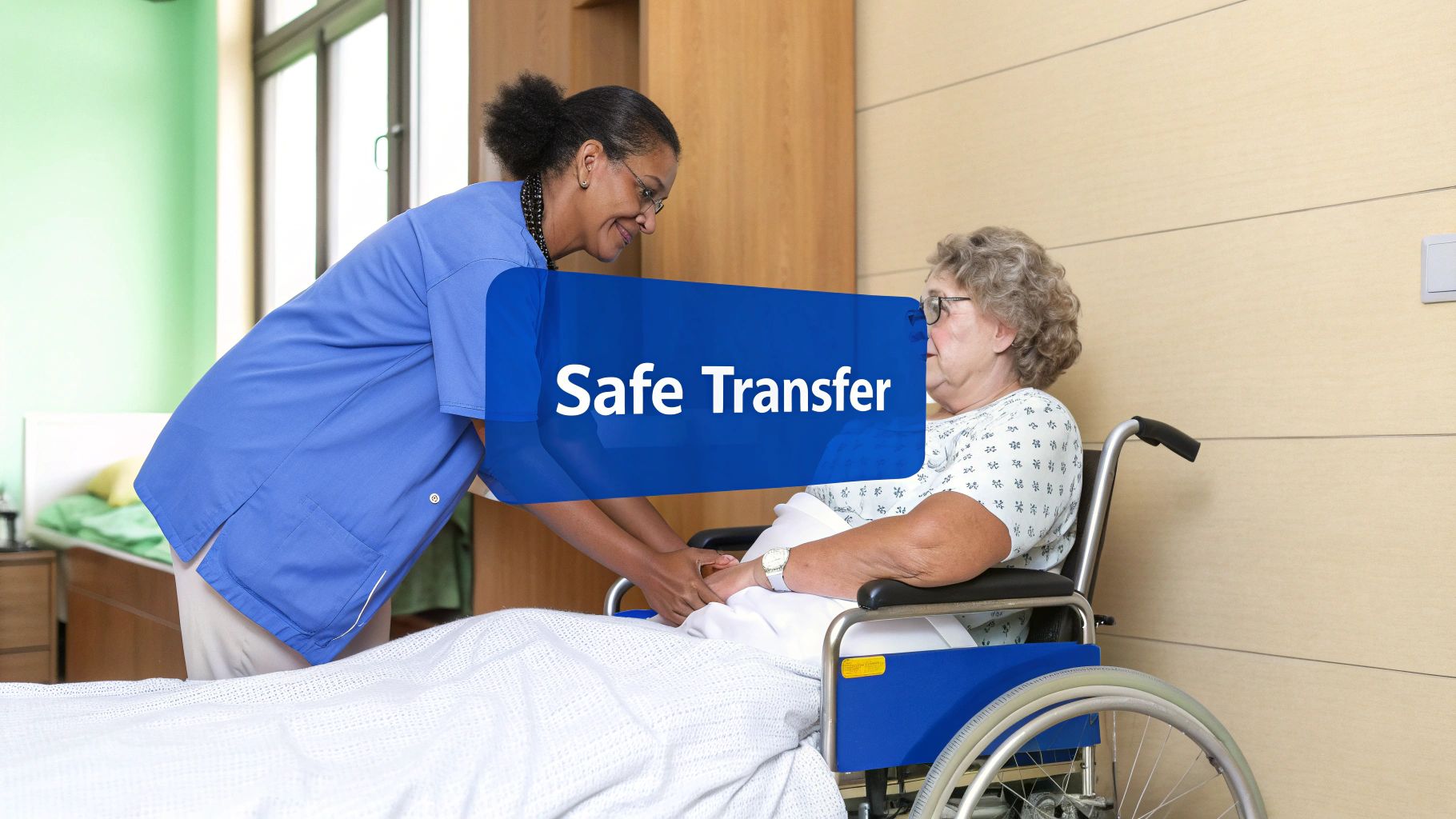
Getting someone from a bed into a wheelchair safely and smoothly really comes down to three things: sizing up the situation, getting the room ready, and moving your own body correctly. When you nail these fundamentals, you’re not just preventing injuries—you’re building trust and making every move feel secure.
The Foundations of a Safe Patient Transfer
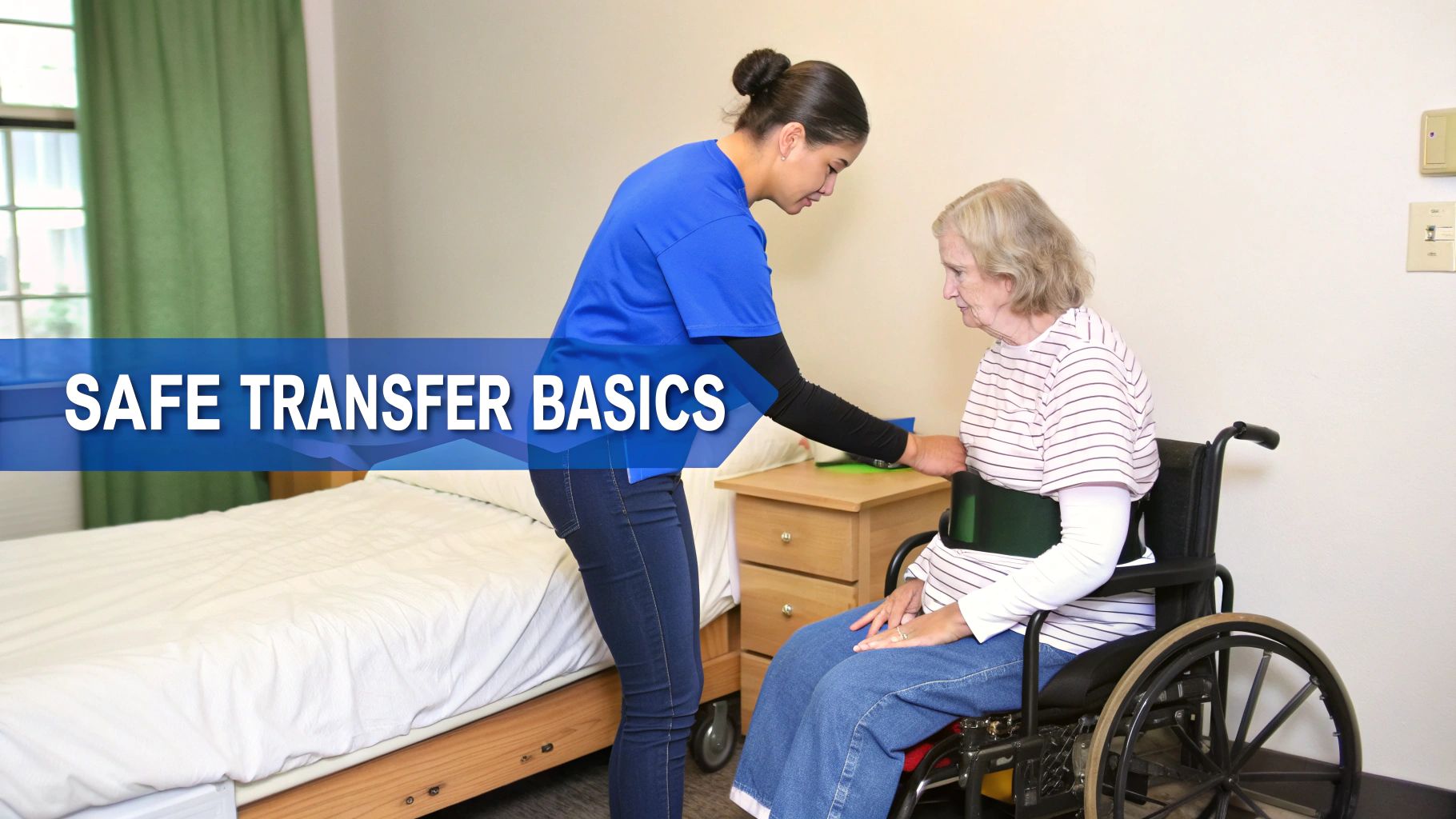
Moving a person isn't just about strength; it's a skill built on a solid foundation of safety, clear communication, and thoughtful prep. Without it, the risk of a fall or strain skyrockets for both you and the person you’re helping. Think of it like a recipe—skipping the prep steps almost always leads to a messy kitchen and a disappointing result.
The physical toll on caregivers is very real. Manual transfers are a leading cause of musculoskeletal injuries in our field. In fact, studies show that up to 42.4% of caregivers report back pain and other strains from the repetitive lifting involved in their work.
The Three Pillars of a Secure Transfer
Before you even think about moving someone, pausing to focus on three core areas will dramatically cut down the risk of an accident. These aren't just suggestions; they are non-negotiable for any safe and dignified transfer.
- Know Their Abilities: Can the person support any of their own weight? Is their left or right side stronger? Knowing their physical capabilities is the first step in deciding which transfer method is best.
- Prep the Space: Is the floor clear of clutter and trip hazards? Are the wheelchair brakes locked and secure? An unprepared environment is where most preventable falls happen.
- Check Yourself: Are you positioned correctly? Are you ready to lift with your legs, not your back? Your own safety is just as important as theirs.
A huge part of this is using proper manual handling techniques every single time. It's about using your body smartly—keeping your back straight, bending your knees, and using smooth, controlled motions instead of jerky lifts.
A successful transfer is 90% preparation and 10% execution. Taking just a minute to run through a mental checklist before you start can prevent the most common and dangerous mistakes.
Pre-Transfer Safety Checklist
To help make this process second nature, a consistent checklist is your best friend. It takes the guesswork out of the equation and ensures you don't miss a critical step, especially when you're feeling tired or rushed.
The table below breaks down the essentials. Running through these points before every transfer transforms a potentially risky task into a confident, controlled process.
Pre-Transfer Safety Checklist
| Check Area | Action Item | Why It's Critical |
|---|---|---|
| The Patient | Communicate the plan clearly. Ask if they feel ready and understand the steps. | Reduces anxiety, promotes cooperation, and allows them to assist as much as they are able. |
| The Environment | Clear the path between the bed and wheelchair. Remove rugs, cords, or clutter. | Prevents trips and falls for both the caregiver and the patient during the pivot. |
| The Bed | Adjust the bed height to match the wheelchair seat height as closely as possible. | Minimizes the lifting distance, reducing strain on the caregiver’s back. |
| The Wheelchair | Position it at a 45-degree angle to the bed, close to the patient. | Creates the shortest and safest pivot point, requiring fewer steps and less movement. |
| The Wheelchair | Lock both brakes firmly. Swing footrests out of the way. | A locked wheelchair provides a stable, unmoving target. Clear footrests prevent tripping. |
| The Equipment | Have the gait belt on the patient and properly tightened. | The gait belt is your primary tool for a secure grip and better control during the transfer. |
| The Caregiver | Plant your feet shoulder-width apart. Bend your knees and keep your back straight. | Ensures you are using the strong muscles in your legs to lift, protecting your back from injury. |
Once you’ve checked these boxes, you’re ready to begin the transfer with confidence, knowing you’ve set everyone up for success.
Preparing Your Environment and Equipment
You know, a safe and successful transfer is almost entirely decided before your loved one even starts to move. I can't stress this enough. Taking just a few minutes to create what I call a 'transfer safe zone' can be the difference between a smooth move and a dangerous fall.
Think of it like a pilot's pre-flight check. You’re setting the stage for a safe journey from the bed to the wheelchair by making sure the space is clear and the tools are ready. It’s a simple habit that prevents accidents and lowers everyone’s anxiety.
Creating a Transfer Safe Zone
First things first, clear the runway. The path from the bed to the wheelchair needs to be completely open. Small things you barely notice, like a stray slipper or a phone charger cord, can become major hazards when you’re focused on helping someone move.
- Scan for Trip Hazards: Get those area rugs, slippers, and cords out of the way. Anything that could catch a foot has to go.
- Make Room to Maneuver: You need enough space to move freely without bumping into a nightstand or dresser. You'll need to bend your knees and pivot, so give yourself plenty of room.
- Light it Up: A dimly lit room is an accident waiting to happen. Good lighting is non-negotiable, as it helps you see any potential hazards on the floor and judge distances accurately.
A cluttered room just makes your job harder. For a deeper dive into creating a safer living space overall, our guide on a senior home safety assessment has some fantastic room-by-room checklists.
Positioning the Wheelchair Correctly
Where you put the wheelchair is just as crucial as clearing the path to it. The wrong placement can make the transfer awkward, strenuous, and incredibly unstable for both of you.
Your goal is to make the distance as short as possible. Always position the wheelchair on your loved one’s stronger side—this allows them to use their own strength to help with the pivot. Place it at about a 45-degree angle to the bed, getting it as close as you can without it being in the way.
Here's the most important step: Lock the brakes. Always. An unlocked wheelchair is a moving target and a primary cause of falls during transfers. Double-check that both brakes are pushed firmly into the locked position before you even think about starting the move.
Finally, swing the footrests out of the way or take them off completely. This clears the space right in front of the seat and keeps their feet from getting tangled up.
Selecting and Preparing Your Tools
Using the right transfer aids makes a world of difference. They provide stability and, just as importantly, protect your back from strain. The most common tools you'll see are the gait belt and the slide board.
A gait belt is a simple but amazing tool. It’s a sturdy fabric belt that gives you a secure place to hold onto. It should be snug around the person's waist, right over their clothing, but not painfully tight. A good rule of thumb is that you should be able to slide two fingers underneath it. Remember, a gait belt is for steadying and guiding—it is not for lifting someone's full weight.
A slide board (or transfer board) is a smooth, firm board that bridges the gap between the bed and the wheelchair. It’s a lifesaver for people who can't bear weight on their legs but still have some upper body strength. It allows them to slide across from one surface to the other, which reduces friction and protects their skin.
It’s no surprise that the market for these kinds of tools is growing. In 2020, the global market for patient lateral transfer devices was valued at around US$260 million, and it's projected to keep climbing. This just shows how important safer transfer solutions are becoming worldwide. You can read more about industry trends for patient lateral transfer devices if you're interested. The key takeaway for you is to have these tools ready and within arm's reach before you start. It’s a simple sign of a well-prepared caregiver.
How to Perform Assisted and Two-Person Transfers
When someone can bear some weight but still isn't steady on their feet, an assisted transfer is the way to go. This technique, often called the stand-and-pivot, transforms a potentially awkward and risky lift into one smooth, controlled movement. It's a foundational skill for any caregiver who needs to safely get a person from a bed into a wheelchair.
The secret is to work with the person, not just for them. You're there to guide and support their own movement, using their strength as much as possible. It’s far more about proper body mechanics and clear communication than it is about brute strength.
This three-step visualization drives home the prep work that makes any transfer safer before you even begin.
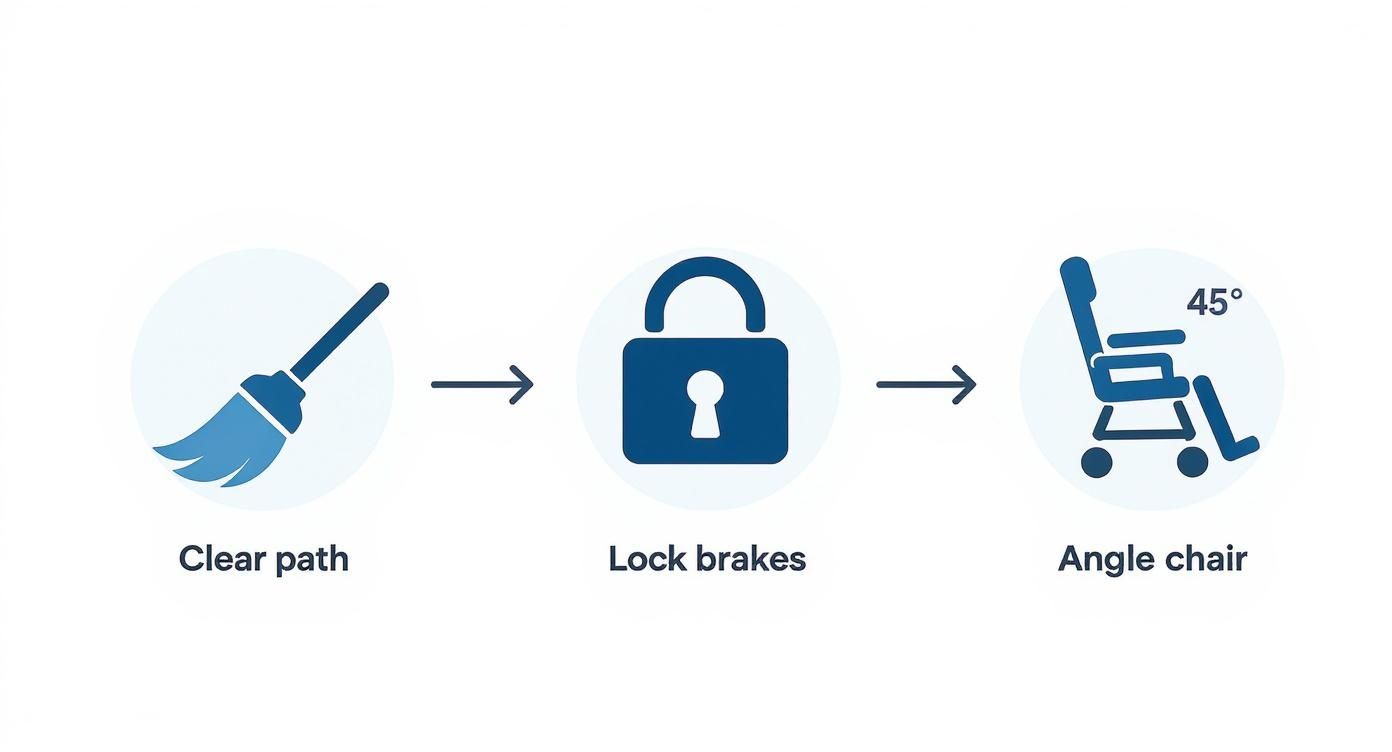
This process really highlights the non-negotiables: clear the path, lock the brakes, and angle the chair. Get these right first, every single time.
Mastering the Stand-and-Pivot Transfer
Think of the stand-and-pivot as a coordinated dance that’s all about leverage and timing. Before you start, make sure the person is wearing a gait belt. This isn’t optional; it's your best tool for getting a secure grip and maintaining control without having to grab their arms, which could cause an injury.
Your positioning is everything. Stand directly in front of them, feet shoulder-width apart and knees bent, mirroring their posture. Ask them to place their feet flat on the floor. Now, gently brace your knees against the outside of their knees. This "knee-to-knee" contact is crucial—it gives them stability and stops their legs from buckling as they pivot.
Talk them through every step in a calm, clear voice. Something simple like, "On the count of three, we're going to stand up together," works perfectly.
- Get a Secure Grip: Reach around and grasp the gait belt from underneath on both sides of their back. Your palms should face up for the strongest hold.
- Lean and Count: Instruct the person to place their hands on your shoulders or push off from the bed beside them. They should never put their hands around your neck, as this can lead to a serious injury for you. Ask them to lean forward, bringing their "nose over their toes." This simple shift in their center of gravity makes standing up so much easier.
- Stand and Pivot: On your count of three, rock back on your heels slightly and use your leg muscles to stand, straightening up together. As they come up, pivot your entire body—feet included—toward the wheelchair. Do not twist your back. Your feet have to move with the turn.
Once their back is lined up with the wheelchair, guide them to bend at their hips and knees to lower into the seat. Asking them to reach back for the armrests gives them a target and helps them guide themselves down.
Keep in mind, the gait belt is for guiding and stabilizing, not for lifting their entire body weight. The power should come from your legs and their participation. Keep your back straight through the whole movement.
For a closer look at body mechanics and preventing injuries, you can find more great information on safe patient handling techniques that protect both you and the person you're caring for.
When to Use a Two-Person Transfer
There are times when one person just isn't enough to provide safe support. That’s when a two-person transfer is essential. It’s the right call if the person has very little ability to bear weight, is feeling especially weak that day, or has cognitive challenges that make it hard for them to follow directions for a one-person assist.
Trying a one-person transfer when two are needed is a huge risk. It can easily lead to a fall, skin tears for the person being moved, and serious back injuries for you. In fact, more than one-third of all caregiver back injuries come from handling patients. Knowing your limits and calling for backup is the mark of a smart, safe caregiver.
Executing a Coordinated Two-Person Transfer
A two-person transfer is all about synchronization. Both caregivers need to communicate clearly and move like a single unit. One person, usually the one at the person's head, should take the lead and give the commands.
The Setup
Position and lock the wheelchair just as you would for any other transfer. Help the person sit up on the edge of the bed with their feet flat on the floor.
Caregiver Roles
- Lead Caregiver (at the torso): This person stands in front. They reach under the person's arms from behind, cross their own hands over the person's chest, and securely grasp their forearms. It creates a kind of "hug lock."
- Second Caregiver (at the legs): This person stands at the side, facing the person's legs. They slide one arm under their thighs and the other under their calves to provide complete support for the lower body.
The Movement
The lead caregiver calls out the plan clearly. For example: "Okay, we're going to lift on three, move to the chair, and lower on my count. Ready? One, two, three, lift!"
On "lift," both caregivers straighten up at the same time, lifting with their legs and keeping their backs straight. They move together in a short, smooth shuffle over to the wheelchair. Once the person is positioned directly over the seat, the lead caregiver calls out the next command: "Alright, we're lowering on three. One, two, three, lower." Both caregivers bend their knees in unison to gently set the person down in the chair.
This coordinated teamwork distributes the weight evenly and makes the person feel safe and secure, turning what could be a difficult task into a manageable routine.
Using Transfer Aids for Non-Weight-Bearing Patients
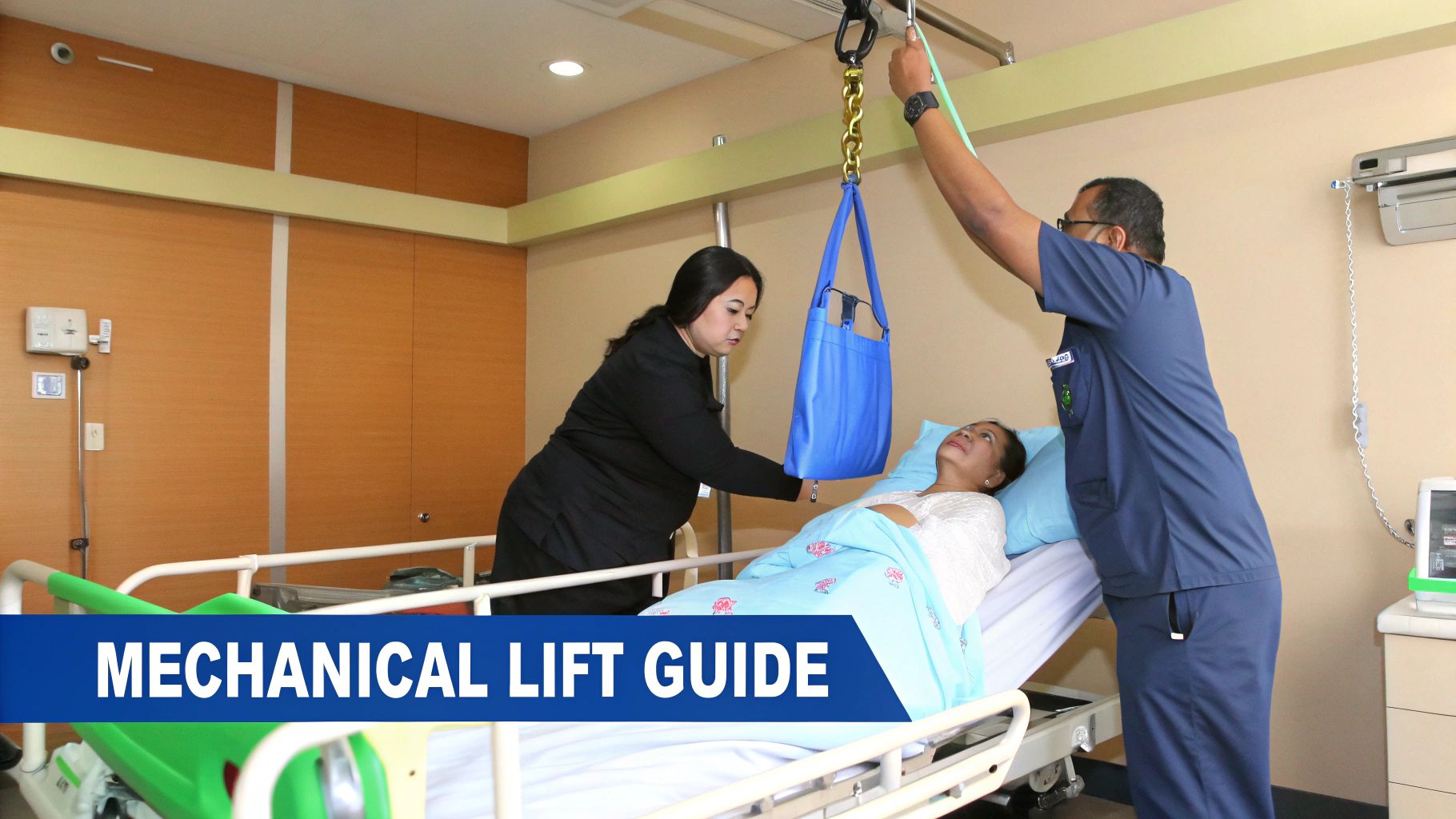
When someone can't bear their own weight, trying to move them manually isn't just a struggle—it's an invitation for injury, both for them and for you. This is precisely when specialized equipment goes from being helpful to absolutely essential.
Transfer aids like slide boards and mechanical lifts shift the focus from brute strength to smart technique. They are the key to preventing falls, protecting fragile skin, and saving your back. Using these tools properly allows you to perform transfers with confidence, ensuring the person in your care is moved with the dignity and security they deserve.
Bridging the Gap With a Slide Board
A slide board (or transfer board) is a deceptively simple piece of equipment that makes a world of difference. It’s a smooth, sturdy board that creates a bridge between two surfaces, like a bed and a wheelchair, so a person can slide across instead of being lifted. This is a great option for people who have decent upper body strength but can't stand or pivot.
The smooth surface dramatically cuts down on friction, which is a common cause of painful skin tears. The trick is to get the two surfaces as level as possible.
How to Use a Slide Board
- Get in Position: Roll the wheelchair right up next to the bed, setting it at a slight angle. Lock those brakes and swing away or remove the armrest closest to the bed.
- Level the Field: Adjust the bed so it’s either the same height as the wheelchair seat or just a little bit higher. Sliding slightly downhill is always safer and easier.
- Place the Board: Ask the person to lean away from the wheelchair. Slide one end of the board firmly under their thigh and hip. The other end needs to rest securely on the wheelchair seat, creating a solid bridge.
- Coach the Slide: Encourage them to use their arms to push up and scoot across the board in small, controlled movements. You’re there to provide stability, guide their hips, and offer support.
A common mistake is not getting the board far enough under the person or onto the wheelchair. You need at least one-third of the board on each surface to keep it stable and secure.
Mastering the Mechanical Patient Lift
For individuals who can't bear any weight at all, a mechanical lift (you'll often hear it called a Hoyer lift) is the gold standard for safety. These devices use hydraulic or electric power to do all the heavy lifting for you, which basically eliminates the risk of a caregiver back injury while moving the person smoothly and securely.
They might look a bit intimidating, but once you get the hang of them, they're quite straightforward. Modern lifts are designed with safety and simplicity in mind. In fact, some newer patient transfer systems allow a single caregiver to perform a transfer in about 90 seconds without any manual lifting. If you're interested, you can read more about these innovations in transfer systems and how they're changing caregiving.
Understanding the different types of equipment is crucial. Our article on mobility aids for the elderly provides a great overview of various tools that can support independence and safety at home.
Choosing and Positioning the Sling
The sling is the most important part of the lift—it’s what holds and supports the person. Picking the right size and style is non-negotiable for safety and comfort.
- U-Sling: A great all-around sling that’s easy to get under someone who is already sitting up.
- Full-Body Sling: This one offers complete support from head to toe, making it ideal for those with poor head and neck control.
- Toileting Sling: Designed with an opening at the bottom specifically for transfers to a toilet or commode.
Getting the sling positioned correctly is half the battle. Gently roll the person onto their side. Tuck the folded sling lengthwise under their back, making sure it runs from their shoulders down to their knees. Then, roll them back onto the sling and over to their other side so you can pull the rest of it through. Always smooth out any wrinkles to avoid pressure spots and skin irritation.
The Safe Lifting and Transferring Process
With the sling in place, you’re ready to bring the lift over and get started.
Connecting the Sling
Lower the lift's cradle bar and attach the sling's loops to the hooks. A good rule of thumb is to connect the shoulder straps first, followed by the leg straps. Cross the leg straps under the person’s thighs to create a more secure, hammock-like seat that prevents them from slipping. Before you lift, do a final check to make sure every strap is hooked securely.
Lifting and Moving
Start lifting slowly. You only need to raise the person just enough to clear the bed—no higher. For the best stability, make sure the lift’s base legs are spread to their widest position.
Once they are clear of the bed, use the lift's handlebars to steer. Never pull on the mast or the patient. Guide the machine smoothly toward the wheelchair, positioning the person directly over the seat.
Lowering into the Wheelchair
Gently and slowly lower them into the wheelchair. You might need to use your hands to guide their body so they land comfortably in the center of the seat. Once they're securely seated, you can unhook the sling loops and move the lift away. Depending on comfort, you can either leave the sling in place or remove it by gently rolling them side to side again.
Common Transfer Mistakes and How to Avoid Them
Knowing the right way to move someone from a bed to a wheelchair is only half the battle. Just as important is knowing what not to do. Even a small slip-up in technique can lead to a fall, a painful skin tear, or a serious injury for either person. These mistakes often pop up when we're in a hurry or just overlook one little detail.
By getting familiar with these common pitfalls, you can build safer habits and make every transfer a smooth, secure process. It's all about being proactive and putting safety ahead of speed.
Forgetting to Lock the Wheelchair Brakes
This is hands-down the most frequent—and most dangerous—mistake. An unlocked wheelchair is basically a moving target. The second any weight hits that seat, the chair can shoot backward, causing a bad fall.
Before you even help the person sit up, make it a non-negotiable first step: push both brake levers firmly into the locked position. Give them a little push to be sure. This one simple action creates the stable, unmoving base you absolutely need for a safe transfer.
Think of locked brakes as the foundation of your transfer. If the foundation isn't solid, everything else is at risk of collapsing. Never, ever skip this step.
Lifting With Your Back Instead of Your Legs
Our natural instinct is often to bend at the waist and hoist, but that puts a ton of strain on the delicate muscles in the lower back. It’s no surprise that back injuries are incredibly common among caregivers, but most are completely preventable.
The right way to do it is to let the powerhouse muscles in your legs do the work.
- Get in Close: Stand as close to the person as you comfortably can.
- Widen Your Stance: Plant your feet about shoulder-width apart. This gives you a much more stable base of support.
- Bend Your Knees: Keep your back straight and bend at your knees and hips, like you're about to sit in a chair.
- Lift by Straightening Up: Power the lift by straightening your legs, not by pulling with your back and arms.
This simple change in mechanics protects your spine and gives you way more power and control through the whole movement.
Poor Communication and Coordination
A silent transfer is an unpredictable transfer. If you start moving someone without talking them through it, they might tense up, move at the wrong time, or get scared. That leads to jerky, unsafe movements.
Always talk through the plan before you start and as you go. Use simple, clear phrases like, "Okay, on the count of three, we're going to stand up together." When you're both on the same page, you work as a team, making the whole process smoother and much more secure.
Letting the Patient Pull on Your Neck
When someone feels unsteady, their first instinct is to grab onto the closest thing for support—which is often the caregiver’s neck or shoulders. This is incredibly dangerous. It can cause a serious neck or back injury for you and can easily pull you off balance, putting you both at risk of a fall.
Before you even start the move, give them clear instructions to place their hands on your waist or forearms, or to use the bed to push off. If you’re using a gait belt, their hands shouldn't be on you at all. Firmly but gently correct this reflex every single time to help build safer habits. A gait belt gives you a much safer and more appropriate place to hold on and maintain control without putting yourself in harm's way.
When to Seek Professional Caregiving Support
Knowing the right transfer techniques is a huge step, but sometimes, the safest move is to call in a professional. It's a tough call to make, but it’s the right one when you notice certain signs.
If your loved one’s mobility takes a sudden downturn, or if the transfers are starting to feel physically overwhelming for you, it's time to think about extra support. The same goes for complex health conditions that make every movement a challenge. Bringing in an expert isn't giving up; it’s making the smart, safe choice.
Professionally trained caregivers are true experts in handling even the most difficult transfers. They’ve mastered everything from a stand-and-pivot with someone recovering from surgery to safely operating a mechanical lift. They bring a level of skill that provides security and peace of mind.
Recognizing your own limits isn't a sign of failure—it's a mark of a smart, responsible caregiver. Prioritizing safety above all else is the ultimate goal.
For families in Mercer County, NJ, navigating these challenges doesn't have to be a solo journey. The team at NJ Caregiving provides expert support, ensuring your loved one is moved with the dignity and security they deserve. Partnering with a professional means you can rest easy, knowing they’re in the best hands.
Answering Your Questions About Patient Transfers
Even with the best training, real-world situations pop up that can leave a caregiver feeling uncertain. Knowing how to handle the unexpected is just as important as mastering the basic steps. Let's walk through a few common questions we hear all the time.
What If the Patient Starts to Fall?
This is every caregiver's biggest fear, and your first instinct will be to try and catch them. Don't do it. Trying to stop a fall mid-motion is a surefire way to injure both yourself and the person you're caring for.
Instead, your goal is to guide them to the floor as safely as possible. Use your body as a brace and allow them to slide down your leg into a controlled descent. Make sure to keep your own back straight and bend at the knees—this protects you from strain while cushioning their landing. Once they're safely on the floor, you can check on them and call for help to get them up properly.
How Often Should I Practice Transfers?
Practice makes perfect, but in caregiving, practice makes safe. If the person's condition allows, aim to practice the transfer at least once a day. It doesn't have to be a major event; even a simple move from the bed to a nearby chair and back again builds confidence and muscle memory for both of you.
This daily routine also helps you notice subtle changes in their strength or mobility, allowing you to adapt your technique. For those looking to build more advanced skills, exploring UK physiotherapy online courses can offer a deeper level of training.
The goal of a transfer is not speed; it is safety and control. A slow, deliberate movement is always better than a rushed, uncoordinated one. Take your time, communicate clearly, and focus on correct technique every single time.
Can I Use a Gait Belt on Every Patient?
Gait belts are fantastic tools, but they aren't a one-size-fits-all solution. There are specific situations where a gait belt could do more harm than good.
You should avoid using one if the patient has:
- Recently had abdominal or back surgery
- A colostomy or G-tube
- Severe cardiac or respiratory issues where pressure around their midsection could be dangerous
When a gait belt is off the table, you'll need to turn to a different method, like a two-person transfer or a mechanical lift. If you're ever in doubt, always check with their doctor or physical therapist first.
At NJ Caregiving, our professional team is trained to handle every type of patient transfer with the utmost safety and compassion. If you're in Mercer County and need expert assistance, we're here to help. Find out more at https://njcaregiving.com.
