

The demand for compassionate, skilled home health care professionals is higher than ever, making interview preparation crucial for both candidates and hiring managers. A successful interview goes beyond verifying credentials; it uncovers the unique blend of autonomy, empathy, and clinical judgment required to excel in a patient's home. This guide breaks down pivotal home health care interview questions you are almost certain to encounter.
We provide a comprehensive analysis of why each question is asked, what interviewers are really looking for, and how you can formulate powerful, authentic answers. This list offers a roadmap to identifying top-tier talent for hiring managers at agencies like Caring Hands Senior Services. For candidates, this is your key to landing a fulfilling role where personalized, in-home care is the heart of the mission.
This resource moves past generic advice, offering specific examples and strategies for each question. Whether you are a family caregiver seeking professional guidance, a hospital discharge planner vetting partners, or a job seeker aiming to impress, these insights will help you navigate the interview process. Let’s equip you with the knowledge to manage this critical conversation with confidence and professionalism, setting the stage for a successful and rewarding career in home health care.
1. Why did you choose a career in home health care?
This foundational question is often one of the first you'll encounter in home health care interviews. Hiring managers use it to gauge your core motivations, passion for the field, and understanding of what makes home-based care unique. They want to see a genuine commitment that goes beyond a simple desire to "help people."
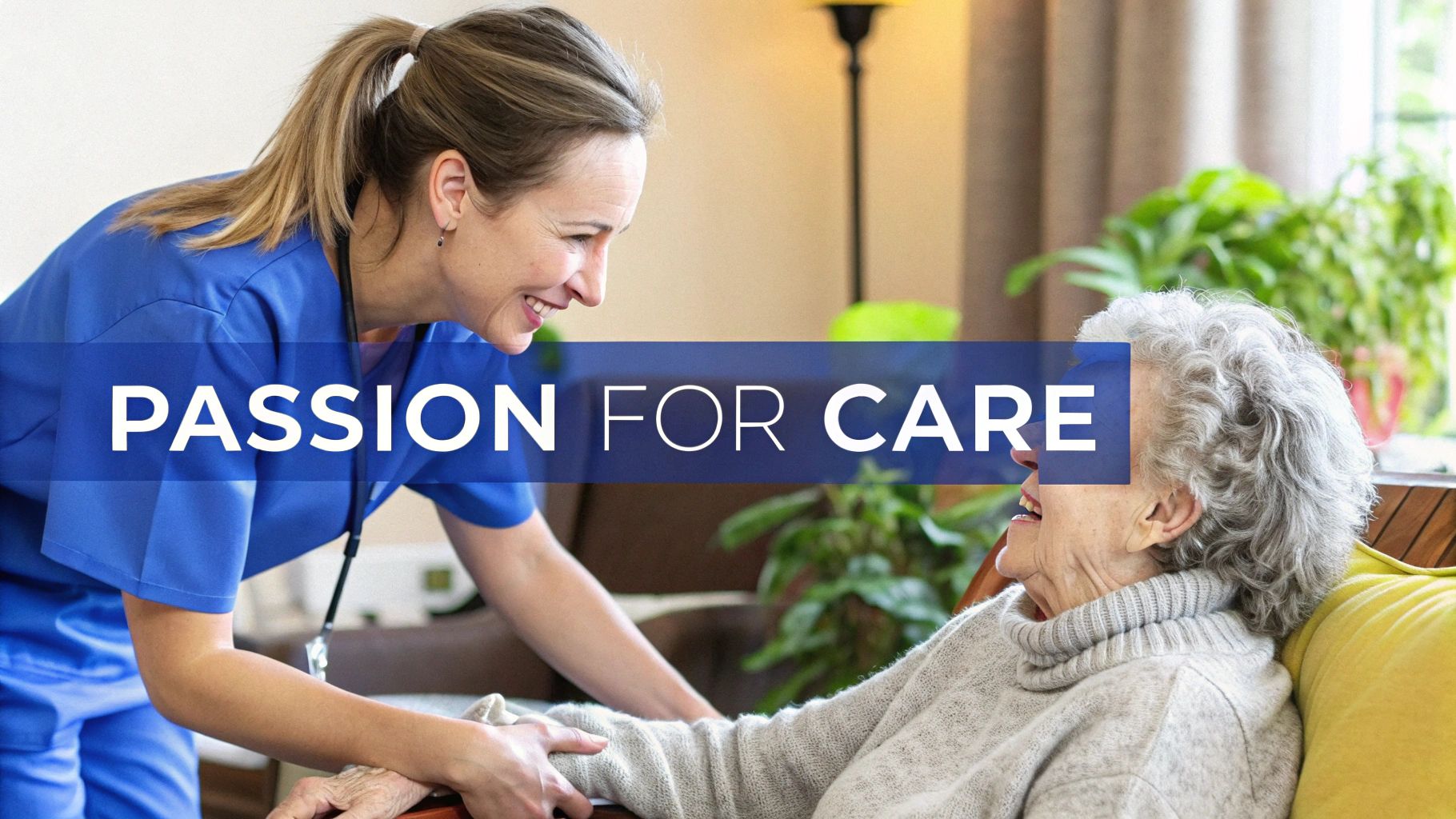
Your answer reveals whether your values align with the agency's mission of delivering compassionate, personalized services within a client's home. It separates candidates who are truly dedicated to this specialized field from those who see it as just another job in the healthcare industry.
How to Craft a Powerful Answer
A compelling response connects a personal story or specific experience to the unique aspects of in-home care. The goal is to be authentic and specific.
- Share a Personal Connection: Did a personal experience, like caring for a family member, inspire you? Explain how that event shaped your perspective on patient dignity and independence.
- Highlight Key Aspects of Home Care: Focus on what specifically attracts you to the home setting. Mention things like fostering one-on-one relationships, promoting patient autonomy, or the challenge of creative problem-solving in a non-clinical environment.
- Connect to Your Professional Philosophy: Link your motivations to your core beliefs about what quality care looks like. This demonstrates thoughtfulness and a deep commitment to your career.
Example of a Strong Answer:
"My interest in home health began when my grandfather received care at home after a stroke. I saw firsthand how being in a familiar environment, surrounded by his own things, significantly improved his morale and recovery. It preserved his dignity in a way a hospital couldn't. That experience led me to seek a clinical rotation with a home health agency, where I discovered a passion for the autonomy and the deep, one-on-one patient relationships that this setting fosters. I believe the most effective care is holistic, and home health allows me to see the full picture of a patient's life and environment."
2. How do you handle working independently without direct supervision?
This critical question evaluates your self-management skills, resourcefulness, and clinical judgment. Hiring managers need to know you are comfortable and competent working autonomously, as home health care professionals are often the sole medical presence in a client's home. Unlike a hospital with immediate backup, this role demands confident, independent decision-making.
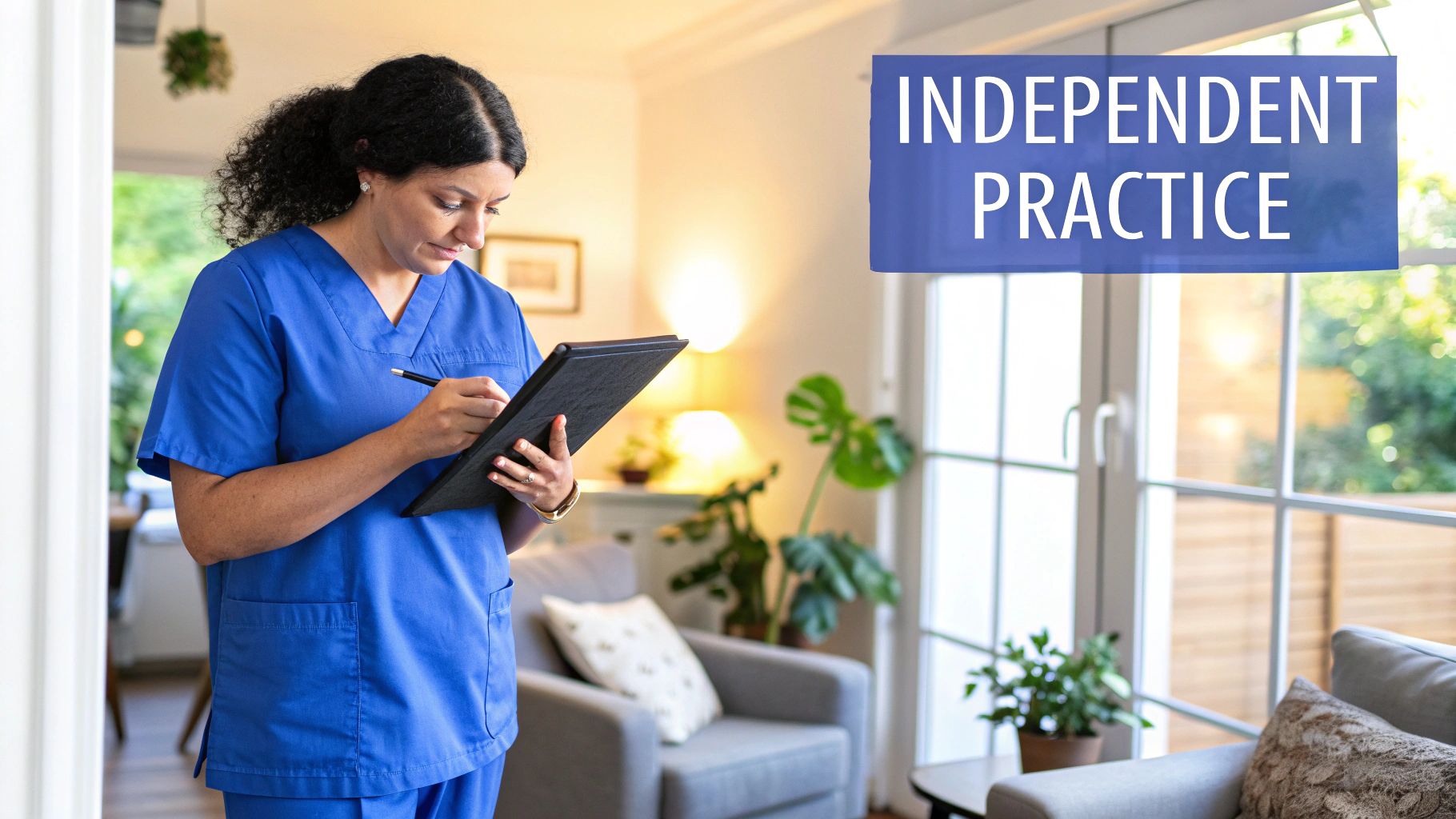
Your answer demonstrates your ability to operate effectively without a supervisor looking over your shoulder. It shows if you can manage your time, solve problems, and, most importantly, recognize the limits of your scope and know when to seek guidance or escalate a situation.
How to Craft a Powerful Answer
A strong response combines practical systems with a specific example that showcases your problem-solving skills. The goal is to prove you are reliable, organized, and safe.
- Describe Your System: Explain the specific tools or methods you use to stay organized and manage your caseload. This could include digital calendars, real-time documentation apps, or personal checklists.
- Emphasize Clear Communication: Mention how you maintain contact with the wider care team. Discuss your protocol for reporting changes in a patient's condition and how you ensure everyone stays informed.
- Provide a Concrete Example: Share a brief story where you successfully managed a situation independently. Detail the scenario, your assessment, the action you took, and the positive outcome.
Example of a Strong Answer:
"I thrive in autonomous roles and have developed a reliable system for managing my work. I start each day by reviewing my patient schedule and prioritizing visits based on acuity. In my previous position, I used our agency's EMR app to document assessments in real-time and flag any concerns for my supervisor. For instance, I once arrived at a patient's home and found his breathing was more labored than usual. I performed a full assessment, stabilized him, and immediately called the on-call physician for orders. I'm confident in my ability to make decisions within my scope but am also diligent about escalating when necessary."
3. Describe a challenging patient or family situation and how you handled it
This behavioral question is a cornerstone of home health care interview questions. Hiring managers use it to evaluate your problem-solving skills, emotional intelligence, and professionalism under pressure. They want to see how you navigate complex family dynamics and maintain therapeutic relationships when faced with conflict or non-compliance.
Your response demonstrates your ability to act with empathy, set professional boundaries, and find constructive solutions in the unpredictable home environment. It shows whether you can be a calming, competent presence when a situation becomes difficult, which is a critical skill for any home health professional.
How to Craft a Powerful Answer
The best way to structure your answer is by using the STAR method (Situation, Task, Action, Result). This provides a clear, concise narrative that highlights your competencies without disparaging the patient or their family.
- Set the Scene (Situation & Task): Briefly describe the challenging scenario and your specific role or responsibility within it. Ensure you maintain patient confidentiality by changing identifying details.
- Detail Your Actions: Explain the specific, professional steps you took to de-escalate the situation or solve the problem. Focus on communication, collaboration, and patient advocacy.
- Show the Outcome (Result): Conclude with the positive result of your actions and, most importantly, what you learned from the experience. Emphasize how it made you a better caregiver.
Example of a Strong Answer:
"I was caring for a diabetic patient whose adult daughter, his primary family caregiver, strongly disagreed with the prescribed medication regimen and was discouraging him from taking it. My task was to ensure patient safety and adherence while addressing the family's concerns. I scheduled a dedicated care conference with the daughter, listened actively to her fears about side effects, and validated her concerns. I then provided clear education on the serious risks of non-compliance and involved the physician to answer her specific medical questions. The result was that the daughter felt heard and respected, transforming from an obstacle into an ally in her father's care. This taught me the importance of treating family members as integral partners."
4. How do you manage your time and organize multiple patient visits in a day?
This is one of the most practical home health care interview questions, as it directly assesses your organizational skills, efficiency, and ability to handle the logistical challenges of the role. Hiring managers need to know you can balance quality care with productivity demands, manage a complex schedule, and adapt to unexpected changes while on the road.
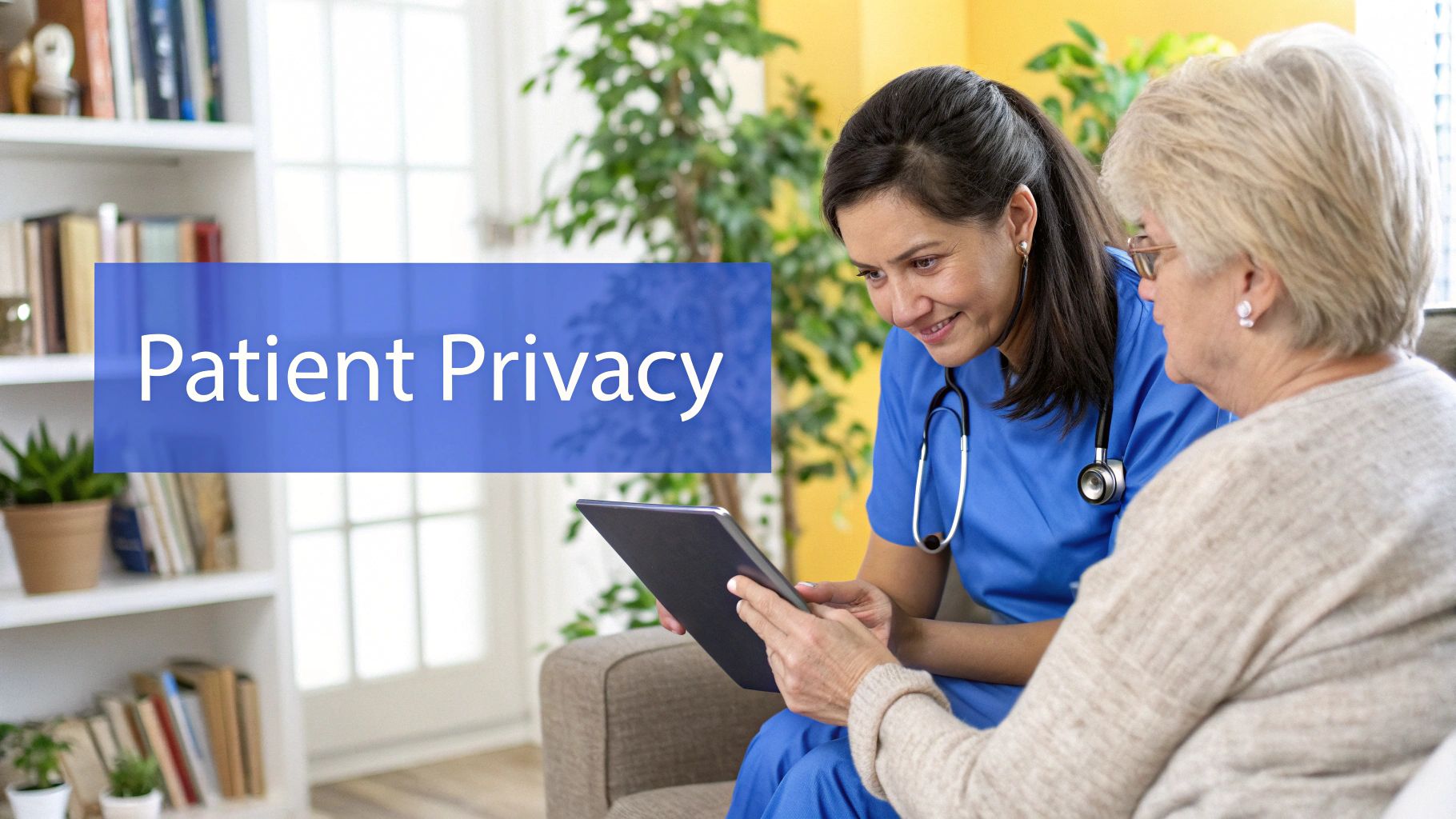
Your response should demonstrate a clear, systematic approach to planning your day. It shows the interviewer that you are a proactive problem-solver who can maintain professionalism and deliver consistent patient care, even when faced with scheduling pressures or unforeseen delays.
How to Craft a Powerful Answer
A strong answer showcases your specific strategies and tools for time management and organization. Vague responses are a red flag; interviewers want to hear about your concrete, actionable methods.
- Detail Your Planning Process: Explain how you start your day. Do you review your schedule, map your route, or prioritize visits based on patient acuity? Mentioning specific tools like GPS apps or your agency's scheduling software shows you are tech-savvy and prepared.
- Explain How You Handle Unexpected Events: Home health is unpredictable. Describe how you build buffer time into your schedule for traffic, longer-than-expected visits, or patient emergencies. This demonstrates foresight and adaptability.
- Address Documentation Efficiency: Discuss your strategy for completing documentation. Do you chart immediately after each visit using a mobile device? This highlights your commitment to accuracy and preventing end-of-day backlogs. Explore effective strategies for home care coordination to see how streamlined processes can improve patient outcomes.
Example of a Strong Answer:
"My approach to managing a busy day is very systematic. The night before, I review my patient list and map the most efficient geographical route using a GPS app to minimize travel time. I build in a 15-minute buffer between each visit to account for unexpected traffic or patient needs. I make a point to complete all my electronic charting in the car immediately after leaving a patient's home, which ensures accuracy and prevents documentation from piling up. If a visit runs significantly long, I immediately contact the scheduling coordinator to see if my next appointment can be adjusted, ensuring I never rush the quality of care for any patient."
5. What would you do if you arrived at a patient's home and observed unsafe living conditions?
This scenario-based question is a critical test of your judgment, ethical compass, and professional responsibility. Interviewers use it to assess your ability to identify risks, prioritize patient safety, and navigate the delicate balance between a client's autonomy and your duty to protect them. They are looking for a systematic, calm, and professional approach.
Your response demonstrates your understanding of mandatory reporting laws, your problem-solving skills, and your capacity to collaborate with a multidisciplinary team. It shows whether you can act decisively to ensure a safe environment while maintaining a respectful and therapeutic relationship with the patient and their family.
How to Craft a Powerful Answer
A strong answer outlines a clear, step-by-step process that prioritizes immediate safety while respecting the patient's rights. It should reflect your knowledge of agency protocols and legal obligations.
- Assess and Prioritize: Start by explaining that your first step is to assess for immediate danger. A gas leak or a patient on the floor requires a different response than clutter or poor sanitation.
- Communicate and Document: Detail how you would respectfully discuss the concerns with the patient, followed by objective, factual documentation. Emphasize communication with your supervisor or case manager to report the situation.
- Collaborate and Intervene: Mention involving other professionals, such as a social worker or therapist, to connect the patient with community resources. This shows you understand the team-based nature of home health care.
- Know Your Legal Duty: If you suspect abuse, neglect, or self-neglect, state clearly that you would follow mandatory reporting procedures as required by state law. To learn more, check out these resources on home safety for the elderly.
Example of a Strong Answer:
"My first priority would be to assess for any immediate, life-threatening danger. If none existed, I would calmly and respectfully talk to the patient about my observations to understand their perspective. I would then document my findings objectively and contact my supervising nurse immediately to report the situation. From there, I would expect to collaborate with the care team, including our social worker, to develop a plan. This might involve connecting the patient with resources for home modifications or cleaning services. If I had any suspicion of abuse or neglect, I would follow state mandatory reporting laws and agency protocol without hesitation, ensuring patient safety is the primary goal."
6. How do you ensure patient privacy and maintain HIPAA compliance when working in patients' homes?
This critical question assesses your professionalism and deep understanding of healthcare privacy regulations. Hiring managers ask this to determine if you recognize the unique confidentiality challenges present in a home setting, which lacks the controlled environment of a hospital or clinic. They need to trust that you can protect sensitive patient information vigilantly.
Your answer demonstrates your ability to apply HIPAA principles in dynamic, non-clinical spaces. It shows you can manage potential breaches from overheard conversations, unsecured documentation, and well-meaning but unauthorized family members, proving you are a reliable and trustworthy caregiver.
How to Craft a Powerful Answer
A strong response goes beyond simply stating that you follow HIPAA; it details the specific actions you take to ensure compliance in the challenging home environment. The key is to be specific about your protocols and awareness.
- Detail Your Digital Security Practices: Mention specific measures like using password-protected and encrypted devices (laptops, tablets), never leaving them unattended, and using secure methods for communication. This shows technical competence.
- Explain How You Manage the Physical Environment: Describe how you handle physical documents and sensitive conversations. Mention seeking private spaces for documentation, securing papers, and confirming with the patient who can be present during care discussions.
- Address Family and Social Dynamics: Show that you understand the social complexities. Explain how you navigate requests for information from unauthorized family members and how you maintain discretion in shared living spaces like apartment buildings.
Example of a Strong Answer:
"I take HIPAA compliance very seriously and recognize the increased vigilance it requires in a home setting. I ensure my work laptop and phone are always password-protected and encrypted, and I never leave them unattended in a patient's home or my vehicle. Before discussing sensitive information, I always ask the patient who they consent to have present. For documentation, I find a private space and ensure my screen is not visible to others. All physical documents are kept in a secure, locked bag and are never left out. I'm also mindful of my surroundings, ensuring conversations cannot be overheard by neighbors or visitors, and I strictly adhere to the 'minimum necessary' standard when coordinating care with other providers."
7. How do you stay current with clinical skills and continue your professional development?
This is a critical question in any home health care interview. Since home health professionals work with a high degree of autonomy, hiring managers need to trust that you are proactive about maintaining your clinical competency. This question assesses your commitment to lifelong learning and your understanding that healthcare is constantly evolving.
Your answer shows whether you take personal responsibility for your growth. Agencies want to see that you are actively seeking out new knowledge, staying informed on evidence-based practices, and applying what you learn to improve patient outcomes, all without constant supervision.
How to Craft a Powerful Answer
A strong response goes beyond simply stating you complete required CEs. It details the what, how, and why of your professional development, showing initiative and a genuine passion for your field.
- Be Specific and Tangible: Name the professional organizations you belong to (like the Home Healthcare Nurses Association), journals you read (such as Home Healthcare Now), or platforms you use (like Medscape or HealthStream).
- Connect Learning to Practice: Don't just list your activities. Explain how a recent webinar on fall prevention or a new wound care certification has directly improved your patient care strategies. This demonstrates application, not just accumulation, of knowledge.
- Show Proactive Initiative: Mention any specialty certifications you hold or are pursuing. Discuss how you actively participate in case conferences or seek feedback from colleagues to learn and improve.
Example of a Strong Answer:
"I am a firm believer in lifelong learning, especially in an autonomous setting like home health. I maintain my membership with the American Nurses Association and regularly complete CEs through their online platform, focusing on chronic disease management. Last quarter, I completed a specialty certification in wound care after noticing an increase in complex cases. Applying those new techniques has already helped reduce healing times for two of my patients. I also subscribe to the Home Healthcare Now journal and participate in my agency’s monthly case conferences to learn from my peers’ experiences and stay current on regulatory updates."
8. Tell me about your experience with documentation and electronic health records
This question evaluates your technical proficiency and understanding of the critical administrative side of home health care. Hiring managers ask this to assess your ability to manage documentation accurately and efficiently, which is vital for regulatory compliance, reimbursement, care coordination, and legal protection. In home health, charting is often done remotely and must be timely and precise.
Your response demonstrates your understanding that documentation is not just a task but a fundamental component of patient care. It shows that you can balance hands-on clinical duties with the meticulous record-keeping required by agencies and regulatory bodies like the Centers for Medicare & Medicaid Services (CMS).
How to Craft a Powerful Answer
A strong answer showcases your technical skills, efficiency, and grasp of documentation's importance in the larger healthcare ecosystem. Be specific about the systems you've used and your workflow processes.
- Name Specific Systems: Mention any Electronic Health Record (EHR) platforms you have experience with, such as Homecare Homebase, Kinnser, WellSky, or Axxess. This gives the interviewer concrete proof of your technical skills.
- Detail Your Workflow: Explain how you ensure timely and accurate completion of notes. Discuss your process for OASIS assessments, visit notes, and care plan updates, including your typical turnaround time.
- Connect Documentation to Outcomes: Show that you understand the "why" behind the task. Explain how your thorough documentation supports billing, ensures continuity of care among the team, and meets legal and compliance standards.
Example of a Strong Answer:
"I have extensive experience using both Homecare Homebase and Kinnser for all my documentation needs. My workflow involves completing point-of-care charting on a tablet during the visit to ensure accuracy, then finalizing and signing off on the note within 24 hours. I am proficient in completing OASIS assessments and understand the importance of submitting them within the strict regulatory timelines. I see documentation as a crucial communication tool that ensures the entire care team is aligned and that we have a clear legal record. In my previous role, I maintained a 100% compliance score on internal documentation audits."
Home Health Care Interview Questions Comparison
| Question / Topic | Implementation Complexity 🔄 | Resource Requirements ⚡ | Expected Outcomes 📊 | Ideal Use Cases 💡 | Key Advantages ⭐ |
|---|---|---|---|---|---|
| Why did you choose a career in home health care? | Low – mainly conversational, requires interviewer skill | Minimal – no special tools needed | Insight into motivation, cultural fit | Screening for passion and long-term commitment | Reveals intrinsic motivation and empathy |
| How do you handle working independently without supervision? | Moderate – needs behavioral examples | Moderate – requires examples of past independent work | Predicts autonomy, problem-solving, accountability | Roles demanding self-direction and decision-making | Identifies self-motivation and professional maturity |
| Describe a challenging patient or family situation | Moderate to high – behavioral scenario analysis | Moderate – requires storytelling and probing | Assesses conflict resolution, emotional intelligence | Positions with frequent family/patient dynamic challenges | Demonstrates empathy and professional boundaries |
| How do you manage time and organize multiple visits? | Moderate – requires detailed explanation and examples | Moderate – familiarity with tech/tools beneficial | Efficiency in scheduling, balancing care quality | Jobs with multiple daily patient visits across locations | Shows organizational skills and adaptability |
| What would you do if you observed unsafe living conditions? | High – scenario-based, requires ethical judgment | Moderate – knowledge of protocols mandatory | Evaluates clinical judgment and patient advocacy | Critical for safety-sensitive roles that involve home assessments | Reveals understanding of safety and reporting procedures |
| How do you ensure patient privacy and HIPAA compliance? | Moderate – technical/legal knowledge required | Moderate – awareness of privacy challenges in homes | Ensures compliance with privacy laws | Roles requiring strict confidentiality and legal adherence | Shows professionalism and understanding of regulations |
| How do you stay current with clinical skills and development? | Low to moderate – requires listing and discussing sources | Low – no tools needed but requires self-motivation | Commitment to lifelong learning and competency | Positions valuing continual education and skill growth | Indicates initiative and professional growth |
| Experience with documentation and electronic health records | Moderate to high – technical proficiency needed | Moderate to high – familiarity with EHR systems required | Quality, accuracy, and timeliness of documentation | Roles with significant documentation and compliance demands | Demonstrates technical skill and regulatory knowledge |
Taking the Next Step in Your Home Health Career
Navigating your home health care interview successfully is about more than just listing your qualifications. It's about telling a compelling story of your competence, compassion, and critical thinking abilities. By preparing thoughtful, detailed answers to common home health care interview questions, you demonstrate a deep understanding of the unique challenges and rewards of this vital profession. Each question is a gateway to showcase your unique strengths.
Remember, your responses should consistently highlight your ability to work autonomously, solve problems creatively, and communicate with empathy. Whether you're describing how you manage a demanding schedule or handle a difficult family dynamic, the goal is to provide concrete examples that bring your skills to life. The insights you've gained from this guide are designed to help you move beyond generic answers and articulate the true value you bring to patients and their families.
Key Pillars of a Successful Interview
To truly stand out, focus on reinforcing these core themes throughout your conversation:
- Patient-Centered Mindset: Frame your experiences around positive patient outcomes. How did your actions improve a client's safety, comfort, or quality of life? This focus shows you understand the ultimate goal of home health care.
- Proactive Problem-Solving: Don't just state that you can handle challenges. Detail the steps you take, from assessing an unsafe environment to de-escalating a tense situation with a family member. Show your thought process.
- Unwavering Professionalism: Emphasize your commitment to ethical standards, including HIPAA compliance and meticulous documentation. This demonstrates reliability and trustworthiness, which are non-negotiable qualities for any home health agency.
Mastering your interview is the final hurdle before you can make a tangible difference in people's lives, allowing them to age with dignity in the comfort of their own homes. The preparation you do now is an investment in your future career and in the well-being of your future clients. Use this knowledge to walk into your next interview with the confidence and clarity that sets exceptional caregivers apart. You are not just looking for a job; you are answering a calling to provide essential, compassionate care.
Ready to join a team that values your skills and dedication? NJ Caregiving is actively seeking passionate home health professionals who are prepared to excel. Explore our current opportunities and take the next step in your career with an agency committed to excellence in Princeton, Hamilton, and across Mercer County by visiting us at NJ Caregiving.