

What Does a Home Health Aide Really Do?
Think of a home health aide as a personal health co-pilot, there to help your loved one navigate daily life with safety and dignity. They fill a critical gap between skilled medical professionals, like nurses, and the everyday, hands-on support needed to thrive at home. Their role is all about compassionate, practical assistance that maintains a high quality of life.
This infographic breaks down their core duties into three key areas.

As you can see, their responsibilities are a balanced mix of personal care, health monitoring, and household support—all centered around your loved one’s well-being.
The Heart of In-Home Support
At its core, a home health aide’s job is to assist with Activities of Daily Living (ADLs). These are the fundamental self-care tasks we all do, like bathing, dressing, grooming, and moving around safely. By lending a hand with these activities, aides empower individuals to maintain their personal hygiene and independence right where they feel most comfortable.
Their duties often extend to light housekeeping and preparing meals. This ensures the home environment is not just safe and clean, but also a place that genuinely supports good health. It's this holistic approach that makes them a true cornerstone of modern in-home care.
The goal is not just to provide care, but to foster independence. An effective home health aide helps individuals do as much for themselves as safely possible, preserving their sense of autonomy.
A Vital Link to Medical Care
While home health aides aren't nurses, they play a huge role in the broader health management picture. They are trained to monitor and record vital signs like blood pressure, temperature, and pulse. This consistent tracking provides incredibly valuable data for the client's medical team, often helping to spot potential health issues before they become serious problems.
Navigating the different types of in-home caregivers can be confusing. To help clarify, here’s a quick breakdown of the most common roles.
Comparing In-Home Caregiver Roles
| Caregiver Type | Primary Focus | Medical Training Level | Typical Tasks |
|---|---|---|---|
| Home Health Aide (HHA) | Personal care & basic health monitoring | Formal training & certification required | ADLs, vital signs, medication reminders, light housekeeping |
| Personal Care Aide (PCA) | Companionship & non-medical assistance | Varies by state; often less formal | Companionship, meal prep, errands, light housekeeping |
| Certified Nursing Assistant (CNA) | Basic medical care under nurse supervision | State-approved certification program | ADLs, vital signs, patient transfers, assisting nurses |
Each role serves a unique and important purpose. For a deeper dive into how these roles compare, you can explore the differences between a home health aide vs a CNA in our detailed guide.
This consistent oversight is vital for managing chronic conditions or supporting someone recovering from a hospital stay. And the need for these services is skyrocketing. The global home healthcare market was valued at USD 416.4 billion in 2024 and is projected to hit USD 747.70 billion by 2030. The service segment, which includes home health aides, made up a dominant 84.1% of revenue, proving just how essential these professionals have become.
Core Services Home Health Aides Provide
When you bring a home health aide into your loved one's life, you're getting support in three main areas: personal care, health monitoring, and household management. This isn't just a checklist of tasks; it's a holistic approach that allows someone to live safely and comfortably right where they want to be—at home.
Let’s break down what that really looks like day-to-day.
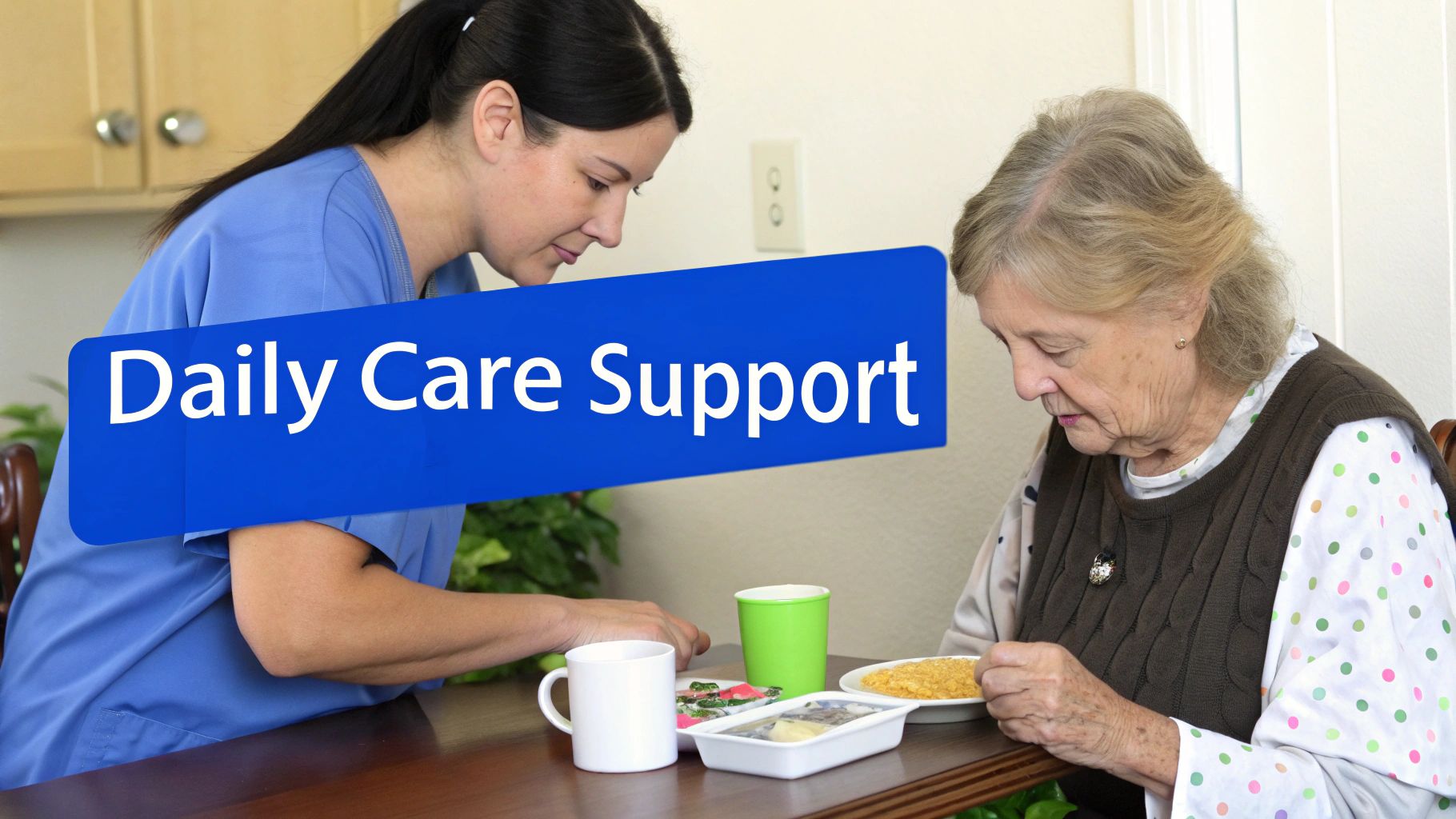
This support structure is less about just getting things done and more about helping a person maintain their dignity and routine in familiar surroundings.
Hands-On Personal Care and Mobility
A huge part of a home health aide’s role is assisting with Activities of Daily Living, or ADLs. These are the fundamental self-care routines we all do, and they are absolutely crucial for a person's health and sense of self.
This hands-on help is always given with patience and respect, preserving personal hygiene and appearance, which does wonders for self-esteem.
- Bathing and Grooming: Helping with showers, baths, and other personal hygiene to keep them clean and comfortable.
- Dressing: Assisting with picking out clothes and getting dressed for the day.
- Toileting and Incontinence Care: Offering sensitive, dignified assistance with using the restroom.
- Mobility Support: Helping move from a bed to a wheelchair, assisting with walking, and repositioning in bed to prevent painful sores.
This kind of physical support is a cornerstone of preventing falls—one of the biggest risks for older adults living at home.
Vital Health Monitoring and Medication Management
Think of a home health aide as the eyes and ears of the broader healthcare team. Their consistent, daily presence allows them to spot changes that could signal a bigger problem. While they don't administer medications like a nurse, their role in managing them is vital.
They are trained to notice and report any shifts in a client’s condition, like a change in mood, a loss of appetite, or a new physical complaint. This proactive monitoring is what allows doctors and nurses to step in early before a small issue becomes a crisis.
A home health aide acts as a vital link between the client and their medical team. Their daily observations provide real-time data that is invaluable for creating and adjusting a successful care plan.
Key health-related tasks include:
- Checking Vital Signs: Regularly taking and recording blood pressure, heart rate, temperature, and breathing rate.
- Medication Reminders: Making sure the client takes the right medications, at the right times, and in the correct dose.
- Observing Health Changes: Noting any new symptoms or concerning changes and immediately reporting them to a supervising nurse or the family.
Household Support for a Healthy Environment
A safe, clean home is just as important as personal care. Home health aides provide light household support that’s tailored to a person's health needs, which is a lot more than just basic cleaning.
This support has a direct impact on health outcomes. For example, preparing nutritious meals that follow a specific diet is critical for managing conditions like diabetes or heart disease. A tidy home, free of clutter and hazards, drastically reduces the risk of falls or infections. These aren't just chores; they are an essential part of a care plan that keeps your loved one safe, healthy, and independent.
The Training That Makes a Great Caregiver
When you're trusting someone with a loved one's care, you need to feel confident they know what they’re doing. Professional home health aides aren't just kind people; they're trained professionals who have to meet specific federal and state standards to make sure they can provide safe and effective care. This rigorous training is what their expertise is built on.
At a minimum, federal guidelines require 75 hours of training for any aide working for a Medicare-certified agency. This isn't just classroom time—it covers crucial skills like taking vital signs, controlling infections, and providing personal care. States often add their own requirements on top of this, making sure aides are fully prepared for the job. You can learn more about the specific home health aide requirements in our area to get a better sense of what's expected.
After the training is done, aides have to pass a competency exam. This isn't your typical multiple-choice test. It almost always includes a hands-on demonstration where they have to prove they can safely help a client with real-world tasks.
The Core of Competency
The best training programs are all about practical, hands-on abilities. It’s not just about logging hours in a classroom; it's about making sure a caregiver can actually do what's needed. When you understand competency-based training principles, you can see how this approach directly leads to better caregivers and a higher quality of care.
This means a properly trained aide can confidently handle situations like:
- Safely transferring someone from a bed to a wheelchair.
- Spotting the signs of a medical emergency and knowing exactly how to respond.
- Preparing meals that follow very specific dietary restrictions.
Beyond the Certificate: The "Soft Skills" That Matter Most
While the technical skills are non-negotiable, what truly makes a caregiver exceptional are the "soft skills." These are the human qualities that build trust, provide comfort, and forge a genuine connection. Without them, even the most skilled aide will feel like a stranger in the home.
The art of caregiving lies in balancing professional duties with genuine empathy. A great home health aide doesn't just perform tasks; they connect with the person they are caring for, enhancing their emotional well-being as much as their physical health.
Key soft skills to look for include:
- Patience: The ability to stay calm and supportive, especially when a client is feeling frustrated or confused.
- Empathy: The knack for understanding and sharing what another person is feeling.
- Communication: Clearly explaining what they're doing, listening carefully to concerns, and keeping family and medical staff in the loop.
- Reliability: Being on time, every time. This consistency provides incredible peace of mind for families.
This blend of formal training and personal character is what truly defines a professional caregiver. The need for these skilled individuals is skyrocketing—employment for home health aides is expected to grow by 21% between 2023 and 2033, which means over 800,000 new jobs. Even with this growth, the field faces its own challenges, like high turnover rates, which just goes to show how critical it is to find and support well-trained, dedicated professionals.
The Real-World Benefits of Professional In-Home Care
Bringing a home health aide into your life does more than just check tasks off a list. It brings a profound sense of relief and stability that touches not just the person receiving care, but their entire family. This kind of professional support is often the key to helping someone age gracefully and safely, right in the comfort of their own home.
Let's break down four of the biggest advantages that professional in-home care brings to the table.
Keeping Independence and Comfort Front and Center
For most older adults, the strongest desire is simply to stay home, surrounded by familiar comforts and cherished memories. A home health aide makes that a reality by offering just the right amount of support to navigate daily challenges. They don't take over; they empower.
This might look like helping someone get in and out of the shower safely, preparing a nutritious meal they can enjoy at their own table, or just offering a steady arm during a walk around the block. It’s this kind of support that builds confidence, allowing your loved one to keep living on their own terms, with dignity.
Driving Better Health Outcomes
Having consistent, professional eyes and ears in the home can dramatically improve a person's health and prevent serious complications. Home health aides are trained to monitor vital signs, spot subtle changes in a client's condition, and make sure medications are taken correctly and on time. This constant observation is a powerful tool for catching health issues before they become crises.
The impact is huge. In the U.S., roughly 12 million Americans get home health care services every year, and the data shows it makes a difference. The presence of a home health aide is proven to lower hospital readmission rates, particularly for those recovering from a recent hospital stay. This steady support system leads to a smoother, safer recovery and better long-term management of chronic conditions. You can find more data on the effectiveness of home health care on boosthomehealth.com.
Peace of mind is knowing that a trained professional is there, not just as a helper, but as a vigilant guardian of your loved one's health and safety.
Giving Family Caregivers a Much-Needed Break
Family caregivers often carry an incredible physical and emotional weight. One of the most invaluable benefits of hiring a professional is the respite it provides. Knowing a skilled and compassionate aide is on duty allows family members to finally rest, recharge, and take care of their own lives.
This break is essential for preventing caregiver burnout. It also allows families to shift their focus from being taskmasters to simply enjoying quality time together, strengthening their relationships and making new memories.
Offering Vital Companionship
Loneliness and social isolation are serious health risks for seniors, often leading to depression and a faster decline in cognitive function. A home health aide offers consistent, friendly companionship by engaging in conversation, sharing meals, or enjoying hobbies together. This social connection is every bit as critical as the physical support they provide, fighting off isolation and bringing a welcome dose of joy into the home.
How to Navigate Costs and Payment Options
Let’s talk about one of the biggest hurdles for families considering in-home care: the cost. It's a critical piece of the puzzle, and figuring out how to pay for a home health aide can feel overwhelming at first. But once you understand what drives the cost and the different ways to cover it, you can put together a plan that works for you.
The first thing to remember is that there’s no single price tag for home care. The final cost depends on where you live, the specific level of care needed, and whether that support is required during the day, overnight, or on weekends.
Breaking Down the Pricing Models
Most home care agencies use a couple of standard pricing models. The most common by far is an hourly rate. This is perfect for families who need help for a specific number of hours each day or week, and it gives you the flexibility to adjust the schedule as your loved one's needs evolve.
For someone who needs constant supervision, a live-in or 24-hour rate might make more financial sense. A live-in aide stays in the home and has designated time for sleep and breaks. In contrast, 24-hour care involves a team of aides working in shifts, ensuring someone is always awake and ready to assist.
Think of it like this: Hourly care is like paying for a taxi ride—you pay for the exact time you use. Live-in care is more like a monthly bus pass—it covers continuous access, offering a predictable cost for extensive needs.
Figuring out which model aligns with your situation is the first step in building an accurate budget.
Exploring Your Payment Options
The good news is that you don't have to shoulder the cost alone. Many families piece together funding from several different sources to make care affordable, so it pays to look into every possible option.
It's helpful to see the common payment sources side-by-side to understand what they offer.
Payment Options for Home Health Aide Services
| Payment Source | Typical Coverage | Who Is Eligible |
|---|---|---|
| Private Pay | All services; offers the most flexibility. | Anyone who can pay with personal savings, investments, or other assets. |
| Long-Term Care Insurance | In-home personal care, skilled nursing, and other long-term services. | Individuals who purchased a policy and meet its specific benefit triggers. |
| Medicare | Short-term, part-time skilled care deemed medically necessary by a doctor. | Typically seniors 65+ following a qualifying hospital stay; not for long-term custodial care. |
| Medicaid | Comprehensive long-term care services for those who need daily assistance. | Low-income individuals and families who meet strict financial eligibility criteria. |
Each of these avenues has its own set of rules and application processes.
Navigating these options can definitely get complicated. For a much deeper dive, take a look at our guide on how to pay for home care, which breaks down how to access these different benefits.
Finding the Right Home Health Aide for Your Family
Choosing a home health aide is easily one of the most personal and important decisions you'll ever make for your family. This isn't just about hiring someone to help out; it’s about welcoming a trusted partner into your home to care for someone you love. The secret to a great outcome is finding a person who is not only professionally qualified but also feels like the right fit for your family's dynamic.
Making that happen calls for a thoughtful, organized approach, and it all starts with getting crystal clear on what you actually need.
Start with a Clear Needs Assessment
Before you even think about looking at agencies or candidates, take a moment to sit down and create a detailed list of what your loved one requires. Think of this assessment as your roadmap—it will guide every single decision from here on out. The more specific you can be, the better.
Try to build a complete picture by considering these key areas:
- Personal Care: Does your loved one need a hand with daily routines like bathing, dressing, grooming, or just getting around safely?
- Medical Support: Are there specific health-related tasks involved, like medication reminders or monitoring vital signs?
- Household Duties: Is help needed with preparing meals, doing some light housekeeping, or running errands?
- Companionship: Is social interaction and genuine engagement a top priority to combat loneliness?
- Schedule: How many hours of care are needed each day or week? Does this include overnight or weekend support?
Having these details buttoned up will make it so much easier to communicate your needs to agencies and potential aides, ensuring you find the perfect match.
Finding and Vetting Reputable Caregivers
Once you have a clear idea of what you’re looking for, you can start the search. Most families go one of two routes: hiring through a professional agency or finding an independent caregiver directly. Agencies often provide a huge advantage by handling all the heavy lifting, like background checks, payroll, insurance, and even arranging for backup caregivers if your regular aide is sick.
When you get to the interview stage, a structured list of questions is your best friend. You're trying to get a feel for both their professional skills and their personality. If you're specifically searching for support for an older family member, a good guide on finding carers for elderly loved ones can offer some extra helpful insights.
"A great caregiver has a unique blend of compassion and competence. The interview is your chance to see if their skills and their spirit align with your family’s values and your loved one’s personality."
Always, always ask for—and check—multiple professional references. Talking to families they've worked with before gives you a real-world picture of their reliability, skills, and bedside manner. And finally, never skip verifying their credentials and certifications. This confirms they have the proper training and gives you the peace of mind that you're making an informed, confident, and safe choice for your family.
Common Questions About Home Health Aides
Stepping into the world of in-home care naturally brings up a lot of questions. Getting clear answers is the first step toward making a confident decision and finding the right support for your family. Here are some of the most common things people ask about home health aides.
What Is the Main Difference Between a Home Health Aide and a Nurse?
It helps to think of their roles as two essential pieces of the same puzzle. A home health aide is focused on hands-on personal care—things like bathing, dressing, meal preparation, and helping someone move safely around their home. They work under the supervision of a nurse to help with the activities of daily living.
A registered nurse (RN) or licensed practical nurse (LPN), on the other hand, handles complex medical tasks that require a clinical license. This includes things like administering injections, managing IV medications, or performing advanced wound care, all of which are outside an aide’s scope of practice.
How Do I Know if My Loved One Needs a Home Health Aide?
Often, the signs are subtle at first. You might notice a decline in personal hygiene, see that they're struggling to keep up with medications, or hear about a recent fall or close call.
An aide can also be invaluable for providing safe, steady support right after a hospital stay or for helping manage the day-to-day challenges of a chronic illness at home.
Should I Hire an Aide Directly or Use an Agency?
Hiring someone directly might seem like it could save money, but using a reputable agency provides a layer of security and peace of mind that's hard to put a price on.
Agencies handle all the critical details—thorough background checks, insurance, payroll, and taxes. They also ensure every caregiver is properly certified and trained. Most importantly, they provide reliable backup support, so you're never left scrambling if your primary aide is sick or unavailable.
At NJ Caregiving, we provide thoroughly vetted and compassionate home health aides to support your family. Find the perfect caregiver for your needs at https://njcaregiving.com.