

When you hear the term home care for disabled adults, what comes to mind? At its heart, it’s a personalized support system designed to help someone live safely and independently in the one place they feel most comfortable: their own home. It’s a flexible approach that can include everything from help with daily tasks to skilled medical care, all while preserving dignity and a high quality of life.
This is a choice that empowers people to thrive in a familiar, comfortable setting, surrounded by their own things and memories.
Understanding Home Care for Disabled Adults
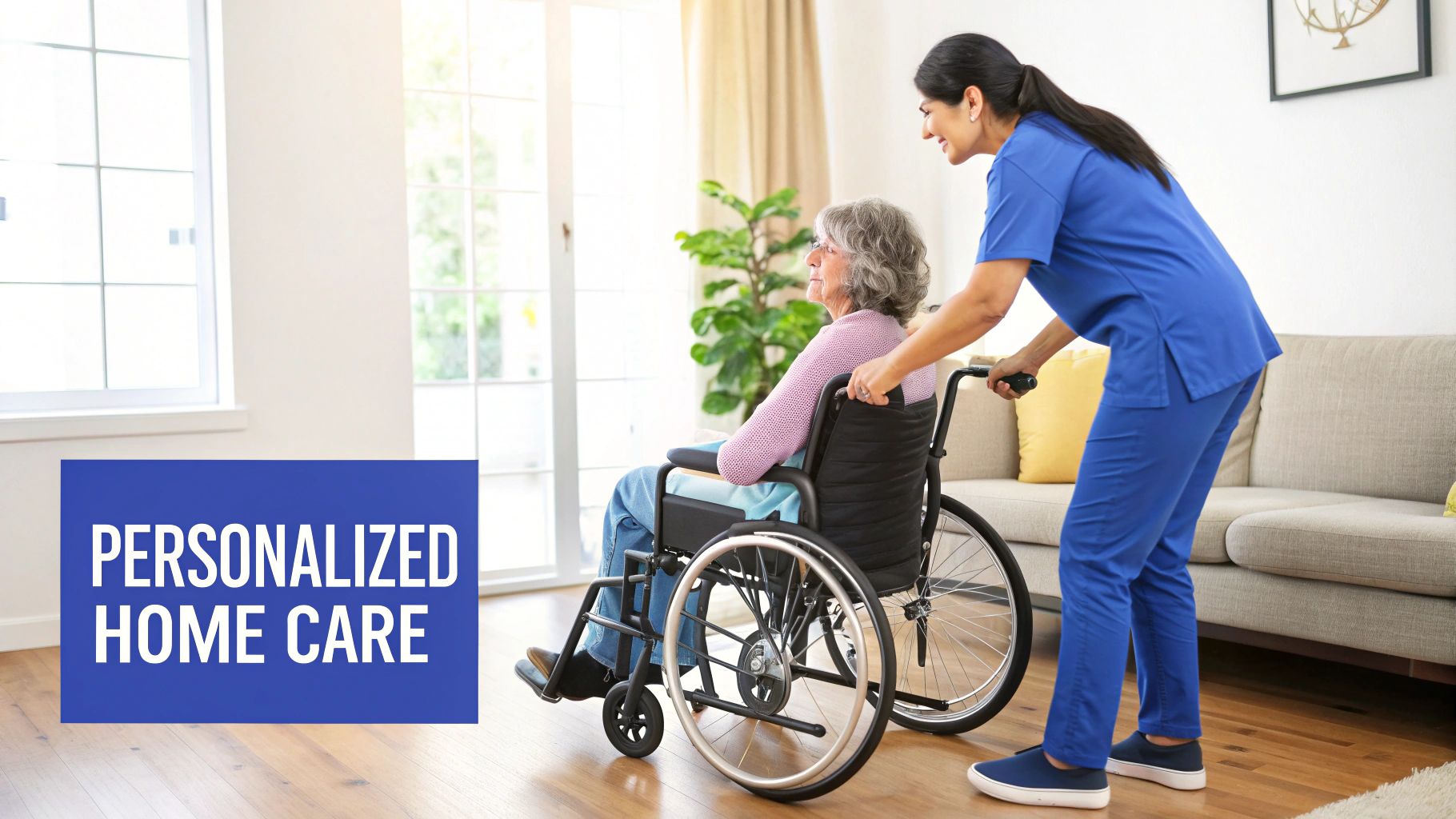
Think of home care less as a service and more as a philosophy built around independence. For adults of any age living with physical, developmental, or cognitive disabilities, the goal is simple: enhance their ability to live life on their own terms. It’s about shifting the focus from limitations to what a person can do with the right support in place.
This model is a world away from institutional settings. If a residential facility is like a one-size-fits-all uniform, home care is a custom-tailored suit. It’s designed to fit the unique needs, preferences, and daily routines of one individual, which helps them hold onto their personal freedom and connection to the community.
A Growing Preference for In-Home Support
The desire to receive care at home isn't just a small trend; it's a powerful and growing movement. You can see this reflected in the numbers—the home care market is on track to blow past USD 1,193 billion by 2032. This explosive growth is driven by people who want to keep their independence and avoid or put off moving into a facility.
If you'd like to dig into the details, you can learn more about the trends shaping the home care service market and what’s driving this demand.
It all points to a fundamental truth: home is so much more than just a place to live. It's a source of comfort, memories, and identity. Bringing support directly into that environment helps maintain a crucial sense of normalcy and emotional well-being that can't be replicated anywhere else.
Core Components of In-Home Care at a Glance
So, what does home care for disabled adults actually look like day-to-day? To really get a handle on it, it helps to break down the main categories of services available. Each type of care is designed to address specific needs, allowing families to build a comprehensive support system from the ground up.
The table below offers a quick map of the foundational services that make independent living not just possible, but successful.
| Service Category | What It Includes | Primary Goal |
|---|---|---|
| Personal Assistance | Bathing, dressing, grooming, and mobility support. | To support activities of daily living (ADLs) safely. |
| Homemaker Services | Meal preparation, light housekeeping, and errands. | To maintain a safe, clean, and healthy environment. |
| Companion Care | Social interaction, emotional support, and hobbies. | To foster engagement and reduce feelings of isolation. |
| Skilled Medical Care | Medication management, wound care, and nursing oversight. | To manage clinical health needs in a home setting. |
Think of these as building blocks. You can mix and match them to create a care plan that’s as unique as the person receiving it, ensuring they have exactly the support they need to flourish at home.
The Spectrum of In-Home Care Services
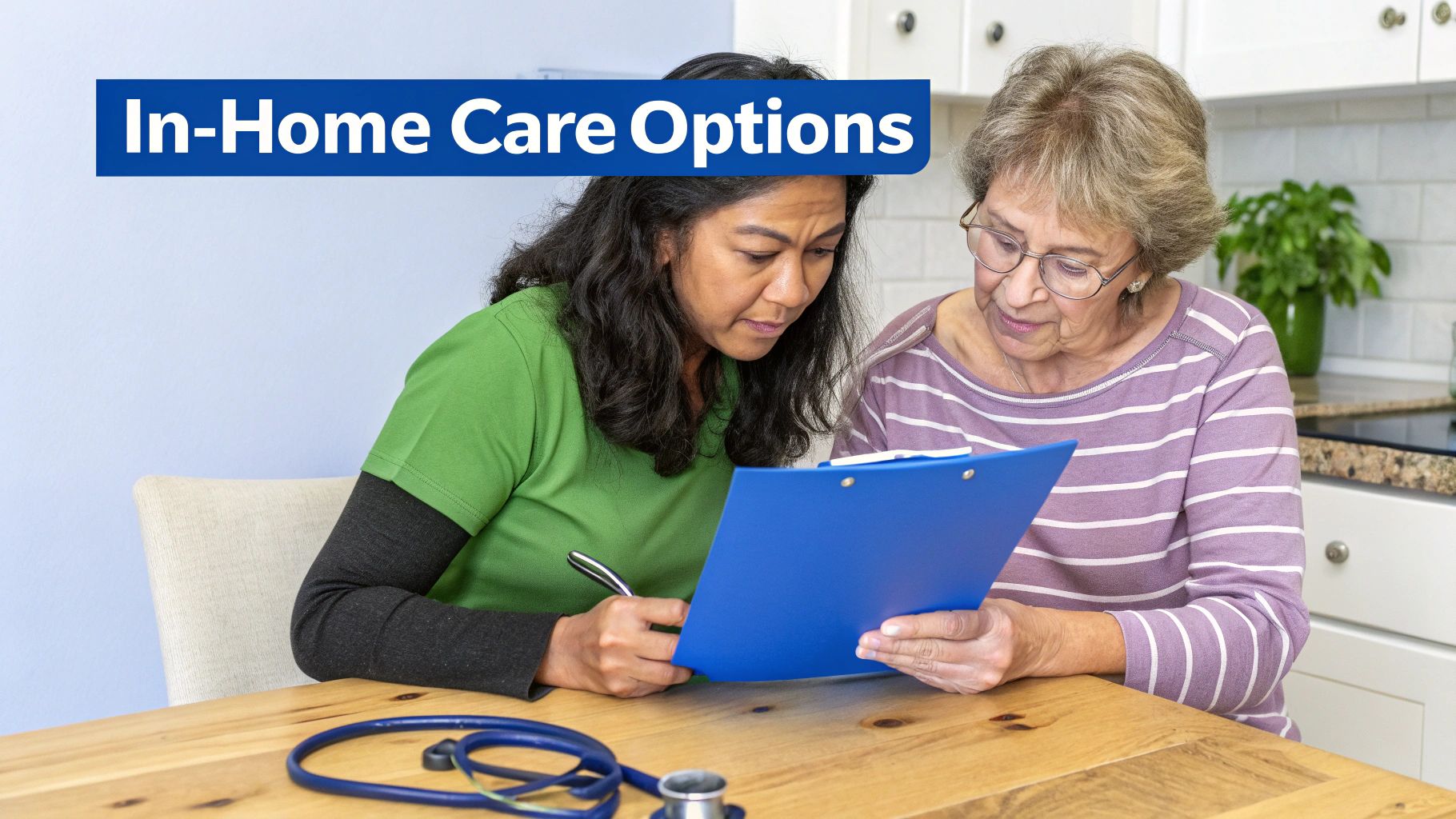
"Home care" isn't just one thing. Think of it as a flexible range of support services, because no two people ever have the exact same needs. The whole idea is to layer and combine different types of care to create a plan that’s a perfect fit. Getting a handle on these different layers is the first real step to figuring out what kind of support will make the biggest impact.
It’s a bit like building a project team. You wouldn’t call a plumber to rewire your house. In the same way, home care is about matching a professional's specific skills to the task at hand. This ensures the right level of support is always there when it's needed most.
Let's break down the main types of home care for disabled adults.
Personal Care Assistance
This is the most hands-on level of support, focusing squarely on what we call Activities of Daily Living (ADLs). These are the basic, personal tasks most of us don't think twice about—until a disability makes them a daily challenge.
A personal care assistant helps with these intimate tasks, always prioritizing dignity and respect. Their goal is to empower someone to start and end their day feeling clean, comfortable, and confident in their own home.
Services at this level usually include:
- Bathing and Toileting: Providing a safe hand in the bathroom helps prevent dangerous falls and maintains personal hygiene.
- Dressing and Grooming: Helping with getting dressed and other grooming supports self-esteem and a positive outlook.
- Mobility Support: This could be anything from helping someone move around the house to transferring from a bed to a wheelchair or just getting out for a walk.
Homemaker and Companion Services
While personal care is about direct physical needs, homemaker and companion services are all about maintaining a safe, uplifting environment and nurturing emotional well-being. These services are often the glue that holds a household together and fights back against the social isolation that can creep in with a disability.
A homemaker keeps the home feeling like a sanctuary—clean, organized, and running without a hitch. A companion, on the other hand, is there for social connection and engagement, which is absolutely vital for good mental health.
Skilled Nursing Care
At the most advanced end of the care spectrum, you'll find skilled nursing care. This is clinical, medical-level support that's brought right into the home by a licensed professional, like a Registered Nurse (RN) or a Licensed Practical Nurse (LPN). It’s specifically for individuals with complex medical needs that require an expert's oversight.
Skilled nursing care bridges the gap between the hospital and home, allowing individuals to manage serious health conditions in a comfortable, familiar environment. This level of support can prevent hospital readmissions and empower individuals to live more independently despite their medical challenges.
For a detailed look at all the different tasks involved across these levels, you can explore our full home care services list to see just how these roles differ.
Why In-Home Care Is a Powerful Choice
Choosing how and where to receive care is one of the most personal decisions a family can make, and it shapes daily life in some pretty profound ways. When you opt for home care for disabled adults, you're doing more than just picking a convenient option. You're making a powerful statement in favor of comfort, independence, and emotional well-being. It’s a choice that says the best place to heal, thrive, and live with dignity is in the familiar, loving space of home.
Think about it—a home is like a library of personal memories. Every photo on the wall, every well-worn armchair, every view from the window tells a story. Even the best-run facilities can't replicate that deeply personal atmosphere. Home care allows someone to stay surrounded by these touchstones, providing a sense of security and continuity that is just so important for mental and emotional health.
And it's a choice more and more people are making. With demographic shifts and a strong preference for aging in place, the demand for home care services is growing across the country. In fact, a huge majority—around 75% of Americans over 50—want to stay in their own homes as they get older. This trend is what’s driving the need for a strong, compassionate in-home care workforce. You can dig a little deeper into these home health care industry trends to see the bigger picture.
The Power of One-on-One Personalized Support
Unlike in a facility where staff have to split their attention among many residents, home care is all about one-on-one support. This dedicated attention is what lets a genuine, trusting relationship form between the caregiver and the person they're supporting.
This personal connection is where the real magic happens. A caregiver who truly gets to know someone—their little quirks, their personality, what makes a good day or a bad day—can provide support that isn't just reacting to needs, but is proactive and deeply empathetic.
This tailored approach also gives your loved one a much greater sense of control and autonomy. Instead of having to fit into a facility’s rigid schedule, their own routine leads the day.
- Meal times are when they're hungry, not when the dining hall says it's time to eat.
- Activities and outings are built around their personal interests, not what the group wants to do.
- Daily tasks are done with them, not just for them, which helps encourage participation and preserve their skills.
This whole structure reinforces their independence at every turn, empowering them to remain the author of their own life story.
Home care isn’t about taking over someone’s life. It's about providing the right support at the right moment to help them continue living their life, their way, with dignity and purpose.
Providing Peace of Mind for the Entire Family
The benefits of home care don't stop with the individual—they create a positive ripple effect that touches the entire family. For family caregivers, who are often juggling their own careers, kids, and personal lives, knowing their loved one is in compassionate, capable hands brings an incredible sense of relief.
It lifts the weight of handling the day-to-day care logistics, freeing them up to focus on what truly matters: spending quality time together. Instead of stressing about medication schedules or what's for dinner, visits can be about shared conversations, laughter, and real connection.
This peace of mind really comes down to a few key things:
- Reliable, Professional Support: Vetted, trained caregivers are there to provide consistent and dependable help.
- Open Communication: Regular updates from the caregiver keep the family in the loop and involved.
- A Safer Environment: Having a professional eye in the home helps reduce risks like falls and ensures it remains a secure space.
Ultimately, choosing home care for disabled adults is a decision that puts the human element first. It recognizes that quality of life isn't just measured in medical outcomes, but in all the small moments of comfort, connection, and personal freedom. It’s a choice that honors a person's past, supports their present, and empowers their future—all within the cherished walls of home.
Finding the Right Caregiver or Agency
Choosing the right person or agency to provide home care for disabled adults is probably the single most important decision you'll make in this entire process. This is about so much more than just skills and schedules; you're inviting someone into your home and trusting them with the well-being of someone you love.
A great caregiver becomes a true partner. They're an advocate and an incredible source of support, which is why this decision deserves your full, unhurried attention.
Think of it like you're hiring for the most important role in your family. You'd never hire someone without a clear job description, right? The same idea applies here. Before you even start looking, your first move should be to create a detailed ‘Care Needs Checklist’ that spells out exactly what kind of support is required. This document will be your north star, making sure you find someone who is a perfect match.
This decision tree infographic can help you visualize the core choice: pursuing home care to maintain dignity and independence versus opting for institutional care.
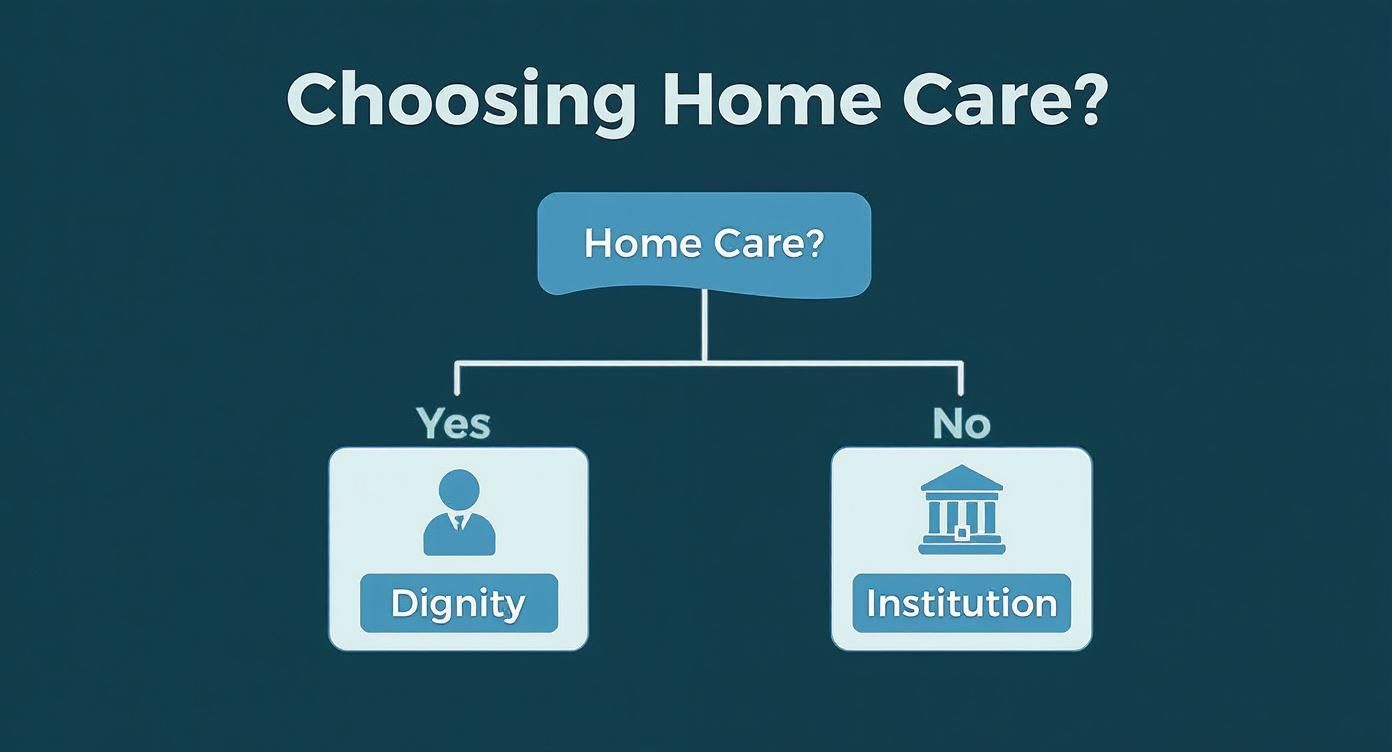
As the visual shows, home care is the path toward preserving personal dignity and autonomy—a powerful insight for families weighing their options.
Agency Care Versus Independent Hires
One of the first big forks in the road is deciding whether to go with a home care agency or hire an independent caregiver directly. Each route has its own pros and cons, and the best choice really comes down to your family’s situation, how comfortable you are with management tasks, and how complex the care needs are.
Think of it this way: an agency is like a general contractor that handles all the logistics for you. Hiring independently makes you the project manager. Understanding the differences is key to making a choice you can feel good about long-term.
Here's a straightforward comparison to help you see the differences side-by-side.
Hiring an Agency vs an Independent Caregiver
| Factor | Home Care Agency | Independent Caregiver |
|---|---|---|
| Hiring Process | They handle all the recruiting, screening, and background checks. | You're responsible for finding, interviewing, and vetting every candidate yourself. |
| Backup Care | Provides a replacement if your regular caregiver is sick or on vacation. | You have to find and arrange for your own backup support, often at the last minute. |
| Oversight | A care manager or nurse usually supervises the caregiver and the care plan. | You are the one providing all supervision and managing performance. |
| Liability & Taxes | They manage payroll, taxes, and carry liability insurance. | You are the employer, so you're on the hook for all legal and financial duties. |
| Cost | Generally higher hourly rates to cover their administrative overhead. | Often lower hourly rates since there's no agency middleman. |
Ultimately, the right path depends on how hands-on you want to be and what level of support and security you need.
Creating Your Care Needs Checklist
Before you even think about interviewing anyone, you need absolute clarity. Your ‘Care Needs Checklist’ is the tool that gets you there, moving you beyond vague ideas and into the nitty-gritty of daily life.
Start by listing every single task and requirement, no matter how small it seems. Be honest and thorough about the level of support needed.
- Personal Care: Get specific. Does this include bathing assistance, help with dressing and grooming, or mobility support?
- Medical Tasks: List out any skilled needs, like medication reminders, simple wound care, or help managing medical equipment.
- Household Duties: Think about meal prep (and any dietary rules), light housekeeping, laundry, and running to the grocery store.
- Companionship Needs: What about social activities, hobbies, or just having someone to talk to and beat back loneliness?
- Transportation: Will the caregiver need to drive to appointments, run errands, or get to social outings?
This checklist isn't just about finding someone qualified; it's about finding the right person. For those supporting individuals with more complex needs, it also helps to know what specific experience to look for. You can learn more about finding a caregiver for special needs to better understand what that involves.
Asking the Right Interview Questions
A resume tells you what someone has done. The interview tells you who they are. When you're trying to find the right caregiver or agency, understanding the essential personality traits for effective caregivers can point you in the right direction. Your questions should be designed to pull back the curtain on those crucial qualities.
Go beyond the basics. Ask situational questions that show you how a candidate thinks on their feet.
Key Interview Questions to Ask:
- "Tell me about a time you had to adapt to a sudden change in a client's condition. What did you do?"
- "How do you handle a situation where a client is feeling down or just isn't cooperating?"
- "Can you give me an example of how you've helped a client hold on to their independence?"
- "What do you find most rewarding about being a caregiver? On the flip side, what's the most challenging part for you?"
These kinds of questions shift the conversation from a boring list of duties to a real understanding of their approach to care. Listen for answers that show empathy, patience, and a deep respect for the person's dignity. At the end of the day, you're looking for someone who is not only competent but also a compassionate fit for your family.
Navigating Costs and Funding for Home Care
Understanding the value of home care for disabled adults is the first step; figuring out how to pay for it is the next. Let's be honest—the financial side of care can often feel like the biggest hurdle. But the good news is that a wide array of resources is available to help manage the costs.
It helps to think of it as a puzzle. Different funding pieces can come together to form a complete picture, making the entire process much more approachable.
The cost of care is a huge factor in what is now a massive and growing market. The global market for Disabled and Elderly Services, which includes everything from home care to nursing facilities, was recently valued at around USD 515.53 billion. While institutional care currently leads this market because it can offer round-the-clock medical support, home care is the vital and preferred choice for countless families.
Building a financial plan that works long-term often means combining several different funding streams. Let's break down the most common options out there for families.
Understanding Government-Funded Programs
For many, federal and state programs are the foundation of paying for home care. The rules can be specific and sometimes confusing, though, so it’s important to know what each program typically covers.
Medicare: This is a federal program that mostly covers short-term "home health" care, not long-term personal assistance. To qualify, the care has to be medically necessary, prescribed by a doctor, and involve skilled services like nursing or therapy. It wasn't designed to cover ongoing help with daily activities like bathing or meal prep.
Medicaid: As the single largest payer for long-term services in the U.S., Medicaid is a critical resource. Unlike Medicare, it can cover non-medical personal care services. Eligibility is based on strict income and asset limits that vary from state to state. Many states also offer Home and Community-Based Services (HCBS) waiver programs, which provide funding for people who would otherwise need institutional care to get that support right at home instead.
It's a common misconception that government programs are all-or-nothing. In reality, many successful care plans use a Medicaid waiver to cover personal care while another source covers different expenses.
Exploring Private Funding and Other Resources
Beyond government aid, several other avenues can help fund home care for disabled adults. These options give you more flexibility and can fill the gaps left by public programs.
- Long-Term Care Insurance: These are private policies specifically designed to cover services like in-home care. Coverage varies widely depending on the policy, so it's absolutely essential to review the benefits and any waiting periods carefully.
- Veterans' Benefits: The Department of Veterans Affairs (VA) offers several programs, like the Aid and Attendance benefit. This can provide a monthly pension supplement to eligible veterans and surviving spouses to help cover the cost of in-home help.
- Private Pay: Some families use personal savings, retirement funds, or even reverse mortgages to pay for care directly. This option offers the most control and flexibility over the services you choose and the caregivers you hire.
Uncovering Additional Financial Support
Piecing together a financial plan can feel overwhelming, but you don't have to do it alone. Many organizations offer grants and financial aid specifically for individuals with disabilities. For a great overview of what's out there, you can explore resources on top grants for people with disabilities to find additional support.
Navigating these different payment methods is a key part of the caregiving journey. For a more detailed breakdown, check out our guide on how to pay for home care, which offers more insights into building a financial plan that works for your family. By researching every option, you can create a sustainable strategy that ensures your loved one gets the quality care they deserve in the comfort of their own home.
Common Questions About Home Care
Once you start seriously considering home care for disabled adults, a lot of practical questions pop up. It’s one thing to think about care in theory, but the day-to-day reality is where the real concerns live. We get it. That’s why we’ve put together answers to the questions we hear most often, helping you move forward with confidence.
Think of this as your guide to the "what-ifs." Getting these answers upfront can turn a lot of that uncertainty into peace of mind, making the whole process feel much more manageable.
What Happens if Our Regular Caregiver Is Unavailable?
This is a big one for most families. You build a relationship with a caregiver, they become part of the routine, and then what happens if they get sick or need a vacation? The answer really hinges on whether you hired through an agency or found someone on your own.
A professional home care agency has a plan for this exact situation. It’s part of their job. They have a whole team of qualified, vetted caregivers ready to step in.
When your main caregiver can’t make it, the agency sends a trained substitute who has already been briefed on your loved one’s care plan, preferences, and daily schedule. This means the support continues without a hitch. It’s a built-in safety net that provides incredible peace of mind.
If you hired an independent caregiver, however, that responsibility falls on you. You'll have to find, screen, and schedule backup care yourself, which can be incredibly stressful, especially during an emergency. If you go this route, it's wise to have a pre-screened list of people you can call in a pinch.
How Do We Ensure a Safe Home Environment?
Making a home safe is a team effort involving you, your loved one, and the care provider. It's about more than just preventing accidents; it's about creating a space where someone can live with confidence and maintain their independence.
Any good home care agency will kick things off with a thorough home safety assessment. A trained professional comes to the home and looks for potential hazards you might not even notice.
They’re checking for common risks like:
- Trip Hazards: Things like loose rugs, stray cords, or general clutter in walkways.
- Poor Lighting: Dimly lit halls, stairways, or bathrooms can be dangerous.
- Accessibility Issues: A lack of grab bars in the bathroom is a classic example.
After the walkthrough, the agency will suggest practical, often simple, modifications that can make a huge difference in reducing the risk of falls or other injuries. Keeping an open line of communication with your caregiver about any new safety concerns is also crucial to making sure the home stays a secure, comfortable place to be.
Can the Care Plan Be Adjusted as Needs Change?
Of course! A care plan that can’t be changed is a major red flag. A person's needs are rarely set in stone; they can shift over time due to changes in health, recovery from an illness, or even new personal goals. The best home care for disabled adults is built to be flexible.
Think of the care plan as a living document, not a contract set in stone. It should be regularly reviewed and updated to reflect the person's current reality. This adaptability is the hallmark of truly personalized care.
A quality provider will schedule regular reassessments, usually every few months or after a major event like a hospital stay. This should be a conversation that includes the client, the family, and the care team. You should always feel comfortable asking for adjustments—whether it's changing service hours, adding new tasks, or shifting focus to meet new goals. This ensures the support being provided is always helpful and relevant.
Is Home Care Just About Physical and Medical Tasks?
That’s a common misconception, but the answer is a firm no. Helping with daily activities and health needs is a huge part of the job, but it’s only one piece of the puzzle. The emotional and social side of care is just as important for a person’s well-being.
A caregiver often becomes a trusted companion, offering the kind of social interaction that helps fight the loneliness and isolation that can come with a disability. Statistics show that nearly 7 out of 10 adults with disabilities live at home with family. While that’s a wonderful support system, a dedicated caregiver offers a unique kind of companionship focused solely on the individual.
This bigger-picture support includes:
- Engaging in Hobbies: Helping with things like gardening, puzzles, or art.
- Providing Social Outings: Getting out to community events, visiting friends, or just running errands.
- Offering Meaningful Conversation: Being a friendly face, a listening ear, and a source of encouragement.
This focus on the whole person is what defines exceptional home care for disabled adults. It’s not just about managing a condition; it’s about nurturing a life.
At NJ Caregiving, we understand that every question matters. Our team provides compassionate, reliable, and flexible in-home care that adapts to your family’s unique needs. To learn more about how we can support you, explore our services at https://njcaregiving.com.
