
When you're arranging in-home care in New Jersey, it’s easy to get caught up in finding the right person and overlook the paperwork. But a formal home care agreement template is more than just a formality; it’s the foundation for a safe, clear, and professional caregiving relationship.
This written contract spells out everything—services, schedules, payment, and responsibilities—to prevent misunderstandings before they even have a chance to start.
Why a Written Home Care Agreement Is Essential

Starting an in-home care journey is built on good intentions, but relying on a verbal agreement or a simple handshake can quickly lead to serious problems. When expectations aren’t written down, confusion over duties, pay, or what to do in an emergency is almost guaranteed.
For the protection of both your loved one and the caregiver, a formal, written agreement is non-negotiable.
Think of it as the roadmap for the entire care relationship. It’s a clear reference point that everyone has agreed to, ensuring you’re all on the same page from day one. This single document elevates an informal arrangement to a professional one, creating a solid foundation built on clarity and trust.
The Dangers of Informal Arrangements
Without a written contract, you open the door to disputes that can strain relationships and, worse, compromise the quality of care.
Imagine this all-too-common scenario: a caregiver thinks their primary role is companionship, but the family also expects light housekeeping and meal preparation. That simple misunderstanding can create real tension and might even cause the entire arrangement to fall apart.
A proper home care agreement gets ahead of these issues by defining every aspect of the job upfront. It forces everyone to answer the critical questions before care begins:
- What specific tasks are part of the daily routine?
- What is the exact work schedule, including breaks and holidays?
- How much will the caregiver be paid, and on what schedule?
- What’s the plan if the caregiver is sick or needs a day off?
Getting these details ironed out on paper is one of the most important things you can do.
Key Components of Your Home Care Agreement At a Glance
To make sure nothing gets missed, a good agreement is broken down into clear sections. This table gives you a quick look at the essential parts and why they matter so much.
| Section Name | Purpose | Why It's Critical |
|---|---|---|
| Services & Duties | Lists all specific tasks the caregiver is expected to perform. | Prevents scope creep and ensures everyone understands the job requirements. |
| Schedule & Hours | Defines workdays, hours, breaks, and policies for time off. | Avoids confusion over scheduling and ensures consistent coverage. |
| Compensation | Details the hourly rate, payment schedule, and overtime rules. | Guarantees fair and timely payment, preventing financial disputes. |
| Liability & Insurance | Outlines who is responsible for accidents or injuries. | Protects both parties financially and legally in case of an incident. |
| Termination Clause | Explains the conditions under which either party can end the agreement. | Provides a clear, respectful process for parting ways if needed. |
| Confidentiality | Ensures the client’s personal and medical information is kept private. | Upholds the client’s dignity and meets legal privacy requirements. |
Each of these pieces works together to create a comprehensive document that protects everyone involved and sets the stage for a positive relationship.
Building a Foundation of Trust and Clarity
A detailed agreement does more than just list rules; it fosters a dynamic of respect and professionalism. The demand for home care is growing fast—the global market is expected to grow at a 9-10% rate between 2024 and 2029, largely due to our aging population. You can explore more data on the home healthcare market to see this trend for yourself.
This boom highlights why structured, personalized agreements are so critical. When you take the time to create a thorough document, you're showing the caregiver that you value their work and are committed to a fair partnership. In return, it gives them the security and clear expectations they need to focus on what matters most: providing excellent care for your loved one.
A well-crafted home care agreement isn’t about mistrust; it’s about mutual respect. It’s a tool that empowers both the family and the caregiver by creating a predictable and safe environment for everyone.
Breaking Down Your Home Care Agreement, Clause by Clause
Turning a blank template into a solid, protective home care agreement is all about the details. This is where you hash out the specifics of the relationship, set clear expectations for everyone, and build a roadmap to prevent headaches down the road. Let’s walk through the most important clauses you'll need, using real-world examples you might encounter right here in New Jersey.
Getting these clauses right from the start is non-negotiable. Think about it: the home care market hit USD 402.9 billion in 2024 and is on track to reach a staggering USD 586.1 billion by 2031. Clear, well-defined contracts are the bedrock of that growth, making sure payments are handled properly, services are understood, and everyone's quality of life is protected.
If you're just starting to think about the structure, it can be helpful to look at some of the best templates for legal documents to get a feel for standard layouts before you dive in.
Defining the Scope of Services
This is arguably the most critical part of the entire agreement. Vagueness here is your worst enemy. Simply writing "help around the house" is a surefire recipe for confusion and frustration.
Instead, you need to get specific. Break down every single task into clear categories. This does two things: the caregiver knows exactly what's expected of them, and the family knows exactly what they're paying for. It's especially important for drawing a firm line between medical and non-medical support. (If you're unsure about the difference, our guide on what is non-medical home care is a great resource.)
Try listing the duties under clear headings like these:
- Personal Care: Assistance with bathing, dressing, grooming, and toileting.
- Mobility Assistance: Help transferring from bed to chair, walking, and using a walker or wheelchair.
- Meal Preparation: Planning menus, grocery shopping, cooking meals, and kitchen cleanup.
- Light Housekeeping: Tasks like laundry, dusting, vacuuming common areas, and changing bed linens.
- Companionship: Engaging in conversation, playing games, reading aloud, and accompanying on walks.
- Transportation: Driving to doctor's appointments, errands, or social outings (and specify whose car will be used).
A Real-World Example:
Let's say a family in Princeton needs care for their father, who is in the early stages of dementia. Their agreement shouldn't just say "dementia care." It needs to be much more detailed: "Provide verbal cues for dressing each morning, prepare and serve three daily meals following a low-sodium diet plan, and engage in memory-focused activities like puzzles for one hour each afternoon."
That level of detail leaves no room for doubt and gives you a concrete document to refer back to if questions ever come up.
Setting a Clear Schedule and Hours
Just as crucial as what the caregiver does is when they do it. The schedule needs to be spelled out with absolute precision. Any ambiguity here can quickly lead to conflicts over hours worked and payment.
This section should explicitly state the caregiver's workdays and exact hours. It also needs to cover the nitty-gritty stuff like breaks, holidays, and what happens when someone is sick.
Key things to pin down in the schedule:
- Regular Hours: Be specific. "Monday through Friday, 9:00 AM to 5:00 PM."
- Meal Breaks: Define the length and if it's paid or unpaid. "One unpaid 30-minute lunch break to be taken between 12:00 PM and 1:00 PM."
- Holidays: List the specific holidays the caregiver has off and whether they are paid days.
- Time-Off Requests: How should the caregiver ask for vacation? How much notice do you need?
- Sick Leave Policy: What's the protocol for calling out sick? Is there a backup care plan?
Detailing these points creates a predictable, professional structure that respects everyone's time and prevents misunderstandings.
Outlining Payment Terms and Reimbursements
Money can be a touchy subject, but it doesn't have to be if you're upfront. A thorough payment clause can head off nearly all financial disagreements before they start.
Start with the basics: the hourly rate. Then, specify the overtime rate. In New Jersey, this usually applies to any hours worked over 40 in a single week.
Next, define the pay schedule. Is it weekly? Bi-weekly? What day of the week can the caregiver expect to be paid? You'll also want to clarify how they'll be paid—direct deposit, check, or another method.
And don't forget about reimbursements! If the caregiver will use their own car to run errands for your loved one, you need to state the mileage reimbursement rate. The IRS standard mileage rate is a common, fair benchmark to use. The same goes for groceries or other supplies—outline the process for submitting receipts and getting reimbursed.
Clarifying Liability and Termination
A solid agreement has to prepare for the tough "what if" scenarios. The liability clause clarifies who is responsible if there's an accident or injury. If you hire through an agency like NJ Caregiving, they typically carry the necessary liability insurance. If you're hiring a caregiver privately, you'll want to check that your homeowner's policy offers enough coverage.
Finally, the termination clause provides a clear and respectful exit strategy for both parties. It should state how much notice is required to end the agreement—two weeks is standard. It's also wise to outline conditions for immediate termination, such as negligence, theft, or a breach of confidentiality. This protects your loved one while also ensuring the caregiver is treated fairly.
Navigating New Jersey Legal and Medicaid Rules
Putting together a home care agreement isn't just about listing duties and pay rates. It's about making sure that agreement works within New Jersey's specific legal and financial systems. If you overlook state regulations, you could face serious tax penalties or even put your loved one's Medicaid eligibility at risk.
Getting these rules right from the start is the key to creating a contract that’s effective, legally sound, and financially sustainable for your family.
Employee vs. Independent Contractor: The Critical Choice
One of the first, and most important, legal decisions you'll face is how to classify your caregiver. In New Jersey, choosing between an employee and an independent contractor has massive tax and legal consequences you simply can't afford to ignore.
For most families hiring a caregiver directly, the law sees that caregiver as a household employee. Why? Because the family typically controls the what, where, and how of the work—you set the schedule, provide the supplies, and direct the specific tasks.
If your caregiver is an employee, you are responsible for:
- Withholding Taxes: This means you have to withhold Social Security, Medicare, and unemployment taxes from their paychecks.
- Paying Employer Taxes: You'll also need to pay your own share of those taxes as the employer.
- Workers' Compensation: You must have a workers' compensation insurance policy in place. This covers any potential injuries that happen on the job.
Getting this wrong is a common but costly mistake. Misclassifying an employee as an independent contractor can lead to a world of trouble, including back taxes, fines, and legal headaches.
Aligning Your Agreement with New Jersey Medicaid
For many families in New Jersey, Medicaid is the only way to afford long-term in-home care. If this is your situation, your home care agreement has to be perfectly structured to meet the rules of New Jersey's Managed Long-Term Services and Supports (MLTSS) program.
MLTSS works through Managed Care Organizations (MCOs), which coordinate all the services. This means your agreement must be a mirror image of the care plan approved by the MCO. The services, hours, and duties you outline in your contract have to match exactly what Medicaid has authorized for payment. Any difference could get your claims denied, leaving you on the hook for the entire bill.
Key Takeaway: Think of your home care agreement as crucial evidence for Medicaid. It proves you have a formal, professional arrangement, justifying the payments and ensuring the care aligns with the approved plan. Without it, payments could be viewed as simple "gifts," which can mess up Medicaid eligibility.
Before you finalize anything, have your draft agreement reviewed alongside your loved one's specific MLTSS care plan. It’s also a good idea to get familiar with New Jersey's long-term care Medicaid program to see how all the pieces connect.
This visual breaks down the core pieces your agreement absolutely must have to satisfy both legal and program requirements.
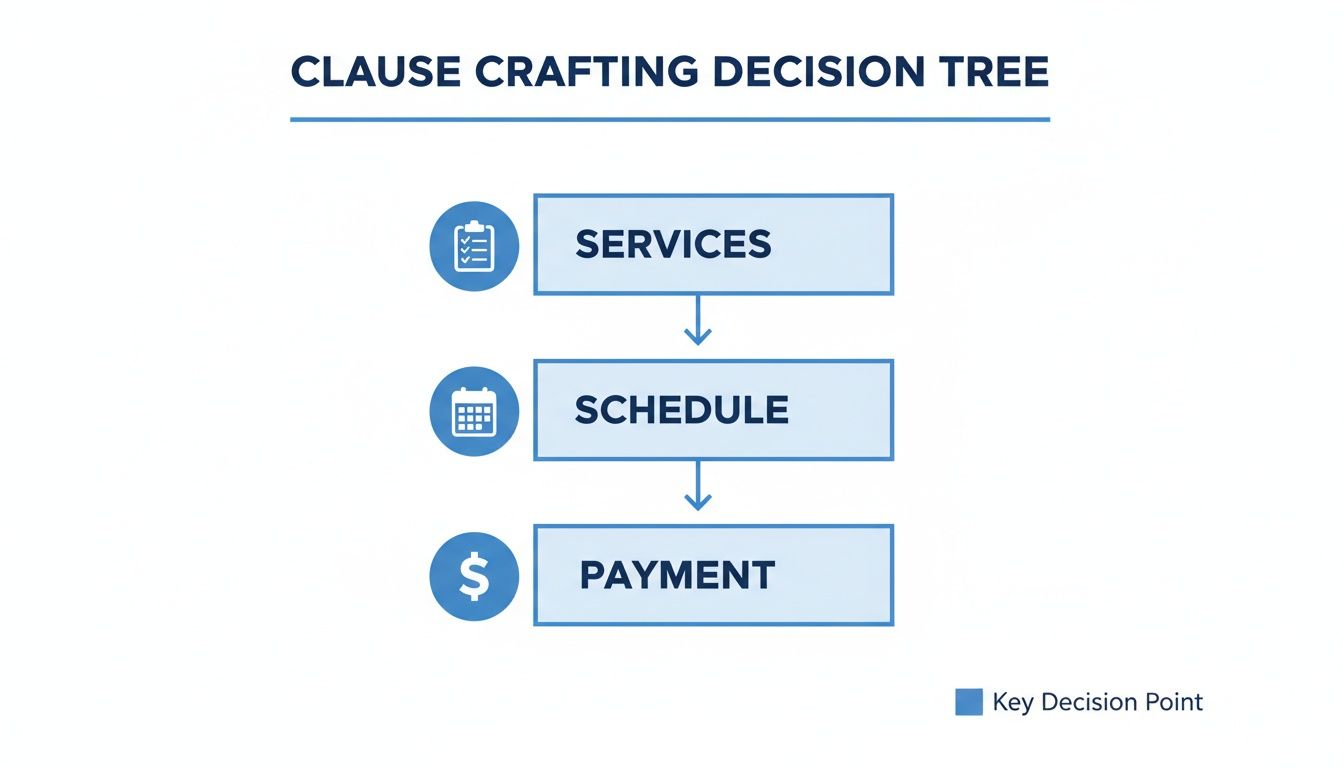
This decision tree shows the foundational building blocks—services, schedule, and payment—that need to be carefully defined to create a compliant and clear agreement.
Financial and Legal Best Practices in NJ
The home care market is a huge part of our economy, projected to hit USD 305.4 billion globally by 2025. Government payers like Medicaid make up a dominant 34.5% of that market, which shows just how vital it is to play by their rules. With North America holding a 42.3% market share, our reimbursement systems demand formal, documented care, making a solid contract non-negotiable.
To protect your family and make sure your agreement is solid, here are a few New Jersey-specific tips:
- Consult an Elder Law Attorney: Before anyone signs on the dotted line, have an attorney specializing in New Jersey elder law look over the document. They can spot potential red flags with caregiver classification, Medicaid rules, and liability you might have missed.
- Document Everything: Keep detailed records of every hour worked, every task completed, and every payment made. This paperwork is your best defense if a dispute ever comes up and is a requirement for Medicaid reimbursement.
- Include a "Severability" Clause: It sounds technical, but this is a simple clause that says if one part of the agreement is found to be invalid, the rest of the contract still stands. It’s a small but powerful piece of protection.
By tackling these legal and financial details head-on, your home care agreement becomes much more than a to-do list—it becomes a powerful tool that provides protection, clarity, and peace of mind for everyone involved.
A Real-World Sample Agreement in Action

Theory and legal clauses are one thing, but seeing a completed home care agreement template in practice is what makes everything click. Let's walk through a realistic scenario to show how you can translate your family's specific needs into a clear, actionable document.
This example will bring all the concepts we've talked about to life.
We'll use the fictional Chen family from Princeton, New Jersey. Their mother, Mrs. Eleanor Chen, has been diagnosed with mild dementia and needs part-time support. Her daughter, Sarah, is her primary caregiver but needs help three days a week to keep up with her own part-time job. They've decided to privately hire a caregiver, James Miller, to fill that role.
Setting the Scene: The Chen Family
For Sarah, the main goals of this agreement are clarity and safety. She needs to make sure James understands her mother's unique needs, which include cognitive engagement and sticking to a consistent daily routine. It's also crucial to formalize the schedule and payment structure to prevent any confusion down the road.
The agreement needs to cover:
- Specific Duties: Tasks that go beyond basic companionship and include dementia-specific activities.
- A Clear Schedule: Three set days per week, with defined start and end times.
- Detailed Payment Terms: This includes an hourly rate and mileage reimbursement for any errands.
By filling out the template with this level of detail, Sarah creates a professional framework that protects both her mother and James.
Filling Out the Services Section
This is where Sarah gets extremely specific. She wants to avoid any ambiguity, so instead of a vague entry like "provide companionship," she details exactly what that looks like for her mother.
Sample Entry for Services and Duties:
- Meal Preparation: Prepare a light lunch following the provided low-sodium dietary guidelines. Ensure Mrs. Chen is hydrated throughout the day.
- Personal Care Cues: Provide gentle verbal reminders for afternoon personal hygiene routines. No hands-on assistance is required at this time.
- Cognitive Engagement: Engage Mrs. Chen in memory-focused activities for at least 60 minutes per shift, such as working on puzzles, looking through photo albums, or listening to music from her youth.
- Light Housekeeping: Tidy the kitchen and living room areas before the end of each shift. This includes washing lunch dishes and wiping down counters.
- Transportation: Drive Mrs. Chen to her weekly art therapy class on Wednesdays using the caregiver’s personal vehicle.
This detailed list sets crystal-clear expectations, leaving no room for guesswork about what the job involves.
Defining the Schedule and Compensation
When it comes to the schedule, precision is key. Sarah and James agree on a fixed part-time schedule that allows Sarah to manage her own work commitments without interruption.
Sample Entry for Schedule:
- Work Days: Monday, Wednesday, and Friday.
- Hours: 9:00 AM to 3:00 PM (6 hours per shift).
- Total Weekly Hours: 18 hours.
The compensation section is just as direct, outlining the financial terms they've agreed upon. This part is vital for preventing payment disputes.
Sample Entry for Compensation:
- Hourly Rate: $25.00 per hour.
- Overtime: Any hours worked beyond 40 in a week (if applicable) will be paid at $37.50 per hour.
- Payment Schedule: Payment will be made via direct deposit every two weeks on Friday.
- Mileage Reimbursement: Mileage for driving Mrs. Chen to appointments will be reimbursed at the current standard IRS rate. The caregiver must submit a mileage log for reimbursement.
By documenting these specifics, both parties have a clear reference point. James knows exactly what he will earn and when he will be paid, and Sarah has a predictable expense for her mother's care. This builds a foundation of professional trust.
As you think about managing agreements and payments, it’s worth looking into how digital forms platforms can help simplify the process.
Finalizing Key Protection Clauses
Finally, Sarah makes sure the agreement includes clauses for confidentiality and termination. These are essential for protecting her family's privacy and providing a clear exit strategy if the arrangement doesn't work out.
The confidentiality clause explicitly prohibits sharing any information or photos of Mrs. Chen on social media. Simple, but critical.
The termination clause states that either party can end the agreement with 14 days' written notice. It also includes a provision for immediate termination in cases of gross misconduct or negligence.
This completed sample shows how a template transforms from a blank document into a personalized plan, providing security and clarity for everyone involved in the care journey.
Your Pre-Signing Checklist and Communication Guide
You’ve drafted the document and all the key details are in place. But don't rush to sign just yet. Before anyone picks up a pen, a few final steps can make all the difference, turning this agreement from a simple piece of paper into the foundation for a strong, respectful relationship.
Think of this as the launch sequence for successful caregiving. It's your last chance to confirm that everyone—the family, the caregiver, and most importantly, your loved one—is on the same page. Skipping this final review can undermine all the hard work you've already put in.
The Final Review Checklist
Before signing on the dotted line, run through this quick checklist. It adds a final layer of protection and ensures everyone feels confident moving forward.
- Read It Through Together: Set aside time to sit down with the caregiver, key family members, and the care recipient (if they're able) to review the entire document.
- Ask All the Questions: Make it clear that this is a safe space to ask for clarification on anything, no matter how small. Now is the time to clear up any confusion.
- Get a Professional Opinion: We strongly recommend having a New Jersey elder law attorney look over the agreement. Their expertise can help you spot potential red flags related to caregiver classification, liability, or state-specific rules.
- Make Final Tweaks: Based on your conversation and any legal feedback, adjust the document as needed. The final version should reflect a true mutual understanding.
- Distribute Copies: Once it's signed, make sure every single person involved gets a complete copy for their records.
This isn’t just about legal diligence; it’s about building trust from day one.
Fostering a Positive Working Relationship
A home care agreement template is more than just a legal document—it’s a roadmap for positive communication. How you handle this final discussion sets the tone for the entire professional relationship. The goal is to create a true partnership, not just a transaction.
Try framing the agreement as a tool for everyone's success. Explain that it’s there to protect both the caregiver and the family by making expectations crystal clear. This approach helps the conversation feel collaborative instead of confrontational.
A great agreement supports a great relationship. It’s a document you create together to ensure the focus can remain where it belongs—on providing compassionate, high-quality care for your loved one.
This is also the perfect opportunity to decide how you’ll communicate moving forward.
Setting Up Communication Channels
Good communication is the lifeblood of any successful home care arrangement. From daily updates and schedule changes to handling unexpected issues, you need reliable ways to stay in touch. Use this pre-signing meeting to agree on the best methods.
Practical Communication Tips to Agree On:
- Pick a Primary Method: Will you use texts for quick updates? Phone calls for bigger conversations? A shared digital log? Agreeing on a main channel prevents important messages from getting lost in the shuffle.
- Set Up a Daily Check-In: A simple end-of-shift text or a note in a logbook can provide incredible peace of mind. It’s an easy way to stay in the loop on your loved one's day, from meals and mood to activities.
- Plan for Problem-Solving: Talk about how you’ll handle disagreements if they pop up. Agreeing to address concerns directly and respectfully before they escalate is the mark of a mature, professional relationship.
- Schedule Regular Reviews: Plan to revisit the care plan and agreement every three to six months. A person's needs change over time, and the agreement should evolve right along with them.
By preparing for both the practical and personal sides of care, you create a supportive environment from the start. For a deeper dive into getting organized, our elderly parent care checklist offers a structured approach to managing all the details. This whole process ensures your home care journey begins with clarity, confidence, and a strong foundation of trust.
Common Questions About Home Care Agreements
It's completely normal to have questions when you're setting up an in-home care plan. Even with a solid template, every family's situation is unique, and you want to get it right. Let's walk through some of the most common questions we hear from families in New Jersey.
The goal here is to make sure you feel confident and informed, leaving no stone unturned. A detailed home care agreement template is your best tool for creating a care arrangement that’s both protective and respectful for everyone involved.
What Happens If We Need to Change the Agreement?
Life is unpredictable, and care needs often change. A loved one’s health might take a turn, or your family's schedule could get upended. A well-drafted home care agreement is built for this reality and includes a clause for "Amendments" or "Modifications."
This section outlines exactly how to handle changes. As a rule, any adjustment—whether it’s to the services provided, the schedule, or the payment rate—needs to be put in writing and signed by both the client (or their representative) and the caregiver. This simple protocol prevents verbal misunderstandings from causing real problems down the road.
Imagine your mother now needs more hands-on help getting from her bed to her favorite chair. You’d simply draft a short addendum detailing the new responsibilities and any pay adjustment, get both signatures, and attach it to the original agreement. Just like that, your contract is current and clear.
Agency Employee Versus Independent Contractor
This is a big one. When you work with a trusted agency like NJ Caregiving, the caregiver is an employee of the agency, not your family. This distinction is critical because it provides a huge layer of protection and simplifies your life immensely.
Working with an agency means they handle all the complicated employer duties:
- Payroll and Taxes: The agency manages all withholdings for Social Security, Medicare, and other required taxes. You don't have to worry about a thing.
- Insurance Coverage: The agency is on the hook for providing workers’ compensation and liability insurance, protecting you from financial risk.
- Vetting and Training: The agency has already done the heavy lifting of background checks and ensuring the caregiver is properly trained.
Your agreement is with the agency, not the individual caregiver. In stark contrast, hiring a private caregiver often makes you their legal employer, saddling you with all of those financial and legal burdens. An agency takes all of that off your plate.
How Do These Agreements Work with Medicaid and Insurance?
A detailed home care agreement isn't just a good idea—it's absolutely essential if you’re seeking reimbursement through NJ Medicaid's MLTSS program or a long-term care insurance policy. These organizations require thorough documentation to approve any claims.
Your agreement acts as the foundational document, proving that a professional, legitimate care plan is in place. It justifies the services being rendered, the hours logged, and the rates charged. Without this formal contract, payers might deny your claims, viewing the setup as informal family help rather than a professional service.
The agreement legitimizes the entire care arrangement. It ensures the services you're paying for align perfectly with the benefits your policy or Medicaid program is set up to cover, preventing costly claim denials.
Can We Include a Clause About Social Media and Privacy?
Yes, and you absolutely should. A "Confidentiality and Privacy" clause is a standard—and vital—part of any modern home care agreement. In a world where everyone shares everything, this section is crucial for protecting your loved one's dignity and your family’s privacy.
This clause should explicitly forbid the caregiver from sharing any personal information about the client or the family. This includes a clear ban on posting photos or videos of your loved one or your home on any social media platform. It establishes a firm professional boundary right from the start, leaving no room for error.
At NJ Caregiving, we know that a secure and compassionate care environment begins with clarity and trust. Our team is here to guide you through every step, making sure your home care plan is built on a solid foundation. If you need expert assistance in Mercer County, visit us at https://njcaregiving.com to learn more.
