

Understanding What Your Family Actually Needs
Before you even start looking at caregiver profiles, let's have a real talk about what your loved one actually needs. I've seen families hire based on wishful thinking, and it usually backfires. We need to talk honestly about current abilities, potential decline, and what level of support truly fits.
This means a realistic look at everything from getting around the house (like stairs and showers) to medication reminders, cooking, and even memory support. These conversations can be difficult, but they're essential. It's not about minimizing anyone; it’s about laying the groundwork for effective care. Think of it as building a house: a solid foundation is key.
Assessing the Needs
So, how do you begin? Start by watching your loved one's daily routine. What are they struggling with? Forgotten medications? Meals becoming a chore? Personal hygiene slipping? Write it down; having concrete examples helps when you talk to potential caregivers.
And don't forget to look ahead. While the present is important, anticipating future needs is crucial. Might mobility decrease over time? Are there health conditions that could require more care later? Thinking about these things now prevents stress later on.
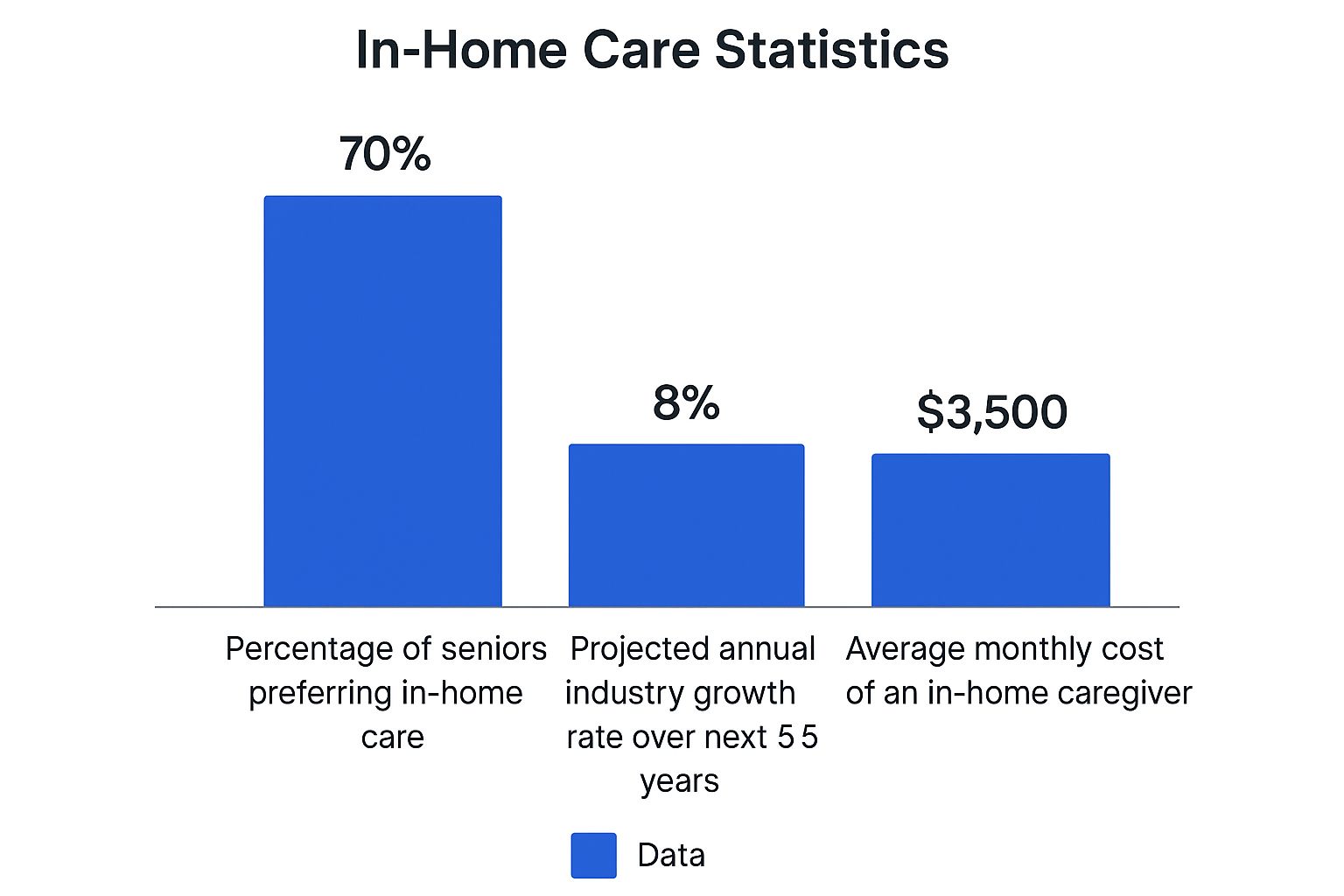
This infographic shows the rising need for in-home care, comparing how many seniors prefer it, how fast the industry is growing, and the average monthly costs. You can see in-home care is a big and growing market, reflecting how many seniors want to age at home. This underlines why planning and understanding the costs are so important.
Understanding the Broader Context
The rising demand for in-home caregivers is happening everywhere. A growing older population and more chronic illnesses contribute to this. In fact, the global home healthcare market is expected to grow by 8.4% each year, reaching $515 billion by 2027. Want to learn more about this? Check out these home care statistics. Discover more insights
Choosing the Right Care Level
Knowing the level of care needed is essential. This isn't just about what's happening now, but anticipating future needs too. To help you figure this out, let's take a look at a comparison of different care levels:
To help you make the best decision for your family, here’s a comparison table of various care levels:
Care Level Assessment Guide
A comprehensive comparison of different care levels and their requirements to help families determine their specific needs
| Care Level | Tasks Included | Required Training | Average Cost Range |
|---|---|---|---|
| Companion Care | Light housekeeping, meal preparation, errands, companionship | Minimal training, CPR/First Aid | $20-$35/hour |
| Personal Care | Bathing, dressing, grooming, toileting, mobility assistance, medication reminders | Certified Nursing Assistant (CNA) or Home Health Aide (HHA) certification | $25-$45/hour |
| Skilled Nursing | Wound care, medication administration, monitoring vital signs, other medical procedures | Registered Nurse (RN) or Licensed Practical Nurse (LPN) license | $40-$80/hour |
| 24-Hour Care | Around-the-clock supervision and assistance with all activities of daily living | CNA, HHA, or specialized training for complex needs | $200-$400/day |
As you can see, the level of care greatly influences the required training and cost. Choosing the appropriate level is critical for both the well-being of your loved one and managing your budget.
Clearly understanding your family's needs—present and future—is the first step to hiring the right in-home caregiver. This foundation helps you find a caregiver who truly gets it and can meet those needs, making the whole experience better for everyone. It empowers families to go through this process with confidence.
Where Quality Caregivers Actually Come From
Let's be honest, finding the right caregiver can feel like searching for a needle in a haystack. You might think certain avenues are the obvious choice, but my experience tells a different story. After years of helping families navigate this, I’ve learned a few things about where the real gems hide (and where to avoid wasting your time). So, let's dive into the best sources for finding a caregiver who truly clicks with your family.
Agencies: A Mixed Bag
Agencies can be a godsend. They handle the initial screening, background checks, and often even the payroll and administrative headaches. But here's the catch: not all agencies are created equal. Some have waiting lists a mile long, while others can place someone practically tomorrow. A quick start isn’t always a good thing. It might mean they're more focused on filling positions than finding the right fit. A longer wait could signal a more thorough vetting process. My advice? Ask pointed questions about their screening procedures. Do they do thorough background checks and verify references? Understanding their priorities will tell you a lot.
Online Platforms: Proceed With Caution
Online platforms like Care.com can feel like a quick solution, but they can also become a major time suck. They often connect you directly with independent caregivers, which offers flexibility and potentially lower costs. The trade-off? You're in charge of all the vetting. Look for platforms with detailed caregiver profiles, background check options, and – crucially – verified reviews. Don't be shy about grilling potential caregivers about their experience and training, particularly concerning your family’s specific needs.
Referrals: Tap Into Your Network
Don't underestimate the power of word-of-mouth! Referrals from friends, neighbors, or healthcare professionals can be absolute gold. These recommendations usually come from firsthand experience, offering invaluable insights you won’t find anywhere else. Of course, what works for one family might not work for another. But referrals give you a solid starting point, a chance to learn about a caregiver’s personality and work ethic from someone you already trust.
Red Flags: Trust Your Gut
No matter where you search, certain red flags should make you hit the brakes. Agencies that pressure you into a quick decision or gloss over important details? Run. Caregivers with inconsistent work histories or vague answers about their past experience? Also a big no-no. Trust your instincts. If something feels off, it probably is.
Realistic Timelines: Patience Is Key
Finding the perfect caregiver takes time. Rushing the process almost guarantees a bad fit. A thorough search, including interviews, background checks, and calling references, can easily take several weeks. Setting realistic expectations from the beginning prevents disappointment and allows you to focus on finding someone truly invested in your loved one’s well-being. Trust me, investing the time upfront is worth it in the long run.
Interviews That Actually Reveal Character
So you've got a shortlist of potential caregivers. Fantastic! Now comes the real detective work – the interviews. It's tempting to treat this like hiring a babysitter, but caring for a loved one is a whole different ballgame. It's deeply personal, often emotionally charged, and your interview process needs to reflect that. Think of it as a conversation, a chance for both of you to see if this is a relationship that can go the distance.
Beyond the Resume: Questions That Matter
Ditch the standard "tell me about yourself" script. You need to dig deeper. Instead of generalities, ask about specific experiences. Try something like, "Tell me about a time a client refused medication. How did you handle that?" Or, "Can you describe a situation where a client's health took a sudden turn? What actions did you take?" These scenario-based questions offer a glimpse into how a candidate thinks under pressure and handles real-world challenges.
The Empathy Test: Looking for Genuine Connection
Caregiving isn't just about skills; it's about genuine empathy. Pay close attention to how candidates talk about their previous clients. Is there warmth and respect in their voice? Do they seem to truly grasp the emotional and physical hurdles that come with aging or disability? Nonverbal cues are just as important. Do they make eye contact? Are they actively listening? These seemingly small things can tell you volumes about a candidate's character.
Discussing the Difficult: Navigating Sensitive Topics
Don't shy away from the tough stuff. Let's be honest, caring for a loved one often involves personal care, medication management, and sometimes even end-of-life discussions. These are sensitive topics, but it's crucial to be upfront about your family's needs and expectations. Lay out the realities of the role without making anyone squirm. A true professional will appreciate your honesty and be prepared to discuss these issues openly.
Gauging Reliability and Flexibility: The Unspoken Qualities
In caregiving, reliability is king. Ask about their availability, their transportation, and what their backup plan is if they get sick. Flexibility is another must-have. Can they roll with unexpected schedule changes? Are they willing to adapt as care needs evolve? These qualities aren't always spelled out on a resume, but they're essential for long-term success.
The Financial Reality: Addressing the Industry Landscape
The home care industry is booming, projected to surpass $107 billion by 2025 in the United States alone, fueled by an aging population and caregiver shortages. Discover more industry stats. Understanding this context can be helpful as you navigate the hiring process. By focusing on these key areas during the interview, you'll be much better equipped to find a caregiver who not only has the right skills but also the compassion and character to provide truly exceptional care.
The Background Checks That Actually Matter

Hiring an in-home caregiver can feel like navigating a minefield. One of the trickiest parts? Background checks. Skipping this crucial step is simply not an option. Let’s talk about which checks are absolutely essential for protecting your family and giving you peace of mind.
Must-Have Background Checks
Some background checks are non-negotiable. A criminal background check is essential, uncovering any past convictions that raise red flags. Equally vital is checking the National Sex Offender Registry. A friendly demeanor isn’t a substitute for this critical safeguard. These checks are your first line of defense. And don’t forget about verifying references. It’s not just a formality; it’s about getting real insights.
Digging Deeper: How To Verify References Effectively
Don't just ask if the caregiver was reliable. Dig deeper! Ask specific questions. For example, “Can you describe a challenging situation this caregiver handled?” Or, “What are their strengths and weaknesses?” These types of questions paint a much clearer picture than a generic "They were great!"
This is about understanding how they’ve handled real-life situations, not just collecting positive feedback. I once knew a family who hired a caregiver with glowing references, only to discover she’d frequently disappear for hours during the workday. A more thorough reference check could have saved them a lot of trouble.
Credentials and Insurance: Separating the Hype From Reality
Certain certifications, such as a Certified Nursing Assistant (CNA) license, indicate specific training and skills. However, other credentials might sound impressive but lack real substance. Don’t be fooled by fancy titles; prioritize practical experience.
Verifying the caregiver's insurance coverage is also critical. This protects both you and the caregiver in case of accidents. Dealing with liability considerations may not be fun, but it’s essential.
Legal Protections: Safeguarding Your Family
Legal requirements can feel overwhelming, but understanding the basics is key. If you're hiring independently, this includes worker's compensation. Clear contracts are crucial, too, outlining everyone's responsibilities and expectations.
These aren’t just formalities. They protect your family from potential legal and financial headaches down the road. Clear agreements prevent misunderstandings and provide a framework for addressing any issues that may arise.
Before we move on, let’s take a look at a breakdown of the essential components of a thorough background check process. This table summarizes everything we’ve discussed so far.
Essential Background Check Components
A detailed breakdown of required background checks, verification steps, and legal documentation needed for safe hiring
| Check Type | What It Reveals | How to Obtain | Red Flags to Watch |
|---|---|---|---|
| Criminal Background Check | Criminal history, convictions | State/Federal agencies | Any history of violence or theft |
| Sex Offender Registry Check | Registration on sex offender databases | National registry database | Listing on the registry |
| Motor Vehicle Record Check | Driving history, violations | State DMV | DUIs, reckless driving |
| Employment Verification | Past employment dates, job titles | Contact previous employers | Gaps in employment, discrepancies |
| Reference Checks | Professional feedback, character assessment | Contact provided references | Vague answers, reluctance to share |
| Professional License Verification | Validity of licenses, certifications | Licensing boards/agencies | Expired or invalid licenses |
The key takeaway here? Don’t cut corners on background checks. It's an investment in your loved one’s safety and well-being. A thorough approach helps build trust and creates a secure environment for everyone involved.
Setting Everyone Up To Win From Day One
Bringing an in-home caregiver into your family's life can feel like a big step. Even with the most experienced caregiver, a smooth transition takes a little planning. It's not just about filling a job; it's about welcoming someone new into your loved one's world. So, how do you create an orientation that sets everyone up for success?
Orientation: A Warm Welcome, Not an Information Dump
The first day should feel like a gentle introduction, not a crash course. Focus on the essentials: your loved one's daily routine, their personal preferences (like that worn-out armchair they love or their must-see TV show), and any little quirks a newcomer might not expect. Maybe your dad refuses to leave the house without his favorite hat, or your mom gets flustered when the phone rings. These details might seem small, but they help a caregiver connect with your loved one on a personal level.
Also, walk through emergency procedures. Make sure the caregiver knows who to contact if something happens: family members, doctors, and local emergency services. Show them where you keep important documents like medical records and insurance information. This isn't about creating anxiety; it's about providing a sense of security and preparedness.
Clear Expectations and Boundaries: Respect Starts Here
It’s crucial to set clear expectations from the beginning, but you don't need to be stiff or formal about it. Talk openly about the caregiver’s responsibilities, work hours, and any house rules you have. Defining boundaries respectfully is key. For example, is it okay for the caregiver to use the family phone for personal calls? Are there any areas of the house that are private? Open communication from the outset prevents misunderstandings and awkwardness later on.
Ongoing Communication: The Key to a Smooth Relationship
A successful caregiver relationship relies on consistent communication. Figure out a system for regular check-ins, whether it's a quick phone call every day, a shared online document, or even just a notebook where everyone can jot down notes. This keeps everyone in the loop about changes in your loved one's health, mood, or routine. Believe me, it can prevent little hiccups from turning into big problems.
Practical Tools: Staying Organized and Consistent
Simple tools can make a world of difference. Templates for care plans, medication logs, and daily reports can provide structure and ensure consistent care, even with changing shifts or if a backup caregiver is needed. A medication log, for example, can help track dosages, times, and any reactions. This not only minimizes errors but also creates a clear record for medical professionals.
Fostering a Supportive Environment: The Secret to Long-Term Happiness
If possible, try to introduce the new caregiver gradually to make the transition smoother for everyone. Having the new caregiver shadow the current one for a few hours, or even a day, can be invaluable. It lets them observe the routine firsthand and ask questions in a relaxed setting.
Don’t forget the importance of constructive feedback. Check in regularly with both your loved one and the caregiver to see how things are going. Address any concerns promptly and respectfully. A supportive environment benefits everyone involved. It fosters a sense of teamwork and creates a positive experience for your loved one, and, honestly, it can do wonders for caregiver retention, which is so important in this field.
Making Quality Care Financially Sustainable

Let's be honest, bringing in-home care into the picture is a big financial decision. But it doesn't have to break the bank. There are ways to make quality care affordable, and that's what we'll explore here. It all starts with understanding the real costs and digging into options you might not have considered.
Beyond the Hourly Rate: Unveiling the True Costs
When you're creating a budget for in-home care, don't just focus on the hourly rate. There's more to it than that. If you're hiring independently, you’ll need to account for payroll taxes, worker's compensation insurance, and maybe even liability coverage. These are essential costs to include in your calculations.
Agencies usually include these in their fees, which simplifies budgeting, but expect those fees to be higher than just the caregiver's hourly wage. Don't forget about the cost of backup care if your regular caregiver can't make it. And those supplies, like incontinence products or special equipment? They add up surprisingly fast.
Exploring Financing Options: Thinking Outside the Box
So many families aren't aware of all the financial resources out there. For example, your long-term care insurance might actually cover some in-home care expenses – it’s definitely worth checking your policy. There are also Veteran programs that offer benefits to help with caregiving costs for those who qualify.
And don't be afraid to think outside the box! Perhaps you could work out a creative payment arrangement with a caregiver, like a slightly lower hourly rate with paid time off. Finding something that works for everyone can make a real difference.
The home care service market is growing rapidly. It's projected to reach $595.10 billion by 2025 and a whopping $1,193.11 billion by 2032, with a 10.4% annual growth rate. Discover market insights. This shows just how much the need for care is increasing and highlights the importance of having a solid financial plan.
Agency vs. Independent: Weighing the Financial Pros and Cons
Choosing between an agency and hiring independently really depends on your priorities and what you can manage. Agencies take care of all the administrative stuff, like payroll and background checks – a huge convenience, but it comes with a higher price tag. Hiring independently gives you more control over costs and who you choose, but it does mean more work for you. Weigh the pros and cons of each to see what truly fits your financial situation and your family's needs.
Managing Costs Over Time: Planning for the Long Haul
Care needs rarely stay the same. What’s affordable today might not be down the road. Regularly check in on your loved one's needs and adjust the care plan as needed. Maybe they started with just companionship, but now need help with personal care. These changes affect the costs, so build some flexibility into your budget.
This might mean exploring other financial resources or changing care arrangements as things evolve. Planning for the long haul means being prepared for changes that come with aging or ongoing health challenges. It's about open communication, adjusting your approach, and making sure quality care remains within reach financially. Being proactive and informed will help you navigate these changes and maintain a sustainable care plan that truly supports your loved one.
Your Personalized Action Plan For Success
Let's get down to brass tacks and create a caregiving roadmap that actually works for your family. Forget generic advice – we're talking a personalized strategy built around your specific needs, timeline, and budget. Think of it like planning a cross-country road trip. You wouldn't just jump in the car and start driving, would you? You'd map your route, plan for gas stops, and maybe even scout out some interesting roadside attractions. Finding the perfect caregiver is no different.
Creating Your Timeline: Realistic Expectations Are Key
First things first: be honest with yourself about your timeline. Rushing this process is a recipe for disaster. Finding the right caregiver takes time – realistically, several weeks, maybe even a couple of months. You need to factor in time for finding potential candidates, interviewing, checking references, and running background checks. Trust me, building in a little extra time for unexpected delays will save you a lot of stress down the road.
For example, let's say you're hoping to have a caregiver in place by July 1st. Starting your search in early May gives you some wiggle room if things don't go exactly according to plan.
Budgeting Smartly: Knowing Your Limits
Next up: your budget. Quality care is an investment, and it's important to be realistic about what you can afford. Don't just think about the hourly rate; factor in things like payroll taxes, insurance, and the potential cost of backup care. Knowing your financial limits from the get-go will help you narrow your search and avoid overspending. It's kind of like house hunting – you wouldn't tour mansions if your budget was more condo-sized, right?
Defining Success Markers: What Does Winning Look Like?
Now for the fun part: defining what success actually looks like for your family. What are your absolute must-haves in a caregiver? Is it someone who's a whiz at medication management? Someone who can engage your loved one in stimulating activities? Someone who can offer emotional support as well as practical assistance? Having a clear picture of your ideal caregiver will help you focus your search and identify the right fit.
Troubleshooting: When Things Don’t Go as Planned
Even with the best-laid plans, things don't always go smoothly. What's your backup plan if your first choice doesn't work out? Maybe it's building relationships with a few different caregivers or agencies. Or perhaps it's having a list of respite care options on hand. Think of it like having a spare tire in your car – you hope you never need it, but it's sure nice to have just in case.
And speaking of being prepared, staying organized is key throughout this whole process. A simple spreadsheet or even a dedicated notebook can be a lifesaver. Use it to track potential caregivers, jot down interview notes, and keep all those important background check details in one place.
Finding the right in-home caregiver can feel overwhelming, but breaking it down into manageable steps makes it much less daunting. With a clear action plan, realistic expectations, and a personalized strategy, you’ll be well on your way to finding the perfect fit for your family. Ready to explore compassionate, personalized in-home care in Princeton, NJ? Contact NJ Caregiving today! Learn more about NJ Caregiving