

As we age, maintaining a healthy weight becomes a cornerstone of overall well-being. However, challenges like decreased appetite, dental issues, or difficulty preparing meals can often lead to unintentional weight loss in seniors. This isn't just about the numbers on a scale; it's about preserving essential muscle mass, sustaining energy levels, and supporting the body's natural resilience. The solution isn't always about eating larger quantities, but rather about eating smarter by choosing foods rich in both calories and vital nutrients.
This guide is designed for family caregivers and seniors looking for practical solutions. We will explore a curated list of high calorie foods for elderly individuals that are not only energy-dense but also packed with vitamins, minerals, and healthy fats. To understand the fundamental principles behind maximizing the nutritional value for seniors, consider these insights on expert advice on making food choices based on nutrient density.
In the following sections, we will break down eight powerhouse foods, from avocados and nuts to whole dairy and dark chocolate. For each item, you’ll find actionable preparation tips, serving suggestions, and specific benefits, providing a clear roadmap to help your loved one get the nourishment they need to thrive.
1. Avocado and Avocado Oil
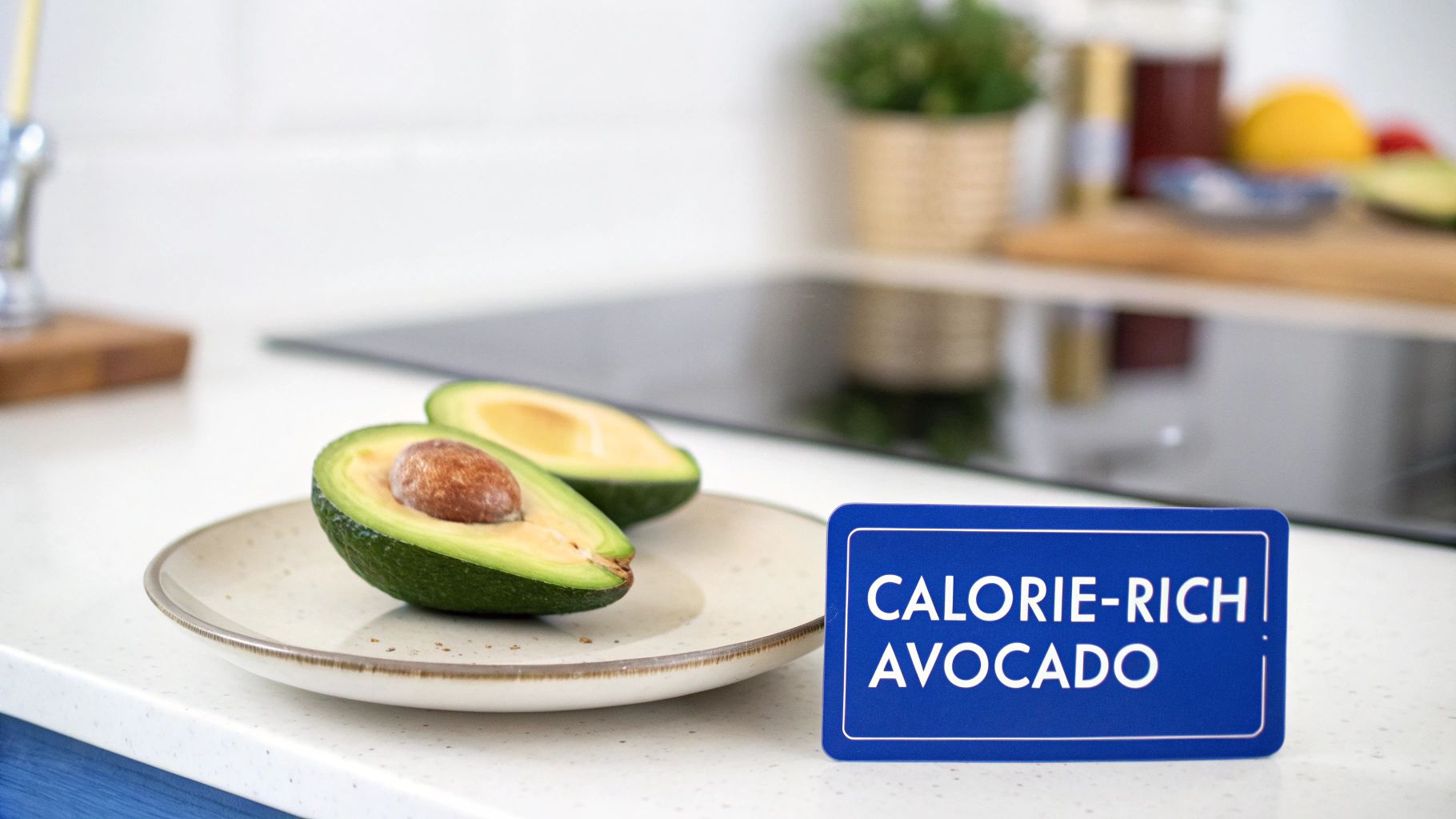
Avocados are a powerhouse of nutrition, making them one of the best high calorie foods for elderly individuals who need to gain or maintain weight. Unlike many other high-calorie options, avocados are packed with heart-healthy monounsaturated fats, fiber, and essential vitamins like potassium and Vitamin E. Their soft, creamy texture is particularly beneficial for seniors who may have difficulty chewing or swallowing.
Just half of a medium avocado contains approximately 160 calories, offering a significant caloric boost in a small, easy-to-digest portion. This nutrient density provides sustained energy without the empty calories found in sugary snacks, supporting overall health, reducing inflammation, and promoting good cardiovascular function.
Why It's a Top Choice for Seniors
The primary advantage of avocados is their combination of high calories and exceptional nutrient profile. The healthy fats are crucial for brain health and absorbing fat-soluble vitamins, while the high potassium content helps manage blood pressure. Their mild flavor and versatility make them easy to incorporate into almost any meal, which is a major plus for seniors with diminished appetites or taste preferences.
Practical Ways to Serve Avocado
- Boost Breakfasts: Mix a quarter of a mashed avocado into oatmeal or scrambled eggs for a creamy texture and extra calories.
- Create Nutrient-Dense Smoothies: Blend avocado with milk, a scoop of protein powder, and a banana for a high-calorie liquid meal that is easy to consume.
- Enhance Simple Meals: Spread mashed avocado on whole-grain toast or add slices to sandwiches and salads for an instant nutritional upgrade.
- Use as a Healthy Base: Create a simple, high-calorie dip or dressing by blending avocado with a little olive oil, lemon juice, and herbs.
Tips for Easy Preparation
To ensure avocados are always ready to use, choose ones that yield to gentle pressure. If they are still hard, place them in a paper bag for a day or two to speed up ripening. Once ripe, you can store them in the refrigerator for several days. For a convenient alternative, consider using avocado oil, which has a high smoke point and a neutral flavor, making it perfect for cooking, roasting vegetables, or drizzling over meals to add extra calories.
2. Nuts and Nut Butters
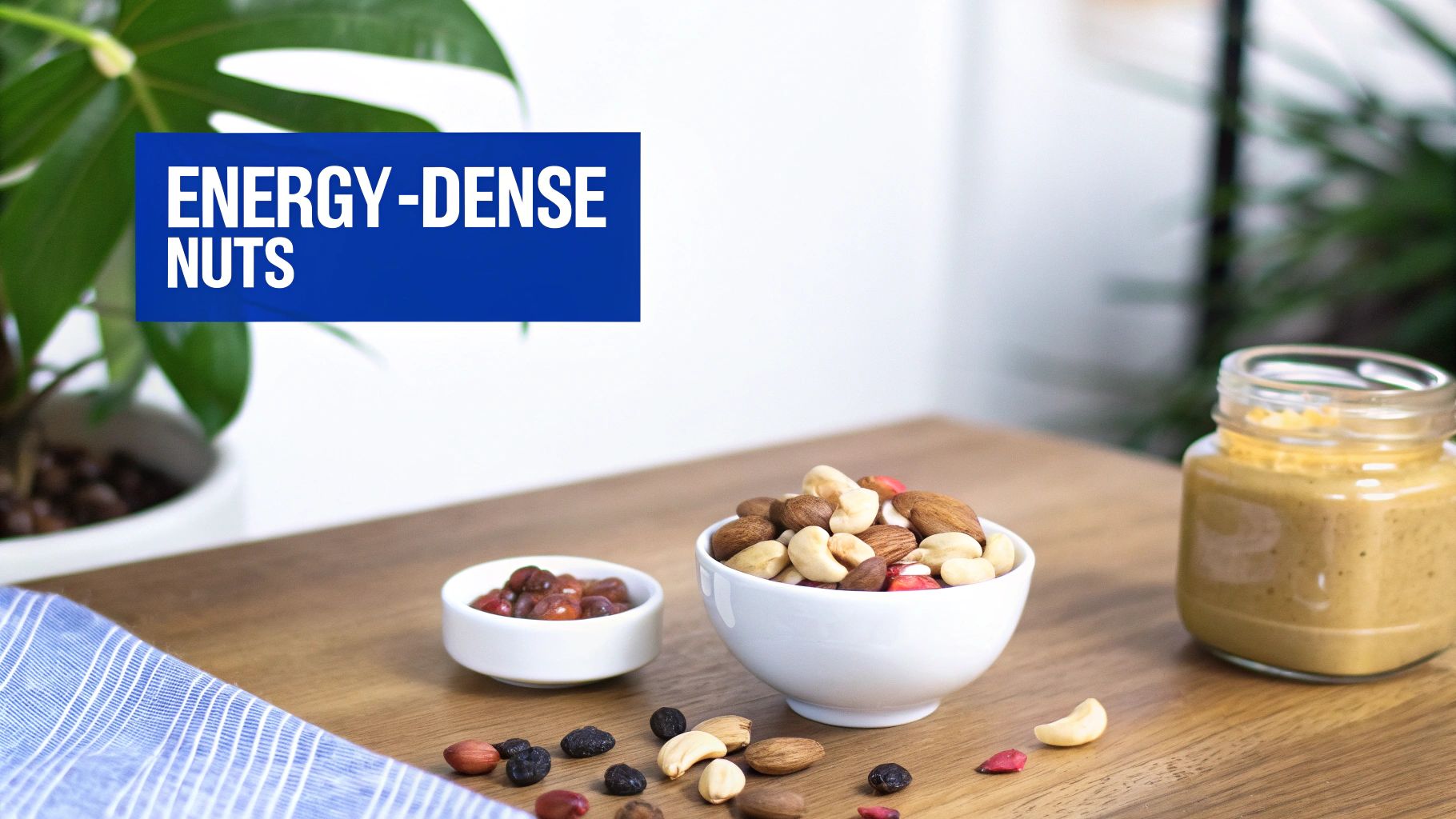
Nuts and their corresponding butters are exceptional high calorie foods for elderly individuals looking to increase their caloric intake efficiently. Packed with healthy fats, protein, and essential minerals like magnesium and zinc, they offer a dense source of nutrition in very small portions. Their versatility makes them a simple yet powerful addition to a senior's diet, supporting muscle maintenance, energy levels, and overall health.
A single ounce (about a small handful) of nuts or two tablespoons of nut butter can contain between 160 and 200 calories. This makes them an ideal choice for seniors with small appetites who need to maximize the nutritional value of every bite. From popular brands like Skippy and Jif to premium options like Justin's, there is a wide variety to suit any preference.
Why It's a Top Choice for Seniors
The main benefit of nuts and nut butters is their incredible calorie density combined with a rich nutrient profile. The healthy monounsaturated and polyunsaturated fats support brain and heart health, while the protein content is vital for preventing age-related muscle loss. Their soft, spreadable form is also perfect for seniors who have difficulty chewing, making nutrition accessible and easy.
Practical Ways to Serve Nuts and Nut Butters
- Enrich Smoothies and Shakes: Blend a tablespoon of almond or peanut butter into a smoothie to add creaminess, protein, and a significant calorie boost.
- Upgrade Snacks: Spread natural peanut butter on apple or banana slices for a balanced, high-energy snack that combines protein, fats, and fiber.
- Fortify Breakfast Foods: Swirl cashew or almond butter into oatmeal, cream of wheat, or yogurt to increase calories and add a rich, nutty flavor.
- Create Savory Sauces: Use peanut or cashew butter as a base for savory sauces to pour over chicken, tofu, or noodles, turning a simple meal into a high-calorie one.
Tips for Easy Preparation
For seniors with dental issues or swallowing difficulties, it is crucial to avoid whole nuts, which can be a choking hazard. Instead, opt for smooth, natural nut butters with no added sugars or hydrogenated oils. You can also use finely ground nuts to sprinkle over desserts or mix into baked goods. Incorporating these nutrient-dense foods into a weekly eating plan can be simplified with a solid strategy. For more ideas on organizing meals, you can learn more about senior meal prep to ensure a consistently nutritious diet.
3. Olive Oil and Other Cooking Oils
Healthy oils are one of the most efficient high calorie foods for elderly individuals because they offer a concentrated source of calories in a very small volume. Pure fats like extra virgin olive oil, coconut oil, and avocado oil are ideal for seniors with poor appetites, as a single tablespoon can add over 120 calories to a meal without adding bulk. They are also packed with health benefits, supporting cardiovascular and cognitive function.
This simple addition can transform a low-calorie meal into a nutrient-dense one. For individuals aiming to increase caloric intake, it is valuable to know exactly how many calories are in a tablespoon of olive oil to track intake accurately. This makes oils a powerful tool for preventing unintended weight loss and promoting overall wellness in a manageable way.
Why It's a Top Choice for Seniors
The primary benefit of healthy oils is their caloric density, allowing for significant calorie addition without overwhelming a small appetite. Extra virgin olive oil, in particular, is rich in monounsaturated fats and antioxidants like oleocanthal, which have anti-inflammatory properties similar to ibuprofen. This makes it an excellent choice for supporting heart health, reducing inflammation, and maintaining brain function.
Practical Ways to Serve Healthy Oils
- Drizzle Generously: Add a tablespoon of extra virgin olive oil over cooked vegetables, soups, pasta dishes, or salads after plating.
- Mix Into Soft Foods: Stir a spoonful of coconut or olive oil into mashed potatoes, oatmeal, or yogurt to seamlessly boost calories.
- Create Calorie-Rich Dressings: Whisk olive oil with lemon juice, vinegar, and herbs to create a simple, high-calorie salad dressing.
- Boost Smoothies: Blend a tablespoon of a neutral-flavored oil like avocado or coconut oil into smoothies for a creamy texture and extra energy.
Tips for Easy Preparation
Choose high-quality, cold-pressed oils like extra virgin olive oil to get the most antioxidants and health benefits. Store oils in a cool, dark place away from the stove to prevent them from going rancid. To easily control portions, use a measuring spoon when adding oil to meals. This ensures a consistent and effective way to fortify foods for seniors needing extra nutritional support.
4. Whole Milk and Dairy Products
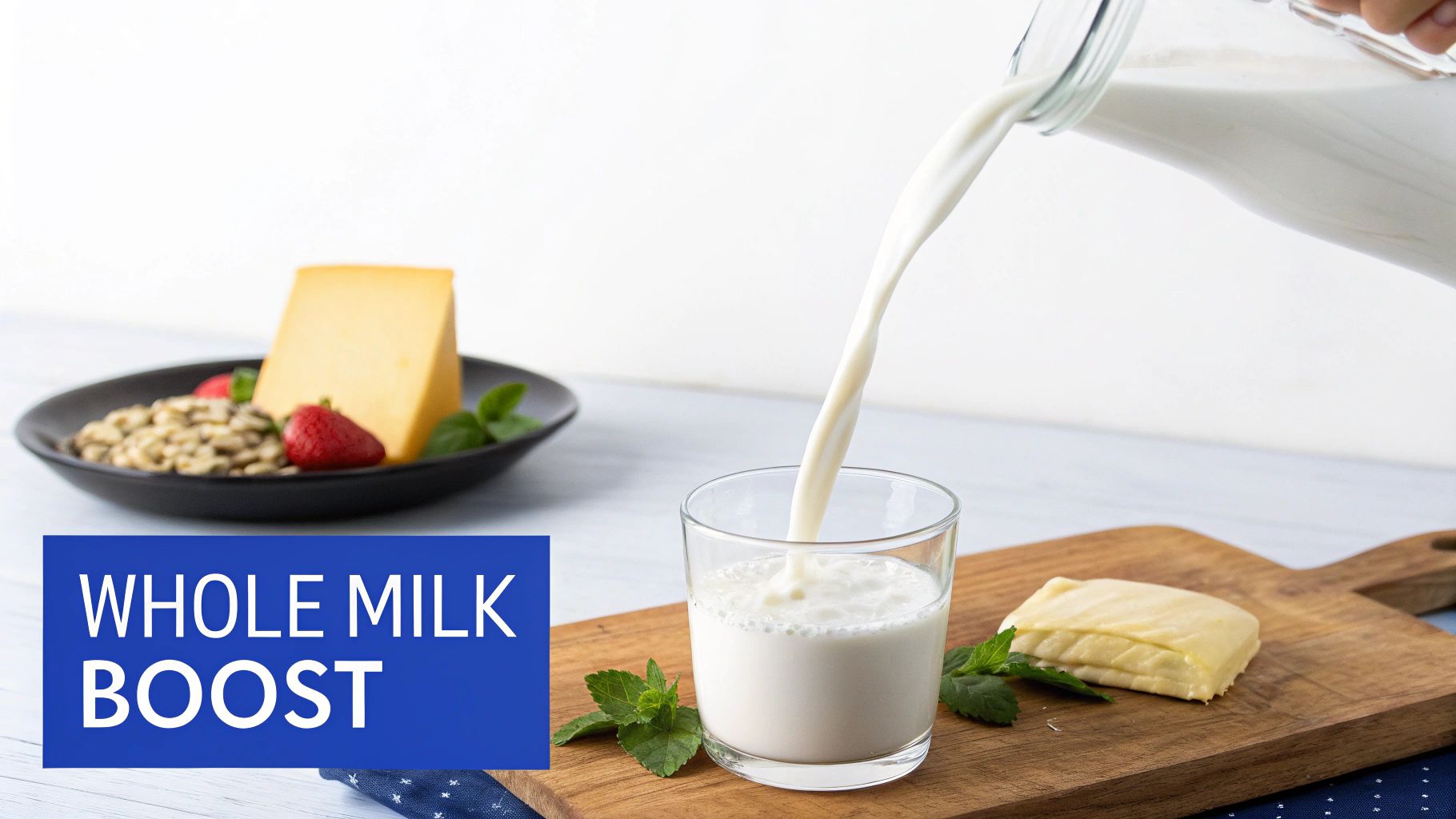
Full-fat dairy products are an excellent source of concentrated nutrition, making them one of the most effective high calorie foods for elderly individuals needing to increase their caloric intake. Options like whole milk, full-fat yogurt, and cheese are rich in high-quality protein, calcium, and vitamin D, which are essential for maintaining muscle mass and bone density. Their familiar taste and typically soft textures make them easy for seniors to accept and consume.
A single cup of whole milk provides around 150 calories and 8 grams of protein, while an ounce of cheddar cheese offers over 100 calories. This caloric density allows seniors to get significant nutritional value from relatively small servings, which is ideal for those with reduced appetites.
Why It's a Top Choice for Seniors
The primary benefit of whole milk and dairy products is their dual role in providing both calories and essential nutrients critical for aging bodies. The high-quality protein helps prevent sarcopenia (age-related muscle loss), while the calcium and vitamin D are vital for bone health, reducing the risk of fractures. These products are also incredibly versatile and can be easily integrated into meals and snacks throughout the day.
Practical Ways to Serve Dairy
- Enrich Beverages and Cereals: Use whole milk instead of water or low-fat milk in oatmeal, coffee, tea, and smoothies to instantly add calories and creaminess.
- Create Calorie-Dense Snacks: Serve full-fat Greek yogurt topped with fruit and nuts, or pair cheese slices with whole-grain crackers for a balanced, high-calorie snack.
- Boost Savory Dishes: Add shredded cheese or a splash of heavy cream to soups, sauces, mashed potatoes, and scrambled eggs for extra richness and calories.
- Offer Comforting Desserts: Prepare milk-based puddings, custards, or milkshakes as a palatable way to increase calorie consumption.
Tips for Easy Preparation
Choose full-fat Greek yogurt for an even greater protein boost compared to regular yogurt. When selecting milk, opt for varieties fortified with Vitamin D to maximize calcium absorption. For seniors with lactose intolerance, many lactose-free whole milk and aged cheese options, like cheddar or Parmesan, are available and well-tolerated. Incorporating these nutrient-dense foods is a key strategy in effective meal prep for seniors.
5. Eggs and Egg-Based Products
Eggs are a complete protein source and one of the most versatile high calorie foods for elderly individuals. They are praised for their nutrient density, offering a perfect balance of high-quality protein, healthy fats, and essential vitamins in a small, easy-to-prepare package. Their naturally soft texture makes them ideal for seniors who may face chewing difficulties.
A single large egg contains approximately 70-80 calories and all nine essential amino acids, which are crucial for muscle maintenance and repair. Additionally, eggs are a rich source of choline for brain health and lutein and zeaxanthin for eye health, making them a powerhouse of nutrition specifically beneficial for the aging population.
Why It's a Top Choice for Seniors
The primary benefit of eggs is their combination of high-quality protein and significant micronutrients at an affordable price. Choline supports cognitive function and memory, while the antioxidants lutein and zeaxanthin help protect against age-related macular degeneration. Their accessibility and ease of preparation make them a reliable staple for consistent, high-quality nutrition.
Practical Ways to Serve Eggs
- Boost Breakfasts: Prepare scrambled eggs with a splash of whole milk and a sprinkle of cheese to increase calorie and protein content.
- Create Nutrient-Dense Meals: Make vegetable omelets or frittatas with added cheese and soft-cooked vegetables for a complete, calorie-rich meal.
- Enhance Simple Meals: Mix a chopped hard-boiled egg into salads or create an egg salad sandwich on soft, whole-grain bread.
- Use as a Creamy Base: Prepare custards, puddings, or quiches, which are soft, high-calorie options that are easy to eat and digest.
Tips for Easy Preparation
To maximize benefits, cook eggs gently to maintain a soft texture, which is easier for seniors to consume. Always ensure eggs are fully cooked to a safe internal temperature to prevent foodborne illness. For an extra nutritional boost, choose omega-3 enriched eggs when possible. Store eggs in their original carton in the main body of the refrigerator, not the door, to maintain a consistent, cool temperature.
6. Dried Fruits and Fruit Concentrates
Dried fruits like dates, apricots, raisins, and prunes are excellent high calorie foods for elderly individuals needing an easy energy boost. Through the dehydration process, water is removed, which concentrates the fruit's natural sugars, calories, and nutrients into a smaller, denser package. This makes them a simple way to add significant calories without requiring the person to eat a large volume of food.
A small quarter-cup serving of raisins or dried apricots can provide over 100 calories, along with fiber, vitamins, and minerals like potassium and iron. Their natural sweetness can also help stimulate a diminished appetite, making them a more appealing snack than blander options and providing a quick source of energy to combat fatigue.
Why It's a Top Choice for Seniors
The primary benefit of dried fruits is their calorie density and convenience. They require no preparation, have a long shelf life, and are easy to portion for snacks throughout the day. For seniors with chewing difficulties, many dried fruits are naturally soft or can be easily softened, providing a sweet and satisfying source of calories that also supports digestive health due to their high fiber content.
Practical Ways to Serve Dried Fruits
- Enrich Hot Cereals: Stir chopped dates, raisins, or apricots into a warm bowl of oatmeal or cream of wheat for added sweetness, texture, and calories.
- Create a High-Calorie Compote: Gently simmer a mix of dried fruits like prunes and apricots in a small amount of water or fruit juice until they are soft and plump. Serve warm, either on its own or over yogurt.
- Blend into Smoothies: Add a few pitted dates or a spoonful of date paste to smoothies to act as a natural sweetener and calorie booster.
- Offer as Simple Snacks: Keep a small bowl of mixed dried fruit readily available for easy, high-energy snacking between meals.
Tips for Easy Preparation
To make dried fruits easier for seniors to eat, soak them in warm water or juice for about 15-20 minutes to soften them. When selecting products, choose unsulfured and unsweetened varieties to avoid unnecessary additives and added sugars. Since the natural sugars are concentrated, it's wise to pair them with a source of protein or fat, like a handful of nuts or a piece of cheese, to help stabilize blood sugar levels.
7. Protein Powders and Nutritional Supplements
When appetite is low or chewing is difficult, specialized protein powders and nutritional supplements can be invaluable. These products are formulated to be high calorie foods for elderly individuals, offering a concentrated source of calories, protein, vitamins, and minerals in an easy-to-consume format. They are specifically designed to address common nutritional gaps and support muscle maintenance, which is crucial for senior health.
A single serving can provide between 150 to 350 calories, along with essential nutrients that might be missing from a limited diet. Products like Ensure, Boost, or Orgain are not just about calories; they provide a balanced nutritional profile that supports overall wellness, making them an efficient and reliable option for seniors struggling with involuntary weight loss or poor appetite.
Why It's a Top Choice for Seniors
These supplements offer a simple solution to complex nutritional challenges. They eliminate the need for extensive meal preparation and are perfect for seniors who feel overwhelmed by large meals. The high protein content, often from sources like whey or casein, helps combat age-related muscle loss (sarcopenia), while added vitamins and minerals support everything from bone density to immune function. For a deeper look into how nutrition fits into a holistic wellness plan, you can learn more about a senior health and wellness guide to aging gracefully.
Practical Ways to Serve Supplements
- Create Fortified Shakes: Blend protein powder or a liquid nutritional supplement with whole milk, a scoop of nut butter, and fruit for a delicious, high-calorie meal replacement.
- Mix into Soft Foods: Unflavored protein or collagen powders can be discreetly mixed into oatmeal, yogurt, pudding, mashed potatoes, or applesauce to boost nutritional content without altering taste.
- Serve as a Convenient Drink: Ready-to-drink shakes like Premier Protein or Ensure are perfect for a quick and easy calorie boost between meals. Chilling them often improves palatability.
- Enhance Soups and Sauces: Add a scoop of unflavored whey or collagen powder to creamy soups or sauces just before serving to increase protein and calories.
Tips for Easy Preparation
To prevent supplement fatigue, rotate between different flavors and brands. Always check with a healthcare provider before starting a new supplement regimen to ensure it aligns with the individual's specific health needs and doesn't interact with medications. For powders, use a shaker bottle or blender to ensure a smooth, clump-free consistency, which is more pleasant for seniors to drink.
8. Dark Chocolate and Cocoa Products
Dark chocolate can be a surprisingly beneficial and enjoyable addition to a list of high calorie foods for elderly individuals. A quality dark chocolate (70% cacao or higher) offers a dense source of calories, with a one-ounce serving containing approximately 170 calories. Unlike milk chocolate, it is rich in powerful antioxidants like flavonoids and polyphenols, which offer significant health advantages.
This caloric density is combined with compounds that support cardiovascular health, improve blood flow, and may even boost cognitive function. The pleasurable taste can also help stimulate a diminished appetite, making it an excellent treat that serves a nutritional purpose beyond just adding calories.
Why It's a Top Choice for Seniors
The primary appeal of dark chocolate is its ability to deliver calories alongside health-promoting compounds in a highly palatable form. The flavonoids it contains are known to support heart health by helping to lower blood pressure and reduce the risk of clotting. Furthermore, dark chocolate contains natural mood-boosting compounds that can improve a senior's overall sense of well-being, making it a treat that nourishes both body and mind.
Practical Ways to Serve Dark Chocolate
- Elevate Breakfast: Stir a tablespoon of unsweetened cocoa powder into oatmeal or a morning smoothie for a rich flavor and calorie boost.
- Create a Warm Beverage: Make a nutrient-rich hot chocolate using dark cocoa powder, whole milk, and a touch of sweetener instead of a pre-made mix.
- Melt and Drizzle: Melt a square of dark chocolate and drizzle it over fruit, yogurt, or whole-grain toast for an easy and delicious calorie enhancement.
- Combine with Other Foods: Offer a small portion of dark chocolate alongside a handful of nuts or seeds for a snack that combines healthy fats, protein, and antioxidants.
Tips for Easy Preparation
For maximum health benefits, choose a dark chocolate with at least 70% cacao content, as this ensures a higher concentration of beneficial compounds and less sugar. It is best to enjoy it in moderation, with one to two ounces daily being a good target. Since dark chocolate contains a small amount of caffeine, it is wise to consume it earlier in the day to avoid any potential disruption to sleep patterns.
8-Item Comparison of High-Calorie Foods for Older Adults
| Item | Preparation & Complexity 🔄 | Cost & Storage ⚡ | Expected Outcomes ⭐ | Ideal Use Cases 💡 | Key Advantages 📊 | Practical Tip 💡 |
|---|---|---|---|---|---|---|
| Avocado and Avocado Oil | 🔄 Medium — requires cutting/peeling; oil easy to use | ⚡ Medium cost; ripe fruit short shelf life; oil stable | ⭐⭐⭐⭐ — calorie-dense healthy fats, sustained energy | Soft foods, smoothies, toast, high-calorie dressings for seniors | 📊 Nutrient-dense: monounsaturated fats, potassium, vitamin E | 💡 Choose ripe fruit, pre-slice, use lemon to prevent browning |
| Nuts and Nut Butters | 🔄 Low — ready-to-eat; butters require spreading | ⚡ Variable cost; long shelf life; pantry stable | ⭐⭐⭐⭐ — concentrated calories + protein for muscle maintenance | Small-portioned snacks, spreads on fruit/toast, smoothies | 📊 High calories/protein; magnesium, zinc, vitamin E | 💡 Pick natural butters; grind nuts if choking risk |
| Olive Oil and Other Cooking Oils | 🔄 Very Low — measure and add | ⚡ Low-to-medium cost per use; long shelf life; concentrated | ⭐⭐⭐ — concentrated caloric boost; aids nutrient absorption | Drizzle over foods, mix into mashed sides, smoothies | 📊 Very concentrated calories; antioxidant benefits (EVOO) | 💡 Use measured spoons; prefer extra virgin for antioxidants |
| Whole Milk and Dairy Products | 🔄 Very Low — ready-to-drink/heat; minimal prep | ⚡ Low cost; refrigerate; moderate shelf life | ⭐⭐⭐⭐ — complete protein, calcium and vitamin D for bone health | Smoothies, puddings, yogurt/cheese snacks for bone & muscle support | 📊 High-quality protein, calcium, vitamin D | 💡 Use fortified or lactose-free options if needed; choose Greek yogurt for more protein |
| Eggs and Egg-Based Products | 🔄 Low–Medium — simple cooking (scramble, boil) | ⚡ Low cost; refrigerated; versatile storage | ⭐⭐⭐⭐⭐ — complete amino acids, choline, lutein for brain/eye health | Quick meals, soft-boiled/snacks, high-protein breakfasts | 📊 Complete protein, nutrient-dense, versatile preparation | 💡 Cook fully for safety; gentle cooking preserves texture and digestibility |
| Dried Fruits and Fruit Concentrates | 🔄 Low — ready-to-eat; soaking softens | ⚡ Low-to-medium cost; long shelf life; compact | ⭐⭐⭐ — rapid energy from concentrated sugars; fiber and minerals | Portable snacks, add-ins for cereal/oatmeal, soft snacks when soaked | 📊 Very calorie-dense per weight; antioxidants and potassium | 💡 Soak to soften, pair with protein, limit for blood sugar control |
| Protein Powders and Nutritional Supplements | 🔄 Low — mix or shake; some prep for blending | ⚡ Medium–High cost; long shelf life; RTD options available | ⭐⭐⭐⭐⭐ — targeted calorie/protein/vitamin delivery for malnutrition | Meal replacement, post-illness recovery, muscle maintenance | 📊 Fortified complete profiles; high protein per serving | 💡 Blend with milk/yogurt, vary flavors, use as supplement not sole diet |
| Dark Chocolate and Cocoa Products | 🔄 Very Low — ready-to-eat; minimal prep | ⚡ Low-to-medium cost; shelf-stable | ⭐⭐⭐ — antioxidant and mood benefits with calorie density | Small treats, cognitive/mood support, calorie-dense snacks | 📊 Flavonoids and polyphenols; satisfying small portions | 💡 Choose ≥70% cacao, limit to 1–2 oz daily, consume earlier in day |
Putting It All Together: A Compassionate Approach to Senior Nutrition
Navigating the nutritional needs of an aging loved one can feel overwhelming, but as we've explored, the solution lies in a thoughtful and compassionate strategy. The key is to make every single bite count by focusing on delicious, familiar, and nutrient-dense options. This isn't about forcing large, unappealing meals; it's about enriching the foods they already enjoy with powerful, calorie-rich ingredients.
From the creamy, healthy fats of avocado to the versatile power of olive oil and the simple comfort of whole-milk dairy, this guide has provided a toolkit of high calorie foods for elderly individuals that support strength, energy, and overall well-being. By integrating these items, you transform everyday meals into opportunities for profound nourishment. A spoonful of nut butter in oatmeal, a drizzle of olive oil over vegetables, or a rich, egg-based custard for dessert are small changes that yield significant health dividends.
Key Takeaways for Immediate Action
To put this knowledge into practice, focus on these core principles:
- Enrich, Don't Enlarge: Instead of increasing portion sizes, increase the caloric density of existing meals. Add avocado, cheese, or nut butters to sandwiches, soups, and smoothies.
- Prioritize Healthy Fats: Fats are the most calorie-dense macronutrient. Emphasize monounsaturated and polyunsaturated fats from sources like olive oil, nuts, and avocados to support heart and brain health.
- Make Snacks Strategic: Use snack times as an opportunity to boost calorie intake. A handful of dried fruit, a piece of dark chocolate, or a small bowl of full-fat yogurt can be both a treat and a powerful nutritional supplement.
- Consult Professionals: Always remember that this advice is a starting point. A registered dietitian or healthcare provider is your most valuable resource for creating a personalized plan, especially for seniors with conditions like diabetes, kidney disease, or dysphagia (swallowing difficulties).
The Broader Impact of Nutrient-Dense Eating
Mastering this approach is about more than just preventing weight loss. It's about empowering seniors with the energy to engage in activities they love, the strength to maintain their independence, and the cognitive function to stay connected with family and friends. A well-nourished body is more resilient against illness and recovers more quickly from setbacks. By focusing on high calorie foods for elderly loved ones, you are directly contributing to their quality of life, dignity, and vitality. This journey is an act of love, ensuring that their golden years are as vibrant and healthy as possible.
Feeling overwhelmed with meal planning and preparation for your loved one? The compassionate caregivers at NJ Caregiving can help create and serve delicious, nourishing meals tailored to specific dietary needs, including incorporating these high calorie foods for elderly residents. Visit NJ Caregiving to learn how our dedicated in-home support can bring peace of mind to your family and vitality to your loved one.