
When you first type “elderly care services near me” into a search bar, the results can feel overwhelming. It’s a deeply personal search, one that’s about so much more than just logistics. You're looking for a way to give someone you love the safety, comfort, and dignity they deserve.
This guide is your local roadmap. We’re here to help you cut through the noise and create a clear, actionable plan for your family, right here in Mercer County.
Your Local Guide To Finding The Right Elderly Care
Finding the right care isn’t a one-size-fits-all process. The perfect solution for a family in Princeton might be a few hours of companionship each week to combat loneliness. For another family just down the road, it could mean daily skilled nursing care or specialized support for a loved one with dementia.
It all comes down to understanding your loved one’s unique situation—their medical needs, their mobility, and their desire to stay connected and engaged.
Understanding the Growing Need for Care
If you're feeling the pressure of this search, you’re not alone. The demand for quality elderly care is growing at an incredible pace, reflecting a massive demographic shift. The global elderly care market was valued at around USD 1.2 trillion in 2023 and is expected to more than double to USD 2.5 trillion by 2032.
With the number of people over 60 projected to hit 2 billion by 2050, finding a reliable, high-quality care partner is more important than ever.
To help you get a quick sense of the landscape, here's a simple breakdown of the most common care options.
Quick Guide To Elderly Care Options
| Care Service Type | Best For | Typical Location |
|---|---|---|
| In-Home Personal Care | Seniors who need help with daily activities but want to stay home. | The senior's own home. |
| Skilled Nursing Care | Individuals with complex medical needs requiring a licensed nurse. | At home or in a facility. |
| Companionship | Seniors feeling isolated or needing social interaction and light help. | The senior's own home. |
| Respite Care | Family caregivers who need a temporary break to rest and recharge. | At home or short-term facility stay. |
| Specialized Dementia Care | Individuals with Alzheimer's or dementia needing a safe, structured environment. | At home with trained caregivers. |
This table is just a starting point, but it helps frame the conversation as you begin to explore what’s available.
Navigating Your Local Options
The real key is moving from a broad internet search to a focused evaluation of local providers in our community. Knowing what to look for makes all the difference. Start by thinking through these core areas:
- Level of Assistance: Does your loved one just need a hand with meals and light housekeeping, or do they require medical support like managing medications or caring for a wound?
- Social and Emotional Needs: Is loneliness becoming a major concern? Sometimes, the most important thing a caregiver can provide is simply being there for a good conversation.
- Family Caregiver Support: Are you the primary caregiver? Respite care isn't a luxury; it’s a necessity that provides short-term relief to prevent burnout so you can be at your best.
The ultimate goal is to enhance your loved one's quality of life while bringing your family peace of mind. Finding the right care partner means finding someone who understands your unique situation and is dedicated to creating a supportive, safe environment.
By breaking down the process, the task of finding the best home care agencies near you becomes much clearer. We’ll walk you through every step, from decoding the types of care to asking the right questions.
Decoding The Different Types Of Senior Care Services
When you first start searching for "elderly care services near me," it can feel like you’re trying to learn a new language. The terms all blend together. To find the right support for your family, you need to understand what these services actually look like day-to-day, not just what the industry calls them.
Each type of care is designed for a different set of needs, from simple companionship all the way to complex medical support. Let's break down the main options you'll find around the Princeton area. Think of it as matching the right tool to the job—your family's unique situation—to ensure your loved one is safe, comfortable, and living with dignity.
In-Home Personal And Companion Care
This is where most families start. In-home care is all about helping seniors with the Activities of Daily Living (ADLs) so they can stay right where they want to be: at home. This isn't medical care; it's hands-on support that helps maintain independence and quality of life.
A caregiver might visit for just a few hours a day or provide around-the-clock assistance. Their role is to step in and help with tasks that have become a little too challenging, like:
- Personal Hygiene: Helping with bathing, getting dressed, and grooming.
- Meal Preparation: Cooking healthy meals and making sure they're staying hydrated.
- Light Housekeeping: Keeping the home tidy, handling laundry, and running errands.
- Mobility Assistance: Offering a steady hand to help your loved one move safely around the house.
But it goes beyond the practical stuff. Companion care is specifically designed to combat the loneliness that can creep in. A companion caregiver is there for social interaction—sharing conversations, enjoying hobbies together, or providing transportation to appointments and social visits.
Skilled Nursing Care At Home
When health needs become more complex, it’s time to look at skilled nursing care. This is a step up from personal care and must be provided by a licensed Registered Nurse (RN) or Licensed Practical Nurse (LPN), all under a doctor's supervision. It’s for someone recovering from surgery, managing a serious chronic illness, or needing regular medical attention.
Basically, you’re bringing clinical expertise right into the living room. For families seeking this specific type of in-home support, providers like Working Nurses Homecare offer a crucial lifeline.
Skilled nursing services can include things like:
- Medication administration and management.
- Wound care and changing dressings.
- Monitoring vital signs.
- Administering injections or IV therapy.
This level of care is vital for preventing rehospitalizations and managing health conditions in a familiar, comfortable environment.
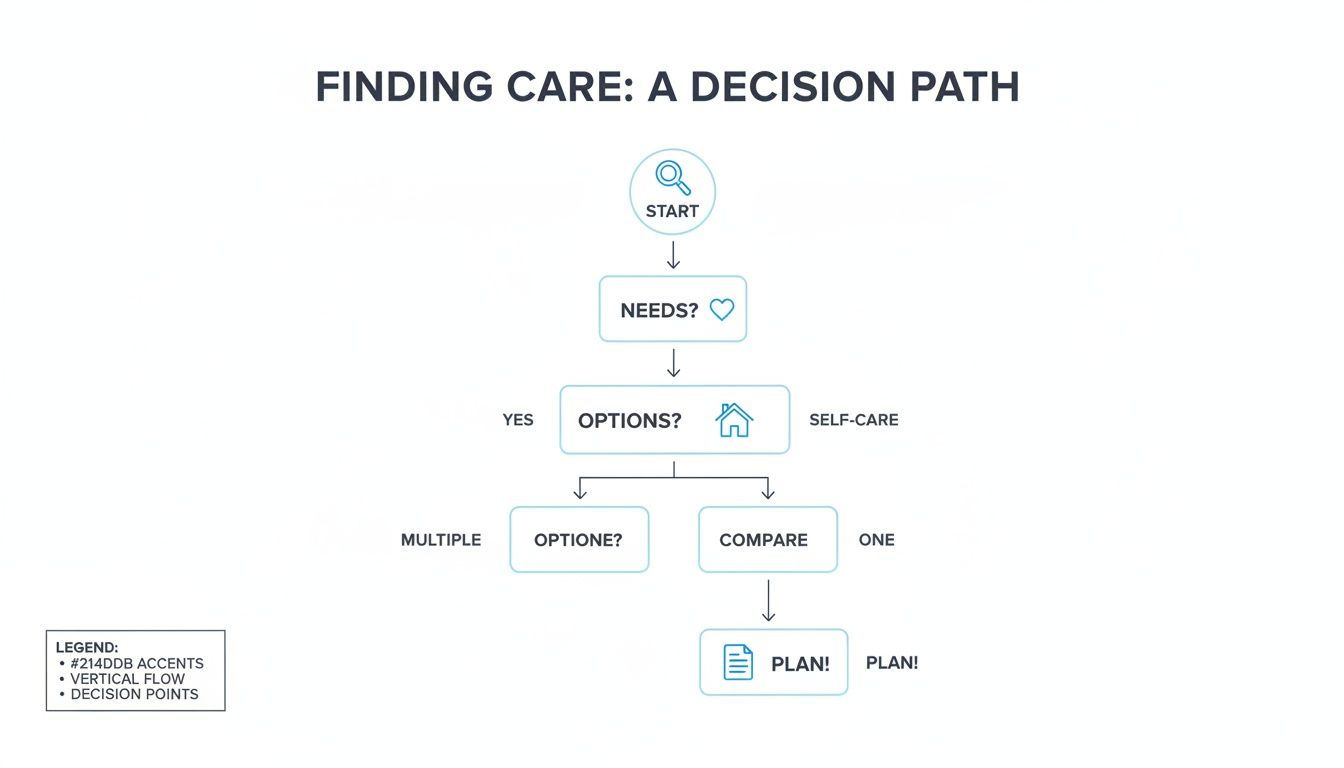
As this path shows, the first step is always getting a clear handle on what's truly needed before you start looking at options and making a plan.
Respite Care For Family Caregivers
Being a family caregiver is one of the most demanding jobs there is, and burnout is a very real danger. That’s where respite care comes in. It’s a short-term service that gives you, the caregiver, a much-needed break. It’s your chance to rest, run errands, or just recharge, knowing your loved one is in great hands.
Respite care can be scheduled for a few hours, an entire day, or even a couple of weeks. A professional caregiver simply steps in and takes over your duties, ensuring there are no gaps in care while you get essential time for yourself.
Specialized Dementia And Alzheimer's Care
Caring for someone with dementia or Alzheimer's is a unique challenge. It requires a different set of skills and a whole lot of patience. These conditions impact memory, behavior, and communication in ways that a standard caregiver might not be prepared for.
Specialized dementia care is focused on creating a safe, calm, and structured environment. Caregivers with this specific training know how to:
- Manage difficult behaviors with compassion.
- Create consistent daily routines to reduce anxiety and confusion.
- Engage your loved one in activities that help stimulate their mind.
- Keep the home secure to prevent wandering.
This kind of expert support can make a world of difference in the quality of life for someone with cognitive decline and brings incredible peace of mind to the whole family. You can learn more about how https://njcaregiving.com/in-home-memory-care/ are structured to meet these unique needs.
How To Evaluate Local Care Providers In Your Area
Once you have a better sense of the kind of help your loved one needs, your search for "elderly care services near me" gets a whole lot easier. You can stop casting a wide net and start building a shortlist of high-quality, reputable agencies right here in our community.
This part of the process is more than just a quick Google search. It’s about doing your homework to make sure the provider you choose meets the highest standards of safety, professionalism, and genuine compassion. Think of it as building a foundation of trust—you need to know, without a doubt, that the agency you hire is both capable and completely reliable.
Let's walk through a practical way to vet and identify the best local care providers in the Mercer County area.
Starting Your Search With Trusted Sources
The best referrals almost always come from professionals who see these agencies in action every single day. A great first step is to tap into your local networks for their top recommendations.
These sources act like a powerful filter, pointing you toward providers with a proven track record of quality and reliability right here in our local healthcare community.
- Healthcare Providers: Ask your loved one's family doctor, specialists, or even a discharge planner at a facility like Penn Medicine Princeton Medical Center. They know who does good work.
- Local Senior Resources: Give the Mercer County Office on Aging a call or check with other local community centers. These organizations are dedicated to supporting seniors and can provide lists of licensed home care agencies.
- Word-of-Mouth: This is invaluable. Talk to friends, neighbors, or coworkers who have been through this. Hearing about their personal experiences can tell you a lot about an agency's responsiveness and the quality of their caregivers.
The Non-Negotiables Of A Reputable Agency
With a list of potential agencies in hand, it's time to screen them. You're looking for a specific set of qualifications that separate the truly professional, trustworthy agencies from the rest. These are the absolute non-negotiables.
A good agency will be open and proud of its credentials. If a provider seems hesitant to share this information, that’s a major red flag.
Key Takeaway: An agency's commitment to proper licensing, thorough background checks, and full insurance coverage directly reflects its commitment to your loved one's safety. These aren't just formalities; they are the fundamental pillars of quality care.
Before you even schedule a meeting, make sure you can check off these boxes:
-
State Licensing and Certifications: In New Jersey, home health agencies must be licensed. This isn't optional. You can often verify an agency’s status with the state, like checking a nurse's credentials with the NJ Board of Nursing. This confirms they meet state-mandated standards for care.
-
Caregiver Screening and Background Checks: Ask them point-blank about their hiring process. A quality agency conducts comprehensive, nationwide criminal background checks, verifies every reference, and confirms employment history for every single caregiver on their team.
-
Insurance and Bonding: This is absolutely critical. The agency must be fully insured and bonded. This protects you and your family from liability if there's an accident or theft in the home. It means the agency, not you, is responsible.
-
Caregiver Training and Supervision: What kind of training do their caregivers receive when they start, and what about ongoing education? Do they have specialized training for conditions like dementia or diabetes? Just as important, ask how caregivers are supervised to ensure the care plan is being followed correctly.
Critical Questions To Ask Every Care Agency

That first meeting with a home care agency is more than just a formality. It’s your chance to look past the glossy brochures and get a real feel for how they operate. This is where you separate the truly great agencies from the rest.
Think of it as an interview—where you're in the driver's seat. A quality, transparent agency will welcome your questions and give you straight answers. Vague responses are a red flag. Let’s walk through the essential things you need to ask.
Understanding Caregiver Expertise And Training
The single most important factor in your experience will be the person who shows up at the door. Their skills, compassion, and training are everything. You need to know exactly who the agency trusts to send into your home.
Here’s what you need to dig into:
- What is your complete screening process for new caregivers? A basic background check isn't enough. A thorough agency will talk about multi-stage interviews, checking every single reference, verifying driving records, and confirming past employment.
- What initial and ongoing training do you provide? Every caregiver should have a solid foundation in safety, personal care basics, and communication. But the best agencies don't stop there; they require ongoing education, especially for complex needs like dementia care or managing chronic conditions.
- Are your caregivers W-2 employees or independent contractors? This is a huge deal. Agencies that hire their caregivers as W-2 employees are responsible for their training, insurance, and supervision. This gives you a massive layer of protection and accountability.
A provider worth your time will be proud to tell you about their rigorous standards. It's what sets them apart.
The best agencies invest heavily in their caregivers. They understand that a well-trained, thoroughly vetted, and professionally supported team is the only way to deliver consistently excellent care.
How They Personalize The Care Plan
Your parent isn’t a case file. They have their own routines, their own preferences, and their own unique health challenges. A generic, one-size-fits-all approach is doomed to fail. You need a partner who builds the care around your loved one, not the other way around.
Ask them how they make it personal:
- How is the initial care plan developed? The gold standard involves a Registered Nurse (RN) or an experienced care manager coming to the home for a detailed assessment. They should want to speak with both you and your loved one to make sure everyone is on the same page.
- How do you match a caregiver with my loved one? This should go way beyond just who's available on Tuesdays. A great agency thinks about personality, shared interests, and communication styles to foster a real, human connection.
- How often is the care plan reviewed and updated? Life happens. A person's needs can change quickly. A proactive agency will have a set schedule for reassessments—usually every 60-90 days—and will be ready to adjust the plan immediately if there's a hospitalization or a shift in their health.
Clarifying Safety And Communication Protocols
When you hand over the keys, you need absolute confidence that there’s a solid plan for anything that could go wrong. Clear emergency procedures and open lines of communication aren't optional—they’re essential.
Before you wrap up, make sure you get answers to these:
- What’s your procedure for a medical emergency? There should be a crystal-clear protocol: call 911 first, then immediately notify the family and the agency supervisor. No hesitation.
- What happens if our regular caregiver is sick or can't make their shift? A professional agency won't leave you scrambling. They should have a system for sending a qualified, fully-briefed backup caregiver to ensure there are no gaps in care.
- Who is our main point of contact at the agency, and how can we reach them? You should have a dedicated care manager or coordinator's name and number, plus a reliable after-hours line for urgent issues that pop up on nights or weekends.
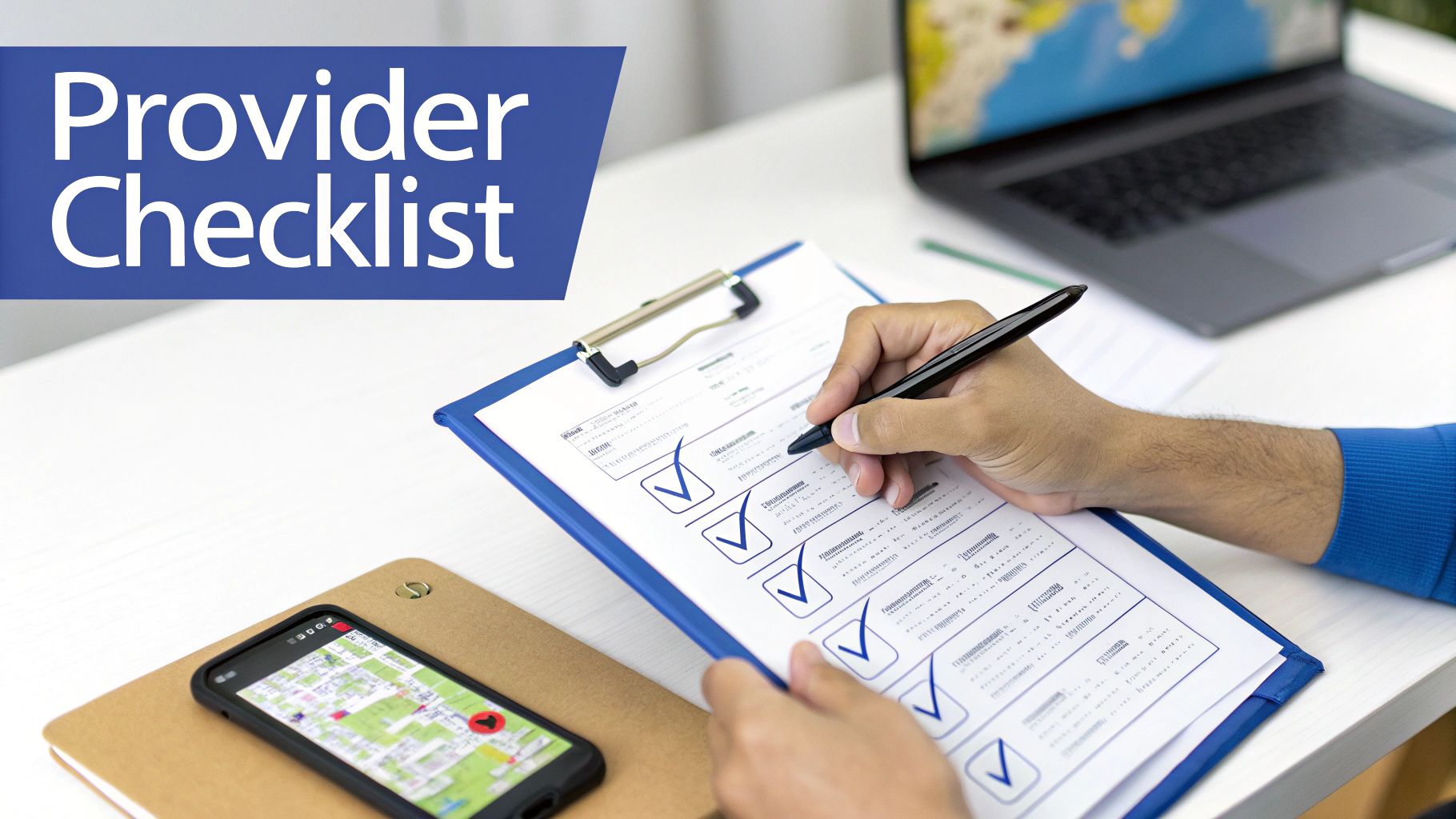
To help you keep everything straight when talking to different agencies, we’ve put together a simple checklist. You can use this to compare your options side-by-side and see who truly measures up.
Provider Evaluation Checklist
| Question Category | Specific Question to Ask | Ideal Response Cues |
|---|---|---|
| Caregiver Screening | What is your complete screening process? | Mentions multi-stage interviews, reference checks, and going beyond a simple background check. |
| Caregiver Status | Are caregivers W-2 employees or contractors? | W-2 employees. This shows the agency invests in and manages their team directly. |
| Training | What initial and ongoing training do you provide? | Details specific initial training and a commitment to continuous education, especially for specialized care. |
| Care Plan Creation | Who develops the initial care plan? | A Registered Nurse (RN) or experienced care manager conducts an in-home assessment. |
| Caregiver Matching | How do you match a caregiver to a client? | They consider personality, interests, and communication style, not just scheduling availability. |
| Plan Reviews | How often is the care plan reassessed? | They schedule regular reviews (e.g., every 60-90 days) and adjust as needed after health changes. |
| Emergency Protocol | What is your process for medical emergencies? | A clear "Call 911 first, then notify family & agency" policy. |
| Backup Care | What if our caregiver is sick? | They have a reliable system for sending a qualified, briefed backup caregiver. |
| Communication | Who is our main point of contact? | You get a dedicated care manager and an after-hours number for urgent matters. |
Using this checklist helps ensure you're asking the same critical questions of every potential provider, making your final decision much clearer and more confident.
Navigating Care Costs And Payment Options In New Jersey
Let's talk about one of the biggest concerns for any family searching for "elderly care services near me"—the cost. Figuring out the financial side of care is just as critical as finding the right caregiver. The good news is that families in New Jersey have several ways to build a sustainable plan.
This section will give you a clear look at what you can expect to pay for care in the Princeton area and walk you through the different ways to fund it. From private savings to state-level programs, understanding your options is the first step toward peace of mind.
Understanding The Primary Payment Methods
For most families, funding care isn’t about a single source. It’s usually a mix of different resources, so it’s smart to explore every avenue available to you.
-
Private Pay: This is the most straightforward method. Families use personal savings, retirement funds, or other assets to pay for services directly. It gives you the most flexibility and control over the type of care and how long it's provided.
-
Long-Term Care Insurance: For those who planned ahead, a long-term care insurance policy can be a game-changer. These policies are specifically designed to cover services like in-home assistance, which your regular health insurance almost never touches.
For many, this type of insurance is a core part of financing elderly care, so it’s incredibly helpful to start by understanding the real costs of long-term care insurance. This knowledge helps you get the most out of your policy and plan effectively.
New Jersey Specific Programs That Can Help
Beyond your own funds, New Jersey has some fantastic programs designed to help seniors get the care they need right at home. The goal is to prevent or delay the need for a nursing home, and these programs can be a real lifeline for families in Mercer County.
Two of the most impactful programs are managed through the state's Medicaid system, which you might know as NJ FamilyCare.
The whole point of these state programs is to empower seniors to age in place with safety and dignity. By offering financial help for in-home services, New Jersey helps people stay independent and connected to their communities.
The key is knowing the eligibility rules and how to apply to unlock these valuable benefits.
NJ FamilyCare And The MLTSS Waiver
For seniors who meet certain financial and medical criteria, New Jersey's Medicaid program offers major support for in-home care through its Managed Long-Term Services and Supports (MLTSS) program.
This isn’t a separate application you have to hunt down. Instead, people enrolled in NJ FamilyCare who need support are automatically assessed for MLTSS. If they are found to need a nursing facility level of care but can be safely cared for at home, the program can cover a huge range of services.
Services Often Covered by MLTSS:
- Personal Care Assistance: Help with the essentials like bathing, dressing, and other daily activities.
- Respite Care: Gives family caregivers a much-needed break.
- Home Modifications: Minor changes to make a home safer, like adding grab bars.
- Skilled Nursing: In-home medical care from a licensed nurse when needed.
The system can feel a bit complex to navigate, but the support it offers is substantial. For a deeper dive into how it all works, you can explore our detailed guide on New Jersey Medicaid waiver programs.
Other Potential Financial Resources
It's also important to think outside the box, as some benefits are easy to overlook.
For example, veterans and their surviving spouses may qualify for the Veterans Aid & Attendance benefit. This is an extra monthly payment added to a pension, specifically intended to help pay for long-term care, including in-home help. It has its own service and financial requirements, but for those who qualify, it can provide a significant and steady source of funding.
By combining private resources with state and federal programs, families in the Princeton area can put together a solid financial strategy. Taking the time to look into each of these options gives you the full picture, making the cost of quality care much more manageable.
Making The Right Choice For Your Loved One
You’ve explored the types of care, dug into vetting local agencies, and faced the financial questions head-on. Now it’s time to bring it all together and make a confident decision. This isn’t just about finding any provider for elderly care services near me—it’s about choosing a true partner who will genuinely improve your loved one's quality of life.
The whole process really boils down to three core steps: figuring out your loved one’s unique needs, carefully checking out local providers, and putting together a financial plan that actually works for the long haul. Keeping these pillars in focus is the key to preventing the search from feeling completely overwhelming.
Remember, the goal isn't just to fill a gap in care. It's about bringing your entire family a profound sense of security and peace of mind.
The Value Of A Dedicated Local Partner
Choosing an agency that’s deeply rooted in the community makes a world of difference. A local partner just gets it—they understand the specific resources available right here in Mercer County, from the best healthcare networks to local community support systems.
They aren't just some faceless service; they're your neighbors, committed to providing compassionate, reliable care you can count on.
The right choice enhances independence, offers comfort, and respects dignity. It’s a decision that provides not just safety for your loved one, but lasting reassurance for you.
Finding this ideal partner transforms what can be a stressful situation into a manageable, supported journey. It means having a compassionate expert you can call who understands your family’s specific circumstances and is ready to help.
If you’re ready to take that next step, we encourage you to reach out for a consultation. At NJ Caregiving, our team is here to listen to your story and help you find the best path forward for your family, right here in the Princeton community. We're ready to help you create a plan that works.
Your Questions About Elderly Care, Answered
Even after doing all the research, it’s completely normal to have a few last questions pop up. Making a decision this important is a big deal, and families often circle back to the same key concerns as they get closer to choosing a provider. We hear these questions a lot from families right here in the Princeton area, so we’ve put together some straightforward answers.
Think of this as your final check-in, a way to clear up any lingering doubts so you can move forward with confidence.
How Quickly Can We Get Help?
This is usually the first thing people ask, especially when the need for care comes on suddenly. The good news is, it's often much faster than you’d expect. While every family’s situation is a bit different, a responsive agency can typically get an in-home assessment scheduled within 24 to 48 hours of your first call.
From there, we work with you to build a personalized care plan. As soon as you give it the green light and the paperwork is sorted, care can begin almost immediately. Our goal is always to get you the support you need, right when you need it.
What if the Caregiver Isn't the Right Fit?
The connection between your loved one and their caregiver is everything. It’s the foundation of quality care. Any good agency not only gets this but has a plan in place for it. If for any reason the first caregiver just doesn't click, you should absolutely feel comfortable speaking up.
A professional agency’s priority is making sure your parent feels safe, heard, and genuinely cared for. They will have a simple, stress-free process for requesting a new caregiver and will work hard to find a personality that’s a much better match.
Never hesitate to share your feedback. The agency wants this to be a successful partnership just as much as you do, and they'll do what it takes to get it right.
Can the Care Plan Change as Our Needs Do?
Of course. In fact, it's designed to. This flexibility is one of the biggest advantages of professional in-home care. A person's needs are rarely set in stone—they can evolve over time or change in an instant after a fall or hospital stay.
A quality provider will schedule regular check-ins, usually every 60 to 90 days, just to see how things are going and reassess the plan. They'll work right alongside you to make any adjustments. That might look like:
- Increasing or decreasing the number of hours per week.
- Adding new services, like more hands-on personal care.
- Tweaking the daily schedule to align with new health advice.
This kind of adaptability means the care your loved one receives today will still be the right care for them tomorrow.
At NJ Caregiving, we believe in providing clear answers and compassionate guidance to every family. If you still have questions or you’re ready to talk about your family's unique situation, our team is here to listen and help you find the best path forward. Contact us today for a complimentary consultation.
