

Being a caregiver is a role of immense love and dedication, but it can also be profoundly isolating and stressful. You're managing medications, coordinating appointments, and providing emotional comfort, often at the expense of your own well-being. This is a journey you shouldn't walk alone.
Caregiver support groups offer a lifeline, providing a confidential space to share experiences, learn coping strategies, and connect with others who truly understand the unique challenges and triumphs of your role. Whether you are an adult child caring for an aging parent, a spouse supporting a partner with a chronic illness, or a family member navigating a new diagnosis, finding the right community is crucial for sustaining your own health.
This guide is designed to help caregivers in Mercer County, NJ, and beyond, navigate the landscape of available support. We will explore a curated list of both local, in-person meetings and national online resources, providing the practical details you need to find the right group for your specific situation. From dementia-specific meetings in Princeton to flexible online communities for those with demanding schedules, consider this your roadmap to finding the support system you need and deserve.
1. AARP Family Caregiving
AARP's Family Caregiving program stands out as a foundational resource, offering a comprehensive suite of tools that extend far beyond traditional caregiver support groups. It serves as a national hub, providing a vast library of educational content, practical guides, and connection points for the millions of Americans caring for a loved one. The program is designed to meet caregivers wherever they are in their journey, from initial planning stages to navigating complex daily challenges.
How It Supports Caregivers
The strength of AARP's platform lies in its multifaceted approach. It combines hyperlocal resources with a robust national online community, ensuring no caregiver feels isolated.
- Community Resource Finder: This tool allows you to search by zip code for local, in-person services, including support groups, adult day care, and transportation assistance right here in Mercer County and across New Jersey.
- Online Forums: Moderated 24/7, these forums provide a safe, accessible space to ask questions, share experiences, and receive peer support at any time of day or night.
- "Prepare to Care" Guide: A cornerstone of their educational offerings, this free guide provides a structured framework for families to have crucial conversations and create a collaborative caregiving plan.
The following chart illustrates the key support channels AARP provides, highlighting its commitment to accessible, around-the-clock, and inclusive assistance.
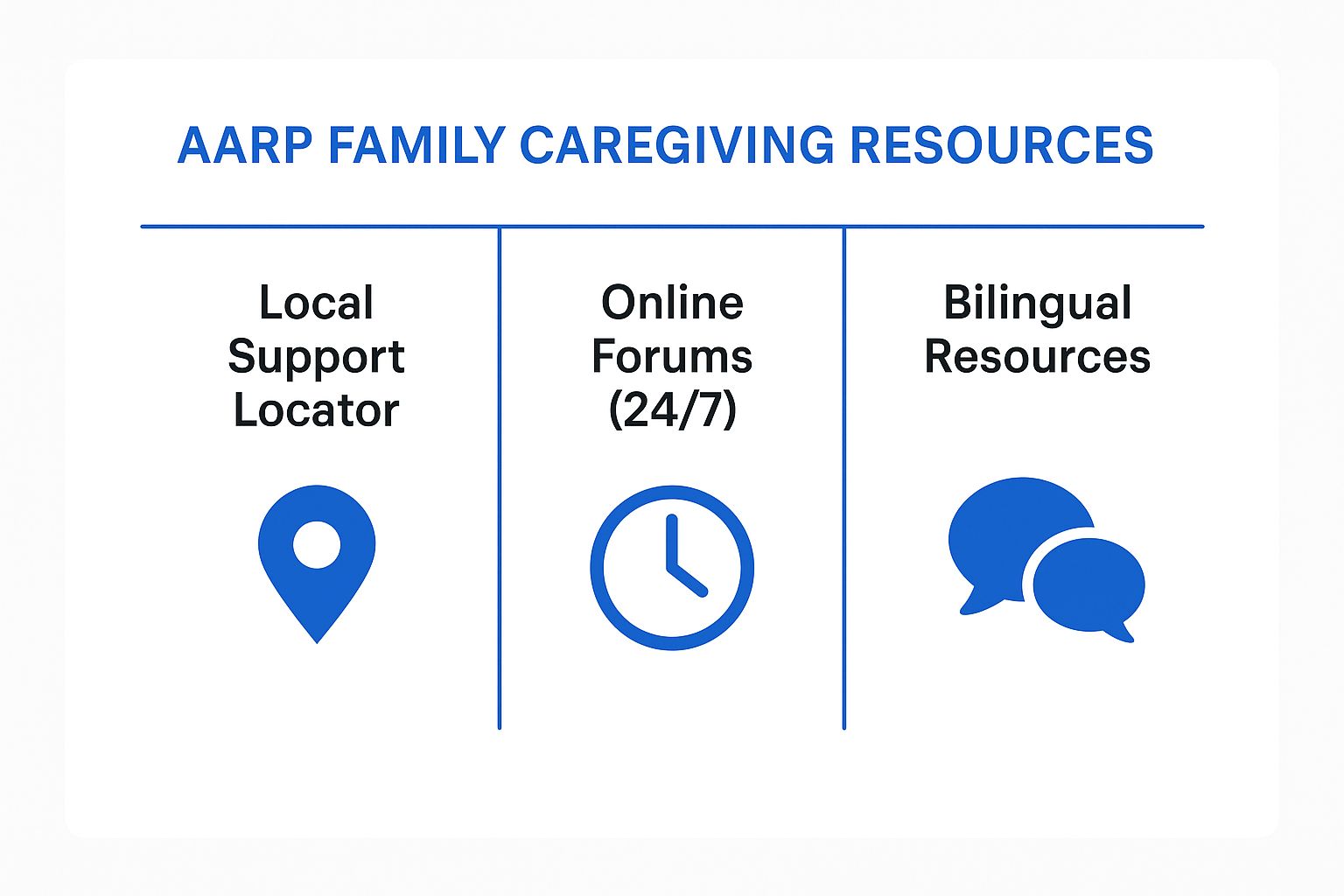
This visual breakdown emphasizes AARP's integrated model, which ensures caregivers can find support locally, connect online anytime, and access resources in multiple languages.
Practical Tips for Getting Started
To maximize the benefits, start by using their online assessment tool to pinpoint your most pressing needs. From there, join a local group for face-to-face connection and supplement it with the online forums for immediate, after-hours support. Their free webinars are also an excellent way to gain expert insights on topics from legal planning to managing caregiver stress without leaving home. AARP provides a holistic ecosystem that empowers caregivers with knowledge and community.
2. Alzheimer's Association Support Groups
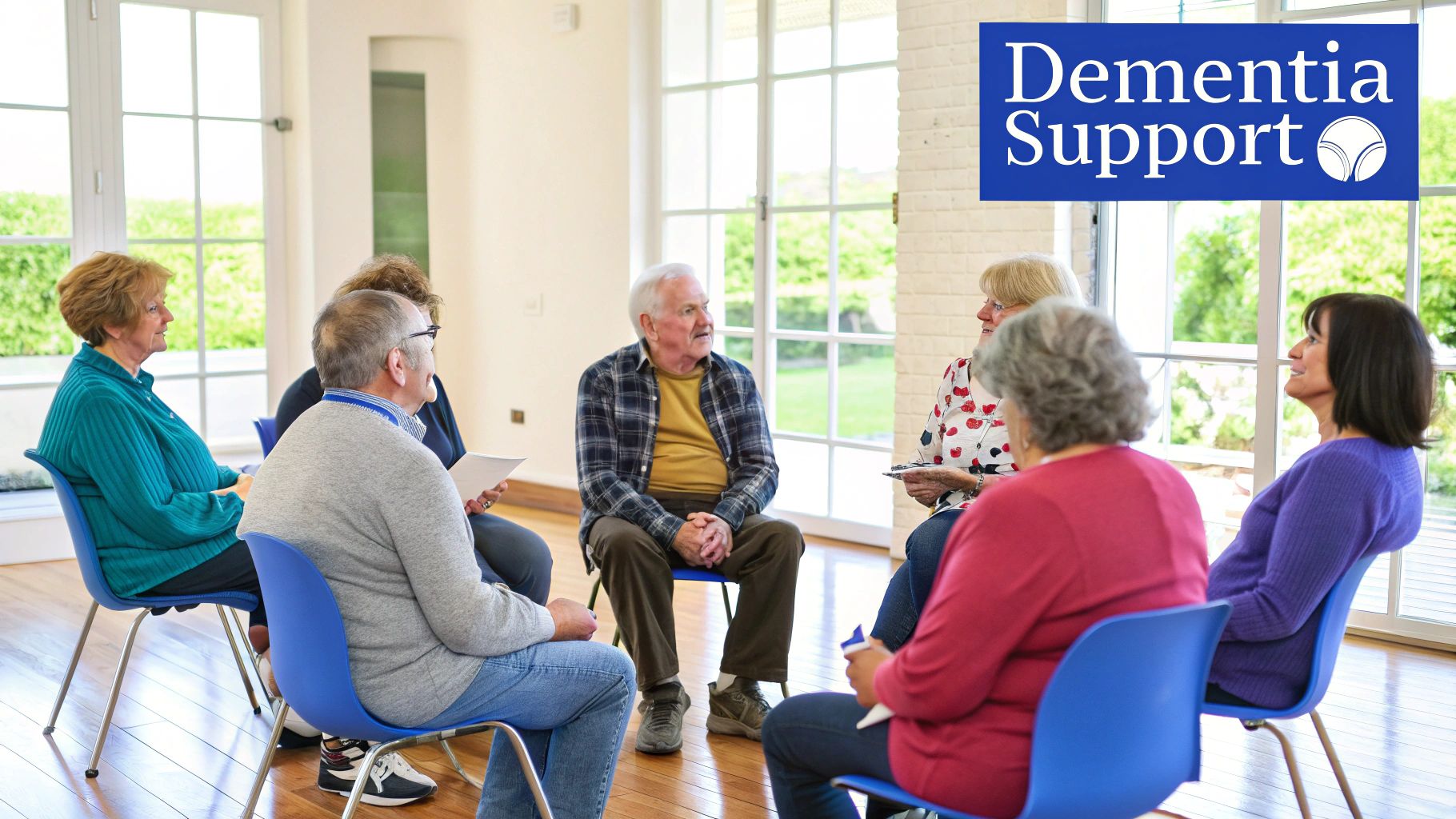
The Alzheimer's Association offers the largest and most specialized network of caregiver support groups dedicated to dementia care. This resource is essential for families navigating the unique challenges of Alzheimer's and related dementias, providing a safe harbor for emotional expression, education, and shared experience. These groups are facilitated by trained individuals and are tailored to meet the specific needs of different caregiver populations, from spouses and adult children to those caring for individuals with young-onset dementia.
How It Supports Caregivers
The association’s model focuses on peer-to-peer and professionally-guided support, ensuring caregivers receive both practical advice and emotional validation. This dual approach helps reduce the isolation and stress often associated with dementia caregiving.
- ALZConnected®: This is a vast online community with over 170,000 members, providing 24/7 access to forums where caregivers can ask questions and share coping strategies with others who truly understand.
- Specialized Group Offerings: Beyond general caregiver meetings, the association provides groups for specific needs, such as early-stage support for patients and their care partners, and dedicated groups for male caregivers who may face unique barriers to seeking help.
- Trained Facilitators: Every group is led by a trained facilitator who guides discussions, provides resources, and ensures a safe and supportive environment for all participants.
This structure allows caregivers in Mercer County to access local, in-person meetings while also connecting with a global online community, offering layers of support that can be accessed anytime. The specialized nature of these groups ensures that the guidance provided is directly relevant to the specific stage and type of dementia being managed.
Practical Tips for Getting Started
To get the most out of this resource, start by calling the Alzheimer's Association's free 24/7 Helpline (800.272.3900) to find the most suitable group for your specific situation. Plan to attend a few sessions before deciding if a particular group is the right fit, as group dynamics can vary. Use the ALZConnected online forums for immediate support between meetings and consider bringing a list of your most pressing questions to your first session to make the experience as productive as possible. Combining group attendance with the association's educational workshops creates a powerful, comprehensive support system.
3. Family Caregiver Alliance Support Groups
Family Caregiver Alliance (FCA) is a pioneering national organization dedicated solely to improving the quality of life for caregivers through education, services, and advocacy. Founded in 1977, FCA offers a wealth of resources, including specialized caregiver support groups that cater to individuals caring for adults with chronic, disabling health conditions like Alzheimer's, stroke, or brain injuries. Their model is built on evidence-based practices and a deep understanding of the caregiver journey.
How It Supports Caregivers
FCA's strength is its comprehensive and research-backed approach to support. It combines direct services with a national clearinghouse of information, ensuring caregivers have access to reliable tools and a compassionate community.
- Condition-Specific Support: FCA provides support groups tailored to caregivers of individuals with specific diagnoses, allowing for more relevant discussions and shared experiences.
- CareNav™ Service: This unique online dashboard helps you create a personalized care plan, find local resources, and access one-on-one consultations with caregiving experts.
- Extensive Resource Library: The organization maintains a vast collection of fact sheets, articles, and webinars on topics from managing challenging behaviors to legal and financial planning.
The FCA model empowers caregivers by providing not just emotional support but also practical, actionable guidance. They focus on building caregiver resilience and competence through education and connection.
Practical Tips for Getting Started
To engage with FCA effectively, start by exploring their online tools to identify your specific needs. Taking a self-assessment can provide clarity before you join a group. Supplement this with their educational materials to build your knowledge base. Their focus on structured, evidence-based programs makes them an invaluable resource for anyone seeking more than just a place to vent. Their services can also help you identify when you might need a break and explore options for respite care for family caregivers to prevent burnout.
4. CaringBridge Online Support Community
CaringBridge offers a unique approach to caregiver support by creating private, personalized websites that centralize communication during a health journey. It acts as a digital lifeline, allowing caregivers to share updates with a select group of family and friends without the overwhelming task of repeated phone calls and texts. This platform transforms a personal network into an organized, supportive community, streamlining communication and consolidating emotional encouragement in one place.

How It Supports Caregivers
The platform's primary strength is its ability to consolidate communication and practical support into a single, private hub. It bridges the gap between the caregiver and their extended circle, ensuring everyone stays informed while protecting the caregiver's time and energy.
- Journal Updates: Caregivers can post detailed updates about their loved one's condition, upcoming appointments, and personal reflections, which are sent to all designated followers. This eliminates the need for repetitive individual conversations.
- Guestbook & Well Wishes: This feature allows friends and family to post messages of encouragement, creating a lasting record of support that caregivers can revisit during difficult moments.
- Planner Tool: An integrated calendar helps coordinate practical needs like meal deliveries, childcare, or transportation to appointments, turning passive offers of "let me know if you need anything" into actionable tasks.
Beyond the personal website, CaringBridge's Amplify community provides a space for caregivers to connect with peers facing similar challenges, offering an additional layer of understanding from those with direct experience. This combination of private network management and broader community access is crucial for maintaining your well-being, a key aspect of caregiver mental health.
Practical Tips for Getting Started
To get the most out of CaringBridge, set up your site before a crisis hits, if possible. Proactively establish your privacy settings to control who can view updates. It is also wise to designate one or two trusted family members as co-authors who can post updates if you are unavailable. Use the Planner feature to clearly articulate your needs, as friends and family often want to help but don't know how. Finally, join the Amplify community to find peer-to-peer caregiver support groups that can provide empathy and advice beyond your immediate circle.
5. Cancer Support Community
The Cancer Support Community (CSC) is a vital, professionally-led nonprofit network dedicated to supporting both cancer patients and the caregivers who stand by them. Formed from the union of Gilda's Club and The Wellness Community, CSC offers a comprehensive array of free services designed to address the unique emotional and practical burdens of a cancer diagnosis. Its mission is to ensure that no one faces cancer alone, providing an integrated approach to care that encompasses support, education, and hope.
How It Supports Caregivers
CSC's strength lies in its specialized focus on the cancer journey, offering programs tailored specifically for the challenges caregivers face. It combines professionally facilitated groups with educational resources to empower caregivers with knowledge and a strong support system.
- Caregiver-Specific Support Groups: These groups provide a safe, confidential space for caregivers to share their experiences, anxieties, and coping strategies with others who truly understand the physical and emotional toll of caring for someone with cancer.
- "Frankly Speaking About Cancer" Program: This award-winning educational series offers workshops and materials that demystify complex cancer topics, helping caregivers make informed decisions and communicate more effectively with healthcare teams.
- Wellness and Stress-Reduction Programs: Beyond emotional support, CSC offers classes like yoga, meditation, and nutrition workshops to help caregivers manage their own stress and maintain their physical health, which is often neglected.
The following video provides a deeper look into the community and mission of CSC, illustrating how it creates a welcoming environment for both patients and their loved ones.
This integrated model of support, education, and wellness ensures that caregivers receive holistic assistance, addressing their emotional, informational, and personal health needs.
Practical Tips for Getting Started
To get the most out of CSC, start by calling their toll-free Helpline at 1-888-793-9355 to discuss your specific situation and find the right program. Consider attending an educational workshop first to build a foundational knowledge base before joining a support group. Many local affiliates, including those near Mercer County, host open house events, which are a great way to meet the staff and see the facility. Combining caregiver-specific groups with general family sessions can provide a more rounded support experience for everyone involved.
6. Well Spouse Association
The Well Spouse Association is a national nonprofit organization offering a unique and highly focused form of support exclusively for spousal caregivers. It addresses the distinct emotional, financial, and social challenges faced by individuals caring for a chronically ill or disabled partner. The association creates a safe harbor for husbands, wives, and partners to navigate the complexities of their dual roles, recognizing that being a spouse and a caregiver presents a unique set of stressors not always understood in general caregiver support groups.

This visual represents the core of the association's mission: providing a community where spousal caregivers can find understanding and strength in shared experiences.
How It Supports Caregivers
Well Spouse's strength lies in its peer-to-peer model, which connects individuals who truly understand the profound impact of spousal caregiving on a marriage and personal identity. This focus allows for deeper, more relevant conversations that might feel out of place in broader groups.
- Specialized Support Groups: The association facilitates both in-person and online support groups where members can openly discuss sensitive topics like intimacy, financial strain, role reversal, and grief for the life they once planned.
- National Conferences and Retreats: These events provide opportunities for intensive, in-person connection, education, and respite, helping to forge lasting friendships and combat the profound isolation many spousal caregivers experience.
- Advocacy and Research: Well Spouse actively advocates for the inclusion of spousal caregivers in research and policy discussions, using data to highlight their higher rates of depression and health issues compared to other caregiver populations.
Practical Tips for Getting Started
To engage with this community, start by exploring the resources that best fit your communication style and needs. Join one of the monthly online meetings to connect with peers from across the country, or use their Facebook group for more immediate, day-to-day interactions and advice. Be prepared to be honest in this safe space; it’s one of the few places where you can discuss complex emotions like resentment or loss without judgment. For those who prefer written communication, the long-standing letter-writing program offers a more private way to build a supportive connection.
7. Caregiver Action Network (CAN)
The Caregiver Action Network (CAN) stands as the nation's leading family caregiver organization, dedicated to enhancing the quality of life for the more than 90 million Americans providing care. It operates on a national level, offering a powerful combination of education, peer-to-peer connection, and robust public policy advocacy. CAN’s mission is to empower caregivers by equipping them with practical tools and a collective voice to drive meaningful change.
How It Supports Caregivers
CAN’s strength is its dual focus on individual empowerment and systemic advocacy. It provides direct support through accessible resources while simultaneously working to improve the policy landscape for all family caregivers.
- Family Caregiver Toolbox: This free, comprehensive online toolkit is a central hub for caregivers. It contains tip sheets, checklists, and guides on a wide range of topics, from navigating insurance to communicating with healthcare providers.
- Online Community Forums: CAN hosts moderated forums where caregivers can connect with peers who understand their challenges, share advice, and find emotional support in a secure environment.
- Advocacy Initiatives: CAN plays a crucial role in advancing legislation like the CARE Act, which ensures hospitals better prepare family caregivers for a patient's discharge. This advocacy work creates a more supportive environment for caregivers nationwide.
The organization's strategy is to provide resources that address immediate needs while fighting for long-term solutions, ensuring caregivers are supported both personally and politically.
Practical Tips for Getting Started
To engage with CAN effectively, begin by exploring their Family Caregiver Toolbox to identify resources that address your specific situation. Joining their online community is an excellent next step for gaining immediate peer support and reducing feelings of isolation. For more detailed information on how groups like Caregiver Action Network (CAN) can help, their website offers a wealth of tailored content. Signing up for their newsletter will keep you informed on new resources and advocacy opportunities, allowing you to contribute to a cause that directly impacts your role.
8. The Caregiver Space
The Caregiver Space offers a modern, virtual support platform specifically designed for the needs of contemporary caregivers. It provides a flexible and accessible alternative to traditional in-person meetings, acknowledging that today's caregivers often juggle work, family, and care responsibilities. The platform delivers evidence-based programs through user-friendly technology, focusing on connection and practical skill-building.
How It Supports Caregivers
The core strength of The Caregiver Space is its highly specific, facilitated group model. Instead of general drop-in sessions, it provides structured peer support groups led by trained professionals, ensuring conversations are productive and safe.
- Targeted Support Groups: Groups are organized by specific situations, such as caring for a parent with dementia, supporting a spouse with cancer, or navigating the challenges of being a "sandwich generation" caregiver.
- One-on-One Coaching: Beyond group meetings, the platform offers individual coaching sessions to help caregivers navigate difficult decisions, manage complex family dynamics, or create personalized self-care plans.
- On-Demand Resources: A library of expert-led workshops, articles, and videos provides crucial education on topics from managing caregiver stress to legal and financial planning, accessible anytime.
This combination of live, targeted group support and individual resources is particularly effective for working caregivers. Several Fortune 500 companies now offer it as an employee benefit, recognizing that its flexible evening and lunch-hour groups help employees maintain their careers while managing care duties.
Practical Tips for Getting Started
To get the most out of this platform, begin by exploring groups that directly match your caregiving scenario for the most relevant peer connections. Schedule group participation as a recurring, non-negotiable appointment in your calendar to ensure you prioritize your own well-being. To create a more comprehensive support system, supplement group sessions with the platform's individual coaching and use the on-demand videos for education between live meetings. Finally, check with your employer's HR department to see if they offer sponsored access as part of your benefits package.
Support Group Features Comparison of Top 8 Resources
| Service | Core Features ✨ | User Experience ★ | Value Proposition 💰 | Target Audience 👥 | Unique Selling Points 🏆 |
|---|---|---|---|---|---|
| AARP Family Caregiving | Local support locator, 24/7 online forums, bilingual resources | Trusted, extensive network ★★★★☆ | Mostly free, membership optional 💰 | Family caregivers across elder care 👥 | Comprehensive resources, strong advocacy ✨ |
| Alzheimer's Association Support Groups | 2,300+ nationwide dementia-focused groups, professional facilitation | Specialized dementia support ★★★★☆ | Free participation 💰 | Caregivers of Alzheimer's & dementia patients 👥 | Largest dementia support network, ALZConnected 🏆 |
| Family Caregiver Alliance Support Groups | Weekly/monthly meetings, CareNav tool, legal/financial aid | Evidence-based, caregiver health focus ★★★★ | Mostly free, some fees in CA 💰 | Caregivers of adults with chronic conditions 👥 | Research-backed, policy advocacy focus ✨ |
| CaringBridge Online Support Community | Free personalized health websites, Amplify peer community | User-friendly, connects existing network ★★★★☆ | Completely free 💰 | Caregivers needing broad emotional support 👥 | Personalized updates, practical coordination ✨ |
| Cancer Support Community | Professionally-led, 170+ locations, wellness programs | Holistic emotional & physical support ★★★★☆ | All services free 💰 | Cancer patients & caregivers 👥 | Licensed facilitators, evidence-based groups 🏆 |
| Well Spouse Association | Peer-led spousal caregiver groups, monthly online, annual conf. | Deep understanding, safe peer support ★★★☆☆ | Membership $50/year 💰 | Spousal caregivers with chronic illness 👥 | Exclusive spousal caregiver focus ✨ |
| Caregiver Action Network (CAN) | Online forum, resource toolkits, policy advocacy | Broad, empowering ★★★☆☆ | Free access 💰 | All family caregivers 👥 | Strong policy advocacy, practical tools 🏆 |
| The Caregiver Space | Virtual groups, topic-specific, professional facilitators | Flexible, tech-forward ★★★★☆ | Subscription or employer-sponsored 💰 | Modern, working caregivers 👥 | Evidence-based, coaching offered ✨ |
Taking the Next Step: Your Well-being Matters Most
The journey of caregiving, while deeply rewarding, is often marked by isolation, stress, and overwhelming responsibility. Throughout this guide, we've explored a diverse landscape of caregiver support groups, from the broad-reaching resources of the AARP and Family Caregiver Alliance to the highly specific communities found within the Alzheimer's Association and the Well Spouse Association. Each one represents a vital lifeline, a dedicated space where your unique challenges are not just heard but profoundly understood.
The core takeaway is simple: you do not have to navigate this alone. Whether you find comfort in the 24/7 accessibility of online forums like The Caregiver Space or prefer the structured guidance of professionally-facilitated local meetings, the right community is waiting for you. This list is more than a directory; it's a starting point for reclaiming your own well-being.
From Information to Action: Your Next Move
Making the decision to seek support is a powerful act of self-preservation. It is a strategic choice that builds resilience, prevents burnout, and ultimately enhances the quality of care you provide. Attending your first meeting or posting in an online forum can feel intimidating, but it is the most critical step you can take for yourself.
Consider these actionable steps to move forward:
- Identify Your Primary Need: Are you seeking practical advice for a specific condition, emotional validation from peers who understand, or simply a safe space to vent? Your answer will guide you toward the most suitable group. For instance, if you're managing cancer care, the Cancer Support Community is an ideal starting point, while the Caregiver Action Network (CAN) offers a broader peer-to-peer connection.
- Start Small: You don't need to commit to weekly meetings immediately. Try observing a virtual session or browsing the posts in an online community like CaringBridge to get a feel for the environment. The goal is to find a place where you feel comfortable and seen.
- Embrace the Power of Shared Experience: The most significant benefit of joining caregiver support groups is realizing that your struggles, frustrations, and small victories are not unique. This shared understanding is incredibly validating and is a powerful antidote to the loneliness that so often accompanies the caregiving role.
Investing in your own mental and emotional health is not a luxury; it is an absolute necessity for sustainable caregiving. A supported caregiver is an empowered, effective, and resilient caregiver. By connecting with others, you are not only helping yourself but also fortifying the foundation of care you provide for your loved one. Your well-being is the engine that drives everything else, so make the choice today to refuel it.
While emotional and peer support are crucial, we understand that practical, hands-on help is just as vital. If you need professional respite care or in-home assistance to lighten your load in Mercer County, contact NJ Caregiving. We provide the reliable support that gives you the time and space to attend a meeting, recharge, and focus on your own well-being.