

Why Your Bathroom Is More Dangerous Than You Think
Let's talk about something nobody really wants to think about: bathroom safety for seniors. I've seen firsthand, sitting with families after a preventable accident, just how quickly things can go wrong. The bathroom, a place we usually take for granted, can become a real hazard as we, or our loved ones, get older.
Think about it: that almost invisible sliver of soap on the shower floor? A potential disaster for someone with age-related vision changes. Or the simple act of stepping into the tub, which can be tricky for anyone experiencing balance issues – a common occurrence as we age. And don't forget the effects of medications, often essential for managing health, that can sometimes cause dizziness. In a small space like a bathroom, dizziness can be a recipe for disaster.
Common Bathroom Hazards
Many bathrooms just aren't designed with seniors in mind. Slippery tiles, a lack of grab bars, and dim lighting are all contributing factors to increased risk. These aren't minor inconveniences; they're serious hazards that can lead to falls and injuries.
It's a fact: bathrooms are one of the most dangerous places in a home for older adults. Falls are the leading cause of injury in this age group, and a shocking 80% of those falls happen in the bathroom, according to the National Institute on Aging. About 1.6 million older adults require medical attention for bathroom-related injuries each year in the United States alone. Falls account for the vast majority of these incidents.
Creating a Safer Bathroom
So, what can we do? Bathroom safety isn't just about adding a grab bar or two. It's about taking a comprehensive look at the entire bathroom environment. This includes identifying potential dangers, making necessary changes, and truly understanding the challenges that come with aging. It's about creating a space that fosters independence and dignity while minimizing the risk of accidents. Check out this helpful resource from Human Care NY for some practical advice.
Here's another helpful resource: NJ Care Giving. Addressing bathroom safety isn’t just a good idea – it's essential for maintaining well-being and independence as we age.
Spotting Hidden Dangers Like a Safety Professional
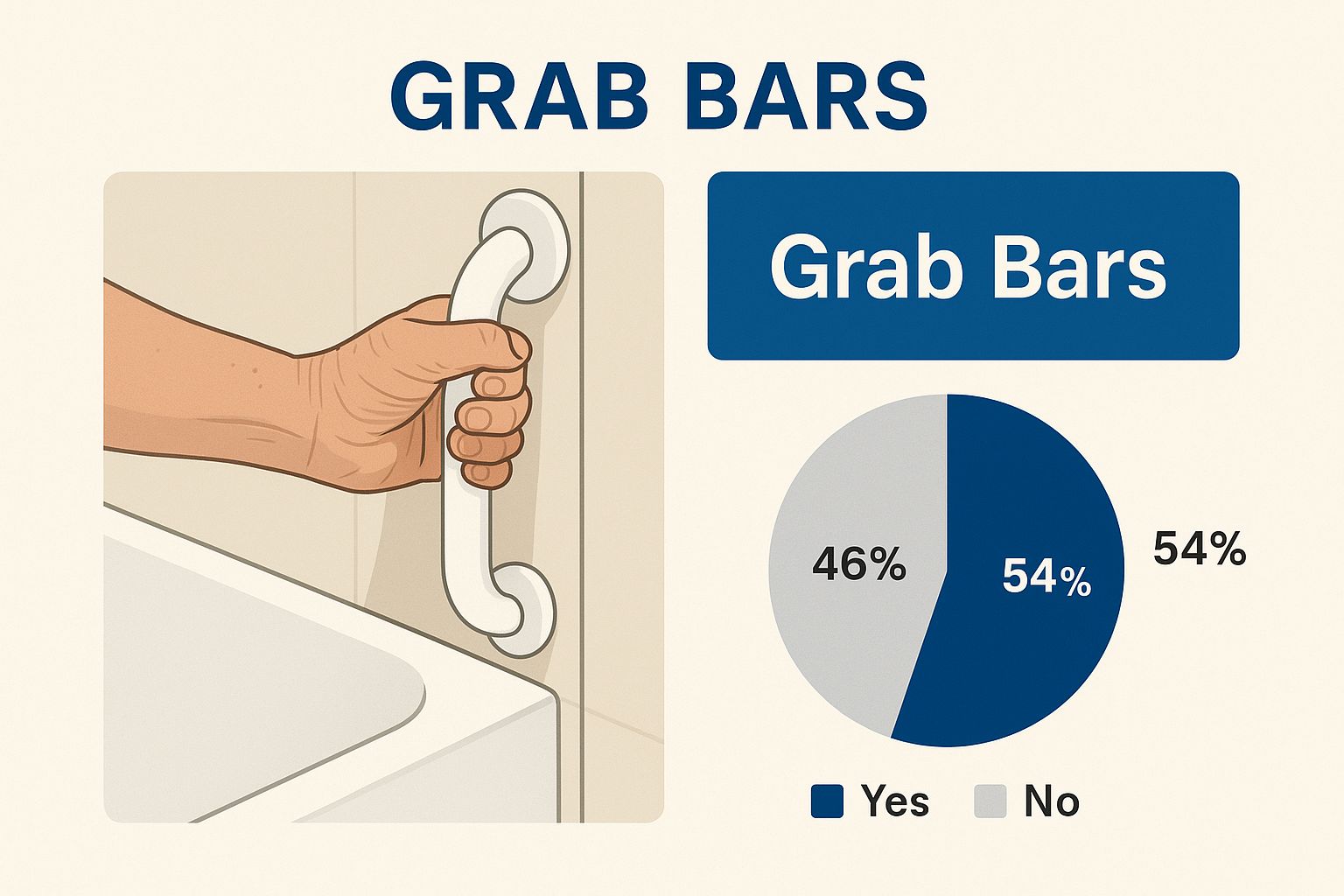
This infographic illustrates how important grab bars are for bathroom safety. Think of a grab bar as a sturdy friend, offering a much-needed hand when getting in and out of the tub or shower. When they’re installed correctly, grab bars can significantly lessen the chances of a fall.
Now, let's play a game of "Spot the Hazard." Imagine you're an occupational therapist, trained to see potential dangers that most of us miss. That gorgeous marble tile? Slicker than it looks. That chic pedestal sink? Nowhere to grab onto. That conveniently placed toilet paper holder? Probably too low for someone using a walker.
Evaluating Your Bathroom for Risks
Here’s how a pro would assess a bathroom:
- Flooring: First, check for slippery surfaces, especially when wet. Consider the flooring material itself, any uneven spots, and potential tripping hazards like rugs.
- Lighting: Good lighting is key. Is it bright enough? Is there glare? Are there dark shadows, particularly near the toilet, shower, and sink?
- Layout: Is there enough room to maneuver with a walker or wheelchair? Can someone easily reach essential fixtures? Think about the flow of movement and access.
- Grab Bars: Are they securely installed in the right places, at the right height? Do they provide solid support? Wobbly grab bars are worse than no grab bars!
- Emergency Access: In a crisis, can someone quickly get to the bathroom? Is the path to the door clear?
Understanding Shifting Needs
Bathroom safety isn’t a one-and-done deal. Needs evolve, and what works now might not work later. A good assessment considers both current and future needs, factoring in potential changes in mobility, vision, and access requirements. For example, the biggest fall risks change as we age. The CDC points out that while the tub/shower area accounts for 84.5% of bathroom injuries for younger adults (15-24), that number drops to 38.9% for those 85 and older. Surprisingly, injuries near the toilet become much more common for seniors, increasing to 51.7% for the 85+ group, compared to just 7% for younger adults. This highlights how important it is to address the specific challenges seniors face, like difficulty standing up from the toilet.
To help visualize potential problem areas and prioritize safety upgrades, take a look at this table:
Bathroom Risk Assessment by Area
A comprehensive breakdown of common hazards found in different bathroom zones with priority levels for addressing each risk
| Bathroom Area | Common Hazards | Risk Level | Immediate Actions |
|---|---|---|---|
| Tub/Shower | Slippery surfaces, high edges, lack of grab bars | High | Install grab bars, non-slip mats, shower chair |
| Toilet | Difficulty standing, low toilet seat | High | Raised toilet seat, grab bars near the toilet |
| Sink | Lack of support, slippery surfaces | Medium | Install grab bars, non-slip mats |
| Floor | Slippery surfaces, rugs, uneven flooring | Medium | Remove rugs, use non-slip mats, address uneven flooring |
| Lighting | Inadequate lighting, glare | Medium | Install brighter lighting, reduce glare |
This table helps identify the most critical areas needing attention. By focusing on these key zones first, you can make the biggest impact on safety right away.
By understanding these shifting risks and being proactive, we can create a bathroom that's truly safe and supportive for our loved ones as they age.
Installing Grab Bars That Actually Make a Difference
Let's be honest, the term "grab bars" can sometimes bring to mind a clinical, institutional feel. But ensuring bathroom safety for seniors doesn't have to mean sacrificing style. I've worked with contractors who have installed countless grab bar systems, and they've taught me how crucial smart placement and solid installation truly are. We're long past the days of those basic, institutional chrome bars.
Choosing the Right Grab Bars
These days, grab bars offer a surprising variety of styles. You can find sleek, flip-up designs that blend right into the bathroom decor, or even bars with integrated lighting for added safety at night. Some grab bars now even incorporate smart technology, alerting family members in case of a fall. This means you can prioritize safety without compromising the look and feel of your bathroom.
Here's a quick look at what's out there:
- Flip-Up Grab Bars: Perfect for smaller bathrooms or any spot where a permanent bar might get in the way. They fold away neatly when not in use.
- Integrated Lighting: Grab bars with built-in LED lights provide both added safety and convenience, especially for those nighttime bathroom trips.
- Smart Grab Bars: These models often include sensors that can detect a fall and automatically notify caregivers or emergency services.
The Importance of Proper Installation
It's important to remember that even the most stylish grab bar won't do any good if it's not installed properly. I've seen beautiful installations fail simply because the wall structure underneath wasn't reinforced. This is where a lot of people underestimate the real investment in bathroom safety for seniors. It’s not just about the cost of the grab bar itself. You also need to consider potential costs like opening walls to reinforce the structure, especially in older homes. These hidden costs can really add up.
For instance, installing what seems like a simple grab bar might actually require reinforcing the wall studs behind the tile, which then means patching and repainting. While this adds to the upfront cost, it's absolutely essential to ensure the grab bar can hold the weight it's designed to support. A loose grab bar isn’t just ineffective; it’s a real hazard. The peace of mind that comes with knowing those grab bars are truly secure is worth every penny. Trust me.
Getting the Job Done Right
Over the years, experienced installers have shared some invaluable tips with me. They stress the importance of anchoring grab bars directly into wall studs whenever possible. If that isn't an option, using special mounting hardware made for hollow walls is key. This makes sure the grab bar can handle the weight and force it needs to. A professional installer will also assess the wall structure and recommend the best way to get a secure, long-lasting installation. You might be interested in: NJ Care Giving.
Don't cut corners on installation. It’s a vital part of creating a truly safe bathroom. A properly installed grab bar offers the support and stability a senior needs to maintain their independence and confidence. By focusing on both style and secure installation, you can create a bathroom that's both comfortable and safe for years to come.
Creating Beautiful Non-Slip Surfaces That Work
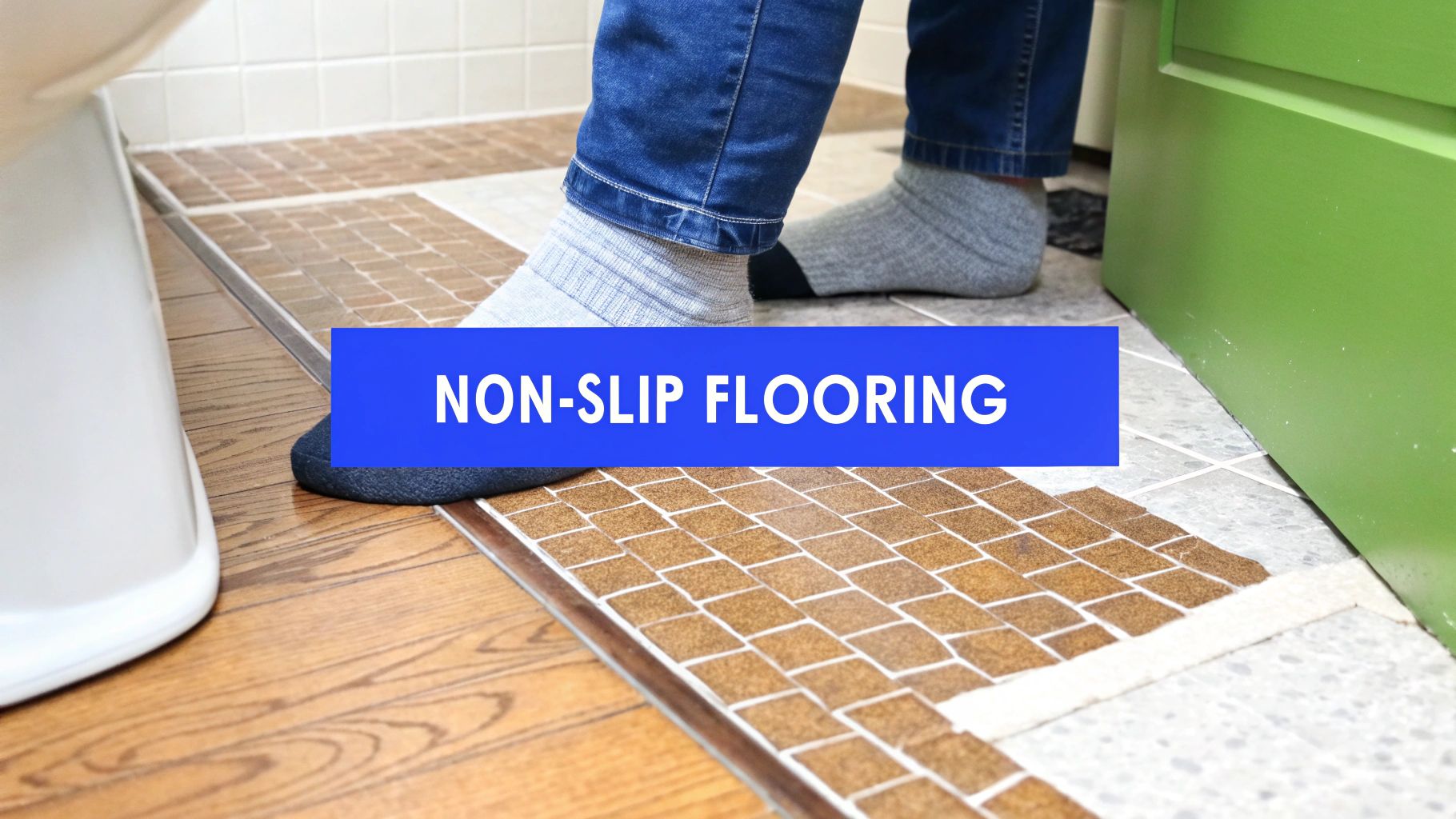
Let's be honest, nobody wants their bathroom to resemble a sterile hospital room. Thankfully, creating a safe bathroom for seniors doesn't mean sacrificing style. I've seen firsthand how innovative non-slip surfaces can actually enhance a bathroom's appearance. Think textured tiles that mimic the look of natural stone, or anti-slip treatments that are practically invisible. Even something as simple as choosing the right material can add grip without screaming "safety modification."
Selecting the Right Non-Slip Solution
The key is understanding which solution works best in different areas. What's perfect for the shower floor might not be suitable for the area around the vanity. Let's explore some options:
-
Bath Mats that Stay Put: A non-slip bath mat that actually stays put is a game-changer. Look for mats with heavy-duty suction cups or a rubberized backing specifically designed to grip wet surfaces. I've found that those with a textured surface also provide extra security.
-
Luxurious and Safe Shower Surfaces: Who says safety can't be luxurious? Textured tiles, non-slip coatings, and pre-fabricated shower pans offer excellent slip resistance while maintaining a spa-like feel. The options range from natural stone with a subtle texture to manufactured surfaces engineered for maximum grip.
-
Threshold Modifications: Transitions between rooms can be tricky, especially for seniors. Modifying thresholds to accommodate wheelchairs and walkers not only improves accessibility but also eliminates a major tripping hazard. This could involve replacing a raised threshold with a beveled one, or creating a seamless transition between flooring materials.
Understanding Slip Resistance Ratings
How can you tell how slip-resistant a surface really is? That's where slip resistance ratings come in. These ratings, typically based on the Coefficient of Friction (COF), tell you how much force is needed for something to slide across a surface. A higher COF means better grip. For bathrooms, a COF of 0.6 or higher is generally recommended.
Comparing Non-Slip Options
To help you visualize the differences between common non-slip solutions, I've put together a comparison table:
Non-Slip Surface Options Comparison
A detailed comparison of different non-slip solutions showing effectiveness, durability, appearance, and cost considerations
| Surface Type | Slip Resistance Rating | Appearance Impact | Installation Cost | Maintenance Required |
|---|---|---|---|---|
| Textured Tile | High | Enhances aesthetic | Moderate to High | Low |
| Non-Slip Coating | Moderate to High | Minimal | Low to Moderate | Moderate |
| Rubber Bath Mat | High | Varies | Low | High |
| Pre-fabricated Shower Pan | High | Varies | Moderate | Low |
This table provides a solid starting point for your research. Consider your budget, your aesthetic preferences, and, most importantly, the specific safety needs of the person using the bathroom. Remember, creating a truly safe bathroom involves choosing the right materials and installing them correctly. This blend of aesthetics and practicality will result in a bathroom that's both beautiful and secure.
Emergency Systems That Connect When Every Second Counts
When a fall happens, especially in the bathroom, seconds can feel like hours. Yelling for help isn’t always possible, particularly if you’re alone or injured. Thankfully, emergency alert systems designed specifically for bathrooms have come a long way. We're talking way beyond those simple button pendants.
Beyond the Basic Pendant
Think waterproof gadgets that automatically detect falls, smart home integrations that keep an eye on bathroom activity and notify family members of potential problems, and systems smart enough to tell the difference between everyday routines and real emergencies. I’ve seen firsthand how these systems can make a world of difference, stopping a minor slip from becoming a serious crisis. This elevates bathroom safety for seniors significantly.
Real-World Performance and Reliability
Let's be honest, false alarms happen. Not all systems are made equally. Some are simply more reliable than others. We'll look at the actual performance of various technologies, separating what genuinely matters in a crisis from marketing fluff.
For instance, some systems use pressure sensors embedded in the floor to detect falls, while others rely on wearable devices with accelerometers. Each has its own set of advantages and disadvantages. Pressure sensors can be less noticeable but might miss a fall if someone doesn't land directly on them. Wearables, conversely, can detect falls anywhere but might go off accidentally during normal movements. Understanding these nuances can help you pick the best system for your unique needs. The fact that the market for senior bathroom safety solutions is growing shows just how important these innovations are. Speaking of growth, the global market is expected to reach about $15 billion by 2028. This increase is driven by rising awareness and an aging population, highlighting the crucial role these solutions play. Discover more insights about senior bathroom solutions.
Choosing the Right Features
So, which features are must-haves and which are just extra bells and whistles? Here are some key things to think about:
- Automatic Fall Detection: A potential lifesaver, especially for seniors who live on their own.
- Water Resistance: Absolutely essential for any device used in the bathroom.
- Two-Way Communication: This allows the user to speak directly with emergency responders or loved ones.
- Monitoring and Alerting: Provides real-time monitoring and alerts designated contacts in case of an emergency.
- Ease of Use: The system should be easy to operate, especially for seniors who may not be comfortable with technology.
By understanding these elements, you can select a system that offers genuine protection and peace of mind. This knowledge puts you in control, allowing you to make well-informed choices about bathroom safety for your senior loved ones and create an environment where they can live independently with confidence.
Lighting Solutions That Prevent Accidents Before They Happen
I've seen too many times how a poorly lit bathroom can turn into a dangerous obstacle course for seniors. That single overhead light just doesn't cut it. Over the years, working with lighting designers specializing in aging vision, I've learned that effective lighting isn't just about making things brighter; it's about creating a safe and comfortable environment. We're talking about strategically eliminating shadows, reducing glare, and ensuring consistent light levels. It makes a world of difference.
Layering Light for Safety and Comfort
Think of bathroom lighting like building a delicious cake. You wouldn't just frost it and call it a day, right? You need layers! The same principle applies here. Combining different types of lighting creates the most effective and safest bathroom environment for seniors.
-
Motion-Activated Lights: These are a true lifesaver, especially for nighttime bathroom trips. No more fumbling for the light switch in the dark – the bathroom lights up automatically when someone enters.
-
Gentle Night Lighting: A soft, low-level glow is perfect for creating a safe pathway without disrupting sleep. Imagine strategically placed LED strips under cabinets or along the floor – subtle yet effective.
-
Task Lighting: Good, focused light at the vanity is essential for grooming tasks. It reduces eye strain and makes everything from shaving to applying makeup easier and safer, boosting confidence and independence.
Fixture Placement and Bulb Selection
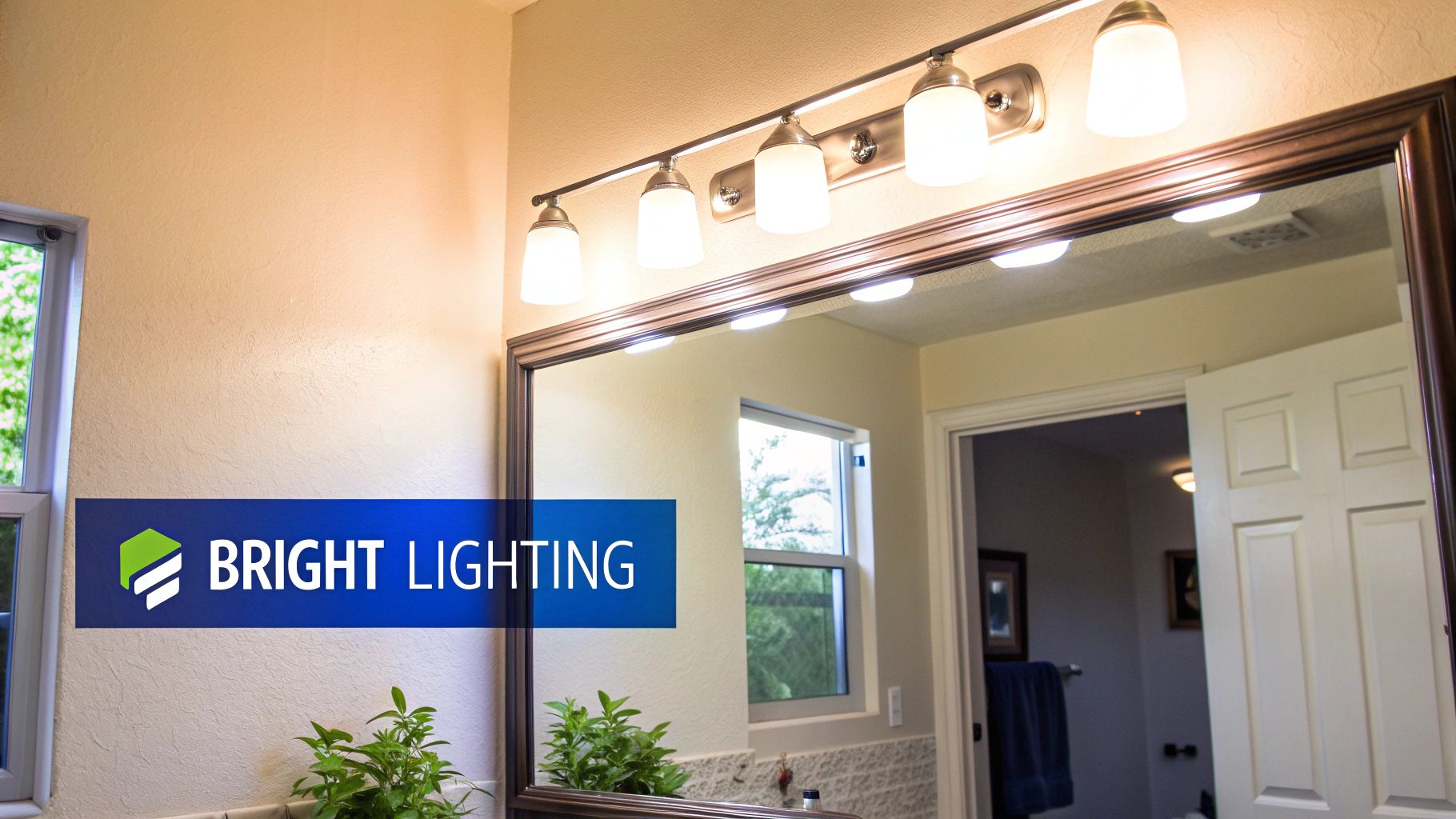
Where you put your light fixtures and what kind of bulbs you use also play a crucial role. Installing lights on either side of the mirror, instead of just overhead, minimizes shadows, making grooming tasks much easier. And when it comes to bulbs, brighter isn't always better. Soft white bulbs (around 2700-3000 Kelvin) are generally ideal for seniors, providing good illumination without the harsh glare that can be disorienting.
I remember working with a family who completely transformed their dimly lit bathroom using these principles. They replaced their single overhead fixture with a combination of recessed lighting, motion-activated night lights, and bright task lighting at the vanity. The change was remarkable. The senior, who had been afraid to use the bathroom at night, regained her confidence and independence. For some more helpful advice, check out this resource from NJ Care Giving.
By understanding the power of layered lighting and strategic fixture placement, you can create a bathroom that’s both safe and inviting. These seemingly small changes can have a huge impact on a senior's well-being and independence.
Your Personal Bathroom Safety Implementation Plan
Making a bathroom safer for a senior doesn't have to be a huge, overwhelming project. Think of it as a series of smart updates, tailored to your loved one's specific needs and, of course, your budget. You don’t have to tackle everything at once.
This screenshot from the CDC shows just how risky getting out of the tub can be. It really highlights why bathroom safety is so important, especially for seniors who might have balance issues. Even a little slip can lead to a serious fall.
Prioritizing for Safety and Budget
First things first: figure out what absolutely needs to be done now. Maybe installing grab bars by the toilet is the top priority, while new lighting can wait a bit. Creating a realistic timeline helps prevent you from feeling overwhelmed and allows for adjustments down the road. Budget is always a factor, too. You don’t need the fanciest equipment to make a big difference. Sometimes the simplest solutions are the most effective.
DIY vs. Professional Help
Knowing when to call in a professional is key. Replacing a worn bath mat? You can totally handle that. Securely installing grab bars into wall studs, especially if it involves plumbing or electrical work? Definitely a job for the experts. A contractor with experience in senior bathroom safety will not only do the job right but can offer valuable advice based on their expertise.
Maintaining Your Safety Upgrades
Once you've made these improvements, keeping them in good shape is crucial. This means regularly checking that grab bars are still secure, non-slip surfaces are clean and working properly, and emergency alert systems are functioning correctly. A little preventative maintenance can avoid bigger headaches later on. It's about building a long-term safety plan, not just a quick fix.
Ready to create a safer, more comfortable bathroom? NJ Caregiving provides personalized in-home care, including help with bathroom safety modifications and ongoing support for seniors in Princeton, NJ, and the surrounding areas. Contact NJ Caregiving today to learn more about how we can help create a safer home.
