

Planning for Your Future: The Definitive Guide to Aging in Place
The decision to age in place, which means continuing to live in one’s own home safely and independently, is a goal for the vast majority of adults over 50. This choice represents a powerful desire for autonomy, the comfort of familiar surroundings, and maintaining connections to a beloved community. However, successfully aging in place is not a passive event. It is the direct result of deliberate planning and proactive preparation across multiple facets of life.
This guide serves as your definitive aging in place checklist. We have structured the complex process into seven manageable and crucial pillars, providing a clear roadmap for creating a secure and comfortable future. Inside, you will find actionable steps, practical resources, and specific recommendations designed to help you prepare.
We will cover essential topics including:
- Home Safety Assessment and Modifications
- Healthcare Access and Management
- Social Connection and Community Engagement
- Transportation Planning
- Financial Planning and Management
- Home Maintenance and Household Management
- Emergency Preparedness and Safety Systems
Whether you are planning for your own future or helping a loved one, this comprehensive checklist will empower you to transform a current residence into a true "forever home." Our focus is on providing the detailed information needed to address everything from coordinating medical care to ensuring financial readiness, ultimately delivering peace of mind for you and your family.
1. Pillar 1: Home Safety Assessment and Modifications
The absolute foundation of any successful aging in place checklist is a physically safe and supportive home environment. This first pillar moves beyond simply preventing falls; it’s about proactively creating a living space that fosters independence, reduces physical strain, and enhances overall quality of life. A comprehensive home safety assessment involves a detailed, room-by-room evaluation to identify and mitigate potential hazards, transforming your home from a potential obstacle course into a comfortable sanctuary.
This process involves strategic installations and modifications guided by principles of universal design, which aims to make environments usable by all people, regardless of age or ability. The goal is to build confidence and eliminate the fear associated with navigating daily tasks. By prioritizing these changes, you create a home that actively supports long-term independence.
Why It's a Foundational Step
A safe home is non-negotiable for aging in place. Modifications directly address the most common causes of accidents for older adults, such as falls in the bathroom or on stairs. By making these changes, you are not just installing equipment; you are investing in peace of mind and sustained autonomy. Success stories from programs like AARP's HomeFit and Rebuilding Together demonstrate the profound impact of these modifications. For example, the Community Aging in Place, Advancing Better Living for Elders (CAPABLE) program has shown a remarkable 75% reduction in functional difficulties among participants after home modifications and occupational therapy.
This summary highlights the tangible benefits and scope of investing in home safety modifications.
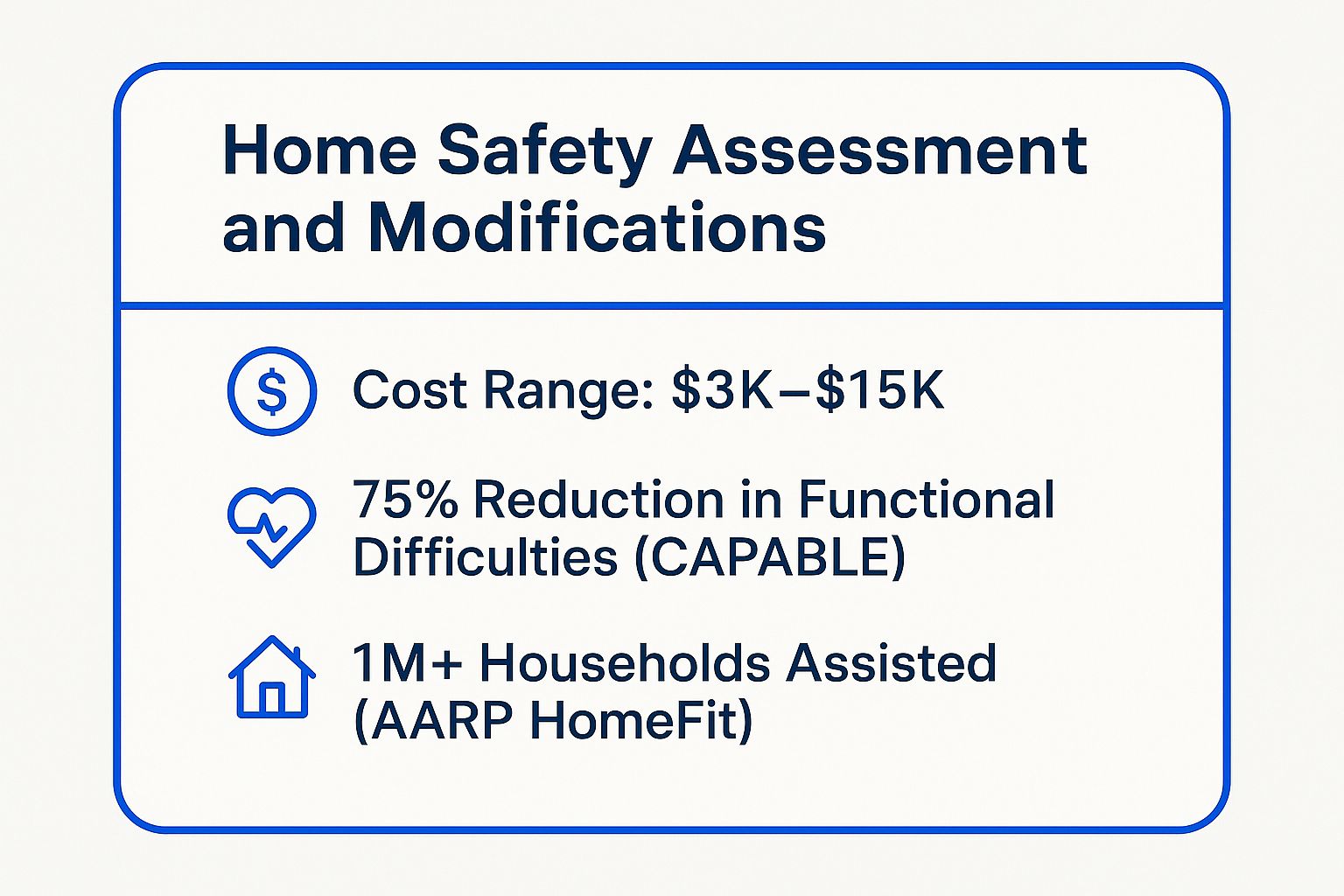
The data clearly illustrates that while there is an investment, the outcomes in terms of improved daily function and the sheer number of households already benefiting are significant.
Actionable Tips for Implementation
To get started, consider these practical steps:
- Start with a Professional Assessment: Hire a certified occupational therapist (OT) or a Certified Aging-in-Place Specialist (CAPS) to conduct a thorough evaluation. They can provide a prioritized, personalized plan based on your specific needs and home layout.
- Prioritize High-Risk Areas: Focus initial efforts and budget on the bathroom and stairways. These two areas account for a high percentage of in-home accidents. Simple changes like installing grab bars, a walk-in shower, and improved stairway lighting can make a huge difference.
- Explore Financial Assistance: Before you begin, check with your insurance provider. While original Medicare Part A and B typically do not cover home modifications, some Medicare Advantage (Part C) plans may offer benefits. Also, look into local and state programs that may provide grants or low-cost labor.
- Test Before Committing: Whenever possible, use temporary solutions to test a modification's effectiveness. For example, use a suction-cup grab bar (for testing placement only, not for support) to find the ideal height and angle before drilling into your wall for a permanent installation.
2. Pillar 2: Healthcare Access and Management
Beyond physical modifications to the home, a crucial pillar of any aging in place checklist is establishing a robust framework for healthcare. This involves the proactive organization and management of medical care, ensuring consistent access to providers, medications, and health monitoring. It is about creating a structured support system that moves from reactive crisis management to a state of prepared, ongoing health maintenance.
This process includes building strong relationships with a core healthcare team, consolidating medical records, and implementing systems for daily health tasks like medication administration. The goal is to demystify healthcare logistics, making it easier to manage chronic conditions, respond to new health challenges, and maintain a high quality of life. By organizing this aspect of life, you empower yourself or a loved one to stay in control of their health journey.
Why It's a Foundational Step
Seamless healthcare management is a non-negotiable component for successful aging in place. It directly impacts an individual's ability to live independently and safely, as unmanaged conditions or medication errors can lead to hospitalization and a loss of autonomy. This pillar is about building a safety net that catches health issues early. Success stories from integrated care models prove the value of this approach. For example, Kaiser Permanente's "Healthy Aging" programs and the coordinated care offered by organizations in the Village to Village Network demonstrate that structured healthcare support leads to better outcomes and sustained independence for seniors.
This summary underscores the critical link between organized healthcare and the ability to remain at home long-term.
Actionable Tips for Implementation
To get started, consider these practical steps:
- Create a Comprehensive Medical Binder: Assemble a single, portable binder containing all vital information. Include a list of doctors with contact details, a complete medication list (dosages, frequency), allergy information, insurance cards, and a summary of medical history. This is invaluable during emergencies and regular appointments.
- Establish Care Relationships Early: Don't wait for a health crisis to find a primary care physician, geriatrician, or specialists. Building these relationships beforehand ensures you have a trusted team that understands your baseline health and can respond more effectively when needed.
- Leverage Pharmacy Services: Many pharmacies offer services like medication synchronization ("med sync"), which aligns all prescription refills to a single monthly pickup date. Also, ask about pre-sorted pill packs (blister packs) to simplify daily medication management and reduce errors.
- Schedule Your Annual Wellness Visit: If you have Medicare, take advantage of the Annual Wellness Visit. This is not a standard physical; it is a dedicated appointment to create or update a personalized prevention plan, review your health risks, and coordinate care with your provider.
3. Pillar 3: Social Connection and Community Engagement
A crucial, yet often underestimated, pillar of a comprehensive aging in place checklist is fostering robust social connections and community engagement. While physical safety is paramount, mental and emotional well-being are equally vital for a fulfilling life. This pillar is dedicated to proactively preventing the profound risks of social isolation and loneliness, which are linked to serious health consequences, including cognitive decline, depression, and increased mortality.

This involves consciously building and maintaining a network of relationships. It's about creating a structured routine of social activities, nurturing friendships, participating in local groups, and leveraging technology to stay connected. By prioritizing social health, you build a resilient support system that provides not just companionship but also a crucial safety net for both emotional and practical assistance.
Why It's a Foundational Step
Human connection is not a luxury; it is a fundamental need. A strong social network provides emotional support, intellectual stimulation, and a sense of purpose and belonging. Research and successful programs have consistently shown the powerful impact of community on older adults' health. For example, the "Villages" movement, starting with the Beacon Hill Village model, now supports over 40,000 members across 200+ communities, providing a framework for neighbor-to-neighbor support. Similarly, Meals on Wheels delivers more than just nutrition; it provides vital social contact to 2.4 million seniors annually, often being the only person a senior might see all day. These initiatives underscore that investing in social infrastructure is as important as installing a grab bar.
Actionable Tips for Implementation
To build a thriving social life, consider these practical strategies:
- Schedule Social Commitments: Treat social activities with the same importance as a doctor's appointment. Join a club, a weekly card game, a book group, or a fitness class. Having at least one regular, weekly social event on your calendar creates a reliable routine and something to look forward to.
- Embrace Technology: Learn to use platforms like Zoom, FaceTime, or Skype to connect with family and friends who live far away. Organizations like Senior Planet, founded by Laura Moorhead, offer free classes to help older adults become tech-savvy, serving 50,000 people annually across dozens of locations.
- Volunteer for a Cause: Share your skills and passion by volunteering. This not only provides a powerful sense of purpose but also connects you with like-minded individuals. Faith in Action programs, for instance, operate in over 600 communities, linking volunteers with neighbors in need.
- Explore Intergenerational Programs: Connect with younger generations by participating in programs that bring different age groups together. These interactions can be mutually beneficial, offering fresh perspectives and reducing age-related stereotypes for everyone involved.
4. Pillar 4: Transportation Planning
Maintaining mobility and the freedom to travel is a cornerstone of independence and a critical component of any successful aging in place checklist. Transportation planning focuses on creating sustainable and reliable options to access healthcare, run errands, and stay socially engaged. It involves a forward-thinking evaluation of current driving abilities, a thorough exploration of alternative transportation methods, and a strategic plan for future mobility needs as they inevitably evolve.
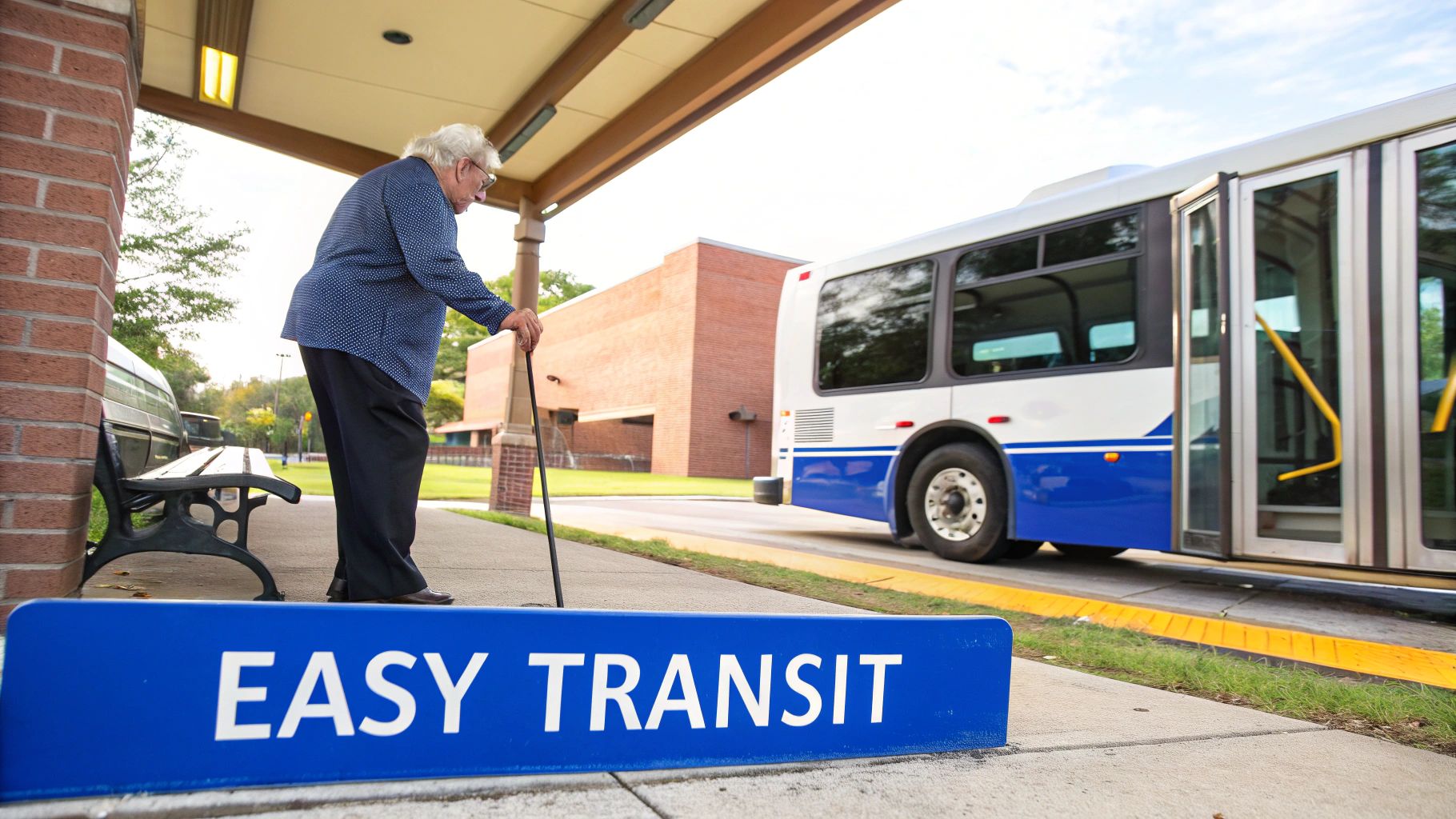
The goal is to ensure that a transition away from driving, whether gradual or sudden, does not lead to isolation or an inability to manage essential life tasks. Proactive planning allows for a seamless shift, preserving autonomy and connection to the community. This pillar is about ensuring life continues vibrantly beyond the driver's seat.
Why It's a Foundational Step
Losing the ability to drive can be one of the most significant psychological and logistical challenges for older adults. Without a plan, this transition can trigger social isolation, depression, and difficulty accessing necessary medical care. By planning ahead, individuals and families can put a support system in place before a crisis occurs, turning a potential hardship into a manageable life adjustment. The success of programs like AARP's Driver Safety courses, taken by over 700,000 people annually, and services like GoGoGrandparent, which simplifies ride-sharing for seniors, highlights the massive demand for and effectiveness of these solutions. Similarly, the fact that medical transportation benefits serve 3.6 million Medicare beneficiaries underscores its essential role in maintaining health.
This summary highlights the tangible benefits and scope of investing in transportation planning.
The data clearly illustrates the vast network of support available, from driver education to specialized ride services, emphasizing that a robust infrastructure exists to aid this transition.
Actionable Tips for Implementation
To get started, consider these practical steps:
- Take a Senior Driving Assessment: Before any issues arise, proactively enroll in a program like AAA's Roadwise or an AARP Driver Safety course. These assessments provide an objective evaluation of driving skills and can identify areas for improvement, helping you drive safely for longer.
- Research Local Options Early: While still driving, investigate all available local transportation alternatives. Contact your local Area Agency on Aging to learn about senior ride programs, volunteer driver networks, and accessible public transit routes.
- Set Up and Practice with Ride-Sharing: Ask a family member or tech-savvy friend to help set up ride-sharing apps like Uber or Lyft on a smartphone. More importantly, practice using them together for a few low-stakes trips to build confidence and familiarity with the process.
- Investigate Medical Transportation Benefits: Contact your insurance provider, whether it's Medicare Advantage or private insurance, to understand what non-emergency medical transportation (NEMT) services are covered. Knowing this benefit exists and how to access it can be a lifesaver for future appointments.
5. Pillar 5: Financial Planning and Management
A crucial pillar for a sustainable aging in place journey is robust financial planning and management. This goes far beyond simply having savings; it involves a strategic approach to organizing resources, anticipating future costs, and safeguarding assets to ensure long-term financial security. A comprehensive plan addresses the unique expenses of aging, from home modifications and in-home care to managing daily budgets and protecting against sophisticated financial scams targeting older adults.
This process involves a clear-eyed assessment of your current financial health and a forward-looking strategy for future needs. The goal is to create a financial framework that supports independence, covers potential healthcare costs, and provides peace of mind. By proactively managing your finances, you ensure that you have the resources necessary to live comfortably and securely in your own home for as long as you choose.
Why It's a Foundational Step
Financial preparedness is non-negotiable for a successful aging in place strategy. Without it, even the best-laid plans for home safety and social engagement can be derailed by unexpected costs. The reality is that aging often comes with increased expenses; Genworth's Cost of Care survey highlights that the national median cost for a home health aide is over $61,000 annually. Furthermore, elder financial abuse is a significant threat, with an estimated 1 in 18 older adults affected, resulting in losses of over $36 billion each year.
Proactive planning directly mitigates these risks. Organizations like the National Council on Aging demonstrate the power of financial navigation, having helped seniors find billions in benefits to which they were entitled. Proper planning ensures you can afford necessary care, protects your life savings from fraud, and empowers you to make choices based on your preferences, not financial limitations.
Actionable Tips for Implementation
To build a strong financial foundation, consider these practical steps:
- Conduct an Annual Benefits and Insurance Review: Your needs change over time. Use tools like the Medicare.gov Plan Finder during open enrollment each year to ensure your health coverage is still the best fit. Simultaneously, use the National Council on Aging's BenefitsCheckUp® to see if you qualify for programs that help with prescriptions, utilities, and other costs.
- Plan for Long-Term Care Costs: Don't wait until you need care to figure out how to pay for it. Investigate long-term care insurance while you are still healthy, as premiums are lower. If insurance isn't a fit, work with a Certified Financial Planner (CFP) who specializes in retirement to create a dedicated savings or investment strategy for future care needs.
- Automate and Simplify Your Finances: Set up automatic bill pay for recurring expenses like utilities, mortgages, and insurance premiums. This reduces the risk of missed payments and late fees. Consolidating accounts can also make them easier to manage and monitor for fraudulent activity.
- Establish Legal and Financial Safeguards: While you are mentally competent, work with an attorney to create a durable financial power of attorney. This legal document designates a trusted person to manage your finances if you become unable to do so yourself. Store this and other critical documents in a secure, accessible location and inform your designee where to find them.
6. Pillar 6: Home Maintenance and Household Management
Beyond initial modifications, a core component of a successful aging in place checklist is establishing a sustainable system for ongoing home maintenance and household management. This pillar addresses the practical realities of keeping a home safe, functional, and livable over the long term. It involves creating proactive plans for routine upkeep, emergency repairs, and daily chores, ensuring the home environment doesn't degrade as physical abilities change.
This process is about more than just mowing the lawn or fixing a leaky faucet. It's about developing a support network of reliable service providers and leveraging modern tools to simplify tasks. The goal is to offload the physical and mental burden of homeownership, allowing you to focus on health and well-being rather than worrying about unexpected repairs or accumulating chores.
Why It's a Foundational Step
A poorly maintained home can quickly negate the benefits of safety modifications. A clogged gutter can cause water damage, a malfunctioning furnace poses a safety risk, and an overgrown yard can create trip hazards. Proactively managing these tasks is crucial for preserving both the home's value and its safety. Organizations like Rebuilding Together, which provides free home repairs to over 10,000 low-income seniors annually, highlight the critical link between maintenance and the ability to age in place safely.
By setting up systems for maintenance, you create a resilient and predictable living situation. This foresight prevents small issues from escalating into major, costly problems and ensures your home remains a source of comfort, not stress.
Actionable Tips for Implementation
To build a robust maintenance and management plan, consider these steps:
- Create a Seasonal Maintenance Calendar: Document recurring tasks like cleaning gutters, servicing the HVAC system, checking smoke detectors, and preparing for winter. Assign these tasks to specific months to stay organized and create a predictable schedule.
- Build a Vetted Service Provider List: Don't wait for an emergency. Research and identify trusted plumbers, electricians, handymen, and lawn care services in your area. Use platforms like Angi or ask for local recommendations, and keep their contact information in an accessible place.
- Consider a Home Warranty: For older homes, a home warranty can provide financial predictability by covering major repairs or replacements for systems like your furnace, air conditioning, and major appliances. This can prevent a single breakdown from becoming a major financial burden.
- Simplify and Automate Housekeeping: Systematically declutter one room at a time to reduce cleaning demands and fall risks. For recurring chores, consider using services like TaskRabbit, which assists thousands of seniors with tasks from cleaning to furniture assembly. Installing smart home devices like robotic vacuums can also automate daily upkeep.
- Establish an Emergency Repair Fund: Set aside a dedicated savings account specifically for unexpected home repairs. Having this fund readily available provides peace of mind and prevents the need to delay critical repairs due to financial concerns.
7. Emergency Preparedness and Safety Systems
A critical, yet often overlooked, part of a comprehensive aging in place checklist is establishing robust emergency preparedness and safety systems. This pillar is about creating a safety net that activates during unforeseen events, whether a sudden health crisis like a fall, a severe weather event, or a power outage. It involves a multi-layered approach that combines technology, planning, and clear communication to ensure that help can be summoned and received quickly and efficiently, no matter the circumstances.
This system goes beyond just having a phone nearby. It encompasses medical alert devices, detailed emergency contact plans, disaster-specific supply kits, and proactive communication with local first responders. By putting these measures in place, you create a powerful framework that mitigates panic and provides clear, actionable steps during a high-stress situation, empowering both the older adult and their family with confidence and security.
Why It's a Foundational Step
An effective emergency plan is non-negotiable for anyone choosing to age in place, especially those living alone or with chronic health conditions. Seconds can make a critical difference in a medical emergency. The widespread recognition of this need is evident in the millions who subscribe to services like Life Alert, Medical Guardian, and Philips Lifeline. These services are not just about convenience; they are proven lifesavers, with companies like Medical Guardian having responded to over 150,000 emergency calls.
Furthermore, preparedness for natural disasters is essential. Resources from FEMA's Ready.gov and educational programs from the Red Cross help millions of Americans prepare annually. Integrating these broader safety plans with personal health emergency protocols creates a holistic safety strategy. This ensures that an individual is not only safe day-to-day but also resilient in the face of larger community-wide emergencies.
Actionable Tips for Implementation
To build your emergency preparedness system, follow these practical steps:
- Implement a Medical Alert System: Choose a system that fits your lifestyle. Options range from in-home, landline-based units to mobile GPS-enabled devices with fall detection. Research companies to find one with a reliable, 24/7 monitoring center. Test the system monthly to ensure it is functioning correctly and that you are comfortable using it.
- Create and Post an Emergency Contact List: Compile a clear, large-print list of key contacts. Include family members, neighbors, doctors, and poison control. Post this list on the refrigerator and next to every phone in the house. Ensure your In Case of Emergency (ICE) contacts are programmed into your mobile phone.
- Assemble a Go-Kit and a Stay-Kit: Prepare two kits. A "Go-Kit" should be a portable bag with essentials in case of evacuation. A "Stay-Kit" should contain supplies for sheltering in place for at least seven days. Both should include a 7-10 day supply of all necessary medications, water, non-perishable food, a flashlight, batteries, a first-aid kit, and copies of important documents in a waterproof container.
- Register with Local Emergency Services: If you have special needs, use supplemental oxygen, or have mobility challenges, contact your local fire department, police department, or office of emergency management. Many communities maintain a voluntary registry of residents who may need extra assistance during an emergency.
7-Point Aging in Place Checklist Comparison
| Item | Implementation Complexity 🔄 | Resource Requirements ⚡ | Expected Outcomes 📊 | Ideal Use Cases 💡 | Key Advantages ⭐ |
|---|---|---|---|---|---|
| Home Safety Assessment and Modifications | Medium – involves some professional installation | Moderate – costs $3K-$15K upfront | Significant fall risk reduction (75% functional improvement) | Older adults at risk of falls or injuries | Increases independence; cost-effective; immediate benefits |
| Healthcare Access and Management | High – coordination of providers and records | High – ongoing management | Better health outcomes; continuity of care; 40% improved health | Seniors needing consistent medical care | Prevents emergencies; reduces caregiver stress |
| Social Connection and Community Engagement | Low to Medium – maintaining relationships and activities | Low to Moderate – mainly time and some transport | 50% lower dementia risk; longer lifespan | Seniors at risk of isolation and cognitive decline | Enhances mental health; provides support network |
| Transportation Planning | Medium – requires planning and some tech adaptation | Moderate – possible ride-sharing costs | Maintains independence; access to services | Seniors with declining driving ability | Flexible transport options; reduces isolation |
| Financial Planning and Management | High – requires complex planning and document organization | Moderate to High – may need professional help | Financial security; better care decisions | Seniors managing limited income or long-term care costs | Protects against fraud; reduces family burden |
| Home Maintenance and Household Management | Medium – regular scheduling and service coordination | Moderate – ongoing maintenance costs | Prevents costly repairs; maintains home value | Seniors living independently in own home | Reduces emergency repairs; adapts to changing abilities |
| Emergency Preparedness and Safety Systems | Low to Medium – setup of devices and plans | Moderate – device costs + monthly fees | Faster emergency response (4-6 min vs 12+) | Seniors at risk of medical or disaster emergencies | Provides peace of mind; immediate help access |
Bringing It All Together: Your Path to Confident Aging at Home
Embarking on the journey of aging in place can feel like assembling a complex puzzle. Each piece, from the smallest home modification to the broadest financial strategy, is essential for creating a complete picture of a safe, independent, and fulfilling future at home. The comprehensive aging in place checklist we have explored provides a detailed blueprint, transforming a potentially overwhelming goal into a series of manageable, actionable steps. You have now navigated the seven foundational pillars: Home Safety, Healthcare Management, Social Connection, Transportation, Financial Planning, Home Maintenance, and Emergency Preparedness. The next step is to move from planning to action.
The true power of this checklist lies not in its completion, but in its initiation. It is a living document, a dynamic guide that should be revisited and adapted as your needs and circumstances evolve. Remember, this is not a race to the finish line. Progress is incremental, and every small adjustment contributes to the larger goal of long-term independence. Start with what feels most achievable. Perhaps it’s a simple weekend project to install grab bars in the bathroom or a scheduled afternoon to organize your medical documents and emergency contacts into a single, accessible binder. Building this momentum is key.
Turning Your Checklist into a Concrete Plan
The most successful aging in place strategies are rarely solo endeavors. This process is an ideal opportunity to open lines of communication with family, friends, and trusted professionals. Sharing your goals and progress can foster a strong support network that is ready to assist when needed.
Consider these actionable next steps to bring your plan to life:
- Prioritize and Delegate: Review your completed aging in place checklist and identify the top three to five most critical items. You do not have to tackle everything at once. Decide what needs immediate attention, what can be planned for the near future, and what can be a long-term goal. Involve family members by delegating tasks based on their skills and availability.
- Consult the Experts: You are not expected to be an expert in home modifications, financial law, or healthcare navigation. Lean on the knowledge of professionals. An occupational therapist can provide a professional home safety assessment, a financial advisor can help structure your assets for long-term care, and a geriatric care manager can help coordinate services.
- Embrace Technology: From automated medication dispensers and telehealth platforms to smart home devices that control lighting and temperature, technology is a powerful ally. Explore tools that can automate daily tasks, enhance safety, and keep you connected with loved ones and your healthcare team.
The Lasting Value of Proactive Planning
By proactively working through this detailed checklist, you are doing more than just future-proofing your home. You are making a profound investment in your own well-being and peace of mind. You are actively shaping a future defined by choice, dignity, and comfort, rather than reacting to a crisis. This foresight empowers you to maintain control over your life, ensuring you can continue to live on your own terms in the environment you cherish most. The confidence that comes from knowing you have a solid plan in place is invaluable, freeing you to focus on enjoying your life, nurturing relationships, and pursuing your passions.
Your home is more than just a physical structure; it is a repository of memories and a center of comfort and security. Taking these steps today ensures it can continue to be your sanctuary for years to come.
Navigating the details of an aging in place checklist can be complex, but you don't have to do it alone. For families in New Jersey seeking professional, compassionate support to bridge the gaps in their plan, NJ Caregiving offers personalized in-home care, nursing services, and companionship. Discover how our dedicated team can help you or your loved one thrive at home by visiting NJ Caregiving.