
For anyone helping a loved one age in place, getting the grab bar height right is more than just a measurement—it’s the difference between stability and a life-altering fall. A properly placed grab bar is like a trusted hand, offering support during those vulnerable moments in a bathroom. Nailing this one detail can transform a potential hazard zone into a safe, accessible space.
Why a Few Inches Can Make All the Difference
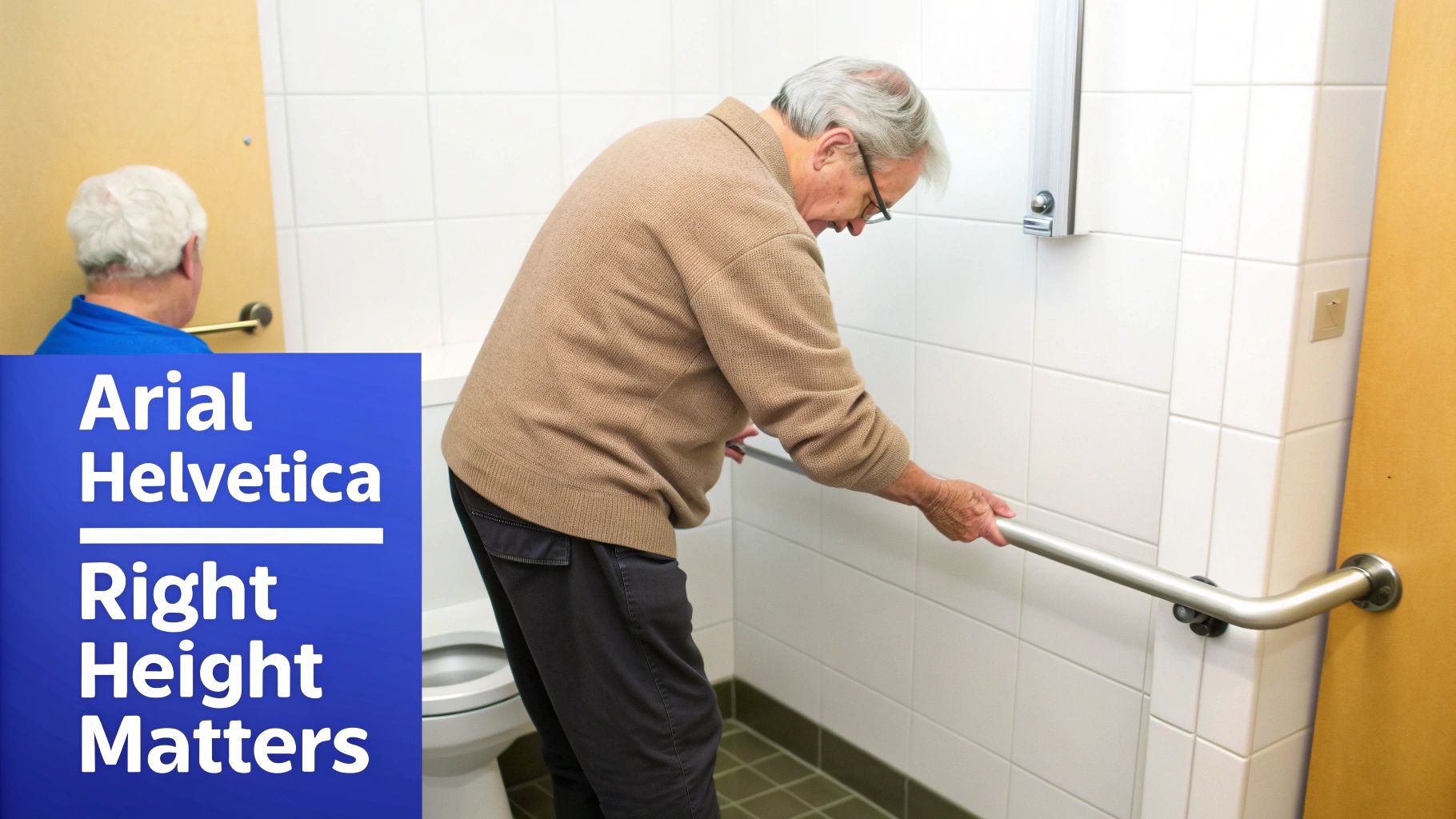
Think of a grab bar as a silent caregiver. It’s a simple tool, but its effectiveness hangs entirely on its placement. If a bar is mounted too high, a person might have to dangerously over-reach, creating instability. Too low, and it won’t provide the leverage needed to safely stand up from a toilet or get out of a bathtub.
Those few inches of adjustment can completely change how someone moves through their home.
This isn't just about convenience; it's about preserving independence and dignity. For families here in Princeton and across Mercer County, knowing a loved one can navigate their home safely brings incredible peace of mind. A correctly installed grab bar empowers seniors, letting them handle daily routines with confidence and quieting the constant worry about falls.
The Science Behind the Standard Height
There’s a real reason for the specific height recommendations. The standard grab bar height mandated by the Americans with Disabilities Act (ADA) is set precisely between 33 and 36 inches from the finished floor to the bar's centerline.
This isn't just some arbitrary number. It’s based on decades of research into body mechanics, engineered to support a wide range of people, especially those transferring from a wheelchair or needing a boost to stand up. This single standard has been a cornerstone of accessibility since 1990, completely transforming public and private spaces for millions.
A well-placed grab bar isn’t just an accessory; it’s a critical piece of safety equipment. Its height and location are directly tied to its ability to prevent falls, which are a leading cause of injury among older adults.
From Compliance to Custom Comfort
At NJ Caregiving, we see the impact of this firsthand when we help clients return home after a hospital stay. Our caregivers often start by assessing the home for safety risks, and recommending grab bars is almost always the first and most important step. It's a fundamental part of creating a secure living space.
This simple home modification is a powerful statement. It says that a home is a place of comfort, safety, and continued independence, where every detail is considered to support the well-being of its residents. For more on this, check out our comprehensive guide on preventing falls in elderly individuals.
Cracking the Code on ADA Standards for Grab Bars
The Americans with Disabilities Act (ADA) isn't just a list of building codes; it's a proven blueprint for safety. When you understand these standards, you can create a genuinely secure space, whether you're modifying a home in Princeton or just want to make sure a loved one is protected. They’re based on years of research into how people actually move and what they need for support.
Think of the ADA guidelines as the universal language of safety. They make sure a grab bar is right where someone instinctively reaches when getting up, sitting down, or transferring from a wheelchair. The whole point is consistency and reliability you can count on.
The Magic Numbers for Grab Bar Height
The single most important measurement is the grab bar height. The ADA requires a horizontal grab bar to be mounted between 33 and 36 inches from the finished floor to the top of the bar. This isn't a random number—it's the carefully calculated sweet spot.
This height range lines up with the center of gravity for most adults when they're sitting down. It gives them the best possible leverage to push or pull themselves up without putting painful strain on their shoulders or back. A bar in this zone feels natural and supportive, which goes a long way in preventing a fall.
A core ADA requirement is that a properly installed grab bar must hold up under a minimum of 250 pounds of force. This is critical because it ensures the bar can support a person's full body weight during a slip or transfer.
This strength requirement is exactly why professional installation is so important. A grab bar that isn't anchored directly into wall studs or solid wood blocking is just a dangerous illusion of safety.
It's More Than Just Height: Key ADA Specs
While getting the height right is huge, a few other ADA specs work together to make a grab bar truly safe and functional. If you ignore these, even a perfectly placed bar can be hard to use or even risky.
These other details are all about making sure the user can get a solid, full-handed grip when they need it most.
- Wall Clearance: There has to be exactly 1.5 inches of clear space between the grab bar and the wall. Any less, and you can't get your knuckles behind it for a full grip. Any more, and a wrist or arm could slip through, causing a serious injury.
- Bar Diameter: The bar itself should have a diameter between 1.25 and 2 inches. This range is designed to fit most hand sizes, allowing for a firm, comfortable hold that won’t slip, even when it's wet.
- Obstruction-Free Zone: The area all around the grab bar needs to be completely clear. A poorly placed soap dish, towel rack, or even a recessed toilet paper holder can get in the way of a secure grip, especially in an emergency.
These small technical details are what separate a decorative bathroom accessory from a life-saving tool. When you're talking with a contractor or looking at your own home, knowing these numbers helps you make sure you're creating a space that’s truly safe.
Why These Standards Matter in Your Home
Even though ADA rules are mandatory for public buildings, bringing them into your own home is a best practice that safety experts and occupational therapists always recommend. They give you a reliable starting point for any home modification project in Mercer County, guaranteeing the setup is safe and effective from day one.
When you follow this proven blueprint, you’re not just installing a piece of hardware. You’re building a support system that helps maintain independence, boosts confidence, and gives everyone peace of mind. Every single measurement, from the 33- to 36-inch height to the 1.5-inch wall clearance, plays a vital role in preventing falls and protecting the people you care about.
Perfecting Grab Bar Height and Placement Around the Toilet
The toilet area is, hands down, one of the most common spots for falls in a home. This makes getting the grab bar height and placement right absolutely critical. This isn't just about checking a box or following a code; it's about creating a truly secure space that gives a person confidence every single time they use it. It’s the difference between a wobbly, risky transfer and a safe, independent one.
Think of the grab bars around a toilet as a two-part support system. You’ll want one on the wall behind the toilet and a longer one on the side wall. Working together, they support a person through the entire motion of sitting and standing, leaving no gaps where balance could be lost.
The Rear Wall Grab Bar: Your First Point of Stability
The first piece of the puzzle is the horizontal grab bar mounted on the wall behind the toilet. The ADA recommends this bar be at least 36 inches long and centered with the toilet. If you’re tight on space, a 24-inch bar might work, but longer is always better because it gives the user more area to grip.
This rear bar is crucial for support when lowering onto the toilet and pushing back up. Its height is key: it needs to be installed between 33 and 36 inches from the floor to the bar’s centerline. This range allows someone to push up or steady themselves without putting awkward strain on their shoulders or back.
To really get a handle on the core ADA requirements, this diagram breaks down the essentials for height, clearance, and strength.
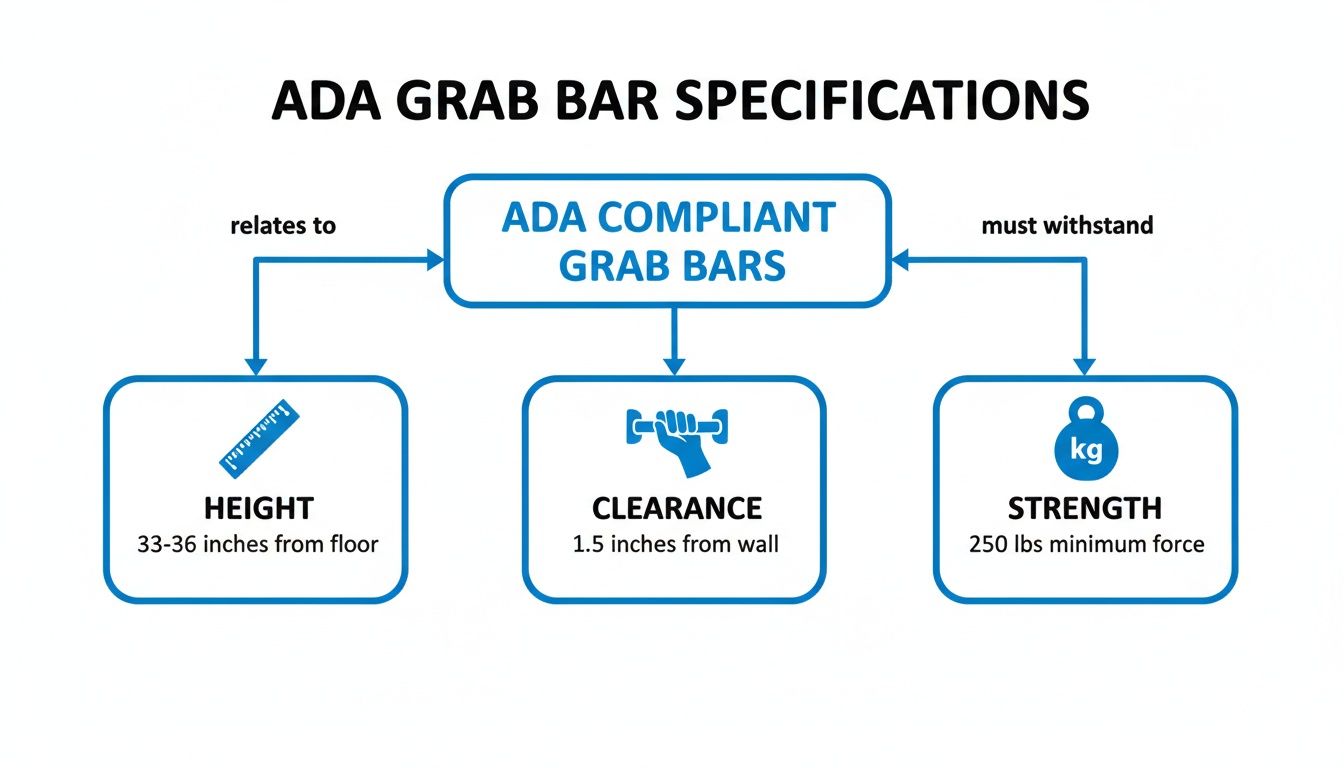
As you can see, it's the combination of correct height, proper grip space, and solid anchoring that turns a simple bar into a reliable safety tool.
The Side Wall Grab Bar: A Guide for Transfers
The second, equally vital piece is the long grab bar on the side wall. This one needs to be at least 42 inches long and positioned so it starts no more than 12 inches from the rear wall. This placement ensures the bar extends well past the front of the toilet bowl, offering a continuous handhold for the entire transfer.
Imagine a loved one in Princeton who needs a bit of help standing. As they start to rise, their hand can slide forward along this side bar, keeping a firm, steady grip all the way through the motion. The height for this bar also needs to be in that same 33 to 36-inch sweet spot, lining up with the rear bar to create a consistent level of support.
For a quick reference, here’s a table that simplifies the key ADA measurements for toilet grab bars.
ADA Grab Bar Placement Guide for Toilets
| Location | Required Height (from floor) | Required Length | Positioning Details |
|---|---|---|---|
| Rear Wall | 33–36 inches | 36 inches minimum | Must be centered on the toilet. Starts 6 inches from the side wall. |
| Side Wall | 33–36 inches | 42 inches minimum | Must start no more than 12 inches from the rear wall. |
This setup provides a seamless transfer of support, eliminating any precarious gaps where someone might lose their footing or balance.
Taking Safety a Step Further with a Vertical Grab Bar
While the two horizontal bars create an excellent baseline of safety, you can make the area even safer by adding a third bar: a vertical one. We typically install these on the wall at the front of the toilet.
A vertical bar is incredibly helpful because it works with the body’s natural "pulling up" motion. It allows for a more intuitive, hand-over-hand movement that feels stronger and more stable for many people. It’s the perfect addition for anyone in Mercer County needing that extra leverage to stand with confidence, turning a good setup into a great one.
Configuring Grab Bars for Showers and Bathtubs
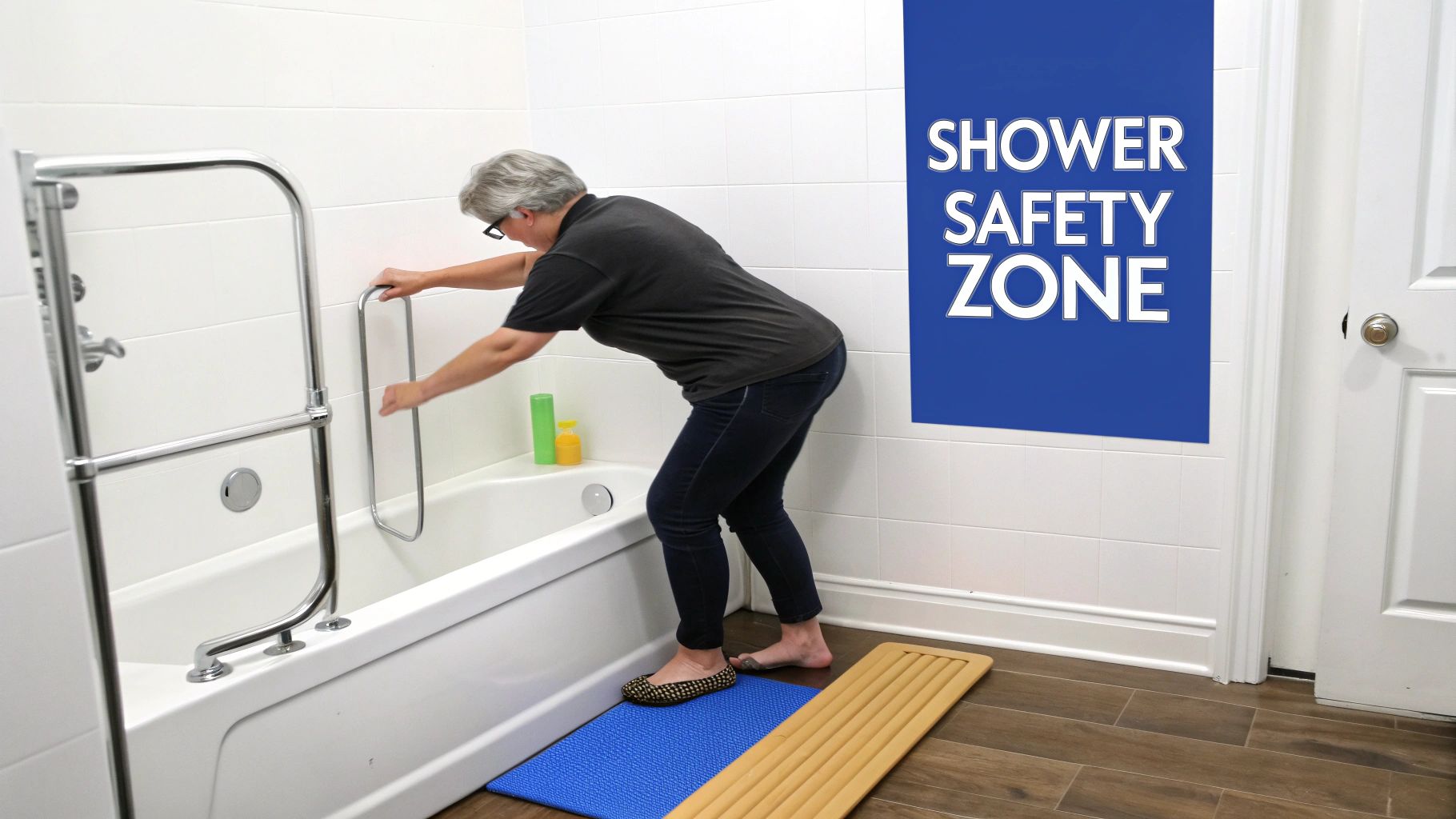
Nowhere is the risk of a fall more pronounced than on the wet, slippery surfaces of a shower or bathtub. This is where a strategically placed grab bar system truly shines, turning a high-risk area into a secure safety zone. The goal is to provide a continuous, reliable handhold for every single movement—from stepping in to adjusting the water and safely stepping back out.
Think of the grab bars here as a sturdy railing on a steep staircase. They offer a constant point of stability when your footing is least certain. Getting the grab bar height and configuration right is absolutely critical to making this safety zone effective.
Creating a Safety Zone in the Bathtub
For a standard bathtub, a two-bar setup is the gold standard for safety. This combination provides support on both the back wall and the control wall (where the faucet and knobs are). Together, they create a comprehensive support system that covers the entire length of the tub.
This setup ensures that no matter where a person is standing or sitting, a supportive bar is always within easy reach. This is a key piece of the puzzle in comprehensive bathroom safety for seniors, which can make all the difference in preventing accidents.
- The Back Wall Bar: A long horizontal bar, often 24 inches or more, should run along the back wall of the tub. This gives you plenty of room to grip while bathing.
- The Control Wall Bar: A second horizontal bar, typically 18 to 24 inches long, goes on the wall with the faucet controls. This lets you hold on securely while adjusting water temperature and flow.
The height for both of these bars follows the trusted ADA recommendation: 33 to 36 inches above the finished floor. This specific height ensures the bars are accessible whether you're standing up or sitting down in the tub.
Best Practices for Shower Grab Bar Placement
Walk-in showers, especially transfer-style showers (those with a built-in seat), have slightly different but equally important requirements. The setup here is designed to support the motion of transferring from a wheelchair or walker to the shower seat and then bathing safely.
In this scenario, grab bars should be installed on all three walls surrounding the shower seat, creating a complete enclosure of support. The height stays consistent with that 33 to 36-inch guideline measured from the shower floor, which keeps the support level uniform and predictable.
A critical but often overlooked detail is placing a vertical grab bar at the shower entrance. This bar provides a crucial handhold for stepping safely over the shower curb—one of the most common moments for a slip to happen.
A Real-World Example in Mercer County
Let’s imagine we’re helping a family in Hamilton adapt a bathroom for their father, who was recently diagnosed with Parkinson's. A condition like this can affect balance and coordination, so a simple horizontal bar just might not be enough.
To create a truly supportive environment, we would recommend a combination approach:
- A Vertical Bar at the Entrance: We’d install a vertical bar right outside the tub. This supports that initial, often tricky motion of lifting a leg over the tub edge.
- A Long Horizontal Bar on the Back Wall: Set at the standard 33- to 36-inch grab bar height, this bar provides stability for standing or shifting weight during the shower.
- An Angled Bar on the Control Wall: Instead of another horizontal bar, an angled one can be more ergonomic here. It offers a low grip for rising from a shower chair and a high grip for standing steady while using the controls.
This tailored combination supports every single phase of the bathing process. It directly addresses the specific challenges posed by a mobility condition, turning what could be a daily source of anxiety into a safe and manageable routine. It’s a thoughtful approach that moves beyond simple compliance to provide truly personalized safety.
When to Customize Grab Bar Height for Personal Needs
While the ADA’s 33 to 36-inch guideline is the gold standard for public bathrooms, your home is a different story. It offers the flexibility to create a safety net that’s truly built for you. Think of the ADA height as a great starting point—like a "one-size-fits-all" shirt. It works well enough for most, but nothing beats a custom-tailored fit for true comfort and safety.
This personalized approach becomes crucial when someone’s height, mobility, or a specific health condition makes the standard placement less than ideal. The real goal is to provide the best possible leverage and support, turning that grab bar into a seamless extension of their own strength.
Moving Beyond a One-Size-Fits-All Solution
Every person moves differently, and so their support needs are unique. For someone much shorter than average, a bar set at 36 inches might be too high to grab effectively. On the other hand, a taller person might have to bend down awkwardly to use a bar at 33 inches, which could make them less stable, not more.
Physical conditions also play a huge role in finding that perfect height.
- Limited Flexibility: If someone has severe arthritis in their shoulders or back, reaching up to a standard-height bar might be painful or even impossible.
- One-Sided Weakness: After a stroke, a person often relies heavily on their stronger side. The grab bars should be placed to favor that side, adjusted to a height that gives them maximum leverage.
- Unique Transfer Styles: We all develop our own little ways of getting up and down. Simply watching how someone naturally moves from a wheelchair to the toilet can tell you exactly where they need support.
When you customize the installation, you’re acknowledging these individual needs and building a support system that works with the user, not against them. As you plan these updates, looking into universal design principles can be a game-changer for making a home safe and comfortable for everyone, for years to come.
How to Find the Perfect Personalized Height
Figuring out the right custom height doesn’t involve any complicated math. One of the most effective ways is to take a simple, practical measurement based on the user’s own body.
Here's an easy technique:
- Have the person stand comfortably right next to the wall where the bar will go.
- Ask them to let their arm hang down naturally at their side.
- Make a small mark on the wall right at the center of their wrist bone.
This wrist-level height is often the sweet spot for a horizontal grab bar. It allows the user to keep their wrist in a strong, neutral position while getting a firm grip, which is perfect for pushing up or lowering down. This one small tweak can make a world of difference.
A truly effective home modification isn't just about meeting a code; it's about meeting a person's individual needs. Customizing grab bar height is a powerful way to enhance safety and promote long-term independence.
This kind of personalization is at the very core of effective aging in place home modifications. For families here in the Mercer County area, taking that extra time to get these details just right shows a real commitment to a loved one's well-being. It ensures their home isn’t just safe, but a place where they can feel truly supported.
Securing Your Grab Bars for Unfailing Support
Figuring out the perfect grab bar height is a huge step, but it’s only half the battle. A bar placed at the ideal height but mounted improperly isn’t just ineffective—it’s a serious hazard. An installation that isn't rock-solid creates a false sense of security, which can lead to a terrible fall when the bar fails under pressure.
A grab bar is only as strong as its connection to the wall. That’s the non-negotiable rule of bathroom safety. To provide the kind of unfailing support needed to prevent an accident, it has to be anchored directly into the solid wood of your wall studs.
The Dangers of Improper Mounting
Many well-intentioned DIY installations go wrong simply by using the wrong mounting hardware. It’s absolutely critical to understand what not to use, as these common methods simply can’t handle the force of a weight-bearing safety device.
- Drywall Anchors: Those standard plastic or metal anchors are fine for hanging pictures or a lightweight shelf. They will rip right out of the wall when hit with the sudden force of a person losing their balance.
- Suction Cups: They might be marketed as a convenient, no-drill solution, but suction cup grab bars are notoriously unreliable. Changes in temperature, humidity, or even a little soap residue can cause them to lose their grip without any warning. They are never a safe substitute for a securely mounted bar.
Relying on these is like using a rope made of thread to catch someone who is falling. When that critical moment comes, they will fail.
The ADA requires professionally installed grab bars to support a minimum of 250 pounds of force. This standard is only possible when the bar is anchored securely into the structural framing of your home.
Why Professional Installation Is a Critical Investment
While it might seem straightforward, installing a grab bar correctly takes precision, the right tools, and a real understanding of how walls are built. A professional installer brings the experience needed to get this crucial job done safely and effectively.
A professional takes several key steps to ensure a rock-solid installation:
- Locate Wall Studs: Using an electronic stud finder, they’ll pinpoint the exact center of the wooden studs behind your drywall or tile.
- Ensure Proper Anchoring: They use high-quality, corrosion-resistant screws long enough to bite deep into the stud, creating an unbreakable connection.
- Seal Against Moisture: In a wet area like a shower, a good installer will use silicone caulk to seal around the mounting plates. This prevents water from seeping into the wall and causing rot or mold down the line.
Hiring a professional for this task isn’t a luxury; it’s an essential investment in a loved one's safety and well-being. For families here in Princeton and Mercer County, knowing that every safety feature is installed to the highest standard provides invaluable peace of mind. A correctly installed grab bar, set at the perfect height, offers dependable support you can truly trust, day in and day out.
Common Questions About Grab Bar Installation
Even with the best plan in place, a few questions always pop up during a home modification project. Getting clear, straightforward answers is the key to feeling confident that every choice you make is centered on safety and long-term reliability.
Here are a few of the questions we hear most often from families just like yours.
Are Suction Cup Grab Bars a Safe Alternative?
This is a big one, and the answer is an emphatic no. Suction cup grab bars are not recommended for bearing any real weight. Think of them as a light touch for minor balance assistance, but that's it. They can, and often do, fail without any warning, especially in the humid, slippery environment of a bathroom.
For genuine fall prevention, the only safe option is a professionally installed, screw-mounted grab bar anchored directly into solid wall studs. It's the only method that guarantees the support will be there when you need it most.
If you're thinking about a larger-scale project, a good Rural NSW Bathroom Renovations Guide can offer some great perspective on how to integrate permanent accessibility features from the start.
Should I Install a Vertical or Horizontal Grab Bar?
The best answer really depends on the specific movement you're trying to support. There’s a place for both.
- Horizontal bars are perfect for providing stability as you move along a wall, like from the toilet to the vanity. They're also great for pushing up from or lowering down to a seated position.
- Vertical bars work beautifully with the natural hand-over-hand motion we use to pull ourselves up. They are fantastic for providing a secure grip when stepping in and out of a tub or shower.
In most cases, the safest and most functional setup involves a combination of both horizontal and vertical bars to create a complete safety net.
Key Takeaway: The best material for a bathroom grab bar is stainless steel. It’s exceptionally durable and won’t rust. For an even better grip when hands are wet or soapy, look for a bar with a textured or "peened" finish. This provides more friction than a smooth surface—a small detail that makes a huge difference in preventing a slip.
At NJ Caregiving, we believe a safe home is the very foundation of independent living. If you have more questions or need a hand with professional grab bar installation here in the Princeton area, we’re here to help.
Contact us today to learn more about our home modification and caregiving services at https://njcaregiving.com.
