
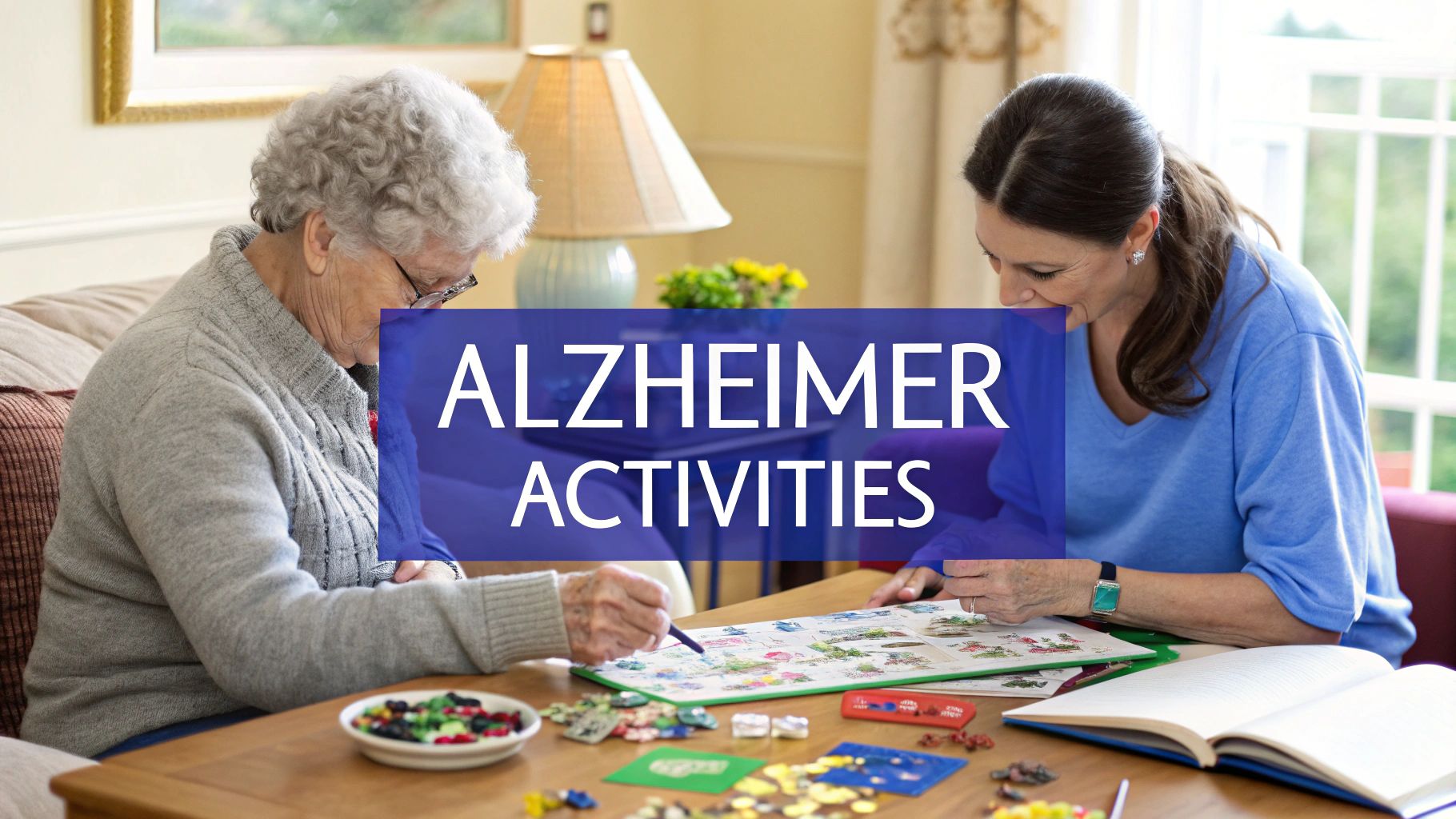
Caring for a loved one with Alzheimer's disease involves navigating a landscape of changing abilities and needs. One of the most powerful tools in a caregiver's toolkit is meaningful daily activity. Beyond simply filling time, purposeful engagement can reduce agitation, improve mood, and foster a profound sense of connection, even as the disease progresses. This comprehensive guide moves beyond generic advice to offer a detailed roundup of activities for Alzheimer's patients that are specifically tailored for different stages of the disease.
This listicle is designed to be a practical resource for in-home caregivers. We will explore ten distinct categories of engagement, from sensory stimulation and music therapy to gentle physical exercises and creative expression. For each activity, you will find:
- Clear Instructions: Step-by-step guidance on how to set up and facilitate the activity.
- Stage-Specific Adaptations: Practical tips for modifying each task to suit early, middle, and late-stage Alzheimer's.
- Key Benefits: An explanation of how the activity supports cognitive function, emotional well-being, or physical health.
- Caregiver Notes: Important safety considerations and advice for making the experience successful and enjoyable for both you and your loved one.
Our goal is to provide actionable strategies that help preserve dignity, stimulate remaining abilities, and create moments of shared joy. For families and caregivers providing in-home support, integrating these practices can transform the daily caregiving journey, turning routines into valuable opportunities for connection and meaningful interaction.
1. Reminiscence Therapy and Memory Box Activities
Reminiscence therapy is a powerful approach that uses sensory cues to help individuals with Alzheimer's recall and share significant life events. This therapeutic activity leverages long-term memory, which often remains more accessible than short-term memory as the disease progresses. Creating a "memory box" is a tangible way to practice this, providing a collection of personalized items that act as prompts for conversation and connection.
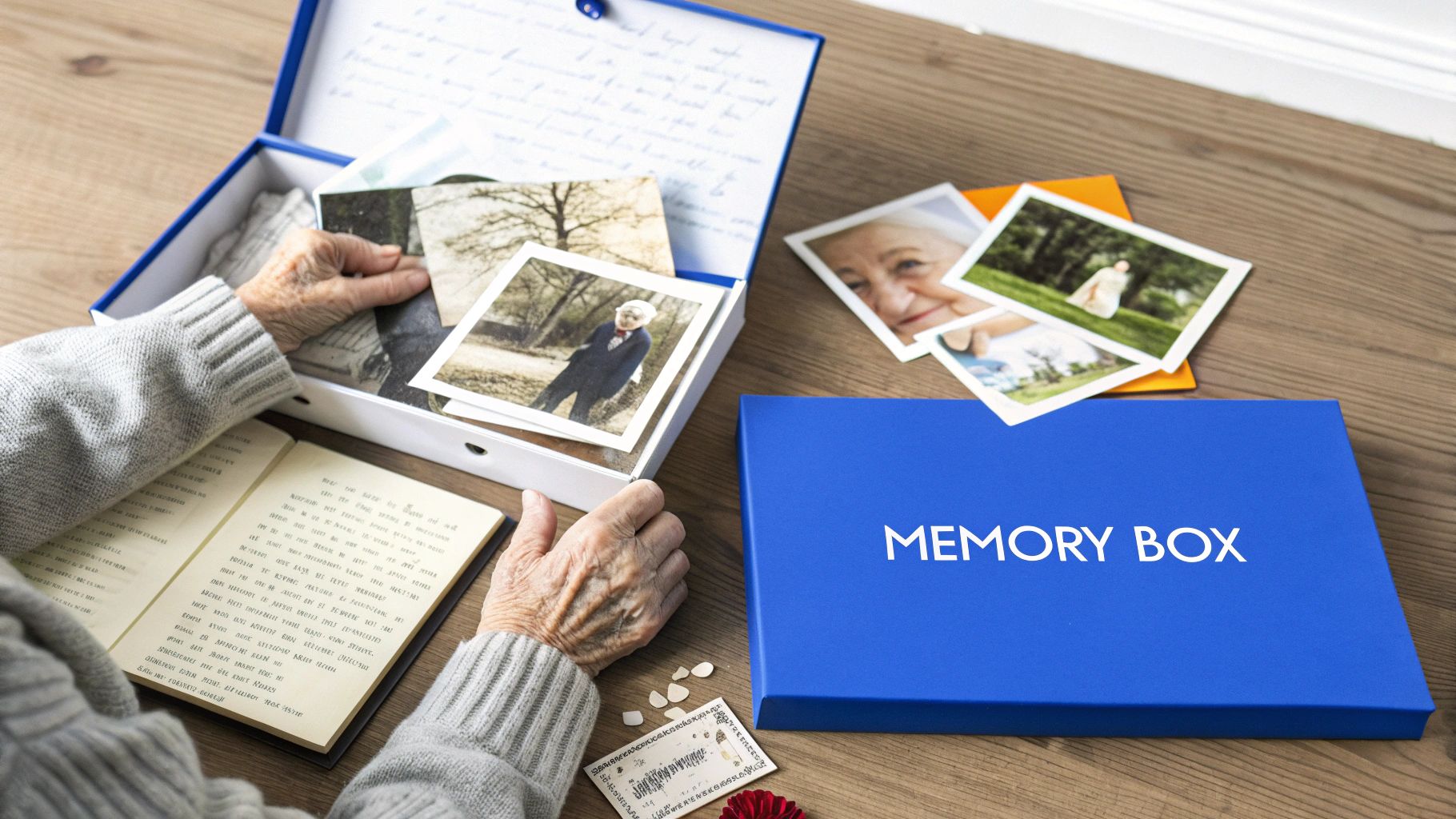
This method isn't just about remembering the past; it's a vital tool for reinforcing a person's sense of self and strengthening emotional bonds with loved ones. By focusing on cherished memories, you create positive interactions that can reduce agitation and improve mood, making it one of the most effective activities for Alzheimer's patients.
How to Create a Memory Box
The goal is to gather items that spark joy, conversation, and a sense of identity. Collaborate with family and friends to find meaningful mementos.
- Photographs and Documents: Include old family photos, wedding announcements, postcards, or letters. Label them with names and dates on the back.
- Hobby-Related Items: Add items related to past hobbies, like a favorite fishing lure, knitting needles and yarn, or a souvenir from a beloved sports team.
- Sensory Triggers: Incorporate objects with distinct textures, scents, or sounds. Consider a sachet of a favorite flower, a small bottle of a familiar perfume or aftershave, or a seashell from a family vacation.
- Music: A small music box or a playlist of songs from their youth can be a wonderful addition, as music often evokes powerful emotional memories.
Caregiver Tip: Keep sessions focused and brief, around 20-30 minutes, to prevent overstimulation. Use open-ended questions like, "Tell me about this picture," rather than "Do you remember this?" to encourage storytelling without pressure.
By curating these items, you provide a gentle, enjoyable way to engage the mind and spirit. To explore more ideas that support cognitive health, discover these specialized memory care activities designed for various stages of dementia.
2. Music and Singing Therapy
Music therapy is a uniquely effective approach for engaging individuals with Alzheimer's, as the brain's ability to process music often remains intact long after other cognitive functions have declined. This evidence-based intervention uses rhythm, melody, and familiar songs to stimulate responses, bypass verbal communication challenges, and connect with emotions. It can transform moods, encourage movement, and unlock memories that seem otherwise inaccessible.

This powerful connection to music is not just a passive listening experience; it's an interactive tool for engagement. By tapping into the rhythms and tunes of a person's youth, you can reduce anxiety, promote social connection, and improve motor coordination. This makes it one of the most versatile and emotionally resonant activities for Alzheimer's patients across all stages of the disease.
How to Implement Music and Singing Activities
The key is to personalize the musical experience to the individual's tastes and background. The goal is to create a positive, stimulating environment without causing distress.
- Create Personalized Playlists: Work with family to identify favorite artists, genres, and songs from the person's young adult years (teens and twenties). Platforms like Spotify or YouTube are great for building era-specific playlists.
- Encourage Participation: Provide simple percussion instruments like tambourines, shakers, or small drums. Encourage them to clap, tap their feet, or sing along, even if they don't remember all the words.
- Integrate Music into Daily Routines: Play calming music during mealtimes to create a relaxed atmosphere or use upbeat, familiar tunes during morning care to boost energy and cooperation.
- Explore Live Music: If possible, arrange for a family member to play an instrument, or consider hiring a professional music therapist for guided sessions. Even simple live singing can be incredibly engaging.
Caregiver Tip: Pay close attention to the individual's reactions. While most music can be calming, certain songs may trigger sad memories. Be ready to change the playlist if you notice signs of agitation or distress. Keep the volume at a moderate level to avoid overstimulation.
By incorporating music, you can create moments of joy and connection that transcend the challenges of dementia. The organization Music & Memory has popularized this approach by demonstrating its profound impact on well-being.
3. Gardening and Plant Care Activities
Gardening and plant care offer a gentle yet profound way for individuals with Alzheimer's to connect with nature and engage their senses. This form of horticultural therapy involves simple tasks like planting, watering, and tending to flowers or herbs, which can awaken dormant skills and provide a comforting, structured routine. It taps into a natural rhythm, offering physical movement, sensory stimulation, and a tangible sense of purpose and accomplishment.
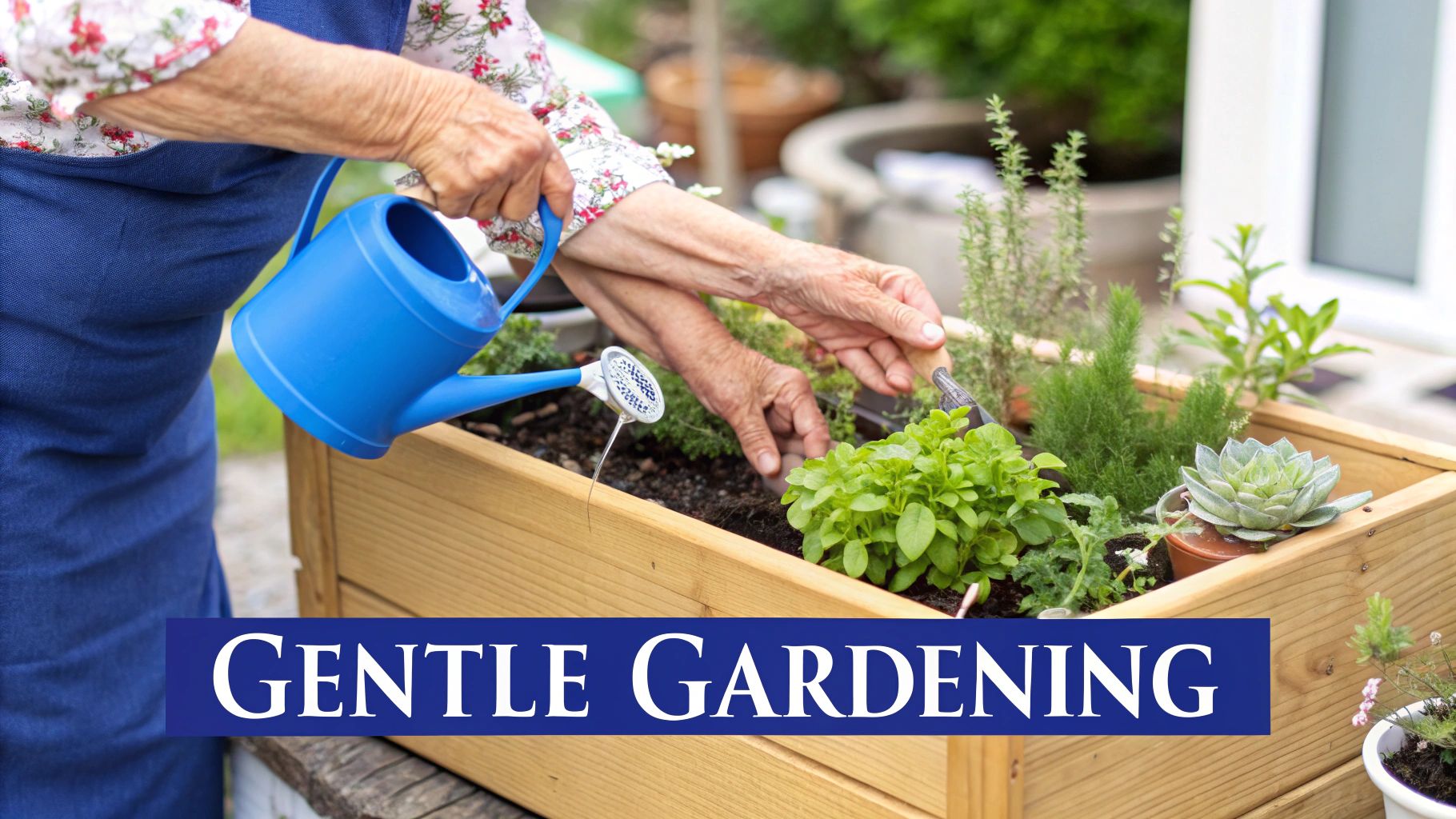
This activity is not just about growing plants; it's about nurturing life, which can be incredibly empowering. The physical act of digging in the soil, the smell of fresh herbs, and the sight of a blooming flower can reduce stress and agitation. As one of the most versatile activities for Alzheimer's patients, gardening can be adapted for any space or physical ability, from a small indoor herb garden to accessible outdoor raised beds.
How to Set Up a Successful Gardening Activity
The key is to create a safe, accessible, and enjoyable environment that focuses on the process rather than a perfect outcome. Start small to build confidence and ensure the experience remains positive.
- Choose Easy-to-Grow Plants: Start with low-maintenance options like succulents, herbs (mint, basil), or hardy flowers like marigolds and pansies. This ensures a high chance of success, which boosts morale.
- Adapt the Space: Use raised garden beds or large containers on a patio to eliminate the need for bending and kneeling. For indoor gardening, a sunny windowsill with a few pots is perfect.
- Use Safe, Lightweight Tools: Provide lightweight trowels, soft-grip tools, and gloves to make tasks easier and safer. Avoid sharp implements or chemical pesticides, opting for natural alternatives.
- Incorporate Sensory Elements: Focus on plants with interesting textures (lamb's ear), vibrant colors, or strong, pleasant scents (lavender, rosemary). The simple act of using a watering can provides soothing sensory input.
Caregiver Tip: Frame gardening as a shared project. Work alongside the individual, offering guidance rather than direction. Use simple, one-step instructions like, "Let's put some soil in this pot," or "This flower looks thirsty." Celebrate every small success, like a new sprout or the first bloom.
By engaging in plant care, individuals can reconnect with a life-affirming hobby, enjoy gentle exercise, and feel a continued sense of contribution and worth.
4. Art Therapy and Creative Expression
Art therapy offers a powerful, non-verbal outlet for individuals with Alzheimer's who may struggle to express their thoughts and emotions. Activities like painting, drawing, or working with clay leverage creativity to bypass verbal communication challenges, allowing for emotional release and personal expression. This process is not about technical skill or creating a masterpiece; the value lies in the act of creation itself.
Engaging in art can help maintain fine motor skills, reduce agitation, and provide a profound sense of accomplishment and purpose. By focusing on sensory input and creative flow, art becomes one of the most adaptable and beneficial activities for Alzheimer's patients, promoting cognitive flexibility and boosting self-esteem.
How to Facilitate Creative Expression
The key is to create a supportive, failure-free environment where the person can explore materials without pressure. The setup should be simple and safe.
- Simplify Materials: Use large-handled brushes, non-toxic, washable paints, and large sheets of paper. Coloring books with simple designs or paint-by-number kits can be a great starting point.
- Offer Gentle Prompts: If a blank canvas seems intimidating, provide a theme or a starting point. Ask, "What does a sunny day feel like?" or suggest painting a favorite color.
- Focus on the Process: Celebrate every effort, regardless of the outcome. The goal is engagement and enjoyment, not a perfect product. Displaying the finished artwork can instill a great sense of pride.
- Incorporate Music: Playing familiar, calming music in the background can enhance the creative atmosphere and help the individual relax and enjoy the moment.
Caregiver Tip: Keep sessions between 30-45 minutes to maintain engagement without causing fatigue. Always prioritize safety by using non-toxic materials and supervising the activity, especially if small items are involved.
By providing the right tools and encouragement, you can unlock a world of expression. For a tailored approach to creative expression, discover these specific engaging art activities for seniors with dementia.
5. Pet Therapy and Animal Companionship
Pet therapy, or animal-assisted therapy, utilizes the natural bond between humans and animals to provide comfort, reduce anxiety, and encourage social interaction. Trained animals, most often dogs, offer unconditional, non-judgmental affection that can significantly improve the emotional well-being of an individual with Alzheimer's. This interaction can lower blood pressure, reduce feelings of loneliness, and even trigger positive memories associated with past pets.
The simple act of petting an animal provides soothing tactile stimulation and can help redirect focus during moments of agitation or confusion. For many, these visits become a cherished part of their routine, making pet therapy one of the most heartwarming activities for Alzheimer's patients that nurtures the spirit and promotes a sense of calm and purpose.
How to Introduce Animal Companionship
The key is to create a safe, positive, and supervised experience. Many organizations, such as Pet Partners or Therapy Dogs International, certify animals specifically for these interactions.
- Start with Short Visits: Begin with sessions of 15-20 minutes to see how the person responds. Schedule visits during a time of day when they are typically most alert and calm.
- Supervise All Interactions: Always stay present to ensure both the person and the animal are comfortable and safe. Use gentle hand-over-paw guidance to help with petting if needed.
- Encourage Conversation: Use the animal as a conversation starter. Talk about its breed, color, or what it’s doing. This can lead to reminiscing about pets from their past.
- Observe and Adapt: Watch closely for any signs of fear, stress, or allergies. Not everyone enjoys animals, so it's important to respect their reaction and not force an interaction.
Caregiver Tip: If full-time pet ownership isn't feasible, look into local community programs that bring therapy animals to homes or senior centers. This provides all the benefits without the long-term responsibility of care, ensuring the experience remains joyful and stress-free.
This gentle therapy leverages the innate human-animal connection to create moments of pure, simple happiness. You can find local certified therapy animal teams through organizations like the Alliance of Therapy Dogs.
6. Intergenerational Activities and Visiting Programs
Intergenerational activities create a powerful bridge between individuals with Alzheimer's and younger generations, fostering unique and mutually beneficial relationships. These programs involve structured interactions with children, teenagers, or young adults that stimulate social engagement, reduce feelings of isolation, and provide a profound sense of purpose. The energy and simple joy of youth can often break through communication barriers, creating moments of genuine connection.
These interactions leverage the natural inclination to nurture and share stories, which can remain strong even as cognitive abilities decline. By creating a space for shared experiences like reading, crafting, or playing simple games, you tap into a deep-seated part of the human spirit. This makes intergenerational engagement one of the most heartwarming and effective activities for Alzheimer's patients, benefiting everyone involved.
How to Facilitate Intergenerational Visits
The key to success is creating a comfortable, structured, and positive environment for both the senior and the young visitor. Thoughtful planning ensures the experience is rewarding and stress-free.
- Connect with Local Groups: Reach out to schools, churches, or youth organizations like the Boy Scouts or Girl Scouts. Many have community service requirements and welcome opportunities to connect with seniors.
- Plan Simple, Shared Activities: Choose activities with simple rules and a clear purpose. Reading a picture book, working on a large-piece puzzle, singing familiar songs, or potting a small plant are excellent choices.
- Establish a Routine: Consistency is comforting. A regular, predictable visiting schedule (e.g., every Tuesday afternoon for 45 minutes) helps build familiarity and anticipation, reducing anxiety for the person with Alzheimer's.
- Prepare Young Visitors: Briefly explain how to communicate effectively. Advise them to speak clearly, make eye contact, introduce themselves, and be patient listeners. This simple preparation builds their confidence and ensures a positive interaction.
Caregiver Tip: Always supervise interactions and be ready to gently guide the activity if needed. Start with shorter visits, around 30-45 minutes, to keep the energy positive. Focus on the joy of the moment rather than performance, allowing for spontaneous conversations and laughter.
By fostering these cross-generational bonds, you create a vibrant social support system that enhances emotional well-being and brings new life into your loved one's daily routine. Organizations like The Eden Alternative have long championed this model, demonstrating its profound impact on quality of life in senior care.
7. Cooking and Baking Activities
Cooking and baking activities engage multiple senses and can tap into deeply ingrained memories of familiar routines and recipes. These hands-on sessions provide a sense of purpose and accomplishment, allowing individuals with Alzheimer's to contribute to the household in a meaningful way. The aromas, tastes, and textures involved can evoke powerful, positive emotions and create new moments of connection.
This activity is more about the joy of the process than the perfection of the final product. It reinforces motor skills, encourages cooperation, and offers a wonderful opportunity for conversation and reminiscence about family traditions. By adapting tasks to the individual's ability, you can create a safe and enjoyable experience that boosts self-esteem, making this one of the most rewarding activities for Alzheimer's patients.
How to Organize a Cooking Activity
The key is to simplify the process and focus on safety. Choose familiar, straightforward recipes like baking cookies, mixing a salad, or making a smoothie.
- Prepare in Advance: Pre-measure ingredients and lay out all necessary utensils before starting. This minimizes confusion and keeps the activity focused.
- Assign Safe Tasks: Delegate simple steps based on their abilities, such as stirring batter, washing vegetables, pouring pre-measured liquids, or kneading dough.
- Provide Clear Instructions: Offer one-step verbal cues or use large-print visual aids to guide them through the process. A caregiver should always handle sharp utensils and hot appliances.
- Engage the Senses: Encourage them to smell the spices, feel the texture of the dough, and taste safe ingredients along the way. Play music from their younger years to enhance the atmosphere.
Caregiver Tip: Focus on what they can do, not what they can't. If they mix ingredients in the wrong order, gently guide them back on track or simply embrace the unique creation. The goal is connection and enjoyment.
By involving them in food preparation, you create a stimulating and purposeful activity. For more insights on simplifying kitchen routines, consider these strategies for meal prep for seniors that can be adapted for collaborative cooking.
8. Gentle Exercise and Movement Therapy
Gentle exercise and movement therapy are crucial for maintaining physical health and emotional well-being in individuals with Alzheimer's. Activities like walking, stretching, tai chi, or seated yoga are adapted to individual abilities to improve mobility, balance, and circulation. These routines provide structure and a sense of accomplishment, often reducing agitation and improving sleep patterns.
Movement, especially when set to familiar music, can stimulate the mind while strengthening the body. This approach isn't about high-intensity workouts; it's about promoting safe, enjoyable physical activity that supports overall health. Incorporating regular, gentle movement is one of the most beneficial activities for Alzheimer's patients, enhancing both physical resilience and mood.
How to Implement Gentle Exercise
The key is to create a safe, encouraging environment that makes movement feel like a positive part of the day rather than a chore. Start small and focus on consistency.
- Chair Yoga and Stretching: Guide them through simple seated stretches for the arms, legs, and neck. These can be done daily to improve flexibility and reduce stiffness.
- Walking: A short, daily walk in a familiar and safe area like a backyard or a quiet park can boost cardiovascular health and provide sensory stimulation.
- Dance and Music: Play music from their younger years and encourage gentle swaying, clapping, or simple dance steps, either standing with support or seated.
- Tai Chi or Qigong: Modified versions of these slow, flowing movements are excellent for improving balance and promoting a sense of calm.
Caregiver Tip: Ensure the exercise space is clear of hazards like rugs or clutter. For individuals with mobility challenges, mastering safe patient transfer techniques is crucial before beginning any physical activity. Always prioritize safety and comfort over intensity.
By integrating these gentle exercises, you help maintain physical function and provide a powerful outlet for emotional expression. To build a holistic wellness routine, explore this comprehensive senior health and wellness guide.
9. Sensory Stimulation and Multisensory Environments
Sensory stimulation engages the five senses (sight, sound, touch, taste, and smell) to evoke positive emotions and reduce anxiety. This approach bypasses the need for cognitive processing, making it exceptionally effective for individuals in the later stages of Alzheimer's. By creating a multisensory experience, you can tap into core emotional centers, providing comfort, promoting relaxation, and encouraging non-verbal communication.
These interventions are not about recalling memories but about creating a pleasant and calming experience in the present moment. Offering gentle, engaging sensory input can decrease agitation and restlessness, making it one of the most compassionate activities for Alzheimer's patients who may have lost the ability to communicate their needs verbally.
How to Create a Sensory Experience
The goal is to provide gentle stimulation without overwhelming the individual. You can create simple sensory kits or a dedicated quiet space using items you may already have at home.
- Touch: Offer a "sensory basket" with objects of varying textures. Include soft fleece, a smooth stone, bumpy balls, a piece of silk, or a bristly brush. Fidget blankets or muffs with zippers, buttons, and ribbons are also excellent.
- Smell: Use aromatherapy with safe, familiar scents like lavender for calming, citrus for gentle alertness, or vanilla. Scented lotions for a hand massage or sachets with dried herbs can be very soothing.
- Sight: Soft, colored lighting can change the mood of a room. A simple lava lamp, a projector displaying gentle patterns on the ceiling, or even looking at a vibrant, colorful painting can be visually engaging.
- Sound: Play calming nature sounds, instrumental music from their era, or the gentle chimes of a music box. Keep the volume low to create a serene auditory environment.
Caregiver Tip: Pay close attention to reactions. What one person finds calming, another might find irritating. Start with one sensory element at a time and observe for signs of enjoyment or distress. The goal is connection and comfort, so let their response guide the activity.
10. Puzzle and Brain Games Adapted for Cognitive Ability
Puzzles and brain games provide vital cognitive stimulation that can be adapted to meet the changing abilities of a person with Alzheimer's. These activities are designed to engage the mind in a gentle, enjoyable way, focusing on maintaining cognitive function rather than challenging it to the point of frustration. By selecting games tailored to the individual's current capabilities, caregivers can create moments of success and accomplishment.
This approach helps maintain problem-solving skills, improve concentration, and can even slow the progression of cognitive decline. More importantly, these shared experiences reduce anxiety and provide a structured social outlet. The key is adapting the challenge, making these some of the most versatile and beneficial activities for Alzheimer's patients at nearly any stage.
How to Select and Adapt Puzzles and Games
The goal is to provide a sense of achievement and mental engagement without causing distress. The best activities are often simplified versions of games the person once enjoyed.
- Large-Piece Jigsaw Puzzles: Choose puzzles with 24 to 100 large, easy-to-handle pieces. Opt for high-contrast images of familiar subjects like animals, landscapes, or classic cars.
- Simple Card and Board Games: Adapt games like Go Fish, Bingo, or Dominoes. Use oversized cards or create a matching game by laying out a few pairs of cards face-up.
- Sorting and Matching Activities: Provide a container of mixed items like colorful buttons, socks, or blocks and ask the person to sort them by color, shape, or size. This is a low-pressure task that engages logical thinking.
- Word Games: Simple crossword puzzles with clues related to their generation or large-print word searches can be effective. Work on them together to make it a collaborative effort.
Caregiver Tip: Focus on collaboration over competition. The objective is engagement, not winning. Watch for signs of frustration, like fidgeting or withdrawal, and be ready to offer a gentle hint, take a break, or switch to a different activity entirely. Celebrate the effort and the time spent together.
10 Alzheimer’s Activities: Benefits & Suitability
| Activity | Implementation Complexity 🔄 | Resource Requirements ⚡ | Expected Outcomes 📊 ⭐ | Ideal Use Cases 💡 | Key Advantages ⭐ |
|---|---|---|---|---|---|
| Reminiscence Therapy & Memory Box | Low — simple prep, minimal training | Low — photos, keepsakes, boxes | Improved mood, identity, reduced agitation — ⭐⭐⭐ | Early–moderate Alzheimer's; one-on-one or small groups | Highly personalizable; strong emotional connection |
| Music & Singing Therapy | Low–Medium — playlists to therapist-led sessions | Low — audio devices/instruments; medium if live therapy | Reduced agitation, improved mood & socialization — ⭐⭐⭐ | All stages; passive listening or group sing-alongs | Bypasses language deficits; engaging and scalable |
| Gardening & Plant Care | Medium — setup and safety adaptations | Low–Medium — pots, soil, tools, raised beds | Physical activity, sensory stimulation, sense of purpose — ⭐⭐ | Early–moderate; indoor herb gardens or accessible outdoor beds | Tangible results; combines exercise and sensory input |
| Art Therapy & Creative Expression | Low–Medium — materials; therapist optional | Low — art supplies; medium with professional therapist | Emotional expression, fine motor maintenance — ⭐⭐ | All stages, especially moderate–advanced for non-verbal expression | Non-verbal outlet; adaptable to ability level |
| Pet Therapy & Animal Companionship | Medium — coordination & certification required | Medium — trained animals, handler coordination | Reduced anxiety, increased socialization & comfort — ⭐⭐⭐ | All stages; visiting programs or resident animals | Tactile comfort, unconditional interaction, mood lift |
| Intergenerational Activities & Visiting Programs | Medium — scheduling, vetting, training volunteers | Low — volunteers, coordination resources | Reduced isolation, meaningful social engagement — ⭐⭐ | Early–moderate; community or school partnership programs | Builds community ties; mutually beneficial interactions |
| Cooking & Baking Activities | Medium — safety measures and task adaptation | Low–Medium — ingredients, adaptive utensils, supervision | Multisensory engagement, improved appetite & routine — ⭐⭐ | Early–moderate; one-on-one or small group kitchen activities | Tangible outcomes, memory triggers, nutritional benefits |
| Gentle Exercise & Movement Therapy | Low–Medium — planning, supervision, medical sign-off | Low — safe space, minimal equipment | Improved mobility, balance, mood, sleep — ⭐⭐⭐ | All stages (adapted); daily routines or group classes | Physical health benefits; low-cost and routine-friendly |
| Sensory Stimulation & Multisensory Environments | Low (portable kits) to High (Snoezelen rooms) | Variable — household items to specialized equipment | Calms agitation, promotes relaxation (esp. advanced) — ⭐⭐⭐ | Moderate–advanced stages; agitation/anxiety episodes | Effective for non-verbal patients; bedside delivery possible |
| Puzzle & Brain Games (Adapted) | Low — select/modify activities to ability | Low — adapted games, large print materials | Maintains cognition, sense of accomplishment — ⭐⭐ | Early–moderate; cognitive stimulation groups or solo play | Low cost, adaptable difficulty, encourages social play |
Creating a Personalized Plan for Meaningful Days
Throughout this guide, we have explored a diverse range of activities for Alzheimer patients, from the reflective calm of reminiscence therapy to the gentle motion of seated exercises. We've detailed how to create a memory box, engage the senses with music and gardening, and foster connection through art, cooking, and intergenerational visits. The common thread weaving through all these suggestions is a powerful, person-centered approach to care. The true value lies not in the activity itself, but in how it is tailored to honor the unique life, history, and current abilities of the individual living with Alzheimer's.
The goal is to shift our focus from what has been lost to what remains. A person's capacity for joy, connection, and self-expression does not disappear with a diagnosis. By thoughtfully selecting and adapting the activities detailed in this article, you are doing more than just filling time; you are creating opportunities for engagement, reducing anxiety, and affirming their identity and worth. Remember, the most successful activities are those that resonate on a personal level, tapping into past hobbies, beloved careers, or cherished memories.
Key Takeaways for Building a Successful Activity Routine
To translate these ideas into a practical, supportive daily structure, it is crucial to internalize a few core principles. Mastering these approaches will transform caregiving from a series of tasks into a sequence of meaningful interactions.
- Person-First, Always: Before selecting any activity, think about the individual. What did they love to do? What was their profession? What kind of music did they listen to? A former accountant might enjoy sorting coins, while a lifelong baker will find comfort in the smell of cinnamon and the feel of dough.
- Adaptation is Key: The activities must evolve with the disease. A complex puzzle that was enjoyable in the early stages may become frustrating later. The key is simplification. Break down tasks into single, manageable steps, and be ready to modify or stop an activity if it causes distress.
- Focus on the Process, Not the Product: The objective is engagement, not perfection. A painting does not need to be a masterpiece, and a song does not need to be sung in perfect key. The value is in the creative process, the sensory experience, and the emotional connection forged in that moment.
- Flexibility Over Rigidity: While routine is comforting, a rigid schedule can create pressure. Be prepared to be spontaneous. If the sun is shining, perhaps an impromptu moment of sitting by the window is more valuable than a scheduled puzzle. Read their cues and respond with compassion and flexibility.
Your Actionable Next Steps
Building an effective plan requires observation, creativity, and patience. Here are your next steps to put these concepts into practice:
- Conduct an "Interest Inventory": Spend some time creating a list of your loved one's past hobbies, career, favorite foods, music, movies, and significant life events. Talk to other family members to gather more details. This list will be your primary source of inspiration.
- Assess Current Abilities: Observe their physical and cognitive state. Can they follow multi-step directions? Is their fine motor skill still strong? Do they respond more to auditory, visual, or tactile stimulation? This will help you select stage-appropriate activities.
- Create a "Go-To" Activity Box: Assemble a box with a few simple, ready-to-use items. This might include a deck of large-print cards, a photo album, a soft-textured blanket, or a simple sorting task like organizing colorful buttons. Having this on hand can prevent frustration when you need to pivot quickly.
- Start Small and Observe: Introduce one new activity for a short period, perhaps just 10-15 minutes. Pay close attention to their reactions. Look for signs of enjoyment like smiling or humming, as well as signs of distress like agitation or withdrawal.
Ultimately, providing meaningful activities for Alzheimer patients is one of the most profound ways to enhance their quality of life. It is a journey of trial, error, and beautiful, unexpected moments of connection. By embracing a personalized and flexible approach, you can create a supportive environment that fosters dignity, reduces stress, and makes each day more meaningful for both your loved one and yourself.
Navigating the complexities of Alzheimer's care can be challenging, but you do not have to do it alone. The compassionate, professionally trained caregivers at NJ Caregiving specialize in creating personalized care plans that include meaningful daily activities to support cognitive function and emotional well-being. If you are in the Mercer County area and need expert in-home support, visit us at NJ Caregiving to learn how we can help your family on this journey.
