
It’s one of the most painful and common dilemmas adult children face. You see the signs clearly—a recent fall, forgotten medications, a home that’s becoming difficult to manage—but every offer of help is met with a firm, resounding "no."
When an aging parent refuses help, it’s rarely about pure stubbornness. It’s almost always rooted in a deep-seated fear of losing their independence. The rejection can feel personal and deeply frustrating, but it's critical to look beyond the surface.
Understanding Why Your Parent Refuses Help

The key is to shift your perspective. Instead of trying to fix their problem, you first need to understand the complex emotions driving their resistance. For many seniors, accepting help feels like the first step toward losing everything that defines them: their home, their autonomy, their very identity as a capable adult. It’s a profound and often terrifying transition.
The Psychology Behind the Refusal
Before you can have a productive conversation, you have to reframe their refusal in your own mind. It’s not defiance; it’s a defense mechanism. That "no" is masking a whole host of deeper feelings.
- Fear of Losing Independence: This is the big one. For someone who has managed their own life for 60, 70, or 80+ years, admitting they need help can feel like a devastating defeat.
- Denial About Their Health: It’s much easier to ignore a problem than to face it. Acknowledging they need help means confronting their own mortality and declining health—a reality that’s incredibly difficult for anyone to accept.
- Desire to Avoid Being a Burden: Your parent likely spent their entire life caring for you. The role reversal can trigger immense guilt and a powerful desire not to become a financial or emotional burden on their children.
At its core, an aging parent’s resistance is a fight to maintain control in a world that feels increasingly out of their control. Recognizing this changes the entire dynamic of the conversation.
How You Offer Help Matters More Than You Think
The way you approach the conversation can inadvertently make things worse. Even the most well-intentioned offers can come across as criticism, making your parent feel incapable, disrespected, or just plain "old."
A study from Oregon State University actually found that when family members offer help, it can make seniors feel stripped of their dignity, causing them to push back even harder. It underscores just how sensitive this topic is.
Sometimes, the resistance is also tied to underlying cognitive changes. If you’ve noticed memory lapses or other concerning behaviors, it’s worth taking a moment to understand the early signs of dementia.
Getting a handle on these complex emotional and psychological layers is the essential first step. Only then can you build a strategy that truly honors their feelings while addressing their safety.
How to Start the Conversation Without Starting a Fight
The way you bring up the topic of needing extra help can make or break the entire effort. If you walk in with accusations or ultimatums, the conversation is over before it even starts. The real goal here isn't to win a battle; it's to gently open a door for discussion.
Success really hinges on your approach. It has to feel like a partnership, not a lecture. This isn’t about you telling your parent what they need to do. It’s about figuring things out together.
Choose Your Moment Wisely
Timing is everything. Please, don't try to have this conversation in the middle of a crisis, like right after a fall or during a moment of intense frustration. A stressed mind is a defensive mind, and you won't get anywhere.
Instead, pick a calm, neutral time when you're both relaxed. A quiet afternoon over a cup of coffee will always be more productive than a tense phone call at the end of a long day. The setting should feel safe and collaborative, not like an ambush.
Use "I" Statements to Share Your Concerns
The words you choose matter immensely. Try to avoid sentences that start with "You," which almost always sound like an attack ("You aren't eating enough," or "You need to stop driving."). This kind of language immediately puts your parent on the defensive.
A much better way is to frame your concerns from your perspective, using "I feel" statements. This shifts the focus from their supposed failures to your genuine worry for them.
- Instead of: "You're forgetting to take your medicine again."
- Try: "I get so worried when I think about you having to manage all your medications alone."
- Instead of: "This house is a mess; you can't keep up with it."
- Try: "I feel overwhelmed just thinking about you having to do all this yard work. It would give me such peace of mind if we could find a way to lighten your load."
This simple switch invites empathy instead of triggering a defensive reflex. For a deeper dive into these techniques, our guide on communicating effectively with elderly parents offers some really practical tips.
The most powerful tool you have is empathy. Acknowledge their feelings by saying things like, "I know this is hard to talk about," or "I can only imagine how frustrating this must feel." Validation shows you're on their side.
Effective Communication Do's and Don'ts
Navigating this conversation requires a careful balance of compassion and honesty. When a parent is pushing back against help, even small phrasing choices can make a huge difference. Here's a quick reference guide to help keep the dialogue productive.
| Do Say or Try This | Don't Say or Do This |
|---|---|
| "I'm concerned about…" and focus on specific things you've noticed. | "You need…" or other commanding, authoritative language. |
| Listen more than you talk. Ask open-ended questions to understand their view. | Interrupt or dismiss their fears, even if they seem irrational to you. |
| Offer choices and involve them in exploring potential solutions. | Present a single, all-or-nothing solution like moving or full-time care. |
| "Let's just try this for a bit." Frame it as a low-commitment, temporary trial. | "This is permanent." Avoid language that sounds irreversible. |
| Frame help as a way to maintain independence for longer. | Imply that accepting help means they are losing their independence. |
Keeping these simple points in mind can help you steer the conversation toward understanding and collaboration, rather than conflict.
Assessing the Real Risks to Your Parent's Safety
While you absolutely want to respect your parent's independence, there's a point where their safety has to come first. It’s a tough line to walk. When they keep refusing help, the frustration is real, but it's time to shift your approach from emotional pleas to objective observation.
The key is to start quietly documenting specific red flags that show a genuine need for intervention. This isn't about building a "case" against them. It’s about understanding the true level of risk so you can have a conversation grounded in facts, not just feelings. When you can move from saying, "I'm worried about you," to "I'm concerned because I noticed X, Y, and Z," the dynamic changes completely.
Red Flags to Watch For
Start paying closer attention to a few key areas of their daily life. I recommend keeping a private log with dates and specific details—this helps you see patterns instead of just one-off incidents.
- Physical Safety: Are you noticing unexplained bruises or scrapes? Have they mentioned falling, even if they brush it off as nothing? Take a look around their home for new hazards, like clutter blocking their usual path or burned-out lightbulbs in the hallway or bathroom.
- Cognitive Changes: Are they missing doctor's appointments or forgetting lunch dates with friends? Do they seem confused during conversations or repeat the same stories over and over? Any noticeable slip from their usual baseline is worth noting.
- Household and Financial Management: When you visit, check the fridge for expired food or a general lack of fresh groceries. Piles of unopened mail are a big one—they could contain overdue bills or important notices. A serious, and often hidden, concern is the potential for elder financial abuse. It's crucial to understand the signs. You can learn more about What Is Elder Financial Abuse and what to look for.
This flowchart can help you think through when and how to start the conversation.
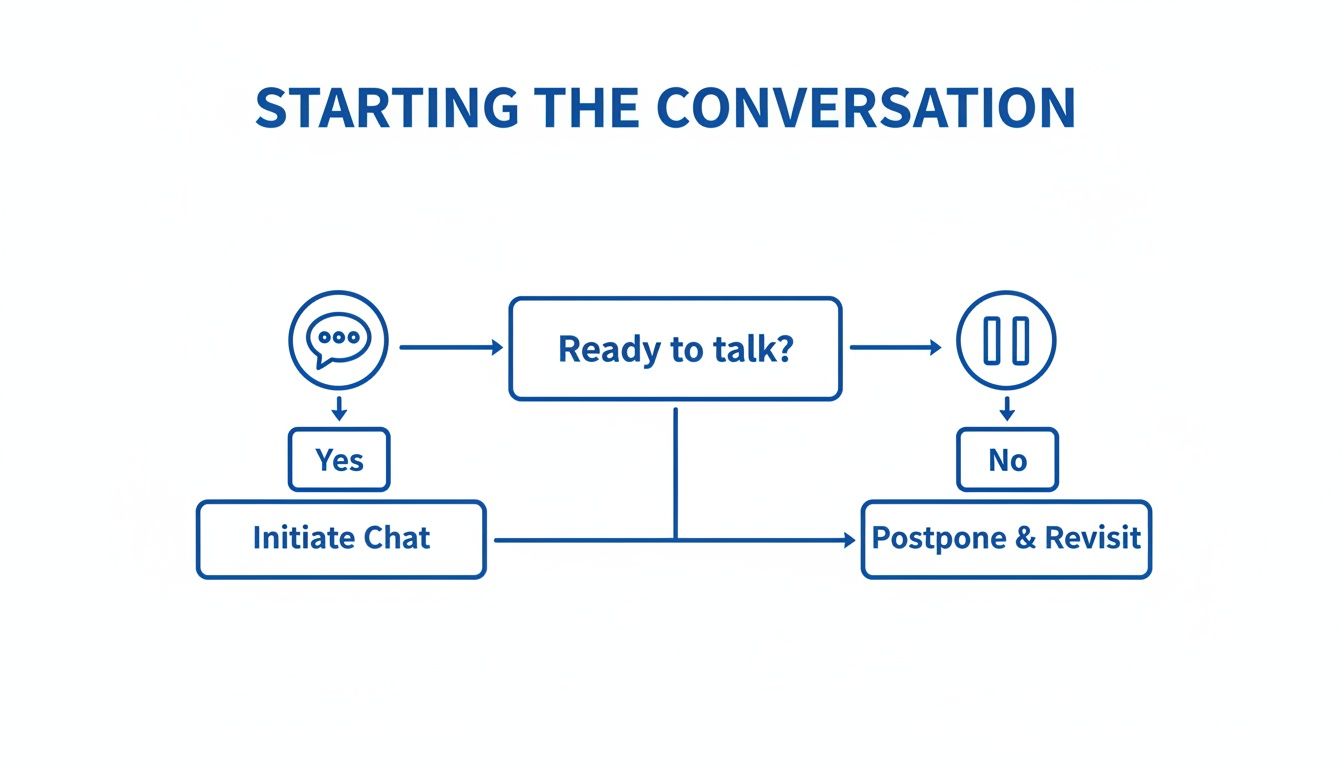
Sometimes just pausing to gather more specific information is the most powerful next step you can take.
These observations create a factual foundation for your concerns. It’s much harder for a parent to dismiss "On Tuesday, the power company called about a late bill" than a vague "I'm worried about your finances."
Sadly, these situations are incredibly common. A 2022 analysis revealed that fully 50 percent of older American parents who need daily home care have significant unmet needs, leaving them dangerously vulnerable.
Having this documented evidence doesn't just make your concerns more concrete; it helps you figure out exactly what kind of support is most urgently needed. For a more detailed checklist, check out our guide on how to conduct a https://njcaregiving.com/senior-home-safety-assessment/.
Introducing Help Gradually to Preserve Dignity
Suggesting a full-time caregiver right out of the gate can feel like a massive invasion of privacy to a parent who values their independence. That all-or-nothing approach is often a direct path to a firm "no." A much better strategy is to introduce assistance slowly, framing it as a tool to enhance their life, not take control of it.

This gentle method allows your parent to maintain a sense of control while getting comfortable with the idea of having someone else around. The key is to start so small that it feels almost silly to refuse. It's a way to sidestep the power struggles that flare up when an aging parent refuses help.
Use "Trojan Horse" Services
Think of this first step as a "Trojan horse"—a non-threatening service that solves a small problem without feeling like personal care. This allows a helper to enter their life in a low-stakes, positive way, building trust and a friendly rapport over time.
Some great starting points are services many people use as a convenience:
- Housekeeping: A cleaning service is often seen as a practical luxury, not a sign of inability.
- Meal Prep or Delivery: Who wouldn't enjoy having a few delicious, ready-made meals each week? It’s a treat!
- Transportation: Offering rides to appointments or social events frames the helper as someone who enables their social life, rather than restricting it.
- Grocery Shopping: This simply takes a physically demanding chore off their plate.
The trick is to position these services not as a reflection of their decline, but as a practical way to make life easier and more enjoyable.
Shift the Focus From Their Need to Your Peace of Mind
How you frame this new help is everything. Instead of making it about their limitations, make it about your feelings. It’s a subtle but incredibly powerful shift that can bypass their natural defenses.
"Mom, it would give me such peace of mind to know someone was helping you with the heavy groceries each week. I worry about you carrying all those bags."
This approach reframes the help as a gift to you. It completely changes the conversation from, "You need help," to "This would help me worry less." Many parents who would never accept help for themselves will agree to do it to ease the anxiety of their children.
And this isn't a rare problem. An analysis found that a staggering 45 percent of Medicare beneficiaries aged 65 to 74 who needed assistance were getting none, often because they refused it. You can learn more about this common dynamic in this study on aging and care refusal.
By starting small and framing it thoughtfully, you can turn a potential battle into a collaborative effort.
Involving Professionals and Navigating Legal Steps
When you’ve tried every approach and still hit a wall, bringing in a neutral third party can be a game-changer. Sometimes, hearing the exact same advice from a professional—instead of their child—is all it takes for a stubborn parent to listen. It removes the personal family dynamic and reframes the conversation around objective, expert recommendations.
If you feel like you're navigating this alone, you're not. Recent research from Age UK revealed that a staggering 6.6 million adults worry they wouldn't know how to support their parents when the time comes. Nearly half of them admit they aren’t sure how to even start arranging proper care. You can read more about this widespread concern on ageuk.org.uk.
These professionals can act as mediators, expert guides, and a source of validation, helping you find a clear path forward when you feel completely stuck.
When to Bring in a Professional
Often, the best messenger is someone outside the family bubble. A trusted authority figure can present the need for help as a practical or medical necessity, sidestepping the emotional tug-of-war that can happen between a parent and their adult child.
Consider reaching out to one of these key allies:
- Your Parent's Doctor: A physician’s word carries a lot of weight. They can assess your parent’s health, lay out the safety concerns in black and white, and make formal recommendations for care.
- A Geriatric Care Manager: Think of these specialists as project managers for elder care. They are experts at conducting comprehensive assessments and creating customized care plans that work for everyone.
- A Trusted Family Friend or Clergy Member: Don't underestimate the power of a peer. A respected friend can sometimes have a heart-to-heart with your parent that you simply can’t, offering perspective from a place of friendship rather than family obligation.
Having a professional validate your concerns can shift the conversation from a family disagreement to a practical problem-solving session. It reinforces that the need for support is real and not just your opinion.
Understanding Essential Legal Documents
As you navigate these conversations, it’s absolutely critical to get the right legal tools in place. These documents are your parent’s safety net, protecting them if their ability to make their own decisions declines. Waiting for a crisis to hit is almost always too late, so you have to be proactive.
For a parent’s financial and legal future, a key document involves understanding Power of Attorney for Property and how it can safeguard their assets.
Two of the most important documents to discuss are:
- Power of Attorney (POA) for Healthcare: This document designates a person (an "agent") to make medical decisions on your parent's behalf if they become incapacitated and can't speak for themselves.
- Power of Attorney (POA) for Finances: This appoints an agent to manage all financial affairs—from paying monthly bills to handling investments—if your parent is no longer able to.
Crucially, these documents must be created while your parent still has the cognitive capacity to fully understand what they are signing. If you have serious doubts about their decision-making abilities, your next step should be to consult an elder law attorney. They can help you explore your options and ensure your parent's well-being is legally protected.
Finding the Right Support for Your Family in New Jersey
Trying to figure out the elder care landscape on your own can be incredibly overwhelming, especially when you’re dealing with a parent who is pushing back against any form of help. But you don't have to go through this alone. Bringing in a professional home care agency here in New Jersey can completely change the dynamic, turning a stressful family conflict into a calm, collaborative care plan.
Agencies like NJ Caregiving are experienced in these exact situations. They offer a whole range of services that can be introduced gradually. You can start with something that feels less intrusive, like a companion for a few hours a week or someone to help with meal prep. As your parent builds trust with their caregiver, you can slowly scale up to personal care if and when it’s needed. This approach is all about respecting your parent's dignity while making sure they’re safe.
Starting with a Professional Consultation
Often, the best first step is to schedule an in-home consultation. A care coordinator can meet with you and your parent in a familiar, comfortable setting to get a clear, objective picture of the situation. They can be a neutral third party, helping to guide the conversation and explain the benefits of professional support in a way that feels less personal coming from them.
A professional assessment does two things: it validates your concerns and reframes the need for help as a matter of health and safety. It's often much easier for a parent to accept this from an expert than from their own child.
Understanding Your Options
Figuring out how to pay for care is another huge hurdle for many families. A knowledgeable local agency can walk you through all of your options, from private pay arrangements to helping you navigate the process of accessing Medicaid-funded home care services in New Jersey.
Turning all this uncertainty and worry into a concrete plan is the most important thing you can do right now. By working with a local partner, you can finally get a solid plan in place that gives you peace of mind and provides your parent with the compassionate support they truly need.
Answering Your Toughest Questions
When you're trying to help a parent who doesn't want it, you're bound to run into some specific, tricky situations. Here are some of the most common questions we hear from families in New Jersey—and our honest advice on how to handle them.
What If My Parent Has Dementia and Refuses Help?
This is a whole different ballgame. If your parent has dementia, their refusal isn't about being stubborn—it's often driven by fear, confusion, or even paranoia. Trying to reason with them or explain your logic is usually a dead end.
Instead, you have to shift your approach. Focus on simple, direct language and redirection. Rather than a long explanation about why a caregiver needs to come along, try something gentle and task-oriented, like, "Let's get your warm coat on before we head out." It bypasses the argument and focuses on the immediate action. In these cases, their doctor absolutely must be involved. It's also critical to find a home care agency with real experience in dementia care; they'll have specialized strategies that actually work.
How Can We Afford In-Home Care?
The cost of care is a huge—and completely valid—worry for almost every family. It can feel overwhelming, but the good news is you have options. You just need to know where to look.
- Medicaid: If your parent meets certain income and asset levels here in New Jersey, they may qualify for Medicaid's home and community-based services.
- Veterans Benefits: The VA offers something called Aid and Attendance benefits. This is a fantastic resource for eligible veterans and their surviving spouses that can help pay for in-home care.
- Insurance: Don't forget to check for a long-term care insurance policy. Many policies cover some or all of the costs for professional in-home help.
A good local agency can walk you through these different avenues and help you figure out what your parent might be eligible for. You don't have to navigate this alone.
My Siblings and I Disagree. What Should We Do?
Oh, the sibling stalemate. It's incredibly common and can bring all progress to a screeching halt. The first thing you need to do is get everyone together for a family meeting—and your parent shouldn't be there for this one.
The goal is to get on the same page. Have everyone share specific, factual observations. Instead of saying, "I'm worried about Dad," say, "I noticed Dad has lost 10 pounds and has expired food in the fridge." Facts are much harder to argue with than feelings. You have to present a united front to your parent, because a divided message will just give them an easy "out." If you're still stuck, it might be time to bring in a neutral third party, like a geriatric care manager, to mediate the conversation.
When you’re ready to move past the arguments and create a real, actionable plan, our team at NJ Caregiving is here. We provide compassionate, professional in-home care services across Mercer County, including Hamilton and Princeton, and we can guide you through every part of this journey. Learn more about how we can support your family at https://njcaregiving.com.