
In-home care is all about providing personalized support that lets seniors continue living right where they belong: in their own homes, safely and comfortably. It's a powerful alternative to moving into a facility, with a focus on preserving the independence and dignity of your loved one. The entire approach is built around familiarity, comfort, and one-on-one attention.
Why In-Home Care Is Becoming Essential for Mercer County Families
Across Princeton, Hamilton, and the rest of Mercer County, the conversation about long-term care is changing. Families aren't just looking for any care anymore; they're looking for the right care—the kind that honors a parent's or grandparent's wish to stay in their own cherished home. This idea, often called "aging in place," is the real heart of modern in-home care.
Instead of uprooting your loved one and moving them to a new, unfamiliar place, this model brings the support directly to them. It’s built from the ground up to be personal, making sure the help they receive fits their specific needs, daily routines, and even their little preferences. It's a compassionate and incredibly practical way to prioritize their well-being and sense of normalcy.
The Growing Need for Personalized Senior Support
Simple demographic shifts are making this conversation more urgent than ever. As our population gets older, the demand for smart, effective care solutions is climbing fast. This isn't just a local trend; it's happening everywhere. The elderly care market is expected to hit an astounding USD 2.7 trillion by 2032, a number fueled by the doubling of the world's senior population. You can read more about the forces shaping the future of senior care on coherentmarketinsights.com.
What this massive growth really tells us is that families are actively searching for better alternatives to traditional nursing homes. In-home care fits that need perfectly by offering a whole spectrum of services that can be adjusted for each stage of aging, from a friendly visitor for a few hours a week to more hands-on daily assistance.
More Than Just a Service—It’s a Partnership
It’s so important to see in-home care as a partnership. It’s a team effort between the senior, their family, and a group of professional caregivers. This partnership provides crucial support not just for the senior, but for the family members who are so deeply involved in their life.
By fostering independence in a familiar setting, in-home care empowers seniors to maintain control over their lives. It reduces the stress associated with major life changes and helps preserve the emotional connections tied to home.
For family caregivers, this professional support can feel like a lifeline. It takes the pressure off of being the one-and-only provider of care, which helps prevent burnout and frees you up to simply enjoy quality time with your loved one. For those looking for a community of people who understand, exploring local caregiver support groups can be an excellent resource. This network of care ensures everyone involved feels supported, understood, and ready for the road ahead.
Decoding the Different Types of Home Care Services
Trying to choose the right elderly in home care can feel like you've been handed a puzzle with half the pieces missing. With so many different terms floating around—personal care, skilled nursing, respite—it’s easy to feel overwhelmed.
The best way to approach this is to stop thinking of it as a complicated list and start seeing it as a menu of support. Each service is designed to fit a specific need, and they can be mixed and matched to create the perfect plan for your loved one. The goal is always the same: provide just enough help to keep them safe and thriving, without stepping on their independence.
Let's break down the main types of care you'll find here in Mercer County.
This simple guide can help you visualize if the support of in-home care might be the right next step for your family.
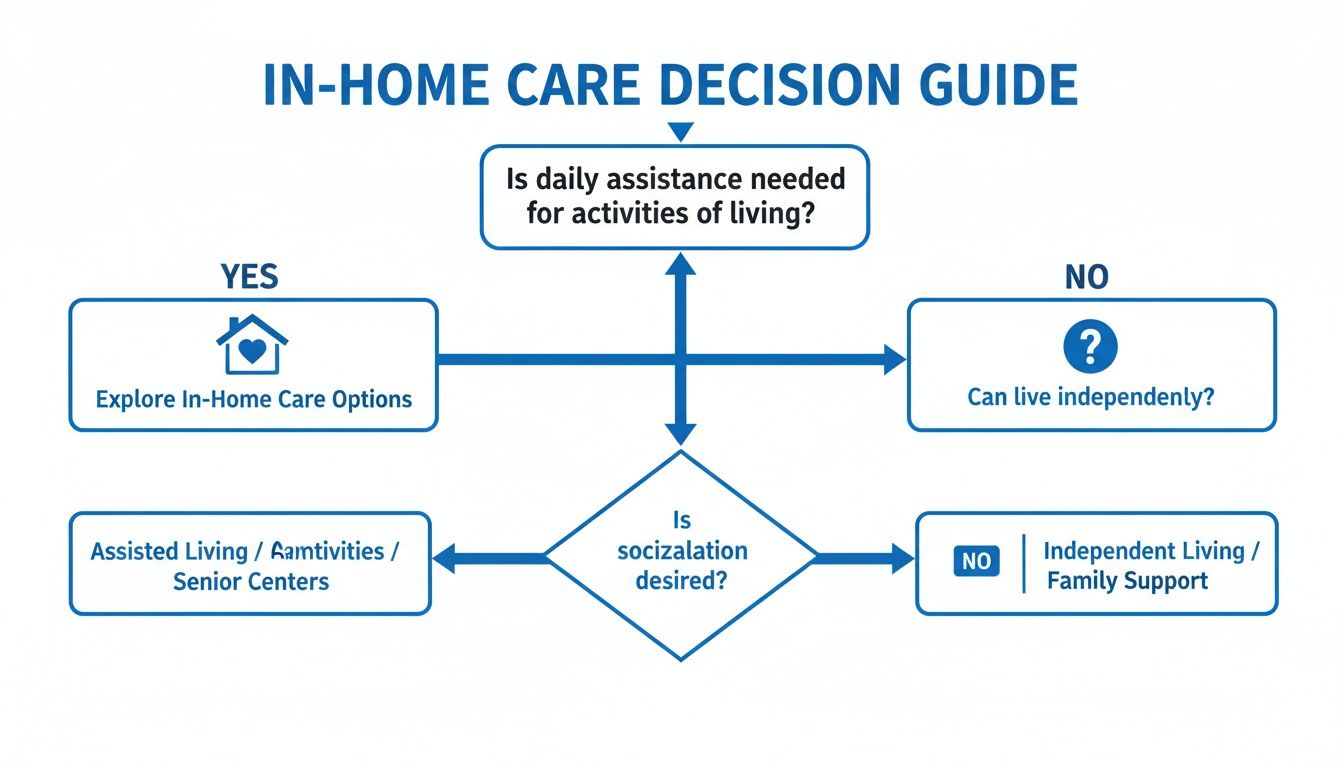
As you can see, if the answer to needing more help and companionship is 'Yes,' in-home care offers a direct path to a supported, more connected life right where they want to be—at home.
Personal Care and Companionship
This is usually the starting point for most families. Personal care is all about helping with the basic tasks of self-care that we often do without a second thought, known as Activities of Daily Living (ADLs). This means offering a helping hand with bathing, getting dressed, grooming, and moving around safely.
A great caregiver provides this hands-on help in a way that’s respectful and protects your loved one’s dignity. They can also take care of things like preparing meals, light housekeeping, or running errands to keep the home running smoothly.
Just as important is companionship, which tackles the emotional side of aging. A companion can be there to chat, play a game of cards, go for a walk in a local Princeton park, or simply offer a reassuring presence. This social connection is incredibly important, as loneliness can take a serious toll on a senior's physical and mental health.
Specialized Dementia and Alzheimer's Care
When a loved one is living with dementia or Alzheimer's, their world changes, and so do their care needs. Dementia care is a specialized service provided by caregivers who have specific training to navigate the cognitive and behavioral challenges that come with memory loss.
These professionals know how to create a calm, predictable environment that helps reduce confusion and anxiety. They focus on safety—like preventing wandering—while also using proven techniques to gently stimulate memory and encourage engagement in daily life.
The goal of specialized dementia care isn't just to manage symptoms, but to preserve quality of life. It’s about creating moments of joy and connection, even as the disease progresses, by providing consistent, compassionate support.
For families in Hamilton and across the county, this type of expert care can be a lifeline, easing the emotional and physical strain of memory care.
Skilled Nursing Services at Home
Sometimes, a senior’s needs go beyond daily support and require actual medical care. That’s where skilled nursing care comes into play. Unlike a personal care aide, these services are delivered by licensed medical professionals, like a Registered Nurse (RN) or a Licensed Practical Nurse (LPN).
Think of it as bringing the doctor's office or clinic right into your living room. A home health nurse can manage complex medical issues, allowing your loved one to recover or manage their condition in the comfort of home.
These services typically include:
- Wound care: Properly cleaning and dressing wounds after surgery or for chronic conditions.
- Medication administration: Managing complex medication schedules, including injections or IV therapy.
- Monitoring vital signs: Keeping a close eye on health indicators to manage conditions like heart disease or diabetes.
- Patient education: Teaching the family how to handle a new diagnosis or use medical equipment.
Skilled nursing is often the bridge between a hospital stay and home, providing crucial medical oversight when it’s needed most.
Respite Care for Family Caregivers
Finally, let’s talk about a service that’s just as much for the family as it is for the senior: respite care. If you're a family caregiver, you know it's one of the most meaningful jobs you'll ever have—but it's also incredibly demanding. Without a break, burnout is a very real possibility.
Respite care gives you that much-needed break. A professional caregiver steps in for a few hours, a full day, or even a weekend so you can rest, run your own errands, or just recharge your batteries. This isn’t a luxury; it’s a critical piece of any sustainable care plan. It ensures your loved one gets continuous, high-quality care while you get the time you need to take care of yourself.
To help you sort through these options, here's a quick comparison table. Use it to get a clearer picture of what each service offers and which one might be the best fit for your family's situation.
Choosing the Right In-Home Care: A Quick Guide
| Service Type | What It Involves | Best For Seniors Who… |
|---|---|---|
| Personal Care & Companionship | Help with daily tasks (bathing, dressing), meal prep, errands, and social interaction. | Need a hand with daily routines and would benefit from social engagement to combat loneliness. |
| Dementia & Alzheimer's Care | Specialized support focused on safety, routine, and memory-enhancing activities. | Are living with cognitive decline and require a structured, safe environment and expert supervision. |
| Skilled Nursing Care | Medical services from a licensed nurse (RN/LPN) like wound care, injections, or IV management. | Are recovering from surgery, hospitalization, or managing a serious medical condition at home. |
| Respite Care | Short-term care to give family caregivers a temporary break. | Have a dedicated family caregiver who needs time to rest and recharge to avoid burnout. |
Navigating these choices is the first step toward building a support system that truly works. By understanding what’s available, you can make an informed decision that honors your loved one’s desire to age in place with dignity and support.
The True Benefits of Aging in Your Own Home
Choosing elderly in home care is about so much more than just logistics. It’s a decision that deeply impacts a person’s emotional well-being and overall quality of life. There's an undeniable comfort in one's own home—it's a place filled with memories, familiar routines, and personal treasures. This isn't just a house; it's a sanctuary of independence.
When a senior can remain in this cherished environment, the immense stress and anxiety of moving to an unfamiliar facility simply vanish. That stability is the bedrock of their mental and physical health, helping them feel grounded and in control.
Fostering Independence and Dignity
The whole point of in-home care is to empower seniors, not to take over their lives. Think of it as the difference between a personal trainer and a generic gym class. The class has one routine for everyone, but a personal trainer creates a plan tailored to an individual’s specific goals and abilities.
That’s exactly how in-home care works. It provides one-on-one support that’s customized to your loved one’s unique needs, which builds a powerful sense of independence. A caregiver might help with a challenging task but encourage the senior to handle the parts they still can, preserving their dignity and self-worth. To make a home even safer and more comfortable, families often look into adaptive furniture like the best lift chairs for elderly.
This personalized partnership doesn't just feel better—it leads to better health outcomes for seniors right here in our community.
Strengthening Family Connections
When a professional caregiver steps in to handle the day-to-day tasks of personal care and household chores, it can transform the family dynamic. Suddenly, adult children can stop being just caregivers and go back to being sons and daughters. This simple shift frees up time for more meaningful, quality moments together.
Visits become less about running through a checklist of chores and more about genuine connection—sharing stories, enjoying a meal, or simply being present with one another. It strengthens family bonds and eases the strain that so often comes with family caregiving.
In-home care allows families to focus on connection rather than tasks. By providing reliable support, it preserves the precious relationship between a senior and their loved ones, free from the stress of day-to-day care duties.
This isn’t just a nice idea; it's what people overwhelmingly want. Research shows that a staggering 75% of Americans over 50 strongly prefer to age in their own homes. This desire is a key reason why around 12 million Americans now rely on in-home care services every year.
Promoting Better Health and Comfort
Staying at home also comes with some major health advantages. For starters, seniors have less exposure to the germs and infections that can spread quickly in communal living facilities. They also tend to eat better and stay more hydrated when they're in their own kitchen with their favorite foods just a few steps away.
Most importantly, the simple comfort of their own bed, their favorite chair, and an established daily rhythm leads to better sleep and lower stress levels. This holistic sense of well-being is a powerful ingredient for healthy aging. Plus, with one-on-one attention, a caregiver is far more likely to notice small changes in health or behavior right away, allowing for quick action before they become bigger problems.
Recognizing When Your Loved One Needs More Support
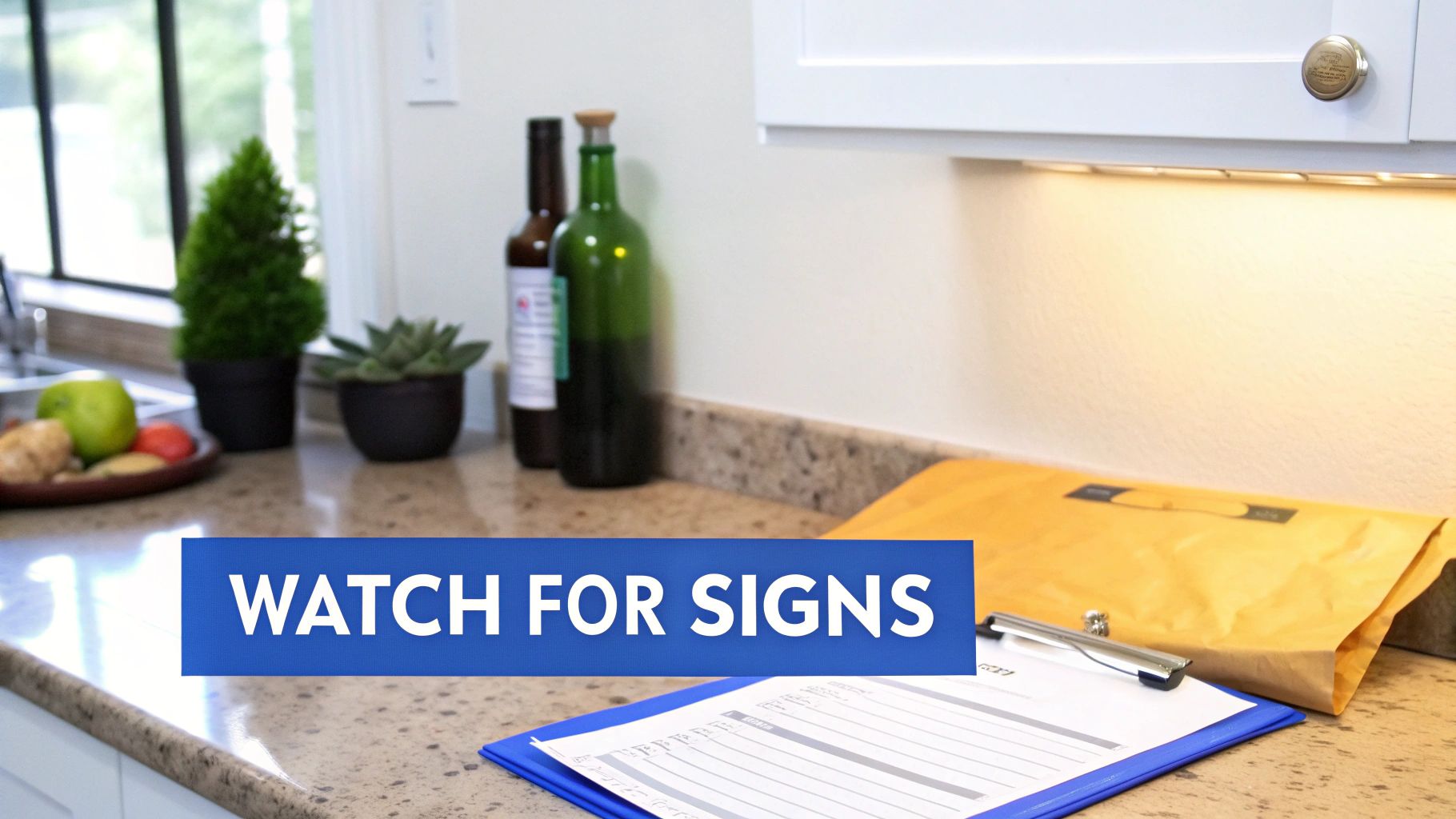
The moment you realize a parent or loved one needs more help rarely arrives with a sudden announcement. It’s usually a slow drip—a series of small, subtle changes that are easy to brush off on their own. Recognizing these signs is the first, most compassionate step you can take.
These indicators aren't signs of failure. They are simply signals that the demands of daily life are becoming too much to handle alone. By paying gentle attention, you can start a conversation about elderly in home care before a minor issue becomes a crisis. The key is to look for patterns, not just isolated incidents.
Changes in Personal Appearance and Hygiene
One of the most immediate signs is often a shift in your loved one's appearance. When daily grooming becomes physically taxing or hard to remember, you might start to notice things that seem out of character.
- Neglected Grooming: Are they wearing the same clothes for several days? Is their hair uncombed, or do they have a noticeable body odor? These can suggest that bathing and doing laundry have become difficult.
- Decline in Personal Hygiene: You might notice a decline in oral care or that they’re forgetting basic hygiene routines they once followed meticulously.
These are often the first flags because they relate directly to the physical and cognitive effort required for self-care. It’s not about being judgmental; it’s about seeing a change from their normal baseline.
Shifts in Household Management
The state of their home is another powerful indicator. A once-tidy space that is now cluttered or neglected can tell a story about their ability to keep up with daily chores.
Observing the home environment provides objective clues. Piles of unopened mail, expired food in the refrigerator, or an unkempt yard can signal that managing the household has become overwhelming.
Look for these specific signs around the house:
- Kitchen Neglect: Are there dirty dishes piled up, a lack of fresh food, or signs of burnt pots and pans? This could indicate difficulty with cooking or memory lapses.
- Unpaid Bills and Clutter: Stacks of mail, late notices, or a general sense of disorganization can suggest that executive functions like paying bills are becoming a struggle.
- Trouble With Upkeep: Sometimes, managing a large home just becomes too much. As you consider options, it might be worth exploring professional downsizing assistance for seniors to ease the burden.
Behavioral and Social Changes
Finally, pay attention to shifts in their mood, behavior, and social habits. These changes can be just as telling as physical ones.
A loved one who was once socially active might start declining invitations or stop engaging in hobbies they used to enjoy. This social withdrawal can be a sign of depression, a fear of falling, or anxiety about their changing abilities.
You may also notice changes in their cognitive function, like forgetting appointments, mismanaging medications, or repeating stories frequently. These aren't just "senior moments" if they form a consistent pattern. Seeing these signs for what they are—a call for support—is the kindest way to help your loved one continue to live safely and with dignity.
How to Choose the Right Home Care Provider in Mercer County
Finding the right partner for your loved one's elderly in home care is easily one of the most important decisions your family will make. It’s a choice that demands thoughtful consideration and a clear-eyed view of what truly matters. This isn't just about hiring help; it's about inviting someone into your home and trusting them with the well-being of a person you cherish.
Think of it like building a trusted team around your family. You need someone who brings the right skills to the table, but just as importantly, they need a compassionate heart and a reliable organization backing them up. Taking the time now to vet your options will pay off immensely, giving you peace of mind that your loved one is in truly excellent hands.
Agency Caregivers vs. Independent Hires
One of the first forks in the road you'll encounter is whether to work with an established home care agency or hire an independent caregiver directly. While hiring someone on your own might seem less expensive on the surface, partnering with a professional agency provides a critical safety net that’s nearly impossible to replicate by yourself.
A good agency handles all the behind-the-scenes complexities that would otherwise fall on your shoulders. This includes:
- Thorough Vetting: Agencies run comprehensive background checks, verify professional credentials, and meticulously check references for every single caregiver on their team.
- Insurance and Liability: Reputable agencies are fully licensed, bonded, and insured. This is huge—it protects your family from any liability if an accident or injury happens on the job.
- Backup Care: What happens if your caregiver calls out sick or needs a vacation? An agency seamlessly arranges a qualified replacement, ensuring there are never any gaps in care.
- Payroll and Taxes: The agency manages all the messy employment details, from payroll and taxes to workers' compensation.
Going with an agency frees you up to focus on what matters most—your loved one—instead of getting bogged down in the administrative headaches of being an employer.
Key Questions to Ask Potential Providers
When you start talking to agencies in the Princeton or Hamilton area, going in with a solid list of questions is a game-changer. The way they answer will tell you everything you need to know about their professionalism, the quality of their care, and how they’ll partner with your family.
Your mission is to understand their entire process, from the first call to the day-to-day care. Don't be shy about digging into the details. A transparent, confident provider will welcome your questions and have clear, ready answers.
Here’s a starting list to get the conversation rolling:
- Caregiver Screening and Training: How do you screen your caregivers? What initial and ongoing training do they get, especially for specialized needs like dementia care?
- Creating a Care Plan: What does the process for building a personalized care plan actually look like? How often do you revisit and update it as my loved one's needs evolve?
- Communication and Oversight: How do you supervise your caregivers in the field? Who will be our main point of contact, and how will we communicate about day-to-day progress and concerns?
- Handling Emergencies: What is your protocol for a medical emergency or another unexpected event? How do you make sure families are notified immediately?
A great home care agency acts as a true partner. They should prioritize open communication, demonstrate a deep commitment to caregiver training, and have clear, reliable protocols for every situation, ensuring your peace of mind.
For a deeper dive, our article on how to choose a home care agency offers a more detailed checklist to help guide your decision. By approaching this process with diligence, you can find a provider in Mercer County that not only meets your needs but becomes a compassionate and dependable source of support for years to come.
Understanding Care Costs and New Jersey Funding Options
It’s the question every family asks when they start exploring elderly in home care: "How are we going to afford this?" It’s a completely valid and practical concern. Getting a handle on the financial side of care is the first step toward building a plan that truly supports your loved one without putting the family under financial strain.
The cost of in-home care in New Jersey isn't one-size-fits-all. It really depends on the level of support your loved one needs. For instance, companion care that focuses on social visits and light housekeeping will have a different hourly rate than skilled nursing care from a licensed professional. It’s better to think of it as a flexible investment that scales directly to what your family member actually requires.
Breaking Down the Cost of Care
In most cases, you can expect to pay an hourly rate for services. A good agency will be totally upfront about their pricing during your first conversation. They should give you a clear, easy-to-understand breakdown of the costs for different types of care so you know exactly where your money is going.
- Companionship & Personal Care: This is the most common starting point for many families, covering daily assistance, meal prep, and social engagement. These services are typically billed by the hour.
- Specialized Dementia Care: A caregiver with advanced training in memory care will often have a slightly higher hourly rate, which reflects their specialized skills and experience.
- Skilled Nursing Care: Services from a Registered Nurse (RN) or Licensed Practical Nurse (LPN) are at the highest tier, as they involve medical expertise and professional licensure.
Remember, investing in professional in-home care is about more than just paying for tasks. You’re paying for reliability, safety, and the peace of mind that comes with expert oversight.
New Jersey Medicaid and Waiver Programs
For many families here in Mercer County, public funding is a critical piece of the puzzle. New Jersey Medicaid has programs created specifically to help eligible seniors get the care they need at home, instead of having to move into a nursing facility. This is where things can get a little complicated, but a knowledgeable home care agency can be an invaluable guide.
The main program you'll want to know about is Managed Long-Term Services and Supports (MLTSS). Through MLTSS, the state provides a whole range of services—like personal care assistance, respite care for family caregivers, and even home modifications—to seniors who meet the program's financial and medical requirements.
The real goal of these programs is to empower seniors to age in place. By funding home and community-based services, the state helps people stay independent and connected to the communities they know and love.
Trying to navigate the application process on your own can feel like a full-time job. The paperwork is dense, and the eligibility rules aren't always straightforward. This is one of the biggest benefits of working with an experienced local agency; they know the system inside and out. They can help you figure out if you qualify and walk you through the application.
For a deeper dive, you can explore our guide to NJ Medicaid waiver programs for a more detailed overview.
Ultimately, taking the time to understand the costs and explore all your funding options will empower you to make the best decision for your family. With the right information and support, you can build a financial plan that makes high-quality elderly in home care an affordable and sustainable reality.
Of course. Here is the rewritten section, crafted to sound completely human-written, with the specified expert tone and natural flow.
Your Questions About Elderly In-Home Care, Answered
Once you start seriously considering elderly in-home care, a whole new set of practical questions usually comes up. It's completely normal. Thinking through the logistics is what helps families in Princeton and Hamilton feel confident about taking that next step.
We've been asked these questions countless times, so we’ve put together some straightforward answers to help demystify the process and make the whole journey feel a bit less overwhelming.
How Quickly Can We Get Started?
This is often the first and most urgent question, especially when a fall, a hospital discharge, or a sudden health decline creates an immediate need for support. The good news? Things can move very quickly.
It all starts with a simple phone call, followed by an in-home assessment. This visit is crucial—it's where we listen to your concerns, see the home environment firsthand, and truly understand your loved one’s personality and needs. Based on that, we create a care plan and find the right caregiver match. In many cases, we can have services up and running within just a few days of your initial call.
When a crisis hits, you can’t afford to wait. A professional agency’s biggest strength is the ability to respond swiftly and effectively, getting compassionate support in place right when it's needed most.
What Happens If Our Caregiver Is Sick?
Reliability is everything. You need to know, without a doubt, that someone will be there. This is one of the most important reasons families choose to work with a professional agency over hiring someone privately. We have a full team of qualified, background-checked caregivers.
If your regular caregiver calls in sick, needs a vacation day, or has an emergency, you don't have to scramble. We handle it all behind the scenes. We’ll immediately arrange for a skilled substitute caregiver who is fully briefed on your loved one’s care plan. For you, this means no interruption in care, ever. It's peace of mind, plain and simple.
Can We Change the Care Plan Down the Road?
Absolutely. In fact, we expect it. Life happens, and a senior's needs are rarely set in stone. What works today might not be enough six months from now, especially after an illness or as a condition progresses. A good care plan isn't rigid; it's a living document that should adapt.
We regularly check in with your family to see how things are going and make sure the support is still hitting the mark. Modifying the plan is easy. We can adjust schedules, add or remove specific tasks, or shift to a higher level of care, like introducing specialized memory support, whenever the need arises.
Ready to get personalized answers for your family? The team at NJ Caregiving is here to help you navigate every step. Learn more at njcaregiving.com
