

When mobility becomes limited, the world can feel as though it's shrinking to the size of a single room. For seniors who are bedridden, whether temporarily or long-term, maintaining mental, emotional, and even physical well-being presents a unique set of challenges. However, being confined to a bed does not mean life must be devoid of joy, connection, and stimulation. The right engagement can transform a monotonous daily routine into a fulfilling and varied experience, directly combating the profound risks of isolation, depression, and cognitive decline.
This guide moves beyond generic suggestions to provide a comprehensive roundup of thoughtfully adapted activities for bedridden seniors. We have curated a collection designed to cater to a wide spectrum of interests and abilities, from sensory and creative pursuits to social and cognitive exercises. Each activity is presented with practical, actionable steps for implementation, ensuring that caregivers and family members can easily introduce them.
Inside, you will find detailed instructions, lists of required materials, crucial safety modifications, and caregiver prompts for each idea. Our goal is to empower you to create meaningful moments that significantly enhance quality of life. This resource is built to prove that a rich and engaging life is possible, regardless of physical limitations, by focusing on what can be done right from the bedside. We will explore everything from adapted arts and crafts to virtual travel and gentle, in-bed exercises, ensuring there is a valuable option for everyone.
1. Audiobook and Podcast Listening Programs
Audio entertainment offers a powerful way to engage the mind and spirit without physical strain, making it one of the most accessible activities for bedridden seniors. Audiobook and podcast listening programs deliver literature, news, and educational content directly to the bedside, providing mental stimulation and a connection to the world beyond their room. This activity is perfect for seniors with visual impairments or those who find holding a book challenging.
By leveraging technology, storytelling and learning become easily accessible. Seniors can revisit beloved classics, explore new genres, or stay informed about current events, all through the immersive power of sound. This helps combat feelings of isolation and boredom, fostering a sense of continued personal growth and engagement.
How to Implement Audio Programs
Setting up an audio program can be simple and tailored to the senior’s comfort level with technology.
- Smart Speakers: Devices like Amazon Echo or Google Nest respond to voice commands, allowing seniors to play specific books or podcasts without needing to use their hands. A family member can pre-program favorite stations or playlists for easy access.
- Tablets and Smartphones: Apps like Libby (powered by OverDrive) connect to local library cards, offering a vast, free collection of audiobooks. For example, many New Jersey public libraries partner with Libby, providing an excellent no-cost resource.
- Dedicated Devices: Large-button MP3 players or specialized audiobook players are designed for simplicity and are ideal for individuals who are not comfortable with more complex technology.
Caregiver Tip: Schedule regular listening times, such as after breakfast or before bed, to create a comforting and predictable routine. This anticipation can become a highlight of the senior’s day.
Actionable Tips for Success
To ensure the experience is enjoyable and beneficial, consider these practical suggestions:
- Start with Familiarity: Begin with an author, genre, or narrator the senior already loves. The comfort of a familiar voice or story can build confidence and interest.
- Optimize for Attention: Choose shorter stories, podcasts (20-40 minutes), or books with shorter chapters to accommodate varying attention spans and prevent fatigue.
- Ensure Comfort and Control: Provide headphones to minimize background noise and enhance immersion. Use voice-activated controls or large-button remotes to empower the senior to manage playback independently.
- Spark Conversation: After a listening session, use the content as a conversation starter. Ask questions like, “What did you think of that character?” or “That reminds me of a time when…” This transforms a solitary activity into a shared social experience.
2. Virtual Visits and Video Calls with Family and Friends
Maintaining social connections is crucial for emotional well-being, and technology offers a fantastic bridge for seniors confined to bed. Virtual visits are one of the most powerful activities for bedridden seniors, enabling them to see and speak with loved ones in real time, no matter the distance. This visual connection combats loneliness and reinforces a sense of belonging, making them feel part of family life even when they cannot be physically present.
This activity addresses the critical need for face-to-face interaction, which significantly impacts mental health. From watching grandchildren open birthday presents to participating in holiday celebrations, video calls allow seniors to share in important moments. This digital inclusion helps preserve family bonds and provides invaluable emotional support.
How to Implement Virtual Visits
Setting up a seamless video call experience requires a bit of preparation to ensure it is stress-free for the senior.
- Tablets and Smartphones: User-friendly devices with large screens are ideal. Apps like FaceTime, Skype, or WhatsApp are popular choices. A family member can pre-program contacts with photos for easy one-touch calling.
- Dedicated Video Calling Devices: Products like the Amazon Echo Show or Google Nest Hub offer large screens and can be voice-activated, allowing seniors to say, "Call my daughter," for hands-free operation.
- TV Integration: For a larger-than-life experience, devices like a Facebook Portal TV can connect to a television, making family members appear on the big screen, which is excellent for group calls.
Caregiver Tip: Position the device on a stable, adjustable stand at the senior’s eye level. This creates a more natural and engaging conversational experience, making it feel like their loved one is right there in the room.
Actionable Tips for Success
To make virtual visits a recurring and joyful part of the routine, consider these practical strategies:
- Establish a Schedule: Coordinate with family to set up regular "video dates," such as a weekly Sunday chat. A consistent schedule gives the senior something to look forward to.
- Optimize the Environment: Ensure the room is well-lit and free of background noise. Test the audio and video quality beforehand to avoid frustrating technical glitches during the call.
- Keep Calls Concise: Start with shorter calls, around 15 to 30 minutes, to prevent overstimulation or fatigue. You can gradually increase the duration as the senior becomes more comfortable.
- Encourage Shared Activities: Make the call interactive. A family member can give a virtual tour of their garden, a grandchild can read a story, or someone can demonstrate a simple recipe. This transforms the call from a simple chat into a shared experience.
3. Gentle Chair Yoga and Bedside Stretching Programs
Physical wellness remains crucial even with limited mobility, and adapted exercise is one of the most beneficial activities for bedridden seniors. Gentle chair yoga and bedside stretching programs focus on improving flexibility, reducing muscle stiffness, and boosting circulation through slow, controlled movements. These routines are specifically designed to be performed from a bed or a wheelchair, making them accessible to almost anyone.
By incorporating modified stretches and poses, seniors can maintain range of motion, alleviate joint pain, and support their overall sense of physical well-being. This gentle activity also promotes relaxation and deep breathing, which can reduce stress and anxiety while fostering a stronger mind-body connection.

How to Implement Gentle Exercise Programs
Introducing a physical wellness routine can be done safely and effectively with the right resources and approach.
- Guided Online Videos: YouTube offers a wealth of free, guided sessions specifically for seniors with limited mobility. Channels like Yoga with Adriene provide seated and gentle routines that can be adapted for the bedside.
- Physical Therapy Protocols: Many physical therapy departments and home health agencies, particularly in areas like New Jersey, create customized bedside exercise protocols for patients. These are often covered by Medicare following events like joint surgery.
- Virtual Senior Center Classes: Some senior centers now offer virtual or recorded gentle yoga classes that bedbound individuals can participate in from home, fostering a sense of community.
Caregiver Tip: Always consult with a primary care physician or physical therapist before beginning any new exercise regimen. They can provide guidance on safe movements and modifications based on the senior’s specific health conditions.
Actionable Tips for Success
To make bedside exercise a safe, enjoyable, and sustainable habit, consider the following strategies:
- Start Small and Build Gradually: Begin with short 5-10 minute sessions to prevent overexertion. As strength and stamina improve, the duration can be slowly increased.
- Prioritize Comfort and Support: Use pillows, rolled blankets, or towels to support the back, neck, and limbs. Ensuring proper alignment and comfort is key to preventing strain.
- Focus on Deep Breathing: Encourage slow, deep breaths throughout each movement. This enhances relaxation, oxygenates the muscles, and helps the senior stay centered and mindful.
- Watch for Signs of Discomfort: Pay close attention to any signs of pain or strain. If a movement causes discomfort, stop immediately and modify it. For more ideas on safe movements, you can learn about more bed exercises for the elderly on njcaregiving.com.
4. Reminiscence Therapy and Memory-Sharing Activities
Engaging in reminiscence therapy offers a deeply meaningful way to validate a senior’s life experiences and strengthen their sense of identity, making it one of the most powerful activities for bedridden seniors. This evidence-based approach encourages individuals to recall and share significant life stories and personal history, which can improve mood, reduce agitation, and enhance cognitive function, particularly for those with dementia. It transforms passive time into an opportunity for profound connection and affirmation.
By focusing on long-term memory, which often remains intact longer than short-term memory, this activity allows seniors to tap into a rich wellspring of personal triumphs, relationships, and wisdom. It provides a platform for them to be the expert on their own life, fostering feelings of competence and self-worth while combating the loneliness that can accompany being bedridden.
How to Implement Reminiscence Therapy
Creating a supportive environment for memory sharing is key and can be adapted easily for the bedside.
- Memory Boxes: Assemble a container with tangible items from different life stages, such as a wedding photo, a baby rattle, a military medal, or a favorite recipe card. These objects serve as powerful sensory prompts to unlock memories.
- Themed Discussions: Focus conversations around specific themes like "first jobs," "favorite holidays," or "childhood homes." This structure can make it easier for seniors to recall and organize their thoughts.
- Digital Storytelling: Use a tablet to look through old family photos stored online or explore their hometown on Google Maps. The visual aids can trigger detailed recollections and create a shared digital experience. Programs like the StoryCorps App provide tools to record these precious oral histories.
Caregiver Tip: Frame these sessions not as a test of memory, but as a celebration of their life. Your role is to be a curious and compassionate listener, allowing the senior to guide the conversation at their own pace.
Actionable Tips for Success
To make memory-sharing sessions both therapeutic and enjoyable, consider these strategies:
- Use Open-Ended Questions: Instead of asking "Was your wedding nice?" try "Tell me about your wedding day." This encourages detailed storytelling rather than a simple yes or no answer.
- Engage Multiple Senses: Play music from their youth, prepare a familiar family recipe, or have a scented item like pine or cinnamon on hand. Sensory cues are incredibly effective at unlocking memories.
- Listen Actively and Patiently: Show genuine interest, make eye contact, and avoid rushing or correcting them. The emotional truth of a memory is often more important than its factual accuracy.
- Record with Permission: Ask if you can record the conversation with a smartphone. This not only preserves family history but also reinforces that their stories are valuable and worth saving. To learn more about how memory-focused engagement can be structured, explore these memory care activities.
5. Adapted Arts and Crafts Projects
Creative expression remains a fundamental human need, and with slight modifications, artistic pursuits can be one of the most fulfilling activities for bedridden seniors. Adapted arts and crafts projects allow individuals with limited mobility to paint, draw, sculpt, or create collages from the comfort of their bed. These activities boost cognitive function, provide an emotional outlet, and foster a tangible sense of accomplishment.
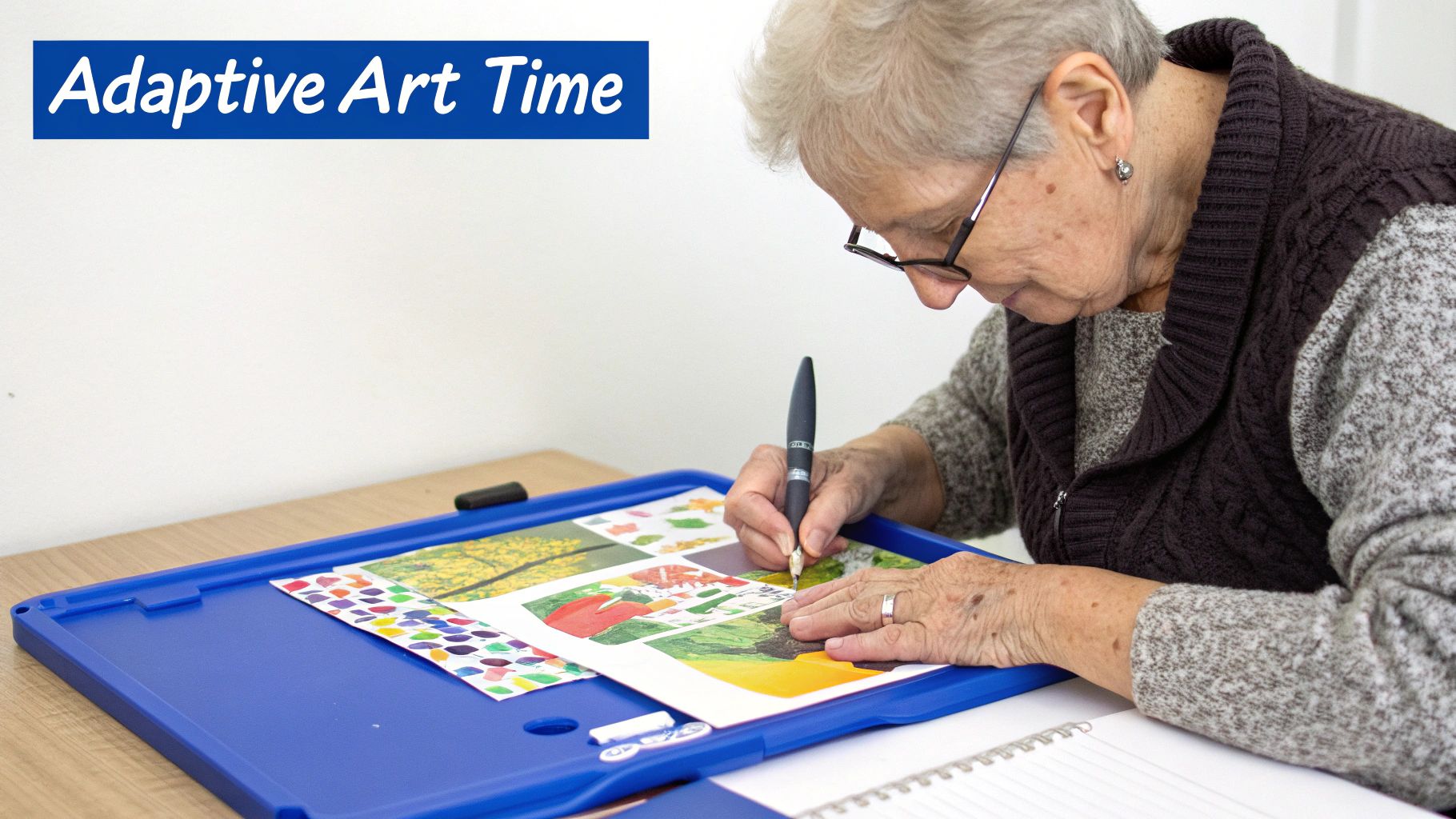
Engaging in art offers a non-verbal way to communicate feelings and memories, making it especially beneficial for seniors who may have difficulty with speech. The sensory experience of working with different materials, from smooth paint to textured yarn, provides gentle stimulation and can significantly improve mood and reduce anxiety.
How to Implement Arts and Crafts
Creating a supportive and accessible art station is key to making this activity successful and enjoyable.
- Bedside Art Studio: Use an overbed table or a sturdy lap desk as a stable workspace. Keep supplies like non-toxic paints, large-handled brushes, and adult coloring books in a rolling cart or a bedside organizer for easy access.
- Virtual Art Classes: Many senior centers and community organizations now offer recorded or live art therapy classes. For example, some museums provide "Art at Home" kits and virtual tours, allowing seniors to engage with the art world from their room.
- Simplified Craft Kits: Look for pre-packaged kits for activities like no-sew blankets, bead stringing with large beads, or mosaic art with self-adhesive tiles. These kits minimize preparation and are designed for success.
Caregiver Tip: Frame and display the senior’s finished artwork in their room. This simple act validates their creativity, celebrates their effort, and brightens their living space with personal achievements.
Actionable Tips for Success
To foster a positive and stress-free creative environment, consider these practical suggestions:
- Prioritize Comfort and Control: Choose adaptive tools like ergonomic brushes, spring-loaded scissors, or paint pens that are easier for arthritic hands to grip. Ensure all materials are non-toxic and washable.
- Build Confidence Gradually: Start with simple projects, such as watercolor painting on a small canvas or creating a collage from magazine cutouts. Success with these initial activities builds confidence for more complex projects.
- Focus on Process, Not Perfection: Emphasize the enjoyment of creating rather than the final product. Play calming music in the background to create a relaxing, therapeutic atmosphere.
- Make It a Social Activity: Invite grandchildren to participate in a collaborative project, either in person or over a video call. Creating art together can bridge generational gaps and create lasting memories.
6. Pet Therapy and Animal Companionship Programs
Animal companionship offers profound emotional and physiological benefits, making it one of the most heartwarming activities for bedridden seniors. Structured pet therapy programs bring trained animals like dogs, cats, or even rabbits to a senior's bedside, providing comfort, reducing anxiety, and combating loneliness. This interaction triggers the release of endorphins, which can lower blood pressure and improve overall mood.
These programs are especially beneficial for seniors who previously owned pets or have a deep affection for animals. The simple act of petting a soft coat or hearing a gentle purr can evoke positive memories and provide a powerful sensory experience, reconnecting individuals to joyful parts of their lives and offering unconditional affection.
How to Implement Animal Companionship
Arranging animal interaction requires coordination with certified organizations or leveraging modern technology to ensure a safe and positive experience.
- Certified Therapy Animal Visits: Organizations like Pet Partners certify animals and handlers for therapeutic visits. Local groups, such as New Jersey’s ‘Paws and Smiles,’ specifically coordinate visits for home care recipients, ensuring animals are well-behaved and vaccinated.
- Virtual Pet Programs: For seniors with allergies, compromised immune systems, or facility restrictions, virtual options are effective. This can involve live streaming from animal shelters or watching curated animal-focused content on a tablet or TV.
- Robotic Companions: Advanced robotic pets, like the PARO therapeutic seal or Joy for All companion pets, mimic the look, feel, and sounds of real animals. They respond to touch and voice, providing comfort without the responsibilities of a live animal.
Caregiver Tip: Keep initial visits short, around 15 to 20 minutes, to prevent overstimulation for both the senior and the animal. Observe the interaction closely and gradually increase the duration based on the senior’s engagement and comfort level.
Actionable Tips for Success
To maximize the benefits of pet therapy, careful planning and consideration are key.
- Screen for Suitability: Before arranging a visit, confirm the senior does not have allergies, phobias, or a fear of animals. A gentle introduction is crucial.
- Prioritize Safety and Hygiene: Ensure any visiting animal is certified, fully vaccinated, and managed by a trained handler. Practice hand hygiene before and after the interaction, especially if the senior is immunocompromised.
- Facilitate Gentle Interaction: Encourage safe, hands-on activities like petting, gentle brushing, or simply having the animal rest nearby. The handler should always be present to guide the interaction.
- Combine with Reminiscence: Use the visit as a prompt for reminiscence therapy. Ask the senior about pets they had in the past, encouraging them to share cherished stories and memories. It's also vital to consider the animal's experience; learning about how to keep your dog happier can ensure visits are positive for everyone involved.
7. Brain Stimulation Games and Cognitive Activities
Structured mental exercises offer a fantastic way to keep the mind sharp and engaged, making them highly effective activities for bedridden seniors. Brain stimulation games, including puzzles, trivia, and memory challenges, are specifically designed to maintain cognitive function, slow decline, and provide rewarding entertainment. This activity is ideal for seniors who enjoy a mental challenge and want to keep their minds active.
By engaging in these activities, seniors can boost their problem-solving skills, improve memory recall, and experience a sense of accomplishment. These games transform passive time into an active, mentally stimulating session that provides measurable neurological and mental health benefits, directly combating cognitive stagnation.
How to Implement Cognitive Activities
Adapting brain games for the bedside is straightforward with a variety of accessible tools and platforms.
- Tablets and Laptops: Apps like Lumosity or Elevate offer structured brain training programs with features that caregivers can oversee. Websites like AARP offer thousands of free games, from crosswords to strategy puzzles, accessible on a large screen.
- Large-Print Books: Traditional puzzle books featuring Sudoku, word searches, or crosswords in large-print format are perfect for seniors who prefer non-digital options and have limited dexterity.
- Voice-Activated Trivia: Use a smart speaker like an Amazon Echo to play trivia games like Jeopardy! or ask brain-teaser questions, providing a hands-free cognitive workout.
Caregiver Tip: Schedule game time during the senior’s peak mental energy hours, often in the morning. Limiting sessions to 30-45 minutes prevents mental fatigue and keeps the activity enjoyable.
Actionable Tips for Success
To ensure brain games are a positive and effective experience, consider these practical strategies:
- Start with Familiar Games: Begin with games the senior already knows and enjoys, like checkers or a favorite card game, to build confidence before introducing new challenges.
- Match the Difficulty: Adjust the game’s difficulty to the senior’s current cognitive ability to prevent frustration. The goal is to challenge, not discourage. For more ideas on finding the right fit, you can learn more about cognitive activities for seniors on njcaregiving.com.
- Play Collaboratively: Turn solitary games into a social activity. Work on a crossword puzzle together or team up against a virtual opponent to foster connection and teamwork.
- Celebrate Progress: Acknowledge and celebrate small victories, like solving a tough puzzle or beating a previous score. This positive reinforcement is a powerful motivator.
8. Music Therapy and Personalized Playlist Programming
Music offers a profound therapeutic connection, making it one of the most powerful activities for bedridden seniors. Personalized music therapy and custom playlists tap into deep emotional and cognitive centers, improving mood, stimulating memory, and even reducing the perception of pain. This evidence-based intervention is highly adaptable and can be tailored to soothe, energize, or spark reminiscence, providing a rich sensory experience without physical exertion.
By curating playlists with songs from significant periods of a senior's life, caregivers can create a powerful tool for engagement and comfort. The familiar melodies of a wedding song, a favorite hymn, or a tune from their youth can unlock memories and feelings that may otherwise be hard to access. This activity helps alleviate anxiety, combats depression, and fosters a strong sense of identity and personal history.
How to Implement Music Programs
Creating a meaningful music experience is about personalization and easy access.
- Streaming Services: Platforms like Spotify, Pandora, or Apple Music allow for the creation of highly specific playlists. A caregiver can build collections themed around moods (calming, upbeat), decades (40s big band, 60s rock), or personal milestones.
- Smart Speakers: Voice-activated devices like Amazon Echo or Google Nest are ideal for seniors, who can simply ask the device to play a specific artist, song, or playlist without needing to handle any controls.
- Dedicated Music Players: For those unfamiliar with modern technology, simple MP3 players with large buttons or even a classic CD player can be loaded with favorite albums or custom-burned CDs, offering a straightforward and familiar way to enjoy music.
Caregiver Tip: Use music as a transitional tool to ease anxiety during challenging daily routines, such as bathing, dressing, or medication administration. A favorite calming tune can transform a stressful moment into a more peaceful one.
Actionable Tips for Success
To maximize the benefits of music, consider these practical strategies:
- Interview and Investigate: Talk to the senior and their family to compile a list of their favorite artists, genres, and specific songs. Ask about music from their teens and twenties, as these are often the most impactful.
- Create Thematic Playlists: Organize music into different categories like “Morning Energy,” “Relaxing Afternoon,” or “Nostalgic Favorites.” This allows you to match the music to the senior’s mood and energy level throughout the day.
- Encourage Participation: Provide printed lyrics to facilitate singing along, which can improve respiratory function and mood. Encourage gentle rhythmic movements like tapping fingers, clapping hands, or swaying to the beat if mobility allows.
- Document and Refine: Pay attention to the senior's reactions to different songs. Note which ones elicit smiles, memories, or other positive responses, and use this feedback to refine your playlists and create more engaging sessions.
8-Activity Comparison for Bedridden Seniors
| Activity | 🔄 Implementation Complexity | ⚡ Resource Requirements | 📊 Expected Outcomes | 💡 Ideal Use Cases | ⭐ Key Advantages |
|---|---|---|---|---|---|
| Audiobook & Podcast Listening Programs | Low–Medium: initial tech setup and occasional troubleshooting. | Device + internet or library access; smart speaker or tablet; optional subscriptions. | ⭐⭐⭐ — cognitive stimulation, reduced anxiety, improved engagement. | Bedridden with vision loss or low mobility; restful entertainment; group listening. | Low physical demand; highly customizable content; cost-effective (library options). |
| Virtual Visits & Video Calls with Family & Friends | Medium: scheduling, caregiver tech support, occasional troubleshooting. | Reliable internet, tablet/large screen, camera, caregiver assistance. | ⭐⭐⭐⭐ 📊 — reduces loneliness, improves mood and family involvement. | Social isolation, families at a distance, telehealth participation. | Direct social contact; supports care coordination; flexible (one-on-one or groups). |
| Gentle Chair Yoga & Bedside Stretching Programs | Medium: medical clearance and trained guidance recommended. | Minimal props (bands, pillows), instructor or guided videos, caregiver help. | ⭐⭐⭐⭐ 📊 — improves circulation, flexibility, pain reduction, prevents atrophy. | Post-hospital recovery, arthritis, circulation/pressure-ulcer prevention. | Physical health benefits; low-cost; adaptable to ability level. |
| Reminiscence Therapy & Memory‑Sharing Activities | Medium–High: benefits from trained facilitators and time investment. | Photos, memory boxes, recording tools, quiet space, facilitator training. | ⭐⭐⭐⭐ 📊 — reduces depression/agitation; strengthens identity and family bonds. | Dementia care, legacy projects, deepening family relationships. | Low cost; creates lasting records; enhances caregiver understanding. |
| Adapted Arts & Crafts Projects | Low–Medium: setup and cleanup; adaptive tools may be needed. | Art supplies, lap desk, adaptive grips, caregiver assistance for setup. | ⭐⭐⭐ 📊 — improves fine motor skills, mood, and sense of accomplishment. | Creative expression, fine-motor maintenance, intergenerational activities. | Tangible outcomes to display/gift; scalable complexity; multisensory engagement. |
| Pet Therapy & Animal Companionship Programs | Medium: screening, scheduling, hygiene and liability considerations. | Trained therapy animals/handlers or robotic/virtual alternatives; infection controls. | ⭐⭐⭐⭐ 📊 — lowers stress, BP, and loneliness; boosts mood and motivation. | Loneliness, depression, behavioral symptoms in dementia, emotional support needs. | Strong physiological and emotional effects; high engagement and purpose. |
| Brain Stimulation Games & Cognitive Activities | Low–Medium: selection and tailoring to ability; some tech training. | Large-print puzzles or tablet apps; caregiver setup; adjustable difficulty. | ⭐⭐⭐⭐ 📊 — maintains cognition, slows decline, measurable progress possible. | Cognitive training, dementia prevention, engaging family/game sessions. | Evidence-based cognitive benefits; customizable difficulty; many low-cost options. |
| Music Therapy & Personalized Playlist Programming | Low–Medium: initial assessment of preferences; optional CMT involvement. | Audio equipment, curated playlists or certified music therapist for formal therapy. | ⭐⭐⭐⭐📊 — immediate mood lift, reduced agitation/pain, memory activation. | Calming during care, dementia-related agitation, reminiscence sessions. | Broad neurologic benefits; inexpensive; highly personal and easy to implement. |
Creating a Personalized Plan for Joyful Living
Navigating the journey of providing care for a bedridden senior can feel overwhelming, but as we've explored, a wealth of opportunities exists to transform this time into a period of connection, growth, and joy. The key takeaway from our exploration of audiobook programs, virtual family visits, gentle stretching, reminiscence therapy, and other engaging pursuits is the profound power of personalization and adaptation. Being bedridden is a physical state, not a limitation on the human spirit's capacity for engagement, learning, and happiness.
The true goal is not merely to fill the hours, but to infuse them with purpose and meaning. The most successful activities for bedridden seniors are those that honor their individual history, respect their current capabilities, and cater to their unique personality. A former gardener might find immense joy in a simple indoor herb garden, while a lifelong music lover could be transported by a personalized playlist of their favorite symphonies. These activities are more than just pastimes; they are bridges to a life still rich with experience.
From Ideas to Action: Your Next Steps
Moving from this list of ideas to a practical, daily routine requires a thoughtful and observant approach. Here are actionable next steps to build a sustainable and enriching plan:
- Observe and Assess: Pay close attention to the senior's energy levels throughout the day. Are they more alert in the morning or afternoon? Do they show a preference for quiet, solitary activities or more social, interactive ones? Use these observations to schedule activities when they are most likely to be receptive and engaged.
- Start Small and Build Momentum: Introduce just one or two new activities from this guide per week. This prevents overwhelm for both the senior and the caregiver. Celebrate small victories, whether it's completing a simple craft project or having a laugh during a virtual call. Positive reinforcement builds enthusiasm for trying new things.
- Create an "Activity Toolkit": Gather necessary materials in a dedicated, easily accessible container. This might include art supplies, a tablet with pre-loaded apps, a deck of large-print cards, or headphones. Having everything ready removes barriers and makes spontaneous engagement much easier.
- Involve the Senior in Planning: Whenever possible, empower your loved one by giving them choices. Ask, "Would you rather listen to a chapter of a book or try some gentle stretches today?" This simple act of granting autonomy can significantly boost their mood and willingness to participate.
The Lasting Impact of Meaningful Engagement
Mastering this personalized approach to care does more than alleviate boredom. It directly combats the isolation, depression, and cognitive decline that can accompany prolonged periods of being bedridden. Each activity, whether it's a brain-stimulating puzzle or a soothing music therapy session, sends a powerful message: "You are valued, you are capable, and you are still connected to the world."
For some, maintaining focus during these activities can be a challenge. Creating a calm, sensory-supportive environment is crucial. To provide a sense of groundedness and aid concentration during activities, explore the benefits of weighted lap pads for comfort and focus, which can offer reassuring deep-pressure stimulation. This holistic view of care, addressing both emotional and sensory needs, is what transforms routine into ritual and caregiving into a shared journey of discovery. Ultimately, fostering an environment of joyful living is one of the most profound gifts you can offer, enriching their life and yours in the process.
Are you looking for professional support to create a vibrant and personalized care plan for your loved one in New Jersey? The compassionate caregivers at NJ Caregiving specialize in integrating therapeutic and recreational activities to enhance the quality of life for bedridden seniors right at home. Visit NJ Caregiving to learn how we can help your family.
