
When a family member's health requires constant, skilled attention, the thought of moving them out of their home can be heartbreaking. 24-hour nursing care in home offers a powerful alternative, creating a dedicated, professional safety net right in the place they know and love. It’s a specialized service that ensures a licensed nurse is always there to manage complex medical needs, handle emergencies, and give everyone peace of mind.
What 24-Hour Nursing Care at Home Really Means
Making decisions about a loved one's care is never easy. The idea of round-the-clock nursing care at home is about more than just having someone present; it’s about bringing the vigilance and expertise of a medical facility into the comfort of a private residence. This is a level of care focused on continuous, high-level medical oversight from a qualified professional.
Think of it as having a personalized medical command center set up right in the home. A nurse is always on hand to proactively manage health conditions, not just react when a crisis hits. This intensive support is a significant step beyond what a standard home health aide can provide.
Who Is This Level of Care For?
This comprehensive service is really for individuals whose medical needs are too significant to be left unmonitored. The goal is to create stability, prevent trips back to the hospital, and manage conditions that are simply too complex for family or non-medical caregivers to handle alone.
Common situations that call for 24-hour nursing care in home include:
- Post-Surgical Recovery: After a major operation like cardiac or orthopedic surgery, patients need careful monitoring of vitals, expert pain management, and professional wound care to heal properly.
- Chronic Illness Management: People living with advanced COPD, ALS, or congestive heart failure often require ongoing medical help, such as ventilator support or IV medication.
- Complex Wound Care: Serious wounds that are slow to heal need a nurse's constant presence to manage specialized dressings and watch for any signs of infection.
- Palliative or End-of-Life Care: Ensuring a person's final days are comfortable and dignified often requires the kind of expert pain and symptom management only a nurse can deliver.
This need for in-home medical support is growing. The global home health care market is projected to hit an incredible $587 billion by 2031. This is driven by a population where 17.5% are now aged 65 or older, and with nearly nine out of ten seniors wanting to age in place, the demand for sophisticated care at home is undeniable.
This continuous care model is all about proactive medical management, not just reactive assistance. It’s about anticipating what’s needed and preventing complications before they start, offering a powerful alternative to a hospital or facility for those with serious health challenges. Our guide on skilled nursing at home provides more detail on the specific tasks these professionals perform.
Choosing Your Care Model: Live-In vs. Shift-Based Nurses
Once you’ve decided that 24-hour nursing care in the home is the right path, the next question is: what does that actually look like day-to-day? Not all around-the-clock support is built the same. You're generally looking at two main approaches: live-in nursing and shift-based nursing.
Figuring out which one fits best comes down to your loved one’s specific medical needs, the setup of your home, and, of course, your budget. It's a critical choice for their safety and comfort. Think of it like this: are you looking for a dedicated building superintendent who lives on-site, or a full security team that patrols in shifts? Both provide constant oversight, but the intensity and how they operate are worlds apart.
The Live-In Nursing Model
A live-in nurse offers a consistent and deeply reassuring presence. In this model, one nurse lives in the home for several days at a time—maybe a 3-day or 4-day stretch—before another nurse comes in to relieve them. This setup is fantastic for people who need continuous monitoring and someone available for immediate help, but don't require intensive, hands-on medical tasks all through the night.
The live-in model is designed with the understanding that the nurse needs to rest, too. Legally, a live-in professional must have their own private space to sleep and is entitled to an 8-hour sleep period, with at least 5 of those hours being uninterrupted. They also get meal breaks during the day.
This arrangement naturally builds a strong, personal bond between the nurse and the patient, which can be incredibly comforting. It’s best for individuals who are mostly stable overnight but need the peace of mind that a skilled professional is right down the hall.
If you're leaning this way, our guide on how to find a live-in caregiver walks you through the practical steps of the process.
The Shift-Based Nursing Model
On the other hand, the shift-based model delivers a much higher level of continuous, active medical care. This structure works just like it does in a hospital. A team of nurses rotates through scheduled shifts, usually 8 or 12 hours long. As one nurse clocks out, another is already there, ready to take over.
This means there is always an awake, alert, and engaged caregiver on duty. No sleeping breaks are involved; the nurse is actively monitoring the patient and performing clinical tasks for their entire shift. This approach is absolutely essential for anyone with critical or unstable health conditions.
Key Takeaway: Shift-based care is the only option for patients who need constant ventilator management, frequent repositioning to prevent painful pressure sores, complex medication schedules that continue through the night, or any other condition where even a small gap in active monitoring could be dangerous.
This simple chart really helps clarify when that higher level of skilled nursing becomes non-negotiable.
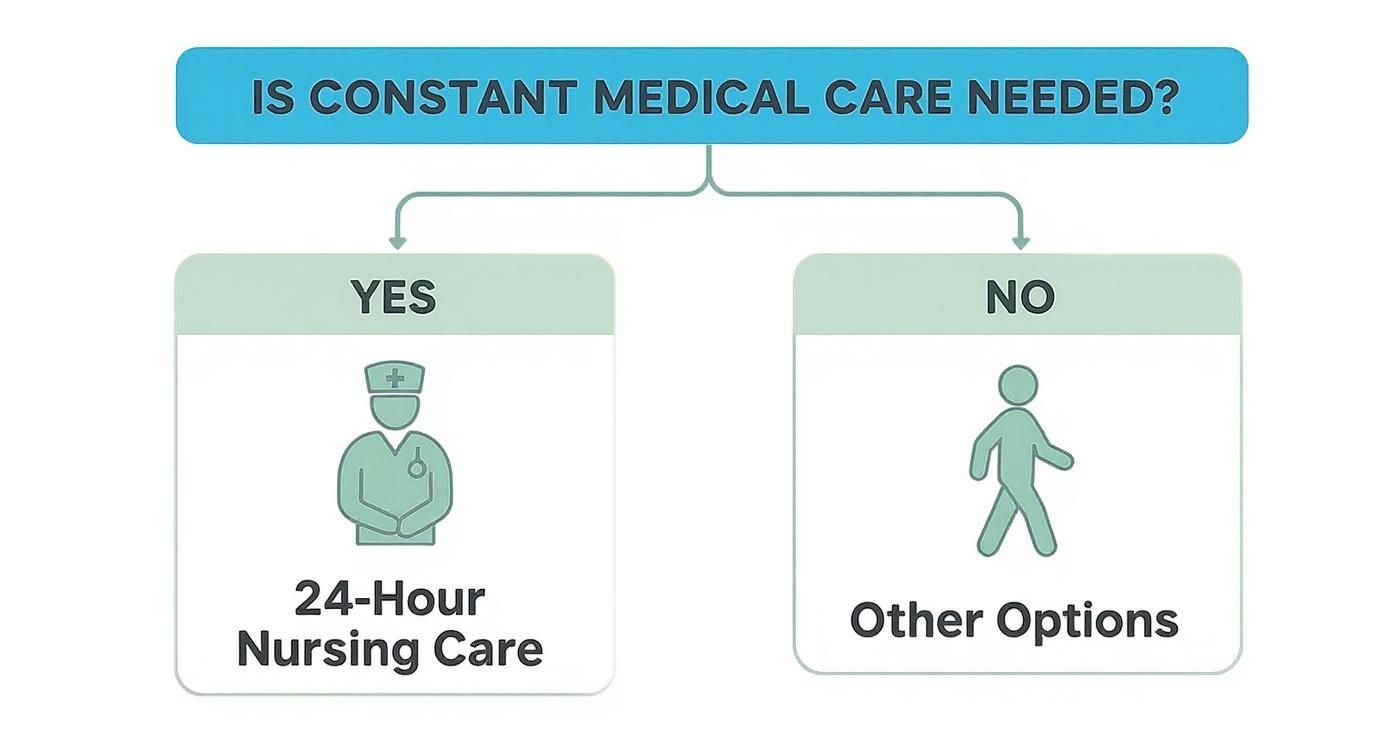
As you can see, the core question is whether constant, skilled medical care is needed. If the answer is yes, you're firmly in the territory of 24-hour nursing solutions.
Comparing Live-In and Shift-Based Care Models
To make this choice clearer, it helps to see the two models side-by-side. Each has its place, and the "better" option is simply the one that aligns with your family's reality.
| Feature | Live-In Nursing Care | Shift-Based Nursing Care |
|---|---|---|
| Coverage | One primary nurse lives in the home for multi-day shifts, with sleep breaks. | A team of nurses rotates in 8 or 12-hour shifts for continuous, awake coverage. |
| Best For | Stable patients needing oversight, companionship, and assistance as needed. | Patients with critical, complex, or unstable medical needs requiring active monitoring. |
| Cost | Generally more cost-effective as you're paying a flat daily rate. | More expensive due to hourly rates for multiple, highly-skilled professionals. |
| Relationship | Fosters a deep, personal bond with one consistent caregiver at a time. | Professional relationship with a rotating team of clinical experts. |
| Home Requirements | Requires a private, furnished bedroom for the nurse. | No special accommodations needed for the nursing staff. |
Ultimately, the goal is to provide the right level of support without over- or under-serving the patient’s needs.
Making the Right Choice for Your Family
Deciding between these two models demands an honest look at your loved one’s health. The live-in model offers wonderful consistency and can be easier on the budget, but the shift-based model provides a level of intensive clinical oversight that is simply unmatched for complex cases.
Think about these key factors:
- Medical Intensity: How fragile is your loved one's condition? Do they need active medical help during the night?
- Your Home: Is there a separate, private room you can provide for a live-in nurse?
- The Budget: Shift-based care involves several nurses and is almost always more expensive than a live-in arrangement.
- Patient's Comfort: Would your loved one prefer seeing one familiar face for days at a time, or are they comfortable with a rotating team?
By weighing these elements honestly, you can choose the care structure that truly fits the medical needs and personal dynamics of your family.
Who Truly Benefits from Around-the-Clock Nursing?
Knowing the different models of care is one thing, but figuring out when a situation truly calls for the highest level of support is another ballgame entirely. How can you be sure that your loved one’s condition has reached the point where 24-hour nursing care in home is a necessity?
This level of service isn't just about having someone around. It becomes essential when medical needs are complex, constant, and unpredictable—making professional oversight a matter of basic safety and well-being. It’s the shift from needing simple assistance to requiring hospital-level clinical management right in the comfort of home. For most families, this decision comes after a major health crisis or as a chronic illness progresses into a more critical phase.
Distinguishing Clinical Need from Companion Care
One of the first and most important lines to draw is between skilled nursing and non-medical companion care. While both are incredibly valuable, they serve completely different roles. Think of it as the difference between a paramedic and a kind neighbor; both can offer help, but only one is trained and legally allowed to handle a true medical event.
Non-medical caregivers are fantastic for providing companionship, helping with daily routines like making meals, light housekeeping, and reminding someone to take their pills. They are a vital part of the support system for countless seniors.
But their responsibilities stop where clinical tasks begin.
A licensed nurse, on the other hand, is qualified to perform specific medical duties that are legally and ethically outside the scope of a companion or home health aide. This is the core reason families opt for around-the-clock nursing.
Here are the key skilled nursing tasks that signal a clear need for professional, 24/7 oversight:
- Medication Administration: This goes far beyond reminders. We're talking about managing complex medication schedules, especially those involving IVs, injections, or frequent dose changes based on vital signs.
- Wound Care: Treating surgical incisions, pressure sores, or other complex wounds that need sterile dressing changes and constant monitoring for infection.
- Ventilator or Tracheostomy Care: Managing respiratory equipment is a highly specialized skill that demands an expert’s constant supervision.
- Tube Feedings: Administering nutrition and medication through gastric or nasogastric tubes requires clinical precision.
- Catheter and Ostomy Management: Providing routine care and troubleshooting to prevent infections and other serious complications.
If your loved one requires any of these services on a continuous, round-the-clock basis, then professional 24-hour nursing care in home is not just an option—it’s the most appropriate and necessary choice.
Real-World Scenarios Demanding Constant Nursing
To paint a clearer picture, let's walk through a few common situations where this level of care becomes indispensable. These stories highlight those critical moments when a family realizes they need more than just a helping hand.
Scenario 1: The Post-Surgery Recovery
Imagine your dad is coming home after complex open-heart surgery. He's fragile, on a dozen new medications, and has a large incision that needs careful monitoring. A nurse’s constant presence ensures his pain is managed effectively, his vital signs are tracked for any hint of trouble, and the surgical site is kept sterile to prevent a dangerous infection.
Scenario 2: The Advanced Dementia Journey
Someone in the later stages of dementia may experience severe confusion, agitation, and a sharp physical decline. They might be at high risk for falls, forget to eat or drink, or wander from home. A round-the-clock nurse provides not just safety and supervision, but also the skilled medical care needed to manage symptoms and other health conditions, ensuring they can live with dignity and comfort.
Scenario 3: Compassionate End-of-Life Care
When providing palliative or hospice care, the main goal is comfort. This often involves managing significant pain and other distressing symptoms that require frequent, precise medication adjustments. While standard hospice services provide intermittent visits, 24-hour nursing ensures a professional is always there to provide immediate relief and support. This allows the family to step back from being caregivers and focus on simply being present with their loved one. It's important to note that hospice doesn't typically cover this continuous care, so families often supplement it with private nursing to ensure constant comfort.
Navigating the Costs of 24-Hour In-Home Care
For most families considering around-the-clock medical support, the first and most pressing question is a simple one: how much is this going to cost? Getting a handle on the financial side of 24-hour nursing care in home isn't just a detail; it's the foundation of a sustainable, long-term care plan.
The price isn't a single, fixed number. Think of it more like a dynamic figure shaped by a few key factors. Just as the cost of living varies from Princeton to Paterson, so does the cost of professional nursing. Your specific location, the level of clinical skill required, and the care model you choose—whether it's a live-in caregiver or rotating shifts—all play a major part in the final bill.
What to Expect: National Averages
To start building a realistic budget, it helps to have a baseline. While New Jersey costs will have their own nuances, looking at national figures gives us a solid starting point.
The national median cost for 24/7 home care hovers around $30 per hour. This breaks down to about $720 per day or $5,040 per week. For a full month of continuous care, families can expect to see an average cost of $21,823.
These are significant numbers, which is why it's so important to have a clear financial roadmap from the beginning. Fortunately, you don't have to go it alone. Several avenues exist to help manage these expenses, from insurance benefits to state and federal programs.
Exploring Your Payment Options
Funding in-home nursing care often feels like putting together a puzzle. It’s rare for a single source to cover the entire cost, so understanding how each piece works is the key to building a financial plan that holds up.
Here are the primary ways families typically cover around-the-clock care:
- Private Pay: This is the most straightforward route, using personal funds like savings, investments, or retirement accounts. It offers total flexibility, letting you hire any provider you choose without worrying about eligibility rules.
- Long-Term Care Insurance: These are policies designed specifically to cover services like in-home care. The devil is in the details here—you'll need to look closely at your policy’s daily benefit amount, lifetime maximum, and any "elimination period" before coverage kicks in.
- Veterans Benefits: Programs like the VA Aid and Attendance benefit can provide a monthly stipend to eligible veterans and their surviving spouses to help offset care costs.
- Government Programs: This is where Medicare and Medicaid come in, but their roles are very specific and often misunderstood.
It's one of the biggest misconceptions in senior care: many assume that standard health insurance or Medicare will pay for ongoing, long-term nursing at home. In reality, their support is almost always limited to short-term, skilled care right after a hospital stay.
Medicare vs. Medicaid for In-Home Nursing
Let's clear this up right away: Medicare and Medicaid are not the same. Understanding the difference is one of the most critical steps in planning for care costs, as they serve very different purposes.
Medicare's Role
Think of Medicare as a bridge, not a permanent road. It can cover skilled nursing care at home, but only for a limited time and under very strict conditions.
Typically, it’s designed to cover intermittent skilled care following a qualifying hospital stay for a specific, acute health problem. It is not designed to pay for ongoing, 24-hour custodial care, which includes help with daily activities like bathing, dressing, and eating.
Medicaid's Role
Medicaid, on the other hand, is a joint federal and state program built for individuals with limited income and assets. It has become the single largest public payer for long-term care services in the country.
In New Jersey, programs like MLTSS (Managed Long-Term Services and Supports) can cover extensive in-home care for those who qualify, including certain levels of nursing support. The trade-off is that the financial eligibility requirements are stringent, and the application process can feel like a maze.
For a deeper dive into the specifics, you can explore our complete guide on how to pay for home care.
Finding and Vetting a Trusted Care Provider
Choosing the right provider for 24-hour nursing care in home is one of the most important decisions your family will make. This isn't just about hiring help; it's about inviting a professional into your home and trusting them with the well-being of someone you love. A careful, methodical search is your best tool for ensuring safety, quality, and your own peace of mind.
The process involves a few key steps, from checking credentials and backgrounds to understanding the crucial difference between hiring through an agency and contracting with a nurse directly. Each path comes with its own set of responsibilities and benefits, and knowing which is right for you is the first step.

Agency Care vs. Independent Hires
Your first major fork in the road is deciding whether to work with a home care agency or hire a nurse on your own.
An agency essentially acts as the employer. They take care of payroll, taxes, insurance, and all the scheduling headaches. This structure provides a huge safety net, including liability coverage and, critically, backup caregivers if a scheduled nurse calls out sick.
Hiring a nurse independently means you become the employer. While this route can give you more direct control and potentially lower costs, it also puts all the responsibility on your shoulders. You'll be the one running background checks, verifying licenses, managing payroll, and scrambling to find a replacement at a moment's notice.
Your Vetting Checklist
Whether you go with an agency or hire directly, a tough screening process is absolutely non-negotiable. A systematic approach ensures no critical detail slips through the cracks. When you start your search, pay attention to how agencies or individuals present themselves online. A professional, findable online presence often points to an established and trustworthy provider, a principle well-understood in guides on local SEO for medical practices.
Here is a simple checklist to guide your search:
- Verify Licenses and Certifications: Always confirm that any nurse (RN or LPN) holds a current, valid license in New Jersey. You can usually do this right on the state’s Board of Nursing website.
- Conduct Thorough Background Checks: This is a must and should include a comprehensive criminal history check. Good agencies do this automatically, but it's a vital step you have to take if you hire independently.
- Check and Call References: Don’t just collect a list of names—actually call them. Speaking with former clients or employers gives you a real-world picture of a nurse's reliability, skill, and bedside manner.
Crucial Insight: Ask agencies about their caregiver supervision policies. How often does a clinical supervisor visit the home to check on the quality of care and support the nurse on duty? Regular oversight is a true hallmark of a high-quality organization.
Key Questions to Ask Potential Providers
Once you've narrowed down your list, it's time for interviews. This is your chance to dig deeper and make sure a provider’s approach truly fits your family’s needs. Your questions should touch on their clinical expertise, how they handle emergencies, and their communication style.
Use these questions to get the conversation started:
- Experience: "Can you tell me about your experience caring for someone with [specific condition, e.g., advanced dementia, post-stroke recovery]?"
- Emergency Protocols: "What is your exact plan if a medical emergency happens in the middle of the night?"
- Caregiver Stability: "What is your staff turnover rate? How do you make sure my loved one has consistent care from caregivers they know and trust?"
That last question about turnover is more important than you might think. The national annual caregiver turnover rate recently hit a staggering 77%, a figure that directly impacts the consistency of care your loved one receives. This shortage is so intense that 69% of agency leaders describe it as "Very Painful" or "Extremely Painful," which can affect whether they even have staff available for families like yours.
Finding the right provider for 24-hour nursing care in home is really a search for a trusted partner. By taking these steps—weighing the agency-versus-independent choice, working through a detailed checklist, and asking direct questions—you can confidently find a provider who will deliver the safe, skilled, and compassionate care your loved one deserves.
Crafting a Care Plan That Truly Works
Finding the right in-home nursing provider is a huge relief, but it’s only the first step. The second, equally crucial part of the puzzle is the care plan. Think of it as the playbook for your loved one’s daily health and well-being. This isn't just a simple to-do list; it’s a living document that guides every decision and action, ensuring a safe, comfortable, and dignified life at home.
A great care plan does more than just list medications and appointment times. It bridges the gap between a doctor's clinical orders and the realities of daily life, all while respecting your loved one’s personal preferences. This document is what guarantees that every nurse on the team—whether it’s a live-in provider or a rotation of caregivers—delivers consistent, personalized support.

The Core Components of a Strong Care Plan
To be effective, a care plan has to be detailed. The goal is to leave nothing to chance, ensuring a seamless transition between nursing shifts and family visits.
A comprehensive plan should be built around these key pillars:
- Medical Protocols: This is the clinical heart of the plan. It spells out medication schedules (doses, times, how to administer), instructions for wound care, ventilator settings, and how to operate any other medical equipment.
- Personal Care Routines: Document your loved one’s preferences for bathing, dressing, and grooming. Little details like their favorite soap, preferred water temperature, or the time of day they like to bathe can make all the difference in maintaining a sense of normalcy.
- Dietary and Nutrition Plan: This section should cover everything from dietary restrictions and allergies to favorite foods. Include meal times, hydration goals, and clear instructions for any special diets or feeding tubes.
- Mobility and Safety Protocols: Map out the procedures for transfers, like moving from a bed to a wheelchair. It should also include a repositioning schedule to prevent pressure sores and specific fall-prevention strategies for safely navigating the home.
Why Collaboration Is So Important
The best care plans are never created in a vacuum. They come from teamwork, blending the clinical knowledge of medical professionals with the deep, personal insights that only family can provide. This process needs to involve a circle of key people, with each person bringing a unique and valuable perspective.
This team should always include:
- The Patient: Whenever possible, the person receiving care should be at the very center of the conversation. Their input on daily routines, what makes them comfortable, and personal preferences is non-negotiable.
- The Family: You hold the backstory. You know their personal history, their emotional triggers, and the subtle cues that a clinical assessment might overlook.
- The Nursing Team: The nurses and their supervisor bring the medical expertise to the table, ensuring the plan is safe, effective, and follows clinical best practices.
- Physicians and Specialists: Your loved one’s doctors provide the foundational medical orders and health goals that the entire in-home plan is built upon.
This collaborative approach creates a person-centered plan. It’s the difference between simply treating a condition and truly caring for an individual by honoring their values, needs, and preferences.
Finally, it’s critical to handle the legal side of things. Taking steps like establishing a Durable Power of Attorney ensures that a trusted person can legally make healthcare decisions if your loved one becomes unable to. This keeps the care plan aligned with their original wishes and is a vital piece of a truly complete and protective plan.
Your Top Questions About 24-Hour Care, Answered
Even after you've weighed the different care models and crunched the numbers, you're bound to have some practical questions. That’s completely normal. Getting clear, straightforward answers is key to feeling confident about arranging 24-hour nursing care in home, so let's tackle some of the most common concerns we hear from families just like yours.
Home Care Versus Assisted Living
So, what’s the real difference between in-home nursing and moving into an assisted living facility? It really boils down to the level of personal attention. In-home care delivers dedicated, one-on-one medical support right in the comfort and privacy of a familiar space.
Assisted living, on the other hand, is a group setting. While it provides great support, the staff are responsible for many residents at once, which means they simply can't offer that same continuous, focused oversight for one individual.
Handling Unexpected Absences
This is a big one for families: "What happens if our nurse gets sick or has an emergency?" It's a valid worry, and any reputable agency will have a solid plan in place. They maintain a roster of fully qualified backup nurses who are on call and ready to step in immediately. This ensures there are never any gaps in coverage, keeping your loved one safe and cared for without interruption.
The ability to provide immediate, qualified backup is a key advantage of working with an established agency over hiring an independent nurse. It’s a crucial safety net for your family.
Adapting the Care Plan
As your loved one's health needs shift, will the care plan keep up? Absolutely. A good care plan isn't a "set it and forget it" document; it's a living, breathing guide. The nursing supervisor should be reviewing it regularly with you, your family, and your loved one's doctors. This collaboration ensures the care provided always aligns perfectly with their current health and needs.
At NJ Caregiving, we're here to provide the answers and support your family needs to arrange dependable, compassionate care in Princeton and Mercer County. To learn how our dedicated nursing team can help, get in touch with us at https://njcaregiving.com.
