
When a loved one starts finding everyday tasks more challenging, the thought of them having to leave their familiar, comfortable home can be heartbreaking. This is where a personal care assistant (PCA) comes in. Think of them less as a helper and more as a dedicated partner whose main goal is to help your family member live safely and with dignity right where they belong.
The Role of a Personal Care Assistant
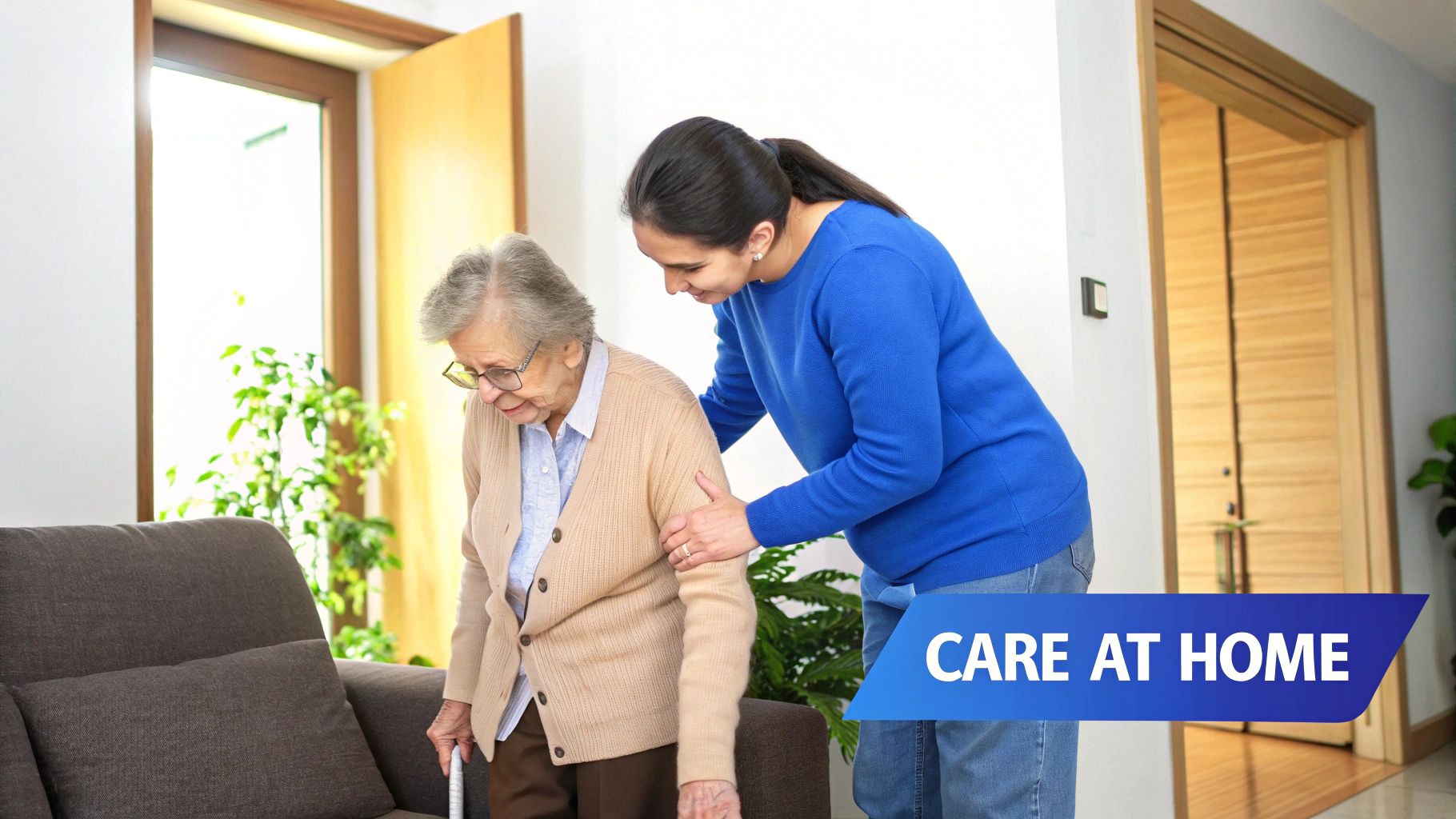
A personal care assistant is the key to making "aging in place" a comforting reality instead of a source of stress. They step in to bridge the gap between what your loved one can do and what they need a little help with, offering both practical support and genuine companionship.
It’s helpful to see a PCA as a sort of "daily life coordinator." Their job isn't to take over, but to assist and empower your loved one in a secure, familiar environment. For families, this brings incredible peace of mind, knowing someone is there to help maintain routines and preserve that all-important sense of independence.
More Than Just a Helper
A PCA’s true value is in the trusting relationship they build. They become a consistent, friendly face, and that emotional support is often just as critical as the physical help they provide. It’s a powerful way to combat the loneliness and isolation that can so easily creep in.
The core of their work is focused on non-medical, hands-on support. To give you a better idea, a PCA can help with:
- Personal hygiene, like bathing, grooming, and dressing.
- Mobility, including safely moving from a bed to a chair.
- Preparing nutritious meals that meet specific dietary needs.
- Light housekeeping to keep the home safe, clean, and comfortable.
- Crucial reminders to take medications on schedule.
This holistic approach addresses the whole person, making sure both physical safety and emotional well-being are looked after. You can dive deeper into these duties in our guide to in-home personal care services.
For a quick overview, here’s a simple breakdown of what a Personal Care Assistant does.
Personal Care Assistant at a Glance
| Aspect | Description |
|---|---|
| Primary Focus | Assisting with Activities of Daily Living (ADLs) and providing companionship. |
| Key Responsibilities | Personal hygiene, mobility support, meal preparation, light housekeeping, medication reminders. |
| Work Environment | The client's home, fostering independence and enabling them to age in place. |
This table highlights how a PCA’s role is centered on creating a supportive home environment where your loved one can thrive.
A Growing Need for Compassionate Care
It’s no secret that the need for skilled, compassionate caregivers is on the rise. In fact, employment for personal care aides is expected to jump by 21% between 2023 and 2033—a staggering figure compared to the 3% average for all other jobs. This surge is fueled by an aging population, as it's projected that by 2030, one in six people worldwide will be 60 or older.
A Personal Care Assistant’s role is fundamentally about enabling independence, not creating dependence. They provide the necessary support to help individuals continue living their lives on their own terms, in the comfort of their own homes.
This growing demand really underscores the vital role PCAs play in modern caregiving. They are the cornerstone of a system that allows our loved ones to age with grace and dignity in the place they know and love best.
What a Personal Care Assistant Actually Does Day-to-Day
It’s one thing to know the definition of a personal care assistant, but it’s another to see what their support looks like in real life. The daily work of a PCA revolves around four key areas, all focused on helping your loved one live safely, comfortably, and with dignity in their own home.
These aren’t just chores on a checklist. A PCA’s responsibilities flex and adapt to your loved one’s specific needs, creating a stable and reassuring routine that supports both their physical and emotional well-being.
Personal Care and Upholding Dignity
At the heart of a PCA’s role is helping with Activities of Daily Living (ADLs). These are the basic self-care tasks we often take for granted—like getting dressed or making a meal—that can become difficult due to age, illness, or injury. A PCA provides sensitive, respectful help with these tasks so your loved one feels supported, not diminished.
This hands-on support includes:
- Bathing and Grooming: Helping with showers, dressing, and other personal hygiene to ensure your loved one feels clean, fresh, and confident.
- Mobility Assistance: Providing a steady hand to help them get out of bed, walk to the kitchen, or move safely around the house. This is huge for preventing falls.
- Toileting and Incontinence Care: Offering compassionate and discreet assistance with one of the most private aspects of daily life.
Figuring out exactly where help is needed is the first step. To get a clearer picture, you can learn more about how to complete an Activities of Daily Living assessment.
Household Support for a Safe and Tidy Home
A cluttered or messy home isn’t just uncomfortable—it can be a safety hazard. PCAs handle light housekeeping tasks that keep the living space safe and organized, taking the physical burden of chores off your loved one’s shoulders.
This isn’t about deep cleaning the whole house. It’s about the consistent upkeep that makes a home feel like a sanctuary. Think of it this way: a PCA might prepare a healthy breakfast, clean up the kitchen, and then put in a load of laundry. These simple acts create a calm, orderly environment that’s much safer for someone with mobility issues.
Health-Related Support and Coordination
While a personal care assistant isn't a nurse and doesn't perform medical procedures, they are an essential part of your loved one's health team. Their daily presence provides a crucial layer of oversight that gives families incredible peace of mind.
A PCA is often the first person to notice small changes that might signal a bigger problem—like a loss of appetite or new-found fatigue. They are the eyes and ears in the home, able to report concerns before they escalate.
Key health-related duties include:
- Medication Reminders: Making sure the right pills are taken at the right times, just as the doctor prescribed.
- Appointment Coordination: Helping to schedule doctor’s visits and figuring out transportation.
- Accompaniment to Appointments: Going along to appointments to offer support, take notes, and make sure important information from the doctor isn't missed.
This kind of support can make all the difference in managing chronic conditions and sticking to a treatment plan.
Companionship and Emotional Well-Being
This might be the most important part of a PCA's job, even though it's often overlooked. Loneliness is a serious health risk for older adults. The steady, friendly presence of a caregiver can truly change everything for someone who feels isolated.
A PCA is more than just a helper; they become a trusted companion. They're someone to talk to over a cup of tea, a partner for a game of cards, or just a friendly face to watch a favorite TV show with. These simple moments of human connection break the cycle of loneliness and are often the key to a happier, more engaged life.
Decoding Caregiver Titles PCA vs HHA vs CNA
Navigating the world of home care can sometimes feel like learning a new language, with a whole alphabet of acronyms like PCA, HHA, and CNA. While they might sound interchangeable, these roles represent very different levels of care, training, and responsibility.
Getting clear on these differences is the first—and most important—step to finding the right support for your family.
Think of it like building a support team. A Personal Care Assistant (PCA) is your foundational player, a versatile and supportive professional focused on the non-medical side of daily living. Their primary goal is to help with personal tasks and provide companionship, making sure your loved one is comfortable, safe, and engaged at home.
The best way to understand the hierarchy is to look at what each role is trained—and legally permitted—to do.
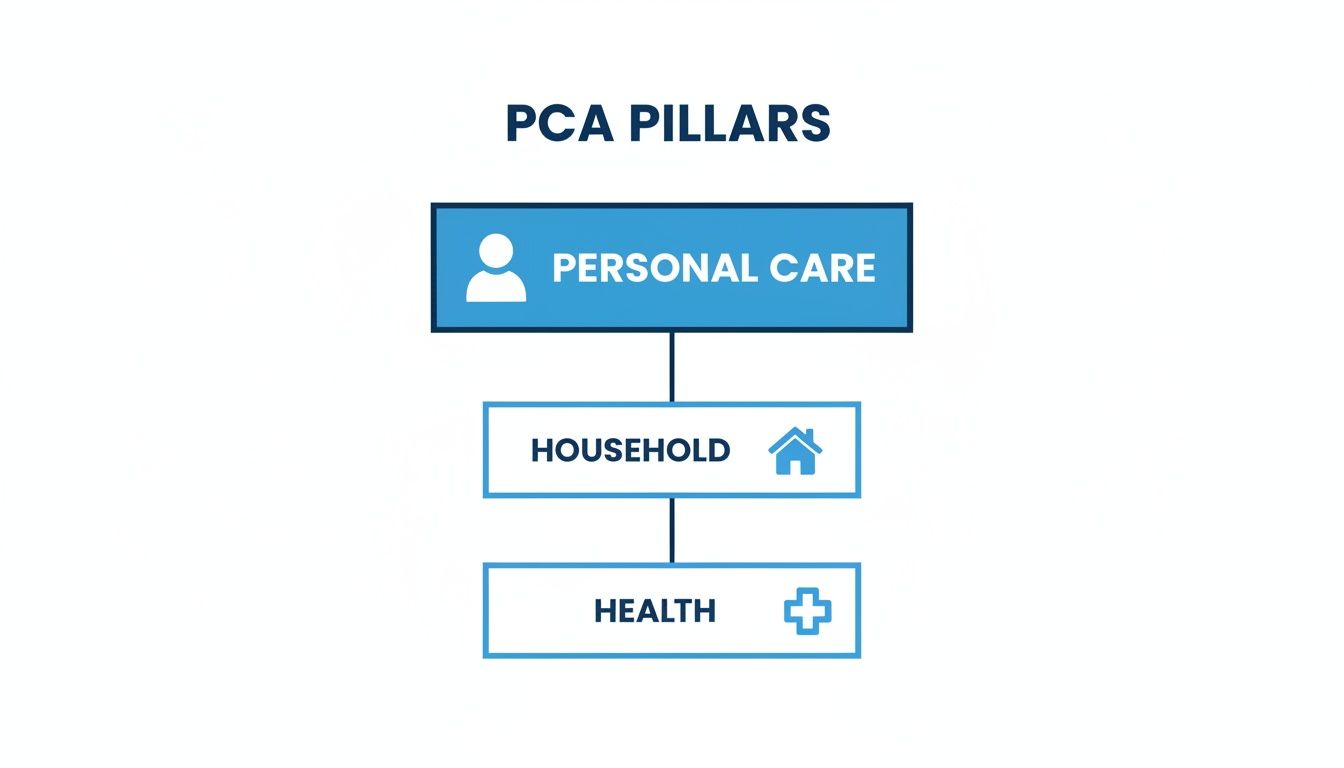
As you can see, a PCA's duties revolve around personal, household, and basic health-related support, all within a strictly non-medical framework.
To really nail down the differences, let's look at each role side-by-side.
Comparing Caregiver Roles PCA vs HHA vs CNA
This table breaks down the key distinctions in training, duties, and work environments for PCAs, HHAs, and CNAs, giving you a clear snapshot of how they compare.
| Attribute | Personal Care Assistant (PCA) | Home Health Aide (HHA) | Certified Nursing Assistant (CNA) |
|---|---|---|---|
| Primary Focus | Non-medical personal care, companionship, and household tasks. | Similar to PCA, but with added basic health monitoring and assistance under supervision. | Basic clinical tasks and patient care under the direct supervision of a licensed nurse. |
| Training | Varies by state; often minimal formal training required, focuses on core competencies. | State-mandated training (e.g., 76 hours in NJ) and competency evaluation. | State-approved certification program, passing a state exam, and continuing education. |
| Key Duties | Bathing, dressing, meal prep, light housekeeping, errands, companionship. | All PCA duties, plus taking vital signs, assisting with prescribed exercises, and medication reminders. | All HHA duties, plus recording vitals, changing dressings, and assisting with medical equipment. |
| Work Environment | Private homes, independent living facilities. | Private homes, assisted living facilities, sometimes group homes. | Hospitals, nursing homes, long-term care facilities, and sometimes private homes. |
| Medical Tasks? | No. Strictly non-medical support. | Limited. Basic health tasks under the supervision of a registered nurse. | Yes. Performs delegated clinical tasks under the supervision of a nurse. |
Understanding these roles helps ensure you're matching your loved one's specific needs with the right professional qualifications. A PCA is perfect for daily support, while a CNA is required when clinical care is part of the daily routine.
The Home Health Aide (HHA)
A Home Health Aide (HHA) represents a step up in formal training. While they handle all the same duties as a PCA, HHAs complete state-mandated training that qualifies them for more specific health-related tasks.
For example, an HHA might be trained to help with prescribed therapies, check vital signs, or monitor a client's condition more closely, reporting any changes back to a supervising nurse. This makes HHAs a great fit when a loved one's needs are a bit more complex but don't yet require constant medical care.
For a deeper dive into these two common roles, you can explore the key differences between a PCA and HHA in our dedicated guide.
The Certified Nursing Assistant (CNA)
A Certified Nursing Assistant (CNA) has the highest level of formal training among the three. To become a CNA, an individual must complete a state-approved educational program and pass a rigorous competency exam.
This certification equips them to perform clinical tasks while working under the direct supervision of a licensed nurse. They are often found in hospitals, nursing homes, and other clinical settings where they act as a direct extension of the medical team. It's also helpful to understand the official distinction between personal care and home help to see how hands-on support differs from general household assistance.
Ultimately, choosing the right professional comes down to one thing: the specific level of need. A PCA is ideal for companionship and help with daily living, an HHA is suited for those needing light health monitoring, and a CNA becomes necessary when basic medical tasks are part of the daily picture. This clarity helps you make the best choice for your family.
What to Look for in a Personal Care Assistant
Finding the right personal care assistant is about so much more than checking boxes on a résumé. It's about inviting someone you can trust into your home and your life. While there are definitely some non-negotiable qualifications, the real measure of a great PCA often comes down to their personal qualities—the "soft skills" that can't be taught in a classroom.
A truly exceptional caregiver is a unique blend of practical know-how and genuine empathy. They need the technical skills to ensure safety and the emotional intelligence to build a real, human connection. Let's break down what you should be looking for.
Foundational Requirements and Certifications
Before you even start thinking about personality fit, there are a few baseline qualifications every potential PCA absolutely must have. These are the essentials that guarantee a basic level of safety and professionalism.
Think of these as the ticket to entry—without them, a candidate shouldn't even be in the running. They are your first line of defense in making sure your loved one is in safe hands.
- Clean Background Check: This is a must. A thorough background check is your assurance that the candidate has no history that would put your loved one at risk.
- CPR and First Aid Certification: Accidents happen. A PCA has to be ready to respond calmly and effectively in an emergency, and current certification is proof they can.
- Valid Driver's License and Clean Driving Record: If the job involves driving to appointments or running errands, this is non-negotiable for everyone's safety.
- Proof of Eligibility to Work: This is just standard procedure to ensure you are hiring legally and responsibly.
The Heart of the Matter: Core Soft Skills
Once you've covered the basics, it's time to focus on what truly matters: the personal traits that separate a decent caregiver from a truly great one. These soft skills are the foundation of trust, comfort, and a positive relationship.
A caregiver's patience and empathy are just as vital as their ability to help with daily tasks. These qualities transform care from a simple service into a meaningful human connection, which is essential for emotional well-being.
During your interviews, be sure to look for these four critical traits:
- Empathy and Compassion: The ability to understand what someone else is going through is the cornerstone of quality care. An empathetic PCA provides comfort and validation, making your loved one feel seen and heard.
- Patience and Understanding: Let's be honest, caregiving can be challenging, and progress isn't always a straight line. A patient PCA stays calm and supportive, especially when dealing with frustration, memory loss, or physical limitations.
- Reliability and Punctuality: Consistency is everything. A reliable PCA shows up on time, every time. This creates a stable and predictable routine that your loved one can count on, which reduces anxiety.
- Communication Skills: Clear, respectful communication is vital. The PCA must be a good listener who can understand your loved one's needs and also effectively report any changes or concerns back to you.
These skills are the backbone of a successful caregiving partnership. They ensure dignity and respect are always at the forefront. The US home care industry was valued at $155.9 billion in 2024, with personal care assistants aiding nearly 12 million Americans annually. You can find more insights about the home care provider industry on IBISWorld.
Your Step-by-Step Guide to Hiring a Personal Care Assistant
Taking the leap to hire a personal care assistant can feel overwhelming. But when you break it down into smaller, more manageable pieces, the whole process becomes much clearer. Instead of one giant decision, think of it as a series of thoughtful steps leading you to the right person for your family.
A structured approach takes the guesswork out of the equation. It empowers you to find a caregiver who isn't just qualified on paper, but who is also a great personality fit. This guide lays out a practical roadmap to help you move forward with total confidence.
Following these four key steps ensures you cover all your bases in finding a reliable, compassionate, and trustworthy PCA.
Step 1: Define Your Needs with a Detailed Care Plan
Before you can find the right person, you need a crystal-clear picture of what you actually need. Jumping into interviews without a plan is like going grocery shopping without a list—you’re bound to forget something important.
Start by sitting down with your loved one and any other family members involved to map out a detailed care plan. This document should outline every single task you expect the PCA to handle. Don't be shy about getting specific.
- Personal Care: Does your mom need help with bathing every morning? Assistance getting dressed? Maybe some discreet support with toileting?
- Household Duties: List out things like daily meal preparation, doing a light laundry load twice a week, or tidying up the kitchen after meals.
- Health Support: Note any medication reminders, specific dietary restrictions, or help needed to get from a chair to a walker.
- Schedule: What days and hours is care needed? Make sure to include any flexibility required for things like doctor's appointments.
This care plan becomes your job description and the foundation for your entire search. It makes sure everyone is on the same page and helps you communicate your expectations clearly from day one.
Step 2: Find and Screen Potential Candidates
With your care plan in hand, you’re ready to start looking. Generally, you have two main paths to choose from: hiring through a professional home care agency or hiring an individual privately. Each has its own set of pros and cons.
An agency handles the heavy lifting—vetting, payroll, and insurance—offering a layer of security. Hiring privately gives you more direct control and can be less expensive, but it also means you become the employer.
Deciding between these two is a critical part of the process.
Agency Pros & Cons:
- Pros: Agencies run background checks, manage all the payroll and taxes, provide liability insurance, and can send a backup caregiver if your regular PCA is sick. This takes a huge administrative weight off your shoulders.
- Cons: That convenience comes at a higher hourly rate. You also might have less say in choosing the specific person who works with your family.
Private Hire Pros & Cons:
- Pros: You have total control over who you hire. You can often negotiate a lower hourly rate since there's no agency taking a cut.
- Cons: You are the employer. That means you’re responsible for everything: running background checks, calling references, handling payroll taxes, and scrambling to find a replacement if your caregiver calls out.
Step 3: Conduct an Effective and Insightful Interview
The interview is your chance to look beyond the resume. This is where you get a real feel for a candidate's personality, their level of compassion, and their professionalism. Use your care plan as a guide to prepare questions that explore both their skills and their caregiving philosophy.
Focus on situational questions that reveal how they’d handle real-world challenges. For example, instead of asking, "Are you patient?" try this: "Tell me about a time you cared for someone who was feeling frustrated or uncooperative. How did you handle it?"
Key Questions to Ask:
- What experience do you have with the specific needs we've outlined in our care plan?
- How would you respond in a medical emergency, like a fall?
- What do you find most rewarding about being a personal care assistant? And what’s the most challenging part for you?
- How do you make sure a client's dignity and privacy are always respected, especially during personal care tasks?
- Can you provide a few professional references we can contact?
Step 4: Complete Your Due Diligence
This is the final, non-negotiable step before you make an offer. Performing thorough due diligence protects your loved one and gives you ultimate peace of mind. Never, ever skip these final checks, even if you have a great feeling about someone.
First, call their professional references. Ask previous employers about their reliability, their skills, and what they were like to work with.
Next, run a comprehensive background check. This should screen for any criminal history that would make them unsuitable for a caregiving role. If you're hiring privately, you can use a reputable online service to get this done.
Once these checks are complete and you feel confident in your choice, you can extend a formal job offer. By following this structured process, you can rest easy knowing you’ve done everything possible to find a wonderful personal care assistant.
Navigating the Costs of PCA Services and Payment Options
Let's talk about the financial side of things. Figuring out how to pay for a personal care assistant is, without a doubt, a huge piece of the puzzle. It's essential to build a care strategy that’s sustainable for the long run, giving your family peace of mind and your loved one the support they deserve.
A few key things will influence the hourly rate you can expect to pay a PCA. Just like in real estate, location is a major factor—rates in a busy city are almost always higher than in a quiet, rural town. A PCA’s level of experience and any specialized training they have will also play a part. And, of course, the complexity of the care itself, from simple companionship to more hands-on help, will affect the final cost.
Common Payment Methods for PCA Services
When it comes to covering the costs, families usually go one of a few routes. Each path has its own rules and benefits, so it’s smart to look at which one really fits your financial picture.
The most direct way is private pay, which simply means you pay for the services out-of-pocket. This gives you the most freedom and flexibility to hire who you want and set your own terms. The trade-off is that it requires some serious financial planning to make sure the funds will be there for as long as they're needed.
Another great option is using a long-term care insurance policy. These policies are specifically built to cover services like in-home care. If your loved one has a policy, now is the perfect time to pull it out, review the benefits, and get clear on what’s required to file a claim. You might be surprised by how much of the PCA cost it covers.
The key to sustainable care is proactive financial planning. By understanding your options early, you can avoid last-minute stress and create a stable care environment for your loved one without jeopardizing your family’s financial health.
Finally, don’t overlook government-funded programs. Many are designed specifically to help seniors and people with disabilities stay in their own homes instead of moving into a facility.
Exploring Government-Funded Programs
For those who qualify, these programs can be an absolute lifeline. The big one you’ve probably heard of is Medicaid, a joint federal and state program that offers health coverage to millions of Americans, including eligible seniors and people with disabilities.
Many states have what are called Medicaid waiver programs, which are designed to fund home and community-based services—including personal care. These waivers make it possible for individuals who might otherwise need to be in a nursing home to get the support they need right at home. The eligibility rules are different in every state, often based on both medical need and financial situation. For families trying to get a handle on these funding options, looking into resources like the Medicaid Waiver Program in Texas can offer critical support and a clear roadmap.
Beyond Medicaid, some states offer special programs for veterans or other specific groups. It's always a good idea to connect with your local Area Agency on Aging. They know all the potential funding sources in your community. A little research here can unlock the support you need to make in-home care an affordable and lasting reality.
Got Questions About Personal Care Assistants? We've Got Answers.
Even after you've covered the basics, a few specific questions always seem to pop up for families thinking about hiring a personal care assistant. Let's tackle some of the most common ones head-on, so you can feel confident about your next steps.
Can a Personal Care Assistant Give My Loved One Their Medications?
This is one of the most critical questions we get, and the answer is almost always a firm no. A PCA can absolutely provide medication reminders—saying, "Mom, it's 10 AM, time for your pills," or helping someone with arthritic hands open a pill bottle.
However, they can't administer medication. That means they legally cannot determine dosages, give injections, or physically put pills in a client's mouth. Those are clinical tasks that belong strictly to a licensed nurse.
Think of a PCA's role as supportive, not medical. They're there to help your loved one stick to their routine, but they can't step into the shoes of a healthcare professional.
What Happens If Our PCA Can't Make It to Work?
Life happens. Caregivers get sick, have family emergencies, or simply need a day off. This is one of the biggest reasons families decide to work with a home care agency rather than hiring someone privately.
A good agency has a whole team of qualified caregivers ready to go. If your regular PCA is unavailable, they'll arrange for a substitute, making sure there are no gaps in care. If you hire on your own, that responsibility falls squarely on your shoulders. It's smart to have a backup plan from day one, whether that means cross-training another family member or keeping a pre-vetted list of fill-in caregivers you can call.
How Should We Handle a Disagreement with Our Caregiver?
Open and honest communication is everything. If something isn't working, find a calm moment to sit down and talk with your PCA. Clearly explain what's on your mind and, just as importantly, listen to their side of the story. You'd be surprised how often a simple conversation can clear up a misunderstanding.
If the problem continues, or if you're with an agency, don't hesitate to call the supervisor. They're trained to mediate these kinds of situations and can help find a solution. If it's just not a good fit, they can assign a different caregiver.
It's worth noting that finding and keeping great caregivers can be tough right now. With a staggering 59% of US home care agencies reporting caregiver shortages in 2024, the industry is feeling the strain from high turnover and low median pay. You can find more details about the home care industry workforce on nchstats.com. This just goes to show how important it is to build a strong, positive relationship with the caregiver you have.
At NJ Caregiving, we get it. We know how challenging this can be, and we're dedicated to providing reliable, compassionate, and professional care you can count on. If you're looking for a trusted partner on this journey, get in touch to see how we can support your family. Visit us at https://njcaregiving.com.
