
When a loved one starts needing a little extra help around the house, many families find themselves at a crossroads. The goal is always to maintain their independence and keep them in the familiar comfort of their own home, but how do you make that happen safely?
This is where non-medical home care comes in. It’s not about clinical procedures or medical treatments. Instead, it’s about providing practical, compassionate support that bridges the gap and makes daily life easier and safer.
What Exactly Is Non-Medical Home Care?
Think of non-medical home care as a helping hand for the everyday things. It’s focused entirely on support, comfort, and companionship, rather than on medical tasks like giving shots or changing wound dressings. A professional caregiver is there to assist with the activities of daily living that may have become difficult.
The whole idea is to enhance quality of life. This could be as simple as a friendly aide preparing a warm meal, helping with a morning routine, or accompanying a Princeton resident on a trip to the grocery store. It’s about people helping people.
Common Services That Make a Difference
The support offered is incredibly flexible and tailored to what an individual actually needs. Most services fall into a few key categories:
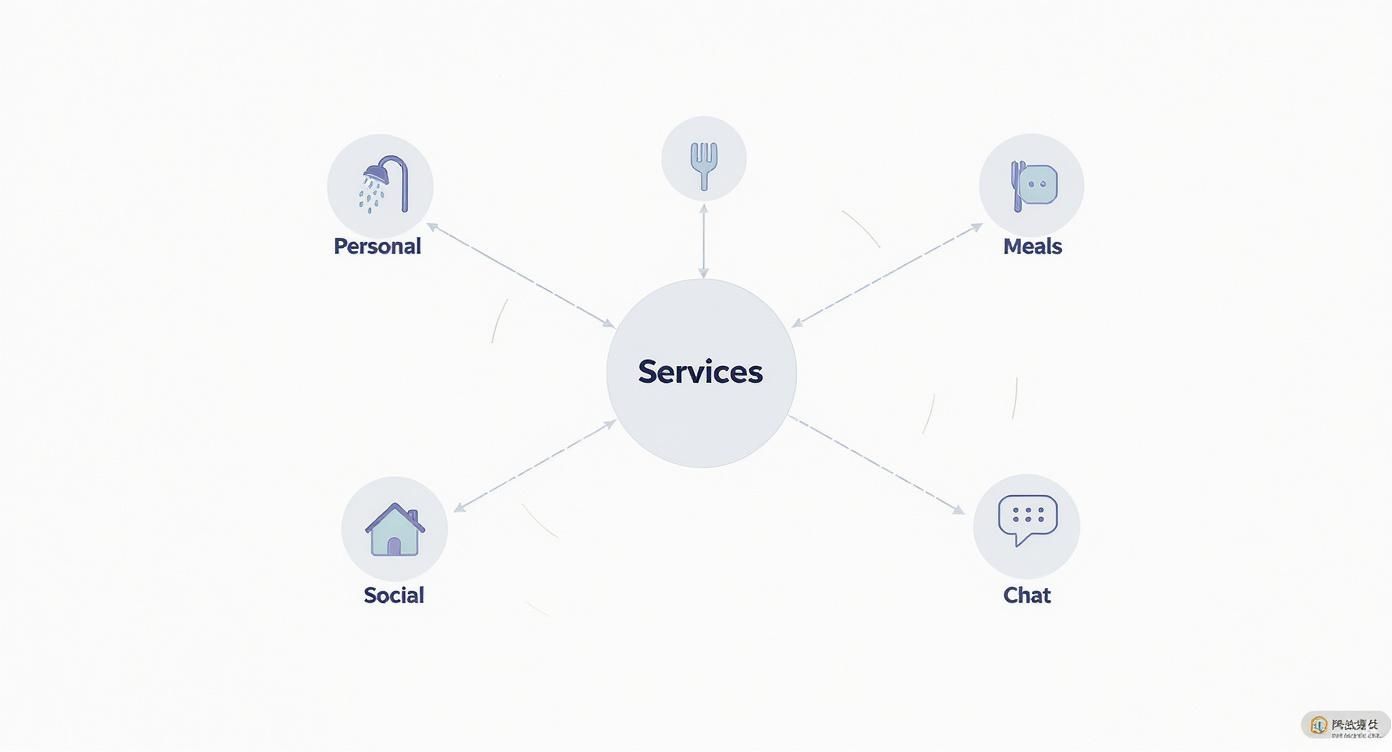
- Personal Care: This is fundamental. It includes dignified assistance with personal hygiene tasks like bathing, dressing, and grooming.
- ADL Assistance: "ADLs" stands for Activities of Daily Living. This support focuses on mobility, like helping someone safely get out of a chair, walk to another room, or transfer into bed.
- Companionship: Loneliness can be a real struggle. A caregiver provides a friendly face for conversation, a partner for a game of cards, or someone to share a walk with, drastically reducing isolation.
- Medication Reminders: While caregivers can't administer medication, they can provide crucial reminders to ensure doses are taken on time as prescribed by a doctor.
It’s important to draw a clear line: this is different from skilled home health care. Skilled care is medical in nature, ordered by a doctor, and involves registered nurses or therapists. Non-medical care is the perfect complement, handling the daily support so your loved one can thrive.
This kind of help is a lifeline for seniors wishing to age in place, individuals recovering from surgery, or even busy families who need a break from caregiving duties (known as respite care). Here in Mercer County, families across Princeton trust NJ Caregiving for exactly this kind of reliable, in-home support.
To make these services clearer, here’s a quick breakdown of what non-medical home care often looks like in practice.
Non-Medical Home Care At A Glance
| Service | Purpose | Example |
|---|---|---|
| Personal Care | To maintain hygiene and dignity. | Assisting with a safe shower and getting dressed for the day. |
| Companionship | To reduce loneliness and provide social interaction. | Playing a board game, going for a walk, or simply chatting over tea. |
| Meal Preparation | To ensure proper nutrition and hydration. | Cooking a healthy lunch and making sure the client eats well. |
| Light Housekeeping | To keep the home environment safe and clean. | Doing laundry, washing dishes, and tidying up the living area. |
| Medication Reminders | To help clients stay on their prescribed schedule. | Prompting them at 10 AM that it's time for their morning pill. |
| Errands & Transportation | To help clients stay connected to their community. | Driving to a doctor's appointment or picking up prescriptions. |
Ultimately, the goal is to provide a comprehensive support system that makes living at home a safe, comfortable, and positive experience.
How Is Non-Medical Home Care Paid For?
Understanding the financial side is a huge part of the planning process. There are several common ways families cover the cost of care:
- Private Pay: This is the most direct method, where families pay for services out-of-pocket, typically at an hourly or live-in rate.
- Medicaid Waivers: For those who meet specific income and health criteria, New Jersey's Medicaid programs may offer waivers that help fund non-medical home care services.
- VA Benefits: Veterans who need assistance with daily activities may be eligible for benefits from the Department of Veterans Affairs that can be used for in-home care.
When you start looking for a provider, do your homework. Check for proper licensing and insurance, ask about their caregiver training and screening process, and read reviews from other local families. It's also wise to ask about their flexibility with scheduling and how they handle after-hours emergencies before you make any decisions.
Expert Tip: Consistent communication is key. A good agency will provide regular, clear updates to family members to keep everyone on the same page and ensure your loved one’s safety and well-being.
Ready to explore how non-medical care could help your family? The first step is a simple conversation. Contact NJ Caregiving to schedule a free, no-obligation consultation where we can build a personalized care plan that fits your unique needs.
Understanding The Key Concepts
At its core, non-medical home care is all about one thing: helping people continue to live independently and with dignity in their own homes. It’s less like a clinical service and more like having a dedicated personal assistant—someone focused on keeping your loved one safe, comfortable, and engaged in their daily routines.
Think of it this way: a registered nurse or physical therapist provides medical tasks. A non-medical caregiver, on the other hand, is the friendly face who makes sure a healthy meal is on the table, the steady arm that helps someone get up from their favorite chair, and the welcome companion who brings conversation and a listening ear. Their job is to maintain a positive, safe, and supportive environment.
That distinction is everything. Non-medical care isn’t about treating a specific illness; it's about building a supportive daily routine that promotes well-being and heads off potential problems before they turn into emergencies.
The Human Element Behind The Care
Of course, the quality of this care all comes down to the people providing it. Caregivers are the heart and soul of this industry, but it's important for families to understand the real-world workforce challenges that can affect the care their loved one receives.
Right now, there's a nationwide shortage of qualified caregivers. In fact, nearly half of all states (48%) are facing a critical shortage, with some areas having as few as eight caregivers for every 1,000 people who need help. This is made worse by a massive annual turnover rate of 75% to 80%, driven by the incredibly demanding nature of the work. You can dig into more of the data on these shortages in the non-medical home care sector.
This reality underscores why choosing a reputable and stable agency is so important. A well-managed agency invests in its caregivers, which translates directly into more reliable and consistent care for your loved one.
Once you understand these two key pieces—the non-clinical focus of the care and the realities of the caregiving workforce—you can see what really makes a quality provider stand out. It’s a blend of a compassionate mission with the business sense to manage their team well, ensuring dependable care for families in communities like Princeton, even when the industry faces challenges. It’s that foundation that helps you find support you can truly count on.
A Closer Look at Common Home Care Services
When you start digging into what non-medical home care really is, it helps to think of it as a flexible set of services designed around a person’s daily life. A caregiver is like a personal assistant for the home, someone who steps in to help maintain routine, safety, and comfort.
These services generally fall into a few key areas, each one addressing a different aspect of daily living. The goal isn't to take over, but to provide just the right amount of support to help someone live as independently as possible.
Personal Care and Activities of Daily Living
This is often the heart of home care. It’s all about providing dignified, hands-on help with personal tasks that have become a challenge due to age, illness, or mobility issues. In fact, studies show that more than a quarter (26%) of adults over 60 struggle with these fundamental activities.
This kind of support usually includes:
- Bathing and Grooming: Helping with a shower, getting dressed, and other personal hygiene routines that help a person feel fresh and ready for their day.
- Mobility Assistance: Simply being a steady arm to lean on when moving around the house, getting out of bed, or standing up from a favorite chair. It’s about making movement safe and confident.
- Toileting and Incontinence Care: Offering respectful, private assistance to maintain comfort, hygiene, and dignity.
Meal Preparation and Household Support
Good nutrition and a safe, tidy home are absolute cornerstones of good health. A caregiver can take the physical strain out of cooking and housekeeping chores, which is a huge relief for many. Keeping the house clear of clutter is especially important, as it significantly reduces the risk of falls for seniors.
This part of care covers things like:
- Meal Planning and Preparation: Working with your loved one to plan and cook nutritious meals that fit their dietary needs, whether that’s a low-sodium, heart-healthy, or diabetic-friendly diet.
- Light Housekeeping: Taking care of daily chores like doing the laundry, washing dishes, and tidying up living spaces to keep the home clean, comfortable, and safe.
- Grocery Shopping and Errands: Making sure the pantry is always stocked, prescriptions are picked up on time, and other essential errands are handled.
A great caregiver does more than just check tasks off a list. They become a trusted part of the support system, often being the first to notice small changes in appetite or mobility that could point to a bigger health issue.
Companionship and Medication Reminders
Beyond the physical tasks, home care is about meeting emotional and practical needs, too. Loneliness can be devastating to a person's health, and keeping track of multiple medications can easily become confusing or overwhelming.
A caregiver provides that friendly face for conversation and shared activities, but also offers those crucial reminders for medications. They can offer a gentle prompt to make sure prescriptions are taken on schedule, bringing peace of mind to the whole family.
Non Medical Home Care Versus Skilled Home Health
Imagine your daily routine as a house. Non-medical home care is the sturdy framework—keeping everything running smoothly. Skilled home health is the specialized repair team—stepping in when there’s a technical issue that needs expert attention.
Getting this distinction right lays the groundwork for the ideal support system. Non-medical caregivers tackle Activities of Daily Living (ADLs), offering personal assistance, light housekeeping, and genuine companionship.
Skilled home health, on the other hand, requires a physician’s order and licensed clinicians—registered nurses, physical therapists, occupational therapists. They handle medical interventions like wound care, IV therapy, or injections. For more on the precise training behind these clinical tasks, see understanding skilled medical procedures like phlebotomy.
Key Differentiators At A Glance
When you step back, three pillars set these services apart:
- Tasks Performed:
Non-medical caregivers help with bathing, meal preparation, errands, and social engagement. Skilled providers deliver clinical treatments and monitor vital signs. - Provider Qualifications:
Non-medical staff are trained in safety protocols and companion care. Skilled home health professionals hold licenses—RNs, PTs, OTs. - Payment Source:
Non-medical care often relies on private pay, Medicaid waivers, or VA benefits. Skilled home health is usually covered by Medicare or private insurance when deemed necessary.
Many families blend both services. A nurse might drop in a couple of times a week for medical tasks, while a caregiver handles day-to-day support.
Comparison Of Home Care Services
Below is a side-by-side look at how non-medical home care and skilled home health compare.
| Feature | Non Medical Home Care | Skilled Home Health |
|---|---|---|
| Tasks Performed | Bathing, meal prep, errands, companionship | Wound care, IV therapy, injections, vital sign monitoring |
| Provider Qualifications | Trained caregiver (no formal medical license) | Licensed healthcare professional (RN, PT, OT) |
| Cost Structure | Private pay, Medicaid waivers, VA benefits | Medicare, private insurance (when medically necessary) |
Understanding these distinctions can guide you toward the right mix of support—ensuring safety, comfort, and healing under one roof.
For a deeper dive into choosing between these options, explore our complete guide on the differences between home health and home care.
Who Can Benefit From Non-Medical Home Care?
When people hear “home care,” they often picture an elderly person needing a bit of help around the house. While seniors who want to age in place are certainly a big part of who we serve, the truth is that non-medical home care casts a much wider net. It’s a flexible, personal solution for people from all walks of life.
Think about a retired teacher right here in Princeton. She’s fiercely independent and loves her home, but arthritis has made cooking and keeping the house tidy a real struggle. A caregiver’s help a few hours a week doesn't take away her independence—it protects it, allowing her to stay in the home she loves without the daily physical pain.
It’s Not Just About Age
The need for a helping hand at home isn’t defined by a number on a birthday cake. Life throws curveballs, and sometimes, a little extra support is what gets you through.
- Adults with Chronic Conditions: Someone managing diabetes or mobility issues might find that having a caregiver to prepare healthy meals or offer a steady arm makes all the difference in their day-to-day safety and well-being.
- Recovering from Surgery: The road back from a hospital stay can be bumpy. A caregiver can take care of the household chores, remind you to take your medications, and just make sure everything is safe, so you can focus 100% on healing.
- Relief for Family Caregivers: So many family members are part of the "sandwich generation," juggling their own jobs and kids while caring for a loved one. Non-medical home care provides them with respite—a chance to recharge and avoid burnout, knowing their family member is in capable, compassionate hands.
It’s a common myth that you have to be frail to need this kind of support. The reality is, anyone who finds daily tasks becoming a challenge—whether for a few weeks or the long haul—can see a huge improvement in their quality of life.
At its core, non-medical care is for anyone who needs support to live more safely, comfortably, and independently at home. It’s a solution designed to meet you right where you are.
Costs And Payment Options
Figuring out the financial side of home care can feel like trying to solve a complex puzzle, but it doesn't have to be overwhelming. Once you understand the typical costs and where to look for help, the picture becomes much clearer. The first thing to know is that there’s no single price tag for home care—the cost really depends on a few key factors.
The biggest driver is the amount and type of care needed. A few hours of companionship a week is naturally going to be less expensive than around-the-clock live-in support. Where you live also matters. Rates in an area like Princeton, NJ, will often be different from what you might find in a more rural part of the state.
Finally, a caregiver’s specific skills, like having a certification in dementia care, can also play a role in the hourly rate. Most agencies structure their pricing in a few common ways to accommodate different situations.
Common Rate Structures Explained
Getting a handle on how agencies bill for their services is the best way to build a realistic budget. Most will use one of these three models:
- Hourly Care: This is the most popular option. You pay a set rate for each hour of care, whether it’s for a few hours a day or several days a week. It gives you the most flexibility to increase or decrease hours as your family’s needs evolve.
- Shift Care: Sometimes called a day rate, this is when you book a caregiver for a longer stretch of time, like an 8 or 12-hour shift. This can sometimes work out to a slightly lower hourly cost compared to booking shorter blocks.
- Live-In Care: For someone who needs constant supervision and support, a live-in caregiver resides in the home. This is the most comprehensive option and is typically billed at a flat daily rate.
Exploring Your Payment Avenues
Once you have an idea of the potential costs, the next question is, "How do we pay for it?" While many families pay directly out of pocket, you might be surprised to learn there are several other avenues to explore.
The good news is that financial assistance is available through various programs, making quality care accessible for many families. It’s a matter of identifying which programs you or your loved one may be eligible for.
Here are the most common ways families cover the cost of non-medical home care:
- Private Pay: This simply means using your own money—savings, pensions, or other personal funds—to pay the home care agency directly. This route offers the most freedom and control over your choice of provider and schedule.
- Medicaid Waivers: For low-income seniors and people with disabilities in New Jersey, certain Medicaid programs can be a lifeline. The Managed Long-Term Services and Supports (MLTSS) waiver is designed to cover non-medical home care services, helping people stay in their own homes.
- VA Benefits: Veterans and their surviving spouses may be able to get help through the Department of Veterans Affairs. Programs like the VA Aid and Attendance benefit provide a monthly payment that can be used specifically for home care expenses.
With a growing number of seniors wanting to age in place, the home care industry has become a major part of the U.S. economy, expected to reach a market size of $155.9 billion in 2025. This demand is creating a projected 765,800 annual job openings for caregivers through 2034.
Navigating the applications and eligibility rules for these programs can be tricky. For a much more detailed guide, you can learn more about how to pay for home care in New Jersey.
Choosing The Right Provider
When you’re ready to find a non-medical home care provider, it can feel like a huge task. But you can break it down into manageable steps to find the perfect fit for your family. Think of it like a hiring process—you’re looking for someone who is not just qualified, but also a great personality match.
The first, non-negotiable step is to verify an agency’s credentials. You’ll want to confirm they are properly licensed and insured to operate in New Jersey. This protects both you and the caregiver.
From there, dig into their caregiver training programs and hiring practices. Does every team member pass a thorough background check? What kind of ongoing education do they receive? You’re not just hiring a pair of hands; you're welcoming someone into your home.
Don't underestimate the power of online reviews and client testimonials. Hearing directly from other families in the Princeton area about their experiences can give you a real sense of an agency's reliability and the quality of their caregivers. You can even ask an agency for references to get that firsthand perspective.
Here are a few key things to look for:
- Licensing and Insurance: Make sure the agency has valid New Jersey certification and carries liability coverage.
- Training Standards: Confirm caregivers are trained in ADLs, safety protocols, and effective communication skills.
- Background Checks: Look for recent criminal and reference screenings completed within the last year.
- Caregiver Turnover: Ask about their turnover rate. A low rate often points to happy, consistent caregivers.
- Ongoing Development: See if the agency invests in ongoing training to keep their team's skills sharp.
Once you’ve narrowed down your options, it’s time to prepare some thoughtful questions for interviews. This is your chance to understand a caregiver's skills and, just as importantly, their personality.
Compare Pricing And Flexibility
Ask about their direct experience with situations similar to yours, whether it's dementia care or helping someone with post-surgery recovery. You'll also want to know their protocol for handling emergencies or last-minute schedule changes—because life happens.
Get detailed quotes from a few different providers so you can make a transparent comparison. Be sure to ask about any hidden fees or if their rates change for weekends and holidays.
It's also crucial to understand how flexible they are. How do they handle a sudden need for more hours or a change in daily tasks? A great agency is one that can pivot with you as your loved one's needs evolve.
A responsive agency will adapt schedules quickly and prioritize open communication.
Another good question is how they manage after-hours calls. When you're evaluating potential providers, asking about their client communication strategies, including whether they use tools like specialized home services answering services, can reveal a lot about their responsiveness.
For an even more detailed guide, you might be interested in our article on how to choose a home care agency.
Taking these steps helps you move forward with confidence, knowing you’re selecting a provider who aligns with your family’s goals. The final step before committing is to create a written care agreement that clearly outlines schedules, emergency plans, and payment terms. A clear contract is the foundation for a stable, supportive, and trusting care relationship.
Final Selection Checklist
Before you make your final decision, run through a simple checklist that includes their licensing status, your interview notes, and details on their pricing and flexibility.
- Consider scheduling a trial period to get a real feel for compatibility, responsiveness, and the overall quality of care.
Ready to find compassionate care in the Princeton area? Contact NJ Caregiving at https://njcaregiving.com for your free care consultation today.
