
When you’re navigating the complexities of elder care, it can feel like you've been handed a massive, complicated project with no instructions. A geriatric care manager is the professional project manager you need—an experienced guide who advocates for your loved one and coordinates all the moving parts.
They step in to manage the healthcare system, organize services, and design a personalized care plan, making sure your family member gets the best possible support while taking the stress off your shoulders.
What Is Geriatric Care Management Explained Simply
Imagine trying to build a new house. You could hire the plumber, electrician, and carpenter all on your own, but you’d spend all your time juggling schedules, solving problems, and making sure everyone is working from the same blueprint. It would be overwhelming.
A geriatric care manager is the general contractor for your loved one’s care. They bring everything and everyone together seamlessly.
These professionals are typically experts with backgrounds in nursing, social work, or gerontology, so they understand the unique challenges that come with aging. Their entire focus is on creating and managing a plan that boosts an older adult’s quality of life and helps them stay as independent as possible.
The Professional Guide for Your Family
Instead of leaving you to figure out doctors' appointments, medication schedules, in-home support, and confusing insurance paperwork, a care manager orchestrates it all. At its core, this service is a specialized form of support that aligns with the principles of what is care coordination in healthcare, but with a laser focus on the distinct needs of seniors.
The process kicks off with a thorough assessment of your loved one’s entire situation, looking at:
- Health and Medical Status: They’ll review diagnoses, medications, and doctor recommendations to understand the full medical picture.
- Living Environment: The manager evaluates home safety to prevent falls and identifies any modifications needed to make life easier and safer.
- Social and Emotional Needs: They look for opportunities for social engagement, companionship, and ways to support mental wellness.
- Financial and Legal Standing: This includes identifying eligibility for benefits and making sure important legal documents are in place.
A geriatric care manager’s goal is to see the entire picture of an older adult's life, not just a single medical issue. This client-centered approach ensures that the care plan truly reflects the individual’s wishes, values, and personal goals.
To give you a clearer idea, here’s a quick summary of a care manager's core functions and what they mean for your family.
Geriatric Care Management at a Glance
| Core Function | What It Means for Your Family |
|---|---|
| Comprehensive Assessment | A complete, 360-degree view of your loved one's needs—from health to home safety. |
| Personalized Care Planning | A clear, actionable roadmap for care that everyone in the family can follow. |
| Service Coordination | No more juggling calls. The manager arranges in-home help, medical appointments, and more. |
| Advocacy & Communication | A professional voice at doctor's visits and a neutral mediator for family discussions. |
| Problem-Solving | An experienced expert to turn to during a crisis or when new challenges arise. |
This table shows how a care manager transforms a complex situation into a structured, supportive process, bringing expertise and peace of mind.
Beyond Planning to Active Advocacy
Once a plan is in place, the care manager doesn't just step back—they become an active advocate. They can attend doctor's appointments with your loved one to make sure your family's questions get answered and that you fully understand the treatment plan. They are also skilled at mediating those tough family conversations, helping everyone get on the same page about important care decisions.
Ultimately, they serve as your trusted point of contact, ensuring nothing falls through the cracks. This expert oversight not only leads to better health outcomes but also provides incredible peace of mind for the entire family. It turns what could be a chaotic and stressful journey into a well-managed, supportive one.
The Core Services of a Geriatric Care Manager
It’s one thing to know what a geriatric care manager is, but seeing what they do in the real world is where their value truly shines. Their work isn’t just about making a few phone calls; it’s a hands-on mix of deep assessment, thoughtful planning, seamless coordination, and fierce advocacy.
Think of them as the head coach for your family's successful aging team. A coach doesn't just hand over a playbook and walk away. They study the field, call the right plays, and make smart adjustments on the fly, making sure everyone is working together toward the same goal.
Comprehensive Assessment and Planning
Everything starts with a deep-dive initial assessment. This is far more than a simple checklist; it's a 360-degree look at every part of an older adult’s life to see the whole picture.
A care manager goes way beyond what’s in a medical chart. They come to the home to check for safety issues, watch daily routines, and get a feel for the social and emotional environment. This is how they spot hidden risks, like tripping hazards or the subtle signs of loneliness.
From this thorough review, they build a personalized care plan. This document is a living blueprint for your loved one's care, mapping out clear, actionable goals and the exact services needed to get there. To get a better idea of what these evaluations cover, you can explore our guide on the activities of daily living assessment.
A care plan might recommend anything from twice-weekly physical therapy and installing grab bars in the bathroom to arranging transportation for social outings and coordinating a medication review with a pharmacist.
The care manager’s job is to pinpoint not just the problems, but the best solutions—creating a clear path forward that prevents small issues from turning into full-blown crises.
Coordination and Implementation
Once the plan is set, the geriatric care manager shifts gears to become a master coordinator. They become the central hub for all communication and logistics, lifting that huge weight off the family's shoulders.
This is where they really get their hands dirty. Their tasks often include:
- Arranging Services: They find, screen, and schedule in-home aides, therapists, meal delivery, and any other support needed.
- Managing Appointments: They coordinate and often go to medical appointments to make sure your loved one’s concerns are heard and that the family clearly understands the doctor’s advice.
- Handling Logistics: A key service is managing big changes, like a move to an assisted living facility. This can even include finding practical support, like reliable packing help for seniors, to make the transition as smooth as possible.
By acting as a single point of contact, they prevent the miscommunications that are so common when multiple providers are involved. For a family caregiver, that means an end to the endless phone tag and stress.
Advocacy and Mediation
A crucial, and often overlooked, role is advocacy. A geriatric care manager is your loved one’s champion, making sure their needs and wishes are front and center in every situation, from a hospital room to a family meeting.
During a hospital stay, their presence can be a game-changer. They talk to the medical team, translate complex information, and push for the best possible discharge plan. This expert oversight is proven to reduce hospital readmissions and lead to better health outcomes.
Care managers are also skilled mediators. They know how to guide those tough family conversations about sensitive topics like driving, finances, or the need for a safer living environment. By bringing an objective, informed perspective to the table, they help families find common ground, ensuring the older adult is respected while their safety is prioritized.
Key Benefits of Professional Geriatric Care

Bringing in a geriatric care manager is a proactive step that brings real, tangible benefits to the entire family. It’s an investment in stability and well-being that can completely change what it feels like to navigate the aging process.
For many families, this is the turning point. It's the difference between lurching from one crisis to the next and moving forward with a clear, well-thought-out plan. The result? Seniors get the consistent, effective care they need, and family caregivers finally get the support and relief they deserve.
Enhancing Health and Safety for Seniors
One of the first things families notice is a real improvement in their loved one's health and safety. With an expert eye on their care, medications are managed correctly, doctor's orders are actually followed, and small health issues are caught before they become big problems.
A care manager's initial home assessment is specifically designed to root out common household dangers. They’ll recommend simple but critical changes, like installing grab bars in the bathroom, improving lighting in hallways, or getting rid of tripping hazards like loose rugs. These small adjustments dramatically lower the risk of falls, which are a leading cause of serious injury for older adults.
This hands-on approach to safety is what makes it possible for a senior to stay independent in their own home for as long as possible. The whole idea is to create a space where they can thrive safely and with dignity.
A geriatric care manager is like a safety net, catching all the little details that make a huge difference in an older person's health. This consistent oversight often leads to fewer hospital visits, better control of chronic conditions, and a genuinely better quality of life.
The Power of Aging in Place
Most seniors want to age comfortably at home, and a care manager is an expert at building the support system to make that happen safely. Staying in familiar surroundings has a profound impact on well-being.
The numbers back this up. Home-based care is the fastest-growing part of the geriatric services market, making up around 42-45% of the industry's revenue in recent years. This trend is pushed by families looking for practical solutions that combine personal help, nursing care, and monitoring right at home. You can find more details about this growing demand on Future Market Insights.
Alleviating Stress for Family Caregivers
The benefits for family caregivers are just as life-changing. Trying to juggle a career, your own kids, and a parent's complex needs is a recipe for burnout, anxiety, and pure exhaustion. A geriatric care manager steps in to lift that enormous weight.
Imagine not having to spend hours on the phone coordinating doctor's appointments or trying to figure out which home care agency is reliable. The care manager takes over the logistics, freeing up your time and mental energy. You can finally go back to just being a son, daughter, or spouse again.
This professional support provides incredible peace of mind, especially if you live far away. Knowing a qualified expert is nearby to handle emergencies, go to appointments, and keep you in the loop brings a sense of calm that is priceless. The constant worry fades, allowing families to actually enjoy their time together instead of being bogged down by caregiving tasks.
When Is It Time to Hire a Geriatric Care Manager?
It’s rarely one big, dramatic event that tells you it’s time for help. More often, it’s a slow burn—a series of small worries that pile up until you realize you're in over your head. Knowing the exact moment to bring in a professional can feel murky, but there are definitely a few common "trigger points" that signal it’s time for expert guidance.
Hiring a geriatric care manager isn't about giving up or admitting defeat. Think of it as a strategic move to regain control. It’s about bringing an expert onto your team so you can ensure your loved one is safe and create a care plan that actually works for the long haul.
A Sudden Health Crisis
A fall, a stroke, or an unexpected hospital stay is often the first time families realize they need help, and fast. The medical world moves quickly, and trying to make critical long-term decisions under that kind of pressure is incredibly difficult.
This is where a geriatric care manager becomes your advocate and navigator. They can translate complex medical jargon, make sure you’re asking the doctors the right questions, and help put a safe, effective discharge plan in place. Their expertise is a lifeline when you're facing an urgent need for coordinated care.
A Difficult New Diagnosis
Getting a new diagnosis for a progressive condition like dementia, Alzheimer's, or Parkinson's can feel devastating. Most families are left feeling lost, with no idea what to expect or how to prepare for what's coming next.
This is a crucial moment to involve a professional who understands the roadmap of these diseases. A care manager can:
- Educate the family on what to expect at each stage.
- Connect you to specialized resources, like local support groups or memory care programs.
- Create a long-term care plan that can adapt as your loved one’s needs evolve.
They provide clarity, turning fear and uncertainty into a series of actionable, supportive steps that protect your loved one’s quality of life.
Think of a care manager as a seasoned guide for a difficult journey. You wouldn't climb a treacherous mountain without a map and an experienced guide; navigating a dementia diagnosis is no different. They provide the expertise to help you avoid pitfalls and find the safest path forward.
When Caregiver Stress Is Piling Up
Are you constantly worried? Is your own health, work, or family life suffering because you’re juggling too many appointments, phone calls, and responsibilities? If so, that's a clear sign you need support.
Caregiver burnout is a very real risk, and it doesn't help anyone. A geriatric care manager steps in to take on that logistical weight. By handling the coordination, scheduling, and problem-solving, they free you up to focus on what matters most—just being a son, daughter, or spouse again.
Trying to Manage Care From a Distance
Caring for a loved one from another city or state adds a whole other layer of anxiety. You can't be there for every doctor's visit or pop in to check on them, which leads to a constant state of worry. This is one of the most common reasons people hire a geriatric care manager.
They essentially become your trusted "eyes and ears on the ground." A local care manager can provide:
- Regular in-person check-ins to assess how things are really going.
- Attendance at medical appointments to get the full story and relay it back to you.
- Emergency response for those moments when you can't physically be there.
Having a local professional on your team offers immense peace of mind, ensuring your parent has immediate, expert support right in their own community.
How to Find and Choose the Right Care Manager
Choosing a professional to guide your family through the complexities of aging is a huge decision. It’s a partnership built on trust, shared goals, and real-world expertise, so you want to feel confident in your choice from day one.
So, where do you start? A fantastic first step is the Aging Life Care Association (ALCA). This national organization is the gold standard, maintaining a directory of members who have met strict requirements for education, experience, and certification. Using their finder tool is a great way to connect with pros who are committed to a high code of ethics. Local Area Agencies on Aging are another invaluable resource for trusted referrals in your community.
Vetting Potential Candidates
Once you have a shortlist of care managers, it’s time to start the interview process. This is your chance to get a feel for their communication style, professional approach, and overall personality. Think of it less like a formal interview and more like a conversation to see if they’re the right fit for your family’s support team.
The goal is to go beyond their resume and understand how they actually handle the challenges your family is facing.
Here are a few essential questions to get the conversation started:
- What are your professional credentials (e.g., RN, LSW, CMC)?
- How long have you been working as a geriatric care manager?
- Do you have specific experience with conditions like my loved one’s (e.g., dementia, Parkinson's)?
- How do you prefer to communicate with families, and how often can we expect updates from you?
- Can you provide references from other families you've worked with?
- What does your fee structure look like? Do you charge hourly, or is there a flat fee for the initial assessment?
The process is a lot like the one you’d follow if you were trying to figure out how to choose a home care agency, since both require a close look at qualifications and making sure there's a good personal connection.
Understanding Different Professional Backgrounds
Geriatric care managers come from all sorts of professional backgrounds—nursing, social work, therapy—and each brings a unique strength to the table. Figuring out which one is right for you often comes down to identifying your family's most immediate needs. A nurse might be the perfect choice for managing complex medical issues, while a social worker could be a pro at navigating community resources and family dynamics.
Your choice should align with your family's most pressing challenges. If medication management and coordination with multiple specialists are your top priorities, an RN's clinical expertise is invaluable. If you need help with Medicaid applications and accessing community support, an LSW's background is a perfect match.
The chart below shows the typical triggers that lead families to look for a care manager in the first place.
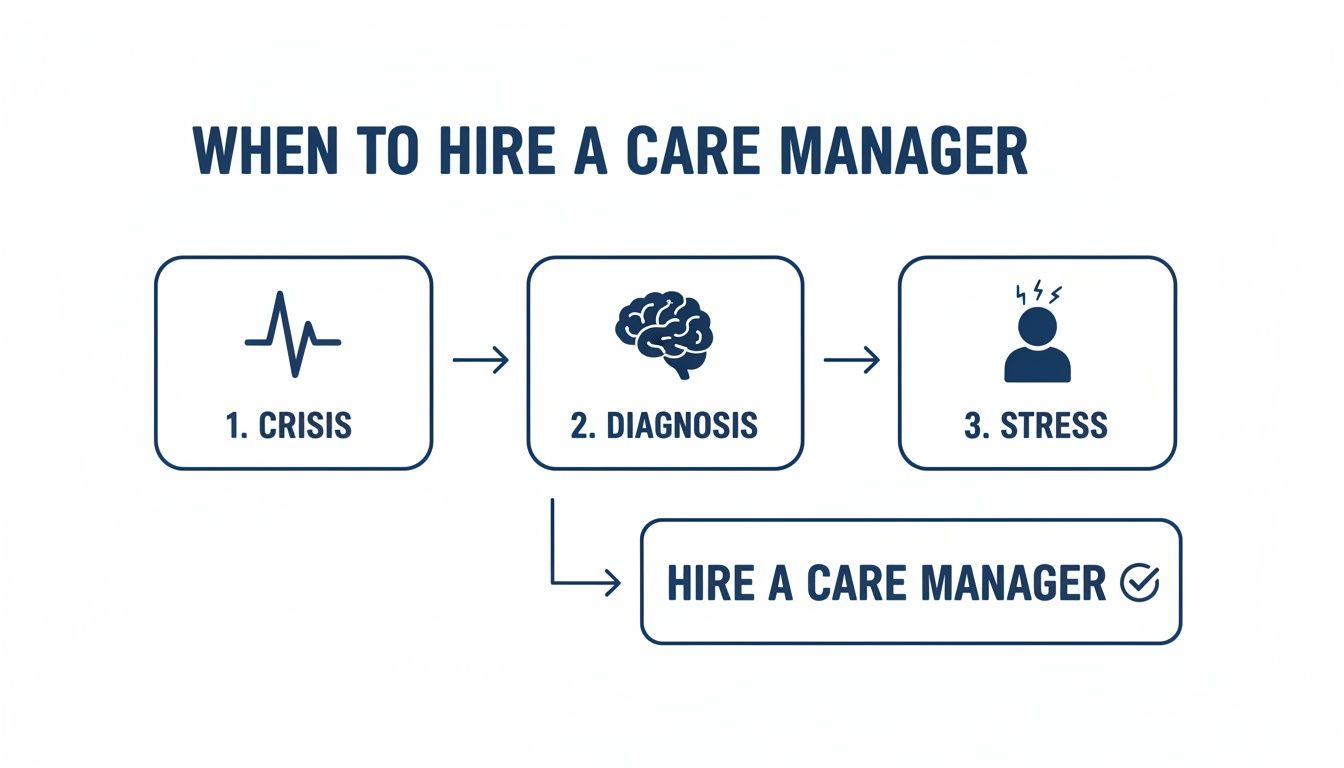
Whether it's a sudden crisis, a new diagnosis, or the slow build-up of family stress, these are the moments when a professional can step in and provide clarity and direction.
To help you sort through the options, we've put together a quick comparison of the most common credentials you'll see.
Comparing Geriatric Care Manager Credentials
It can be confusing to see a jumble of letters after someone's name. This table breaks down what some of the most common professional backgrounds mean, so you can match their expertise to your loved one’s needs.
| Credential (e.g., RN, LSW, CMC) | Primary Area of Expertise | Best Suited For… |
|---|---|---|
| Registered Nurse (RN) | Clinical health, medication management, chronic disease oversight. | Seniors with complex medical needs, multiple prescriptions, or frequent hospitalizations. |
| Licensed Social Worker (LSW) | Navigating social services, family counseling, accessing community resources. | Families needing help with benefit applications, emotional support, and long-term planning. |
| Certified Care Manager (CMC) | A specialized certification in care management, demonstrating broad expertise. | Any situation, as this credential validates a high level of experience and knowledge in the field. |
Ultimately, the best care manager is the one whose skills directly address the challenges your family is facing right now, while also having the experience to anticipate what's coming next.
Got Questions About Geriatric Care? We Have Answers.
When you start looking into support for an aging parent, a lot of questions pop up. It’s completely normal to wonder how geriatric care management actually works day-to-day, what it costs, and how it’s different from other services you’ve heard about. Let’s clear up some of the most common questions families ask.
Manager vs. Home Care Agency
This is a big point of confusion for many families, but the roles are actually very different—and they work best together.
Think of a geriatric care manager as the general contractor for your loved one's care. They’re the strategist who looks at the entire situation, creates the master plan, and then coordinates all the different pieces. They see the whole picture.
A home care agency, in this analogy, is like a trusted subcontractor hired to handle a specific part of that plan. They provide the wonderful, hands-on caregivers who help with daily tasks like bathing, making meals, or just being a friendly companion. The care manager oversees the agency to make sure their work fits into the larger goals and is always top-quality.
Costs and Payment Options
So, how much does this kind of professional oversight cost? The exact numbers can vary depending on where you live and the manager's background, but the structure is pretty standard.
Most geriatric care managers charge a one-time fee upfront for the deep-dive assessment and for creating the initial care plan. After that, they typically bill by the hour for their ongoing coordination and support.
While Medicare usually doesn't foot the bill for geriatric care management, some long-term care insurance policies might. For the most part, it’s a private-pay service. Many families find it's an investment that pays for itself by preventing much costlier crises down the road, like a hospital stay or a premature move to a nursing facility.
While it's an upfront cost, geriatric care management often saves money and stress in the long run. By creating a proactive plan, a manager can help avoid expensive emergency room visits and delay the need for residential care, preserving assets and improving quality of life.
Regulation and Credentials
It’s smart to ask if care managers are licensed. The profession doesn’t have a universal government license like doctors or lawyers, which makes checking a person’s credentials that much more important.
You’ll find that reputable managers are almost always licensed professionals in a related field, like nursing (RN) or social work (LSW). Many also go the extra mile to earn voluntary certifications. Look for the Certified Care Manager (CMC) designation from the National Academy of Certified Care Managers—it’s a strong sign that they have a high level of proven experience and knowledge.
Family Involvement and Decision-Making
A common worry is, "Will we lose control of the decisions?" Absolutely not. In fact, you'll be more in control than ever.
A good care manager is your partner and collaborator. They bring their expertise to the table, present you with well-researched options, and give you their professional recommendations. But the final say always belongs to the senior and their family. Their job is to empower you with the clarity and support you need to make the best possible choices. This can even include helping you navigate complex legal documents, and you can get a head start by learning about medical and financial power of attorney forms.
At NJ Caregiving, we understand that finding the right support is crucial for your family's peace of mind. If you're exploring options for senior care in Mercer County, our team is here to help you understand your choices and provide compassionate, professional in-home assistance. Learn how we can support your loved one by visiting us at https://njcaregiving.com.
