

Of course. Here is the rewritten section, crafted to sound like an experienced human expert while adhering to all your requirements.
Taking care of an older loved one's medications can feel like a full-time job. It’s so much more than just remembering to hand over a pill in the morning. As we age, it’s common to be on multiple prescriptions from different doctors for various chronic conditions. This is what experts call polypharmacy, and it's a minefield of potential problems.
It's not just about the sheer number of pills. The real issue is the heightened risk of bad drug reactions and dangerous interactions. An older adult's body simply processes medicine differently. Metabolism slows down, and kidney or liver function might not be what it once was. This means a dose that was perfectly fine years ago could now be too strong, leading to side effects like dizziness or confusion—symptoms that are all too easily brushed off as just "getting older."
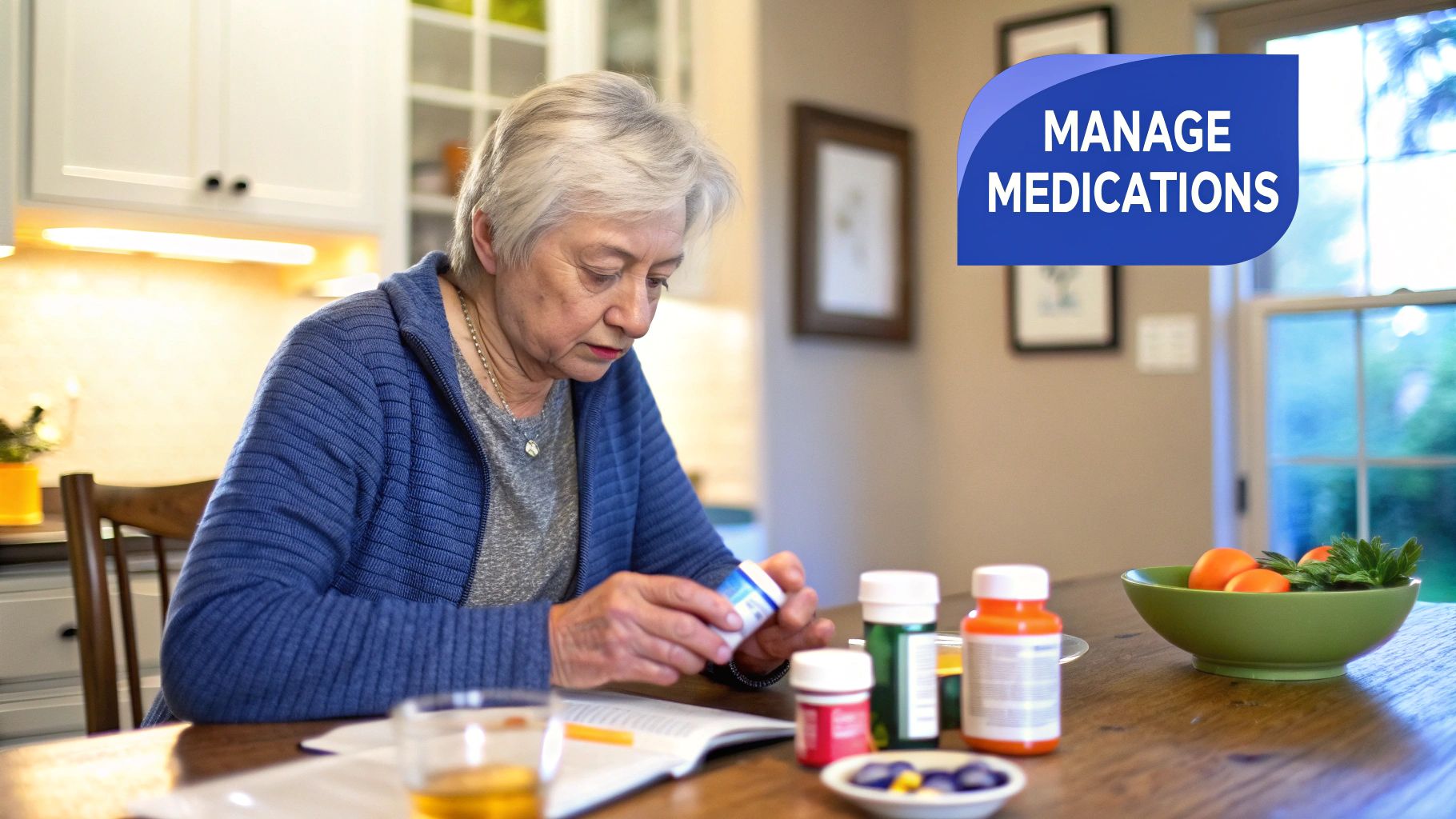
Why Senior Medication Management Matters
Without a solid system in place, mistakes are bound to happen. And these aren't small slip-ups. A moment of forgetfulness could mean a missed dose of essential heart medication. A little confusion might lead to an accidental double dose of a blood thinner. These aren't just worst-case scenarios; they are daily risks that family caregivers face.
The reality is that medication errors are responsible for an estimated 1.3 million emergency room visits every single year. A clear, organized approach to managing your loved one’s medications isn't just about making life easier—it's a critical part of keeping them safe at home.
The numbers tell a powerful story. The global market for geriatric medicines is on track to hit an incredible USD 1,701.91 billion by 2032. This explosive growth is fueled by the rising number of older adults managing chronic diseases, which really drives home why getting medication management right is so important.
The Hurdles We All Face
Managing a complex medication schedule is challenging for everyone involved—the senior, the family, and the caregiver. Understanding these common obstacles is the first step toward building a better system.
Here's a breakdown of the typical challenges we see:
Common Medication Hurdles for Seniors
| Challenge | Impact on Health | How Management Helps |
|---|---|---|
| Forgetfulness | Missed or delayed doses can make treatments less effective and worsen chronic conditions. | A consistent schedule, reminders, and pill organizers create a reliable routine. |
| Vision Problems | Difficulty reading small print on labels leads to taking the wrong medication or incorrect dose. | Pre-sorted pill boxes, large-print labels, and caregiver assistance prevent mix-ups. |
| Complex Regimens | Juggling multiple pills at different times of day with specific food requirements is confusing. | A clear, written schedule simplifies the process and reduces the cognitive load. |
| Accidental Double-Dosing | Taking a dose twice can cause serious side effects or even an overdose, especially with potent drugs. | A check-off chart or smart dispenser tracks when meds have been taken, eliminating guesswork. |
These hurdles are real, but they are absolutely manageable with the right strategy.
The Payoff of a Structured Approach
When you finally get a system working, the benefits are immediate. For your loved one, it means their health improves, they experience fewer side effects, and they feel more in control of their own life. It’s incredibly empowering and helps them stay independent for longer. For a helpful visual guide on caregiving, check out this resource on home care.
For you, the caregiver, it brings a sense of calm that's hard to put a price on. Just knowing that the medications are being handled correctly lifts a huge weight off your shoulders. It turns a major source of anxiety into a manageable, everyday task, which ultimately makes your relationship with your loved one stronger. This guide is all about helping you create that exact system.
Building a Centralized Medication List
The very first thing you need to do is get everything in one place.When you're managing a loved one's medications, your first practical step is to create a single, reliable master list. A prescription note on the counter, a bottle in the bathroom, another on the nightstand—this kind of disorganization is a recipe for confusion and potential danger. A centralized list is the absolute foundation of a safe, effective medication plan.
Start by gathering every single thing they take. This means prescriptions, of course, but also over-the-counter drugs like pain relievers, daily vitamins, and even herbal supplements. It's so easy to forget that supplements can cause serious interactions with prescription medications. You have to include everything, no matter how minor it seems, to get a complete picture and prevent dangerous drug combinations.
What to Track for Each Medication
Once you have all the bottles and packages in front of you, it’s time to document the key details for each one. This goes way beyond just writing down the name. You're creating a comprehensive profile that anyone—another family member, a new caregiver, or an EMT in an emergency—can understand at a glance.
Your master list needs to include:
- Medication Name: Be sure to write down both the brand name (like Tylenol) and the generic name (acetaminophen).
- Dosage: Get specific. Note the exact strength, like 50 mg.
- Frequency: Detail exactly when and how often it’s taken. For example, "one tablet twice daily with food."
- Purpose: Briefly explain what the medication is for, such as "for high blood pressure."
- Prescribing Doctor: List the physician who prescribed it and their office phone number.
A well-documented list is so much more than an organizational tool; it's a critical safety document. I saw this firsthand when a client of ours was unexpectedly hospitalized. Their detailed medication list allowed the ER doctor to quickly spot a potential interaction with a newly prescribed antibiotic, preventing what could have been a very serious complication.
Choosing the Right Storage Method
How you keep this list is just as important as what's on it. The main goals here are accessibility and accuracy. For many families, a simple, dedicated notebook kept in a central spot, like a kitchen drawer, works perfectly. This low-tech method is dependable and easy for everyone in the home to find and update.
If you and your family are more tech-savvy, a secure app or a document in a shared cloud folder (like Google Docs) can be incredibly effective. The big advantage of a digital list is that it can be updated and shared instantly with other family members or healthcare providers, no matter where they are.
This visual helps break down the core process of setting up a solid medication management system.
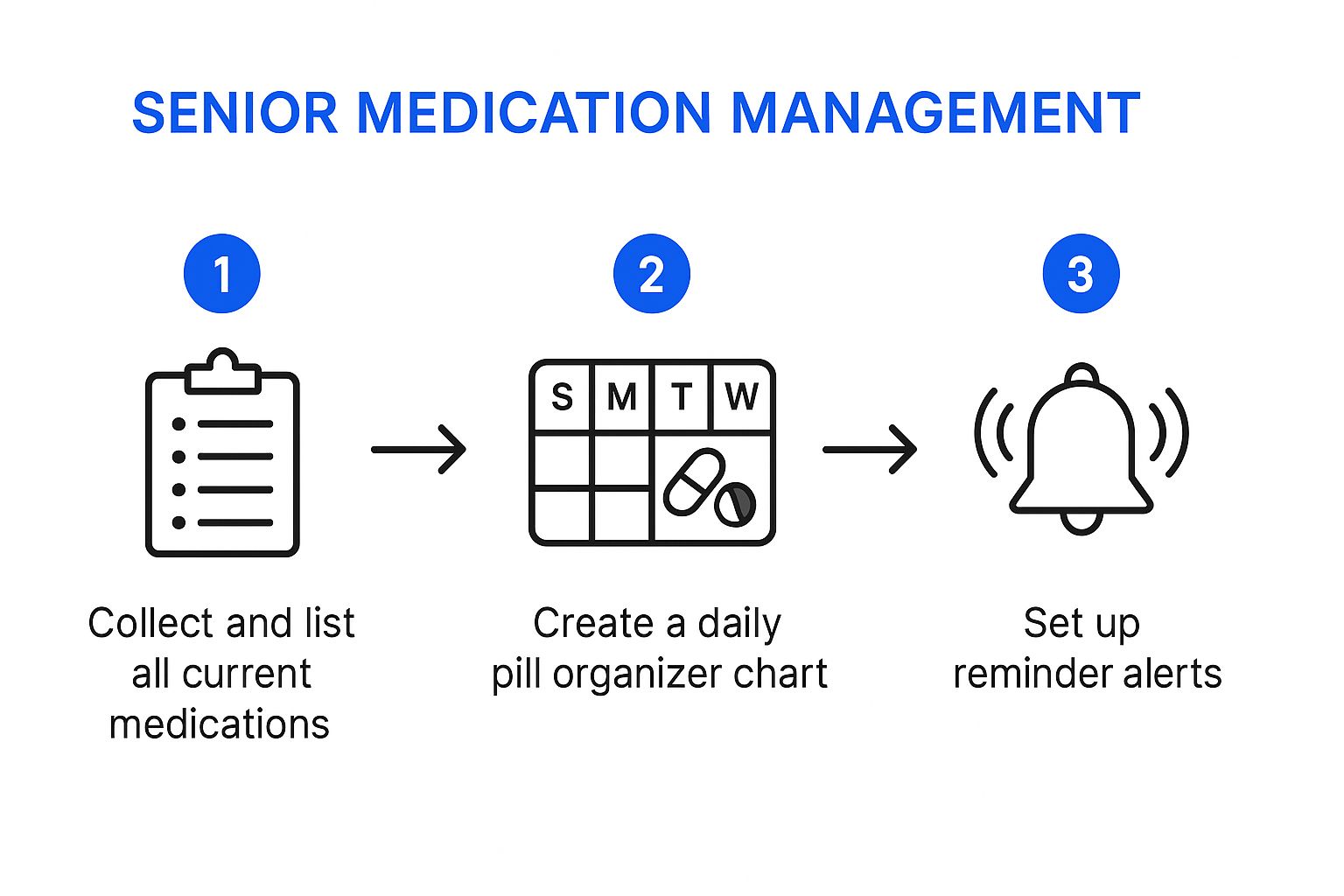
As you can see, creating that comprehensive list is the crucial first step. It leads directly to organizing the pills themselves and setting up reminders. When you start with a solid foundation like a master medication list, you make every other part of managing your loved one's care that much simpler and safer.
Organizing Pills and Setting a Routine
Now that you have a comprehensive medication list, you can get down to the hands-on task of organizing the actual pills and building a solid routine. This is where the rubber meets the road. A clear, organized system is your best defense against the most common slip-ups, like a missed dose or taking the wrong pill at the wrong time—major hurdles in senior care.
The goal here is to create a system that’s simple, reliable, and fits the person you’re caring for.
For many families, a basic weekly pill organizer is the perfect place to start. You’ve seen them—the inexpensive plastic containers from the pharmacy with little compartments for each day, often split into morning, noon, evening, and bedtime. Taking a few minutes once a week to fill the organizer takes the daily guesswork out of the equation. It's a lifesaver.
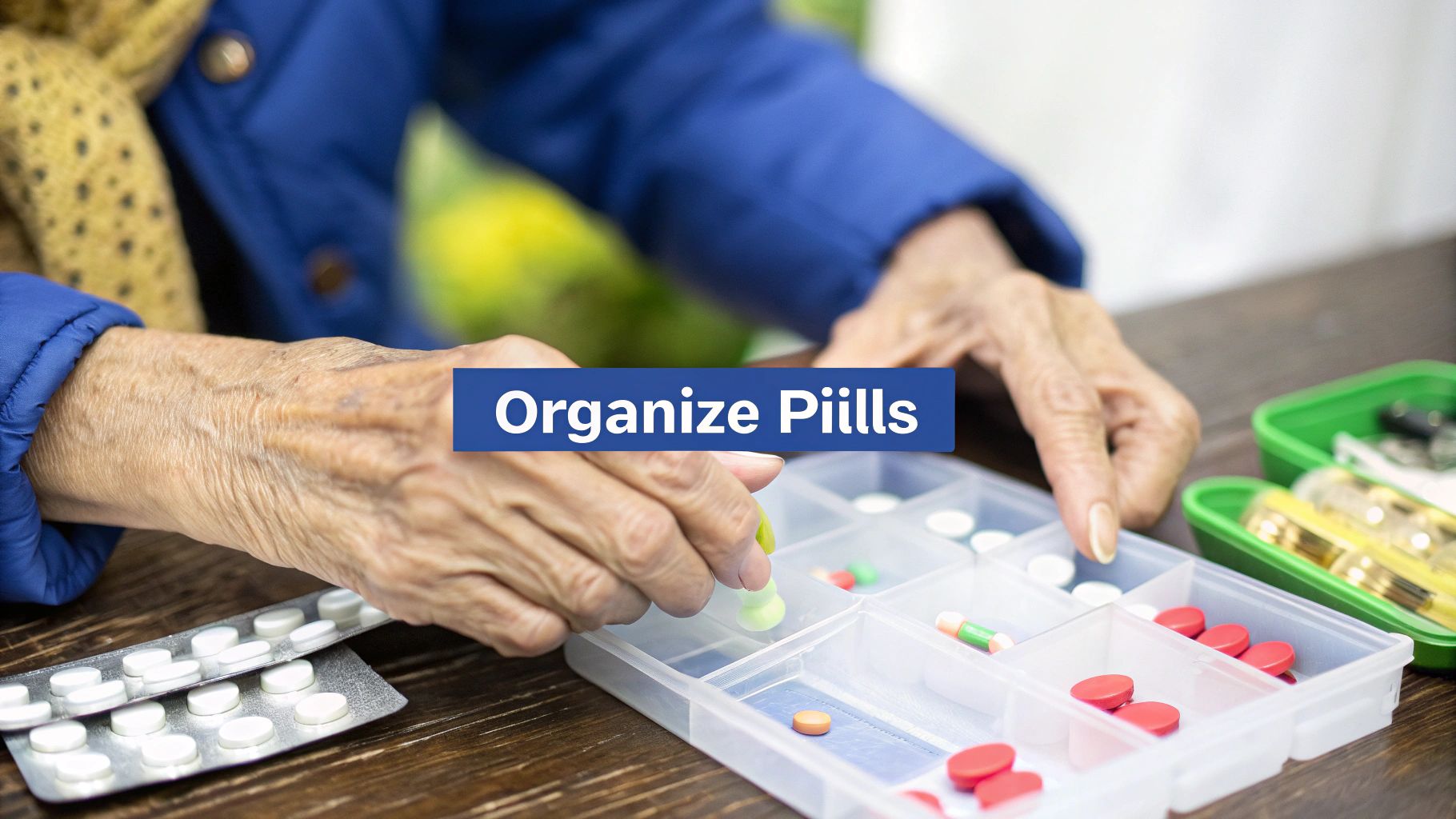
This simple tool is especially helpful for seniors who are still sharp but might struggle with arthritis or dexterity issues, since they won't have to fuss with multiple child-proof caps every day.
Finding the Right Tools for the Job
Of course, that standard pill box isn't the only game in town. The market for medication management tools has exploded, and it’s a direct reflection of our aging population. In fact, the market is projected to swell from USD 4.35 billion in 2025 to USD 8.85 billion by 2029.
This growth makes sense when you consider that by 2040, adults aged 65 and over will make up 22% of the U.S. population. If you're interested in the tech side of things, you can explore the future of medication management technology on ResearchAndMarkets.com.
Here are a few other tools I’ve seen work wonders for families:
- Blister Packs from the Pharmacy: This is a fantastic service. Many pharmacies will package medications in pre-sorted blister packs for you. Each little bubble is clearly labeled with the date and time a dose should be taken, which is incredibly helpful for anyone on a complex regimen.
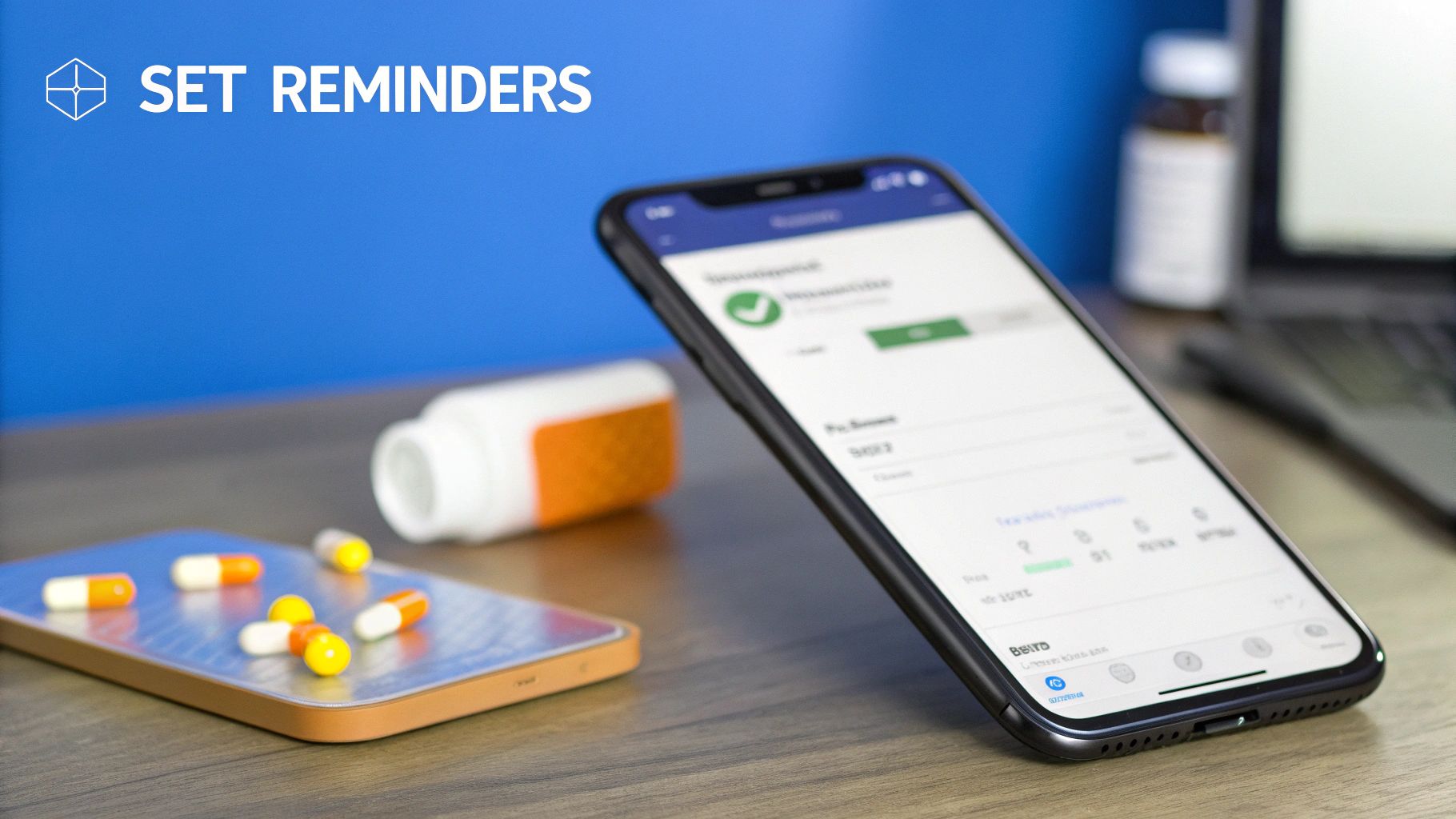
- Pill Reminder Apps: If your loved one is comfortable with a smartphone, a simple app can be a great help. They send push notifications when it’s time for a dose and can even track when pills were taken and send reminders for refills.
- Automated Pill Dispensers: These are a true game-changer, especially for anyone with memory challenges. You program the device, and it dispenses the correct pills at the correct time, often with a loud alarm. Many even send a text to a caregiver if a dose is missed.
Creating a Consistent Medication Routine
Even the best tools are only half the battle; they need to be paired with a strong routine. The real secret is to anchor medication times to existing daily habits. It's a simple psychological trick called "habit stacking," and it makes remembering so much easier.
For example, if a pill needs to be taken with breakfast, put the pill organizer right next to the coffee maker or their favorite cereal box. It becomes part of the breakfast ritual itself.
A situation I see all the time involves medications that have to be taken first thing in the morning on an empty stomach. Those are so easy to forget. My go-to tip? Put that specific pill bottle on their nightstand with a fresh glass of water before they go to bed. It becomes the very first thing they see and do when they wake up.
Consistency is your most powerful ally. Sticking to the exact same times every single day not only builds a predictable rhythm for your loved one, but it also helps maintain stable levels of the medication in their system, which can make the treatment more effective.
A large-print schedule taped to the fridge can also serve as a constant, gentle reminder for the senior and anyone else involved in their care. By combining the right tools with a thoughtful routine, you can transform medication management from a daily stressor into a calm, manageable part of life.
Using Technology for Better Medication Safety
Let’s be honest, managing a loved one’s medications can be a huge source of stress. The good news is that technology has given us some incredible tools to make it safer and a whole lot easier, and you don’t need to be a tech wizard to use them.
These aren't complicated gadgets. They’re practical solutions built for real-world problems. Think about a senior who struggles with memory. A smart pill dispenser can be a game-changer, automatically popping out the right pills at the right time. If a dose is missed, it can send an alert straight to your phone. That simple feature provides an enormous safety net and incredible peace of mind.
Smart Solutions for Daily Challenges
Beyond pill dispensers, a whole range of helpful tech is at our fingertips. Simple medication reminder apps on a smartphone can send a gentle nudge when it’s time for a dose. Many of these apps also let you track when pills were taken and will even alert you when a prescription is running low, so you can avoid those last-minute panicked trips to the pharmacy.
Telehealth has also become a lifeline for many families. It allows you to have virtual medication reviews with a doctor or pharmacist right from the comfort of home. This makes it so much easier to talk about side effects, ask questions, and make sure the current regimen is still the right one, all without the hassle and stress of travel.
At the end of the day, the real win here is the peace of mind. Knowing there’s a system in place to catch common errors drastically cuts down on caregiver stress and helps seniors hold onto their independence with confidence.
These advancements are truly changing how we approach medication management for older adults. New digital tools are helping us tackle persistent issues like complex schedules and communication gaps. From smart pill dispensers to telehealth platforms, we're now able to monitor adherence and even catch potential side effects in real time. For a deeper look into this evolving field, you can find more great information about the future of tech in elder care on Humancareny.com.
Overcoming Adoption Hurdles
Of course, bringing new technology into a senior’s life isn’t always a smooth process. Resistance is common, but the key is to start small and focus on the immediate benefit. Don't frame it as a complex gadget; introduce it as a simple tool to help them stay independent.
- Start with just one thing. Don't overwhelm them with five new apps at once. A basic pill reminder alarm on their phone might be the perfect, unintimidating first step.
- Explain the "why" in simple terms. Connect the tool to a tangible benefit. For example, "This little box means you won't have to worry about forgetting your heart medication anymore."
- Offer hands-on help. Sit down and set it up together. Walk through how it works several times until they feel comfortable. Patience is everything. If you're looking for more caregiving resources, this helpful image from our library might offer some useful visual aids.
When we focus on usability and clear benefits, technology stops being an obstacle and starts being a powerful partner in keeping our loved ones safe and healthy.
Partnering With Doctors and Pharmacists
When it comes to managing your loved one's medications, you are the most important person on the healthcare team. It's your job to connect the dots between the doctor's office, the pharmacy, and what’s actually happening at home. Building a strong, open relationship with healthcare professionals isn't just a nice-to-have—it’s absolutely essential for making sure every prescription is safe and effective.
Think of yourself as a partner to the doctor and pharmacist. They have the clinical expertise, but you have the real-world context. You see firsthand how a new medication is affecting your loved one. Proactive communication is the only way to catch potential issues early and make smart adjustments. Don't wait for a problem to pop up.
Make Every Appointment Count
Medical appointments often feel rushed, and it's so easy to walk out realizing you forgot to ask your most important questions. The key to a productive visit is simple: preparation. Before you go, spend a few minutes jotting down your questions and any observations you've made since the last visit. This small step can turn a stressful meeting into a focused, incredibly valuable conversation.
And always, always bring that master medication list we talked about earlier. Every single time. This ensures everyone is working from the same playbook.
One of the most powerful things I recommend is the “brown bag review.” At least once a year, you literally put every single medication—prescriptions, over-the-counter drugs, vitamins, and supplements—into a bag and take it to the pharmacist or doctor. This hands-on review is one of the most effective ways to spot duplicate therapies, outdated prescriptions, and dangerous interactions.
The Right Questions to Ask
Knowing what to ask can make all the difference, especially when a new medication is prescribed or a dose is changed. When you’re prepared, you can advocate with confidence.
To get you started, I’ve put together a quick checklist of questions to bring to your next appointment. Having these handy helps you get the clarity needed for safe medication use at home.
Questions for Your Doctor or Pharmacist
Bring this checklist to every appointment to ensure you get the clarity needed for safe medication use.
| Category | Essential Question |
|---|---|
| New Prescriptions | What is this medication for, and how will we know if it’s working? |
| Dosage & Timing | What should we do if a dose is accidentally missed? |
| Side Effects | What are the most common side effects, and which ones are serious enough to call you immediately? |
| Interactions | Are there any foods, drinks, or over-the-counter products we need to avoid while taking this? |
| Long-Term Use | How long is this medication expected to be needed? Do we need to schedule a follow-up to re-evaluate it? |
Asking these questions isn't about challenging their expertise. It’s about building a partnership and a shared understanding to keep your loved one safe.
Streamline Your Pharmacy Routine
Here’s a simple strategy with a huge impact: use a single pharmacy. When one pharmacy has a complete record of all prescriptions, its system can automatically flag potential drug interactions or duplicate prescriptions—things that can easily be missed if you’re filling scripts at multiple locations. For more ideas on building a strong support network, this overview of caregiving services has some great information.
Make an effort to get to know your pharmacist by name. They are one of the most accessible healthcare experts you have and a vital member of your care team. They can clarify confusing instructions, offer practical advice on managing side effects, and act as a crucial second set of eyes on the entire medication plan. This relationship is a cornerstone of success.
Answering Your Top Medication Questions
Even with a perfect system, you're going to run into questions and tricky situations. Let’s be real—managing a loved one's medications isn't just about pill organizers and schedules. It’s about knowing what to do when things don't go according to plan.
Think of this section as your quick guide for those "what do I do now?" moments. Having a solid plan for these common hurdles will save you a lot of stress and keep your loved one safe.
What if a Dose Is Forgotten?
It's a moment that can send any caregiver into a panic: you realize a dose was missed. The first and most important rule is don't panic and never double up. Trying to "catch up" by giving two doses at once is incredibly dangerous, especially with sensitive medications like blood thinners or diabetes drugs. A double dose can cause serious, even life-threatening, side effects.
What you should do really depends on the specific medication and how long it's been since the missed dose.
- Check the Paperwork: The patient information leaflet that comes with the prescription often has specific instructions for what to do if you miss a dose.
- Call the Pharmacist: If the instructions aren't clear, your pharmacist is your best friend. They can give you a quick, reliable answer on whether to take the dose late or just wait for the next scheduled time.
One of my go-to tips for families is to write the pharmacist's advice right on the medication schedule. For example: "For Metformin, if a dose is missed by more than 4 hours, skip it and wait for the next one." This small step turns a future moment of panic into a simple, follow-the-plan action.
How to Handle Side Effects
When a new medication starts or a dosage changes, side effects can crop up. A huge part of good medication management is knowing the difference between a minor annoyance and a serious problem. I always recommend keeping a simple log of any new symptoms—like dizziness, nausea, or a rash—noting when they started and how severe they are.
This log becomes an invaluable tool when you talk to the doctor. It gives them concrete information, helping them figure out if the symptom is a side effect, something unrelated, or a sign that the medication needs to be adjusted. As people age, they often become more sensitive to medications, so even a low dose can sometimes cause a reaction you wouldn't expect.
Can We Crush Pills or Open Capsules?
This is a critical question, especially for seniors who struggle with swallowing. The answer is a very firm "it depends." Many pills are designed with a special coating for slow, extended release. If you crush them, you destroy that coating. This can cause the full dose to hit the system all at once, leading to a dangerous overdose.
Before you ever alter a pill, you absolutely must get the green light from the doctor or pharmacist. They can tell you if it's safe. Better yet, they might be able to prescribe a liquid, dissolvable, or chewable version of the same medication, which is always a much safer option. Never assume it's okay to crush a pill without checking first.
At NJ Caregiving, we know that managing medications is just one piece of a much larger puzzle. Our skilled caregivers can provide the support needed to ensure your loved one's health and safety at home. To learn more about our personalized in-home care services in Princeton and Mercer County, visit us at https://njcaregiving.com.
