
Figuring out the right care for a loved one is one of the most personal decisions a family can make. At its core, senior care at home is about bringing professional support into the place an older adult knows and loves best—their own home. This approach puts their dignity, independence, and quality of life front and center.
Why Families Are Choosing In-Home Senior Care
The conversation around how to best care for an aging family member can feel heavy and overwhelming. More and more, families are realizing that the best solution isn't a facility, but right in the place where a lifetime of memories was made. "Aging in place" has gone from a nice idea to a powerful, practical choice for helping seniors thrive.
Picture your mom or dad surrounded by family photos, sleeping in their own bed, and making coffee in their own kitchen—all while getting the support they need. That’s the real heart of in-home senior care. It’s a complete shift away from the one-size-fits-all model of many residential facilities and toward something much more personal.
The Power of Familiarity and Comfort
For most seniors, home isn’t just four walls; it’s a sanctuary of comfort, routine, and identity. Being uprooted can be deeply stressful and disorienting. In-home care respects that connection, understanding that emotional well-being is just as critical as physical health. That stability is a huge relief for them and gives the entire family incredible peace of mind.
This isn't just a feeling; it’s a major trend. We’re seeing a huge demographic shift, with the number of Americans aged 65 and older expected to hit 88.8 million by 2060. A huge majority of them—about 75% of adults aged 50 and older—say they want to stay right where they are as they get older. You can learn more about the trends shaping home healthcare on globalonehomecare.com.
A Personalized Approach to Well-Being
Unlike the rigid schedules of a nursing home, in-home care is built completely around one person’s needs, habits, and preferences. That one-on-one attention means care isn’t just something that happens to them; it's woven thoughtfully into their daily life.
Senior care at home is about more than just assistance; it's a partnership that empowers older adults to live life on their own terms, preserving their independence and connection to their community.
This customized approach often leads to better health outcomes and a more engaged, fulfilling life. It reframes the idea of "needing help" from a loss of independence to a tool for keeping it. When families choose this path, they aren't just arranging for care—they're investing in their loved one's happiness.
Decoding the Different Types of Home Care
The term “senior care at home” can feel like a huge umbrella, covering everything from a friendly weekly visit to around-the-clock medical attention. Getting a handle on the specific types of support available is the very first step toward finding the perfect fit for your family.
Think of it not as a single service, but as a flexible toolkit designed to build a life of safety, comfort, and independence right where it matters most: at home. When you start exploring your options, it's easy to get lost in the jargon. So, let’s break it all down.
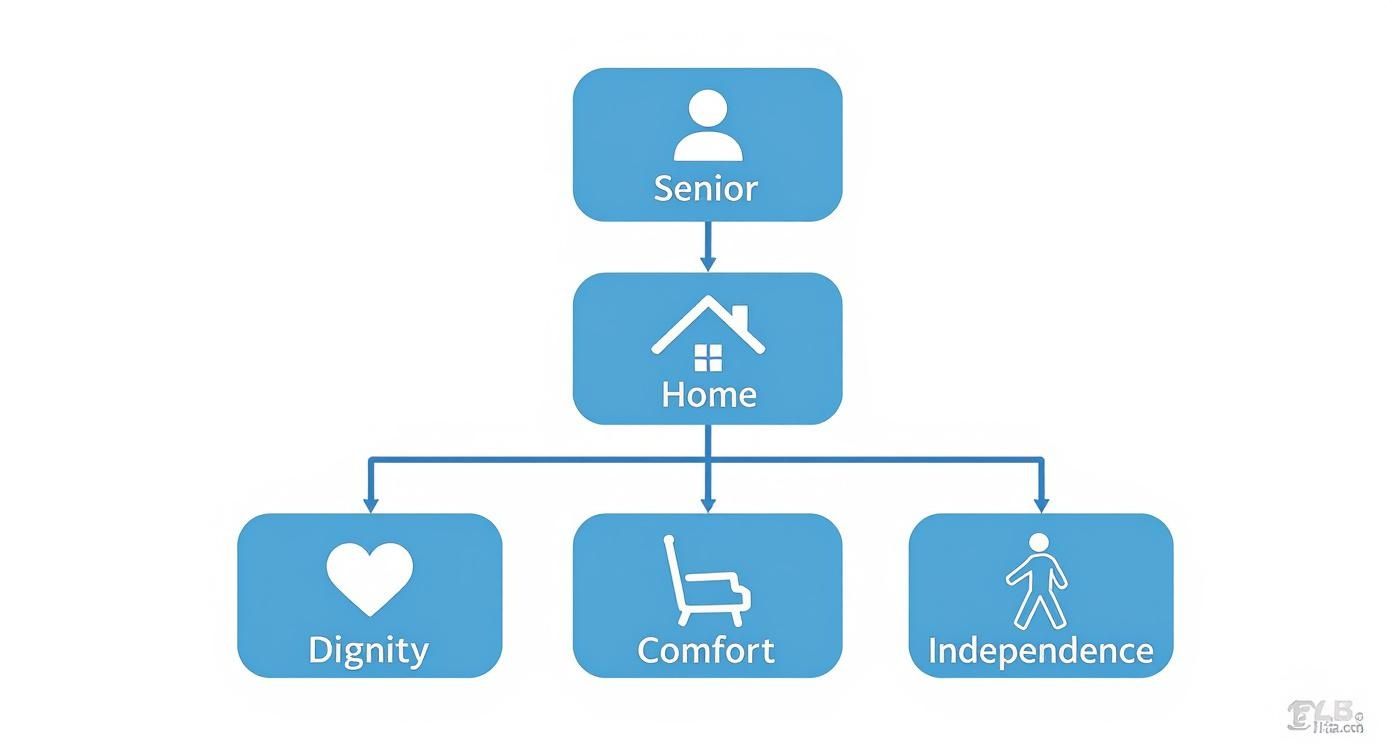
As you can see, the goal of bringing care into the home is always to support a person's entire well-being, not just their physical needs. It's about preserving dignity, comfort, and independence.
To help you figure out what you might need, we've put together a quick comparison table that breaks down the three main categories of in-home care.
Comparing Home Care Service Levels
| Service Type | Typical Tasks | Best For Seniors Who… |
|---|---|---|
| Companion Care | Conversation, errands, light housekeeping, meal prep, transportation | Are mostly independent but experience loneliness or need help with household management. |
| Personal Care | All companion tasks plus bathing, dressing, grooming, mobility assistance | Need hands-on support with the fundamental tasks of daily living (ADLs) to stay safe. |
| Skilled Nursing Care | Wound care, injections, IV therapy, medication management, vital signs monitoring | Have complex medical conditions requiring a licensed nurse under a doctor's orders. |
This table gives you a snapshot, but let's dive into what each of these really looks like in day-to-day life.
Companion Care: The Social and Emotional Support System
At the foundational level, you have companion care. This is a non-medical service focused entirely on improving a senior’s quality of life through social interaction and help with everyday logistics. Loneliness is a significant health risk for older adults, and a great companion can make all the difference.
Imagine a caregiver who visits a few times a week to share a cup of tea, play a game of cards, or provide a ride to a doctor's appointment. They're there to offer friendship and make sure your loved one stays connected to their community.
Key tasks often include:
- Social engagement: Providing conversation, reading aloud, and participating in hobbies.
- Household help: Assisting with light housekeeping, meal preparation, and grocery shopping.
- Errands and transportation: Driving to appointments, the pharmacy, or social outings.
This type of care is perfect for seniors who are still pretty independent but could use a little help to combat isolation and keep their household running smoothly.
Personal Care: Hands-On Assistance with Daily Living
The next level of support is personal care, which includes everything from companion care plus hands-on assistance with Activities of Daily Living (ADLs). These are the fundamental, essential tasks for self-care. This service is for seniors who need direct physical help to get through their day safely.
A personal care aide might help a loved one get out of bed, bathe, get dressed, and move around the house. Their role is to provide dignified support with the intimate tasks of daily life. This is often the point where families realize they need professional senior care at home to ensure safety and hygiene.
For instance, an aide can help a senior with mobility issues use the restroom or transfer from a wheelchair to a bed. This kind of direct support drastically reduces the risk of falls—one of the biggest threats to an older adult's independence.
Skilled Nursing Care: Medical Support at Home
Finally, skilled nursing care is the highest level of in-home support, and it’s provided by a licensed nurse (an RN or LPN). This is medical care that can only be performed by a trained professional working under a doctor's orders. While people sometimes confuse it with other services, it is distinctly clinical. If you want to dive deeper into the specifics, you can learn more about the differences between home health and home care in our detailed guide.
This type of care involves complex medical tasks that go far beyond personal assistance. A skilled nurse can manage serious health conditions, helping your loved one recover from surgery, illness, or injury in the comfort of their own home.
Examples of skilled nursing services:
- Wound care and dressing changes
- Administering injections or IV therapy
- Monitoring vital signs and complex health conditions
- Catheter and ostomy care
- Educating the patient and family on managing a health condition
This service is absolutely crucial for individuals with significant medical needs who would much rather avoid a hospital or rehabilitation facility. It brings the clinical expertise of a healthcare setting right into the living room.
The True Value of Aging in Place
Staying home is about so much more than just familiar surroundings; it’s a powerful way to preserve a person’s quality of life. The decision to bring senior care at home into the picture unlocks huge, often overlooked, benefits that touch every part of a person's well-being, from their mental state to their physical health. Think of it as an investment in a loved one’s happiness and freedom.
There’s a massive psychological advantage to staying in a cherished, familiar space. A home isn't just a building; it's a living scrapbook of memories, daily routines, and personal identity. When seniors receive care there, they hold onto a profound sense of control and self-worth, which can be a game-changer in pushing back against the anxiety and depression that often come with major life transitions.
This feeling of stability isn't just a nice-to-have—it’s a health benefit. The numbers tell the story. In 2020, about 3.4 million Medicare beneficiaries chose home healthcare, and patient satisfaction rates soared to an incredible 89.2%.
A Healthier and More Personalized Environment
Beyond the emotional comfort, aging in place brings real, tangible physical advantages. Communal living facilities, just by their very nature, can raise the risk of exposure to common bugs like the flu or stomach illnesses. A private home is a controlled environment, which drastically cuts down this risk and helps protect an already vulnerable immune system.
On top of that, the care itself is naturally more personalized. With a one-on-one caregiver-to-client ratio, all the focus is on one person's specific needs. This means a caregiver can respond instantly to any changes in health, carefully manage medications, and adjust the care plan on the fly.
Choosing in-home care is an act of empowerment. It honors a person's life story by allowing them to continue writing it in the setting they love most, surrounded by the comfort and dignity they deserve.
This kind of dedicated attention builds a strong, trusting bond between the caregiver and the senior. That relationship leads to better communication and, in the end, better health outcomes. To dig deeper into these perks, you can read our guide on the benefits of aging in place.
Thriving Through Independence and Connection
Holding onto independence is a cornerstone of a happy and fulfilling later life. Senior care at home is designed to support—not replace—a person’s autonomy. A caregiver is there to help with tasks that have gotten tougher, all while encouraging the senior to keep doing whatever they can for themselves.
And this support doesn't stop at the front door.
- Maintaining social ties: Caregivers can provide a ride to visit friends, go to community events, or participate in beloved hobbies.
- Encouraging personal interests: They can help with gardening, cook favorite family recipes, or get a video call set up with relatives.
- Promoting physical activity: A caregiver can be a companion for safe, gentle walks, helping a senior stay active and engaged.
For seniors to really thrive while aging in place, keeping an eye on their health is key. Many convenient health tests at home can offer crucial insights without a trip to the doctor's office. This proactive approach, combined with truly personal support, creates an environment where seniors don't just live—they flourish.
Navigating the Costs of Senior Care at Home
Figuring out the financial side of senior care at home can feel like trying to solve a complicated puzzle. But once you have the right information, all the pieces start to fit together.
There’s no one-size-fits-all price tag. The final cost is shaped by a few key things, creating a unique financial picture for every family. The biggest factors are the level of care your loved one needs and where you live. For instance, simple companion care will naturally cost less than specialized nursing services from a licensed professional. In the same way, you’ll find that hourly rates in a big city are usually higher than in a small town.
Thinking about the cost is a critical first step. It helps you build a sustainable plan that gives your loved one consistent, high-quality support without creating financial stress.
Breaking Down Home Care Pricing Models
When you start looking at your options, you'll mainly see two different ways that agencies price their services. Getting a handle on how they work is the first step to creating a realistic budget.
- Hourly Rates: This is the most common approach. You pay a set hourly fee for a caregiver's time, which gives you incredible flexibility. You can schedule care for just a few hours a week or for longer daily shifts, whatever your family needs.
- Live-In Care: For seniors who need round-the-clock supervision, live-in care can be a more budget-friendly choice than paying hourly for 24 hours. In this setup, a caregiver lives in the home and has their own time for breaks and sleep, providing constant peace of mind.
It’s always a good idea to ask agencies for a clear breakdown of their rates and exactly what’s included. Some may have minimum hour requirements or charge different rates for nights and weekends.
Exploring Ways to Pay for Care
One of the biggest reliefs for families is learning that their own savings aren't the only way to fund senior care at home. Several programs and policies exist specifically to help manage these expenses, making quality care much more attainable.
These funding sources can seem complex at first, but they become much clearer once you understand what each one is designed for. Let's walk through the most common options available.
Medicare and Medicaid Explained
Medicare and Medicaid are two government programs that are often mixed up, but they play very different roles when it comes to paying for care at home.
Medicare is a federal health insurance program mostly for people age 65 or older. It usually covers short-term, medically necessary home health care—like skilled nursing or physical therapy—following a hospital stay. It’s not designed to cover long-term personal or companion care.
Medicaid, on the other hand, is a joint federal and state program that helps people with low income. Through specific state-run waiver programs, it often covers long-term personal care services at home to help seniors with daily activities. Eligibility and coverage can vary quite a bit from state to state. For a detailed walkthrough, our guide offers more information on how to pay for home care in New Jersey.
Other Important Financial Resources
Beyond government programs, many families turn to private insurance and other benefits to build a solid financial plan. These can fill the gaps that Medicare and Medicaid might leave, ensuring your loved one has all the support they need.
- Long-Term Care Insurance: This is a private insurance policy created specifically to cover the costs of long-term care, including personal care at home. Policies can differ a lot, so it's vital to review the details of an existing plan. It's also important to understand the real cost of long-term care insurance to budget effectively.
- Veterans' Benefits: Veterans and their surviving spouses may be able to get help through the Department of Veterans Affairs (VA). Programs like Aid and Attendance can provide a monthly pension that helps pay for in-home care services.
By exploring all of these avenues, you can build a financial strategy that works. This proactive approach ensures your loved one can get the best care possible in the comfort of their own home, giving both them and your family lasting peace of mind.
How to Find a Trusted Home Care Provider
Choosing a provider for senior care at home is one of the most important decisions you'll ever make for your family. It's a choice that hinges on trust, compassion, and absolute reliability. Finding the right person or agency to care for a loved one can feel like an overwhelming task, but breaking it down into a clear process will help you move forward with confidence.
Right out of the gate, you'll face a big decision: should you hire through a professional home care agency or find an independent caregiver yourself? Each option has its own set of pros and cons, and the best path really comes down to your family’s unique needs and comfort level.
Agency vs. Independent Caregivers
Going through a reputable agency provides a solid, secure framework. Agencies are almost always licensed, bonded, and insured, which gives you a critical layer of protection. They take care of all the administrative headaches—things like payroll, taxes, background checks, and scheduling—which frees you up to simply focus on your loved one.
On the other hand, hiring an independent caregiver can sometimes be more affordable. It might also offer more flexibility when it comes to negotiating rates and schedules. But this route puts all the responsibilities of being an employer squarely on your shoulders. You’ll be in charge of vetting candidates, running background checks, managing payroll, and scrambling to find backup care if the caregiver is sick.
Let's look at the two approaches side-by-side:
| Feature | Home Care Agency | Independent Caregiver |
|---|---|---|
| Screening | Handles comprehensive background checks, credential verification, and reference checks. | It's your job to conduct all background and reference checks. |
| Liability | The agency is bonded and insured, protecting you from theft or injury claims. | You may need to buy a separate liability insurance policy. |
| Backup Care | Provides a replacement caregiver if the primary one is unavailable. | You're responsible for finding and arranging substitute care on short notice. |
| Management | Manages payroll, taxes, scheduling, and performance oversight. | You handle all employer duties, including legal and financial tasks. |
| Cost | Typically higher hourly rates to cover administrative overhead. | Often lower hourly rates, but you take on the added employer responsibilities. |
Your Vetting Checklist for a Home Care Agency
If you decide an agency is the best fit, your next move is to thoroughly vet your options. A good agency will be transparent, professional, and happy to answer every single one of your questions. Use this checklist to guide your search and make sure you’re partnering with a provider you can truly trust.
- Licensing and Certification: First things first, confirm the agency is licensed by the state and meets all its regulatory requirements.
- Insurance and Bonding: Ask to see proof that the agency is fully insured and bonded. This protects your family and your home from liability.
- Caregiver Screening: Dig into their screening process. Do they run national criminal background checks? What about driving records and credential verification?
- Training Protocols: What kind of training do their caregivers receive? Top-tier agencies invest in ongoing education, especially for conditions like dementia or Parkinson's.
- Care Plan Development: How do they build a personalized care plan? It should always start with a detailed, in-person assessment of your loved one's needs, preferences, and home environment.
Key Questions to Ask During the Interview
Once you have a shortlist of agencies, it's time for interviews. This is your chance to get a real feel for how they operate day-to-day and see if their values align with your family's.
Don't be shy about asking detailed, specific questions. A trustworthy provider will welcome your diligence and give you clear, comprehensive answers that set your mind at ease.
Here are a few essential questions to have ready:
- How do you match a specific caregiver to my loved one's personality and needs?
- What is your protocol for handling emergencies or unexpected medical issues?
- Can we meet and interview a few potential caregivers before service begins?
- How do you supervise your caregivers and ensure the quality of care stays high over time?
- What happens if our family isn't happy with the caregiver you've assigned?
Finding the right support is a journey, not just a transaction. By taking a thoughtful and methodical approach, you can find a trusted provider who will deliver compassionate, professional senior care at home, ensuring your loved one can thrive safely and happily—right where they belong.
What Does the Future of Home Care Look Like?
If you're considering senior care at home, you’re not just making a smart choice for your family—you're part of a massive, positive shift in how we approach aging and healthcare. This isn't a fleeting trend; it’s truly the future. We now recognize that aging in place is a modern, dignified, and incredibly effective way to support older adults.
This movement is picking up serious steam. The global home healthcare market was valued at around USD 416.4 billion in 2024, and it's projected to explode to nearly USD 747.7 billion by 2030. That kind of rapid growth tells a clear story: more families are choosing the comfort and familiarity of home over a clinical setting. You can dive deeper into this market expansion on grandviewresearch.com.
The Rise of Technology in Home Care
Technology is playing a huge role in making home-based care more sophisticated and accessible than ever before. Things like smart home devices, telehealth appointments, and remote monitoring tools are quickly becoming standard, creating a safety net that helps seniors live independently with more confidence.
These advancements aren’t about replacing the human touch; they’re about enhancing it. Think about it:
- Telehealth visits mean a quick check-in with a doctor is possible without the hassle and stress of travel.
- Automated medication dispensers can manage pills and send alerts to family members if a dose is missed.
- Wearable sensors can detect a fall and instantly notify emergency services.
This blend of high-tech tools and compassionate, hands-on care adds an extra layer of security and gives families tremendous peace of mind. It frees up caregivers to focus less on routine monitoring and more on what really matters—meaningful, personal connection.
A Future Centered on Personalization
Looking ahead, the future of senior care is all about the individual. Gone are the days of one-size-fits-all solutions. Families are now seeking—and demanding—care plans that truly honor a person’s unique history, personality, and preferences. This client-centered mindset is the very foundation of quality senior care at home.
The goal is no longer just about meeting basic physical needs. It's about enriching a person's life and helping them continue their story in the one place they feel they truly belong—home.
By understanding the services available, getting a handle on the costs, and finding a provider you trust, you have the power to make this a reality for your loved one. With a thoughtful plan, you can navigate this journey successfully, ensuring they receive exceptional, personalized support right where they want to be. You're not just arranging for care; you're championing their independence and dignity for years to come.
Common Questions About Senior Home Care
Deciding on senior care at home is a big step, and it naturally comes with a lot of questions. As you start to explore what this journey looks like for your family, it's completely normal to feel a bit uncertain. To give you some clarity, we've put together answers to a few of the most common questions we hear.
What Are the First Signs a Parent Needs Help?
Figuring out when it's time for help is often the hardest part. It's almost never one big event, but more like a series of small, gradual changes that start to add up.
Keep an eye out for shifts in their day-to-day life and home environment. You might notice the house isn't as tidy as it used to be, there's expired food in the refrigerator, or maybe they're overlooking personal hygiene. Other subtle clues could be unexplained bruises that hint at falls, trouble managing their medications, or forgetting about appointments.
Home Care vs. Home Health Care: What Is the Difference?
This is a really common point of confusion, but getting the distinction right is key. The easiest way to think about it is that home care is non-medical help with daily life, while home health care is clinical, medical care that a doctor has to order.
- Home Care: This is all about assistance with Activities of Daily Living (ADLs). It can include personal care like help with bathing and getting dressed, companion care to keep them socially engaged, or help with household chores like making meals and light cleaning.
- Home Health Care: This involves skilled services from licensed professionals, like a nurse or a physical therapist. Examples include wound care after a surgery, physical therapy to get their strength back, or managing injections for a medical condition.
At its core, home care helps someone live safely and comfortably at home, while home health care helps them recover from an illness or injury.
How Does an Agency Match a Caregiver to My Loved One?
A good, reputable agency won't just send anyone. They use a thoughtful, detailed process to make sure it's the right fit—and it’s about so much more than just a skillset. It’s about matching personalities, communication styles, and finding someone who can build a real, genuine connection.
The best caregiver matches are built on a foundation of trust and compatibility. A good agency invests time in understanding your loved one's personality, interests, and specific care requirements to find someone who doesn't just provide a service but becomes a trusted companion.
The whole thing usually kicks off with an in-depth assessment where a care coordinator will sit down with you and your family. They’ll want to know all about your loved one’s needs, what they like and dislike, their hobbies, and even their general temperament. Using all that information, they’ll select a caregiver whose experience and personality seem like a great match, and they'll often give you a chance to meet them before care officially begins.
What Happens If a Caregiver Is Not the Right Fit?
Even with the most careful matching, sometimes personalities just don't click. And that's okay. Any professional agency knows how important that client-caregiver relationship is and will have a clear plan for what to do.
If you feel like the caregiver isn't the right match, the first thing to do is call the agency. Be open and honest about your concerns. A quality provider will listen without getting defensive and will work quickly to find a different caregiver, making sure there's no gap in care. Your loved one's comfort is the top priority, and your peace of mind is what matters most.
At NJ Caregiving, we understand that finding the right support is a deeply personal decision. We are committed to providing compassionate, professional senior care at home that respects the dignity and independence of every client. Contact us today to learn how we can create a personalized care plan for your family in Princeton, NJ, and the surrounding areas.
