

Connecting with an elderly loved one, client, or patient requires more than just asking about their day. The right questions can unlock a treasure trove of stories, wisdom, and crucial insights into their well-being. This guide provides a comprehensive list of questions to ask the elderly, categorized to serve different purposes, from sparking joyful reminiscence to conducting sensitive care assessments.
For family caregivers and loved ones, these questions build bridges across generations, preserving family history and strengthening bonds. For healthcare professionals like discharge planners and in-home caregivers, they are essential tools for creating personalized, compassionate care plans that respect an individual's history and autonomy. Understanding a senior's proudest accomplishments, their sources of joy, and their past challenges provides a more complete picture than a simple medical chart.
This article moves beyond generic conversation starters. We will explore specific, actionable questions designed to gather meaningful information. You will learn:
- How to phrase sensitive questions about health and independence.
- When to ask certain types of questions to build trust.
- How to interpret answers to identify needs and potential red flags.
By moving beyond surface-level conversations, you can honor their life experiences, accurately understand their current needs, and create moments of genuine connection. The goal is not just to talk, but to listen, learn, and provide better support for the seniors in your life and care.
1. Tell me about your life story and family history
This foundational question is more than a simple conversation starter; it is an invitation for an elder to share their personal narrative and reinforce their sense of identity. By asking someone to recount their life story, you validate their experiences and acknowledge their unique journey. This approach helps preserve invaluable family history, connecting younger generations to their roots and providing a deeper understanding of who they are and where they come from.
This type of open-ended question is particularly powerful as it places the individual as the expert of their own life. It can reveal significant life events, personal triumphs, societal changes they witnessed, and the values that have guided them. For individuals in memory care, recalling long-term memories can be a positive and engaging activity. You can learn more about how storytelling benefits seniors in our guide to memory care activities.
How to Implement This Question
To get the most out of this conversation, approach it with intention and sensitivity.
- Set the Scene: Choose a quiet, comfortable setting free from distractions. Dedicate ample time so the conversation feels unhurried.
- Use Prompts: Start with broad questions like, "Where did you grow up?" or "What were your parents like?" Then, use photos or heirlooms as catalysts for specific memories.
- Active Listening: Show genuine interest by making eye contact, nodding, and avoiding interruptions. Let them guide the narrative at their own pace.
Key Insight: The goal is not just to gather facts, but to understand the emotions and lessons tied to their experiences. Listen for the "why" behind their stories.
Actionable Tips for Success
- Record with Permission: Ask if you can record the audio or video of your conversation. This creates a priceless family artifact.
- Ask Follow-up Questions: Encourage elaboration with questions like, "What was that like for you?" or "How did that make you feel?"
- Preserve the Narrative: As you gather their experiences, consider ways to honor and preserve these valuable narratives with lasting keepsakes like custom gifts for grandparents that tell their story. This transforms their memories into tangible legacies for future generations to cherish.
2. What accomplishments are you most proud of?
This affirmative question encourages seniors to reflect on their successes, which is a powerful way to boost self-esteem and reinforce a sense of purpose. By focusing the conversation on achievements, you invite them to celebrate their life’s contributions, both big and small. This approach helps individuals feel that their efforts were meaningful and valued, shifting the narrative toward empowerment and positive self-perception.
Asking about accomplishments is an excellent way to understand what an individual values most. Their answers can reveal deep-seated passions, personal strengths, and the moments that brought them the greatest joy. This is not just a pleasant conversation starter; it's a therapeutic tool that can counteract feelings of irrelevance or diminished capacity that sometimes accompany aging. It reaffirms their legacy and impact on the world around them.
How to Implement This Question
To create a supportive environment for this discussion, approach it with genuine admiration and curiosity.
- Create a Celebratory Atmosphere: Frame the conversation as a celebration of their life. You might say, "I'd love to hear about some of the things you've achieved that make you feel proud."
- Explore Different Life Areas: Prompt them to think about various domains, such as their career, family life, hobbies, community involvement, or personal challenges they overcame.
- Acknowledge and Validate: As they share, actively acknowledge their accomplishments. Simple phrases like, "That's incredible," or "You must have felt so proud," can be very affirming.
Key Insight: Pride isn't always about grand, public achievements. Listen for the quiet victories: raising a kind family, mastering a difficult skill, or helping a neighbor in need.
Actionable Tips for Success
- Ask Impact-Oriented Follow-ups: Encourage deeper reflection by asking questions like, "How did that achievement change things for you?" or "Who did that accomplishment impact?"
- Document Their Legacy: Consider creating a "brag book" or a short documentary-style video based on the interview. This can be a wonderful keepsake for the family and the individual.
- Connect to Their Passions: Use their proudest moments as a springboard to engage them in related activities. If they were a passionate gardener, for instance, you could plan a visit to a botanical garden or start a small indoor herb garden together.
3. Who are the most important people in your life and why?
This relationship-focused question delves into an elder's social connections and emotional bonds, revealing what and who matters most to them. Asking about the important people in their life validates the significance of these relationships and provides insight into their social support system. It opens a door to understanding their personal values and the connections that have shaped them.

This question is a powerful tool for caregivers, social workers, and family members alike. It can quickly highlight a strong network of friends and relatives or, conversely, bring attention to potential feelings of loneliness or isolation. For discharge planners or healthcare professionals, understanding these key relationships is crucial for coordinating care and ensuring the individual has adequate support after returning home.
How to Implement This Question
To make this question effective, it’s important to create a safe and empathetic space for sharing.
- Be Present and Patient: Ask the question gently and give them time to think. The people they choose to mention and the reasons why are deeply personal.
- Show Genuine Curiosity: Listen to the stories behind the relationships. Instead of just noting names, ask what makes those individuals so special to them.
- Observe Non-Verbal Cues: Pay attention to their facial expressions and tone of voice as they speak about different people. This can reveal the depth of their emotional connections.
Key Insight: The "why" is the most critical part of this question. It uncovers the core values an elder holds, such as loyalty, humor, kindness, or shared history.
Actionable Tips for Success
- Take Note of Key People: Write down the names and relationships mentioned. This information is invaluable for personalizing care and conversation in the future.
- Ask About Contact: Gently inquire about how often they connect with these important people. This can help identify potential social isolation that needs addressing.
- Facilitate Connections: If they express a desire to connect with someone they haven't spoken to recently, offer to help facilitate a phone call, video chat, or visit. This is one of the most practical questions to ask the elderly because it can lead to immediate, positive action.
4. What advice would you give to younger generations?
This wisdom-seeking question positions elders as mentors and respected keepers of knowledge, framing their life experiences as a valuable resource. Asking for advice validates their journey and the lessons learned along the way, reinforcing their sense of purpose and relevance. It creates a powerful opportunity for intergenerational connection, allowing priceless wisdom to be passed down.
Posing this question is an act of respect that acknowledges an elder's accumulated expertise. Their answers can provide profound insights into navigating relationships, careers, personal finance, and happiness, all grounded in real-world experience. For younger people, this guidance is a gift, offering perspective that can only come from a lifetime of triumphs and tribulations. This is one of the most meaningful questions to ask the elderly to bridge generational gaps.
How to Implement This Question
Approach this conversation with genuine curiosity and an open mind to foster a meaningful exchange.
- Be Specific: Instead of a generic "any advice?" prompt, ask about specific life domains. For example, "What's the most important lesson you learned about maintaining a happy marriage?" or "What advice would you give your 20-year-old self about a career?"
- Create a Comfortable Dialogue: Frame the conversation as a chance to learn from them. This is not an interview but a mutual exchange of ideas. Your active participation is key to a rewarding discussion.
- Show Appreciation: Actively listen to their response and share how their advice resonates with you. Connecting their wisdom to your own life shows that you are truly hearing and valuing what they have to say.
Key Insight: The value lies not just in the advice itself, but in the act of asking. You are communicating that their life has meaning and that their experiences hold important lessons for others.
Actionable Tips for Success
- Record the Wisdom: With their permission, consider recording their advice. This can become a treasured family heirloom, preserving their voice and wisdom for future generations.
- Ask for Stories: Encourage them to elaborate on how they learned a particular lesson. Ask, "Was there a specific moment that taught you that?" This often reveals a powerful story behind the advice.
- Practice Effective Communication: Building a comfortable rapport is essential for these deeper conversations. You can find valuable strategies in our guide on communicating with elderly parents to ensure the dialogue is both productive and positive.
5. What brings you joy and makes you smile?
This positive inquiry shifts the focus from medical history or past events to the elder's current emotional well-being and sources of happiness. Asking about what brings them joy is a person-centered approach that uncovers the activities, people, or small moments that enhance their quality of life. It serves both as a warm conversation starter and a valuable assessment tool for caregivers and healthcare professionals to understand and support an individual's contentment.
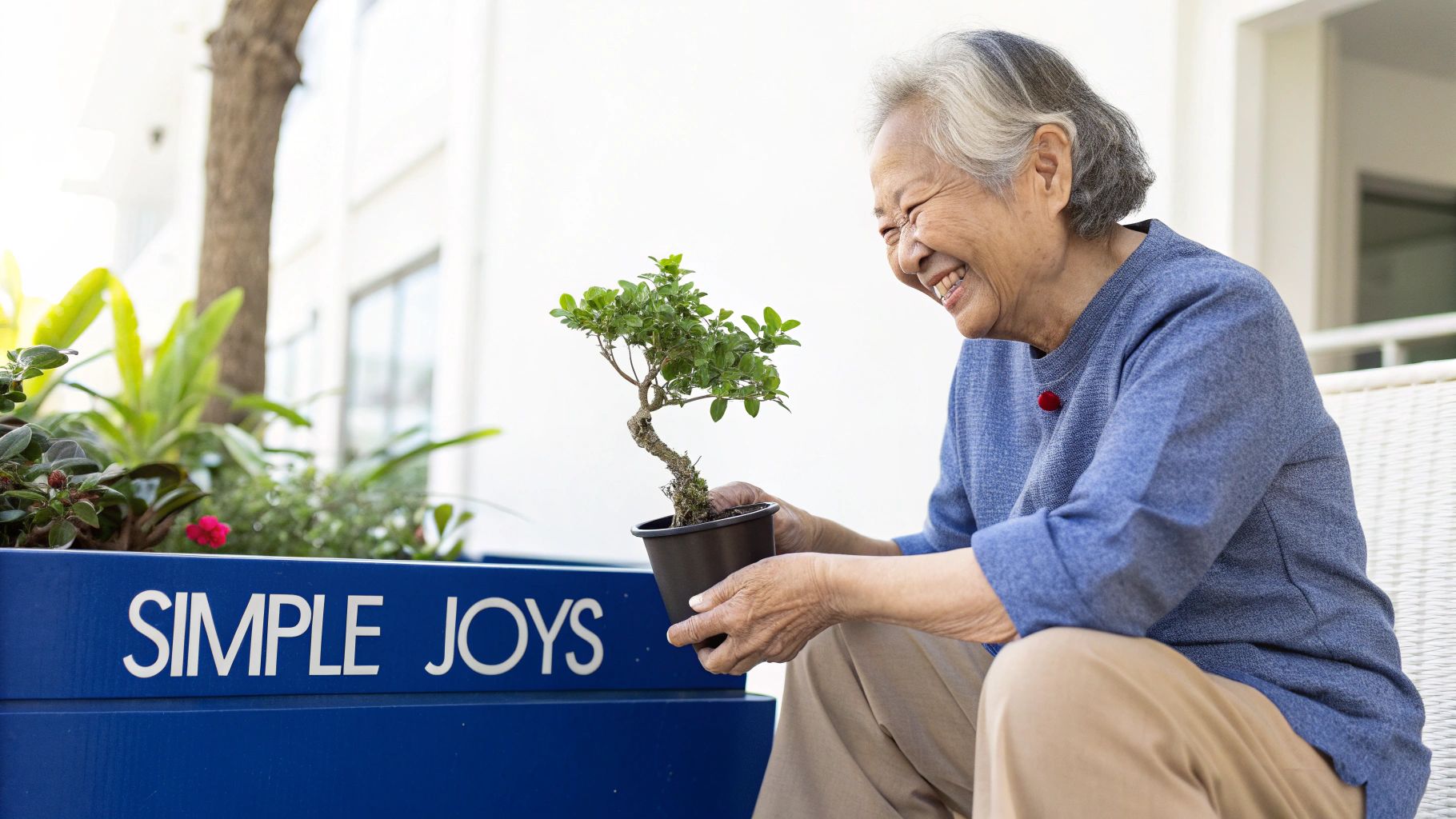
This question is incredibly effective in various settings, from casual family chats to formal care planning. For instance, an activity coordinator in a nursing home can use these responses to design a more engaging and personalized activities calendar. Similarly, an occupational therapist can incorporate an individual's known joys, like gardening or listening to a specific genre of music, into therapeutic sessions to improve motivation and outcomes. It’s one of the most insightful questions to ask the elderly to promote well-being.
How to Implement This Question
To create a meaningful dialogue, frame the question in a way that encourages thoughtful and specific answers.
- Be Specific: Instead of a broad question, try asking about daily pleasures. "What was the best part of your day today?" or "What’s something you look forward to each week?" can yield more concrete answers.
- Explore All Senses: Prompt them by asking about favorite songs, cherished scents, or comforting foods. This can evoke powerful, positive emotions tied to sensory experiences.
- Observe and Inquire: Pay attention to what makes them light up. If they smile when a pet enters the room, you can say, "I see how much you love having animals around. Tell me about that."
Key Insight: Joy is often found in the small, everyday moments. Focus on identifying these simple pleasures, as they are often the most accessible and sustainable sources of happiness.
Actionable Tips for Success
- Create a "Joy List": Work together to write down a list of things that make them happy. This list can be a reference for family, friends, and caregivers.
- Facilitate Joyful Activities: Once you identify a source of joy, find ways to incorporate it into their routine. If they love birds, set up a bird feeder outside their window.
- Use Responses to Inform Care: For professionals, answers to this question should directly influence the care plan. A person who loves classical music might benefit from having it played during personal care routines to reduce anxiety and create a more pleasant experience.
6. What would you like people to remember about you?
This profound, legacy-focused question invites an elder to reflect on their life's meaning and the impact they wish to leave behind. It moves beyond recounting past events to explore personal values, core identity, and what they want their life to represent. Asking this question validates their contributions and supports existential well-being, which is a crucial part of healthy aging.
This type of inquiry is a cornerstone of the life review process, helping individuals find peace and a sense of completeness. It allows them to articulate the character traits, accomplishments, and values they hold most dear. For families, this conversation provides a clear understanding of their loved one's wishes for remembrance, which can be invaluable for funeral planning, creating tributes, or simply carrying on their legacy in a meaningful way.
How to Implement This Question
Approaching this topic requires sensitivity, as it touches on mortality and life's purpose. Creating a supportive atmosphere is essential.
- Frame the Conversation: Present the question as a celebration of their life and influence, not as a morbid or final discussion. Use gentle phrasing like, "When people think of you, what are the most important things you hope come to their mind?"
- Explore All Facets: Inquire about different aspects of their legacy. Ask about the character traits they're most proud of, the accomplishments that brought them joy, and the causes or beliefs they championed throughout their life.
- Listen with Compassion: This question can evoke deep emotions. Be prepared to listen patiently and offer comfort. Acknowledge the significance of their reflections without judgment.
Key Insight: This question is not about building a monument; it's about understanding the essence of a person. It helps define their unique contribution to the world, no matter how big or small.
Actionable Tips for Success
- Document Their Wishes: Ask for permission to write down or record their thoughts. This can be used to create an "ethical will" or a memory book that preserves their values for future generations.
- Connect to Concrete Actions: Help translate their wishes into tangible legacy-building projects. This could involve creating a memory box, documenting family recipes, or making a donation to a cherished cause in their name.
- Discuss Remembrance: Gently ask how they would like to be remembered in practical terms, such as through stories, traditions, or specific tributes. This can bring comfort and a sense of control.
7. How have you managed challenges or difficult times?
This resilience-focused question invites an elder to reflect on their own strength and adaptability. Rather than dwelling on hardship, it reframes difficult experiences as opportunities for growth and showcases the coping mechanisms they have developed over a lifetime. Asking this question validates their struggles while simultaneously celebrating the fortitude it took to overcome them.
This inquiry is particularly valuable as it can reveal a person's core values, support systems, and problem-solving skills. For family members, understanding how a loved one has navigated adversity provides profound insight into their character. For caregivers, this knowledge can inform a strength-based approach to care, leveraging the elder's proven coping strategies to help them manage current challenges, whether health-related or emotional.
How to Implement This Question
Approaching this topic requires sensitivity and a focus on empowerment. The goal is to explore strength, not to re-traumatize.
- Create a Safe Space: Ensure the conversation is private and unhurried. Start by acknowledging that everyone faces difficulties and you're interested in learning from their strength.
- Broaden the Scope: Ask about different types of challenges, from major life crises like loss or illness to more common struggles like financial worries or career setbacks.
- Focus on Agency: Frame follow-up questions around their actions and decisions. For example, "What was the first step you took to handle that?" or "Who did you turn to for support?"
Key Insight: This conversation is not about the details of the trauma, but about the tools and resources the individual used to endure and move forward. Focus on the "how," not just the "what."
Actionable Tips for Success
- Validate Their Resilience: Actively affirm their strength with phrases like, "It sounds like you were incredibly resourceful," or "That must have taken a lot of courage."
- Inquire About Support: Ask who or what helped them through difficult times. This can highlight important relationships or internal resources like faith or optimism.
- Connect to the Present: If appropriate, gently explore how those past lessons might apply to any current difficulties they are facing.
- Document Lessons Learned: Encourage them to share the wisdom gained from their experiences. Ask, "What did that situation teach you about yourself or about life?" This transforms a painful memory into a powerful lesson.
8. Are there places you've been or dream of visiting?
This travel-focused question opens a window into an elder's sense of adventure, curiosity, and unfulfilled desires. It moves beyond daily routines to explore their past journeys and future aspirations, revealing their passions and what truly excites them. Discussing travel can evoke vivid, positive memories and provide insight into their worldview, personal interests, and experiences that shaped them.
Asking about travel is one of the most engaging questions to ask the elderly because it connects their past joys with present wishes. For a caregiver or family member, this conversation can identify potential activities or "bucket list" items that may still be achievable, either physically or through alternative means. It shifts the focus from limitations to possibilities, fostering a sense of hope and forward-looking optimism.
How to Implement This Question
Approach this topic with a spirit of exploration and genuine curiosity about their worldly experiences.
- Create an Inspiring Atmosphere: Bring out a globe, an atlas, or travel magazines to spark conversation. Watching a travel documentary together can also be an excellent catalyst.
- Explore Past and Present: Start by asking about their favorite trips. Then, gently transition to places they always wanted to see by asking, "Was there ever a place you dreamed of visiting but never got the chance?"
- Listen for the 'Why': Pay close attention to why a particular destination fascinates them. Is it the culture, the scenery, the history, or a personal connection? This reveals deeper interests.
Key Insight: This question isn't just about geography; it's about understanding what experiences and cultures resonate with them, offering clues to their core personality and passions.
Actionable Tips for Success
- Consider Virtual Travel: For those with limited mobility, use technology. Explore destinations together using Google Earth's Street View or watch high-definition virtual reality (VR) travel videos.
- Plan an Achievable Outing: A "dream trip" doesn't have to be international. It could be a visit to a nearby state park, a cultural museum, or a restaurant featuring cuisine from their dream country.
- Connect with Senior Travel Groups: Research travel companies or local community centers that specialize in trips for seniors. These organizations manage logistics and provide a supportive environment for older travelers.
9. What has changed the most since your younger years?
This comparative question invites an elder to act as a historical witness, reflecting on the vast transformations they have seen in the world. It frames their life as a valuable lens through which to view decades of societal, technological, and cultural evolution, validating their unique perspective and lived experience. Asking about change can spark profound discussions and offer younger generations a tangible connection to the past.
Engaging with this question allows seniors to contextualize their lives within a broader historical narrative. It can highlight personal resilience, adaptability, and the enduring aspects of human nature amidst constant change. This is particularly insightful for intergenerational projects, such as school interviews or community oral history initiatives, where the goal is to bridge the gap between different eras. It’s one of the most revealing questions to ask the elderly to understand their worldview.
How to Implement This Question
To foster a rich and meaningful dialogue, guide the conversation toward specific areas of change.
- Be Specific: Instead of a single broad question, break it down. Ask about changes in technology ("What was it like before everyone had a phone?"), social norms ("How were friendships or dating different?"), and daily life ("What did you do for fun?").
- Explore Both Sides: Encourage them to discuss both positive and negative changes. Ask what they miss from the past and what they appreciate most about the present.
- Create a Dialogue: Share your own perspective thoughtfully. For example, after they describe a past challenge, you might mention a modern convenience that addresses it, creating a two-way exchange.
Key Insight: This question is not just about nostalgia; it is about understanding progress, loss, and continuity. Listen for the values that have remained constant for them despite a changing world.
Actionable Tips for Success
- Ask Follow-up Questions: Probe deeper with questions like, "How did that new technology affect your family?" or "Was that change difficult to adapt to?"
- Record Their Observations: With permission, document their reflections. These firsthand accounts are invaluable pieces of social history that can be shared with family or even local historical societies.
- Discuss Opportunities: Explore how opportunities have changed, particularly regarding careers, education, or travel. This can reveal personal ambitions, societal barriers they faced, and their hopes for future generations.
10. What do you need help with, and what can you still do independently?
This direct question is essential for practical care planning because it frames the conversation around both needs and capabilities. It respectfully acknowledges an elder's desire for autonomy while pragmatically identifying specific areas where support is required. This balanced approach fosters collaboration, empowering the individual to be an active participant in decisions about their own care.
By focusing first on what they can do, you reinforce their sense of competence and dignity. Shifting to what they need help with becomes a problem-solving exercise rather than a declaration of their limitations. This is a cornerstone of person-centered care, whether in a formal assessment by a social worker or a simple family conversation about aging in place.
How to Implement This Question
Approaching this topic requires sensitivity and a focus on teamwork. The goal is to create a supportive dialogue, not an interrogation.
- Be Specific: Instead of broad questions, ask about specific tasks. For example, "How is managing your medications going?" or "Do you feel steady when you're getting in and out of the shower?"
- Frame Positively: Start by acknowledging strengths. "I know you're great at managing your finances, but how do you feel about driving to the bank these days?"
- Observe and Inquire: If you notice a challenge, like unopened mail piling up, gently inquire about it. "I see you have a lot of mail here; is sorting through it becoming a hassle?"
Key Insight: The most effective care plans are built with the elder, not for them. This question opens the door to that collaborative process by valuing their self-assessment.
Actionable Tips for Success
- Use an ADL Framework: Structure your conversation around Activities of Daily Living (ADLs) and Instrumental Activities of Daily Living (IADLs). You can find more details in this guide to conducting an Activities of Daily Living assessment.
- Discuss Solutions Together: When a challenge is identified, brainstorm solutions collaboratively. This could involve assistive devices, home modifications, or outside help.
- Revisit Regularly: A person's abilities can change over time. Make this a recurring, low-pressure conversation to adjust support as needed, ensuring their care plan remains relevant and effective.
Comparison of 10 Key Questions for the Elderly
| Question | 🔄 Implementation complexity | ⚡ Resource requirements | ⭐ Expected outcomes | 📊 Ideal use cases | 💡 Key advantages |
|---|---|---|---|---|---|
| Tell me about your life story and family history | High — open-ended, time‑intensive, needs patience | Moderate — quiet space, recording device, uninterrupted time | Rich narratives & emotional connection ⭐⭐⭐ | Oral histories, family reunions, reminiscence therapy | Validates life, records legacy, strengthens bonds |
| What accomplishments are you most proud of? | Low–Moderate — guided prompts work well | Low — conversational setting, attentive listener | Increased self‑esteem & positive reflection ⭐⭐ | Celebrations, interviews, retirement events | Highlights strengths, boosts confidence |
| Who are the most important people in your life and why? | Moderate — requires sensitivity and follow‑ups | Low — note‑taking, possible family involvement | Clear map of social supports & emotional ties ⭐⭐ | Social work assessments, family therapy, care planning | Identifies caregivers, reveals isolation risks |
| What advice would you give to younger generations? | Moderate — benefits from openness and respect | Low — recording optional, time for examples | Wisdom transfer & mentorship potential ⭐⭐ | Mentorship programs, intergenerational projects | Affirms purpose, shares practical lessons |
| What brings you joy and makes you smile? | Low — quick, uplifting prompts | Low — minimal supplies, activity options | Immediate mood lift & engagement ⭐⭐ | Activity planning, therapeutic sessions, dementia care | Identifies preferences, informs personalized activities |
| What would you like people to remember about you? | Moderate–High — existential, may be emotional | Moderate — private space, time, possible recording | Legacy clarity & meaning‑making ⭐⭐⭐ | Palliative care, legacy projects, ethical wills | Supports life review, aids end‑of‑life planning |
| How have you managed challenges or difficult times? | Moderate–High — trauma‑informed approach needed | Moderate — skilled interviewer, emotional support | Insights into coping & resilience ⭐⭐ | Counseling, resilience research, memoir workshops | Validates strength, provides transferable strategies |
| Are there places you've been or dream of visiting? | Low — conversational and imaginative | Low–Moderate — may involve VR or travel planning | Stimulates engagement & goal setting ⭐ | Senior travel programs, VR experiences, planning | Reveals interests, motivates activity and planning |
| What has changed the most since your younger years? | Moderate — reflective, may invite debate | Low — time for storytelling, possible recording | Historical perspective & educational value ⭐⭐ | Oral history projects, school programs, documentaries | Preserves living history, fosters intergenerational learning |
| What do you need help with, and what can you still do independently? | High — requires assessment skills and sensitivity | Moderate–High — assessment tools, follow‑up resources | Accurate care planning & preserved autonomy ⭐⭐⭐ | Occupational therapy, care plans, aging‑in‑place evaluations | Balances dignity with safety, informs resource allocation |
From Questions to Action: Building a Foundation of Compassionate Care
The journey of understanding an elder's life, needs, and desires begins with a simple, powerful tool: a question. Throughout this guide, we've explored a comprehensive range of questions to ask the elderly, moving from heartwarming conversation starters to critical assessments of their well-being. Asking "What accomplishments are you most proud of?" or "Tell me about your life story" does more than fill an afternoon; it validates a lifetime of experiences, wisdom, and resilience. These conversations are the bedrock of genuine connection, transforming routine interactions into moments of profound meaning.
However, asking is only the first step. The true impact lies in how you listen and, most importantly, what you do with the answers. The insights you gather are not just interesting anecdotes; they are a roadmap to providing more empathetic, personalized, and dignified support. When an elder shares their story, they are entrusting you with a piece of their identity. Honoring that trust means actively using what you learn to improve their quality of life, respect their autonomy, and celebrate their individuality.
Key Takeaways: Translating Dialogue into Dignity
To truly master the art of asking questions, we must commit to turning those conversations into compassionate actions. Remember these core principles as you move forward:
- Listen with Intent: Active listening is more than just hearing words; it's about understanding the emotions, concerns, and joys behind them. Pay attention to non-verbal cues, ask follow-up questions, and validate their feelings. The most valuable information is often found in what is not said directly.
- Observe and Assess: Use questions like "What do you need help with?" as a starting point for observation. If they say they are fine but you notice unopened mail, a sparsely stocked fridge, or difficulty with mobility, it's a sign to investigate further. Your role is to bridge the gap between their words and their reality.
- Empower, Don't Assume: Always frame your support around their independence. Instead of taking over, ask how you can best assist them. This approach respects their capabilities and reinforces their sense of control over their own life, which is crucial for mental and emotional well-being.
From Insights to Actionable Next Steps
Once you've had these conversations, the next phase is to build a supportive ecosystem based on what you've learned. If their answers reveal feelings of loneliness, help them reconnect with old friends or explore local senior center activities. If they express pride in their home but are struggling with upkeep, organize a family cleaning day or look into home maintenance services.
Sometimes, the most loving action is a simple gesture that shows you were listening. Did they mention a favorite song from their youth? Create a playlist for them. Did they talk about a passion for gardening they can no longer manage? Bring them a beautiful indoor plant. As you move from asking questions to acting on compassionate care, remember that thoughtful gestures can also deepen connections and bring joy. Consider these cherished handmade gift ideas for grandparents to create a personalized token of your affection. These small, consistent actions demonstrate that you value them as a person, not just as someone who needs care.
Ultimately, mastering these questions to ask the elderly is about more than just checking boxes. It’s about building a foundation of trust, respect, and deep understanding that enriches both your lives. It allows family members to preserve a precious legacy, and it equips caregivers and professionals with the insights needed to craft care plans that are not only effective but also deeply human. This approach transforms caregiving from a series of tasks into a meaningful partnership, ensuring our elders feel seen, heard, and cherished for exactly who they are.
If your conversations reveal that a loved one needs more consistent support to live safely and happily at home, we are here to help. NJ Caregiving specializes in creating personalized in-home care plans that honor an elder’s story and autonomy. Let us help you translate the answers you’ve received into a compassionate, professional plan of action.
