
Light housekeeping for seniors isn't about deep cleaning. It's a supportive, non-medical service that helps older adults keep their homes clean, safe, and comfortable. This service focuses on the daily and weekly tasks that can become physically challenging with age, allowing seniors to maintain their independence and well-being without the strain.
Defining Light Housekeeping for Seniors
Think of light housekeeping less like a maid service and more like a consistent “daily reset” for your loved one’s home. The goal isn’t scrubbing floors on hands and knees. It’s about managing the essential, everyday chores that keep a house functional, tidy, and safe. This kind of support is a true cornerstone of effective non-medical home care, helping seniors flourish in the place they know and love.
The need for this kind of help is growing fast. As more people choose to age in place, light housekeeping has become a vital piece of the puzzle. The U.S. home care market was valued at around $250 billion last year and is expected to hit $383 billion by 2028. That number tells a powerful story about how crucial this assistance has become for families everywhere.
What It Is and What It Isn't
The keyword here is truly "light." This service is all about maintenance, not a major overhaul. A caregiver will help with the upkeep of the most frequently used areas—think the kitchen, living room, and bathroom. This keeps pathways clear, surfaces sanitary, and the whole environment feeling orderly and pleasant.
The real purpose of light housekeeping is to stop clutter and grime from building up in the first place. This prevents safety hazards and reduces stress, making daily life that much easier and more enjoyable.
This is a world away from heavy-duty cleaning, which involves much more physically demanding work. Getting this distinction right is key to setting clear expectations when you're arranging for in-home care.
Light Housekeeping vs. Deep Cleaning at a Glance
To paint a clearer picture, let's break down what typically falls into each category. This quick reference can help you and your family understand the scope of services and communicate your needs clearly to a caregiver or agency.
Light Housekeeping vs Deep Cleaning at a Glance
| Task Area | Light Housekeeping (Included) | Deep Cleaning (Not Included) |
|---|---|---|
| Kitchen | Wiping down counters, washing dishes, tidying up the sink area, sweeping the floor. | Cleaning inside ovens and refrigerators, scrubbing floor grout, washing cabinets. |
| Living Areas | Dusting furniture, vacuuming carpets, organizing mail and magazines, watering plants. | Moving heavy furniture to clean underneath, shampooing carpets, washing windows. |
| Bathroom | Wiping sinks and faucets, cleaning the toilet bowl and seat, tidying the counter. | Scrubbing shower tiles and grout, deep cleaning the entire bathtub or shower. |
| Bedroom | Making the bed, changing linens, organizing clothes, dusting nightstands and dressers. | Flipping mattresses, cleaning under the bed, organizing closets and drawers. |
As you can see, light housekeeping covers the routine chores that keep a home in good shape day-to-day. Deep cleaning, on the other hand, is for those bigger, less frequent tasks that require more time and elbow grease.
How a Tidy Home Boosts Senior Well-Being
A clean, organized home is so much more than just a pretty space. For a senior, it's the bedrock of their physical safety, mental clarity, and overall health. When daily tasks start to feel heavier, even a little bit of clutter can turn into a big obstacle. The benefits of light housekeeping for seniors go far beyond what you see on the surface, directly supporting their ability to live with dignity and independence.
These small, steady efforts can truly transform a house into a sanctuary—a place that actively supports well-being instead of getting in the way.
Promoting a Safer Living Space
For older adults, the most immediate payoff of a tidy home is a huge drop in the risk of falling. Clutter like stacks of mail on the floor, bunched-up rugs, or stray cords can easily become tripping hazards. Since falls are a leading cause of serious injuries among seniors, keeping pathways clear is one of the smartest preventative moves you can make.
Simple housekeeping chores make all the difference:
- Vacuuming and sweeping don't just clean the floors; they get rid of tiny objects that could cause someone to slip.
- Organizing living areas means everything has a home, keeping walkways and busy parts of the house clear and open.
- Wiping up spills right away in the kitchen or bathroom gets rid of slick spots that are just an accident waiting to happen.
When a caregiver handles light housekeeping, they bring a second pair of eyes to the home, spotting and removing these potential dangers before they can cause harm. That kind of consistent maintenance is what creates a genuinely safe environment.
A clutter-free home isn’t just about being neat; it's a critical safety measure. Every organized room and clear hallway is a deliberate step toward preventing falls and preserving a senior's independence and mobility.
Enhancing Mental and Emotional Health
The link between our surroundings and our state of mind is incredibly strong. A messy or disorganized home can fuel feelings of stress, anxiety, and being completely overwhelmed. For seniors who might already be juggling health issues or loneliness, a chaotic living space can make those negative feelings even more intense.
On the flip side, an orderly home helps create a sense of calm and control. Waking up to a clean kitchen or relaxing in a tidy living room provides a peaceful, predictable backdrop to the day. This stability can do wonders for mood, lower stress, and boost self-esteem. When seniors know their home is taken care of, they can focus their energy on hobbies, family, and things they love, instead of worrying about a growing to-do list. The simple act of having a made bed or clean countertops can set a positive tone for the entire day.
Supporting Better Physical Health
Beyond just preventing falls, a clean home is a healthier home. It directly impacts physical health by improving air quality and cutting down on exposure to germs. Dust, pet dander, and other allergens love to collect on surfaces and in carpets, which can really bother anyone with respiratory conditions like asthma or COPD.
Regular dusting and vacuuming are key to pulling these irritants out of the air. At the same time, sanitizing high-touch surfaces like doorknobs, light switches, and kitchen counters helps stop the spread of bacteria and viruses. This is a huge deal for older adults, whose immune systems might not be as strong, making them more vulnerable to getting sick.
A Room-by-Room Light Housekeeping Checklist
So, what does light housekeeping for seniors actually look like in practice? To really understand it, we need to move past the general idea and get into the specifics of what a caregiver does. The best way I've found to do this is to break it down by room. This simple approach creates a clear, practical framework so everyone involved—the senior, the family, and the caregiver—is on the same page from day one.
Think of it as creating a simple, actionable game plan. It turns a vague concept into a clear set of responsibilities, making it so much easier to communicate what’s needed and manage expectations.
This is more than just tidying up; it's about creating an environment that actively supports a senior's well-being.
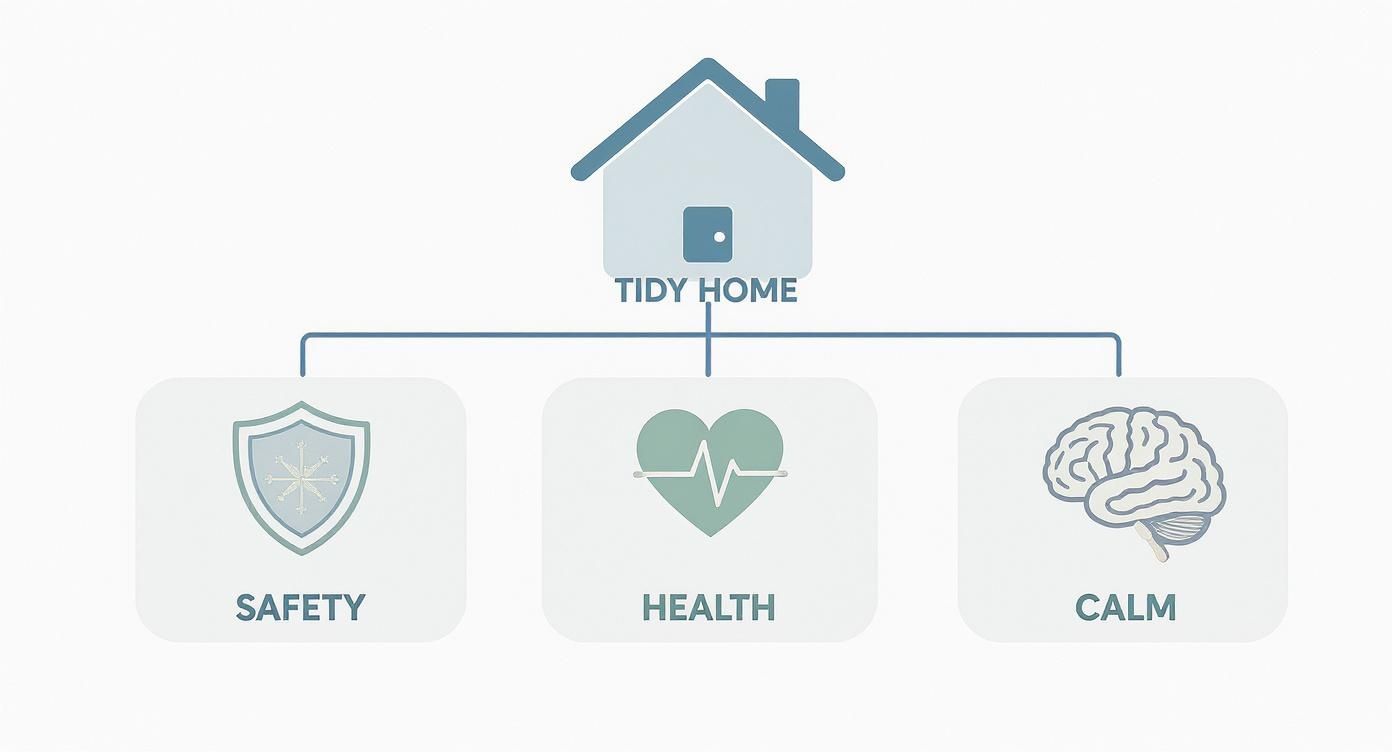
As you can see, a well-maintained home is the foundation for improved safety, better health, and a real sense of calm. It all starts with the living space.
The Kitchen: The Heart of the Home
The kitchen is usually the busiest room in the house, a hub of daily activity. That also means it needs consistent attention to stay safe and hygienic. Light housekeeping here is all about managing the immediate, high-traffic areas.
- Wiping Down Surfaces: This means countertops, tables, and the stovetop get a daily wipe to clear away crumbs and spills.
- Washing Dishes: Whether it's by hand or loading the dishwasher, keeping the sink clear is crucial for preventing bacteria from building up.
- Sweeping the Floor: Just a quick sweep each day can keep the floor free of little bits of debris that could easily cause a slip.
- Taking Out Trash and Recycling: Getting waste out of the house regularly is a simple way to control odors and keep pests away.
Living and Common Areas
These are the spaces for relaxing, reading, or connecting with family. Keeping them tidy and organized helps create a peaceful, stress-free atmosphere. The focus is on managing daily clutter and dust, not deep-cleaning projects.
- Dusting Furniture: Wiping down surfaces like coffee tables, end tables, and bookshelves.
- Vacuuming Carpets and Rugs: Hitting the high-traffic zones with the vacuum helps keep dust down and the air cleaner.
- Organizing Mail and Magazines: Simply tidying up stacks of paper can make a huge difference in how orderly a space feels.
- Watering Houseplants: It’s a small thing, but caring for plants adds a touch of life and cheer to the home.
It's important to remember what light housekeeping for seniors does not include. Caregivers will not perform tasks like scrubbing floors, shampooing carpets, washing windows, moving heavy furniture, or doing outdoor yard work.
Bedroom and Bathroom Routines
Personal spaces like the bedroom and bathroom are vital for a senior’s comfort and health. The light housekeeping tasks here are all about maintaining these areas so they remain restful, sanitary sanctuaries.
These daily upkeep tasks might seem small, but they make a significant difference in a person’s day-to-day comfort and well-being.
Bedroom Checklist
- Making the bed daily
- Changing bed linens as needed
- Tidying up clothes and putting them away
- Dusting nightstands and dressers
Bathroom Checklist
- Wiping down the sink and faucet
- Cleaning the toilet seat and bowl
- Tidying the countertop
- Making sure fresh towels are available
By clearly defining these tasks room by room, you can create a specific, reliable plan. This checklist becomes an invaluable tool when you're talking to potential caregivers, helping you find someone who is a perfect match for your loved one’s needs.
Sample Light Housekeeping Weekly Task Planner
To see how these tasks fit into a real-world schedule, it helps to map them out. A weekly planner prevents things from piling up and ensures the home stays consistently tidy without overwhelming the caregiver or the senior.
Here’s a sample of how tasks might be distributed throughout the week.
| Day | Kitchen Tasks | Living Area Tasks | Bedroom/Bathroom Tasks |
|---|---|---|---|
| Monday | Wipe counters, wash dishes, take out trash. | Dust furniture, organize mail. | Make bed. |
| Tuesday | Wipe counters, wash dishes. | Water houseplants. | Make bed, wipe down bathroom sink. |
| Wednesday | Wipe counters, wash dishes, sweep floor. | Vacuum high-traffic areas. | Make bed, change bed linens. |
| Thursday | Wipe counters, wash dishes. | Tidy magazines/books. | Make bed, clean toilet. |
| Friday | Wipe counters, wash dishes, sweep floor, take out trash/recycling. | Dust and vacuum. | Make bed, ensure fresh towels are out. |
This kind of schedule provides structure and predictability. It ensures all the essential areas are addressed regularly, promoting a safe and pleasant living environment all week long.
How to Find and Hire the Right In-Home Help
Finding the right person to provide light housekeeping for seniors can feel like a huge task. You're not just hiring someone to do a job; you’re welcoming them into a loved one's personal space.
You really have two main paths: hiring someone on your own or working with a professional home care agency. Each has its pros and cons.
Going the independent route might give you more flexibility, but it puts all the responsibility on your shoulders—vetting, background checks, payroll, the whole nine yards. A professional agency, on the other hand, handles all that for you. They take care of insurance, liability, and even have backup caregivers ready if your regular helper can't make it. That peace of mind is often worth its weight in gold.
The need for these services is growing fast. With over 80% of seniors wanting to stay in their own homes, light housekeeping has become a massive part of the global elderly care market, which hit a value of $1.94 trillion this year.
Assessing Your Family’s Needs First
Before you even start looking, take a moment to get a crystal-clear picture of what you truly need. Don't just list tasks—think about personality and connection. Is your mom a quiet person who prefers things to be peaceful, or does your dad thrive on friendly conversation?
Jot down the specific housekeeping tasks you have in mind, maybe going room by room with a checklist. You'll also want to decide how often you'll need help. Is this a twice-a-week thing, or a daily visit? Having this clarity will be your roadmap when you start interviewing.
Key Questions for the Interview
The interview is your chance to see beyond a resume and get a feel for someone's approach to care. When you're considering hiring someone, it's always smart to know the essential questions to ask before hiring a cleaning service. But for senior care, you need to go deeper and touch on compassion and flexibility.
Ask questions that reveal both their skills and their character. Of course, you’ll want to ask about experience, but also try questions like, "Can you tell me about a time you had to handle a last-minute change in a client's routine?" or "How do you adjust your approach when someone is having a tough day?"
These kinds of questions help you find a person who isn't just capable but is also patient, adaptable, and genuinely cares. For even more great screening tips, you can check out our guide on how to find private caregivers.
Finally, once you've found the perfect fit, it’s a good idea to create a simple service agreement. This document should clearly lay out the expected duties, the work schedule, and the payment details. Putting it all in writing helps prevent any misunderstandings down the road and sets everyone up for a positive, professional relationship from day one.
Understanding Costs and Payment Options
Let's talk about the financial side of things—it’s a conversation every family has when considering in-home care. The cost for light housekeeping for seniors isn't one-size-fits-all. It really depends on where you live, the exact help you need, and how many hours a week a caregiver will be there. Figuring this out early helps you build a care plan that’s sustainable for the long run.
As you start looking into help, you’ll need a clear picture of the costs involved, including common tasks like laundry. It helps with budgeting when you’re understanding the pricing for these services. This isn’t a small niche, either; the senior care market, which includes home services, was recently valued at a staggering $312.4 billion and is expected to hit $675.3 billion by 2035.
Common Ways to Pay for Care
Figuring out how to pay for care can feel a bit overwhelming, but there are several paths you can take. Most families begin by using private funds, but it's always smart to see what other support might be available.
Here are the most common options families turn to:
- Private Pay: This is the most straightforward route, using personal savings, retirement accounts, or regular income to cover the costs.
- Long-Term Care Insurance: If your loved one has a policy, it was designed for exactly this kind of situation. These policies often cover in-home support, including housekeeping. You'll want to check the fine print to understand the coverage limits and what you need to do to qualify.
- Veterans' Benefits: Programs like the VA Aid and Attendance benefit can offer a real financial lifeline for eligible veterans and their surviving spouses.
Does Medicare or Medicaid Cover Housekeeping?
This is one of the first questions we get from families, and it’s a critical one. The answer isn't always simple because these two programs work very differently.
One of the biggest misconceptions is that Medicare will cover housekeeping services on their own. The truth is, Medicare does not pay for custodial care—like light housekeeping—if that's the only service a senior needs.
Medicaid, however, is a different story and can be a fantastic resource. Many states, including New Jersey, have Home and Community-Based Services (HCBS) waivers. These programs are specifically designed to help seniors age safely in their own homes rather than moving to a facility.
These waivers often cover services like light housekeeping as part of a larger, more comprehensive care plan. To qualify, there are income and medical need requirements, so you'll need to check the specific rules for your state. Getting a handle on all the different avenues can be a lot, but a detailed guide on how to pay for home care can help clear things up.
Getting Local Support with NJ Caregiving
When you're looking for in-home help for a loved one in Mercer County, you're not just searching for a service—you're looking for a trusted local partner. At NJ Caregiving, we have deep roots in communities like Princeton, Hamilton, and Lawrenceville. We're your neighbors, and that gives us a real understanding of what families here truly need.
We believe that light housekeeping for seniors isn't a one-size-fits-all solution; it should be as unique as the person receiving the care. That’s why we don't just hand you a generic checklist. Instead, we sit down with your family to create a plan that fits perfectly with your loved one’s daily routines and personal preferences. It's all about making them feel comfortable and respected in the home they cherish.
A Story of Comfort and Independence
Let me tell you about Mrs. Davis, a long-time Hamilton resident who loved her independence but was finding it exhausting to keep up with her home. Her daughter called us, worried about her mom’s safety and overall well-being.
We started with a caregiver visiting three times a week. The focus was simple: keeping the kitchen tidy, making sure the living room was clear of clutter, and helping with the laundry.
But the support went far beyond those tasks. Our caregiver became a friendly, familiar face—someone Mrs. Davis could chat with while her home was being cared for. This not only made her home safer, but it also genuinely lifted her spirits. She could finally focus on her beloved garden instead of worrying about household chores.
This is the kind of impact we aim for every single day. We want to make daily life easier, safer, and more enjoyable.
If your family is in Mercer County and looking for compassionate, reliable support, let’s talk. We're here to help you find the perfect solution that brings peace of mind to everyone.
Common Questions About Senior Housekeeping
When you start thinking about in-home help, it's natural for a few practical questions to pop up. Getting these details ironed out from the beginning helps everyone—the caregiver, your loved one, and you—feel comfortable and on the same page.
Will a Caregiver Use My Supplies?
Yes, absolutely. The standard practice is for caregivers to use the cleaning supplies and equipment you already have in the home.
There’s a good reason for this. It prevents introducing any new chemicals or scents that could trigger allergies or sensitivities for your loved one. Plus, it ensures everything is cleaned with products you and your family already trust. A good tip is to do a quick check before the first visit to make sure you're stocked up on essentials like your preferred cleaning sprays, sponges, and paper towels.
What If My Loved One Is Home During the Service?
That’s the whole point! This isn't like a typical cleaning service where you have to leave the house. The care is designed to support seniors right where they are, in their own space.
A professional caregiver knows how to work quietly and respectfully in the background, mindful of your loved one's routine and personal space. In fact, many seniors really enjoy the light companionship that comes from having a friendly, helpful person around the house while the chores get done.
The goal is to make life easier without disrupting it. Caregivers are trained to adapt to the client's needs, whether they prefer to chat or rest quietly while the housekeeping is completed.
This flexibility ensures the experience is always a positive and supportive one.
At NJ Caregiving, we know you have questions, and we’re here with clear, compassionate answers. If you're in Mercer County, let's talk about how our personalized in-home care can bring you and your family peace of mind. Learn more at https://njcaregiving.com.
