
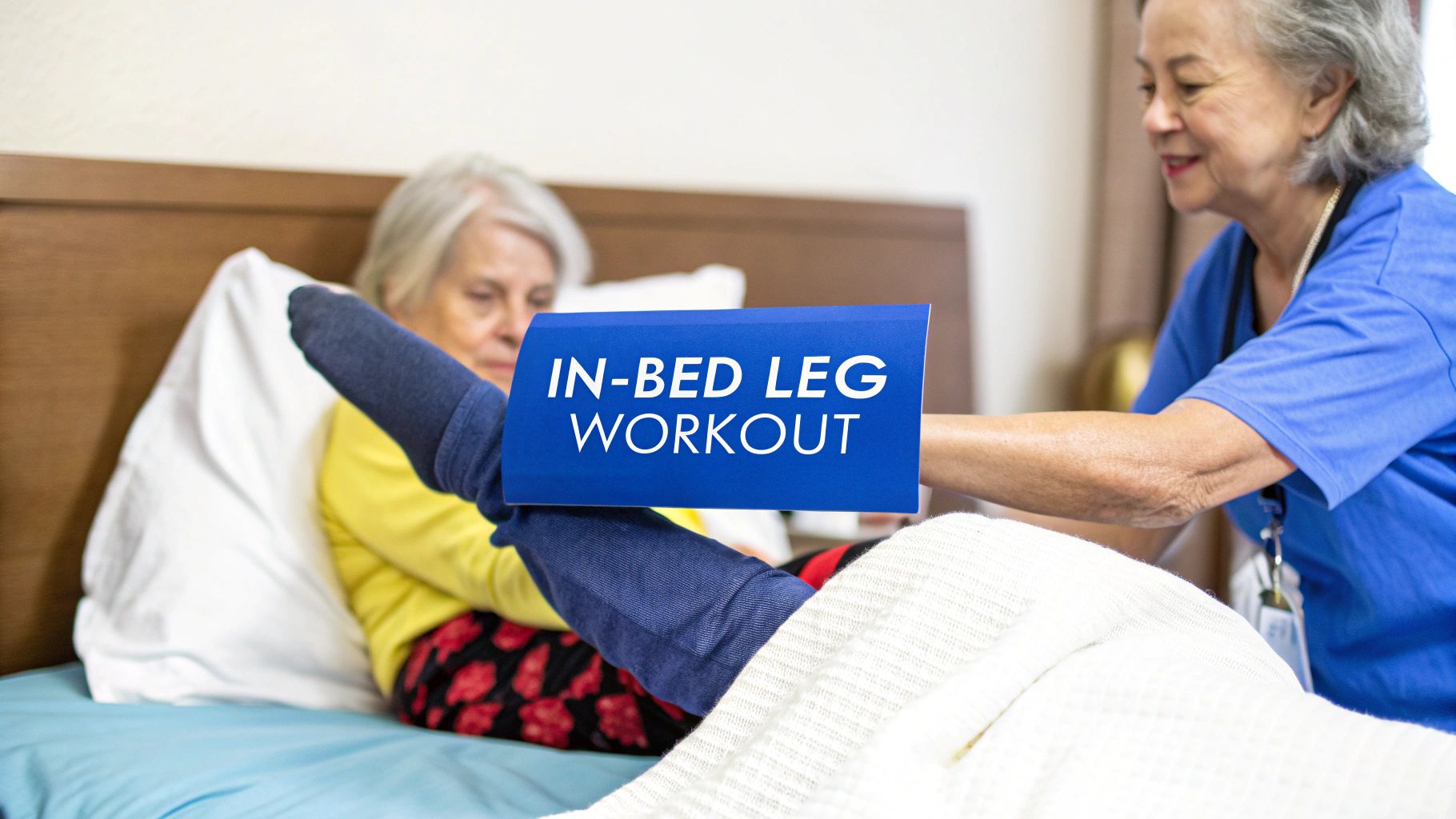
For anyone facing extended rest or limited mobility, the idea of losing strength can be a real worry. But it doesn't have to be. Simple, consistent leg exercises in bed are a fantastic way to keep your muscles toned, improve circulation, and just feel better overall. These gentle movements are all about maintaining independence and confidence, right from the comfort of your own home.
Why Bed-Based Exercises Are a Game-Changer
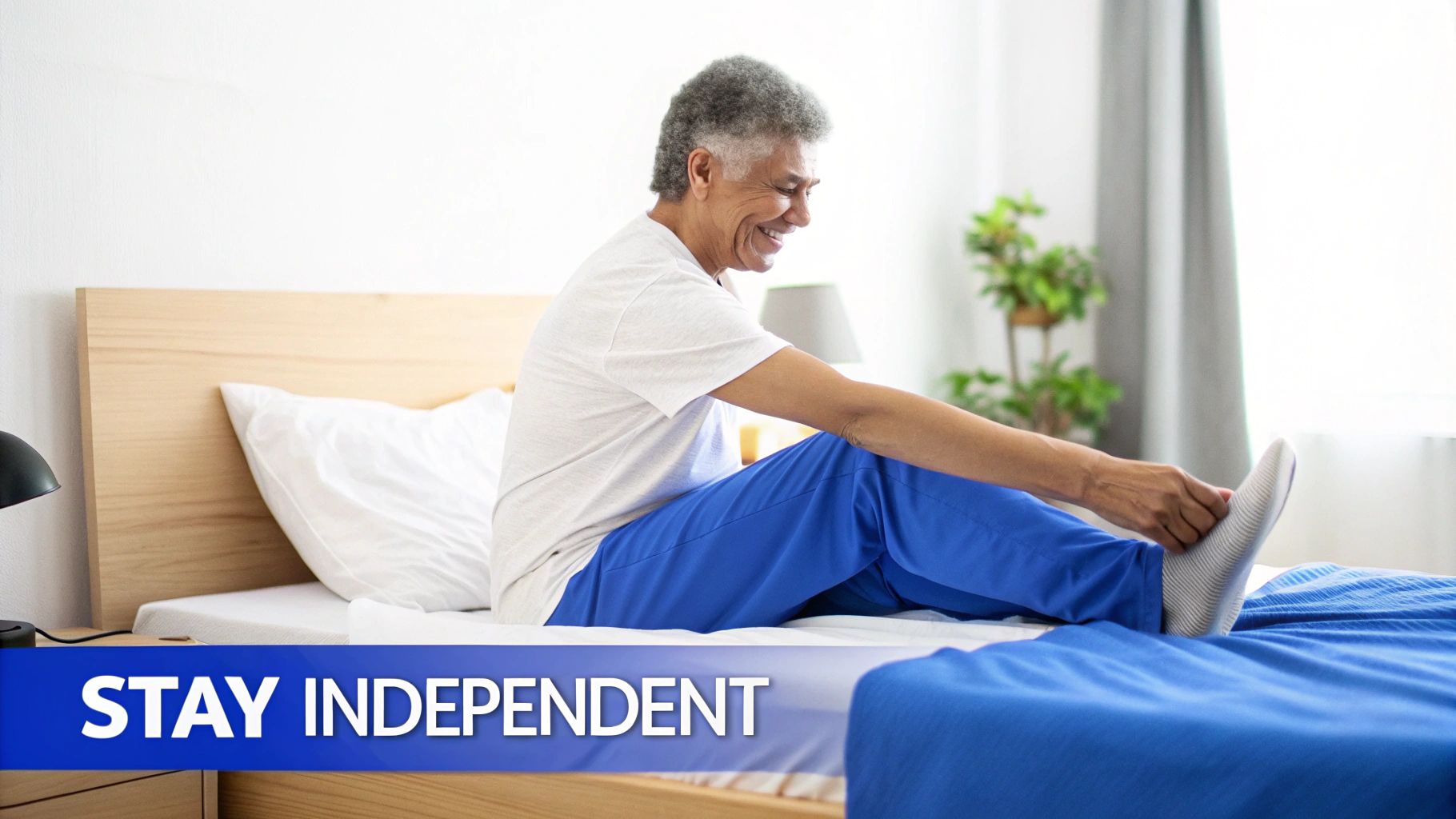
Staying mobile is key to aging with dignity. When getting out of bed is tough—whether from recovery, illness, or balance issues—muscle loss, or atrophy, becomes a serious concern. The good news? Your bed can actually become a safe and effective space to maintain your fitness.
The Power of Gentle Movement
Simple leg exercises performed while lying down or sitting on the edge of the bed can make a world of difference. They are low-impact, which is perfect for anyone with joint pain or arthritis. The benefits tie directly into everyday life:
- Better Circulation: Gentle movements get the blood pumping through your legs, which can help cut down on swelling and lower the risk of blood clots.
- Stronger Muscles: Regularly working the quadriceps, hamstrings, and calves helps you keep the strength you need to stand up, walk, and move around safely.
- More Flexible Joints: Keeping your joints moving helps lubricate them and can ease the stiffness that often comes with conditions like arthritis.
There's a common myth that rest always equals recovery. While rest is definitely important, complete inactivity can cause you to lose strength surprisingly fast. Gentle, guided movement is often the real key to holding onto your function and getting back to your daily routine sooner.
Being on bed rest can lead to significant muscle loss if you're not proactive. In fact, without some kind of movement, the calf muscle can shrink by a shocking 33% after just a few weeks of being immobile.
Fostering Independence and Safety
Stronger leg muscles mean better balance and stability, which is the cornerstone of preventing falls. You can learn more about how important these exercises are in our guide on fall prevention exercises for seniors.
And if you really want to elevate your bed-based routine, looking into adjustable beds for seniors can offer incredible comfort and support. It's these small, daily efforts that build the foundation for living independently.
Your Pre-Exercise Checklist for a Safe Start
Starting a new routine of leg exercises in bed is a fantastic move, but let's make sure we do it safely. A few simple preparations can make all the difference, turning each session into a secure and effective step toward better mobility.
First things first, have a quick chat with your doctor, nurse, or physical therapist. This is absolutely critical if you're recovering from surgery, have a history of blood clots, or are managing a chronic condition like severe arthritis or heart disease. They know your health history and can give you personalized advice on which movements are best and which ones you might need to modify or even skip.
Creating a Secure Environment
Once you've got the green light, take a minute to set up your space. You'll want to be on a bed that’s stable and supportive, not one that's overly soft or sags in the middle. The goal is to feel secure while you move.
Pillows can be your best friends here. Tucking one under your knees can take the strain off your lower back during certain exercises. Another behind your head can add a little extra comfort. It's also a good idea to clear away any clutter from your bedside table to make sure nothing gets knocked over.
The goal is progress, not perfection. Starting a new routine is about consistency and listening to your body. Some days you'll feel stronger than others, and that’s perfectly okay. Celebrate the effort, not just the outcome.
For family caregivers, this idea of a safe environment goes beyond just the bedroom. A good walk-through of the entire home can help you spot potential hazards before they cause a problem. Running a detailed senior home safety assessment is a great way to make sure the whole house, from the bedroom to the kitchen, is set up to support independence.
The Most Important Rule: Listen to Your Body
This is your golden rule. It's normal to feel your muscles working or a bit of mild fatigue, but sharp, shooting, or sudden pain is a red flag. If you feel any real pain, that's your body's clear signal to stop what you're doing right away.
If you're a caregiver, your job is to be an encourager, not a drill sergeant. Your loved one is the expert on their own body.
- Offer Support: Be ready to lend a steadying hand or help adjust a pillow for better positioning.
- Communicate Gently: Check in by asking how they're feeling as they go. Positive words can really build confidence.
- Celebrate Small Wins: Just finishing a few repetitions is a victory worth acknowledging. That kind of encouragement provides powerful motivation to keep going.
By running through this quick checklist, you build a foundation of safety and support. This simple approach helps turn exercise time into a positive, empowering part of the daily routine—paving the way for steady progress and better well-being.
Essential Leg Exercises You Can Do in Bed
Starting a new routine with leg exercises in bed can feel incredibly empowering, especially when mobility is a challenge. These aren't strenuous, high-impact movements. Instead, they’re designed to be gentle yet effective, helping you maintain strength and boost circulation without putting any stress on your joints.
Let's walk through some of the most fundamental exercises you can start doing today, right from the comfort and safety of your bed.
Building a Foundation with Ankle Pumps
Think of Ankle Pumps as the perfect warm-up for your lower legs. This simple movement is an absolute powerhouse for circulation. It's fantastic for helping prevent swelling and reducing the risk of blood clots, which is a key concern for anyone spending a lot of time resting.
While lying on your back with your legs as straight as is comfortable for you, simply point your toes away from your body, like you're gently pressing a gas pedal. Hold that for a second, then flex your feet back, pulling your toes toward your shins. That’s one full rep.
Aim for a set of 10-15 pumps on each foot. The key is a smooth, steady motion. Try to breathe in as you point and out as you flex.
Activating Thighs with Heel Slides
Heel Slides are excellent for targeting the hamstrings—the big muscles on the back of your thigh—and for keeping your knees flexible. This movement helps maintain the range of motion you need for everyday things, like getting in and out of a chair or bed.
Start by lying on your back with both legs extended. Slowly bend one knee, sliding your heel up toward your buttocks while keeping your foot flat against the bed. Only go as far as you can without any pain. Pause briefly, then gently slide your heel back down to the starting position.
Focus on controlled, deliberate movement rather than speed. Complete 8-12 repetitions on one leg before you switch to the other. If you live with arthritis, you might find this movement particularly soothing for stiff knee joints, but always stop if you feel any sharp pain.
Caregiver Tip: If your loved one has trouble moving their leg on their own, you can offer gentle assistance. Place one hand under their heel and the other under their knee to help guide the leg through the sliding motion. Encourage them to do as much of the work as they can.
This simple process shows the core principles of a safe and effective exercise routine.
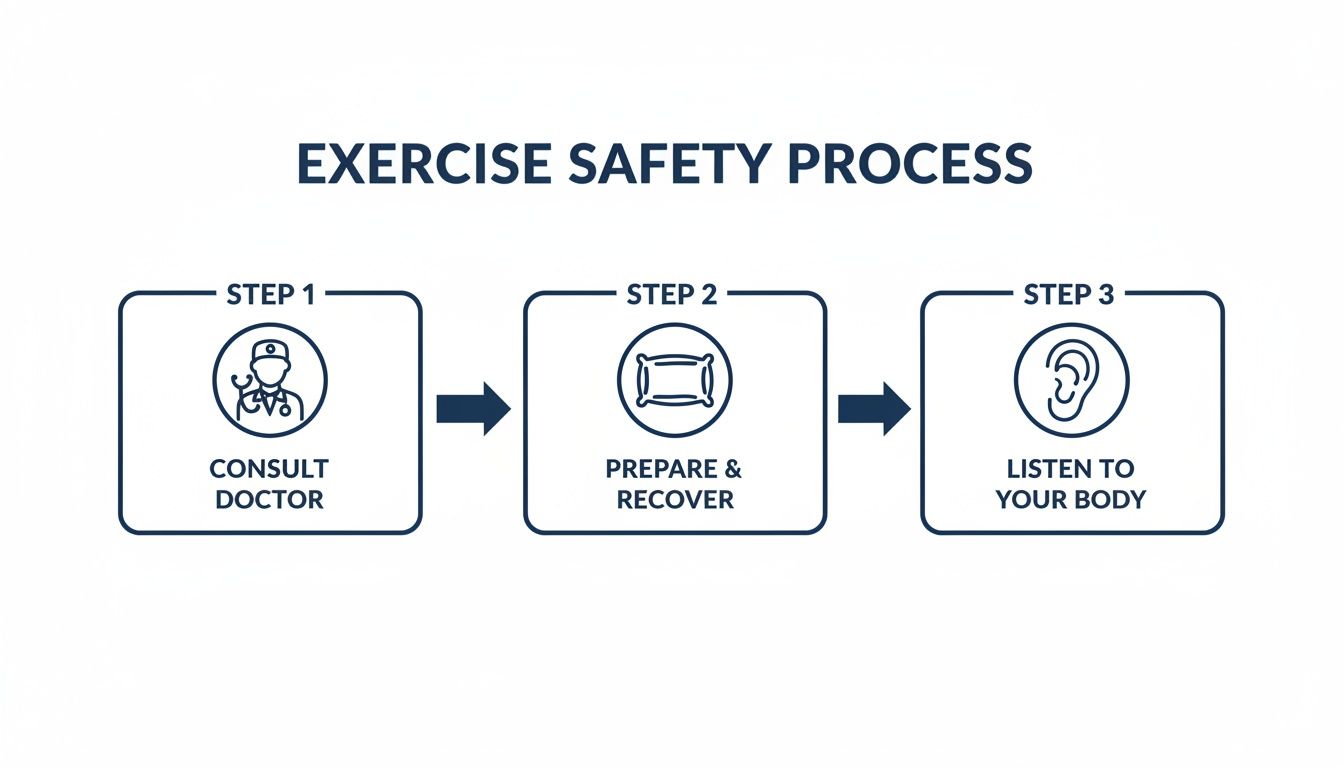
As the visual shows, every session should begin with a mindful approach—checking in with a professional, preparing your space, and, most importantly, listening to your body's signals.
Strengthening Quads with Straight Leg Lifts
Straight Leg Lifts are a fantastic way to strengthen your quadriceps, which are the large, powerful muscles at the front of your thigh. These muscles are absolutely vital for stability when you're standing and walking. Keeping your quads strong can make a huge difference in preventing falls.
Here’s how to do them safely and effectively:
- Lie on your back with one leg bent and that foot flat on the bed. Keep the other leg straight.
- Tighten the thigh muscle of your straight leg and slowly lift it about six inches off the bed.
- Hold the leg up for 3-5 seconds, keeping that muscle engaged the whole time.
- Slowly and with complete control, lower your leg back down.
Aim for 8-10 lifts per leg. A common mistake is lifting the leg too high, which can put a strain on the lower back. The goal here is small, controlled movement that focuses entirely on the thigh muscle. If you do feel any strain in your back, try placing a small, rolled-up towel under your lower back for a bit of extra support.
Improving Hip Mobility with Bed Marching
Bed Marching is a gentle exercise that gets your hip flexors and core muscles working together. This movement is great because it mimics the motion of walking, helping you maintain the mobility needed for daily activities.
While lying on your back with both knees bent and your feet flat on the bed, slowly lift one foot just a few inches off the mattress. Hold it for a second, then lower it back down. Now, do the same with the other leg. Alternate back and forth, as if you're marching in place while lying down.
Try to perform 10-15 "steps" with each leg. Keeping your movements slow and deliberate will also engage your core, which helps stabilize your pelvis and protect your lower back.
Beyond these specific leg movements, you might also be interested in exploring other general exercises you can do from your bed to build a more well-rounded routine.
How to Progress and Adapt These Exercises
It’s important to remember that these exercises are adaptable. Start where you are. If you’re just beginning, do fewer repetitions and really focus on getting the form right. As you feel stronger, you can gradually increase the reps or add a second set.
Consistency is what truly matters. Performing these leg exercises in bed a few times a week will give you much better results than doing too much at once and feeling sore or discouraged. Always listen to your body and adjust the routine to make it work for you.
To help you get started, here is a sample plan to guide your progression safely over the first month.
Weekly Exercise Progression Plan
| Week | Ankle Pumps (Reps per Leg) | Heel Slides (Reps per Leg) | Straight Leg Lifts (Reps per Leg) | Frequency (Days per Week) |
|---|---|---|---|---|
| 1 | 10 | 8 | 8 | 3 |
| 2 | 12 | 10 | 8 | 3-4 |
| 3 | 15 | 10 | 10 | 4 |
| 4 | 15 | 12 | 10 | 4-5 |
This table is just a suggestion. Feel free to adjust it based on how you feel. The goal is steady progress, not perfection.
How to Enhance Results and Stay Motivated
Starting a new routine with leg exercises in bed is a fantastic first move, but sticking with it is where you'll see real, lasting change. The key is to make these simple movements feel like a natural part of your day, not just another item on your to-do list.
One of the best ways I've seen people succeed is through something called habit-stacking. It’s simple: you just link your new exercises to something you already do every single day without even thinking about it.
For instance, make a pact with yourself to do your leg exercises right after you wake up, before you even swing your legs out of bed. This small connection helps the new habit stick. Before you know it, waking up will automatically trigger the thought, "Time for my leg lifts."
Building Momentum and Adding Challenges
Once you're doing the exercises consistently, you're going to feel stronger. That's your cue to introduce small, gradual challenges to keep the progress going. You don’t need any fancy gym equipment for this, either.
Something as simple as a resistance band can add a whole new dimension to exercises like Heel Slides or Straight Leg Lifts. That gentle resistance is what really helps build muscle more effectively.
Here are a few ways to keep things fresh and keep getting stronger:
- More Reps: If you started out doing 8 repetitions, gradually work your way up to 10 or 12.
- Add a Second Set: When one set starts to feel too easy, take a minute to rest, then do it all over again.
- Introduce Resistance: Try looping a light resistance band around your thighs or ankles to give your muscles an extra challenge.
Don't underestimate the mental side of this. Every time you finish a session, it's a win that builds your confidence. I remember working with a client, John, who started with just a few ankle pumps a day after a long illness left him feeling incredibly unsteady. After about a month of his daily routine, he felt strong enough to walk to his mailbox and back—a small trip that felt like a massive step toward getting his independence back.
The Proven Impact of Consistent Movement
The power of consistent, gentle movement simply can't be overstated, even for those starting from a place of significant weakness. Research on in-bed cycling exercises, which are very similar to some of the leg exercises in bed we've covered, has shown some pretty incredible results for frail patients.
One study I often refer to found that patients doing these exercises had an 87.0% recovery rate by the time they were discharged. That’s a huge leap compared to the 60.6% rate for the group that didn't exercise. This data, which you can read more about in early mobilization research, really drives home how powerful this can be.
It’s not about becoming a marathon runner overnight. It’s about the cumulative effect of small, daily efforts. Each time you complete your routine, you are making a direct investment in your strength, your mobility, and your long-term independence.
And remember, motivation often comes after you start, not before. On those days when you really don't feel like it, just promise yourself you'll do one or two of the easiest exercises. More often than not, once you get moving, you’ll find the energy to finish the whole routine.
A Guide for Caregivers: How to Assist and Monitor
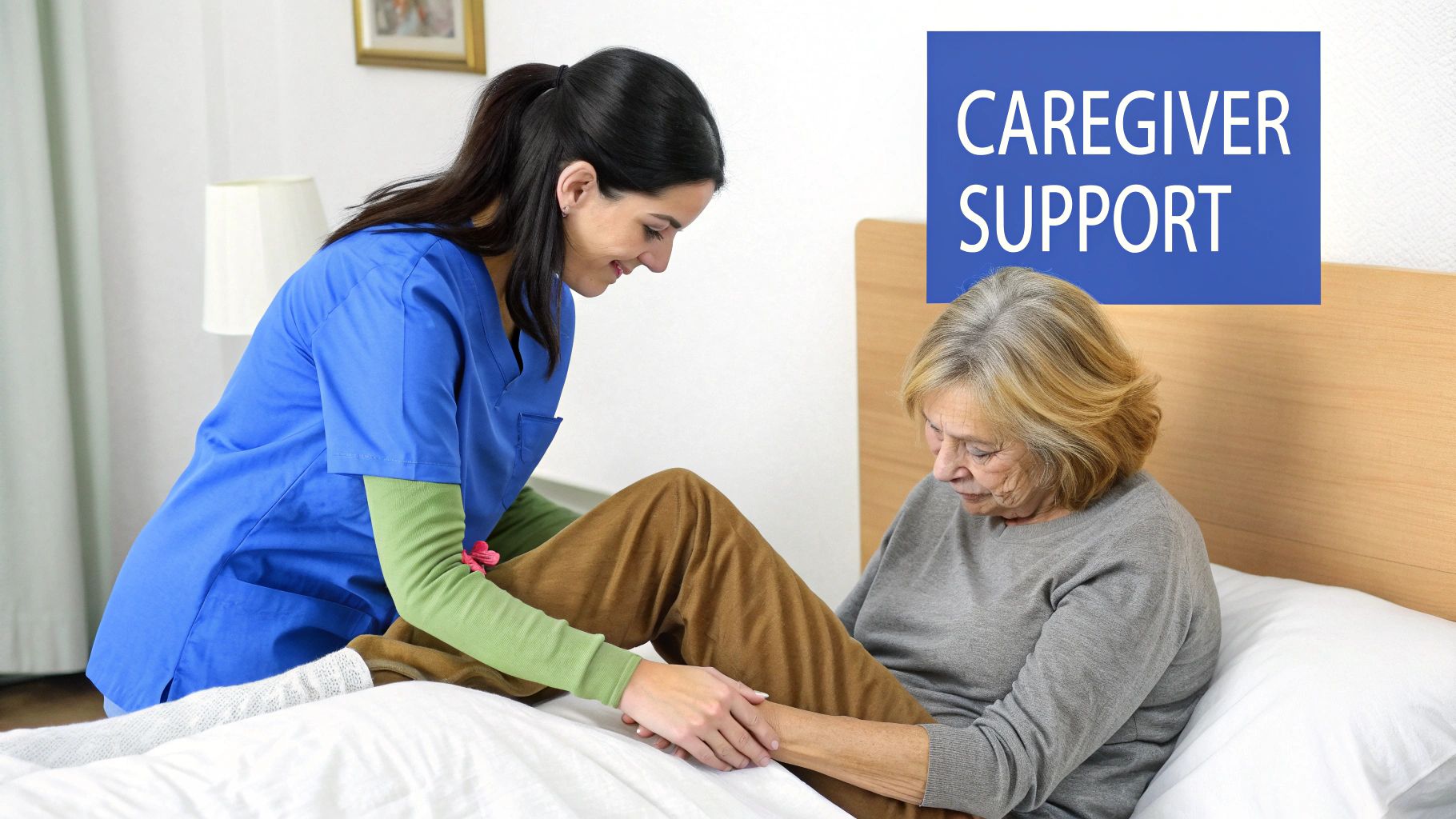
As a caregiver, your role in helping a loved one with leg exercises in bed goes far beyond just counting reps. You’re their stability, their cheerleader, and their safety net, turning what could feel like a chore into a moment of connection. Your gentle support can truly make all the difference.
Effective help starts with a simple conversation and a watchful eye. Before you begin, always ask how they're feeling that day. Energy levels change, so what worked yesterday might be too much today. Remember, the goal is to encourage movement, not to force it.
Providing Gentle and Safe Support
Think of yourself as a supportive partner in this process. You’re there to provide just enough help to keep them safe and ensure good form, but not so much that you’re doing the work for them. Let them lead the effort.
Here are a few practical ways you can offer physical assistance:
- For Heel Slides: Try placing one hand lightly under their heel and the other just under their knee. This simple placement helps guide the leg smoothly and cuts down on friction from the bedsheets.
- For Leg Lifts: A gentle hand under the ankle provides a great sense of security. It also helps them control the movement on the way down, preventing the leg from dropping suddenly.
And don't forget to protect your own body! When you lean in to help, stand with your feet apart for a solid base and bend at your knees, not from your back. Your well-being is crucial, too.
Observing and Encouraging Progress
Watching for signs of fatigue or discomfort is one of your most important jobs. You’ll want to keep an eye out for subtle cues that it might be time for a break or to stop for the day.
Your encouragement is the most powerful tool you have. Celebrate the small wins—completing one more rep than last time, or even just making the effort to try. This kind of positive reinforcement builds confidence and turns exercise into a shared accomplishment.
Be on the lookout for these key signals:
- A change in their breathing, like holding their breath or starting to breathe heavily.
- Facial expressions like grimacing or wincing, which can signal pain.
- Slowing down a lot or struggling to finish a movement.
This kind of partnership is at the heart of a successful recovery, much like the guidance offered by professionals providing in-home physical therapy for seniors. Your consistent, positive presence creates an environment where they can really thrive.
The benefits of this teamwork are clear. One study looking at in-bed exercise routines found that with the right support, participants saw incredible improvements. Their mental well-being scores jumped from 45.28 to 50.85, while pain ratings dropped from 3.32 to 2.14. The fact that nearly 40.9% of people stuck with the routine for six months without any issues just shows how impactful a supportive caregiver can be. You can read the full research about these positive outcomes. By working together, you aren't just building muscle—you're boosting their entire quality of life.
Got Questions About Bed-Based Leg Exercises? We've Got Answers.
It's smart to have questions when starting something new, especially when it comes to health. Both seniors and their caregivers often wonder about the specifics of leg exercises in bed, and that’s a good thing! Getting clear answers builds the confidence you need to start and, more importantly, to keep going.
How Often Should These Exercises Be Done?
When you're just starting out, consistency is so much more important than intensity. The real goal isn't to feel wiped out afterward. It's about gently waking up your muscles and joints on a regular basis.
A fantastic starting point is to aim for one session a day, about 3-5 times a week. This gives your body plenty of time to adapt and recover between sessions. As you get stronger and more comfortable, you can gradually build up to doing them most days of the week. The most important thing? Listen to your body—it’s always your best guide.
Can These Exercises Cause Pain or Injury?
When you do them correctly and with care, these movements are exceptionally safe. They are designed to be low-impact, which protects your joints while still giving you real benefits. The risk of injury is very low. The trick is to start slow and never, ever push through a sharp or sudden pain.
It’s really helpful to know the difference between two types of feelings you might experience:
- Good Soreness: A mild, achy feeling in your muscles the day after you exercise is totally normal. This is just a sign that your muscles are responding and getting stronger.
- Warning Pain: Sharp, stabbing, or nagging pain right in a joint is your body’s signal to stop. It might mean the movement isn’t right for you at this moment, or that you need to adjust your form.
The golden rule is simple: listen to what your body is telling you. If an exercise causes joint pain, stop right away. It's always better to be cautious and try a different movement than to push through and risk a setback.
What Results Can We Realistically Expect?
Patience is key here. While everyone's body is different, many people start noticing small, positive changes within the first couple of weeks. These early wins often look like better circulation, less swelling in the ankles, and joints that don't feel quite so stiff, especially in the morning.
Building noticeable muscle strength takes a bit longer, usually several weeks or even a few months of sticking with it. But honestly, the most meaningful results show up in everyday life. Celebrate those small victories! Finding it easier to shift positions in bed, feeling more steady when you stand up, or having the energy to walk to the kitchen with more confidence—these are the true signs of progress.
At NJ Caregiving, we believe in empowering seniors to live with dignity and independence right where they feel most comfortable. If you need compassionate, professional support to help your loved one stay active and safe at home, learn more about our in-home care services.
