

When you're the primary caregiver for a loved one, it can feel like the world rests on your shoulders. You're the chef, the nurse, the chauffeur, and the cheerleader, all wrapped into one. But even the most dedicated caregiver needs a break. That's where in-home respite care comes in—it’s not about finding a replacement, it’s about bringing in a teammate.
Understanding In Home Respite Care and Why It Matters

Think of in home respite care as a professional relief valve for your family. It's a planned, temporary service where a qualified caregiver comes into your loved one’s home, allowing you to step away without worry. This isn't just "getting a break"—it's a crucial part of a sustainable, long-term care strategy.
Whether it’s for a few hours to run errands, a full day to catch up on your own appointments, or even a few days to take a much-needed vacation, respite care helps you avoid caregiver burnout. It ensures your loved one receives seamless, high-quality care right where they feel most comfortable: at home.
The entire goal is to give you a chance to recharge before stress and exhaustion take over. This way, you can return to your caregiving role with renewed energy and focus.
The Core Components of Respite Care
At its heart, this service is built on two simple but powerful ideas that support both your loved one and you:
- Seamless Care Continuity: The professional caregiver steps right into the daily routine. From medication reminders and meal prep to companionship, everything continues as usual, so your loved one's comfort and stability are never disrupted.
- Essential Caregiver Support: It gives you the time you need for your own health, work, and personal life. This break is essential for preventing the isolation and fatigue that so often come with being a full-time caregiver.
To give you a clearer picture, here’s a quick breakdown of what in-home respite care really looks like for your family.
In Home Respite Care At a Glance
| Key Aspect | What It Means for Your Family |
|---|---|
| Location | Care is provided in your loved one's own home, maintaining their comfort and routine. |
| Provider | A trained, professional caregiver takes over duties temporarily. |
| Duration | Flexible scheduling, from a few hours to several days at a time. |
| Purpose | To provide temporary relief to the primary family caregiver and prevent burnout. |
| Services | Includes personal care, companionship, meal prep, and medication reminders. |
This service isn’t just a nice-to-have; it's becoming a necessity. With the global respite care market expected to hit USD 448.15 million by 2030, it’s clear families are recognizing its value. And with 75% of Americans over 50 wanting to stay in their own homes, services like those from NJ Caregiving are vital for the nation's 63 million family caregivers.
By bringing professional care directly into the home, you maintain a sense of normalcy for your loved one while giving yourself the permission and opportunity to recharge. It’s a proactive approach to sustainable, long-term family caregiving.
For families in Princeton and Mercer County, NJ Caregiving is your local resource for making this process feel simple and reassuring. If you'd like to explore this topic further, you can also check out our detailed guide on the fundamentals of respite care for the elderly.
The True Impact on Caregivers and Seniors

While in home respite care is often described as just a "break," its true value runs much deeper. It creates a positive ripple effect that touches both the caregiver and the senior they're supporting. For family caregivers, this service is nothing short of a lifeline, directly tackling the chronic stress that leads to physical and emotional exhaustion.
Taking on the responsibility of full-time care is a massive undertaking. The constant pressure can make it feel impossible to keep up with your own health, career, or other family commitments. Respite care gives you the freedom to step away without guilt, knowing your loved one is in safe, capable hands. It's a proactive step toward preserving your own well-being.
Respite isn’t just about preventing a crisis; it’s about maintaining balance. This scheduled relief gives caregivers the essential time needed to recharge, ensuring they can continue providing compassionate, high-quality care in the long run.
This scheduled pause allows you to return to your role with renewed patience and energy, which can dramatically strengthen the relationship you have with the person you care for. You can find more information about this in our guide covering how to prevent caregiver burnout.
Benefits for the Senior
The advantages extend powerfully to the senior as well. Introducing a new, friendly face into their routine provides valuable social interaction, which can significantly ease feelings of loneliness or isolation. Many seniors also quietly worry about being a burden on their families, and respite care helps lift that concern.
It offers a welcome change of pace and a new person to share stories and activities with, boosting their mood and providing mental stimulation. Plus, receiving care from a trained professional ensures their needs are consistently met with expert attention, which enhances their safety and overall quality of life.
A Princeton Family's Story
Consider Sarah, a Princeton resident who was caring for her father, Robert, after he developed mobility challenges. She was juggling his appointments, meals, and all the household chores, but her freelance design business was suffering, and she felt constantly drained. She worried that leaving him alone, even for a few hours, was just too risky.
After arranging for in home respite care with NJ Caregiving, a professional aide began visiting Robert three afternoons a week. This simple change had a huge impact:
- Sarah’s Relief: She could finally schedule client meetings and dedicate focused time to her work, which dramatically reduced her financial and emotional stress.
- Robert’s Experience: He quickly bonded with his caregiver, enjoying their conversations about local history and genuinely looking forward to the companionship.
This new arrangement completely transformed their dynamic. Sarah was no longer just a caregiver; she could be a daughter again. Robert, in turn, felt more independent and less like a responsibility. Their story really shows how respite care doesn't just provide a break—it restores balance and enriches the lives of everyone involved.
When to Consider In Home Respite Care
Knowing when to ask for help is one of the toughest parts of being a caregiver. So many families I've worked with wait until they’re at their absolute breaking point, but in home respite care works best when you bring it in before things get overwhelming. Recognizing the early signs of strain can protect your own health and make sure your loved one is getting the best possible support.
Think of it like regular maintenance for your car. You don't wait for the engine to seize up before you get an oil change. In the same way, respite care isn’t just for emergencies—it’s smart, preventative maintenance for your family’s entire care system.
Scenarios Where Respite Care Is a Lifeline
Some situations just naturally call for an extra set of hands. If your family is navigating any of these challenges, it’s a pretty clear sign that it’s time to look into temporary professional care.
- Managing a Chronic Condition: Caring for someone with a progressive illness like Alzheimer’s, dementia, or Parkinson's is a marathon, not a sprint. The physical and emotional toll is immense, and respite care gives you those essential, planned breaks you need to keep going long-term.
- Post-Surgery Recovery: After a hospital stay, your loved one might need temporary help that’s beyond what you’re comfortable providing. A respite caregiver can manage recovery tasks, help with mobility, and ensure a safe and smooth transition back to everyday life.
- Preventing Caregiver Burnout: Are you feeling exhausted all the time? Irritable? Isolated? These are the classic red flags of burnout. Pushing through them can damage your health and, frankly, affect the quality of care you're able to give. Respite is the most direct solution.
For so many adult children juggling careers, their own kids, and their parents' needs, respite care is the bridge that holds it all together. It’s a structured, reliable way to know your parents are safe and happy while you take care of everything else on your plate.
The Bigger Picture: Navigating the Care Landscape
The decision to seek help isn't just about your personal situation; it's also shaped by what's happening in the wider world of care. The demand for caregivers is growing, but there's a nationwide shortage of professionals. In fact, projections show a need for over 772,000 new direct care jobs by 2034, and high turnover is already straining the system.
This shortage has a real impact on families like yours, making established, professional respite services from an agency like NJ Caregiving an invaluable resource for consistent, safe support. You can read more about how this trend is affecting home care services.
At the end of the day, if providing care has started to feel unsustainable or if you're constantly worried about leaving your loved one alone, that's your cue. It’s time to seriously consider in home respite care. This isn't a sign you've failed—it's a smart, compassionate step toward building a more resilient care plan for your whole family.
How to Handle Costs and Payment Options in NJ
Let's talk about the financial side of things. Figuring out how to pay for in home respite care can feel like a huge hurdle, but the good news is that New Jersey has several pathways to make it affordable. Knowing what’s available is the first step toward getting the support your family needs without adding a ton of financial stress.
Many families start by using private funds or a long-term care insurance policy, as these often cover respite services. To get a ballpark idea for your budget, you can look up the average respite care cost per day. But for a lot of folks here in Mercer County, government-funded programs are the most realistic and sustainable solution.
Unlocking Government Funded Support
New Jersey actually has some robust support systems for seniors and people with disabilities. These programs are designed specifically to help families get essential care—including respite—right at home.
The two main avenues you’ll want to explore are:
- NJ Medicaid Programs: The Managed Long Term Services and Supports (MLTSS) program is the big one here. It’s designed to help eligible people get care at home instead of in a nursing facility.
- Veterans Affairs (VA) Benefits: Veterans who meet certain requirements may qualify for aid that can be used to pay for in-home help and respite.
Tapping into these programs can dramatically reduce or even completely cover out-of-pocket costs, opening the door to professional care for many more families.
The whole point of programs like MLTSS is to help people stay in their own communities, receiving care in a place that’s familiar and comfortable. Respite is a covered service because everyone understands it’s absolutely critical for keeping the entire family care situation stable for the long haul.
Navigating NJ Medicaid for Respite Care
For many New Jersey families, Medicaid is the single most important resource for funding in home respite care. The MLTSS waiver program is particularly helpful because it bundles different services together, which makes managing benefits much simpler. Under MLTSS, an eligible person works with a care manager to create a personalized care plan, and that plan almost always includes an allowance for respite.
The application process can look intimidating, with its strict income and asset rules. But you don't have to go it alone. Getting the details right is crucial, and having an expert guide you can make all the difference. For a closer look at how it all works, check out our detailed guide on Medicaid respite care in NJ. Here at NJ Caregiving, we help families in Princeton and the surrounding towns navigate this process all the time, making sure they get the benefits they've earned.
This decision tree shows some of the common triggers that lead families to start looking for support like respite care.
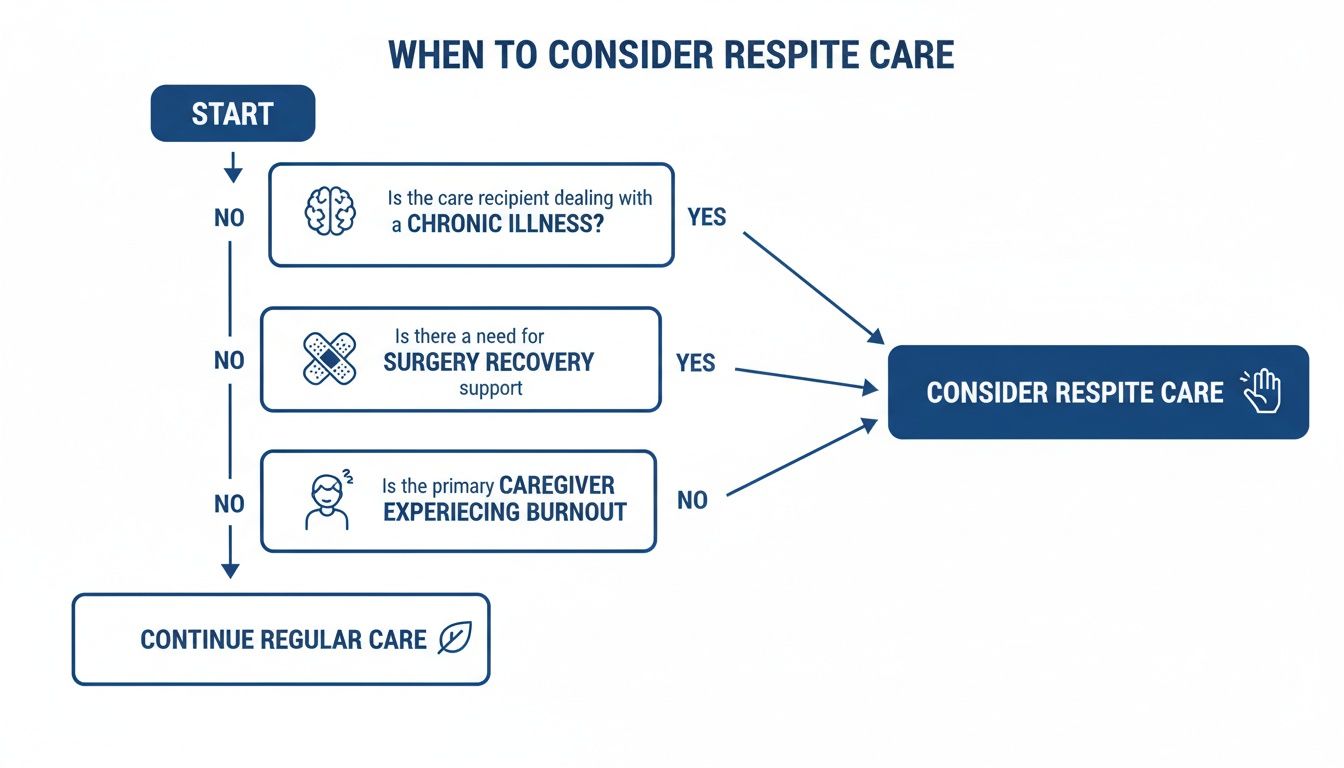
As the flowchart shows, different life events—whether it’s managing a chronic illness, recovering from surgery, or just hitting a wall with caregiver burnout—are all perfectly valid reasons to bring in professional help.
Your Step-by-Step Guide to Arranging Care

Figuring out in-home respite care can feel like a huge undertaking, but it doesn't have to be. When you break it down into a few simple steps, the whole process becomes much more manageable. Think of this as your roadmap—a clear path to finding the right support with confidence.
It all starts with getting a handle on what your family truly needs. From there, you can find a provider you trust, have a productive first conversation, and work together to build a plan that fits everyone. This way, nothing gets missed, and you end up with a solution that actually works.
Step 1: Figure Out What Your Family Really Needs
Before you even start Googling agencies, take a few minutes to think about your specific situation. This initial assessment is the bedrock of finding the right fit. You don't need every single detail ironed out, but having a general idea will make your conversations with providers so much more effective.
Try to nail down a few key things:
- Frequency and Duration: How often do you need that break? Are you thinking a few hours every week to catch up on errands, or do you need a full weekend to yourself once a month?
- Level of Care: What will the caregiver actually be doing? It could be as simple as providing companionship and making lunch, or it might involve more hands-on personal care like help with bathing or getting around the house.
- Specialized Needs: Does your loved one have a condition like dementia that requires a specific approach? Do they need careful medication reminders? Jot down any special skills you think a caregiver should have.
Step 2: Find a Trusted Local Provider
Once you have a clearer picture of your needs, you can start looking for a provider right here in the Princeton area. You'll want to find an agency with a solid local reputation, good reviews, and all the proper credentials—that means they should be licensed, bonded, and insured. This is non-negotiable; it protects your family and ensures you're working with professionals.
Here at NJ Caregiving, our first step is always just to listen. We know every family in Mercer County has a different story, and our mission is to become a partner you can lean on from the very first phone call.
A great provider won’t just fill a time slot; they will seek to understand your family’s dynamic. The goal is to build a supportive relationship based on trust, respect, and open communication.
Step 3: Get Ready for the First Conversation
That initial consultation is more than just a formality; it’s your chance to interview the agency and see if they feel right. You should walk into that meeting with a list of questions ready to go. This is the time to ask about their care philosophy, how they train their caregivers, and what happens in an emergency.
Step 4: Create a Personalized Care Plan Together
The last piece of the puzzle is working with your chosen provider to map out a detailed, personalized care plan. This should be a team effort. The plan needs to cover everything from daily routines and food preferences to a list of emergency contacts and how everyone will stay in touch. This document is essentially the caregiver's playbook, making sure care is consistent and giving you total peace of mind.
Finding The Right Provider In Princeton
Choosing an agency for in-home respite care is a huge decision. You’re not just hiring a service; you’re inviting someone into your home and trusting them with the well-being of a person you love. It’s natural to feel a little overwhelmed, but a clear plan can help you navigate the process with confidence.
Think of it like hiring for the most important job in the world—supporting your family. You wouldn't bring someone onto that team without thoroughly checking their background, skills, and references. The same level of care and attention is needed here to find a compassionate, professional partner who truly understands your family’s needs.
Caregiver Screening And Training
An agency is only as good as its caregivers. Period. Before you dive into anything else, you need to know exactly how they recruit, vet, and train their team. This is absolutely non-negotiable for your loved one's safety and your peace of mind.
Get right to the point and ask:
- What does your screening process involve? (Ask specifically about criminal background checks and reference checks.)
- What kind of initial and ongoing training do your caregivers receive?
- Are your caregivers trained to handle specific conditions like dementia, mobility challenges, or medication reminders?
Agency Credentials And Insurance
A reputable agency operates with complete transparency and has safeguards in place to protect both you and its employees. This means they should be fully licensed, bonded, and insured. Think of these credentials as your safety net.
Verifying that an agency is licensed, bonded, and insured isn't just a formality. It’s your confirmation that you're working with a legitimate, professional organization committed to high standards of care and accountability.
Customizing The Care Plan
Your family’s situation is unique, so a cookie-cutter care plan just won’t do. The right provider will sit down with you and work together to build a plan that fits your life, not the other way around.
Find out how flexible they are:
- How do you create a personalized care plan for a new client?
- What happens if our needs change? How do you adjust the plan?
- How much notice do you need if we have to change or cancel a visit?
At NJ Caregiving, we've built our reputation on a rigorous screening process and our commitment to creating genuinely personalized care plans for every family we serve in the Princeton area.
Before you make that final decision, it helps to have a checklist of questions ready. This ensures you cover all the important bases and can easily compare different agencies.
Essential Questions To Ask A Respite Care Provider
| Category | Question to Ask |
|---|---|
| Caregiver Qualifications | What are your hiring requirements for caregivers (experience, certifications)? |
| Do you perform national and local background checks on all staff? | |
| What kind of ongoing training do you provide for your caregivers? | |
| Care Planning & Flexibility | How do you create a personalized care plan for my loved one? |
| Can we meet the proposed caregiver before services begin? | |
| What is your policy if a scheduled caregiver is sick or unavailable? | |
| How much notice is required to change or cancel a service? | |
| Agency Credentials | Is your agency licensed by the state of New Jersey? |
| Are you bonded and insured? Can you provide proof of insurance? | |
| Communication & Oversight | How does the agency supervise its caregivers? |
| Who is my main point of contact at the agency if I have questions or concerns? | |
| How do you handle complaints or issues with care? | |
| Cost & Payment | Can you provide a detailed breakdown of all costs and fees? |
| Do you accept long-term care insurance, NJ Medicaid, or VA benefits? | |
| What are your billing procedures and payment schedules? |
Using this table as a guide during your conversations will help you feel organized and empowered. You’re gathering the information needed to make an informed, confident choice for your family.
Answering Your Questions About In-Home Respite Care
Even after deciding respite care is the right move, it's natural to have a few questions about how it all works day-to-day. Getting a handle on the details is the best way to feel truly comfortable and confident. Let's walk through some of the most common questions we hear from families right here in Princeton.
How Flexible Is The Scheduling?
This is a big one. Families often worry that respite care won't fit into their already packed lives. The short answer is yes—scheduling is completely flexible and designed to fit your family's unique rhythm.
Some families just need a few hours a week to run errands or attend appointments. Others arrange for a few days of care so they can finally take that much-needed vacation. We'll sit down with you and map out a schedule that gives you the perfect amount of support, whether that’s a regular weekly visit or just a one-off.
Will My Loved One Have The Same Caregiver?
We get it. A trusting, familiar relationship is absolutely vital for your loved one's comfort. That's why caregiver consistency is always a top priority for us. While we can't promise the exact same person for every single visit—life happens, after all—we do our best to assign a small, dedicated team to your family.
This way, your loved one always sees a familiar, friendly face at the door. It builds comfort and fosters a genuine connection, which is really what quality care is all about.
What Happens In A Medical Emergency?
Your loved one's safety is our highest priority, without question. Our caregivers are thoroughly trained in emergency protocols. In any life-threatening situation, their very first step is to call 911 immediately. After that, they notify you and our agency's on-call supervisor right away.
During our initial conversation, we'll work with you to create a crystal-clear, documented emergency plan. This ensures everyone is on the same page and knows exactly what to do if a crisis occurs.
At NJ Caregiving, our mission is to bring your family the support and peace of mind you deserve. To find out more about our personalized in-home respite care services here in Mercer County, contact us today for a complimentary consultation.
