

When you hear the term "in-home elderly care," what comes to mind? For many, it's about professional support that allows a senior to live safely and comfortably right where they belong—in their own home.
It’s a deeply personal alternative to a nursing home or assisted living facility. Care can range from simple companionship and help with daily chores all the way to complex medical support, all within the familiar four walls of home.
Why More Families Are Choosing In-Home Elderly Care
For families across Princeton and Mercer County, the conversation about care for an aging loved one is never just about logistics. It quickly gets to the heart of what truly matters: dignity, comfort, and independence. This is where the idea of aging in place becomes not just an option, but the preferred path forward.
Instead of seeing it as a clinical service, it's better to think of in-home elderly care as a partnership. It’s a collaborative effort to empower seniors, helping them hold onto their cherished routines, social circles, and sense of self in the one place they know best. This couldn't be more different from the structured, and often impersonal, setting of a large facility.
The Growing Preference for Familiar Comforts
The desire to stay at home isn't just a local trend—it’s a huge demographic shift. As our population ages, the need for personalized care solutions has exploded. The number of Americans over 65 is set to grow by a staggering 47% between 2022 and 2050.
Right now, about 12 million Americans receive care at home each year, and a massive 86% of them are age 65 or older. This paints a clear picture of the link between getting older and needing in-home support. You can dig into more home health trends on boosthomehealth.com.
This preference is deeply rooted in real emotional and psychological benefits. Aging in a familiar setting provides:
- A Stronger Sense of Independence: Seniors get to keep making their own choices about their day, from when they wake up to what’s for lunch.
- Reduced Stress and Anxiety: The simple comfort of one’s own bed, seeing familiar photos on the wall, or looking out at a beloved garden can make a world of difference during a time of change.
- Continued Community Connection: Staying home means staying connected to neighbors, local shops, and community groups, which helps fight the social isolation that can seriously impact health.
Choosing in-home elderly care is often about preserving a quality of life that institutions just can't replicate. It’s about making sure a loved one feels respected, valued, and in control of their own life story for as long as possible.
At the end of the day, families are choosing this path because it puts the person before the patient. It honors a lifetime of memories and routines, bringing support that adapts to the individual, rather than forcing them to adapt to a new and unfamiliar world. This guide is here to help you confidently navigate every step of this important decision.
Understanding the Different Types of In Home Care
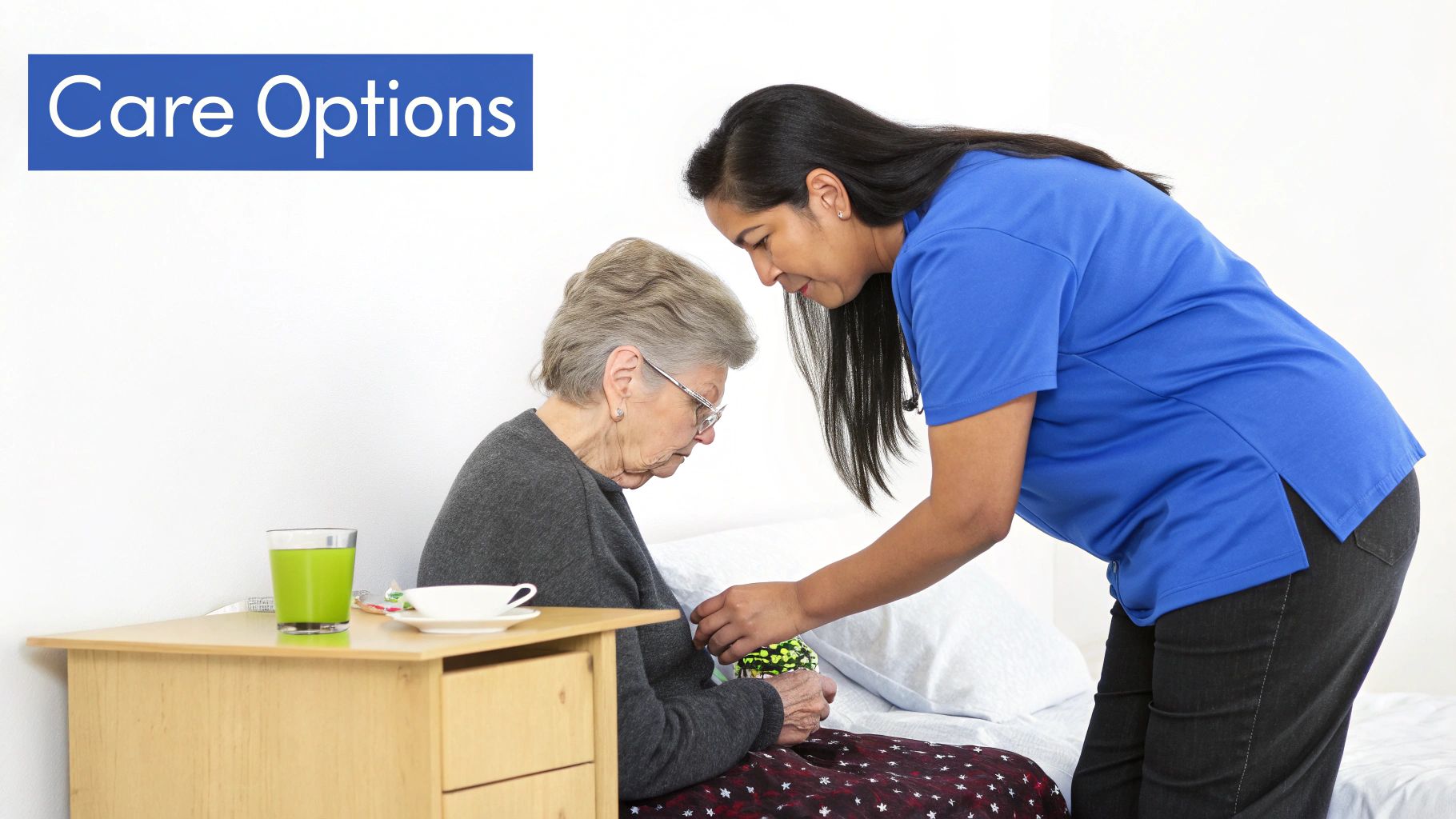
The phrase "in-home elderly care" isn't a one-size-fits-all service. It’s actually a broad spectrum of support systems, designed to meet everything from a simple need for companionship to complex medical assistance. Think of it as building a custom support team where you choose the players based on your family's unique situation.
Figuring out these distinct service types is the first step toward finding that perfect balance of independence and support for your loved one. Each category serves a unique purpose, ensuring care is always relevant, respectful, and effective.
H3: Personal Care Assistance
Imagine your father, who has always been proud and independent, now struggling with the simple act of buttoning his shirt due to arthritis. Personal care is the gentle, hands-on help that allows him to start his day with dignity. It’s not about taking over, but about providing support right where it's needed most.
This type of care centers on the Activities of Daily Living (ADLs)—those fundamental tasks of self-care. It’s designed to help seniors maintain their personal hygiene and daily routines safely and comfortably.
Common personal care tasks include:
- Assistance with bathing, dressing, and grooming.
- Help with mobility, like moving from a bed to a chair or walking safely around the house.
- Support with toileting and incontinence care.
- Meal preparation and assistance with feeding if necessary.
This foundational support is often the first type of in-home elderly care a family looks for, as it addresses immediate safety and comfort needs.
H3: Skilled Nursing Care
Now, picture a different scenario. Your mother is returning home from the hospital after a hip replacement. She needs more than just help getting around—she requires professional medical attention to ensure her recovery goes smoothly. This is where skilled nursing care comes in.
Unlike personal care, skilled nursing is provided by a licensed Registered Nurse (RN) or Licensed Practical Nurse (LPN). It involves medical tasks that can only be performed by a trained healthcare professional, bringing clinical expertise directly into the home.
Services often include wound care, IV medication administration, monitoring vital signs, and managing complex health conditions like diabetes. It's the ideal solution for post-operative recovery or managing a chronic illness that requires ongoing medical supervision. For a deeper dive, our guide to nursing care at home provides a more detailed look at these critical services.
H3: Companionship and Social Engagement
Loneliness can be just as damaging to a senior's health as any physical ailment. That’s why companionship care is so incredibly vital. Think of it as a friendly visitor who comes not just to help, but to genuinely connect.
This service is all about emotional well-being and social interaction. A companion caregiver might spend an afternoon playing cards, looking through old family photos, or simply sharing a heartfelt conversation over a cup of tea. They can also accompany your loved one on social outings, to doctor’s appointments, or to the grocery store, helping them stay active and engaged with their community.
H3: Specialized Dementia and Alzheimer's Care
Caring for someone with dementia or Alzheimer's requires a very specific set of skills and a deep well of patience. Specialized dementia care is delivered by caregivers who have received dedicated training to manage the cognitive and behavioral challenges that come with memory loss.
These professionals know how to create a calm, structured environment that reduces agitation and confusion. They use proven techniques to encourage engagement, assist with memory-focused activities, and provide consistent routines that give your loved one a sense of security. This specialized approach ensures their safety while promoting the highest possible quality of life.
H3: Respite Care for Family Caregivers
Finally, let’s not forget about the family caregiver—that dedicated daughter, son, or spouse who provides round-the-clock support. Respite care is designed specifically for you. It offers a temporary, well-deserved break, allowing family caregivers to rest, run errands, or simply recharge their batteries.
A professional caregiver steps in for a few hours, a full day, or even a few weeks, ensuring your loved one's care continues without interruption. This service is absolutely essential for preventing caregiver burnout and maintaining the well-being of the entire family.
To help you see how these services stack up, here’s a quick comparison.
In Home Elderly Care Services at a Glance
| Service Type | Primary Focus | Common Tasks | Best For |
|---|---|---|---|
| Personal Care | Hands-on assistance with Activities of Daily Living (ADLs) | Bathing, dressing, grooming, toileting, mobility support, meal prep | Seniors needing physical support to maintain independence and safety at home. |
| Skilled Nursing | Medical care from licensed nurses (RNs, LPNs) | Wound care, IV therapy, medication management, vital sign monitoring | Individuals recovering from surgery, illness, or managing a chronic condition. |
| Companionship | Emotional support and social engagement | Conversation, hobbies, accompanying to appointments, light housekeeping | Seniors experiencing loneliness, isolation, or who need supervision and encouragement. |
| Dementia Care | Specialized support for cognitive decline | Memory activities, safety supervision, managing behavioral changes, routine creation | Individuals with Alzheimer's or other forms of dementia requiring a structured, safe environment. |
| Respite Care | Temporary relief for family caregivers | Can include personal care, companionship, or nursing tasks | Family caregivers who need a short-term break to prevent burnout and attend to their own needs. |
Each of these care types can be a lifeline, ensuring your loved one gets the right level of support at the right time.
Navigating the Costs of In Home Care
Figuring out the financial side of in home elderly care is a huge step in building a care plan that actually works for the long haul. There’s no single price tag; think of it more like a custom quote that shifts based on a few key things.
The cost really boils down to the type and amount of care your loved one needs. A few hours of companionship a week, for instance, is going to be far more affordable than round-the-clock skilled nursing. Specialized support, like dementia care that requires caregivers with extra training, will also shape the final number. The idea is to perfectly match the services—and the cost—to what your family truly needs, so you’re only paying for support that makes a difference.
Primary Funding and Payment Options
Once you have a clear idea of the care required, the big question is: how do we pay for it? The good news is, you’ve got options. Many families find that a mix of different resources makes professional care manageable and affordable.
Here’s a look at the most common ways families in New Jersey cover the cost:
- Private Pay: This is the most straightforward route. Families pay for care out-of-pocket using personal savings, retirement funds, or other assets. It offers the most freedom to choose your provider and services without having to jump through eligibility hoops.
- Long-Term Care Insurance: If your loved one planned ahead with a long-term care policy, it can be a game-changer. These policies are built specifically to cover services like in-home care when someone needs help with daily activities.
- VA Benefits: Veterans and their surviving spouses might qualify for help through the Department of Veterans Affairs. Programs like Aid and Attendance can provide a monthly pension specifically to help pay for in-home assistance.
Leveraging Government Assistance Programs
Beyond private options, government programs are a critical resource for many families. New Jersey has specific Medicaid programs designed to help eligible seniors get care right in their own homes, steering clear of a nursing facility. While navigating these programs can feel a bit complicated, they are a vital lifeline for thousands.
The most important thing to remember is that you don't have to figure this out alone. A reputable local agency can help you understand your options and guide you toward the resources that best fit your financial situation.
Medicaid's home and community-based services (HCBS) waivers can cover a whole range of non-medical support, from personal care to companionship. Eligibility depends on both medical need and financial standing, so it's important to look into the specific requirements for New Jersey. We break it down further in our guide on how to pay for home care to get you started.
This shift toward professional home care isn't just a local trend. The global market is booming, expected to grow from USD 430.12 billion in 2025 to over USD 727.65 billion by 2032. With its large aging population, North America makes up over 38% of this market right now. You can dive deeper into these industry dynamics on coherentmarketinsights.com to see how the numbers confirm the growing value of professional care. Planning for these costs is one of the best things you can do to ensure your loved one gets consistent, high-quality in home elderly care.
How to Select the Right Care Provider in Mercer County
Choosing the right partner for in home elderly care is easily the most critical decision you'll make. This isn't just about hiring a service; you're inviting someone into your home and entrusting them with a family member's well-being. This guide gives you a clear framework for finding a provider in Mercer County who delivers not just exceptional care, but also complete peace of mind.
The journey starts with a really honest look at what your family truly needs. Before you even think about picking up the phone, take some time to do a thorough needs assessment. Think of it as creating a detailed map that will guide you to the perfect care solution.
Conducting a Comprehensive Needs Assessment
This first step involves looking at your loved one's situation from every possible angle—not just their physical health. A holistic view is the only way to ensure the care plan will support their entire well-being.
Consider these three key areas:
- Physical Needs: What daily activities are becoming a struggle? This could be anything from mobility and bathing to dressing, preparing meals, or managing medications. Be upfront about their physical limitations and any safety concerns, like fall risks.
- Cognitive Needs: Are you noticing signs of memory loss, confusion, or difficulty with simple problem-solving? Take stock of their ability to manage appointments, pay bills, or follow instructions. This is especially important if you suspect the early signs of dementia.
- Social and Emotional Needs: Is your loved one feeling lonely or isolated? Do they miss their old hobbies or seeing friends? Quality care isn't just about tasks; it should include companionship and opportunities for social connection to lift their spirits and boost their mental health.
By writing these needs down, you essentially create a "job description" for a potential caregiver. This clarity saves you from wasting time with an agency that offers services that don't line up with your loved one’s specific requirements.
Once you have this map in hand, you're ready to start interviewing agencies.
Questions to Ask Potential Care Agencies
Treat this step like you’re hiring for the most important role in your company. Your questions should be direct and designed to reveal an agency's professionalism, compassion, and true commitment to quality.
Here is a checklist of essential questions to ask every single provider:
- Caregiver Qualifications and Training: What are your hiring standards? Are your caregivers certified Home Health Aides (HHAs)? Do they get ongoing training, especially in specialized areas like dementia care?
- Screening and Background Checks: What does your screening process involve? Do you run national criminal background checks, verify all references, and check driving records?
- Licensing and Insurance: Is your agency licensed by the state of New Jersey? Are you fully insured and bonded to protect my family from any liability?
- Care Plan Development: How do you build a personalized care plan? Is a Registered Nurse (RN) involved in the initial assessment and ongoing supervision?
- Emergency Protocols: What's your procedure if a caregiver can't make their shift? What happens in case of a medical emergency?
The infographic below outlines the common process for funding care, which is another key topic to discuss with potential providers.
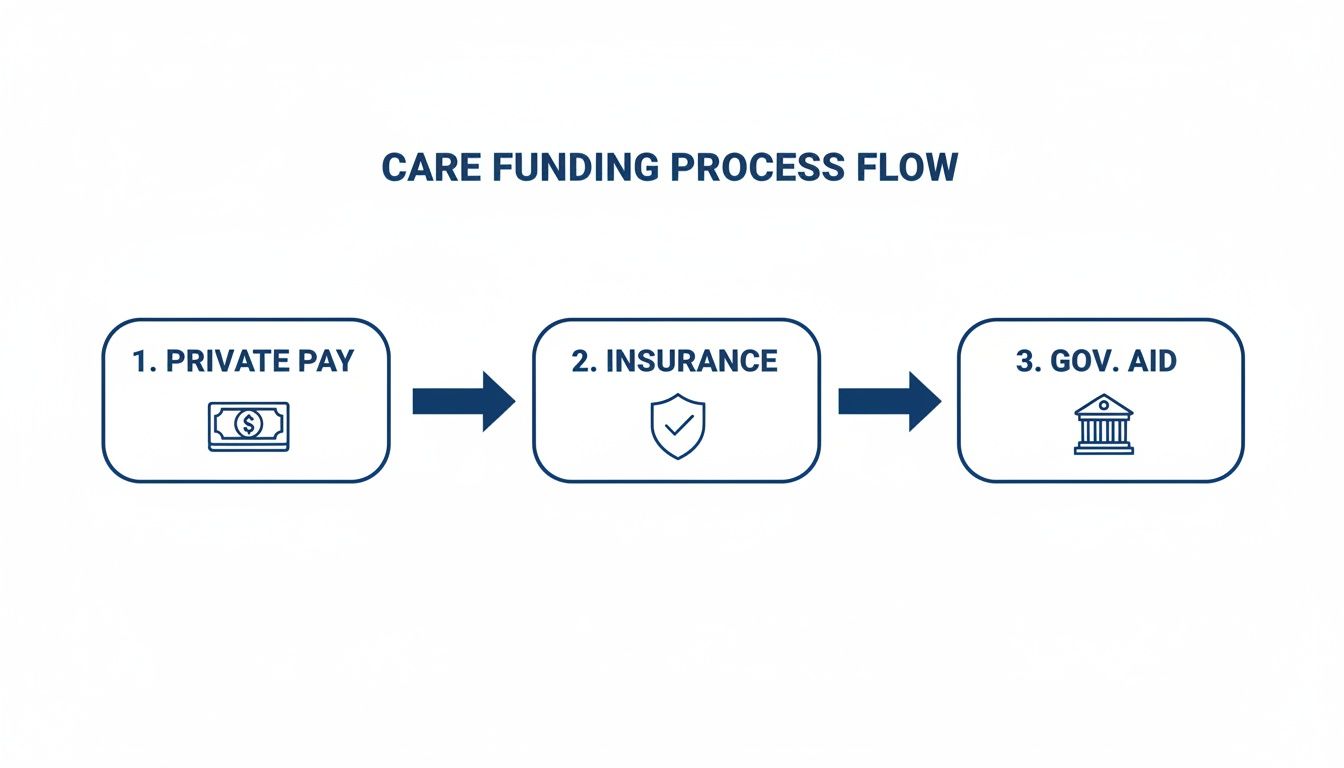
This visual shows that funding often flows from private pay and insurance before tapping into government aid, highlighting the different financial pathways available. For a deeper understanding of navigating care in our area, you can learn more about home care in Princeton NJ and how a trusted local agency can guide you.
Red Flags to Watch Out For
Just as important as asking the right questions is knowing how to spot potential warning signs. Be wary of any agency that seems evasive, disorganized, or unprofessional.
Critical red flags include:
- Vague answers about caregiver training or background checks.
- No RN supervision or involvement in creating the care plan.
- Hesitation to provide references from current or former clients.
- Inflexible contracts or a lack of clarity on costs and billing.
Choosing a local Mercer County provider means you're partnering with a team that truly understands our community. They should be transparent, compassionate, and dedicated to building a trusting relationship with your family from day one.
Designing a Truly Personalized Care Plan
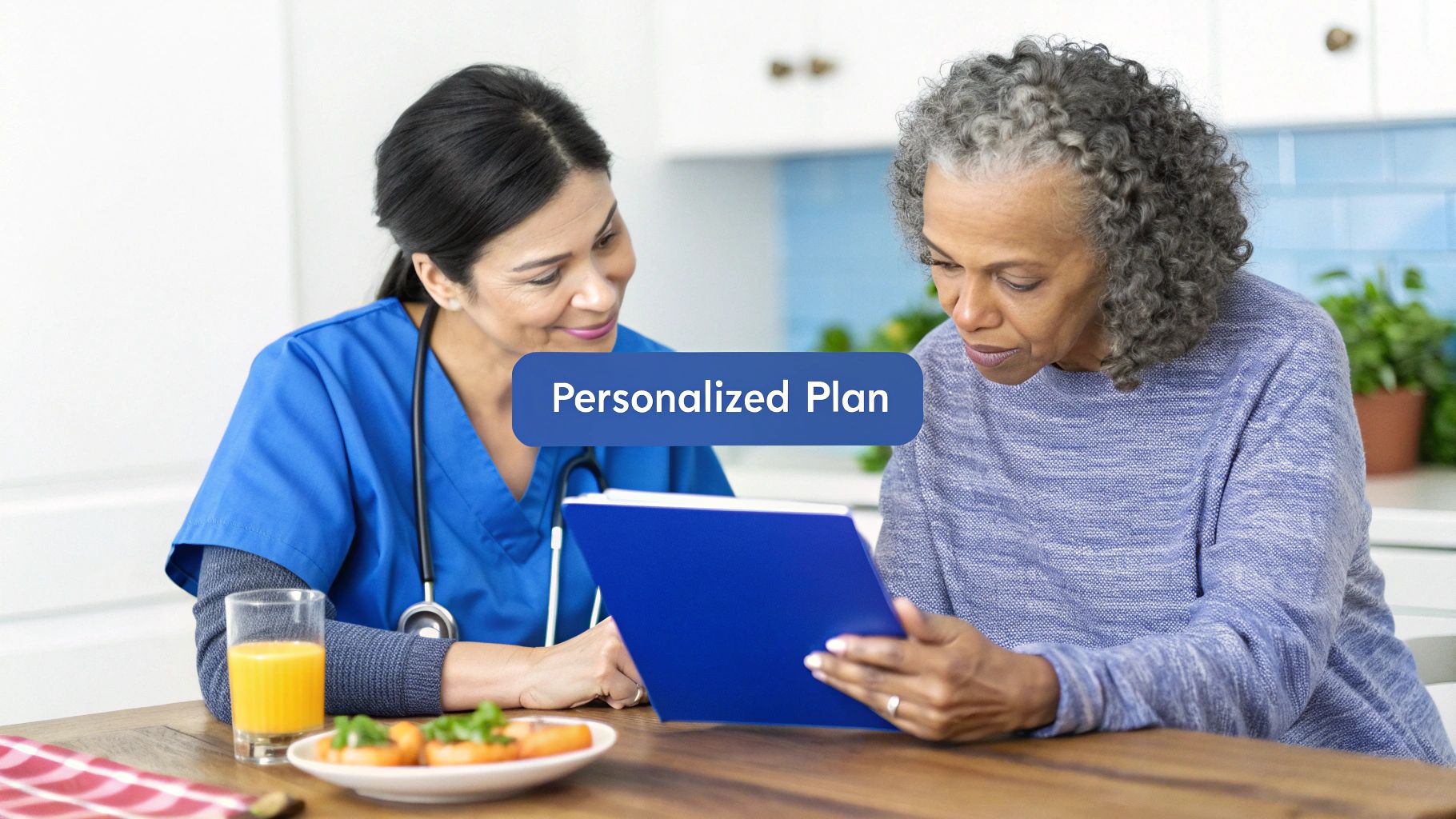
A truly effective care plan is so much more than a to-do list for a caregiver. Think of it as the architectural blueprint for your loved one’s daily life—a detailed, thoughtful document that guides every single aspect of their support. It’s what transforms generic services into a deeply personal in home elderly care experience.
This plan is the absolute cornerstone of consistent, high-quality care. It ensures that every caregiver, whether they're the primary person or just stepping in for a day, understands your loved one's unique needs, routines, and even their little quirks. Without this guide, care can feel disconnected and impersonal.
The Collaborative Blueprint for Care
The best care plans are never created in a vacuum. They come from a collaborative process that should always involve a Registered Nurse (RN), the senior themselves, and their family. This teamwork is what makes a plan medically sound, practical, and, most importantly, respectful of the individual’s wishes.
A top-tier agency will lead this collaboration, asking detailed questions to get to know the person behind the patient. They’ll want to know about lifelong habits, favorite meals, and social preferences to build a plan that truly honors who your loved one is.
The goal is to create a dynamic, living document that adapts as needs evolve. It’s a roadmap for providing care that is not just safe and effective, but also dignifying and life-enriching.
This plan should be looked at regularly and updated whenever there's a shift in health or personal preference. That's how it stays relevant and useful.
Essential Elements of a Robust Care Plan
So, what does this blueprint actually contain? A strong care plan is organized into clear sections that address every dimension of a senior's well-being. It goes far beyond basic tasks to create a daily routine that feels both structured and flexible.
Key components should always include:
- Daily Schedules and Routines: This outlines preferred times for waking up, eating meals, and going to bed to provide a comforting sense of normalcy.
- Medication Management Protocol: A clear, detailed schedule for all medications—including dosage, time, and specific instructions—is crucial and should be overseen by an RN.
- Dietary and Nutrition Plan: This section specifies meal preferences, any dietary restrictions or allergies, and hydration goals to support physical health.
- Social and Emotional Goals: It's important to include activities designed for engagement, like puzzles, walks, or calls with family, to combat isolation.
When you're designing a plan, comfort and sleep quality are paramount. It's essential to consider the increasing importance of a supportive mattress as we age, as it directly impacts overall health and well-being.
A Sample Framework for Success
To bring this all to life, let’s look at a sample structure. A well-designed care plan should be easy for anyone to pick up and understand, making sure every single person on the care team is on the same page.
A care plan often includes sections like the ones outlined in the table below. This framework ensures that all the essential details are covered, from medical needs to personal preferences.
Essential Components of a Sample Care Plan
| Component | Description | Example Detail |
|---|---|---|
| Personal Care | Detailed instructions for ADLs like bathing and dressing. | "Prefers a shower in the morning around 9 AM; needs standby assistance for safety." |
| Mobility Support | Specifics on assistance needed for walking or transfers. | "Uses a walker for all mobility; needs help standing up from a seated position." |
| Emergency Contacts | A list of family members and doctors with contact info. | "Primary contact: Daughter Jane Smith. Secondary: Dr. Allen at Princeton Medical." |
Having a clear, organized plan like this makes all the difference in the world.
Ultimately, a personalized care plan is the single most important tool for delivering exceptional in home elderly care. It’s the guarantee that your loved one receives support that is not only professional but also deeply compassionate and tailored just for them.
The True Impact of Quality In Home Care
When we talk about in-home care, it's easy to focus on the practical stuff—help with meals, medication reminders, or getting around the house. But the real magic of high-quality in home elderly care goes so much deeper. It’s about more than just keeping someone physically safe; it’s about nurturing their spirit and honoring their sense of self in the one place that holds all their memories.
There’s a powerful comfort in familiar surroundings. Think about it: staying in your own home means you’re not just a patient in a facility. You’re in your favorite armchair, looking out at the garden you’ve tended for years, with lifelong neighbors just next door. This continuity is a huge anchor for mental and emotional well-being, especially for anyone navigating cognitive changes.
Fostering Connection and Combating Isolation
One of the biggest, and often quietest, health risks for seniors is loneliness. Having a dedicated caregiver provides direct, one-on-one companionship that can completely transform the atmosphere of a home, filling it with warmth and conversation.
A great caregiver does more than prepare a meal—they become a friend. They’re there to share stories, play a game of cards, or simply listen. This consistent, friendly presence can work wonders for a senior's mood and even sharpen their cognitive function. It reminds them that they are seen, heard, and valued.
For the rest of the family, the impact is just as profound. There's an incredible peace that comes from knowing your loved one isn't just safe, but genuinely happy and engaged. This assurance allows you to step back from being a constant care manager and just be a son, daughter, or spouse again.
Peace of Mind for the Entire Family
That peace of mind is truly the cornerstone of good care. Many families also add an extra layer of security by exploring reliable smart home security systems, which can be a great way to ensure a loved one is safe when a caregiver isn't present. Combining professional oversight with modern technology creates a complete safety net.
It's no surprise that more families are choosing this path. The senior in-home care market was valued at USD 1,422.6 million in 2025 and is projected to hit USD 2,695.7 million by 2035. That’s a clear sign of just how important this model of care has become. You can dig into these in-home care market findings on futuremarketinsights.com. At the end of the day, great care enhances the quality of life for everyone involved.
Frequently Asked Questions About In-Home Elderly Care
Stepping into the world of in-home elderly care naturally brings up a lot of questions. It's a big decision, and families often wonder about everything from timing to the day-to-day logistics. Getting straightforward answers is the first step toward feeling confident and at peace with your choice.
Our goal here is to cut through the confusion and give you the practical information you need. When you have this foundation, you can focus on what really matters: finding warm, dependable care for the person you love.
How Do I Know When It’s the Right Time for In-Home Care?
Recognizing the right moment for care is rarely a single, dramatic event. It’s more often a quiet pattern of small but significant changes. You might notice your mom is struggling to cook healthy meals, or maybe your dad has started forgetting to take his medication. Sometimes, it's a growing sense of isolation that you can't quite put your finger on.
These are the gentle nudges that tell you a little extra help could make a world of difference.
The best approach is to be proactive, not reactive. Bringing in a caregiver for just a few hours a week can help prevent a fall or another crisis down the road. It improves safety and quality of life long before the needs become urgent. A professional assessment can also provide an objective, expert opinion to help guide you.
What Happens if Our Regular Caregiver Is Unavailable?
This is one of the biggest reasons families choose to work with a professional home care agency. A well-run agency knows that life is unpredictable—caregivers get sick, have family emergencies, or take well-deserved vacations. They have a solid system in place to ensure your loved one is never left without support.
A good agency maintains a team of qualified, background-checked caregivers who are ready to step in. If your primary caregiver can't make their shift, the agency handles all the legwork. They'll assign a trained substitute who is already briefed on your loved one's needs, ensuring care continues without a hitch. That kind of reliability provides incredible peace of mind.
Can the Care Plan Be Adjusted as Needs Change?
Absolutely. In fact, it must be adjustable. A care plan should be a living, breathing document that changes right along with your loved one's needs, not a rigid checklist that's set in stone.
High-quality in-home elderly care is built on flexibility. Whether a loved one is recovering from a hospital stay and needs more help, or their condition improves and they need less, the services can be scaled up or down. A professional agency will have a nurse conduct regular check-ins with your family to make sure the care plan always perfectly matches your loved one’s current situation and goals.
How Are Caregivers Matched with Clients?
A great caregiver match is about so much more than just skills and a schedule. The best agencies understand that the relationship between a client and a caregiver is deeply personal. It's the foundation of a positive, trusting experience, and they take the time to get it right.
The process starts with a detailed conversation to learn about your family member as a person. What are their hobbies and interests? What's their personality like? This insight is used to thoughtfully pair them with a caregiver who not only has the right skills but also a compatible temperament. It's how you foster a genuine bond built on comfort and mutual respect.
Finding the right support for your loved one in Mercer County starts with a conversation. At NJ Caregiving, we are dedicated to providing compassionate, professional in-home elderly care that honors your family's unique needs. Contact us today to learn how we can create a personalized plan that brings you peace of mind. Learn more at https://njcaregiving.com.
