
Finding the right live-in caregiver starts with a solid plan. Before you even think about posting a job or calling an agency, you need to do two things: first, get a really clear picture of the specific support your loved one needs, and second, decide whether you want to hire through an agency or find someone on your own.
Getting this initial planning phase right is like creating a blueprint. It guides every single step that follows—from the first interview to signing a contract—and makes sure you find the best possible match for your family.
Defining Your Family's Care Needs
You can't find the right person if you don't know exactly who you're looking for. The journey doesn't begin with a job ad; it starts with a thoughtful, honest look at your loved one’s daily life. This isn't just about making a to-do list. It's about building a complete profile of their needs, their personality, and what makes them tick.
Taking the time to do this upfront helps you avoid a common and heartbreaking mistake: hiring someone who looks great on paper but just isn't the right fit personality-wise. A caregiver becomes a huge part of the household, and making sure they click with your family is just as critical as their qualifications.
Create a Detailed Care Needs Assessment
It’s time to document everything. A good assessment covers medical needs, daily routines, and personal preferences. Think of it as crafting the perfect job description that will attract the kind of person you're truly looking for.
Break your assessment down into a few key areas:
- Medical and Physical Support: Does your loved one need help managing medications, getting around the house, or using special medical equipment? Be specific about how often and how complex these tasks are.
- Personal Care (ADLs): This covers the basics of daily living—things like bathing, dressing, grooming, and using the toilet. Our guide on creating an Activities of Daily Living assessment is a great resource for structuring this part of your evaluation.
- Household Duties: What kind of help is needed with cooking, light housekeeping, laundry, or getting to doctor's appointments?
- Companionship and Social Needs: Is your loved one quiet and introverted, or do they light up with conversation and social outings? The caregiver's personality should be a natural match.
To get a feel for what the job is really like from the caregiver's perspective, it can be incredibly helpful to read about the realities of working in home health care as a CNA. It gives you a much more realistic picture of the role.
Agency vs. Private Hire: The Two Paths
With your care assessment in hand, you've arrived at your first big decision. Should you go through a home care agency or hire a private caregiver directly? There’s no one-size-fits-all answer here. The right choice really comes down to your family’s budget, how quickly you need someone, and how comfortable you are taking on the role of an employer.
A home care agency handles the administrative burdens—like background checks, payroll, and liability insurance—offering a streamlined and secure option. Hiring privately gives you more control over selection and potentially lower costs, but it also makes you the employer, responsible for all legal and financial duties.
The demand for this kind of support is only getting bigger. In the United States, the number of family caregivers is expected to hit an estimated 63 million by 2025. This massive jump just goes to show how many families are facing this same challenge and highlights why choosing the right hiring path is so important.
Here’s a quick breakdown to help you weigh the pros and cons of each approach.
Agency vs. Private Hire: A Quick Comparison
This table breaks down the fundamental differences between hiring a live-in caregiver through an agency and finding one privately to help you decide which path is right for your family.
| Consideration | Hiring Through an Agency | Hiring Privately (Direct Hire) |
|---|---|---|
| Recruiting & Vetting | Agency handles screening, interviews, and background checks. | You are responsible for finding, interviewing, and vetting all candidates. |
| Cost | Typically higher hourly or daily rates to cover agency overhead. | Often more affordable, as you pay the caregiver directly without agency fees. |
| Liability & Payroll | Agency is the employer; they manage payroll, taxes, and insurance. | You become the employer, responsible for all legal and financial duties. |
| Backup Care | Most agencies can provide a substitute caregiver if yours is sick or on vacation. | You are responsible for finding your own backup care. |
| Control & Flexibility | Less direct control over selection, but a pre-vetted pool of caregivers. | Complete control over who you hire and the terms of employment. |
| Speed | Can often place a caregiver quickly from their existing staff. | The process can be slower as you handle every step yourself. |
Ultimately, an agency provides a safety net, handling the tricky parts and ensuring you're never left without care. A private hire, on the other hand, can lead to a more personal connection and gives you direct control over the arrangement. Making this choice early on will focus your search and set clear expectations for everyone involved.
How To Vet and Interview Potential Caregivers
Once you have a list of promising candidates, you’ve reached the most important part of your search. Vetting and interviewing isn't just about checking off boxes on a resume. This is your chance to guarantee safety, confirm their skills, and—most importantly—find a person whose personality and approach to care feel right for your family.
A thoughtful evaluation turns a simple Q&A into a real conversation. It lets you see beyond the paper qualifications and get a true feel for the person who could become such a central part of your loved one's life. Putting in the time and attention here builds a foundation of trust right from the start.
Running Comprehensive Background Checks
Before you get too invested in interviews, it’s crucial to run some foundational safety checks. This step is non-negotiable. Whether you’re hiring privately or just want to be extra sure about an agency’s screening, you need to do your homework. To make sure you’re hiring someone trustworthy, you need a comprehensive pre-employment screening process.
Your screening should hit several key areas:
- Criminal History: Go for a nationwide check that includes a search of the National Sex Offender Registry. Minor issues from a long time ago might not be a deal-breaker, but you’re looking for patterns of behavior or serious offenses that are clear red flags.
- Driving Record (MVR): If the caregiver will be driving your loved one, you absolutely need their Motor Vehicle Record. You want to see a clean record, free of DUIs, reckless driving, or a string of recent accidents.
- Reference Checks: Don't just ask if they worked there. Dig deeper. Ask previous employers specific questions about their reliability, their compassion, and how they managed tough situations. These conversations can tell you more than any formal document ever could.
This diagram shows the basic two-step process of figuring out your needs before you start choosing a path.
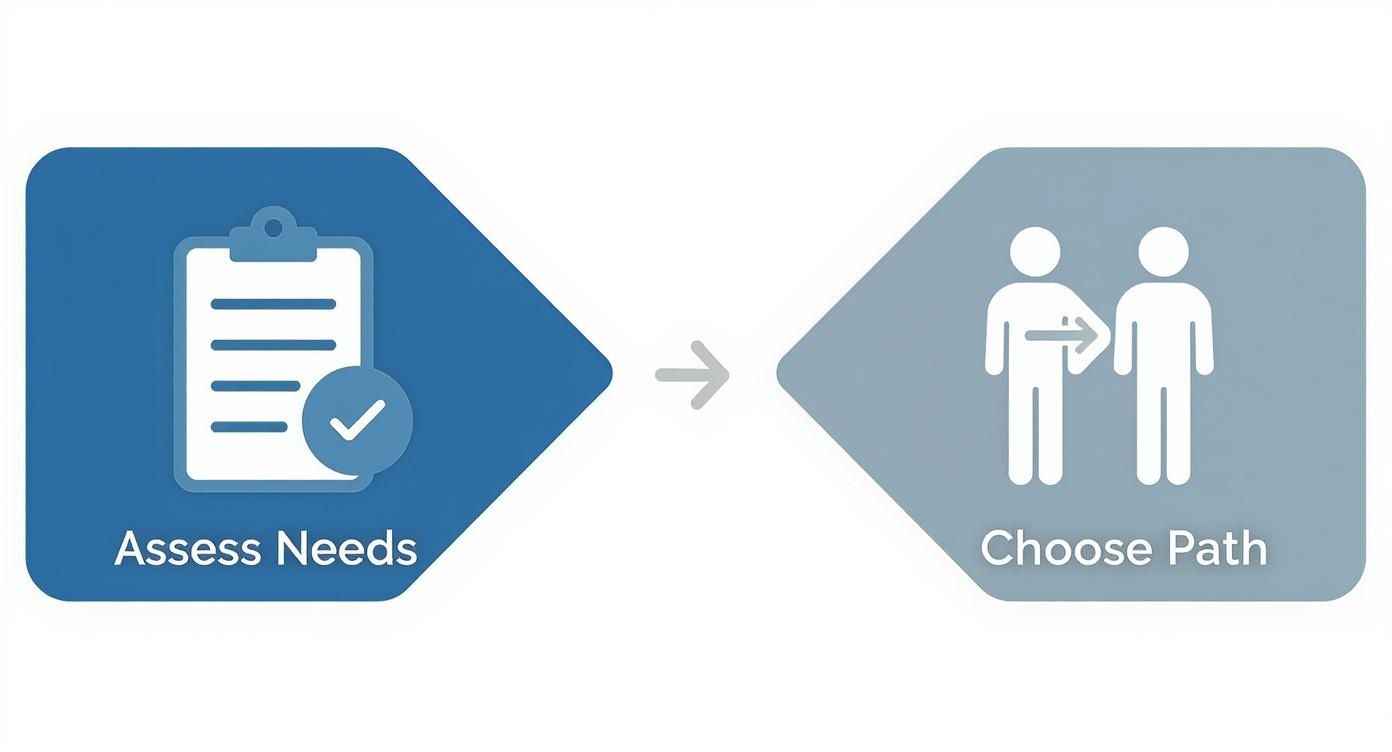
When you know exactly what you’re looking for, the vetting process becomes much more focused and a whole lot easier.
Moving Beyond the Resume in Interviews
The interview is where you find out who this person really is. A truly great caregiver has a special mix of patience, empathy, and quick thinking that you just can't see on a resume. The trick is to ask questions that encourage them to share stories and real-world examples, not just spit back generic answers.
So, instead of asking, "Are you patient?" try posing a question that gets to the heart of what patience actually looks like in this line of work. You want to see their thought process and emotional intelligence in action.
Using Behavioral and Scenario-Based Questions
To really see how a candidate thinks on their feet, use questions that make them pull from past experiences or think through a hypothetical situation. This is the best way to gauge critical soft skills like compassion, good judgment, and clear communication.
Examples of Behavioral Questions:
- "Tell me about a time you had a disagreement with a client or their family. How did you work through it?"
- "Describe a situation where you had to handle a sudden medical issue. What were the steps you took?"
- "Can you share an example of a time you went above and beyond for someone you were caring for?"
Examples of Scenario-Based Questions:
- "My mother can be stubborn about taking her medication. How would you approach that situation?"
- "Let’s say you notice my father seems more confused than usual one morning. What’s the first thing you would do?"
- "If my loved one becomes agitated or upset, what are some strategies you would use to help calm them?"
These kinds of questions reveal so much more about a person's problem-solving skills and emotional strength than standard interview questions.
For a much longer list, check out our complete guide to crucial caregiver interview questions to help you prepare. This resource gives you dozens of extra prompts designed to uncover the qualities that matter most. When you ask the right questions, you can feel truly confident that you’re making the best possible choice for your family.
Navigating Costs, Contracts, and Legal Duties
Hiring a live-in caregiver isn’t just a big emotional step; it's a significant financial and legal one, too. You're not just finding help—you're becoming an employer. Taking the time to understand the costs, your legal duties, and the absolute necessity of a solid contract will save you countless headaches down the road.
This is the practical side of caregiving that can feel overwhelming, but it doesn't have to be. By breaking it down, you can create a stable, respectful, and legally sound arrangement that protects both your family and the person you’re welcoming into your home.
Understanding the True Cost of Live-In Care
There's no single price tag for live-in care. The final cost is a blend of several key factors, including the caregiver’s experience level, the complexity of your loved one’s needs, and where you live.
Here in Mercer County, New Jersey, costs generally reflect state averages. But remember, specialized skills come at a premium. A caregiver with a CNA license or deep experience in dementia care will naturally command a higher salary than someone providing basic companionship. For a detailed breakdown, our guide on the current in-home caregiver costs in New Jersey is a great resource for budgeting.
Did you know the economic value of unpaid family caregiving in the U.S. is a mind-boggling $873.5 billion each year? That number really puts into perspective the incredible dedication this work requires. It’s also why formalizing the arrangement and compensating a professional caregiver fairly is so important when the needs become too great for family alone.
Employee vs. Independent Contractor: A Critical Distinction
This is a point many families miss: when you hire a caregiver privately, you become a household employer. The IRS is very clear on this—if you control what work is done and how it's done, that person is your employee, not an independent contractor.
This isn't just semantics; it comes with real legal and financial obligations. These aren't optional—they're required by law.
- Payroll Taxes: You are on the hook for withholding and paying Social Security and Medicare taxes (FICA).
- Unemployment Insurance: You’ll need to pay both federal (FUTA) and state (SUTA) unemployment taxes.
- Workers' Compensation: In New Jersey, household employers are required to carry workers' compensation insurance. This protects both you and the caregiver if they get injured on the job.
Trying to misclassify your caregiver as an independent contractor to dodge these responsibilities is a risky move. It can lead to steep penalties, back taxes, and serious legal trouble. A household payroll service can be a lifesaver here, handling all the paperwork and keeping you compliant.
Crafting a Clear and Comprehensive Caregiver Contract
A detailed work agreement is the single most important tool you have for setting clear expectations from day one. It’s the official playbook for the job, outlining every last detail to prevent misunderstandings. A handshake deal just won’t cut it for a role this vital.
Think of the contract as the foundation of your professional relationship. It should be reviewed and signed together before the caregiver's first day, ensuring everyone is on the same page from the get-go.
Essential Clauses for Your Live-In Caregiver Contract
A well-drafted contract leaves no room for guessing games. Use this checklist to make sure your work agreement covers all the critical bases, protecting both your family and your caregiver.
| Clause Category | Key Details to Include | Why It's Important |
|---|---|---|
| Compensation | Specify the exact salary (daily or weekly rate), pay schedule (e.g., every Friday), and payment method (e.g., direct deposit). Include details on overtime pay. | Prevents any confusion or disputes over wages and ensures you're following labor laws. |
| Job Duties | Create an exhaustive list of all tasks, from personal care and medication reminders to meal prep, light housekeeping, and driving. | Clearly defines the scope of the role. The caregiver knows what's expected, and you can be sure all needs are met. |
| Work Schedule | Outline on-duty hours, break times, and weekly days off. For live-in care, specify the expected sleep period (usually 8 uninterrupted hours). | Establishes a clear work-life balance and helps prevent caregiver burnout, which is critical for their well-being and job performance. |
| Time Off | Detail policies for paid vacation, sick leave, and personal days. Explain how much notice is required for requesting time off. | Sets professional expectations for managing absences and ensures you have a plan for finding backup care when needed. |
| Confidentiality | Include a clause requiring the caregiver to respect the family’s privacy and not share personal or medical information. | Protects your family’s sensitive information and establishes a crucial professional boundary. |
| Termination | Define the terms for ending the employment relationship, including the notice period for both parties (e.g., two weeks' notice). | Provides a clear, fair, and respectful process for parting ways if the arrangement doesn't work out. |
Putting everything in writing might feel formal, but it’s the best way to build a relationship based on mutual respect and clear communication. It's the blueprint for a successful and lasting caregiving partnership.
Getting Your Caregiver Started on the Right Foot
The first few weeks after a new live-in caregiver arrives are a huge adjustment—for everyone involved. This is a critical time that really sets the tone for the entire relationship. A little bit of thoughtful planning can transform what might be an awkward transition into a strong foundation built on clarity, trust, and mutual respect.
This is about so much more than showing them where the coffee maker is. It’s about having a real plan to integrate them into your home, get them up to speed on your loved one’s unique needs, and open the lines of communication from day one. Getting this right prevents so many future headaches and helps your new caregiver feel confident and empowered in their role.

Set Up a Paid Trial Period
Before everyone fully commits, one of the smartest things you can do is implement a paid trial period. Think of it as a one- or two-week test drive where you and the caregiver can see if the arrangement is a good fit in practice, not just on paper. It’s a low-pressure way to observe their skills and personality in a real-world setting.
It’s absolutely critical that this is a paid trial. Your caregiver is performing all the duties of the job, and they must be compensated fairly for their time. This isn’t just about being respectful; it’s about complying with labor laws from the very beginning.
During this time, your main job is to observe. How do they interact with your loved one? Do they take initiative? Are they respectful of your home and your rules? This trial is your final, practical gut check to make sure the connection feels right.
The First Day and Week: Have a Plan
A chaotic first day creates stress no one needs. A clear plan, on the other hand, makes the caregiver feel welcomed and prepared. The goal here is to give them all the information they need to succeed without completely overwhelming them.
A simple checklist can be your best friend for the first 24 hours and the week that follows.
- The Grand Tour: Go beyond the obvious. Show them their private space, of course, but also point out key items like the first-aid kit, fire extinguisher, and circuit breaker.
- Deep Dive into the Care Plan: Sit down together and walk through the detailed care plan you created. This is your chance to explain daily routines, medication schedules, dietary needs, and any little quirks or triggers.
- Emergency Cheat Sheet: Have a clearly written list of emergency contacts—family, doctors, preferred hospitals—ready to go. Talk through what to do in different emergency scenarios.
- House Rules & Routines: Explain your family’s general schedule, rules about having guests over, how to use the TV or internet, and expectations for any shared spaces. This helps set clear boundaries from the start.
Think of the first week as a guided orientation. Your presence and availability are key. This isn't about micromanaging; it's about providing the support and resources your caregiver needs to settle in and build a genuine rapport with your loved one.
This structured introduction removes the guesswork and helps your caregiver feel like a valued part of the team right away.
Keep the Conversation Going with Daily Check-Ins
The trial period isn’t just for watching from the sidelines; it’s for active communication. Plan to have brief, informal check-ins at the end of each day for the first week. These quick chats are invaluable for catching small issues before they snowball.
Try asking open-ended questions to get a real dialogue going.
- "How did today go from your perspective?"
- "Was there anything about Mom's routine that surprised you?"
- "Is there anything I could tell you that would make tomorrow easier?"
And then, listen. This is their opportunity to ask questions and share what they've noticed about your loved one. These check-ins build a habit of open communication that will serve you well for as long as they work with your family. At the end of the trial, have a more formal sit-down to discuss how everything went and officially welcome them aboard. This final step solidifies the relationship and makes sure everyone is ready to move forward together with confidence.
Finding Local Resources in New Jersey
When you're figuring out how to find a live-in caregiver here in the Garden State, knowing where to turn for local support can make all the difference. For families in Mercer County and nearby towns like Princeton and Hamilton, tapping into the right state and county programs can ease the financial burden and offer some much-needed guidance. Trust me, it makes the whole process feel a lot less lonely.
New Jersey has some solid programs designed to help residents manage long-term care costs. These aren't just names in a directory; they're active support systems ready to help families navigate these challenges.
Tapping into State-Funded Programs
The big one you need to know about is NJ FamilyCare, which is our state's Medicaid program. For seniors and individuals with disabilities who qualify, this program can be an absolute lifeline for funding in-home care, including live-in help.
The specific part of the program to focus on is called Managed Long-Term Services and Supports (MLSS). The whole point of MLSS is to help people get the care they need right in their own homes and communities, rather than in a nursing home. If your loved one meets the financial and clinical requirements, MLSS can cover a huge range of services, from personal care assistance to more skilled nursing tasks.
This is the official starting point for digging into NJ FamilyCare eligibility and getting the facts on long-term services.

Figuring out if you're eligible involves both a financial review and a clinical needs assessment. A great place to start that process is by reaching out to your local County Board of Social Services or an Area Agency on Aging.
Your Local Mercer County Connections
While state programs are powerful, sometimes the most immediate and practical help comes from your own backyard. Local county and community organizations offer direct assistance, build support networks, and give advice that’s actually relevant to where you live.
For families right here in Mercer County, your go-to hub is the local Area Agency on Aging (AAA). Think of them as the local experts on all things senior services. They can connect you with everything from meal delivery and transportation to caregiver support groups and respite care options.
Here are the key local resources you should have on your list:
- Mercer County Area Agency on Aging/Aging and Disability Resource Connection (ADRC): Honestly, this should be your first call. They provide free, unbiased help so you can understand all your options, including exactly how to apply for programs like MLTSS. They cover all of Mercer County, including Princeton and Hamilton.
- Local Senior Centers: Don't overlook the senior centers in towns like Hamilton, Princeton, and Ewing. They often run workshops, have resource libraries, and can introduce you to other local families who've been in your shoes. They are fantastic for building a real support network.
- Non-Profit Organizations: Groups that focus on specific conditions, like the Alzheimer's Association, have local chapters that offer specialized support. They can often refer you to caregivers who have direct experience with dementia care.
Getting in touch with these local groups does more than just give you a list of phone numbers—it plugs you into a community that gets it. They can help you check out local agencies, get a handle on regional costs, and tackle the unique challenges of finding reliable care right here in our corner of New Jersey.
A Few Common Questions We Hear All the Time
As you start down the path of finding a live-in caregiver, a lot of questions are bound to pop up. Getting clear answers helps you move forward with confidence, especially when things get complicated. We’ve answered some of the most common questions families ask us right here.
What’s the Real Difference Between Live-In and 24-Hour Care?
This is a big one, and it's crucial to get right. A live-in caregiver actually moves into the home, has their own private room, and gets designated time off. This isn't just a quick break for coffee—it includes an uninterrupted 8-hour sleep period and a few hours for personal time during the day. For this reason, they're usually paid a flat daily or weekly rate.
On the other hand, 24-hour care means someone is always awake, alert, and on duty. This is only possible with a team of caregivers working in shifts (think two 12-hour shifts or three 8-hour shifts). It's more expensive, no doubt, but it's absolutely essential for anyone who needs constant monitoring and can't be left alone safely, even for a moment overnight.
How Do I Handle Payroll and Taxes for a Private Caregiver?
If you hire a caregiver directly and you’re the one setting their schedule and defining their duties, the IRS almost always considers you a household employer. This isn't something you can opt out of—it comes with real legal and financial responsibilities.
You'll be on the hook for:
- Withholding and paying Social Security and Medicare taxes (FICA).
- Paying federal and state unemployment taxes (FUTA/SUTA).
- Getting an Employer Identification Number (EIN) from the IRS.
- Filing a Schedule H with your personal income tax return.
It's a lot to manage, and many families find it overwhelming. Using a specialized household payroll service can be a lifesaver. They handle all the paperwork and ensure everything is done by the book so you can avoid any legal headaches.
A word of caution: It might be tempting to misclassify your caregiver as an "independent contractor" to dodge these responsibilities, but this can backfire spectacularly. You could end up facing significant penalties, back taxes, and a whole lot of legal trouble. It's so much better to do it right from the start.
What Happens if My Loved One Doesn’t Like the Caregiver?
This is a tough, emotional situation, and it happens. The first step is to take a breath and investigate without jumping to conclusions. Talk privately with your loved one to hear their specific concerns. What exactly is bothering them? Then, have a separate, calm conversation with the caregiver to get their side of the story. Often, the issue is a simple miscommunication or mismatched expectations that a good chat can fix.
If it’s more of a personality clash, you could try to mediate a discussion to help them find some common ground. But at the end of the day, your loved one's comfort and well-being are what matter most. If the dynamic just isn't improving after a fair trial period, it's time to make a change. This is exactly why a clear termination clause in your contract and a backup plan are so important.
Will Long-Term Care Insurance Cover a Live-In Caregiver?
Most long-term care (LTC) policies do cover in-home care, but "most" isn't good enough—the devil is always in the details of your specific policy. Before you even start your search, call your insurance provider and get the facts straight.
Be sure to ask about:
- The "elimination period": This is the waiting time before your benefits actually kick in.
- The daily or monthly benefit limit: This is the maximum amount the policy will pay out.
- Provider requirements: This one is critical. Many insurers will only pay for care from a licensed home care agency or a caregiver who holds specific credentials. If you hire a private individual who doesn't meet their criteria, you might find yourself paying entirely out of pocket.
Getting these answers upfront will save you from making a costly hiring mistake that your insurance won't back you up on.
At NJ Caregiving, we know these questions are just the tip of the iceberg. If you're in Mercer County, Princeton, or Hamilton and need guidance on finding compassionate, professional in-home care, our team is here to help. We simplify the process so you can focus on what matters most—your loved one's well-being. Learn more about our personalized care services at https://njcaregiving.com.
