

When you step into the role of a dementia caregiver, you begin a profound journey—one defined by love, incredible resilience, and, often, a great deal of uncertainty. It's a reality shared by millions, yet it can feel isolating in a way that's hard to describe.
This guide is meant to be different. We're moving beyond the clinical checklists to offer a compassionate, real-world framework for how to care for dementia patients in a way that truly honors them as a person.
Your own experiences on this path—the moments of deep frustration, the unexpected flashes of joy, and the quiet, creeping grief—are all valid. Acknowledging this emotional landscape is the very first step toward building a care routine that you can sustain for the long haul. Remember, you aren't just managing a condition; you're supporting a whole person.
The Reality of Dementia Caregiving
The need for real, effective caregiving support is a pressing issue, not just here in New Jersey but globally. The numbers are staggering: approximately one in five people living with dementia receive virtually no help with their daily activities.
This gap in care isn't just a statistic; it has severe, real-world consequences, leading to higher risks of emergency room visits, depression, and even premature death. You can read the full research about these dementia care findings to grasp the true scale of the challenge. This is why informed, compassionate caregivers are so critical. Your role isn't just valuable—it's absolutely essential to the health and safety of the person you love.
Core Principles for a Supportive Environment
To provide the best possible care, it helps to ground your approach in a few core principles. Think of these not as rigid rules, but as guiding lights that will help you make decisions with confidence and empathy, especially as needs change over time.
Caregiving isn't about trying to fix what's broken. It's about creating moments of connection, comfort, and safety right here, right now. It's about meeting your loved one exactly where they are on any given day.
We'll get into the specifics throughout this guide, but here's a quick look at the fundamental ideas we'll be exploring. These are the pillars that create a supportive and dignified environment.
| Core Principles of Compassionate Dementia Care |
| :— | :— | :— |
| Care Principle | Primary Goal | Practical Example |
| Establish Gentle Routines | Create a predictable rhythm to reduce anxiety and provide a sense of security. | Having meals at the same time each day or a consistent bedtime ritual. |
| Adapt Communication | Connect beyond just words, using tone, touch, and non-verbal cues. | Making eye contact, using a calm tone, and offering a gentle hand on the arm. |
| Ensure Home Safety | Modify the living space to prevent accidents and support independence. | Installing grab bars in the bathroom or removing trip hazards like throw rugs. |
| Prioritize Your Own Well-being | Recognize that caregiver health is the foundation of quality care. | Scheduling regular breaks (respite) or joining a local support group. |
These pillars aren't just theories; they are practical actions you can start taking immediately. By focusing on routines, communication, safety, and your own health, you build a foundation strong enough to handle the challenges ahead.
Creating a Calm and Predictable Daily Rhythm

For someone living with dementia, the world can feel chaotic and uncertain. Things that were once simple—like remembering faces or places—can suddenly become sources of deep confusion and anxiety. This is precisely where a gentle, predictable daily rhythm becomes one of the most powerful tools in your caregiving toolbox.
A good routine isn't about enforcing a rigid, minute-by-minute schedule. Think of it more as a comforting framework for the day that provides a sense of security and cuts down on stressful decision-making. When the flow of the day is familiar, it frees up precious cognitive energy and can significantly reduce agitation. It’s a true cornerstone of effective dementia care.
Building a Gentle Morning Routine
How the day begins often sets the tone for everything that follows. A calm, unhurried morning can be the antidote to the anxiety that so often builds as the day wears on. The secret is breaking tasks down into small, manageable steps.
Instead of a broad instruction like, "It's time to get dressed," try laying out their clothes in the exact order they need to be put on. This simple visual cue removes the mental work of choosing and sequencing. In the same way, keeping toiletries in the exact same spot on the counter every single day helps anchor their grooming routine in familiarity.
A few simple morning anchors can make a world of difference:
- Consistent Wake-Up Time: Gently waking them around the same time each morning helps regulate their internal clock and brings a sense of order.
- Simple Breakfast Choices: To avoid overwhelm, offer just two options or have a standard breakfast on most days.
- Post-Breakfast Calm: After the meal, transition into a quiet, pleasant activity. Maybe it's sitting by a sunny window or listening to soft, familiar music.
Rethinking Mealtimes to Reduce Overwhelm
Mealtimes can be especially tough. Sensory overload, trouble with utensils, or difficulty focusing can all turn a meal into a stressful event. Your goal is to create a peaceful dining environment that encourages both nutrition and independence.
Loud noises from a TV, a cluttered table, or too many food choices can be incredibly overwhelming. Simplify the whole experience. Serve just one course at a time on a plain, high-contrast plate. You might be surprised to learn that a red plate can make it easier for someone with visual perception changes to see their food clearly against a white tablecloth.
A quiet meal in a familiar setting does more than provide nutrition; it offers a moment of normalcy and connection. Turn off the TV, minimize distractions, and focus on sharing a calm moment together.
This approach can transform mealtime from a potential battleground into a calming ritual. And if using utensils becomes too difficult, don't hesitate to offer finger foods like cut-up sandwiches, chicken strips, or steamed vegetables. The real priority is making sure they get proper nourishment in a dignified, stress-free way.
Weaving in Meaningful, Failure-Free Activities
Too much downtime can lead to restlessness and agitation. Engaging your loved one in simple, purposeful activities provides gentle stimulation and reinforces their sense of identity and contribution. The best activities are the ones that feel familiar from their past and—this is key—have no right or wrong way to be completed.
These "failure-free" activities are all about the enjoyment of doing, without the pressure of a specific outcome.
- Folding Laundry: The repetitive, tactile motion of folding towels or sorting socks can be deeply soothing and satisfying.
- Sorting Objects: Give them a box of buttons, colorful beads, or even nuts and bolts to sort by shape or color. It engages the hands and mind gently.
- Listening to Familiar Music: Create a playlist of songs from their young adult years. Music has an almost magical way of accessing memories and emotions when other functions are fading.
- Simple Art Projects: Working with non-toxic modeling clay or painting with watercolors can be a wonderful sensory outlet.
The heart of a successful daily rhythm is its flexibility. A good day might include a short walk outside. On a more challenging day, just sitting together and listening to music is a victory. The structure is there to serve you both, not the other way around. By learning how to care for dementia patients with a focus on gentle consistency, you create a safe harbor in their often-confusing world, making each day more manageable for everyone.
Communicating When Words Fail
As dementia moves through its stages, the ability to find and use the right words often begins to fade. For families, this can be one of the most heartbreaking parts of the journey. But communication is so much more than just language; at its heart, it’s about connection. Learning how to care for dementia patients effectively means becoming fluent in a new language—one spoken through your tone, a gentle touch, and simply being present.
Your approach can single-handedly turn a moment of confusion into one of comfort. Get down on their level, literally. Meet their eyes, speak in a warm and gentle tone. A simple, reassuring touch on their hand can say more than a whole paragraph of words ever could. The goal is always to send one clear message: "I am here, and you are safe."
Responding with Empathy, Not Correction
A common and deeply challenging scenario is when a loved one asks for someone who passed away years ago, maybe a parent or spouse. Our first instinct is often to correct them with the hard truth. But this usually just causes unnecessary pain, forcing them to relive that loss all over again.
Instead of correcting their reality, try stepping into it with them. Focus on validating the emotion behind their question. If your mom asks when her own mother is coming home, a compassionate response could be, "You must miss her so much. Tell me a favorite memory you have of her." This acknowledges her feelings, honors her memory, and gently redirects the conversation to a place of loving reminiscence instead of painful facts.
Remember, you aren't lying to them; you are responding to the emotional truth of their moment. Their reality is different now, and joining them there is an act of profound kindness.
This approach, sometimes called validation therapy, puts emotional well-being ahead of factual accuracy. It’s a vital skill for anyone learning the art of dementia communication. For more in-depth strategies, our guide on communicating with dementia patients offers more practical advice.
Decoding Behavior as Communication
When verbal skills decline, behavior becomes their primary way of telling you something. Actions like restlessness, agitation, or pulling at their clothing aren't random. They are signals of an unmet need. Your role shifts from being a conversation partner to a compassionate detective, trying to figure out what they’re trying to express.
Think of these behaviors as clues.
- Restlessness or pacing? This could signal boredom, hunger, pain, or maybe they just need to use the restroom.
- Wringing their hands? This often points to anxiety or some kind of discomfort.
- Refusing to eat? It might be dental pain, trouble swallowing, or maybe they just feel overwhelmed by too many choices on the plate.
By paying attention to the context, you can start to identify and address the real issue. For caregivers facing these difficult moments, resources like specialized training for responding to distressing behaviours can provide invaluable strategies.
Bridging the Communication Gap
The task of finding better ways to communicate falls on a massive global community. As of 2021, dementia affects an estimated 57 million people worldwide. Millions of informal caregivers provide an average of 5 hours of care and supervision daily. In the United States alone, family caregivers provided an estimated 19.2 billion hours of unpaid care. These numbers show just how universal this challenge is.
To bridge the gap, simplify your own communication. Use short sentences. Ask simple, yes-or-no questions instead of open-ended ones. For example, instead of asking, "What would you like for lunch?" try holding up an option and asking, "Would you like a sandwich?" Using a picture or the actual object as a visual cue is a game-changer.
Patience will be your greatest asset. Give them plenty of time to process what you’ve said and form a response. It’s so tempting to jump in and finish their sentences, but try to resist. Sometimes, the most powerful communication happens in comfortable silence, just holding their hand and letting them know they aren’t alone.
Building a Safe Harbor at Home
As dementia progresses, a person's perception of the world shifts. Their familiar home, once a place of comfort, can suddenly feel confusing or even threatening. One of the most powerful things you can do as a caregiver is to transform that space back into a safe harbor.
This isn't about expensive renovations. It's about making thoughtful, often simple, adjustments to minimize hazards and reduce stress. When a person feels secure in their environment, you’ll often see a decrease in anxiety and agitation, which makes daily life easier for both of you. This is a core part of learning how to care for dementia patients—shaping their surroundings to meet their changing needs.
A Room-By-Room Approach to Safety
The best way to begin is to walk through your home with a fresh set of eyes, trying to spot potential risks you might normally overlook. Every room presents its own unique challenges.
- Living Areas: Loose throw rugs are a major tripping hazard—it's best to remove them entirely. Securely tape down or cover any electrical cords running along the floor and make sure walking paths are wide and clear of clutter. Good lighting is also key; adding a few extra lamps can eliminate shadows that might be disorienting.
- Kitchen: This room is full of potential dangers. Install safety locks on cabinets with cleaning supplies, knives, or other sharp objects. It's also a good idea to use appliances with an automatic shut-off feature. Disconnecting the garbage disposal can prevent serious accidental injuries.
- Bathroom: The bathroom is a high-risk area for both falls and burns. Install sturdy grab bars next to the toilet and inside the shower or tub. Always use a non-slip mat in the shower, and consider setting your water heater to 120°F or below to prevent scalding.
These modifications create a foundation of safety that supports independence and gives everyone more peace of mind. For a more thorough evaluation, a professional can spot things you might miss. You can find out more by looking into a dedicated senior home safety assessment.
This infographic is a great visual reminder that physical safety is just one piece of the puzzle. The emotional environment you create through your tone, touch, and patience is just as critical.
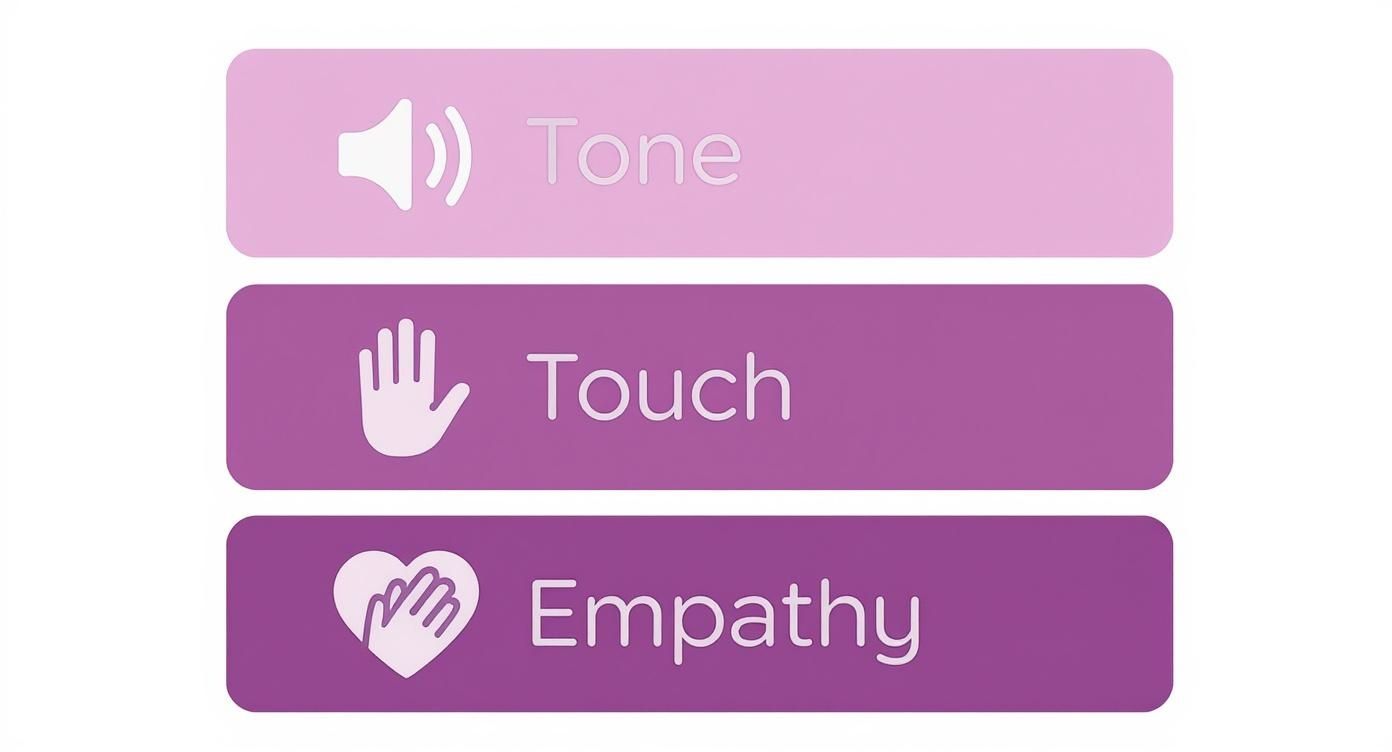
While structural changes make the house physically safer, it's the compassion you bring that makes it feel like a true sanctuary.
To help you get started, here's a checklist to guide you through a home safety audit.
Home Safety Checklist for Dementia Care
| Room | Common Hazard | Recommended Safety Measure |
|---|---|---|
| All Areas | Poor Lighting & Shadows | Add nightlights in hallways and bathrooms; ensure bright, even lighting. |
| Living Room | Tripping Hazards | Remove throw rugs, clutter, and unnecessary furniture. Secure cords. |
| Kitchen | Dangerous Items | Lock away knives, chemicals, and matches. Unplug small appliances. |
| Kitchen | Fire Risk | Install automatic shut-off devices on the stove and other appliances. |
| Bathroom | Slips and Falls | Install grab bars and a raised toilet seat. Use non-slip mats. |
| Bathroom | Scalding Water | Set water heater temperature to 120°F or lower. |
| Bedroom | Nighttime Disorientation | Place a commode near the bed; use a baby monitor or bed alarm. |
| Stairs | Falls | Ensure sturdy handrails on both sides; mark edges of steps with tape. |
| Exits | Wandering | Install door alarms or locks that are difficult for them to operate. |
This list isn't exhaustive, but it covers the most critical areas to address to prevent common accidents.
Simplifying Medication Management
Keeping medications straight can become a huge source of stress. A missed dose or an accidental double dose of certain prescriptions can have serious consequences. The key is to create a system that is simple, visual, and consistent.
A weekly pill organizer is your best friend here. Fill it once a week so you aren’t fumbling with multiple bottles every single day. Keep a simple chart nearby and physically check off each dose as you give it. This simple habit prevents second-guessing later.
Creating a structured medication routine isn't just about safety; it's about reducing your own cognitive load as a caregiver. When the system is reliable, you have one less thing to worry about in a day filled with responsibilities.
Preparing for Smoother Medical Appointments
Doctor's visits can easily become overwhelming and confusing for someone with dementia. A little bit of prep work goes a long way in making these outings less stressful and more productive.
Before you even leave the house, jot down a short list of your top three questions or concerns for the doctor. It's easy to forget your points once you're in the exam room.
Also, pack a "go-bag" with essentials: a bottle of water, a few snacks, any needed incontinence supplies, and something comforting like a favorite sweater or a small blanket. At the appointment, be their advocate. Clearly explain any changes you've noticed in their behavior or health, and don't be afraid to ask the doctor to slow down while you take notes. Planning ahead helps ensure their needs are met and keeps the stress level manageable for everyone.
Navigating Essential Legal and Financial Decisions
Tackling legal and financial matters early on isn’t just about checking boxes on a to-do list; it's one of the most profound ways you can care for your loved one. When you make these decisions together, while they can still participate, you're ensuring their wishes are front and center. It provides clarity for the entire family and creates a roadmap that protects their future.
Getting these plans in place allows you to shift your focus from worrying about what-ifs to being fully present. It’s a critical part of learning how to care for dementia patients with foresight and true compassion.
Securing Authority with Key Legal Documents
When someone can no longer make decisions for themselves, another person must be legally authorized to step in. If you wait until a crisis hits, you could find yourself tangled in complex, expensive, and stressful court proceedings. A few key documents, set up proactively, are the best way to avoid this scenario.
The most important of these is the Power of Attorney (POA). This is a legal tool that lets your loved one appoint a trusted person—the "agent"—to make decisions for them.
There are two main types you'll need to consider:
- Financial Power of Attorney: This gives the agent the power to handle financial matters like paying bills, managing bank accounts and investments, or dealing with property.
- Medical Power of Attorney (Healthcare Proxy): This lets the agent make healthcare decisions, from routine doctor's visits to critical end-of-life care, all based on what your loved one would have wanted.
It’s also crucial to understand how these roles differ from other legal appointments. To get a clearer picture, you can learn more about the difference between a Power of Attorney and guardianship in our detailed guide.
Approaching These Sensitive Conversations
Bringing up topics like finances and end-of-life wishes can feel intimidating, but it's a conversation you have to have. The key is to approach it with empathy and respect. Find a calm, quiet time when neither of you is rushed or distracted.
Try framing the conversation around empowerment, not loss. You could start with something like, "Mom, I want to make sure we always know exactly what you want, so your wishes are respected no matter what. Can we talk about getting your plans in order?" This approach puts them in the driver's seat and makes it clear their voice is what matters most.
These discussions are a gift to the entire family. Having a clear, legally documented plan removes the burden of guesswork during an already emotional time, preventing potential disagreements and ensuring a unified approach to care.
Understanding the Financial Realities of Long-Term Care
The financial side of dementia care is significant, which is why early planning is so important. The economic weight of dementia care in the U.S. is staggering, with total annual costs projected to hit $781 billion in 2025 dollars. Families are already spending $52 billion out-of-pocket each year. This strain often forces caregivers to cut back on work, leading to billions in lost wages. You can discover more insights about the cost of dementia and its economic impact.
Start by getting a complete picture of your loved one’s finances—income, assets, insurance policies, and any long-term care plans they might already have. This inventory will be your starting point for exploring resources.
Look into benefits that could help ease the financial burden. These might include:
- Veterans Benefits: If your loved one served in the military, they could be eligible for aid programs like Aid and Attendance.
- Medicaid: For those who meet specific income and asset limits, this program can cover long-term care costs.
- Life Insurance Policies: Some policies contain provisions that allow for early payouts to cover long-term care expenses.
Speaking with an elder law attorney or a financial advisor who specializes in senior care can be invaluable. They can help you navigate all the options and build a sustainable financial strategy, ensuring your loved one gets the best care possible without creating undue hardship for the family.
Remembering to Care for the Caregiver

You've probably heard the saying, "You can't pour from an empty cup." When you’re caring for someone with dementia, this isn't just a cliché—it’s a fundamental truth. The constant emotional, physical, and financial demands can put you on a direct path to burnout.
Putting your own well-being first isn't selfish. It's actually the most critical part of providing sustainable, loving care for the long haul. Acknowledging this is the first step toward building the resilience you'll need for this journey.
Recognizing the Signs of Burnout
Caregiver burnout is so much more than just feeling tired. It's a state of deep exhaustion that can seep into every corner of your life, affecting your health, your relationships, and your ability to care for your loved one. It often creeps up on you, making it hard to spot until you feel completely overwhelmed.
The reality is staggering. In 2023, more than 11 million caregivers in the U.S. provided over 18 billion hours of unpaid care for people with dementia. It’s absolutely essential to recognize the signs of emotional burnout and get support before you hit a crisis point.
Keep an eye out for these common warning signs:
- Constant fatigue that a good night's sleep just doesn't fix.
- Feeling increasingly irritable or short-tempered with the person you're caring for.
- Pulling away from friends and activities you used to love.
- Physical symptoms, like frequent headaches, stomach issues, or getting sick more often.
If any of this sounds familiar, please don't see it as a failure. Think of it as an urgent signal that your own resources are running dangerously low.
Practical Self-Care for Demanding Schedules
"Self-care" can feel like an impossible luxury when your day is already packed from morning to night. The trick is to reframe it as small, doable acts of restoration that you can fit into the cracks of your day. You don’t need a spa day; five minutes of intentional calm can truly make a difference.
Building your own support network isn't a sign of weakness; it's a strategy for strength. It allows you to continue providing care from a place of resilience, not depletion.
Try weaving in a few of these simple practices:
- Take Five for Breathing: When your loved one is safe and settled, step into another room, close your eyes, and just take ten slow, deep breaths. This simple act can do wonders to reset your nervous system.
- Connect with a Friend: Even a quick text to someone who gets it can be a lifeline. A short exchange is a powerful reminder that you’re not alone in this.
- Find a Support Group: There's a unique validation that comes from talking to other dementia caregivers. They offer practical advice and a level of understanding you won't find anywhere else.
The Lifeline of Respite Care
Ultimately, everyone needs a real break. This is where respite care comes in. It provides temporary relief for you, the primary caregiver, giving you precious time to rest, run errands, or just recharge your batteries.
Building a network of help is vital. This might include family members who can take over for an afternoon, friends who can drop off a meal, or professional services. At NJ Caregiving, we offer compassionate respite care designed to give you total peace of mind, knowing your loved one is in capable, caring hands. Accepting help is one of the strongest things you can do.
Dementia Care FAQs: Your Questions Answered
When you’re a caregiver, questions are a constant. This journey is full of unknowns, and looking for answers isn’t a sign of weakness—it’s a sign of a great caregiver. Here are a few of the most common questions we hear from families just starting to navigate how to care for dementia patients.
What’s the Most Important First Step After a Diagnosis?
After a diagnosis, your first move is really a two-part process: learning and planning.
Start by digging in and learning everything you can about the specific type of dementia your loved one is facing. Understanding how it typically progresses helps you see what’s coming down the road and feel more in control.
At the same time, it’s crucial to get the legal and financial house in order. Documents like a Power of Attorney for both healthcare and finances need to be set up while your loved one can still be part of the conversation. Getting this done early creates a solid foundation of security for everyone involved.
How Do I Handle Resistance to Daily Tasks Like Bathing?
Pushback on personal care, especially bathing, is something almost every caregiver deals with. It usually comes from a place of fear, confusion, or the feeling of losing their independence. The golden rule? Never force it.
Instead, change your approach. Keep your voice calm and reassuring. Frame it as an invitation, not a command.
One of the best things you can do is give them back a little bit of control through simple choices. Try asking, "Would you like the blue towel or the white one?" If you’re still met with a firm “no,” that’s okay. Just step back. Give it 20-30 minutes and then try again. Sometimes, a simple mood shift is all it takes.
When a loved one resists care, they are often communicating an unmet need or a hidden fear. Responding with patience and flexibility, rather than force, is the most compassionate and effective approach.
When Is It the Right Time to Consider Professional Care?
This is one of the toughest and most personal questions you'll face. There’s no single right answer, but there are definitely signs to look out for. It might be time to bring in help when:
- Your own health—mental or physical—is starting to suffer from caregiver burnout.
- Your loved one’s safety is a constant worry due to wandering or frequent falls.
- Their care needs have become too physically demanding for one person to handle alone.
Getting professional help isn't admitting defeat. It’s admitting that you need a bigger team to make sure both you and your loved one get the best care possible.
How Can I Cope with the Grief of Losing the Person I Knew?
What you're feeling has a name: ambiguous loss. It's the deep, confusing grief you feel for someone who is still physically here but is no longer the person you once knew. It's real, it's valid, and it's essential to let yourself feel it.
Find a support group, whether it's online or in your community. Connecting with people who just get it is incredibly healing.
Try to focus on connecting with your loved one as they are now. Cherish the small moments of connection and joy you can still find together, instead of only focusing on what’s been lost.
Navigating dementia care is too big a job to do alone. If you need help, NJ Caregiving provides compassionate, professional in-home care, including respite services to give you the break you deserve. Find out how we can support your family.
