

Creating a Safe and Comfortable Home for Seniors
As our loved ones age, ensuring their safety and comfort at home becomes paramount. This listicle explores crucial home modifications for seniors, offering practical solutions to enhance their independence and well-being. Discover how thoughtful changes can transform a house into a haven, promoting safety, accessibility, and a higher quality of life.
Aging in place comfortably and safely requires a proactive approach to home design. This curated list of seven key modifications provides actionable insights to create a senior-friendly environment. We'll cover essential updates, from bathroom safety to smart home technology, empowering you to make informed decisions for your loved ones.
This article provides valuable guidance for family caregivers, seniors wishing to age in place, and healthcare professionals seeking practical solutions for their patients. Learn how to address potential hazards and create a supportive living space that fosters independence and reduces the risk of accidents. We will delve into specific examples and actionable strategies, moving beyond generic advice to offer fresh perspectives on home modifications for seniors. The following key areas will be explored:
- Bathroom Safety Modifications: Learn how to prevent falls and improve accessibility in the bathroom.
- Stair Safety and Accessibility Solutions: Discover options for navigating stairs safely or eliminating them altogether.
- Smart Home Technology Integration: Explore how technology can enhance safety, security, and independence.
- Kitchen Accessibility Modifications: Make meal preparation easier and safer with practical kitchen adjustments.
- Flooring and Surface Modifications: Reduce tripping hazards and improve mobility with appropriate flooring choices.
- Lighting and Visibility Improvements: Enhance visibility and reduce the risk of falls with strategic lighting solutions.
- Emergency Preparedness and Safety Systems: Prepare for emergencies and ensure quick access to assistance.
1. Bathroom Safety Modifications
Bathrooms are a common site of falls for seniors, making safety modifications a critical aspect of aging in place. These modifications improve accessibility and reduce the risk of injury, fostering independence and peace of mind. Simple changes can transform a bathroom from a hazard zone into a safe and comfortable space.
Why Prioritize Bathroom Safety?
The high incidence of falls in bathrooms makes these modifications essential. Wet surfaces, limited maneuverability, and the physical demands of bathing contribute to this risk. Addressing these factors head-on dramatically improves safety and well-being for seniors. This proactive approach can prevent injuries, reduce hospitalizations, and maintain independence.
Key Modifications to Consider
several key modifications are highly effective in enhancing bathroom safety:
- Grab Bars: Install grab bars near the toilet, shower, and bathtub. Secure them to studs or use specialized anchors rated for 250+ pounds for maximum stability. Choose textured grab bars for a better grip.
- Walk-in Showers: Eliminate the high step-over of traditional tubs, making entering and exiting the shower easier and safer. Consider adding a built-in seat and handheld showerhead for added convenience.
- Raised Toilet Seats: These make it easier to sit down and stand up from the toilet, reducing strain and fall risk.
- Non-Slip Surfaces: Apply non-slip mats or strips to the shower floor and bathtub to prevent slips and falls. Textured flooring outside the shower also adds an extra layer of safety.
Actionable Tips for Implementation
Implementing these modifications effectively requires attention to detail:
- Professional Consultation: Consult an occupational therapist for personalized recommendations on grab bar placement and other modifications tailored to individual needs.
- Enhanced Visibility: Ensure adequate lighting and use motion-activated night lights for nighttime safety. Contrasting colors for grab bars against the wall improve visibility.
- Product Selection: Choose high-quality products specifically designed for bathroom safety. Look for certifications and ratings that indicate durability and weight capacity.
The infographic below visualizes key data points related to bathroom safety modifications, including the prevalence of falls, the impact of safety features, and typical installation costs.
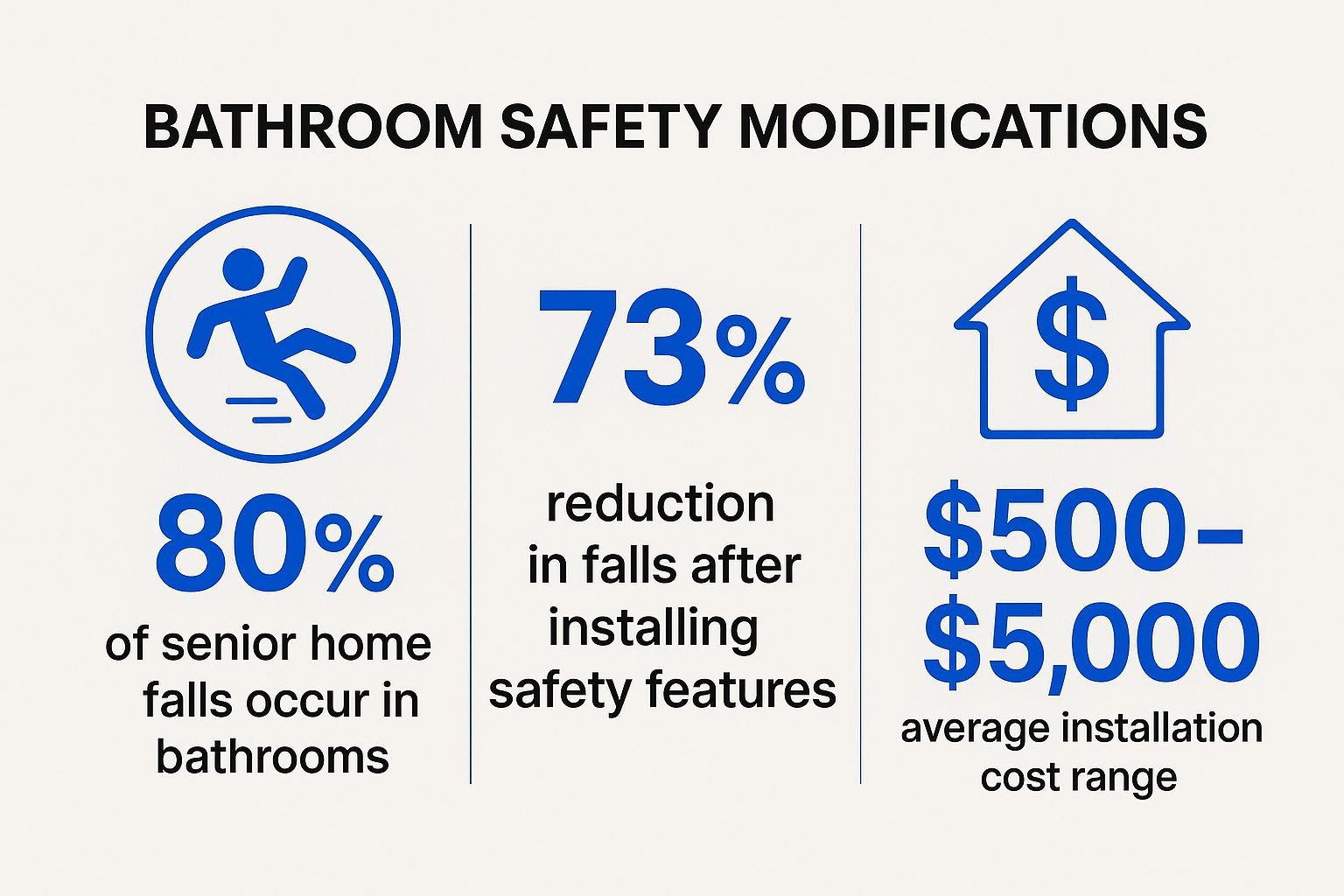
The infographic highlights the sobering statistic that 80% of senior home falls happen in the bathroom, but also the encouraging fact that modifications can reduce falls by 73%. The cost range of $500 to $5,000 underscores the importance of planning and budgeting for these crucial improvements.
Examples of Successful Implementations
The AARP HomeFit Guide reports a 73% reduction in bathroom falls following modifications. The Department of Veterans Affairs has installed over 1.2 million bathroom safety modifications in veterans' homes, demonstrating the wide-scale adoption and effectiveness of these measures. Medicare Advantage plans are also increasingly covering grab bar installations, recognizing their preventative health benefits.
By prioritizing bathroom safety modifications, seniors can maintain their independence, enhance their quality of life, and enjoy a greater sense of security in their homes. These modifications are not just about preventing falls; they're about enabling seniors to live comfortably and confidently in the place they call home.
2. Stair Safety and Accessibility Solutions
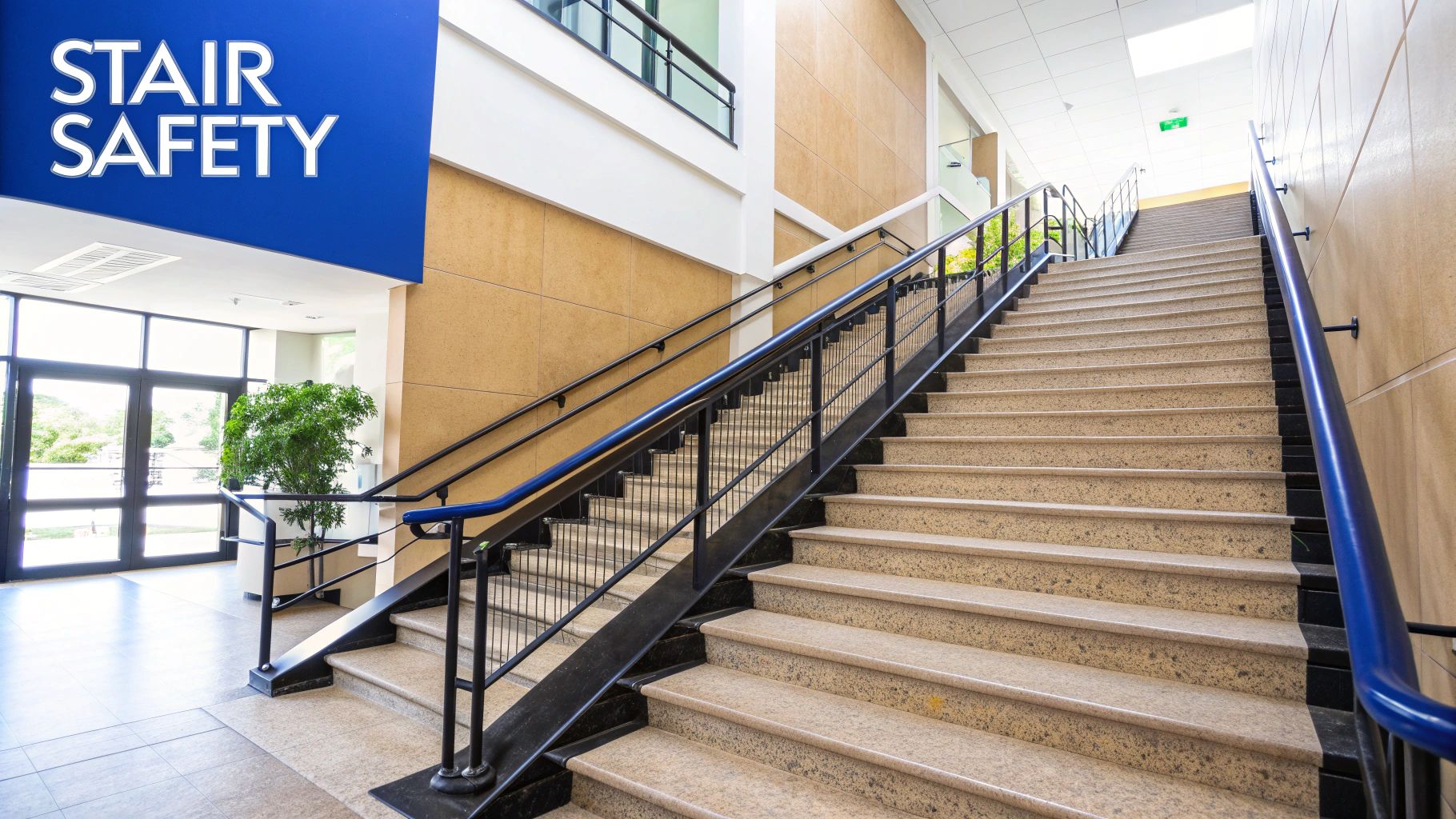
Stairs can pose a significant challenge for seniors, often hindering mobility and increasing the risk of falls. Implementing stair safety and accessibility solutions is crucial for enabling seniors to navigate multi-level homes safely and maintain their independence. These modifications range from simple improvements like enhanced lighting to more substantial installations like stair lifts.
Why Prioritize Stair Safety?
Falls on stairs can lead to serious injuries, particularly for seniors. Reduced mobility, vision changes, and balance issues contribute to this risk. Addressing stair safety proactively is vital for preventing accidents and promoting independent living. These modifications create a safer and more accessible environment, empowering seniors to move confidently within their homes.
Key Modifications to Consider
Several effective modifications can significantly improve stair safety:
- Stair Lifts: These motorized chairs provide a safe and convenient way to travel between floors. Models are available for straight and curved staircases. Consider battery backup systems for power outages.
- Improved Handrails: Ensure handrails are securely installed on both sides of the staircase and extend beyond the top and bottom steps. Choose handrails with a comfortable grip and contrasting color for better visibility.
- Enhanced Lighting: Brighten stairways with adequate lighting. Install motion-activated lights for nighttime safety and visibility. Graduated step lighting can further enhance safety by highlighting each step.
- Non-Slip Surfaces: Apply non-slip strips or treads to each step to improve traction and reduce the risk of slips. Secure or remove loose carpeting to eliminate tripping hazards.
Actionable Tips for Implementation
Implementing these modifications effectively requires careful planning and execution:
- Professional Assessment: Consult an occupational therapist or certified aging-in-place specialist for personalized recommendations tailored to individual needs and home layout.
- Regular Maintenance: Inspect and maintain stair lifts, handrails, and lighting regularly to ensure proper function and safety. Lubricate moving parts and replace worn-out components promptly.
- Visual Cues: Enhance visibility by using high-contrast tape on step edges. This visual distinction helps seniors identify each step clearly, further reducing fall risk.
Examples of Successful Implementations
Companies like Bruno and Acorn have installed over 500,000 stair lifts worldwide, demonstrating the widespread adoption and effectiveness of this solution. The City of Portland's Home Safety Repair Program has modified over 3,000 staircases, highlighting community-based initiatives to improve senior safety. IKEA incorporates senior-friendly home design principles, including graduated step lighting, in their product development. These examples showcase the positive impact of incorporating stair safety solutions.
By addressing stair safety and accessibility, seniors can continue to enjoy their multi-level homes with confidence and peace of mind. These modifications are essential for promoting independent living, preventing falls, and enhancing overall well-being. Prioritizing stair safety empowers seniors to live safely and comfortably in their homes for years to come.
3. Smart Home Technology Integration
Smart home technology offers a powerful suite of tools for seniors aging in place. Voice-activated assistants, smart lighting, automated thermostats, and emergency response systems can significantly enhance independence, safety, and connection. These technologies can compensate for physical limitations, provide peace of mind for family members, and simplify daily tasks.
Why Prioritize Smart Home Technology?
Smart home features address key challenges faced by seniors. Difficulty with mobility, memory loss, and managing household tasks can be mitigated through automation and remote monitoring. This proactive approach enhances safety, promotes independence, and improves overall quality of life. Connecting seniors with family and caregivers also reduces social isolation and provides an added layer of support.
Key Technologies to Consider
Several smart home technologies are particularly beneficial for seniors:
- Voice-Activated Assistants: Devices like Amazon Echo or Google Home allow seniors to control lights, appliances, and entertainment systems with voice commands. This is especially helpful for those with limited mobility.
- Smart Lighting: Automated lighting systems can be programmed to turn on and off at specific times or triggered by motion sensors. This improves safety by reducing the risk of falls in dimly lit areas.
- Automated Thermostats: Smart thermostats maintain comfortable temperatures and can be controlled remotely, eliminating the need for manual adjustments. This is particularly beneficial for seniors who are sensitive to temperature fluctuations.
- Emergency Response Systems: Modern medical alert systems integrate with smart home technology, providing quick access to help in case of a fall or other emergency. These systems can automatically notify family members or emergency services.
Actionable Tips for Implementation
Integrating smart home technology effectively requires careful planning and execution:
- Start Small: Begin with one or two devices and gradually expand the system as needed. This prevents overwhelm and allows seniors to become comfortable with each technology.
- User-Friendly Devices: Choose devices with large, clear displays and simple interfaces. Voice control is also a valuable feature for seniors with dexterity challenges.
- Family Access & Monitoring: Ensure family members or caregivers have access to the system for monitoring and support. This allows for quick response in emergencies and helps seniors stay connected.
- Regular Testing: Test emergency features regularly to ensure they are functioning correctly. This includes medical alert systems, smoke detectors, and other safety devices.
- Professional Installation: For complex systems, consider professional installation to ensure proper setup and integration. This can save time and frustration, particularly for those less familiar with technology.
Examples of Successful Implementations
Amazon's Alexa Senior Living program serves over 15,000 senior communities, demonstrating the widespread adoption of voice-activated technology in this demographic. Philips Hue smart bulbs are utilized in 67% of senior smart home setups, highlighting their popularity for enhancing lighting and safety. Life Alert, a well-known emergency response system, has expanded beyond traditional pendants to include smart home integration, providing a comprehensive safety net for seniors.
By integrating smart home technology, seniors can maintain their independence, enhance their safety, and enjoy a more connected and comfortable living experience. These technologies are not just about convenience; they are about empowering seniors to live fulfilling lives in the comfort of their own homes.
4. Kitchen Accessibility Modifications
The kitchen, often the heart of the home, can pose significant challenges for seniors as mobility and dexterity decrease. Modifying this crucial space to enhance accessibility empowers seniors to maintain their independence in meal preparation and nutritional well-being. Simple changes can transform the kitchen into a safe and functional environment that promotes continued culinary enjoyment.
Why Prioritize Kitchen Accessibility?
Maintaining nutritional independence is vital for seniors' overall health and well-being. Accessible kitchen design enables seniors to continue preparing meals, fostering a sense of autonomy and preventing reliance on processed or pre-prepared foods. This proactive approach supports healthier eating habits and improves quality of life.
Key Modifications to Consider
Several key modifications can significantly improve kitchen accessibility for seniors:
- Lowered Countertops: Adjusting countertop heights accommodates seniors who use wheelchairs or have difficulty standing for extended periods. This allows for comfortable meal preparation and cleanup.
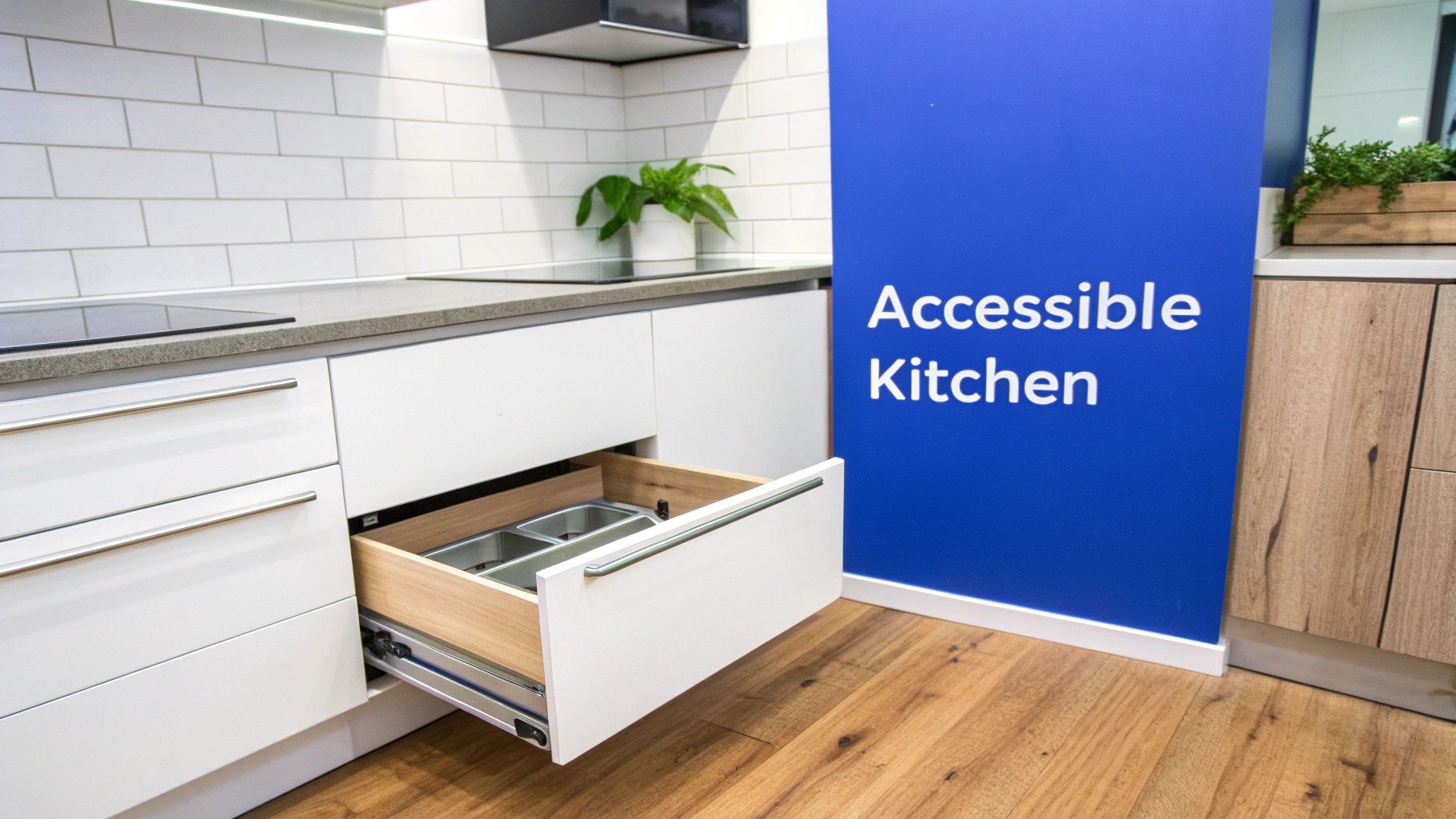
- Pull-Out Drawers and Shelves: Replace traditional cabinets with pull-out drawers and shelves to eliminate reaching and bending. This provides easy access to stored items and cookware.
- Lever-Style Handles: Swap out knob-style handles for lever-style handles on cabinets and drawers. These are easier to grip for seniors with arthritis or weakened hand strength.
- Improved Lighting: Enhance task lighting over work areas to improve visibility and reduce the risk of accidents. Under-cabinet lighting and brighter overhead fixtures are beneficial additions.
Actionable Tips for Implementation
Implementing these modifications requires careful planning and attention to individual needs:
- Prioritize Key Areas: Focus on the most frequently used areas first, such as the sink, stove, and refrigerator "work triangle."
- Ergonomic Considerations: Install pull-out cutting boards and adjustable-height work surfaces to accommodate varying physical abilities.
- Appliance Selection: Choose appliances with large, clear controls that are easy to operate.
- Enhanced Grip: Opt for D-shaped cabinet pulls for easier gripping.
Examples of Successful Implementations
Companies like IKEA have embraced universal design principles in their kitchen systems, making accessibility a core feature. KraftMaid offers specialized accessibility cabinet solutions catering to the needs of seniors. Whirlpool's line of senior-friendly appliances has seen significant growth, reflecting increasing demand for accessible kitchen features. The National Kitchen & Bath Association reports a substantial increase in senior-friendly kitchen renovations, highlighting the growing recognition of this important trend.
By prioritizing kitchen accessibility modifications, seniors can maintain their culinary independence, enjoy healthier eating habits, and continue to experience the joy of cooking in a safe and comfortable environment. These modifications are an investment in well-being and a crucial step in creating a truly age-friendly home.
5. Flooring and Surface Modifications
Flooring and surface modifications play a crucial role in creating a safer and more accessible home environment for seniors. These modifications address trip hazards, improve mobility, and accommodate assistive devices like walkers and wheelchairs, promoting independence and reducing fall risks. Simple changes to flooring can significantly improve safety and comfort.
Why Prioritize Flooring and Surface Modifications?
Falls are a leading cause of injury among seniors, and many occur due to tripping hazards or unstable surfaces. Modifying flooring addresses these risks directly. By creating a smooth, even, and non-slip surface, seniors can move around their homes with greater confidence and stability. This proactive approach reduces the likelihood of falls and subsequent injuries.
Key Modifications to Consider
Several flooring and surface modifications are particularly effective:
- Remove Trip Hazards: Eliminate throw rugs, loose carpeting, and uneven transitions between rooms. Secure loose cables and cords.
- Non-Slip Surfaces: Replace slippery flooring with non-slip options like luxury vinyl plank (LVP) or textured tile. Use non-slip mats in areas prone to moisture, like bathrooms and kitchens.
- Level Transitions: Install smooth transitions between different flooring types to prevent tripping. Ensure thresholds are flush or beveled to accommodate wheelchairs and walkers.
- Consistent Flooring Height: Maintain a consistent floor height throughout the main living areas. Avoid changes in level that could cause tripping.
Actionable Tips for Implementation
Implementing these modifications effectively requires careful planning:
- Material Selection: Choose flooring materials specifically designed for senior living. Look for durable, low-maintenance options with good slip resistance. Matte finishes minimize glare, which can be disorienting.
- Professional Installation: Consult with a contractor experienced in senior-friendly flooring installations. Proper subfloor preparation and installation are critical for a smooth and level surface.
- Accessibility Considerations: Ensure doorways and hallways are wide enough for wheelchairs and walkers to maneuver easily. Remove door thresholds or use low-profile transitions.
Examples of Successful Implementations
Luxury vinyl plank (LVP) has become a popular choice for senior-friendly flooring due to its durability, water resistance, and ease of maintenance. Studies by the Mayo Clinic have shown a 35% reduction in falls with appropriate flooring modifications. Senior living communities are increasingly adopting LVP and other modern flooring solutions, reporting up to 50% fewer maintenance issues. Shaw Floors, Mohawk, and Armstrong Flooring offer specialized flooring solutions designed for senior living.
By prioritizing flooring and surface modifications, seniors can significantly improve their safety and mobility at home. These modifications are not merely cosmetic improvements; they represent a crucial investment in long-term health, independence, and well-being.
6. Lighting and Visibility Improvements
Proper lighting is crucial for seniors aging in place. As we age, our eyes require significantly more light – two to three times more than younger eyes. Comprehensive lighting upgrades can dramatically improve safety, comfort, and independence within the home. These improvements encompass increased overall illumination, strategic placement of lights, reduction of glare and shadows, and maximizing natural light.
Why Prioritize Lighting and Visibility?
Age-related vision changes, such as reduced contrast sensitivity and difficulty adapting to changing light levels, make seniors more susceptible to falls and accidents. Improved lighting minimizes these risks. It allows seniors to navigate their homes safely and confidently, perform daily tasks with ease, and maintain a higher quality of life. This proactive approach supports independence and reduces the likelihood of injuries.
Key Modifications to Consider
Several key lighting modifications are highly effective in enhancing visibility and safety:
- Increased Overall Illumination: Boosting general lighting levels throughout the home makes it easier to see clearly. Use brighter bulbs in hallways, stairwells, and other frequently used areas.
- Motion-Activated Lights: Install motion-activated lights in hallways, bathrooms, and bedrooms to illuminate pathways automatically, especially at night. This eliminates fumbling for light switches in the dark.
- Reduced Glare and Shadows: Minimize glare from shiny surfaces and harsh overhead lighting. Use lampshades to diffuse light and strategically place lamps to reduce shadows.
- Improved Natural Light: Maximize natural light by opening curtains and blinds during the day. Consider installing larger windows or skylights to bring in more sunlight.
Actionable Tips for Implementation
Implementing these lighting modifications effectively requires thoughtful planning and execution:
- Bulb Selection: Choose warm LED bulbs (2700K-3000K) for a comfortable and inviting atmosphere. Avoid cool or overly bright bulbs, which can be harsh on the eyes.
- Targeted Lighting: Install lights on both sides of beds for nighttime safety and convenience. Use task lighting for specific activities like reading or cooking.
- Dimmer Switches: Install dimmer switches to adjust lighting levels according to individual needs and preferences. This allows for customized lighting control.
- Color Temperature Adjustment: Consider smart lighting systems that allow for color temperature adjustment. This can support circadian rhythms and improve sleep quality.
Examples of Successful Implementations
The Lighting Research Center has documented a 42% reduction in falls among seniors following targeted lighting improvements. Philips Healthcare lighting systems, known for their senior-friendly design, are used in 80% of senior living facilities. The growing popularity of programs like Home Depot's senior lighting consultation program, which has seen a 300% increase in demand since 2019, further highlights the importance of these modifications.
By prioritizing lighting and visibility improvements, seniors can significantly enhance their safety, comfort, and independence at home. These modifications not only reduce the risk of falls but also create a more welcoming and enjoyable living environment. They empower seniors to live confidently and maintain their quality of life as they age in place.
7. Emergency Preparedness and Safety Systems
For seniors aging in place, a well-planned emergency preparedness strategy, supported by reliable safety systems, is crucial for maintaining independence and ensuring swift access to help when needed. These systems provide a safety net, offering peace of mind for both seniors and their families. Proactive planning can significantly mitigate risks and enhance overall well-being.
Why Prioritize Emergency Preparedness?
As we age, unforeseen medical events or accidents become more likely. A quick response can be the difference between a minor incident and a serious health crisis. Emergency preparedness ensures seniors can summon help quickly, even if they are alone or unable to reach a phone. This preparedness is especially vital for seniors living alone or with limited mobility.
Key Systems to Consider
Several key systems are vital for comprehensive emergency preparedness:
- Medical Alert Devices: These devices allow seniors to call for help with the push of a button, connecting them to emergency services or designated contacts. Choose devices with features like fall detection and GPS location.
- Smoke Detectors with Voice Alerts: These detectors provide clear voice instructions in case of fire, reducing confusion and aiding quicker evacuation. Interconnected detectors ensure that an alarm in one room triggers alarms throughout the house.
- Emergency Lighting: Motion-activated night lights and strategically placed emergency lights provide illumination during power outages, preventing falls and aiding navigation.
- Enhanced Communication Systems: Easy-to-use phones with large buttons and amplified sound, along with readily accessible contact lists, facilitate communication during emergencies.
Actionable Tips for Implementation
Implementing these systems effectively requires proactive planning:
- System Testing: Test medical alert devices, smoke detectors, and other emergency systems monthly to ensure they are functioning correctly.
- Contact Information: Keep emergency contact lists updated and readily accessible. Display these lists near phones and in key areas of the home.
- Strategic Placement: Install emergency systems in multiple rooms, particularly bedrooms, bathrooms, and hallways, to ensure access from anywhere in the house.
- Device Features: Choose waterproof medical alert devices for use in the shower or bath. Consider devices with fall detection for added safety.
- Family Education: Ensure family members and caregivers understand how the emergency systems work and know how to respond to alerts.
Examples of Successful Implementations
Life Alert, a pioneer in medical alert systems, has served over 7 million seniors since 1987, demonstrating the widespread adoption and impact of these devices. Medical Guardian reports a 95% customer satisfaction rate, highlighting the effectiveness and reliability of their personal emergency response systems. First Alert's voice smoke detectors have been shown to reduce response confusion by 60%, improving safety during fire emergencies. Bay Alarm Medical offers a range of monitoring services that integrate various safety features, providing comprehensive protection for seniors.
By prioritizing emergency preparedness and implementing robust safety systems, seniors can create a more secure home environment, enhancing their independence and promoting peace of mind for themselves and their loved ones. These systems provide a crucial safety net, allowing seniors to age in place with confidence and ensuring a swift response in times of need.
7 Key Home Modifications for Seniors Comparison
| Item | Implementation Complexity 🔄 | Resource Requirements ⚡ | Expected Outcomes 📊 | Ideal Use Cases 💡 | Key Advantages ⭐ |
|---|---|---|---|---|---|
| Bathroom Safety Modifications | Moderate; may need professional install | Moderate cost ($500–$5,000), some plumbing | Up to 73% reduction in falls in bathrooms | Seniors at high fall risk, bathroom safety focus | Reduces falls sharply; maintains independence; some insurance coverage |
| Stair Safety and Accessibility | High; may require structural changes | High cost ($200–$15,000), mechanical parts | Enables safe use of multi-level homes | Multi-story home residents needing safer stairs | Enables continued home use; stair lifts available for rent; prevents ER visits |
| Smart Home Technology Integration | Moderate to high; setup and learning curve | Moderate cost ($200–$3,000), internet needed | Improved safety, remote monitoring, emergency aid | Seniors comfortable with tech, remote care needs | Hands-free control; emergency alerts; energy efficient; improves medication management |
| Kitchen Accessibility Modifications | High; may need major renovation | High cost ($2,000–$25,000), professional design | Maintains cooking independence, reduces strain | Seniors with kitchen safety/mobility needs | Enhances meal prep independence; ergonomic; safety appliances included |
| Flooring and Surface Modifications | Moderate; requires full or partial replacement | Variable ($3–$12 per sq ft), possible relocation | 35%+ fall reduction; improves mobility | Homes with trip hazards, mobility aid users | Reduces slips; easier mobility; low maintenance; joint cushioning available |
| Lighting and Visibility Improvements | Moderate; may need electrical work | Moderate cost ($500–$3,000) | 42% fall reduction; improved task performance | Seniors needing better vision support | Better illumination; motion sensors; energy-efficient LED; mood benefits |
| Emergency Preparedness and Safety Systems | Low to moderate; installation and setup | Initial cost $100–$500 + $20–$70/month | 24/7 emergency response; fall detection | Seniors living alone or with high emergency risk | Immediate help access; family notifications; voice alerts; battery backup |
Taking the Next Step Towards Senior Home Safety
Creating a safe and comfortable home environment is paramount for seniors wishing to age in place gracefully. This article explored seven key areas of home modification for seniors, providing actionable insights to enhance safety, accessibility, and overall well-being. From bathroom modifications and stair solutions to integrating smart home technology and improving lighting, each area plays a vital role in fostering independence and reducing the risk of accidents.
Key Takeaways for Enhanced Senior Living
Let's recap the essential takeaways:
- Prioritize fall prevention: Flooring modifications, improved lighting, and strategically placed grab bars are crucial for minimizing fall risks.
- Enhance bathroom safety: Simple adjustments like installing grab bars, shower seats, and raised toilet seats can significantly improve safety and independence in the bathroom.
- Boost kitchen accessibility: Modifying countertops, cabinets, and appliances can make meal preparation easier and more enjoyable for seniors.
- Embrace technology: Smart home systems can offer increased security, automated lighting, and convenient control over various home functions.
- Plan for emergencies: Installing medical alert systems and ensuring easy access to emergency exits is crucial for prompt assistance in critical situations.
Creating a Supportive Home Environment
By addressing these key areas, you can transform a home into a supportive sanctuary that promotes safety, comfort, and independent living for seniors. Remember, home modifications for seniors aren't just about physical changes; they're about fostering an environment where seniors feel secure, empowered, and able to enjoy their golden years to the fullest. The specific modifications needed will vary based on individual needs and preferences.
Planning for the Future
Proactive planning is key. Assessing current and future needs is crucial for implementing effective home modifications. Consulting with occupational therapists or certified aging-in-place specialists (CAPS) can provide valuable insights and guidance. These professionals can offer personalized recommendations tailored to individual circumstances, ensuring that home modifications are both practical and effective.
Empowering Seniors to Age in Place
Home modifications for seniors represent an investment in their well-being and independence. By creating a safe and accessible home environment, we empower seniors to maintain their autonomy and enjoy the comforts of familiar surroundings. This approach not only enhances their quality of life but also provides peace of mind for family members knowing their loved ones are safe and well-cared for.
Considering home modifications for a senior loved one? NJ Caregiving offers professional in-home care services and can provide guidance on implementing personalized home modifications tailored to individual needs. Visit NJ Caregiving to learn more about their comprehensive services and how they can support seniors in aging in place comfortably and safely in the Princeton, NJ area.
