

When a loved one starts to need a little more help around the house, figuring out the next steps can feel like trying to solve a puzzle in the dark. Suddenly, you're navigating a new world of terms like "personal care" and "skilled nursing," all while trying to make sense of the financial side of things. It's more than just logistics; it's an emotional time, and all you want is to make the best choice for the person you care about.
But here’s the good news: you don't have to figure this all out on your own. Instead of seeing this as a crisis, think of it as a chance to be proactive, to put a plan in place that ensures your family member can stay safe, happy, and comfortable at home. A clear, step-by-step approach can cut through the confusion and empower you to find a solution that truly fits.
First, Acknowledge the Feelings
Before we get into the practical details, it's important to take a moment and recognize how emotionally charged this process can be. For many families, the idea of bringing in outside help can stir up feelings of guilt, stress, or even sadness. It often signals a real shift in family roles and dynamics.
The whole point of looking into home care isn't to take away independence—it's to preserve it. It's about adding a layer of compassionate support that allows your loved one to keep living in the place they know and love.
Building a Strong Foundation for Care
A successful home care plan always starts with a solid understanding of what's truly needed. This guide is designed to walk you through the key steps, helping you move from a place of uncertainty to one of confidence. We’ll cover:
- Figuring Out the Needs: We'll help you pinpoint the specific daily tasks where your loved one could use a hand.
- Understanding the Options: We'll break down the different types of care available, from simple companionship to more complex medical support.
- Making Sense of the Finances: We'll demystify payment sources like Medicaid, private insurance, and veterans' benefits.
- Choosing the Right Partner: You'll get practical advice for finding a reliable and trustworthy care provider right here in New Jersey.
Let’s take this one step at a time. Together, we can turn a daunting task into a manageable journey to find the right path for your family.
Decoding the Different Types of Home Care Services
Trying to figure out home care can feel like you're learning a whole new language. You’ll hear terms like "companion care" and "personal care," and it's not always clear what the difference is. But getting these distinctions right is the first, most important step in finding the perfect support for your family.
Think of it less as a confusing menu and more like a specialized toolkit. You wouldn't use a hammer to turn a screw, right? The same logic applies here. The goal is to match the right tool—the right type of care—to the specific need, ensuring your loved one gets the precise support that helps them thrive at home.
This need for clear options is bigger than ever. The home care industry has seen incredible growth over the last decade, with revenue expected to hit $155.9 billion in 2025 after growing at an annual rate of 3.7% for five years. This isn't just a statistic; it reflects a real shift in how we want to age. Families here in Princeton, NJ, and across the country are choosing to find compassionate solutions that allow their loved ones to remain independent in the place they feel most comfortable.
Foundational Support: Companionship and Homemaker Services
At its heart, a lot of home care is simply about human connection and making sure the home remains a safe, comfortable space. That’s where companionship and homemaker services come in. These are often the first steps a family takes when an older loved one starts to feel isolated or finds that daily chores are becoming a bit too much to handle.
Companion care is all about social and emotional well-being. It’s friendship. It's having someone to play cards with, provide a ride to a doctor's appointment, or just share a cup of coffee and a conversation. It’s a powerful way to combat the loneliness many seniors face.
Homemaker services tackle the practical tasks that keep a household running. This isn't heavy-duty cleaning but rather the essential chores that maintain a sense of order and normalcy. This can include things like:
- Light housekeeping (dusting, vacuuming, tidying up)
- Planning and cooking healthy meals
- Doing laundry and changing bed linens
- Running errands like grocery shopping
These services lift a huge weight off the shoulders of both the senior and their family, making the home feel like home again.
Hands-On Assistance: Personal Care
When physical challenges start to make daily routines like bathing or dressing difficult, personal care becomes essential. This is hands-on assistance, always provided with the utmost respect and dignity, from a certified home health aide (CHHA) who works under a nurse's supervision.
Personal care is all about preserving dignity while providing necessary help. It's the gentle assistance that allows a person to continue their daily routines safely and comfortably, from getting dressed in the morning to settling into bed at night.
Common personal care tasks include help with bathing, dressing, grooming, and moving around safely—like getting from a bed to a chair. If you'd like to dive deeper, you can learn more about exactly what non-medical home care entails.
The path to finding the right care is a journey, moving from an initial goal to a final solution while navigating challenges along the way.
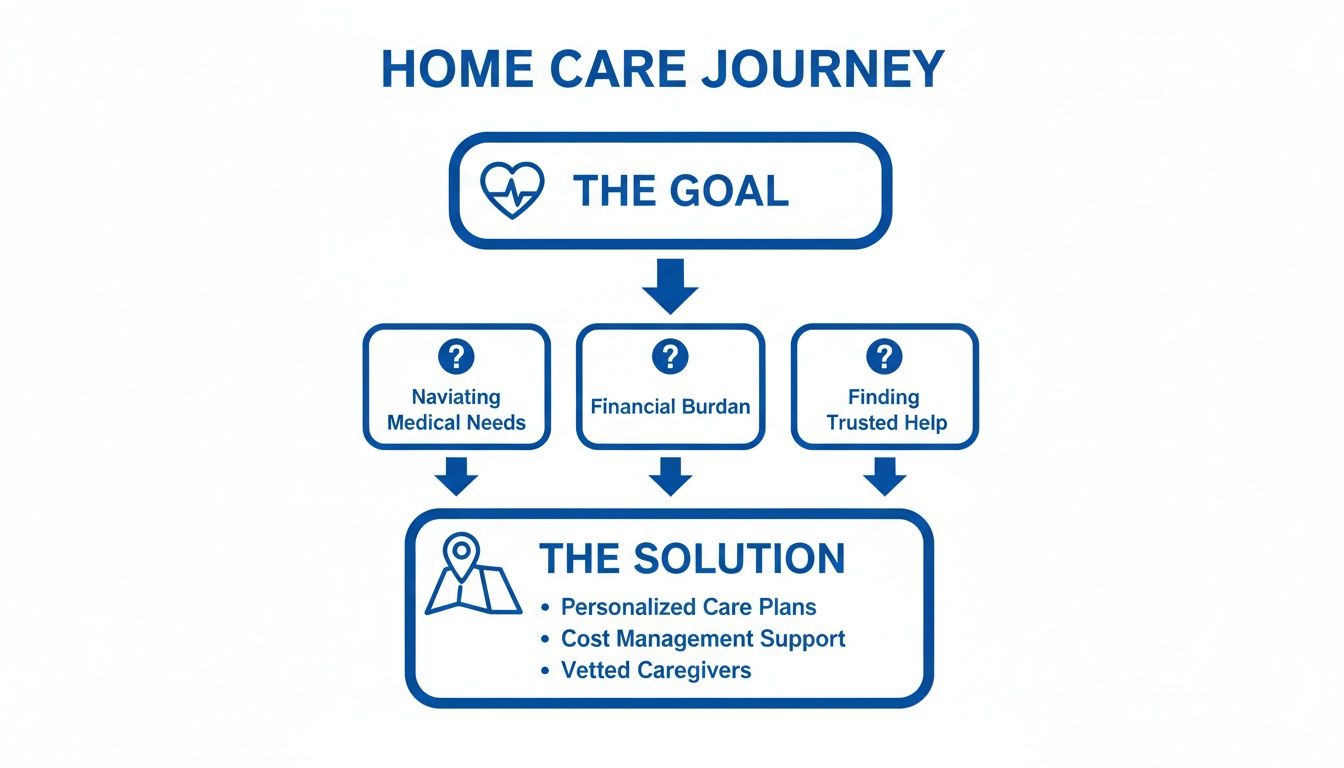
This diagram makes it clear: while hurdles like cost can seem daunting, a structured approach leads to a personalized plan that truly supports dignified, independent living.
Specialized and Clinical Support
Sometimes, health needs are more complex and require a higher level of care. These specialized services bridge the gap between non-medical support and a nursing facility, allowing people to manage serious health conditions from the comfort of home. To get a better sense of the full spectrum, it's helpful to explore the various care services available.
Here are a few key types:
- Skilled Nursing Care: This is clinical, medical care provided by a Registered Nurse (RN) or Licensed Practical Nurse (LPN). It’s for medical tasks that require a professional license, like wound care, giving injections, or managing IVs.
- Respite Care: This is a lifeline for family caregivers. A professional caregiver steps in for a few hours, a day, or even a few weeks to give the primary caregiver a much-needed break to rest and recharge.
- Hospice Care: When someone is facing a terminal illness, hospice care shifts the focus to comfort and quality of life. It’s compassionate support that addresses the medical, emotional, and spiritual needs of both the patient and their family.
At-a-Glance Comparison of Home Care Services
To help simplify these options, we’ve put together a quick comparison table. It’s a straightforward way to see how each service lines up based on what it’s designed to do.
| Service Type | Primary Focus | Common Tasks |
|---|---|---|
| Companion Care | Social engagement and emotional well-being | Conversation, playing games, transportation, accompanying to events. |
| Homemaker Services | Maintaining a safe and clean home environment | Meal prep, light housekeeping, laundry, grocery shopping. |
| Personal Care | Hands-on assistance with daily self-care | Bathing, dressing, grooming, toileting, mobility support. |
| Skilled Nursing | Medical needs and clinical oversight | Wound care, medication injections, health monitoring, IV therapy. |
Seeing it laid out like this can make it much easier to pinpoint which type of care aligns best with your loved one’s current needs.
Navigating Costs and Funding for Home Care
Once you’ve figured out the right type of care for your loved one, the next big question always comes down to money. Let's be honest—it's often the biggest hurdle families face. But getting a handle on the financial side of things is the key to creating a care plan that’s sustainable, not stressful.
Think of it like planning a road trip. Some routes are direct, like using personal savings. Others are more scenic, with specific rules and eligibility, like Medicaid or Veterans Affairs benefits. The goal is to map out every possible avenue so you can choose the one that works best for your family. There’s no single "right" way to pay for care; often, the best solution is a mix of different sources.
The need for these solutions is growing fast. The home healthcare market is booming, which just underscores how vital it is in modern elder care. In 2024 alone, this market pulled in $407.1 billion in revenue, and it’s expected to hit $730.8 billion by 2030. This growth is all about the increasing demand for personal care and nursing—exactly the kind of support that helps people stay in their homes. You can discover more insights about the home healthcare market on grandviewresearch.com.
Private Pay and Long-Term Care Insurance
The most direct route is private pay, which simply means using personal funds from savings, retirement accounts, or other assets. The biggest plus here is control. You can start, stop, or change services on a dime without waiting for approvals or meeting strict eligibility rules.
While hourly rates can vary depending on where you are and the level of care needed, private pay offers the most flexibility.
Another powerful tool in the toolbox is Long-Term Care (LTC) Insurance. If your loved one planned ahead with an LTC policy, it was designed for exactly this kind of situation. These policies are built to cover services like personal care when someone can no longer handle certain activities of daily living (ADLs) on their own.
Quick tip: Make sure you review the policy's "elimination period"—that’s the waiting time before benefits kick in—and the daily benefit amount. Knowing these details upfront helps you budget effectively while you're waiting for coverage to start.
Unlocking Government-Funded Programs
Beyond your own funds, there are several government programs that can offer a lifeline. They come with specific rules, but for many families, they are absolutely essential resources. It’s important to know how they differ, because they all serve very different purposes.
- Medicare: This is the federal health insurance program most people know, mainly for adults 65 and older. But here's a common misconception: Medicare does not cover long-term home care. It only covers short-term, medically necessary home health care right after a qualifying hospital stay. It won't pay for ongoing personal care or companionship.
- Veterans Affairs (VA) Benefits: If your loved one is a veteran, don't overlook VA benefits. Programs like Aid and Attendance can provide a pension benefit to help cover the costs of home care for veterans who need help with daily activities.
Wading through the rules for these programs can feel a little overwhelming, but they exist to provide a safety net. Never hesitate to call local agencies or the programs themselves to get your questions answered.
Understanding Medicaid in New Jersey
For many families here in New Jersey, Medicaid is the single most important funding source for long-term home care. Unlike Medicare, Medicaid is a joint federal and state program that does cover long-term personal care for people who meet certain financial requirements. It’s designed to help low-income individuals get the care they need to stay safe.
New Jersey has specific programs—often called Medicaid Waivers or Managed Long-Term Services and Supports (MLTSS)—that allow eligible people to receive care at home instead of moving into a nursing facility. To qualify, a person has to meet both financial criteria (income and assets below a set limit) and clinical criteria (needing a nursing facility level of care).
The application process has a few key steps:
- Financial Application: This involves submitting proof of income and assets to your County Board of Social Services.
- Clinical Assessment: A nurse will visit in person to assess your loved one's care needs.
- Enrollment: Once approved, you enroll in an MLTSS plan, which will coordinate the care services.
This process can take a while, so it’s smart to get started as early as possible. For a more detailed walkthrough, check out our guide on how to pay for home care in New Jersey. Agencies like NJ Caregiving have been through this process with countless families and can be an invaluable guide as you navigate the Medicaid system.
How to Choose the Right Home Care Provider
Picking a home care agency is one of the most personal decisions your family will ever make. You’re not just hiring a service; you’re inviting someone into your home and trusting them with the well-being of a person you love. This decision deserves a careful, thoughtful approach to make sure you find a true partner in care.
The right provider does more than just check tasks off a list. They become an extension of your family’s support system, bringing reliability, compassion, and professional expertise right to your doorstep. We can turn this potentially overwhelming search into a manageable process by starting with what to look for and which questions to ask.
Start with a Detailed Needs Assessment
Before you pick up the phone, take a moment to create a clear picture of what your loved one actually needs. This list should cover more than just medical requirements. Think through their entire day—from the moment they wake up until they go to sleep—to build a realistic profile of the support they need to thrive.
A thorough assessment helps you communicate your needs clearly to potential agencies and ensures you get matched with the right level of care from day one.
Your list should include specifics from a few key areas:
- Personal Care: Jot down any help needed with daily activities like bathing, dressing, grooming, or safely moving around the house.
- Household Support: What kind of help is needed with meals, light housekeeping, laundry, or running errands like grocery shopping?
- Companionship Needs: Don't forget their social well-being. Do they need someone for a friendly conversation, a walk in the park, or a ride to appointments?
- Medical Tasks: List any skilled needs, like medication reminders, simple wound care, or help monitoring blood pressure.
Vet Every Potential Provider Thoroughly
Once you have a solid idea of your needs, it's time to start researching and interviewing agencies. This is your chance to dig in and get a feel for their professionalism, their processes, and their entire philosophy of care. Don't be shy about asking direct, detailed questions—a good agency will welcome your diligence.
Choosing a home care provider is an act of trust. Your goal is to find an agency that demonstrates accountability, transparency, and a genuine commitment to compassionate care in every interaction.
When you're looking at different providers, pay close attention to how they handle communication. You want an agency that uses secure technology, like HIPAA compliant texting apps, to protect your loved one’s private health information. This kind of attention to detail is a great sign of professionalism.
Essential Questions to Ask Every Agency
To make a fair comparison, try to ask every agency the same set of questions. This lets you compare them "apples-to-apples," which makes the final decision a whole lot easier. Use this checklist as a starting point.
Caregiver Screening and Training
- What is your screening process for caregivers? Does it include full background checks and reference verification?
- What kind of initial and ongoing training do your caregivers get? Is there special training for conditions like dementia or Alzheimer's?
Care Planning and Supervision
- How do you create a personalized care plan? How often is it reviewed and updated?
- Who supervises the caregivers in the home, and how often do they make supervisory visits?
Logistics and Emergency Protocols
- What happens if our regular caregiver is sick or can't make it? Do you have backup caregivers ready to step in?
- What are your procedures if a client has a fall or another medical emergency?
Licensing and Insurance
- Is your agency licensed by the state of New Jersey?
- Are your caregivers employees of the agency, and are they bonded and insured? This is a non-negotiable for protecting your family.
By following this structured approach, you can confidently navigate the different home care options and choose a provider that offers not just services, but true peace of mind.
Your Local Partner in Mercer County Care

Choosing from the many available home care options isn’t just about hiring a service—it’s about finding a partner you can truly trust. When you invite someone into your home, you're looking for a person who understands not just the clinical needs, but the human ones, too. This feels especially true here in Mercer County, where community ties run deep.
At NJ Caregiving, we're not just a provider; we're your neighbors. We serve families across Princeton, Hamilton, and the surrounding towns with a philosophy built on being a dedicated local partner. We believe real care isn't about taking over. It's about adding a layer of support that helps your loved one stay independent and gives your family genuine peace of mind.
Our entire approach starts with a simple idea: care should fit the person, not the other way around. Every family's story is different, so a one-size-fits-all plan just won't cut it.
Personalized Care That Feels Like Family
We’ve seen it time and again—the right support can completely transform a family's daily life. It’s about so much more than checking tasks off a list. It’s about building relationships founded on trust, respect, and real compassion.
That’s why our services are designed to be as individual as the people we serve.
Whether you need a friendly companion for your mom in Princeton or skilled nursing support for your dad in Hamilton, we create a plan that addresses their specific needs and personal preferences. This commitment is at the heart of everything we do.
For instance, we once worked with a family whose father, a retired history professor, was becoming more isolated. We matched him with a caregiver who also loved books. Soon, their time together was less about assistance and more about lively discussions, restoring a sense of connection he'd been missing.
Our Commitment to Mercer County Families
Being a local partner means we're right here when you need us, ready to adapt as your family's needs change over time. Our connection to the community is what drives us to provide care that is not only professional but also deeply personal.
Our mission is to be your trusted, accessible resource for care right here in your own community. We're here to help you navigate these challenges with confidence and clarity, ensuring your loved one receives the dignified support they deserve.
Here’s how we make that happen:
- Building Relationships: We prioritize consistent caregiver assignments. This helps foster a sense of familiarity and trust between our clients and care professionals.
- Flexible Care Plans: Life is unpredictable, and care plans should be able to change with it. We regularly review and adjust services to match your loved one’s current situation.
- Community Focus: We are deeply rooted in Mercer County. This gives us a unique understanding of the local resources and support systems available to your family.
Navigating the world of elderly in-home care can feel overwhelming, but you don't have to do it alone. We are committed to making the process as clear and stress-free as possible for you.
If you’re ready to see how personalized care can make a difference for your family, let's have a conversation. We invite you to a free, no-pressure consultation to talk about your needs. Together, we can find the right path forward.
Frequently Asked Questions About Home Care
Once you get a handle on the different types of services and how they’re funded, you’re usually left with the practical questions—the "what ifs" and "how does this actually work" details. It's completely normal.
Think of this section as a conversation about those finer points. We’ve gathered the most common concerns we hear from families just starting this journey to give you clear, straightforward answers.
What Is the Main Difference Between Home Care and Home Health Care?
This is easily one of the most common points of confusion, and getting it right is key. The simplest way to think about it is to focus on the purpose of the care. It’s like the difference between a helpful neighbor and a visiting nurse—both are supportive, but their roles are completely different.
Home care is all about non-medical support for daily living. The goal is to improve quality of life and help someone stay independent at home. This covers everything from help with bathing and dressing to meal prep, companionship, and light housekeeping. Most of the time, this kind of care is paid for privately or through programs like Medicaid.
Home health care, on the other hand, is clinical, medical support ordered by a doctor. It’s for specific needs like wound care, physical therapy after a surgery, or administering injections. Home health care is often covered by Medicare for a limited time after a hospital stay or a specific medical event. Knowing this distinction from the start helps you look for the right kind of help.
How Does the Process of Starting Home Care Services Work?
Getting started with a professional agency should feel supportive, not stressful. A good provider will walk you through a clear, structured process to make sure the plan is a perfect fit for your family.
It almost always starts with a phone call where you can share your situation and get some initial questions answered. From there, the next step is a comprehensive in-home assessment.
During the assessment, a care manager or nurse meets with you and your loved one to truly understand their needs, personality, and home environment. This isn't just about a checklist; it's a real conversation to build a personalized care plan from the ground up.
After that, the agency will work on matching your loved one with a caregiver whose skills and personality are a great fit. This careful, step-by-step approach takes the guesswork out of getting started.
Can We Adjust Services if Our Loved One's Needs Change?
Absolutely. In fact, you should expect to. One of the biggest advantages of professional home care is its flexibility. A person’s needs rarely stay the same—they can change slowly over time or suddenly after a fall or illness. A good care plan is a living document, not something set in stone.
Reputable agencies build regular check-ins and reassessments right into their process. This is how they make sure the care provided always matches your loved one's current situation. Adjusting services might mean:
- Increasing or decreasing hours to give more or less support.
- Modifying the type of support, like adding personal care to a companionship plan.
- Temporarily pausing services if a loved one goes into the hospital or on vacation.
This adaptability is a hallmark of high-quality home care options and is essential for effective, long-term support.
How Are Caregivers Screened to Ensure My Loved One Is Safe?
Your peace of mind is the absolute top priority. Any professional home care agency worth its salt knows this and uses a tough, multi-layered screening process for every single caregiver. It goes way beyond a simple interview.
The screening process should always include several non-negotiables: comprehensive state and national criminal background checks, full verification of any professional licenses or certifications, and thorough checking of personal and professional references.
On top of that, good caregivers receive ongoing training in critical areas like safety protocols, infection control, dementia care, and effective communication. This robust system of vetting and continuous education is what ensures your loved one receives care that is not only safe and professional but also genuinely compassionate.
Navigating your home care options can feel overwhelming, but you don't have to figure it all out alone. At NJ Caregiving, we're here to provide clear guidance and personalized support to families throughout Mercer County. If you're ready to see how compassionate, professional care can enhance your loved one's independence and bring your family peace of mind, we’d love to start a conversation.
