
Think about a trusted, friendly face who stops by to see an aging parent or loved one, making them feel less alone and more connected to the world. That’s the real heart of home care companion services. It’s a non-medical approach focused on boosting a senior’s quality of life through genuine friendship and practical, everyday support.
The goal? Helping them stay independent and safe, right in the comfort of their own home.
More Than Just a Visit—It's a Lifeline
For many families here in Princeton and Mercer County, the search for in-home care often starts with a simple observation: a parent or grandparent seems lonely. While aging in place is wonderful for its comfort and familiarity, it can quietly lead to social isolation, which is a major risk factor for both mental and physical decline.
That’s exactly where companion services come in. They are designed specifically to break that cycle of isolation by providing a vital, human connection to the outside world.
Think of a companion caregiver less like a nurse and more like a supportive partner in daily living. Their main job is to offer friendship, conversation, and emotional encouragement. This consistent, warm presence can completely change the tone of a senior’s day, turning a quiet, solitary routine into one filled with engagement and warmth.
The Cornerstone of Senior Well-being
At its core, this kind of care is all about fostering independence while making sure your loved one is safe. It’s built on a simple truth: well-being isn't just about physical health. It's just as much about feeling connected, happy, and socially fulfilled.
A companion helps bridge the gap for seniors who might be finding certain activities challenging but don’t need hands-on medical care just yet. Their support empowers older adults to keep living life on their own terms, with confidence and dignity.
This might look like:
- Encouraging Hobbies: Spending time together gardening, working on a puzzle, or just listening to favorite old songs.
- Providing Social Interaction: Simply sharing stories over a cup of tea or being a friendly, listening ear.
- Assisting with Errands: Helping with the weekly grocery run or getting to a community event in the Hamilton area.
- Offering Peace of Mind: Giving families the deep reassurance that their loved one isn’t alone.
For anyone thinking about a career in this field, compassionate roles like these are some of the most fulfilling in-demand careers in healthcare that don't require a degree.
Ultimately, companionship is a proactive approach to senior wellness. It addresses the emotional needs that are foundational to a happy, healthy life, helping to prevent the negative effects of isolation before they take hold.
By bringing a friendly face and a helping hand into the home, families can give their loved ones the support system they truly need to thrive. It’s a powerful reminder that sometimes, a little bit of help can make all the difference in the world—improving mood, boosting confidence, and making every day just a little bit brighter.
The True Impact of Companionship on Senior Health
While the practical help is a big piece of the puzzle, the real power of home care companion services comes down to something much simpler and more profound: human connection. For seniors, loneliness isn’t just a passing sadness. It’s a genuine health risk, and consistent companionship is one of the most effective ways to push back against the effects of social isolation.
When an older adult is isolated for too long, it can actually increase their risk of developing serious physical conditions. Study after study has drawn a direct line between loneliness and things like high blood pressure, a weaker immune system, and even heart disease. A friendly, engaging companion caregiver helps buffer against these risks simply by being there and fostering positive social interaction.
This isn't about having a "sitter." It's about providing a vital piece of a holistic wellness plan. A great caregiver creates an environment where a senior feels seen, heard, and connected to the world around them, which has a direct, positive impact on their health and outlook.
Combating Cognitive Decline and Depression
Just like our muscles, our minds need regular exercise to stay sharp. Social isolation often means a lack of mental stimulation, and that can unfortunately speed up cognitive decline. A companion actively engages a senior’s mind through conversation, sharing stories, playing games, or working on hobbies together.
Think about the difference between a quiet afternoon alone versus one spent chatting about current events, reminiscing over old photos, or tackling a jigsaw puzzle with a friend. Those simple interactions are the mental workouts that help keep cognitive functions firing on all cylinders.
Depression is another major risk for seniors who feel disconnected. Having a trusted person to talk to—someone who shows up consistently—can make all the difference. This emotional support breaks the cycle of loneliness and brings a positive, reliable presence into their daily routine. It’s amazing how the simple act of connection can improve mood, boost self-esteem, and bring back a sense of purpose.
A companion’s true gift is their ability to transform a senior’s daily environment from one of solitude into one of shared experience and mutual respect. This consistent, positive interaction is fundamental to both mental and emotional well-being.
The Power of Shared Moments
So, what does this connection look like day-to-day? It’s found in the small but meaningful moments. It's sharing a quiet cup of coffee on the porch, taking a slow walk through a local Princeton park, or just having someone there to listen without jumping in to solve everything.
These shared experiences create a positive ripple effect:
- Improved Mood: Regular social time is a natural mood-lifter, helping to ease feelings of sadness or anxiety.
- Increased Activity: A companion can gently encourage light movement, like a walk around the block or some simple stretches, which benefits both body and mind.
- Renewed Interest in Hobbies: Having someone to share a passion with—whether it's gardening, painting, or playing cards—can reignite a senior’s interest and engagement in the things they love.
The need for these services is only growing. The U.S. Census Bureau projects that the population aged 65 and older will jump from 58 million in 2022 to 82 million by 2050. That’s a staggering 47% increase. This shift underscores just how critical high-quality, in-home support will be for helping seniors age with dignity and connection.
Ultimately, companionship gives a profound sense of security and belonging. You can learn more about how our dedicated senior care companionship services are designed to build this vital connection for your loved one. It’s about creating a true partnership that enriches a senior's life with the friendship and encouragement they need to thrive.
Here’s what a typical day with one of our companion caregivers might look like.
It’s hard to grasp the real value of companion care until you see it in action. It’s so much more than just having another person in the house. Think of it as a flexible, friendly partnership that mixes practical help with genuine social connection, all tailored to your loved one's personality and daily rhythms.
The day doesn't start with the quiet of an empty house. Instead, it begins with a warm greeting from a familiar face. Your caregiver arrives, ready to start the day on a positive note, maybe sharing a cup of coffee and chatting about the plan for the next few hours. This simple moment sets a supportive, friendly tone that lasts all day.
This combination of real help and emotional support can completely change a senior's daily life. It pushes out isolation and replaces it with conversation. It eases anxiety and brings reassurance. Simply put, it makes every day easier and more enjoyable.
Morning Engagement and Household Assistance
Mornings are usually about getting the day started on the right foot, mixing in some light household help along the way. Our caregivers are there to assist, not take over. This is key. We want to empower your loved one to stay involved, which helps them keep their independence and feel in control of their own home.
For instance, a caregiver might help get a nutritious breakfast on the table, making sure it fits any dietary needs. While your loved one eats, the caregiver can take care of a few small tasks around the house.
Common morning activities often include:
- Meal Preparation: Cooking a healthy breakfast and maybe even getting lunch started, always keeping personal tastes and dietary rules in mind.
- Light Housekeeping: Tidying up the kitchen after a meal, running a load of laundry, or making the bed helps keep the living space clean and comfortable.
- Medication Reminders: A gentle, verbal reminder to take medications on schedule is a crucial part of staying healthy at home.
- Engaging Conversation: Whether it’s talking about the news, sharing old stories, or just enjoying a quiet chat, conversation keeps the mind active and spirits high.
This part of the day sets a comfortable, organized tone, ensuring essential tasks get done without causing any stress or fatigue for the senior.
Midday Activities and Social Connection
As the day moves on, the focus often shifts more toward social and mental engagement. This is where the "companion" part of companion care really comes to life. Those quiet midday hours can feel especially lonely, and having a friend there makes all the difference.
A caregiver might suggest an activity based on what your loved one enjoys. If they love puzzles, they can work on one together. If they have a green thumb, they might spend some time in the garden. The whole idea is to fill the day with moments of purpose and joy.
A caregiver’s role is to be a partner in daily life. By sharing activities and providing encouragement, they help seniors reconnect with hobbies and interests that may have been set aside due to physical limitations or lack of motivation.
This time might also be used for errands or appointments. A companion can drive your loved one to a doctor’s visit in Hamilton, wait with them, and give you a summary afterward. They can also handle the weekly grocery run or a trip to the pharmacy, turning what could be a stressful chore into a pleasant trip out.
Afternoon Outings and Winding Down
The afternoon is a great time to get out for a change of scenery. Depending on your loved one’s energy and mobility, this could be anything from a short walk to a community event. These outings are so important for preventing that "stuck at home" feeling and keeping them connected to their Mercer County community.
A few ideas for the afternoon:
- A Gentle Walk: A simple stroll through a local Princeton park or around the block provides fresh air and light exercise.
- Community Events: They could attend a class at the local senior center or make a trip to the library.
- Visiting Friends: Our caregiver can accompany them to a friend or family member's house, making it easier to maintain those vital social ties.
As the visit wraps up, the caregiver makes sure everything is settled. They might get a light dinner ready or leave snacks out, tidy up any last-minute clutter, and give one final medication reminder. They’ll say a warm goodbye, confirm the time of their next visit, and leave your loved one feeling safe, supported, and with something to look forward to.
Companion Care vs. Personal Care
One of the first hurdles families face when looking into home care is figuring out the different levels of support. It’s easy to get tangled up in the terminology, but understanding the difference between home care companion services, personal care, and skilled nursing is key to finding the right fit for your loved one.
Think of it like this: a companion is like a helpful, trusted friend who stops by to help with daily life and provide company. A personal care aide, on the other hand, is trained to provide hands-on, physical help. Getting this distinction right from the start saves a lot of headaches and ensures your loved one gets the support they truly need.
This chart breaks down how companion care focuses on the social, household, and day-to-day logistics of life.
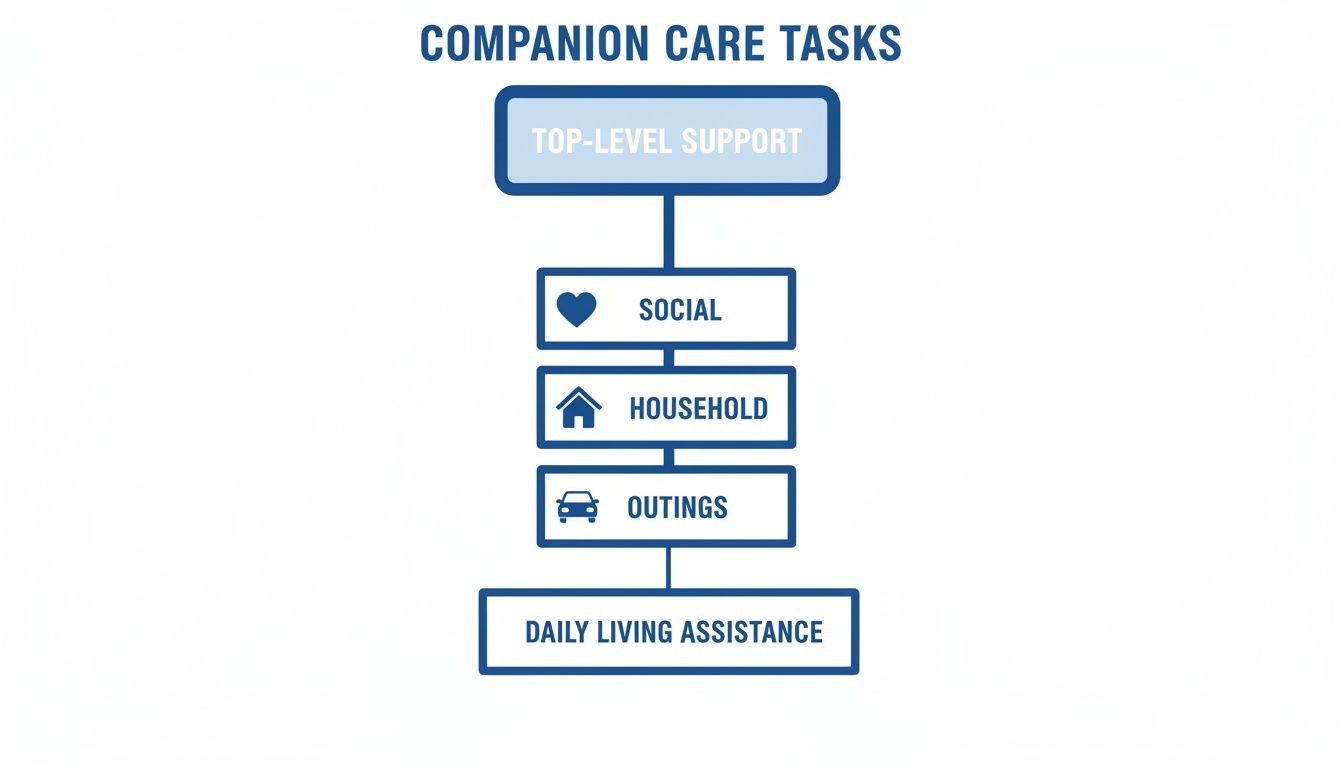
As you can see, companion care is all about well-being and independence—it's a non-medical service at its core.
What Does a Companion Actually Do?
Companion care is centered on two main things: social connection and help with what we call instrumental activities of daily living (IADLs). These are the practical tasks we all do to live independently, but they don’t involve physical, hands-on assistance like bathing or dressing.
The goal here is simple: to fight off loneliness, keep an eye on things, and help manage the little things around the house. This kind of care is a perfect match for seniors who are still fairly independent but could use a hand to stay safe, connected, and engaged. For families, it's an incredible source of peace of mind.
A companion’s day might include:
- Social and Emotional Support: Just being there. Having a conversation, playing a card game, or working on a favorite hobby together.
- Household Tasks: Helping with a load of laundry, preparing a light meal, tidying up, or sorting through the mail.
- Community Connection: Driving to doctor's appointments, running errands at the grocery store, or heading to a social event in Princeton or Hamilton.
- Safety and Supervision: Simply being present to prevent accidents, offer a steadying arm, and provide friendly medication reminders.
Understanding Personal Care Assistance
Personal care is the next step up. It involves direct, hands-on help with Activities of Daily Living (ADLs)—the fundamental self-care tasks we all need for basic health and hygiene.
This level of care is for someone with physical limits, mobility issues, or cognitive decline that makes it tough to handle these tasks alone. A Personal Care Aide (PCA) or Home Health Aide (HHA) is trained to provide this support with dignity and respect. Their work is much more intimate and requires specific skills to ensure a person's physical comfort and safety.
Personal care directly addresses an individual's physical needs, providing the hands-on help required to manage basic self-care routines safely. This is the key distinction from companionship, which focuses on non-physical support.
For instance, a companion might remind Mom to take her pills, but a personal care aide can actually help her open the bottle and ensure she takes the correct dose.
Comparing In-Home Care Levels
To make it even clearer, let's look at these services side-by-side. This table breaks down what each level of care typically includes.
| Feature | Companion Care | Personal Care | Skilled Nursing |
|---|---|---|---|
| Primary Goal | Social connection & household help | Hands-on assistance with self-care | Medical treatment & monitoring |
| Typical Tasks | Conversation, errands, meal prep | Bathing, dressing, toileting, mobility | Wound care, injections, IV therapy |
| Training | Varies; focused on safety & support | Certified Aide (PCA/HHA) | Licensed Nurse (RN/LPN) |
| Medical Focus | Non-medical | Non-medical, supports health routines | Medical, prescribed by a doctor |
| Best For | Seniors needing social engagement | Seniors needing physical assistance | Seniors with complex medical needs |
Seeing the roles defined this way helps families in Mercer County pinpoint exactly what kind of support will make the biggest difference.
Skilled Nursing: The Highest Level of In-Home Care
Finally, at the top of the pyramid, you have skilled nursing. This is medical care, plain and simple, delivered at home by a licensed nurse (an RN or LPN). It’s always prescribed by a doctor and is designed for individuals with complex medical conditions that need professional clinical oversight.
Think wound care after surgery, managing injections or IV therapy, or monitoring a serious chronic illness. It's the most intensive support available at home. By understanding these three distinct levels, you can make a confident and informed choice for your loved one.
Navigating Payment Options for Care in New Jersey
Let's talk about one of the first questions on every family's mind: "How are we going to pay for this?" It's a completely fair and practical question. Figuring out the financial side of home care companion services is a major part of planning for a loved one's well-being.
The good news is that in New Jersey, you have options. There are several different paths to making care affordable, from using private funds to tapping into state programs.
The most straightforward approach is private pay. This is when families use personal savings, retirement accounts, or other assets to cover the cost. The biggest advantage here is flexibility—you can pick any provider and set a schedule that works for you, without needing to worry about outside eligibility rules.
Another very common route is long-term care insurance. If your loved one has one of these policies, it was designed for exactly this kind of situation. You'll want to pull out the policy and get familiar with the details, like the daily benefit amount, the "elimination period" (how long you wait before benefits start), and exactly what types of care it covers.
Understanding New Jersey Medicaid and MLTSS
For many families, state programs are an absolute lifeline. In New Jersey, Medicaid is a huge help when it comes to funding in-home care, primarily through a program called Managed Long Term Services and Supports (MLTSS).
Think of MLTSS as a program designed to help seniors and people with disabilities stay in their own homes and communities instead of moving to a nursing facility. It bundles a whole range of services—including non-medical help like companionship—into one managed care plan. This means if your loved one qualifies, they can get the social support and household help they need right where they're most comfortable.
So, who is eligible for MLTSS? It generally comes down to two main things:
- Financial Criteria: There are specific income and asset limits you have to meet to qualify for New Jersey Medicaid. These numbers are updated from time to time.
- Clinical Criteria: A healthcare professional needs to confirm that the person requires a "nursing home level of care." The key here is that through MLTSS, they can receive that level of support in a much more comfortable setting, like their own home.
The MLTSS program is so important because it gets that "care" is about more than just medicine. It sees the incredible value that companionship and a little daily help have in keeping seniors independent and happy at home.
The application process can feel like a lot to handle, but it’s definitely doable. It involves gathering detailed financial paperwork and going through a clinical assessment. Partnering with an agency that knows the New Jersey Medicaid system inside and out can make all the difference. Our team can help walk you through the requirements and get your information in order.
Other Funding Avenues to Explore
Beyond those main options, there are a few other possibilities to look into. For example, some veterans can get benefits through the Department of Veterans Affairs (VA) that can be used for in-home care services.
It's also worth checking any life insurance policies your loved one might have. Some contain riders or have conversion options that let you access a portion of the death benefit early to pay for long-term care. It’s always smart to review existing policies to see if this feature is included.
Making sense of all these financial pathways is a big step in the care planning process. If you want to dig deeper into the details, you can learn more about how to pay for home care in our comprehensive guide. Taking the time now to explore all your options will give you the confidence to make the best choice for your loved one and your family.
How to Choose the Right Companion Service in Mercer County
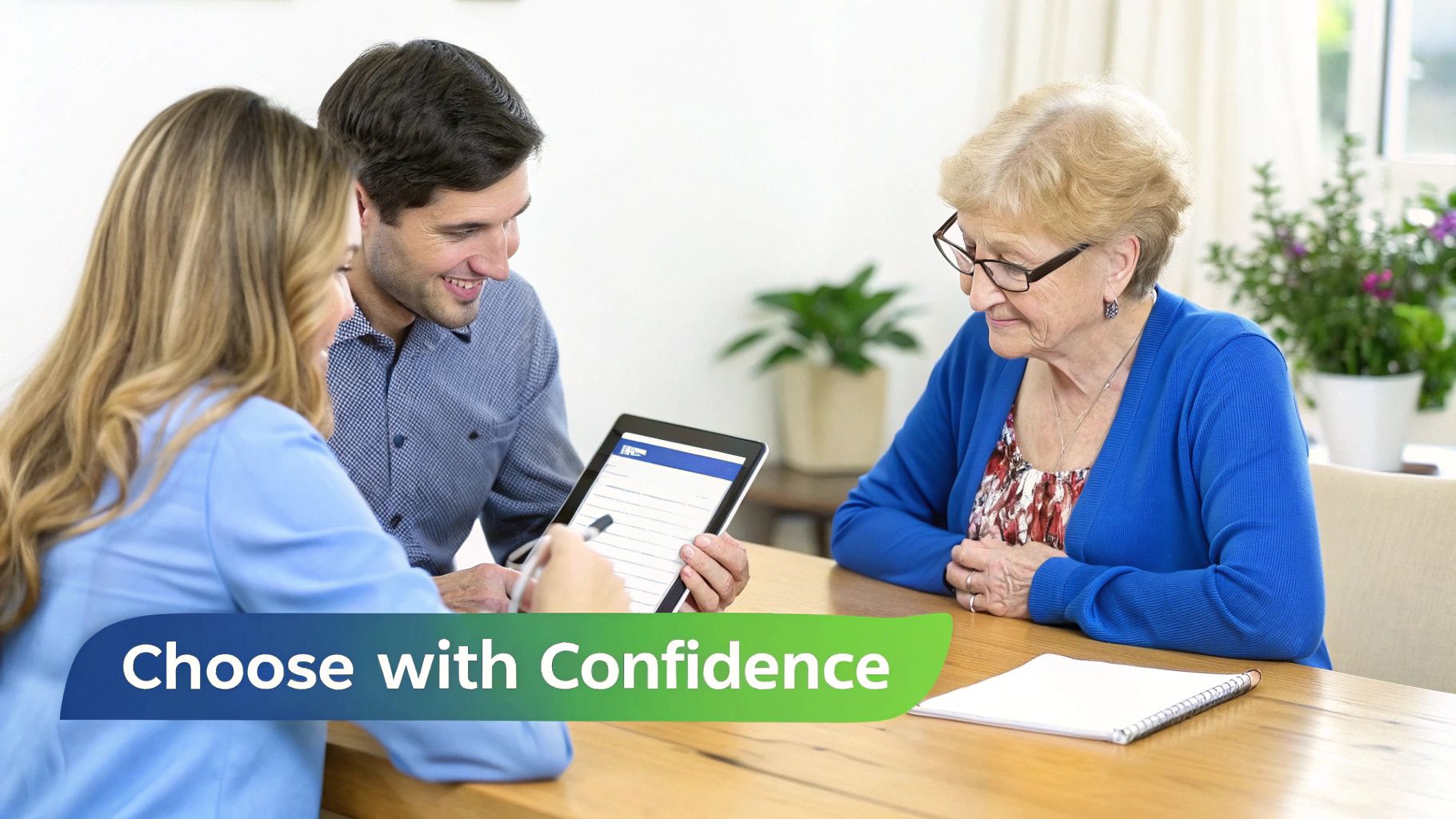
Choosing an agency to provide home care companion services is one of the biggest decisions your family will make. It’s not just about hiring someone to help out; it's about inviting a person into your loved one's home and trusting them with their happiness and well-being. This isn't a decision to be rushed.
For families in Princeton, Hamilton, and across Mercer County, the real goal is finding a partner in care—an agency that gets what your family is all about. With a little structure, you can move from feeling overwhelmed to making a choice that gives you true peace of mind.
Verifying Agency Credentials and Safeguards
Before you even start thinking about personalities and schedules, your very first step is to check the agency's credentials. A truly professional provider will be completely upfront about their licensing, insurance, and how they screen their caregivers. These aren't just boxes to tick; they are the fundamental safeguards protecting your family.
You want to see that an agency is licensed by the state of New Jersey and carries both liability insurance and workers' compensation. This protects you from any financial surprises if an accident happens. Just as important is how they vet their caregivers, so don't be shy about asking direct questions.
- Background Checks: Do they run comprehensive, nationwide criminal background checks on every single employee?
- Reference Verification: Is there a process for actually calling and verifying the professional references for every caregiver they consider hiring?
- Skill Assessment: How do they evaluate a caregiver’s practical skills, experience, and, just as crucial, their personality and temperament?
A top-tier agency will have a tough, multi-step screening process. It’s their job to ensure only the most trustworthy and qualified individuals walk through your door.
Key Questions to Ask During Your Consultation
Once you've got the basics covered, the next step is the consultation. This is your chance to really get a feel for how the agency operates and if their approach clicks with your family's needs. Go in prepared with a list of questions so you can compare your options fairly. A good consultation should feel like a genuine conversation, not a sales pitch.
Your initial consultation is the single best opportunity to gauge an agency's professionalism, empathy, and commitment to personalized care. Pay close attention to how they listen just as much as how they answer.
Here are a few essential questions to get you started:
- Caregiver Matching: How do you pair caregivers with clients? Do you take personality, shared interests, and specific needs into account?
- Training and Development: What kind of initial training do your caregivers receive, and what about ongoing education?
- Backup Support: What’s the plan if our regular caregiver is sick or has an emergency? How do you make sure there are no gaps in care?
- Care Plan Creation: How do you develop the personalized care plan? How often is it revisited and updated as needs change?
- Communication: What is the process for keeping families in the loop about a loved one's day and any potential concerns?
Making an informed decision is everything when you're arranging this kind of support. For a deeper dive into the specific types of help available, take a look at our guide on elderly in-home care services. When you find the right partner, you empower your loved one to live a fuller, safer, and more connected life at home.
Common Questions About Home Companion Care
Even after learning all the details, it’s completely normal to have a few more questions pop up when you're considering home care companion services. To help make things crystal clear, we’ve put together answers to some of the most frequent questions we hear from families right here in the Princeton and Hamilton areas. Think of this as a quick guide to give you the confidence you need to take the next step.
How Are Caregivers Matched with Clients?
Finding the right personality fit is just as crucial as finding the right set of skills. We don’t just randomly assign someone; our matching process is a thoughtful, deliberate one. It all starts with a deep-dive consultation where we get to know not just your loved one’s care needs, but also who they are as a person—their hobbies, their personality, and how they like to communicate.
From there, we look within our team of dedicated caregivers to find the person whose temperament and experience are a perfect match. We firmly believe a great client-caregiver relationship is built on a genuine connection, so we take our time to get this step just right. The goal is always to create a partnership that feels natural and supportive from the very first day.
A successful match is so much more than a skills checklist. It’s about pairing two people who will genuinely enjoy spending time together, building a relationship founded on trust, respect, and real understanding.
What Happens If Our Regular Caregiver Is Unavailable?
Consistency is the bedrock of great care, but we all know that life can be unpredictable. If your regular caregiver is sick or has an emergency, we have a solid backup system in place to ensure there’s never a gap in your loved one’s support.
Our coordination team will immediately arrange for another qualified and compassionate caregiver from our team to step in. Before they even walk through the door, this caregiver will be fully briefed on your loved one’s care plan, their personal preferences, and their daily routine. This ensures a seamless, stress-free transition and maintains the high standard of care you expect and deserve.
How Flexible Can the Service Schedule Be?
Flexibility isn't just a buzzword for us; it’s a core part of how we provide effective home care. A person's needs can change—sometimes slowly over time, and sometimes overnight. Your care plan has to be able to adapt right along with them. Whether you need help for just a few hours a week or require more consistent support, we’ll work with you to create a schedule that fits.
We can easily adjust visit times, increase or decrease hours, and modify the entire plan as your loved one’s situation evolves. Our aim is simple: to provide the right amount of support at the exact right time, ensuring the care plan always reflects what’s needed today.
Ready to give your loved one the gift of companionship and dedicated support? The team at NJ Caregiving is here to answer any other questions you might have and help you build a personalized care plan from the ground up. Contact us today to start the conversation.
