

Understanding What You Really Need Before You Hire
Hiring for in-home care can feel like a race against time. But honestly, rushing into hiring is a recipe for disaster. It's the fastest way to end up with caregivers who just aren't a good fit. Before you even start thinking about job postings, you need to be absolutely crystal clear on what your clients need.
I've seen this happen so many times – agencies skip this crucial first step and then they’re stuck with constant caregiver turnover and unhappy clients. It's a mess you want to avoid.
First things first: assess your current client base. Are you primarily working with seniors who need companionship and help with everyday tasks? Or do you have a lot of clients with more complex medical needs requiring skilled nursing? This is a huge differentiator.
Think about it: a caregiver who excels at providing engaging companionship might not be equipped to handle medication management or wound care. On the other hand, a highly skilled nurse might find basic companionship duties less fulfilling. It’s all about matching the right skills to the right needs.
This means your hiring process needs to be laser-focused. If your client base is diverse, consider creating separate hiring pipelines for different care levels. It might seem like more work upfront, but trust me, it's way less stressful than hiring someone who looks great on paper but isn't equipped to handle the actual work.
Also, think about your agency's growth. It’s tempting to get carried away with big growth plans, but your hiring needs to be realistic. If you're hoping to double your client base next year, how many more caregivers will you actually need? And where are you going to find them? An estimated 1.4 million people work in home health care, so there's a workforce out there, but the competition for qualified caregivers is tough. Discover more insights about the home care workforce. Planning ahead is key.
Finally, once you've got a solid understanding of your client needs and growth projections, you can start writing targeted job descriptions. Ditch the generic descriptions that attract everyone and no one. Focus on the specific skills and qualities you need for each role. If you need a caregiver experienced in dementia care, spell it out! This attracts the right candidates and filters out those who aren't a good match. A strong job description is your first defense against a bad hire. By figuring out exactly what you need before you even start the hiring process, you’re setting yourself up for success. You'll attract caregivers who not only meet your clients' needs but also thrive in your agency.
Finding Quality Caregivers Where They Actually Look
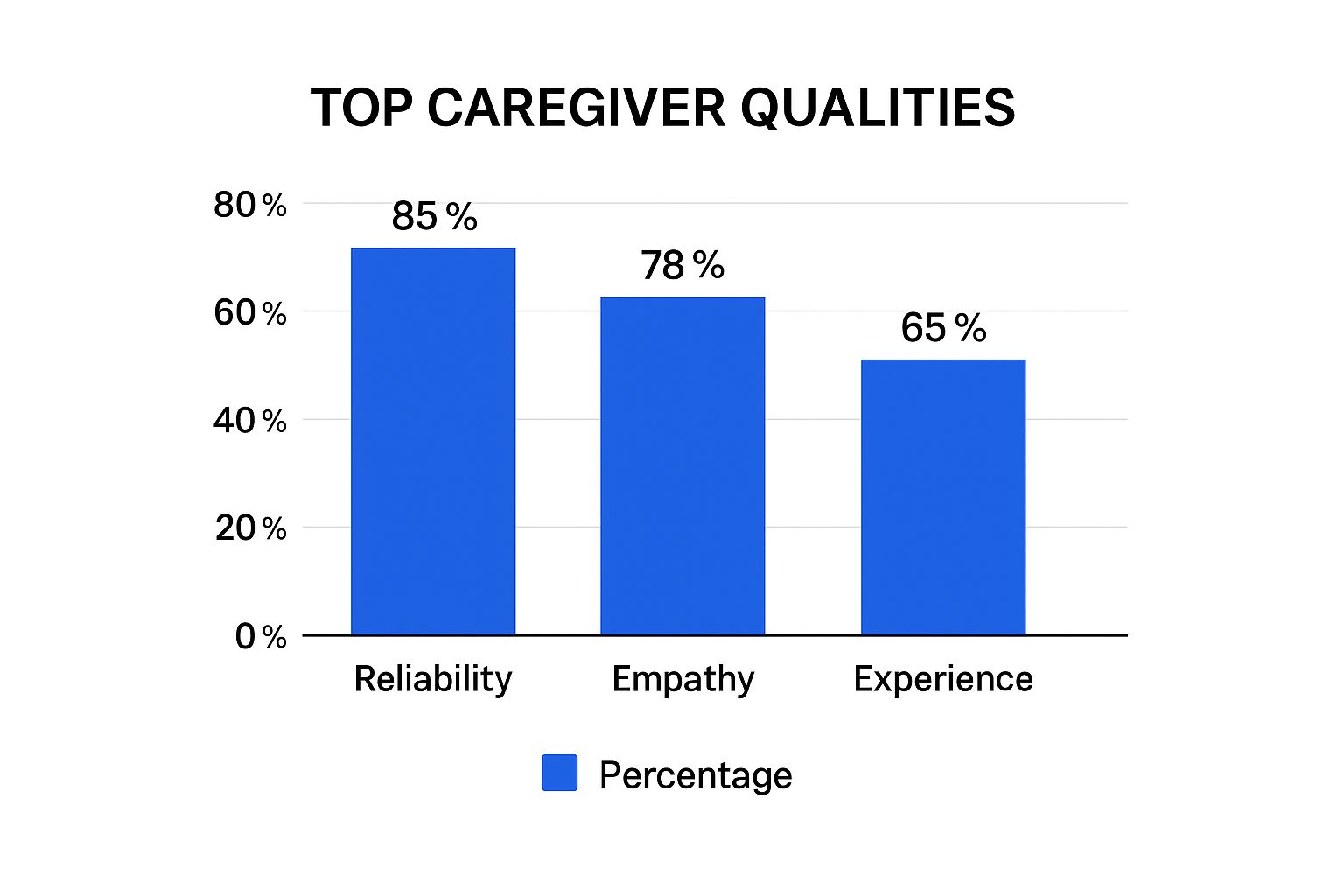
The infographic above highlights what families prioritize when hiring in-home care: reliability (85%), empathy, and experience. It really underscores that finding dependable and compassionate caregivers is key. Families want someone they can trust, who genuinely cares, and who knows what they're doing. This isn't just about ticking boxes; it's about finding the right fit.
So, you know what your clients need. But where do you find these gems? Let's ditch the generic job boards like Indeed. The best caregivers aren't just passively browsing online; they're actively involved in their communities and looking for agencies that value their work.
Tapping into Untapped Talent Pools
In my experience, building relationships with local nursing programs and healthcare training facilities is a game-changer. These places are filled with dedicated individuals passionate about caregiving. Think about offering internships or partnering with schools for job fairs. It's an investment in the future, but it creates a steady stream of new talent.
Also, check out online platforms specifically for healthcare professionals. While LinkedIn can be useful, niche platforms often attract caregivers actively seeking home care positions. It’s like fishing in a well-stocked pond versus casting a wide net in the ocean.
Crafting Compelling Job Postings
Even on the right platforms, your job postings need to shine. Don't just list duties; tell a story. Highlight the positive impact caregivers can make. Focus on the rewarding relationships they'll build and the real difference they'll make in someone's life. Remember, this profession is all about helping others.
For instance, instead of "Assist with bathing and dressing," try "Empower seniors to maintain their dignity and independence through compassionate personal care." It’s a small change, but it speaks volumes.
Community Connections: Your Secret Weapon
Finally, never underestimate the power of community connections. Senior centers, community health fairs, and local churches are goldmines. These are places where caregivers are already involved, and you can build trust by showing genuine interest in the community. Trust me, your competitors probably aren't doing this, so it's a fantastic way to stand out.
To help you navigate the different recruitment channels, I've put together a comparison table based on my experience in the field:
Home Care Recruitment Channels Comparison
Real-world effectiveness and cost comparison of different recruitment channels based on agency experiences
| Recruitment Channel | Cost Level | Quality of Candidates | Time to Fill | Best For |
|---|---|---|---|---|
| Local Nursing Programs & Healthcare Training Facilities | Medium | High | Medium to Long | Building a pipeline of new talent |
| Niche Online Healthcare Platforms | Low to Medium | Medium to High | Medium | Experienced professionals actively seeking home care roles |
| Medium | Medium | Varies | Reaching a broad audience of professionals | |
| Community-Based Recruiting (Senior Centers, Health Fairs, Churches) | Low | High | Varies | Connecting with caregivers already embedded in the community |
| Generic Job Boards (Indeed, etc.) | Low | Low to Medium | Short | High-volume hiring, but may require more screening |
This table shows that while generic job boards can be quick, they often yield lower-quality candidates. Investing in relationships with nursing programs and engaging with local communities takes more effort but results in finding truly exceptional caregivers.
By targeting your efforts and writing compelling job postings, you can attract top-notch caregivers and build a thriving team. This benefits not only your agency but, more importantly, ensures your clients receive the best possible care.
Why the Booming Market Changes Everything About Hiring

The in-home care industry is exploding right now. This is great news for agencies, but it also makes hiring caregivers much more challenging. You're facing stiffer competition for qualified candidates than ever before.
This market boom is pushing salary expectations way up—faster than many agencies can keep pace with. I’ve talked to agency owners who are really feeling the pinch. One owner in Pennsylvania shared that she had to boost her starting wage by a whopping 15% in just one year! It’s not just about offering decent pay anymore; it’s about offering competitive pay in a market that’s constantly shifting.
The skills you need in a caregiver are also changing. You have to look beyond the basics. Think about it: technology is everywhere in home care these days, from telehealth appointments to medication reminders. Caregivers who are comfortable with tech and can learn new systems are worth their weight in gold. You're now hiring for tech skills alongside caregiving experience.
The global home care services market is projected to hit $1,193.11 billion by 2032, with a 10.4% annual growth rate. Discover more insights into the home care market growth. This shows just how huge the demand for in-home care is, but it also underscores how competitive it is to find and keep great caregivers.
You have to be more strategic with your hiring. Simply posting a job and hoping for the best isn’t going to cut it. You need to make your agency the place caregivers want to work. What makes your agency stand out?
- Do you offer flexible schedules?
- Are there opportunities for professional development?
- Is it a supportive and positive work environment?
Highlight these perks in your job postings and when you’re interviewing candidates.
I know one agency that partners with a local community college to offer continuing education to their caregivers. It’s a fantastic way to help caregivers grow professionally and make the agency super attractive to potential hires.
Don't forget to think outside the box when it comes to benefits. Go beyond basic healthcare. Consider offering paid time off, mileage reimbursement, or performance bonuses. These perks can make a real difference. They show your caregivers that you value them and their well-being, and that's key to staying competitive. You want caregivers to choose you, not just settle for you.
Interviewing Beyond the Standard Questions

Finding the right in-home care can feel like searching for a needle in a haystack. Anyone can memorize answers, but how do you find someone truly committed? The key is looking beyond the standard interview questions and really getting to know the person behind the resume. You're not just filling a position; you're welcoming someone into a vulnerable and intimate part of your or your loved one's life.
I've learned from years of experience and conversations with agency owners that the most successful hires come from understanding a candidate’s character and genuine compassion. It's about finding someone who sees this work not just as a job, but as a calling.
Uncovering Genuine Compassion and Commitment
Instead of relying on prehearsed responses, try painting a picture. Present real-life scenarios. Instead of "How would you handle a difficult client?", try, "Imagine a client refuses their medication. What do you do?" This reveals practical problem-solving skills and their ability to handle the delicate dance of caregiving.
Emotional intelligence is key. Ask about a time they showed empathy or dealt with stress. Did they lose their cool or find a creative solution? Home care is full of emotional moments; you need someone who can navigate them with grace and understanding.
Here's a table I've found incredibly helpful when interviewing potential caregivers:
Character-Revealing Interview Questions for Home Care
Proven questions that go beyond surface answers to reveal genuine caregiver qualities
| Question Category | Sample Question | What It Reveals | Red Flag Responses |
|---|---|---|---|
| Problem-Solving | "A client insists on doing something unsafe. How do you respond?" | Judgment, creativity, ability to balance safety with client autonomy | Insisting on their way, dismissing client's feelings, inability to adapt |
| Empathy | "Tell me about a time you had to comfort someone who was upset." | Emotional intelligence, communication style, genuine compassion | Lack of specific examples, minimizing the other person's feelings, focusing on themselves |
| Stress Management | "Describe a challenging work situation and how you handled it." | Resilience, problem-solving under pressure, ability to remain calm | Blaming others, becoming overwhelmed easily, inability to reflect on the experience |
| Initiative | "Tell me about a time you went above and beyond for someone you were caring for." | Proactive nature, dedication, genuine desire to help | Difficulty coming up with examples, focusing on tasks rather than the person’s needs |
This table helps me structure my interviews and ensures I’m asking the right questions to uncover the qualities I’m looking for. It's about seeing beyond the surface and getting a feel for who they really are.
Cultural Fit and Team Dynamics
Just as important as individual qualities is how a caregiver fits within your existing team. Your agency has its own personality. Ask about their preferred work style. Do they love collaboration or thrive independently? A harmonious team is a happy team, and that positive energy translates directly to better care.
One of my favorite techniques is introducing candidates to the team. Observe their interactions. Are they genuinely engaging, asking questions, and showing interest? This sneak peek into their potential team dynamic can be invaluable.
Beyond the Interview Room
Words are important, but actions speak louder. Pay attention to the non-verbal cues: body language, eye contact, and overall demeanor. Do they seem present and engaged? These subtle signs can offer surprisingly insightful glimpses into their personality and professionalism.
Hiring for in-home care isn't just about ticking boxes on a checklist. It’s about finding a genuine connection, someone who truly cares. It's about finding the person who will treat your loved one as their own. By digging deeper, you'll not only find a competent caregiver but someone who becomes an extension of your family, providing comfort, support, and true peace of mind.
Making Background Checks Work, Not Wait
Let's be honest, background checks are crucial for in-home care. But they can be a real headache, especially when you need caregivers now. Nobody wants to skimp on safety, but you also don't want to miss out on qualified candidates because the process takes forever. I've heard this same frustration from so many agency owners, trying to find the right balance.
The secret? A system that's efficient and effective. Think smooth, streamlined process, not a series of obstacles. Each part should flow naturally into the next.
Choosing the Right Background Check Services
First things first: find a background check service that understands home care. Some are just better equipped to handle the specific regulations involved with healthcare hiring. Tap into your network! Ask other agencies what they use – a personal recommendation is gold. I’ve noticed many agencies prefer services that offer bundled packages, covering criminal checks, motor vehicle records, and certification verification.
Handling Imperfect Histories with Care
Not every issue on a background check is a reason to walk away. Someone might have a minor offense from years back that doesn't represent who they are today. Have a clear policy in place for how to handle these situations. Talking to the candidate to understand the context is key. Don't write someone off without giving them a chance to explain. I know one agency owner who uses a point system to evaluate background check results, which allows for some flexibility depending on the severity and how recent any issues are.
Documentation: Your Protection and Theirs
Detailed record-keeping for every background check is essential. It protects you legally and ensures fairness for all candidates. Go digital! Scanned documents are so much easier to manage than paper files. A secure online system is a game-changer for organization and staying compliant. Plus, it makes accessing information a breeze.
Communicating Clearly and Professionally
Keep candidates updated throughout the process. Explain what the background check involves and give a realistic timeframe. Transparency builds trust and respects their time. I know one agency that uses automated email updates. It's a simple way to keep everyone informed and reduce stress.
Balancing Speed and Compliance
You can be thorough without being slow. Choosing the right service, having a clear process, and open communication can make background checks a natural part of your hiring process. It’s not about cutting corners, but about making the process work for you so you can onboard fantastic caregivers quickly and confidently. The ultimate goal is to find the best caregivers while ensuring everyone's safety and well-being. This not only protects your clients, but also builds a culture of trust and respect within your agency.
Building Teams That Scale With Industry Growth
Building a solid in-home care team isn’t just about filling those empty slots you have right now. It's about creating a framework that can easily adapt and grow as your agency does. Savvy agencies are looking ahead, anticipating the rapid growth that's happening in this industry. They’re not just thinking about today’s needs; they're building for tomorrow. This proactive approach sets them up for long-term success in what is becoming a very competitive market.
One key thing to focus on is finding caregivers with real growth potential. Instead of just looking at their current skills, consider their eagerness to learn, how well they adapt, and their genuine passion for caregiving. These qualities tell you something important: this person is likely to stay with you and take on new challenges as you expand. It's a bit like investing in a promising up-and-coming stock – you want to find the ones with the best chance of long-term success.
Equally important is making sure your hiring process is efficient and can scale. A smooth, streamlined process—from application to onboarding—saves you time and resources without compromising the quality of your hires. Think online applications, standardized interview questions, and even digital onboarding systems. It’s all about building a well-oiled machine where all the parts work together smoothly.
You also need to make your agency a place where caregivers want to work. In a growing market, caregivers have choices. You need to stand out from the crowd. Competitive salaries and benefits are a must, but also consider offering opportunities for professional development. Create a culture where caregivers feel valued, supported, and empowered.
Successfully managing rapid growth means maintaining your standards even as you ramp up hiring. This might mean developing solid training programs, setting clear performance expectations, and putting quality assurance measures in place. Think of it like scaling up a favorite recipe – you want to keep that same great taste even if you’re cooking for a crowd.
Another smart move? Creating opportunities for advancement within your agency. Offer promotions, chances to specialize, and even leadership roles. This not only motivates your team but also ensures you have experienced staff ready to step up as you grow. It's about creating a career ladder within your agency, so your caregivers can envision a future with you.
The home care industry is booming thanks to the increased demand for non-hospital care. In fact, the U.S. home care market is projected to hit $225 billion by 2025, showcasing a huge increase in the need for these services. Find more data on the growth of home care here. This growth means the demand for caregivers will just keep climbing.
Finally, don’t forget to keep your hiring criteria up-to-date. Client needs change, and so does the industry. Stay informed about new technologies, the latest approaches to caregiving, and changing regulations. This ensures you attract and retain caregivers who are truly qualified to meet the evolving needs of your clients and the industry itself. It's all about staying ahead of the curve, continuously learning and adapting to what the future holds.
Building a team that can grow with you is key to long-term success in this rapidly expanding industry. It's not just about filling today's openings; it's about building a foundation for sustained growth. By attracting and keeping top-notch caregivers, your agency will be ready to thrive for years to come.
Your Practical Roadmap to Hiring Success
Let's get down to brass tacks. We've talked theory, now let's talk practical application. This isn't some pie-in-the-sky ideal; it's a field-tested roadmap based on what truly works for home care agencies. I've personally witnessed these strategies turn hiring nightmares into smooth, efficient processes.
Implementing Your Hiring Strategy: Practical Steps
Whether you're running a small agency or a large one, these steps will steer you in the right direction:
-
Clarify Your Needs: Don't just throw a wide net and hope for the best. Take a good hard look at your current client base and your realistic growth projections. Then, define the specific caregiving roles you need to fill. Intentional hiring is key.
-
Targeted Outreach: Forget the scattergun approach. Think laser focus. Where are the quality candidates hiding? Building relationships with local nursing schools or engaging with community groups can be far more effective than generic job boards.
-
Craft Compelling Job Descriptions: Don't just list duties. Tell a story. Highlight the real, meaningful impact caregivers have on people's lives. Show potential hires why your agency is a fantastic place to work.
-
Go Beyond Standard Interviews: Resumes and generic interview questions only tell you so much. Use real-life scenarios and behavioral questions to get a sense of a candidate's character, empathy, and problem-solving skills. And don't forget to observe how they interact with your existing team. This can be incredibly revealing.
These aren't abstract concepts, they're concrete actions you can start taking today.
Setting Realistic Expectations and Timelines
Overhauling your hiring process isn't an overnight miracle. Building solid relationships with referral sources takes time and effort. Implementing new interview techniques requires practice and refinement. There will be bumps in the road, expect that. However, prioritizing quality over speed right from the start will save you headaches and wasted time in the long run.
I once worked with an agency that saw a dramatic reduction in caregiver turnover within six months of implementing a more targeted hiring approach. They went from constantly putting out fires to actually having a waiting list of qualified applicants. It wasn't a quick fix, but a commitment to a better process that ultimately yielded huge returns.
Measuring Success: Beyond Filling Positions
Just filling open positions isn't the finish line. True success in home care hiring means building a thriving team. Keep a close eye on your caregiver retention rates. Are your caregivers sticking around? Happy caregivers lead to happy clients. And client feedback is gold. Are they satisfied with the care their loved ones are receiving? These are the real metrics that matter.
Continuous Improvement: Never Stop Learning
The world of hiring is always changing. Stay on top of industry trends, new technologies, and emerging best practices. Regularly evaluate your hiring process and tweak it as needed. What worked a year ago might be obsolete today. The key is to remain flexible, adaptable, and always be open to learning. That's how you consistently attract and keep the best caregivers in the field.
Are you ready to experience the transformative power of a strong caregiving team? NJ Caregiving is dedicated to providing compassionate, personalized in-home care in Princeton, NJ, and the surrounding Mercer County area. Contact us today to discover how our skilled caregivers can support your loved ones and give you peace of mind.
