
When someone needs a little extra help to live safely at home, a home health aide (HHA) often steps in. Their job is all about providing personal care, keeping an eye on health, and offering light household support. They're more than just a caregiver; an HHA is a supportive bridge, connecting a person's day-to-day needs with their bigger health picture, helping them live with dignity and independence.
Understanding the Cornerstone of In-Home Care
Think of a dedicated professional who not only helps with physical tasks but also brings compassion and companionship into the home. That's the heart of what a home health aide does. They're there for people recovering from an illness, managing a chronic condition, or just needing an extra hand to stay comfortably in their own space.
An HHA's work isn't one-size-fits-all; it’s tailored to each person's specific care plan. Unlike a friend or family member who might help out, a certified HHA works under the supervision of a registered nurse. This ensures all the care they provide is safe, effective, and perfectly aligned with a doctor’s orders.
The Three Pillars of HHA Responsibilities
The duties of a home health aide generally fall into three main categories. Grasping these pillars helps families know what to expect when welcoming an HHA into their lives.
- Personal Care and Support: This is the hands-on assistance with what we call Activities of Daily Living (ADLs)—the basic tasks of self-care. It could be anything from help with bathing and dressing to grooming and getting around the house safely. You can dive deeper into this topic in our guide on the 12 activities of daily living.
- Health-Related Monitoring: HHAs are trained to be the eyes and ears on the ground. They watch for any changes in a client's condition, monitor vital signs like blood pressure, give timely medication reminders, and assist with prescribed exercises.
- Household and Environmental Support: A safe, clean home is essential for good health. HHAs tackle light housekeeping duties like laundry, preparing nutritious meals, and tidying up to make sure the living space is comfortable and free of hazards.
A home health aide does more than just tick off a to-do list. They build a real relationship, offer emotional support, and become a trusted, steady presence. They create an environment where someone can truly thrive, even with health challenges.
This unique blend of personal, health, and domestic support makes the role of an HHA so powerful.
To give you a clearer snapshot, here’s a quick breakdown of what an HHA’s responsibilities often look like.
Home Health Aide Responsibilities at a Glance
| Category of Care | Examples of Duties |
|---|---|
| Personal Care | Assisting with bathing, dressing, grooming, and toileting. |
| Mobility Assistance | Helping clients move safely around the home, transferring from bed to chair. |
| Nutrition Support | Planning and preparing meals according to dietary needs, assisting with feeding. |
| Health Monitoring | Checking vital signs, providing medication reminders, observing for health changes. |
| Household Tasks | Light housekeeping, laundry, changing bed linens, and grocery shopping. |
| Companionship | Providing social interaction, emotional support, and engaging in activities. |
This table shows just how varied and essential their work is, touching on nearly every aspect of a client's daily well-being.
Mastering Activities of Daily Living with Compassion
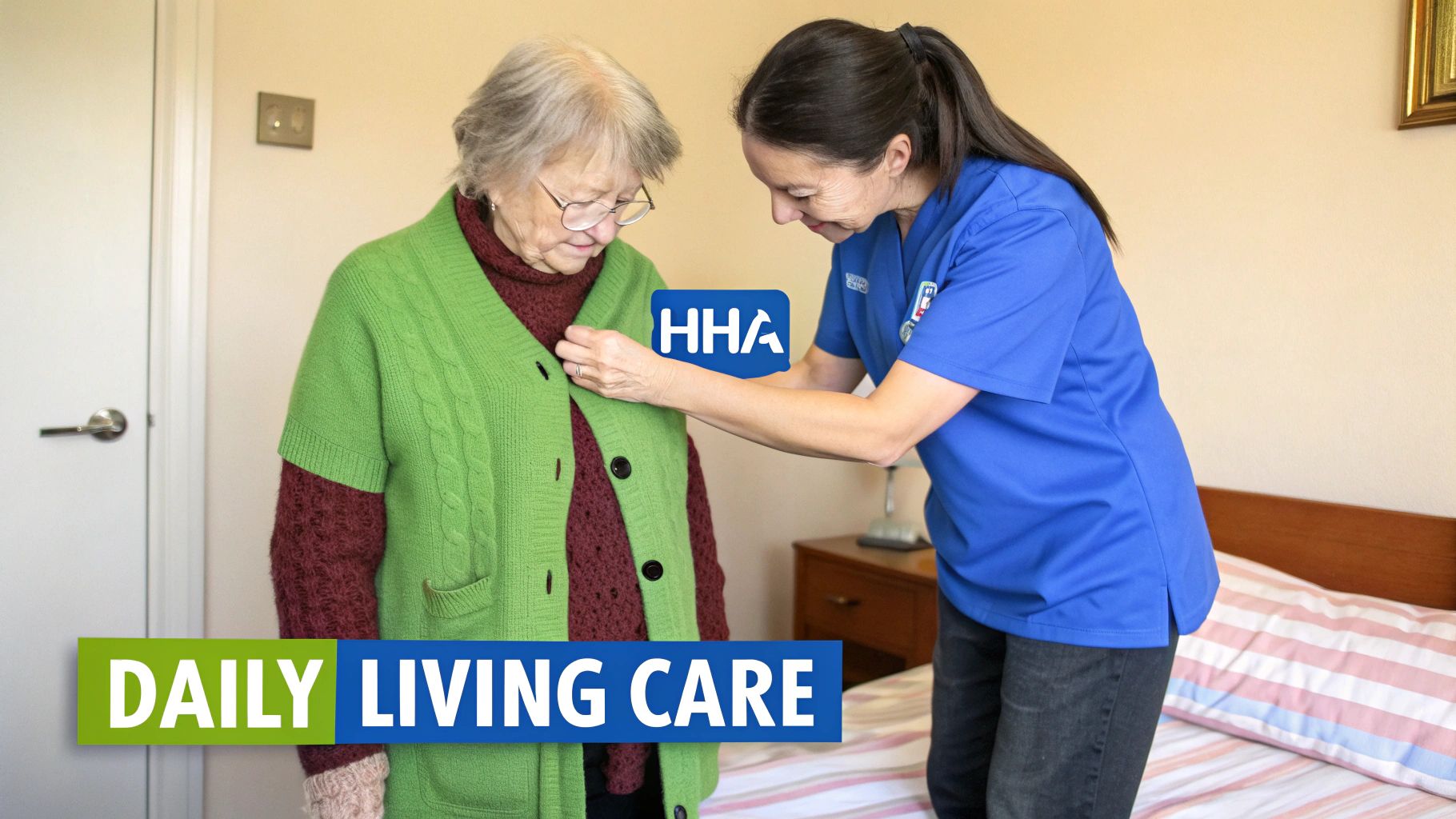
The term "Activities of Daily Living," or ADLs, might sound a bit clinical, but it really just describes the fundamental tasks that make up our daily routines. These are the things we all do to feel independent and like ourselves. For a home health aide, helping with ADLs isn't about just completing tasks—it's about providing that support with genuine respect and compassion.
Think of an HHA as a supportive partner. They aren't there to take over, but to enable. They step in just enough to make a challenging task manageable, all while preserving your loved one’s sense of dignity and self-worth. It’s a delicate balance, and getting it right is the hallmark of truly great care.
So what does this look like in practice? Let's walk through a typical morning to see these duties in action. It’s far more than a checklist; it's a series of meaningful interactions that create a safe, comfortable, and positive day.
Upholding Dignity in Personal Care
The morning routine—bathing, dressing, grooming—is a private and often cherished part of the day for most of us. When physical challenges make these simple tasks difficult, it can feel incredibly frustrating. A skilled HHA approaches this with immense sensitivity.
Instead of just getting the job done, a great aide turns personal care into a collaborative effort. They might lay out two favorite outfits and ask, "Which one are you in the mood for today?" This simple question returns a feeling of control and personal choice to your loved one.
During grooming, they might chat about the day's plans while brushing hair or assist with shaving in a way that always ensures the client feels comfortable and respected. This is about so much more than hygiene; it's about helping someone feel like their best self.
"True care isn't about doing things for someone; it's about empowering them to do what they can for themselves. It’s about preserving the person behind the patient."
This philosophy is central to how an HHA assists with even the most personal of tasks, ensuring every action reinforces the client’s dignity.
Transforming Mealtime into a Nourishing Experience
Good nutrition is a cornerstone of health, but preparing a meal can feel like an insurmountable task for someone with limited energy or mobility. One of the key duties of a home health aide is to turn this potential chore into a positive and nourishing part of the day.
This support goes far beyond simply putting food on a plate. It involves:
- Mindful Meal Planning: An HHA takes dietary needs, personal preferences, and even cultural tastes into account. The goal is to make food that is both healthy and enjoyable.
- Collaborative Preparation: Whenever possible, the aide involves the client. This might mean asking them to stir a sauce or help chop soft vegetables, which keeps them engaged and connected to their own meals.
- Creating a Pleasant Atmosphere: Aides can set the table, make sure the eating environment is comfortable, and provide companionship during the meal. This simple act is known to improve both appetite and digestion.
With this approach, mealtime becomes a moment of connection and pleasure, not just a necessity.
Ensuring Safe and Confident Mobility
For many older adults, the fear of falling is a constant worry. That fear can unfortunately lead to a less active life. A home health aide plays a vital role here, helping to build confidence and ensure your loved one can move safely around their own home.
Their assistance is both proactive and reactive. They proactively keep pathways clear of clutter and make sure walkers or canes are always within easy reach. Then, they reactively offer a steady arm for support when walking to the bathroom or getting up from a favorite chair.
This reliable support helps clients feel more secure and confident in their own space. By reducing the risk of falls, an HHA helps maintain independence and prevent injuries that could lead to a hospital stay, creating a safe environment where your loved one can thrive.
Navigating Medication and Clinical Support Boundaries
It's one of the most critical things for families to understand: a home health aide is a vital part of the care team, but they aren’t a nurse. Think of an HHA as a skilled co-pilot for your loved one’s health journey. They follow the detailed flight plan laid out by doctors and nurses, but they don't make the crucial navigation decisions themselves.
This distinction is never more important than when it comes to medication. An HHA's job is to offer support and reminders, making sure the client sticks to their prescribed schedule. However, they are legally and ethically forbidden from actually administering the medication. This bright line is non-negotiable—it’s there to protect your loved one and clarify when a higher level of care is truly needed.
Knowing where these boundaries lie helps everyone have realistic expectations, ensuring a safe and effective care environment from day one.
Medication Reminders vs. Administration
The difference between a "reminder" and "administration" might sound like semantics, but in the world of home care, it's a massive legal and practical divide. An HHA’s purpose is to help a client remember to take their own medication exactly as their doctor prescribed.
This supportive role looks like this:
- Verbal Prompts: A simple, friendly nudge like, "It's 9 a.m., time for your morning pills."
- Bringing Medications to the Client: An HHA can retrieve the pill bottle or a pre-filled organizer and hand it to the client.
- Reading the Label: They can read the instructions on the bottle out loud to confirm the right dose is being taken at the right time.
- Assisting with Packaging: For someone with arthritis or limited dexterity, an aide can help open a tricky bottle or pop a pill out of a blister pack.
What they absolutely cannot do is physically put a pill in a client’s mouth, manage a complex insulin shot schedule, or draw medication into a syringe. Those actions are all considered "administration," a task reserved for licensed professionals like a Registered Nurse (RN) or Licensed Practical Nurse (LPN). If you'd like to dive deeper into this, you can learn more about how to prevent medication errors in our dedicated guide.
Permitted Health-Related Tasks
While HHAs have firm limits on medical procedures, they are trained to handle a range of important health-related tasks, always under a nurse's supervision. These duties are crucial for giving the entire care team a clear picture of a client's daily well-being.
An HHA is permitted to:
- Check Vital Signs: This includes accurately taking and recording temperature, pulse, respiration rate, and blood pressure.
- Assist with Prescribed Exercises: Helping a client move through physical or occupational therapy routines that a licensed therapist has already taught them.
- Support Special Diets: Preparing meals that follow specific medical instructions, like a low-sodium or diabetic-friendly plan.
- Assist with Medical Equipment: Helping with non-invasive gear like walkers, canes, or personal lift devices.
These aren't just small chores; they are fundamental to monitoring a client’s condition. Consistent, accurate tracking of vital signs, for example, can help a supervising nurse catch a potential problem long before it becomes an emergency.
A Home Health Aide acts as the care team's eyes and ears in the home. By diligently performing these health-related duties, they provide the real-time data that nurses and doctors need to make informed clinical decisions, ensuring proactive and responsive care.
The Clear Line HHAs Cannot Cross
To keep clients safe and operate within their legal scope of practice, there are several clinical tasks a home health aide is strictly forbidden from doing. Knowing this list helps families recognize when they need to bring in a skilled nurse.
An HHA must never:
- Administer injections of any kind (including insulin)
- Perform wound care or change sterile dressings
- Insert or manage catheters
- Administer medications (as we’ve covered)
- Make a medical diagnosis or change the official care plan
- Perform any task that requires the clinical judgment of a licensed nurse
These boundaries aren't just suggestions—they are hard-and-fast professional standards designed to protect your loved one. If their care needs include any of these tasks, a skilled nursing service is essential, either instead of or alongside a home health aide. This is how we ensure every aspect of care is delivered safely and competently.
The Hidden Importance of Communication and Observation
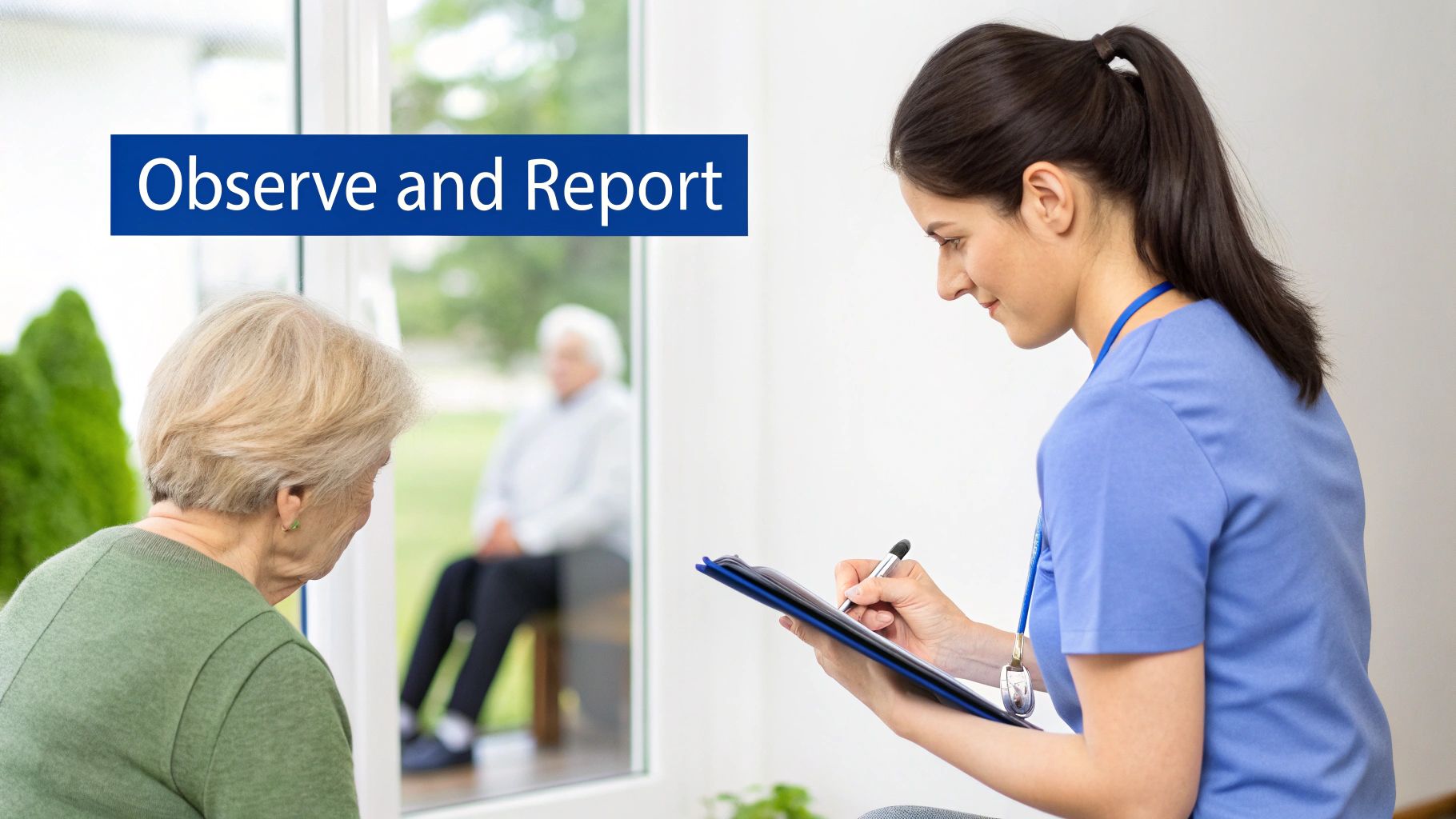
While the hands-on tasks are what most people picture, some of a home health aide’s most crucial work happens quietly in the background. An HHA is truly the eyes and ears for the entire care team—the family, the supervising nurse, and the doctors.
Because they spend more time with your loved one than anyone else, they have a unique perspective. They’re perfectly positioned to notice small but meaningful changes that might otherwise go unseen.
More Than a Caregiver, a Proactive Observer
This role is anything but passive. It requires active listening, sharp observation, and detailed documentation. The skill to spot a subtle shift in someone's condition and report it accurately can be the difference-maker, often preventing hospital visits and enabling early treatment for developing health problems.
Think of an HHA as a detective for your loved one's well-being. They're trained to see beyond the checklist of daily tasks and pay close attention to the little things. A slight change a family member might miss during a short visit can be a major red flag for a professional who is there day in and day out.
This proactive mindset transforms their job from simply performing tasks to actively protecting a person's health.
Here are just a few of the subtle but critical details an HHA is always watching for:
- Changes in Appetite: Did Mom suddenly lose interest in her favorite lunch? Is Dad drinking a lot less water than he normally does?
- Shifts in Mood or Behavior: Is a normally cheerful person suddenly quiet and withdrawn? Are they showing new signs of confusion or irritability?
- Mobility Issues: Does it seem harder for them to get out of their chair today? Do they seem a little less steady on their feet?
- Physical Signs: Are there any new bruises, a skin rash, or some slight swelling in their ankles that wasn't there yesterday?
The Power of Detailed Documentation
Noticing these changes is just the first step. The next, equally vital part of the job is to document and report these findings clearly and factually. These meticulous notes give the supervising nurse the hard data they need to make smart clinical decisions.
A note that says, "Mr. Smith seemed tired today," is okay. But a note that says, "Mr. Smith needed to rest twice while walking from the living room to the kitchen, which is unusual," provides specific, actionable information.
By translating daily observations into clear, factual records, a home health aide provides the raw data that fuels proactive care. This communication bridge ensures that potential problems are addressed before they can escalate into emergencies.
An aide's observations are especially powerful when they have a good baseline understanding of what to look for. For instance, knowing the basics of monitoring heart health at home can help them better identify and report concerning changes to the supervising nurse.
This diligent record-keeping isn't just busywork; it's a core safety measure. It builds a continuous health story, allowing the whole care team to spot trends, react quickly, and tweak the care plan as needed. It’s how we ensure your loved one receives the most responsive support possible.
HHA vs. Personal Care Aide vs. Nurse Explained
Navigating the world of home care can feel like you're trying to solve a puzzle. With so many different titles and job descriptions, how do you know which type of support is the right fit? Let's break down the key differences between a Personal Care Aide (PCA), a Home Health Aide (HHA), and a Registered Nurse (RN) so you can make a confident choice for your family.
Think of it like building a support team for your loved one. The PCA is the foundational support, handling the companionship and household help that makes a home feel comfortable and safe. The HHA is the skilled specialist, managing the hands-on personal care and basic health tasks. And the RN? They're the project manager, designing and overseeing the entire medical care plan.
Each of these roles is distinct, with its own specific training requirements and a legally defined scope of what they can and can't do. Understanding these boundaries is crucial to ensure your loved one gets care that is safe, appropriate, and truly effective.
The Personal Care Aide (PCA)
A Personal Care Aide—often called a companion or homemaker—focuses almost entirely on non-medical support and companionship. Their job is to enhance a client's quality of life by helping with daily routines and providing meaningful social interaction. It’s all about making life easier and more enjoyable.
A PCA's day might include:
- Providing companionship, whether that's through conversation, playing cards, or watching a movie together.
- Tackling light housekeeping like laundry, dusting, or doing the dishes.
- Planning and cooking nutritious meals.
- Running errands, such as picking up groceries or prescriptions.
- Providing transportation to doctor's appointments or social events.
PCAs aren't required to have extensive medical training, so they can't perform health-related tasks like checking vital signs or administering medication.
The Home Health Aide (HHA)
A Home Health Aide is the bridge between simple companion care and skilled nursing. HHAs must complete a state-approved training program to become certified, which gives them the skills to provide hands-on personal care and basic health assistance. This means the duties of a home health aide are significantly broader than a PCA's.
An HHA does everything a PCA does, but they also take on critical health-related tasks while working under the supervision of a registered nurse. This includes assisting with activities of daily living (ADLs) like bathing, dressing, and toileting, as well as monitoring vital signs and giving medication reminders. An HHA is a versatile caregiver who supports both daily comfort and stable health.
For a deeper dive, check out our article on the differences between a PCA vs. HHA.
The Registered Nurse (RN)
A Registered Nurse provides skilled medical care that demands advanced clinical training and judgment. As licensed healthcare professionals, RNs are qualified to perform complex medical tasks that are well outside the scope of HHAs and PCAs.
An RN’s responsibilities include:
- Administering medications, including injections and IVs.
- Performing complex wound care and changing sterile dressings.
- Managing catheters and other medical devices.
- Creating, reviewing, and updating the official patient plan of care.
- Conducting in-depth health assessments and making clinical decisions.
In a home care setting, the RN often supervises the HHA, developing the care plan the aide will follow and ensuring all care meets strict medical standards.
The image below offers a great visual summary of how these roles differ, from companionship all the way to clinical care.
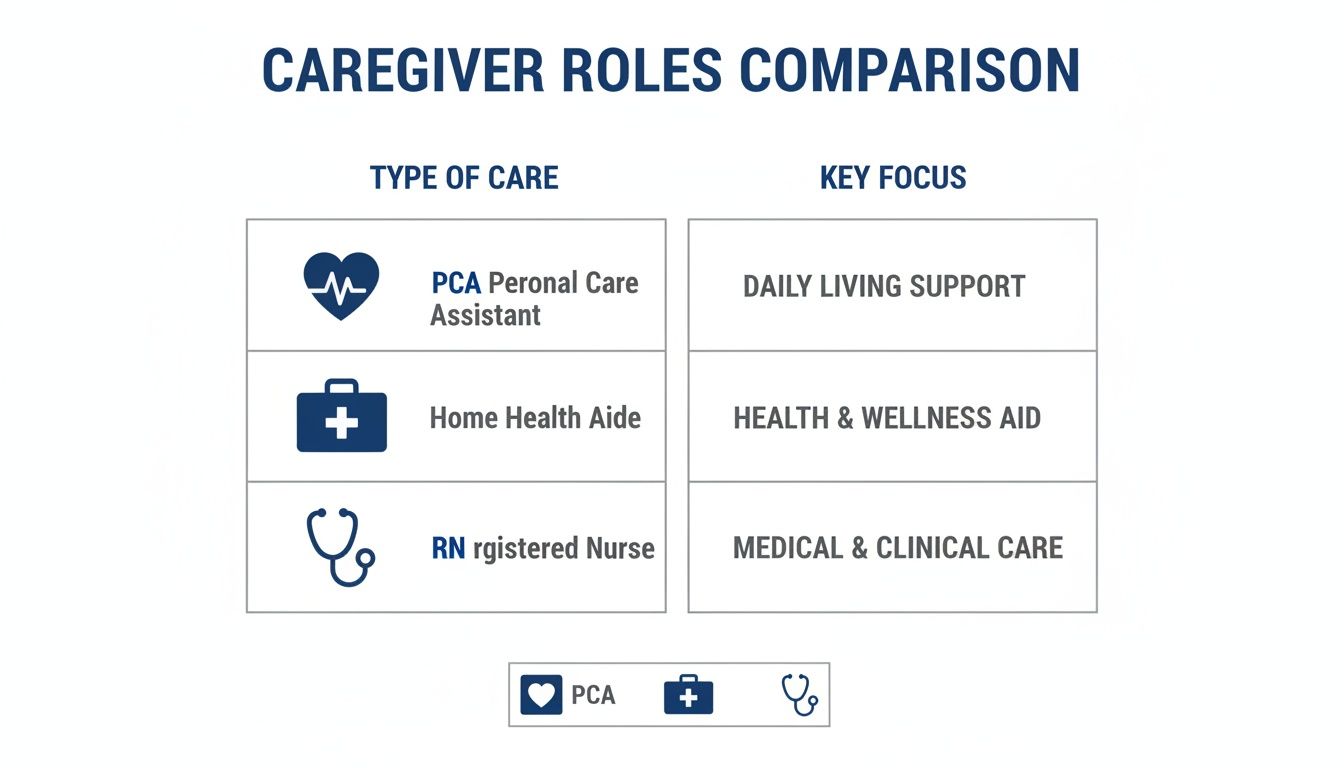
This simple chart shows a clear progression. A PCA lays the groundwork with companionship, an HHA adds a layer of essential personal health support, and an RN brings the advanced medical expertise needed for more complex situations.
To make it even clearer, here is a breakdown of how the roles compare side-by-side.
Comparing In-Home Caregiver Roles
| Care Professional | Primary Focus | Typical Duties | Training Level |
|---|---|---|---|
| Personal Care Aide (PCA) | Companionship and household support | Meal prep, light housekeeping, errands, transportation, social engagement. | Varies; often no formal certification required. |
| Home Health Aide (HHA) | Hands-on personal care and basic health monitoring | All PCA duties, plus bathing, dressing, toileting, vital signs, medication reminders, transfers. | State-certified training program (e.g., 76 hours in NJ) and competency exam. |
| Registered Nurse (RN) | Skilled medical care and clinical management | Medication administration, wound care, IVs, care planning, patient assessment, supervising HHAs. | Associate's or Bachelor's degree in nursing and state licensure (NCLEX exam). |
Ultimately, choosing the right caregiver comes down to matching the level of need with the right level of skill. A PCA provides vital companionship, an HHA delivers essential hands-on support, and an RN offers necessary medical intervention. Knowing the difference ensures your loved one receives care that isn't just compassionate, but also perfectly and safely suited to their health requirements.
How to Find a Qualified and Trustworthy Home Health Aide
Choosing a home health aide is a decision that’s all about trust. You're inviting someone into your home to look after a family member, so finding a person who is not just skilled but also compassionate and reliable is everything. It’s a process that goes way beyond scanning a resume; it's about understanding an aide's training, an agency's standards, and their commitment to genuine, person-first care.
The need for skilled caregivers is growing like never before. The home care field has quickly become one of the fastest-growing job sectors in the country, with the workforce more than doubling between 2008 and 2018. This isn't just a statistic—it highlights the real, growing need for high-quality, dependable support right at home. You can read the full research about the expanding home care workforce.
Verifying Essential Qualifications and Certifications
The first step in making a great choice is to check an aide’s credentials. In New Jersey, a certified Home Health Aide (CHHA) must complete a state-approved training program and pass a competency exam. This guarantees they have the core skills to safely handle the essential duties of a home health aide, from personal care to basic health monitoring.
But for the best agencies, that state certification is just the beginning. They build on that foundation by investing in their caregivers through:
- Rigorous Screening: This means doing thorough background checks, verifying references, and conducting deep-dive interviews to get a real sense of both skill and character.
- Continuous Training: The most dedicated HHAs receive ongoing education in critical areas like dementia care, patient safety, and communication to keep their skills sharp and up-to-date.
For caregivers looking to enter the field, experience in similar roles is a huge plus. It can be helpful to get guidance on crafting an outstanding CNA resume, as many of the skills and responsibilities overlap with HHA work.
The Importance of Agency Oversight and Support
Partnering with a reputable agency adds a vital layer of safety, quality control, and accountability. A hallmark of a great agency is nurse-led supervision. This means a Registered Nurse (RN) creates the initial care plan and makes regular home visits to oversee the HHA. This ensures the care being provided lines up perfectly with doctor's orders and your loved one’s changing needs.
A great agency doesn't just send a caregiver; they manage the entire care experience. This includes handling scheduling, providing backup aides when needed, and serving as a single point of contact for the family, which removes a significant burden from your shoulders.
Always look for an agency that focuses on making the right match. This goes beyond just skills on a page—it's about finding the right personality and temperament to build a strong, positive relationship founded on respect and comfort. That personalized approach is what turns good care into truly exceptional care, giving you peace of mind and your loved one the support they deserve.
Answering Your Questions About Home Health Aides
When you're considering in-home care, a lot of practical questions naturally come up. Families often want to know about the costs, how flexible scheduling can be, and what those first steps actually look like. Let's walk through some of the most common concerns to help you feel more confident as you arrange support for your loved one.
How Much Does a Home Health Aide Cost?
This is often the first question on everyone's mind, and for good reason. While the exact rates depend on where you live and the level of care needed, it helps to have a general idea.
Based on 2023 data, the mean annual wage for a home health aide was $33,380, which works out to about $16.05 per hour. What’s really important to know, however, is that a huge portion of home care is funded by public programs like Medicare and Medicaid. This makes professional care much more accessible for many families. For a deeper dive into national numbers, the Bureau of Labor Statistics has detailed wage data.
Your best bet is always to talk directly with an agency. They can break down their specific rates and walk you through what might be covered by insurance or other programs.
Are Home Health Aide Schedules Flexible?
Absolutely. Flexibility isn't just a perk; it's a core part of professional home care. Good agencies know that every family's situation is different and that care needs rarely fit neatly into a 9-to-5 schedule.
You can almost always arrange for a schedule that fits your life:
- Part-Time Care: Just a few hours a day or a couple of days a week is perfect for helping with things like morning routines or getting dinner ready.
- Full-Time Care: This covers the workday, giving you peace of mind that your loved one has continuous support while you’re out.
- 24/7 or Live-In Care: For anyone who needs round-the-clock supervision and assistance to stay safe at home.
- Respite Care: This offers short-term relief for family caregivers who need and deserve a break.
The whole point is to build a schedule that supports your loved one's independence while taking the pressure off your family.
The right care plan is one that adapts to your life, not the other way around. A good agency will work with you to build a schedule that provides the perfect balance of support and independence for your loved one.
What Is the Process for Starting with an Agency?
Getting started is usually a straightforward and supportive process. It's designed to make sure the caregiver who walks through the door is the perfect match. While every agency has its own unique touch, the journey from that first phone call to the first day of care generally looks like this:
- Initial Consultation: It all starts with a simple conversation. You'll talk to a care coordinator about your loved one's needs, their health, and what you’re hoping to find in an aide.
- In-Home Assessment: A registered nurse or a dedicated care manager will visit the home. They'll do a thorough assessment of your loved one’s health, mobility, and living situation to get the full picture.
- Personalized Care Plan: Using the information from the assessment, the nurse creates a detailed plan of care. This document clearly outlines all the specific duties of the home health aide.
- Caregiver Matching: This is where the magic happens. The agency will carefully select an aide whose skills, experience, and even personality are the best fit for your family.
- Introduction and Start of Service: Before care officially begins, you’ll get to meet the HHA. This simple step ensures everyone feels comfortable and ready to get started on the right foot.
This structured approach guarantees that from day one, the care is safe, personal, and perfectly tuned to what your family needs.
At NJ Caregiving, we’re here to make this process as smooth and stress-free as possible. If you’re in Princeton, NJ, or anywhere in the Mercer County area and have more questions, our team is ready with answers. Contact us today to learn more about our compassionate in-home care services.
