
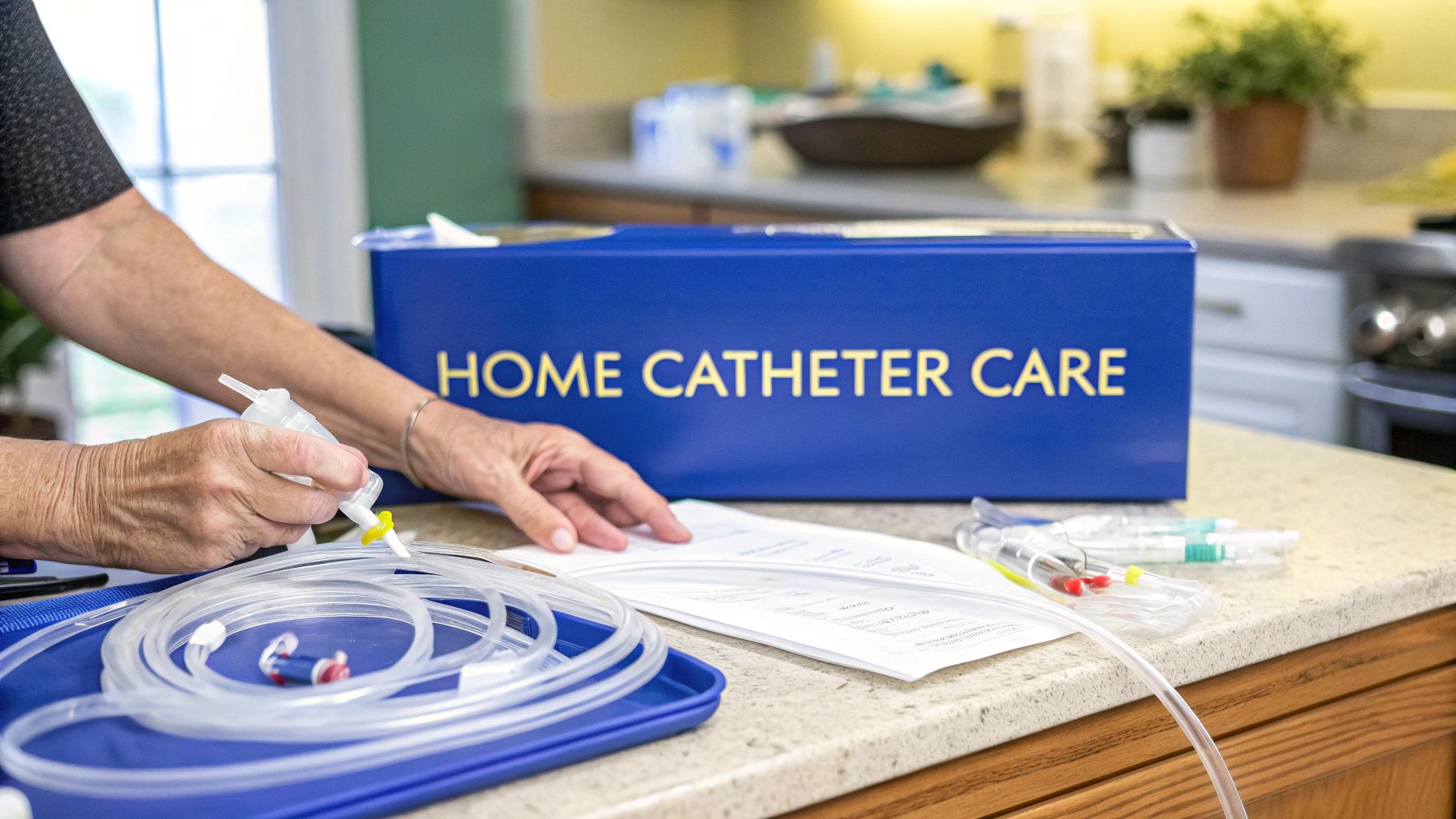
Taking on catheter care at home can feel like a heavy weight, but you’re not in this alone. This guide is here to help shift your perspective—from seeing this as a daunting medical task to viewing it as a manageable, compassionate part of supporting someone you love.
With the right knowledge and a solid routine, you can ensure they remain safe, comfortable, and respected.
Starting Your Catheter Care Journey with Confidence

Becoming a caregiver often happens without much warning. One day, a loved one comes home from the hospital after surgery, or they're learning to manage a new condition like urinary retention. Suddenly, you're faced with medical equipment that looks complex and intimidating.
The truth is, you've joined millions of other families navigating this exact situation. A major U.S. study found that about 9% of adults getting home care services live with long-term indwelling catheters. Other research suggests even higher numbers, reflecting a worldwide trend as people live longer and prefer to age in their own homes. You can learn more about the prevalence of home catheter use from this detailed research.
This journey is about more than just learning a new set of tasks; it’s about building your own confidence. When you understand the fundamentals, what once felt like a clinical procedure becomes a simple act of supportive, everyday care.
Your main goal is to protect your loved one’s health and dignity by preventing complications—especially infections. Getting the care routine right is the single most important part of making that happen.
Understanding the Catheter Basics
Before we get into the daily to-dos, let's demystify the equipment you'll be working with. A urinary catheter is just a thin, flexible tube that helps drain urine from the bladder. While there are a few kinds out there, you'll most likely be dealing with one of two common types in a home setting.
Here are the key types you should know:
- Indwelling (Foley) Catheters: These are designed to stay inside the bladder for days or weeks at a time. A tiny, inflated balloon at the tip holds it in place, allowing urine to drain continuously into a collection bag.
- Intermittent Catheters: Think of these as "in-and-out" catheters. They are inserted just long enough to empty the bladder and then immediately taken out. This is usually done several times a day on a regular schedule.
Each one serves a different purpose, and the care approach for each is slightly different. The doctor or nurse will have chosen the right type, but your job is to manage it safely day-to-day. Consider this guide your starting point for building the skills you need to provide excellent care with peace of mind.
Establishing Your Daily Catheter Care Routine
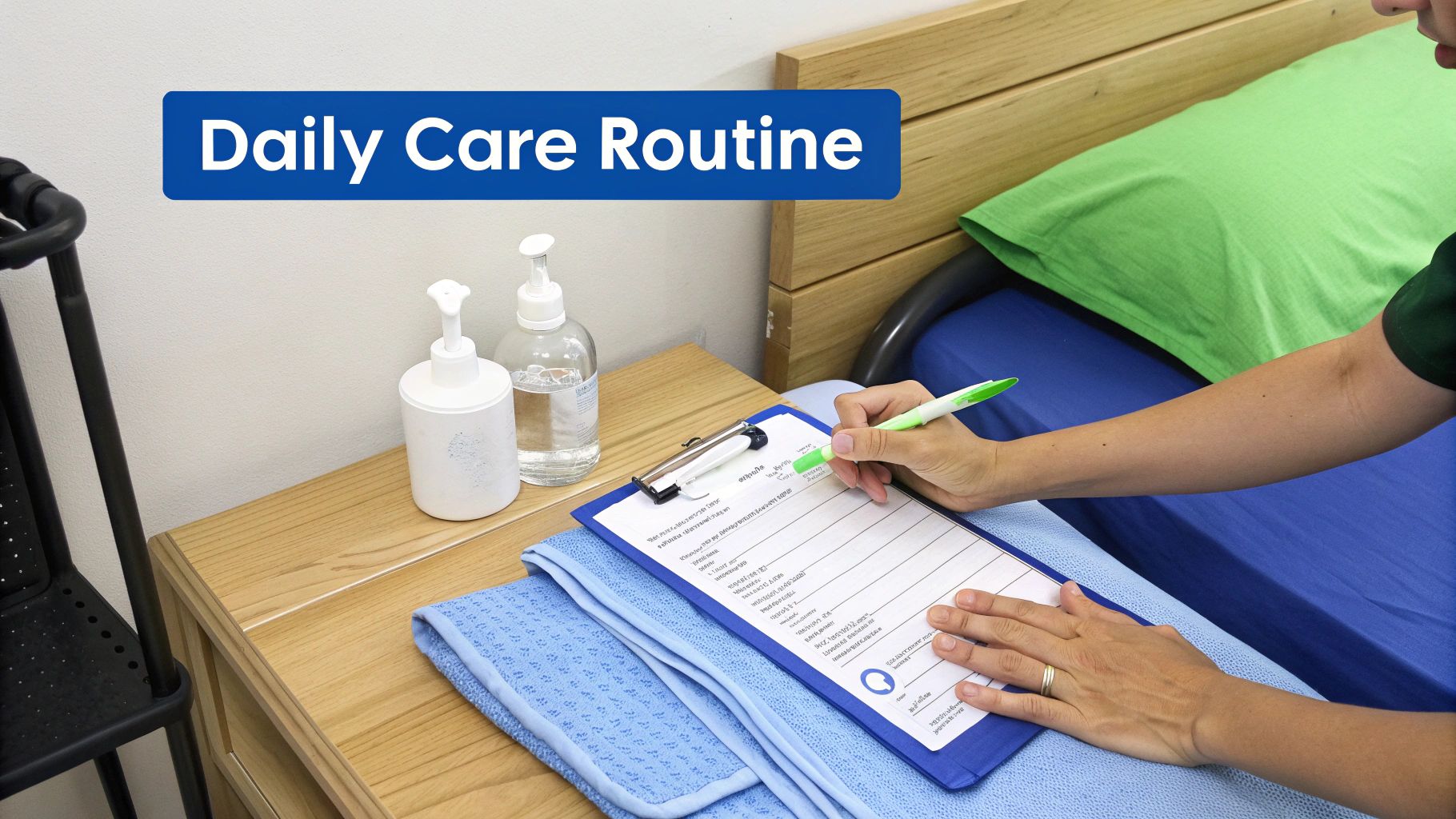
When it comes to catheter care at home, consistency is everything. Building a predictable daily schedule is your best defense against infections, and it also lightens the mental load for both you and your loved one.
Once the routine becomes second nature, you can stop worrying about the mechanics and focus on what truly matters: providing compassionate support. Think of it as creating a simple checklist for the morning, midday, and evening. Each small step adds up to a huge impact on your loved one's safety and comfort.
Morning Care and Hygiene
The morning is your chance to set a clean, comfortable tone for the rest of the day. This first check-in lets you spot any issues that might have cropped up overnight and helps your loved one feel fresh.
Your first and last step, every single time you interact with the catheter, must be thorough handwashing. Use warm water and antibacterial soap, and wash for at least 20 seconds before and after providing care. No shortcuts here.
Next, gently clean the area where the catheter enters the body. You don’t need harsh chemicals—mild, unscented soap and warm water are perfect.
- For Indwelling Catheters: Gently wash the skin around the insertion site, always cleaning away from the opening to prevent introducing germs.
- For External (Condom) Catheters: This type should be removed daily. Wash and thoroughly dry the skin before putting on a new one.
After washing, pat the area completely dry with a clean towel. Any trapped moisture can quickly lead to skin irritation or create a welcoming environment for bacteria. This simple step is vital for protecting their skin.
Midday Checks and Adjustments
Throughout the day, your job shifts from cleaning to monitoring. These quick checks can catch small problems before they become big ones. The main goal is to make sure urine is flowing freely into the drainage bag.
Glance at the tubing. Is it twisted or looped? A simple kink can block the flow, causing urine to back up into the bladder. That’s not just uncomfortable; it also raises the risk of infection.
Also, check how the catheter is secured. The tube should be safely anchored to the upper thigh using a proper securing device or medical tape. This prevents the catheter from being accidentally tugged or pulled, which can cause real pain and trauma.
A properly secured catheter is a comfortable catheter. It's one of the easiest things you can do to improve your loved one's quality of life, giving them the freedom to move without worrying about painful pulling.
Evening and Overnight Preparation
As the day winds down, a few final tasks will ensure your loved one has a safe and restful night. This is typically when you'll switch from a smaller leg bag to a larger bedside drainage bag.
The larger bag holds more, so you won’t have to wake up to empty it. The golden rule for any drainage bag is simple: always keep it positioned below the level of the bladder. Gravity does the work for you, ensuring urine flows down and away from the bladder, not back into it.
To help you keep track, here is a quick-reference guide for your daily routine.
Daily Catheter Care Routine at a Glance
| Time of Day | Key Task | Why It's Important |
|---|---|---|
| Morning | Wash hands, gently clean the insertion site, and pat the area completely dry. | Sets a hygienic baseline for the day and prevents skin irritation and potential infection. |
| Midday | Check tubing for kinks or loops and ensure the catheter is securely fastened to the leg. | Promotes continuous urine flow and prevents painful tugging or accidental removal. |
| Evening | Switch to a larger overnight bag and make sure it's positioned below the bladder level. | Ensures uninterrupted drainage all night long, reducing infection risk and allowing for restful sleep. |
Before calling it a night, do one last check of the whole system. Make sure all connections are snug and the tubing has a clear, downward path to the bag. Building this reliable daily routine for catheter care at home is the foundation of providing safe, confident support.
A Practical Guide to Managing Drainage Bags
If there's one skill that's absolutely crucial in at-home catheter care, it's knowing how to properly handle the drainage bag. Think of it as the frontline of defense against infection. Bacteria can easily travel up the tubing and into the bladder, and careful, consistent bag management is your best tool to stop that from happening. Getting this right will give you the peace of mind that you're keeping your loved one safe.
You'll likely be working with two types of bags. During the day, a smaller leg bag allows for more mobility and discretion. At night, a larger bedside bag takes over. Knowing how to empty, clean, and switch between them without introducing germs is the name of the game.
How to Empty a Drainage Bag the Right Way
A good rule of thumb is to empty the bag when it's about one-half to two-thirds full. If you let it get too full, its weight can pull on the catheter, which is uncomfortable. Even more importantly, an overfilled bag can create back pressure, pushing urine back toward the bladder—exactly what you want to avoid.
First things first, wash your hands thoroughly with soap and water. If you're not near a sink, an alcohol-based hand sanitizer is your next best option.
- Get a clean container and place it on the floor or a low stool, right under the bag's drain spout.
- Carefully unclip the spout from its little holder on the bag. This is critical: do not let the tip of the spout touch anything. Not your fingers, not the container, not the floor.
- Open the clamp and let the urine drain completely.
- Once it's empty, grab an alcohol wipe and give the end of the spout a good clean before you clamp it shut and tuck it back into its holder.
- Now, you can empty the container into the toilet and, you guessed it, wash your hands again.
One of the most common mistakes is letting the drain spout touch the inside of the toilet or collection container. That single touch can introduce a flood of germs into what should be a closed, sterile system, undoing all your other careful work.
Keeping Reusable Bags Clean and Odor-Free
Some bags are disposable, but many are designed for reuse, often for a few days or up to a week. Keeping them clean is non-negotiable for preventing odors and bacterial buildup. Plan on cleaning the bag at least once a day, usually when you're switching from the leg bag to the overnight bag.
You don't need fancy cleaners. A simple homemade solution of one part white vinegar to three parts water works perfectly.
- First, a quick rinse. After you’ve emptied the urine, rinse the inside of the bag with cool water. Hot water can make the plastic brittle over time, so stick with cool.
- Add the cleaning solution. Pour your vinegar-water mix into the bag until it's about half full.
- Swish and soak. Close the spout and gently slosh the solution around, making sure it coats every surface inside. Then, let it sit for about 30 minutes.
- Final rinse and dry. Empty the solution out, give the bag one more good rinse with cool water, and hang it up to air dry. Make sure you leave the spout unclamped and pointing down so it can drain completely.
This quick daily routine is a lifesaver for neutralizing odors and keeping the system safe.
Switching Between Day and Night Bags
Changing from a leg bag to an overnight bag (or vice versa) is a moment when the "closed" system has to be opened. That's a key opportunity for germs to sneak in, so you need to be just as meticulous here. Always start with clean hands and work on a clean surface.
Before you disconnect anything, take a fresh alcohol pad and wipe the spot where the catheter tube connects to the drainage tube. Use another fresh pad to wipe the tip of the tubing on the new bag you're about to connect.
Now you're ready. Disconnect the old bag and, without delay, connect the new one. Make sure you push them together for a snug, secure fit. The goal is to never let your fingers touch the open ends of the catheter or the tubing. This careful, methodical approach is truly a cornerstone of safe and effective catheter care at home.
How to Proactively Prevent Urinary Tract Infections
As a caregiver, you are the first and most important line of defense against infection when managing catheter care at home. Good hygiene is the bedrock, of course, but truly preventing Catheter-Associated Urinary Tract Infections (CAUTIs) goes much deeper. It’s about becoming a sharp observer, someone who can spot subtle warning signs and understands how every daily action protects your loved one.
This isn’t just about keeping someone comfortable; it’s about preventing serious health complications. Applying expert strategies for preventing healthcare-associated infections in a home setting is a powerful way to keep them safe.
The reality is that managing a catheter at home comes with unique challenges. One study highlighted just how significant the impact is, with 92.2% of participants feeling their daily lives were affected. The study also revealed a stark difference in infection rates: CAUTIs were present in a staggering 82.2% of outpatients versus only 35.3% of inpatients. This gap often comes down to the level of hands-on support and training caregivers receive.
Recognizing the Subtle Signs of Infection
When it comes to seniors, the classic UTI symptoms you might expect—like a burning sensation or cloudy urine—often don't show up first. Their bodies can react very differently, and sometimes the earliest red flags are changes in their behavior.
Catching these shifts early can help you get ahead of an infection before it takes hold.
Keep an eye out for these changes:
- New or Worsening Confusion: A sudden shift in mental clarity is one of the most common signs of a UTI in older adults.
- Increased Agitation or Irritability: If they seem unusually restless or cranky without a clear reason, it could signal discomfort from an infection.
- Unusual Lethargy: Is your loved one suddenly much more tired or disengaged? That’s a signal worth investigating.
- Loss of Appetite: A sudden lack of interest in food is another common sign that something isn't right.
It can be easy to write these off as just part of aging, but when they appear out of the blue, they absolutely warrant a closer look. For more in-depth guidance, we have more resources on UTI prevention in the elderly.
The Critical Role of Hydration
Think of water as the urinary system's own natural cleaning service. Making sure your loved one gets enough fluids is one of the most powerful, non-medical tools you have for preventing UTIs.
When the body is properly hydrated, urine is less concentrated, and the bladder gets flushed out more often. This constant flow makes it incredibly difficult for bacteria to settle in and multiply.
"A well-hydrated system is a resilient system. Encouraging consistent fluid intake is not just a suggestion—it's an active, ongoing strategy to dilute bacteria and reduce the risk of infection before it can even begin."
Of course, getting an older adult to drink more can be tough. They might not feel thirsty as often, or mobility issues could make grabbing a drink a real challenge.
Practical Tips to Encourage Drinking
This is where you can get a little creative. It’s not always about just handing them another glass of plain water.
Here are a few strategies that have worked for many families:
- Offer Fluids Often: Don’t wait for them to ask. Offer small glasses of water, decaf tea, or diluted juice throughout the day.
- Make It Accessible: Keep a pitcher of water and a cup right by their favorite chair or on their nightstand. The easier it is to reach, the more likely they are to drink.
- "Eat" Your Water: Lots of foods have high water content. Things like watermelon, cucumbers, soups, and even Jell-O can help boost their fluid intake.
- Find Their Favorite: Figure out what they actually enjoy drinking. Maybe it’s a flavored seltzer, a warm herbal tea, or a low-sugar sports drink. Anything that makes hydration less of a chore is a win.
The simple process below is another key part of your daily infection prevention routine.
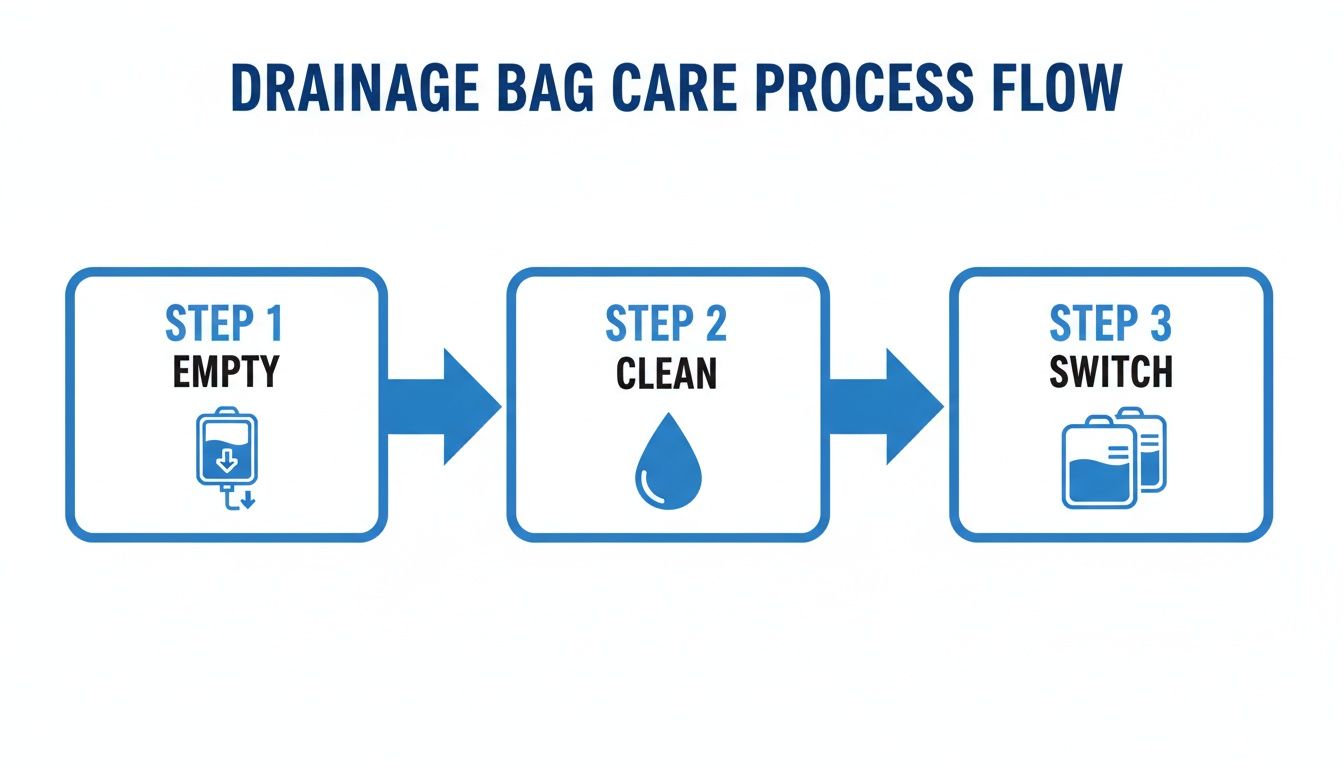
This straightforward three-step process—empty, clean, and switch—is the foundation of safe drainage bag care and is critical for preventing infection. When you combine this with being a vigilant observer, promoting hydration, and maintaining meticulous hygiene, you create a powerful defense system. Your careful attention truly is the key to successful catheter care at home.
Knowing When to Call for Professional Help
Excellent catheter care at home is more than just getting the daily routine down pat. It's about developing the wisdom to know when a situation needs a professional eye. Learning to tell the difference between a minor hiccup and a true red flag is a skill that will bring you incredible peace of mind.
This isn't about causing alarm. It’s about empowering you to act with confidence when it really counts. Think of yourself as the first line of defense—the one who notices the small changes before anyone else. Your watchful eye is the most important safety net your loved one has.
Urgent Signs That Require an Immediate Call
Some symptoms are non-negotiable. They require an immediate call to a doctor or home health nurse. These signs can point to a serious infection or a blockage, and acting fast can be the difference between a quick fix and a trip to the hospital.
Don't hesitate to pick up the phone if you see any of the following:
- Fever or chills. A temperature over 101°F (38.3°C) is one of the first and most serious signs of a brewing infection.
- Severe pain. While it's normal to be aware of the catheter, any new or intense pain in the bladder, abdomen, or back is a major warning sign.
- No urine for hours. If the drainage bag stays empty for more than six to eight hours even though they've been drinking fluids, the catheter could be blocked or out of place.
- Thick, cloudy, or foul-smelling urine. These changes, especially with sediment, are classic indicators of a urinary tract infection (UTI).
- Blood in the urine. Seeing bright red blood or large clots in the drainage bag always warrants a call to a medical professional.
Trust your gut. If something feels wrong, it’s always better to make the call and get reassurance than to wait and risk a serious complication.
Less Critical but Important Issues to Monitor
Not every problem is a five-alarm fire. Some situations just need a watchful eye and a follow-up with the healthcare team. These are the kinds of things you’ll want to track and mention during your next call or visit.
Keep a simple log of these less urgent concerns:
- Minor skin irritation. A little redness at the insertion site can happen. But if it gets worse, starts to spread, or you see any pus, it needs to be checked.
- Persistent leaking. A tiny bit of leakage can occur now and then, but if it becomes a constant issue, the catheter might need to be resized or adjusted.
- Just not feeling well. Sometimes, the signs are more subtle. If your loved one seems unusually tired, confused, or just "off," it could be a clue that something related to the catheter is amiss.
Knowing when to act is a core part of being a caregiver. Your role isn't to diagnose—it's to observe, document, and communicate. A clear report of what you're seeing is invaluable to the medical team.
How Professional Home Care Provides a Safety Net
This is where you don't have to carry the burden alone. Professional home care services bridge the gap between family care and the doctor's office. When you're not sure if a symptom is serious, a skilled nurse can provide the assessment and expertise you need to make the right call.
For example, if you notice the urine output has slowed, a visiting nurse can perform a simple flush to clear a potential blockage right at home. For ongoing support, our guide to skilled nursing at home explains how these professionals can become an essential part of your care team, handling everything from routine catheter changes to urgent troubleshooting. They provide a layer of expert oversight that gives families incredible security.
Partnering with Local Experts for In-Home Support
Let's be honest: managing catheter care at home is a huge responsibility. Even the most dedicated family member can start to feel the pressure. You're not just going through a daily routine; you're watching for tiny changes, working to prevent infections, and making judgment calls that feel incredibly important. This is exactly where getting professional support can turn a stressful duty into a shared, manageable partnership.
Instead of trying to shoulder it all yourself, you can bring in trained professionals who offer expertise and, just as importantly, peace of mind right in your own home.
How Professional Caregivers Make a Difference
A trained in-home caregiver or nurse brings so much more to the table than just following a checklist. They become a vital part of your support system, handling the technical side of care with practiced skill while also providing compassionate oversight. This frees you up to step back from being a full-time medical technician and return to simply being a son, daughter, or spouse.
Here’s what that professional support often looks like:
- Expert Routine Management: They handle daily cleaning, bag emptying, and tubing checks with a level of hygienic precision that comes from training and experience.
- Infection Monitoring: A professional is trained to spot the early, subtle signs of a UTI that family members might easily miss—things like new-onset confusion or a slight change in urine clarity.
- Skilled Assistance: They can safely manage tasks like catheter flushing or changing, which really do require clinical training to be done correctly.
- Caregiver Respite: It gives you a much-needed break to rest and recharge, knowing your loved one is in completely safe hands.
This move toward professional home-based support isn’t just a passing trend; it reflects a real and growing need. The global urinary catheter market is expected to hit roughly USD 6.0–6.6 billion by 2033, with home care being a major reason for that growth. For providers, these numbers confirm what we already know: high-quality catheter care is a core service that helps people recover and live more independently.
Bringing in a professional isn't a sign of failure—it's a smart, strategic move to build a stronger, more resilient care team for your loved one. It’s a proactive step toward better health outcomes and a higher quality of life for everyone involved.
For families here in Mercer County and the surrounding areas, local agencies like NJ Caregiving are specifically set up to provide this kind of skilled support. Finding the right partner is key. To help you sort through your options, take a look at our guide on how to choose a home care agency that truly fits your family’s needs. For more general advice on home care, especially when assisting older adults, you might find a guide to caring for the elderly at home to be a helpful resource.
Your Top Questions About Home Catheter Care, Answered
When you're new to managing catheter care at home, a lot of questions pop up. It's completely normal. To give you some quick, practical answers, we've put together some of the most common concerns we hear from families and caregivers.
How Often Does a Long-Term Catheter Need to Be Changed?
This is a big one, and the answer really depends on the specific catheter and your loved one's care plan. A healthcare professional will set the schedule, but typically, you can expect an indwelling catheter to be changed every 4 to 12 weeks.
This is not a do-it-yourself task. Changing a catheter has to be done by a trained professional, like a visiting nurse, using a sterile technique to prevent nasty infections. Unless you've been formally trained by a medical professional, you should never attempt to change it yourself.
Safety first, always. Improperly changing a catheter is one of the leading causes of serious urinary tract infections. It's a job best left to a trained clinician.
Is It Okay to Shower with a Catheter?
Yes, absolutely! Showering is safe and, honestly, a great way to maintain good hygiene. Your loved one can wear their leg bag right in the shower without any problems.
After showering, just take an extra minute to gently wash the area where the catheter enters the body. Use some mild soap and water, and then make sure to pat the skin completely dry. We do recommend avoiding baths, though, as soaking in still water can give bacteria an easy route into the urinary tract.
What Do I Do If the Catheter Disconnects?
If the catheter and the drainage tube accidentally come apart, the key is to act quickly and cleanly to avoid contamination.
First, wash your hands thoroughly. Next, grab two separate alcohol pads. Use one to wipe the tip of the catheter and the other to wipe the end of the drainage tube before you put them back together. Try your best not to touch the open ends with your fingers. If either end happened to touch the floor or another surface, it’s best to call your home health nurse for guidance right away.
When you need professional, compassionate support for catheter care at home, NJ Caregiving is here to help. Our skilled nurses provide expert care in Mercer County, Princeton, and surrounding areas, ensuring your loved one's safety and comfort. Contact us today to learn more about our in-home nursing services.
