
Becoming a skilled, confident caregiver starts with the right education. Whether you're a family member stepping into a new role, an aspiring professional in Princeton, or an experienced aide seeking specialized skills, navigating the landscape of caregiver training courses can be challenging. This guide is designed to simplify your search by providing a clear, direct path to the best programs available.
We've curated and analyzed the most relevant training options for residents of Mercer County and greater New Jersey. Our comprehensive list covers everything from state-certified programs at local community colleges to nationally recognized online courses for specialized dementia care. For each entry, you will find direct links, screenshots, and a detailed breakdown of the essentials:
- Cost and Duration: Understand the time and financial commitment upfront.
- Accreditation and Certification: Know the value and recognition of each credential.
- Target Audience: Determine if a course is designed for family caregivers, aspiring CNAs, or seasoned professionals.
- NJ Relevance: See how programs align with New Jersey Medicaid, HCBS waivers, and local employment standards.
- Recommended Use-Case: Find the perfect fit for your specific career goals or caregiving situation.
This resource moves beyond simple descriptions to provide an honest assessment of each program’s strengths and limitations. As you embark on your journey, exploring tools for efficiently reviewing and documenting training workshops can enhance your learning experience; resources for transcribing training workshops can be particularly helpful for retaining key information. Our goal is to equip you with the practical details needed to make an informed decision and invest in training that truly matters.
1. Alzheimer’s Association — essentiALZ Dementia Care Training and Certification
The Alzheimer’s Association’s essentiALZ program is an authoritative, evidence-based online training resource specifically designed for dementia care. It stands out by combining a self-paced learning module with a formal, proctored certification exam, making it a top choice for professionals and dedicated family caregivers seeking to validate their specialized knowledge. This program is ideal for those who need a recognized credential in dementia care, whether for career advancement or to provide the highest standard of support to a loved one.
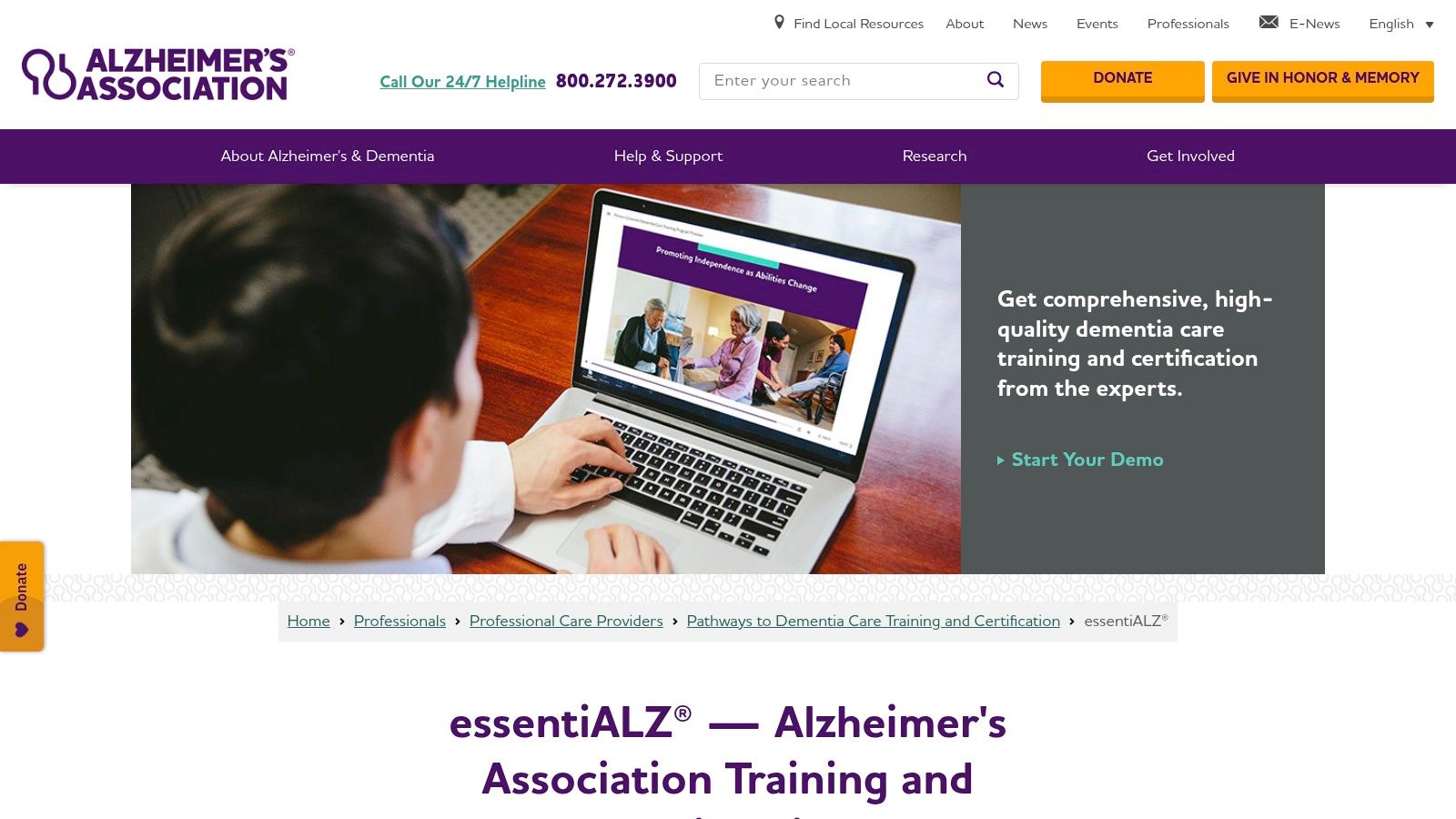
The curriculum is built upon the Dementia Care Practice Recommendations and covers five key topic areas, emphasizing person-centered approaches. While its narrow focus on dementia is a limitation for those needing general caregiving skills, its depth in this area is unparalleled. For New Jersey caregivers, this certification can significantly enhance a resume, demonstrating a commitment to best practices in a field with growing demand. The self-paced format and included Continuing Education (CE) credits offer significant value.
Key Details and Use Cases
| Feature | Description |
|---|---|
| Target Audience | Professional caregivers (CNAs, HHAs), assisted living staff, and family caregivers seeking deep dementia expertise. |
| Duration & Format | Self-paced online course; access to materials for 6 months. |
| Cost | Varies; individual and discounted volume pricing for organizations are available. |
| Accreditation | Provides CE credits; certification is recognized by the Alzheimer's Association and valid for two years. |
Best For:
- Caregivers specializing in memory care.
- Healthcare professionals in New Jersey seeking CE credits and a recognized credential.
- Family members who want to master proven, person-centered techniques; to go deeper, you can also learn how to care for dementia patients at home.
Enrollment: Purchase and enroll directly on the Alzheimer's Association website.
2. Relias Academy
Relias Academy is a vast online learning library offering a la carte courses and certificate packages for direct care workers, aides, and healthcare professionals. It stands out for its sheer volume and breadth of topics, allowing individuals to purchase specific training modules on demand without committing to a larger program. This makes it an excellent resource for caregivers looking to fill specific knowledge gaps, supplement existing skills, or explore different areas of care without a significant upfront investment.
The platform’s strength lies in its bite-sized, video-based lessons that cover practical skills from infection control to activities of daily living (ADLs) and caregiver stress management. While many certificates of completion may not be state-board approved credentials, they are invaluable for personal development and demonstrating initiative to employers. For New Jersey caregivers, bundles like the Personal Care Aide package offer a structured path to acquire foundational knowledge on a flexible, self-paced schedule.
Key Details and Use Cases
| Feature | Description |
|---|---|
| Target Audience | Aspiring PCAs, HHAs, CNAs, family caregivers, and healthcare workers seeking continuing education or skill-specific training. |
| Duration & Format | Self-paced online modules; courses range from under 1 hour to multi-hour certificate packages. |
| Cost | A la carte pricing per course or bundle; varies by topic and length. |
| Accreditation | Provides certificates of completion; some courses offer CE credits for specific professions (verify on the course page). |
Best For:
- Individuals needing to learn specific skills quickly, such as safe patient handling techniques.
- Family caregivers looking for affordable, accessible training on a wide range of topics.
- Care professionals in New Jersey seeking to supplement their formal training with specialized knowledge.
Enrollment: Browse the course catalog and purchase directly on the Relias Academy website.
3. Positive Approach to Care (Teepa Snow)
Teepa Snow’s Positive Approach to Care (PAC) is a widely respected educational ecosystem focused on practical dementia care techniques. It distinguishes itself by shifting the focus from the clinical aspects of dementia to the human experience, teaching caregivers how to interact and connect with individuals living with cognitive changes. This platform is perfect for caregivers who have a foundational knowledge of dementia but struggle with challenging behaviors, communication breakdowns, or daily care interactions.
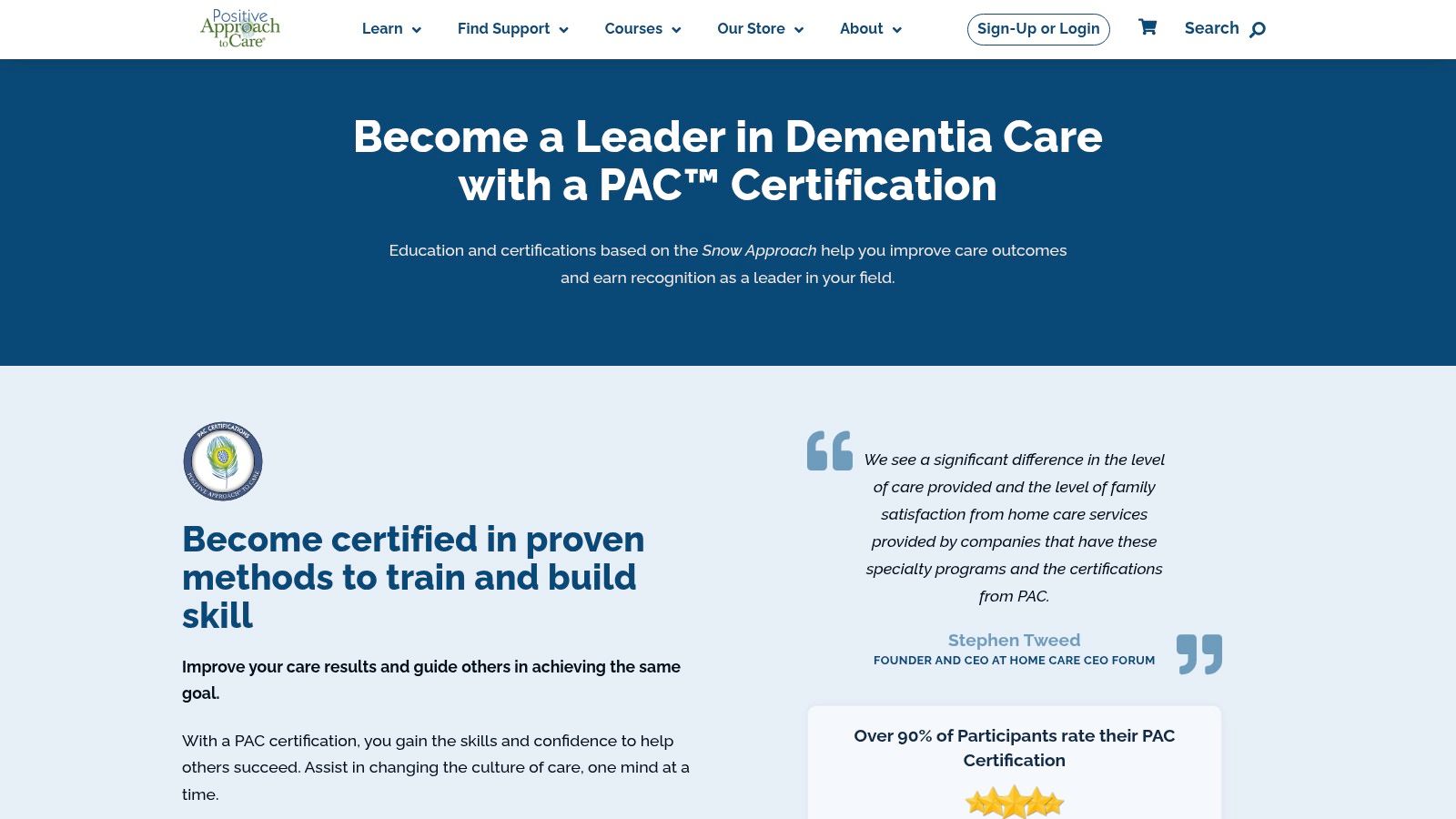
The curriculum combines on-demand video courses with live, mentor-led sessions, catering to various learning preferences. While its specialized focus on dementia means it doesn't cover general caregiving skills like mobility or medication management, its hands-on strategies, such as the Hand-under-Hand™ technique, are invaluable. For New Jersey caregivers, completing PAC caregiver training courses provides a unique skill set that is highly sought after in memory care communities and home health agencies, offering a significant advantage in professional settings.
Key Details and Use Cases
| Feature | Description |
|---|---|
| Target Audience | Family caregivers, CNAs, HHAs, and senior living staff focused on dementia care. |
| Duration & Format | Self-paced on-demand videos, live virtual sessions, and certification pathways. |
| Cost | Varies significantly by course or certification path; individual and group pricing is available. |
| Accreditation | PAC-specific certifications are offered; some courses may have limited CE pre-approval. |
Best For:
- Caregivers seeking practical, hands-on strategies for dementia-related behaviors.
- Professionals wanting to become a "Dementia Champion" within their organization.
- Family members looking for compassionate and effective communication techniques.
Enrollment: Explore courses and certification options directly on the Teepa Snow website.
4. American Red Cross — Online Caregiver Training (Child and Infant Care)
The American Red Cross is a highly trusted national provider offering foundational online training for those caring for children and infants. While many caregiver training courses focus on elder care, the Red Cross carves out a niche by specializing in babysitting basics and advanced child care skills. This makes it an essential resource for aspiring babysitters, nannies, or family members who want to ensure they provide the safest possible environment for young children. Its brand recognition and straightforward, accessible courses make it a go-to for introductory training.
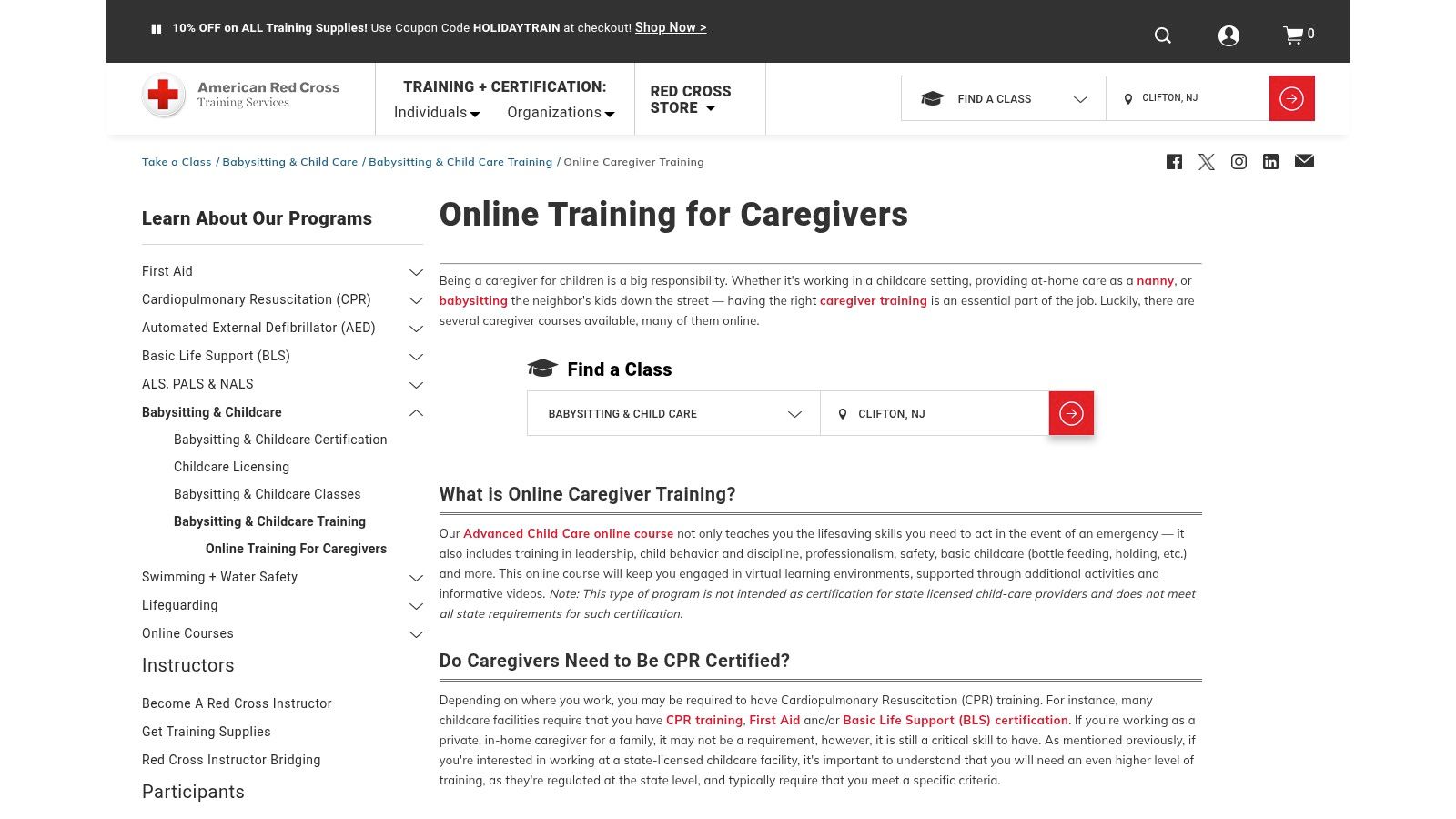
The platform’s strength lies in its clearly defined curriculum, covering topics from basic safety and first aid to age-appropriate activities and child behavior. While these courses do not cover elder care and aren't a substitute for state-licensed childcare certifications, they provide a strong, verifiable foundation. For caregivers in New Jersey, adding optional CPR and First Aid certifications can significantly bolster a resume for childcare positions. The self-paced online format and accompanying mobile app provide flexibility and on-the-go resources.
Key Details and Use Cases
| Feature | Description |
|---|---|
| Target Audience | Aspiring babysitters, nannies, au pairs, and family members providing child care. |
| Duration & Format | Self-paced online courses (typically 2-4 hours); in-person or blended learning for CPR/First Aid add-ons. |
| Cost | Varies by course; online babysitting courses start around $45. |
| Accreditation | Provides a digital certificate of completion valid for two years; not a state licensure. |
Best For:
- Teenagers and young adults starting a babysitting or nanny career.
- Family caregivers (grandparents, relatives) wanting to refresh their child safety knowledge.
- Individuals seeking supplemental skills like CPR and First Aid from a reputable source.
Enrollment: Register for online and in-person classes directly on the American Red Cross website.
5. Family Caregiver Alliance — Learn.Caregiver.org
The Family Caregiver Alliance (FCA) is a highly respected nonprofit, and its Learn.Caregiver.org portal offers accessible, high-quality online training for family and professional caregivers. The platform stands out by providing many of its key resources for free, with an optional paid track for professionals, like social workers, who need Continuing Education (CE) credits. Its content is practical and evidence-based, focusing on the real-world challenges caregivers face, from managing difficult behaviors to navigating healthcare systems.
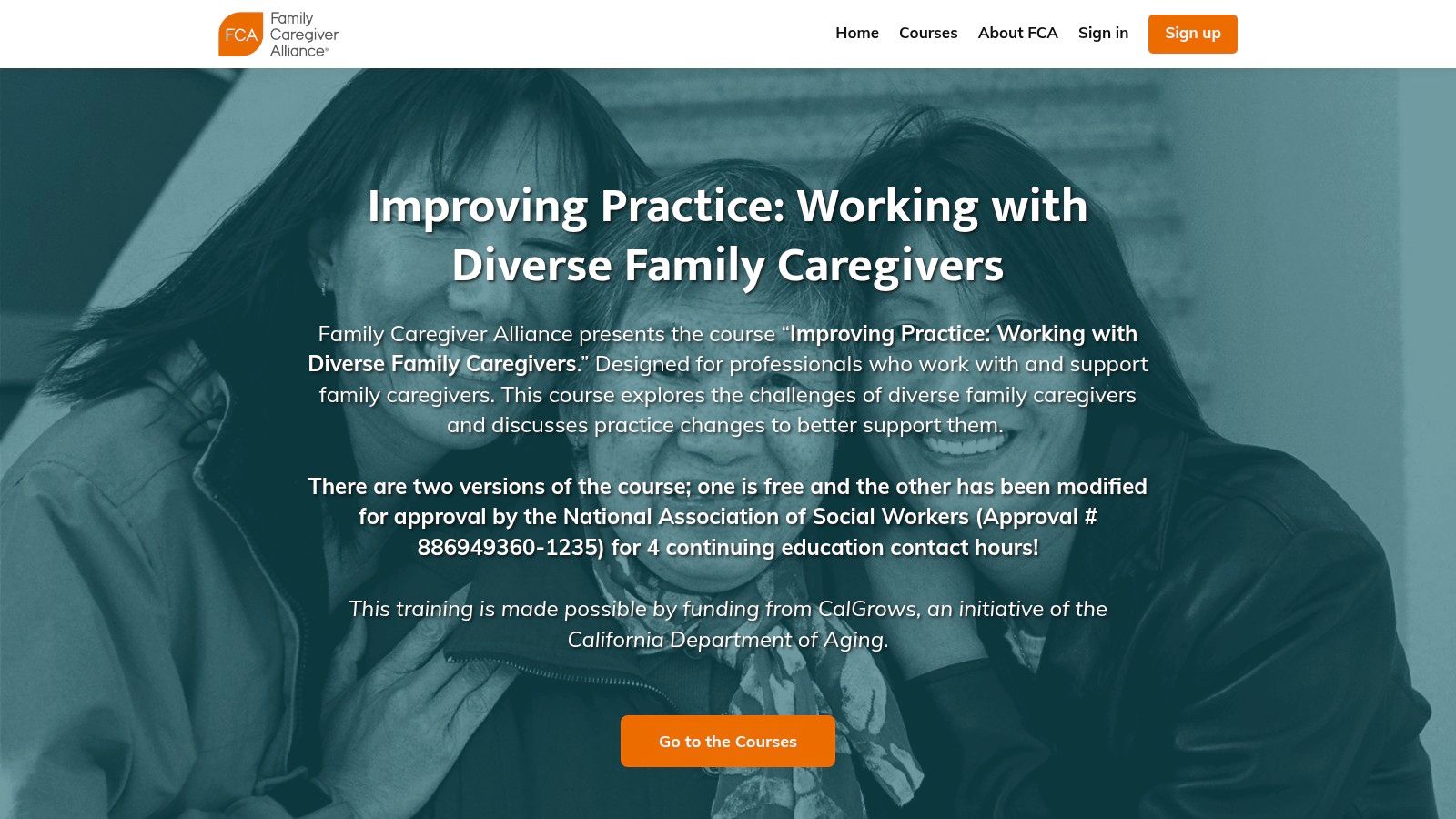
The courses are designed for convenience, featuring short, mobile-friendly video lessons and case studies that can be completed on a flexible schedule. While the catalog is more curated than a massive marketplace, each module is thoughtfully produced. Some content is tied to California initiatives, but the skills taught are universally applicable. For New Jersey caregivers, especially those balancing work, family, and care responsibilities, the free, bite-sized format makes FCA an invaluable resource for skill development without a significant time or financial commitment.
Key Details and Use Cases
| Feature | Description |
|---|---|
| Target Audience | Family caregivers seeking practical skills, and professionals (especially social workers) needing CE credits. |
| Duration & Format | Self-paced online modules with short video lessons and practical case studies. |
| Cost | Most core content is free; paid options are available for those seeking CE credits (e.g., NASW-approved). |
| Accreditation | Select courses offer CE credits approved by the National Association of Social Workers (NASW). |
Best For:
- Family caregivers in New Jersey looking for free, high-quality, and practical training.
- Social workers and case managers needing affordable, NASW-approved CE credits.
- Individuals seeking foundational knowledge on specific topics like dementia care or caregiver self-care.
Enrollment: Create a free account and enroll in courses directly on the Learn.Caregiver.org website.
6. Coursera — 'Supporting Families and Caregivers' (Stanford Medicine)
For those seeking an academic, evidence-based perspective on caregiving, Stanford Medicine’s "Supporting Families and Caregivers" course on Coursera offers a unique learning experience. This university-level program is not a state certification but instead focuses on the theoretical and practical aspects of supporting family caregivers. It is ideal for healthcare professionals, social workers, or family members who want to understand the dynamics of caregiver burden, learn effective coping interventions, and develop strategies for family support.
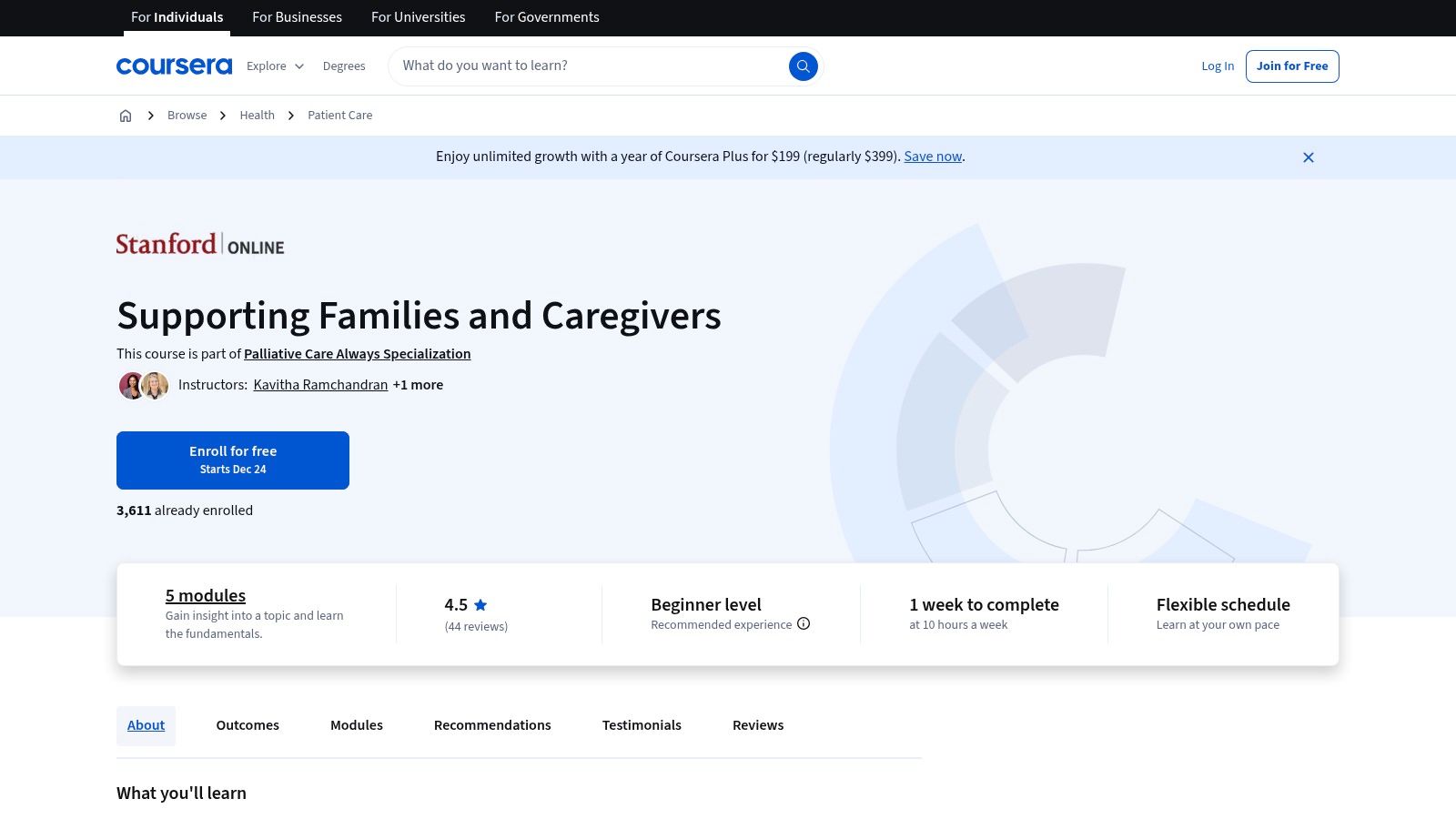
The course's strength lies in its academic rigor and focus on the family unit, a perspective often missing from skills-based caregiver training courses. While it does not provide state licensure, its content can be invaluable for building empathy and developing a holistic support plan. As with many online courses, motivation is key to completion; if you enroll, you might find it helpful to review some effective strategies to boost Coursera course completion rates. The flexibility of auditing for free or accessing via a Coursera Plus subscription makes this high-quality education highly accessible.
Key Details and Use Cases
| Feature | Description |
|---|---|
| Target Audience | Family caregivers, healthcare professionals, social workers, and students interested in gerontology or family support. |
| Duration & Format | Self-paced online course with flexible deadlines; typically takes a few weeks to complete. |
| Cost | Can be audited for free (no certificate); included with a Coursera Plus subscription or available for individual purchase. |
| Accreditation | Not a state certification or licensure program; focuses on academic knowledge. CE credits are generally not provided. |
Best For:
- Professionals seeking a deeper understanding of the psychosocial aspects of caregiving.
- Family members wanting to learn university-backed strategies to manage stress and support each other.
- Those looking for flexible, high-quality, and affordable educational content without needing a formal credential.
Enrollment: Sign up or audit the course directly on the Coursera website.
7. U.S. Career Institute — Online Caregiver Training Program
The U.S. Career Institute offers a structured, school-based online caregiver training program for individuals seeking an entry-level, non-medical role. It stands out by providing a comprehensive, DEAC-accredited curriculum combined with robust student support, including career coaching and resume assistance. This makes it an excellent choice for learners who prefer a formal educational framework with clear guidance and instructor access, rather than a purely self-directed course.
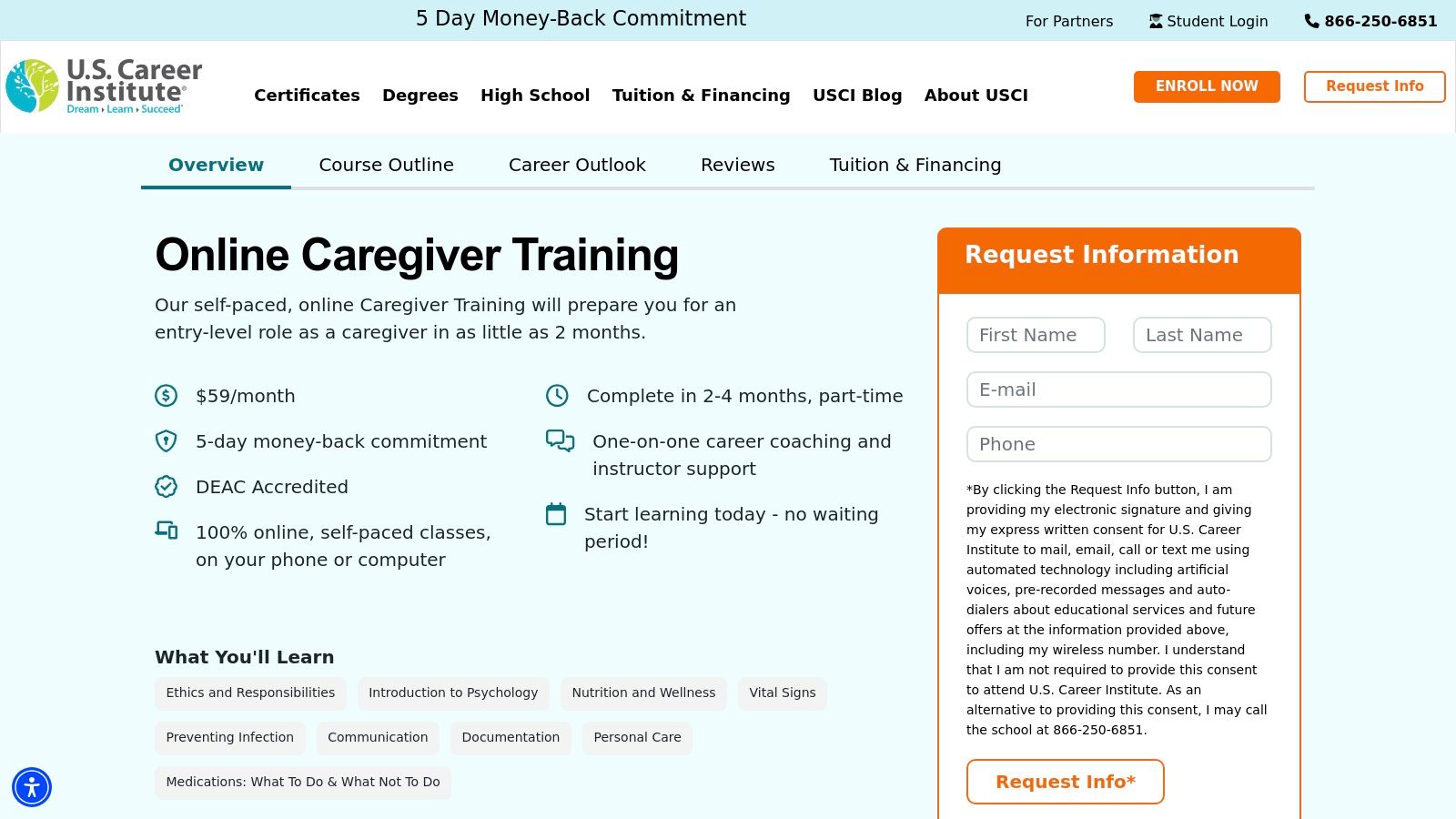
This program is self-paced, allowing students to complete it in as little as two to four months part-time. While it does not lead to state-level licensure like CNA or HHA in New Jersey and lacks clinical hours, it provides a strong theoretical foundation for companion care and private-duty non-medical roles. Its transparent tuition options and student support services offer a level of security and structure that many independent online courses lack, making it a reliable pathway into the caregiving field.
Key Details and Use Cases
| Feature | Description |
|---|---|
| Target Audience | Aspiring non-medical caregivers, companion aides, and individuals wanting a formal, school-structured online program. |
| Duration & Format | 100% online, self-paced; typically completed in 2-4 months part-time. |
| Cost | Transparent tuition plans available with payment options. |
| Accreditation | Institution is accredited by the Distance Education Accrediting Commission (DEAC); this is not a state licensure program. |
Best For:
- Individuals in New Jersey seeking foundational knowledge for a non-medical private caregiver role.
- Learners who thrive in a structured educational environment with instructor and career support.
- Family caregivers who want a formal, comprehensive education to enhance their skills.
Enrollment: Enroll directly through the U.S. Career Institute website.
8. Caregiver Training University (CTU)
Caregiver Training University (CTU) offers a direct and affordable online pathway for individuals looking to gain fundamental skills as non-medical caregivers. It stands out by providing state-specific course catalogs, ensuring the training aligns with local expectations for entry-level roles. The platform is designed for rapid certification, featuring a straightforward four-step process that concludes with a downloadable certificate and an optional listing in their caregiver registry to enhance job prospects.
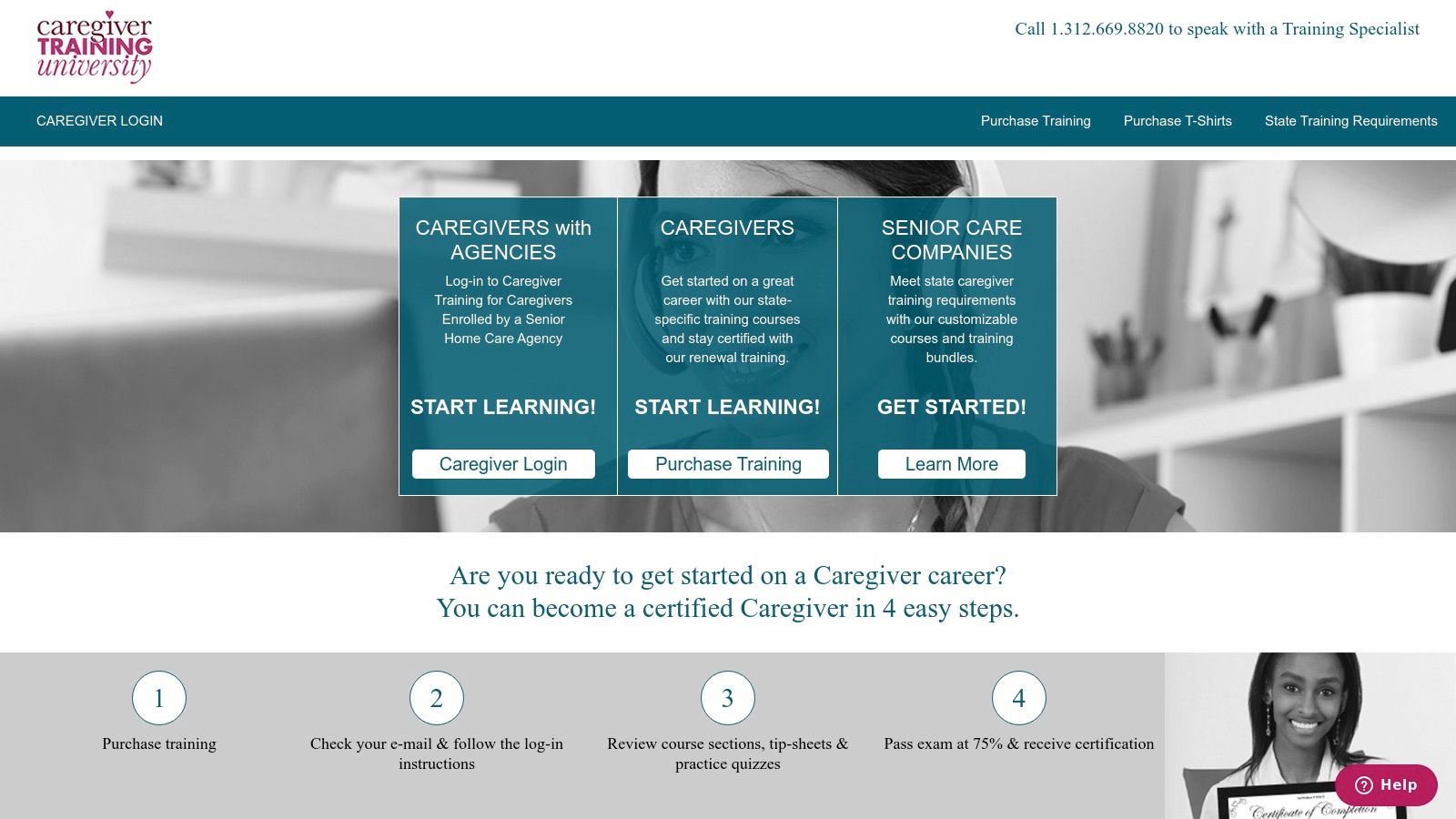
The primary advantage of CTU is its accessibility and speed, making it an excellent starting point for those new to the field or needing a quick credential. While its recognition can vary by employer and it is not a substitute for formal HHA or CNA licensure, its focused curriculum provides a solid foundation. For aspiring caregivers in New Jersey, this certification serves as a valuable first step, demonstrating initiative and a baseline understanding of caregiving principles; to learn more about this role, you can explore what is a personal care aide.
Key Details and Use Cases
| Feature | Description |
|---|---|
| Target Audience | Aspiring non-medical caregivers, individuals seeking a quick entry-level certificate, and family caregivers. |
| Duration & Format | Self-paced online course with 24/7 access; can be completed in a few days. |
| Cost | Varies by state-specific course; generally an affordable one-time fee. |
| Accreditation | Provides a certificate of completion; not a state-licensed credential like CNA or HHA. |
Best For:
- Individuals seeking the fastest route to a basic caregiver certification.
- Family caregivers who want structured, foundational training at a low cost.
- Job seekers looking to add an initial credential to their resume for non-medical home care positions.
Enrollment: Select your state and enroll directly on the Caregiver Training University website.
9. Home Care Pulse (HCP Training)
Home Care Pulse (HCP) offers a modern, app-friendly training platform tailored for both aspiring and established non-medical caregivers. HCP Training stands out with its clear learning pathways, including an 8-hour “Become a Care Professional” foundational course and continuing education (CE) bundles. This makes it a highly accessible option for individuals looking to enter the caregiving field or for seasoned professionals needing to maintain their credentials with relevant, engaging content.
The platform is built on a robust Learning Management System (LMS) that supports mobile access, allowing caregivers to complete modules on the go. While its focus is primarily on the non-medical sector, the quality and structure of its caregiver training courses provide a strong foundation. For New Jersey caregivers, completing these programs can demonstrate proactive professional development to employers, even if they are not state-certification programs. The primary drawback is that pricing is not transparent upfront and is only revealed at checkout.
Key Details and Use Cases
| Feature | Description |
|---|---|
| Target Audience | Individuals new to caregiving, existing non-medical caregivers, and home care agency staff. |
| Duration & Format | Self-paced online courses, including an 8-hour foundational program and various CE bundles. |
| Cost | Pricing is shown at checkout; individual courses and bundles are available for direct purchase. |
| Accreditation | Provides CE credits for various professional credentials; courses are designed for professional development. |
Best For:
- Aspiring caregivers seeking a structured, entry-level training program.
- Working professionals who need a flexible, mobile-friendly platform for continuing education.
- Individuals in New Jersey looking to build a strong resume for non-medical home care roles.
Enrollment: Courses and bundles can be purchased directly on the HCP Training website.
10. National Council of Certified Dementia Practitioners (NCCDP) — CDP Pathway
The National Council of Certified Dementia Practitioners (NCCDP) offers the Certified Dementia Practitioner (CDP) credential, one of the most widely recognized certifications in the senior care industry. Unlike single online courses, the CDP pathway involves a multi-step process: attending a required Alzheimer’s Disease and Dementia Care (ADDC) seminar and then submitting a formal application. This structured approach makes it a premier choice for professionals seeking a credential that carries significant weight with employers in assisted living, memory care, and home health.
The required ADDC seminar, often conducted live by approved trainers, provides an intensive, comprehensive curriculum covering all facets of dementia care. While the multi-step process and variable seminar schedules can be a drawback compared to on-demand modules, the resulting certification is a powerful resume-builder. For New Jersey caregivers looking to specialize and advance their careers, achieving CDP status signals a deep commitment to high-quality dementia care, opening doors to leadership and specialized roles. The rigorous process ensures that certified individuals have a robust, verified knowledge base.
Key Details and Use Cases
| Feature | Description |
|---|---|
| Target Audience | Healthcare professionals, senior care staff, and experienced caregivers aiming for a highly recognized professional credential. |
| Duration & Format | Requires attending a one-day live or virtual ADDC seminar followed by a separate application process. |
| Cost | Varies based on the seminar trainer, plus a separate certification application fee. |
| Accreditation | CDP is a nationally recognized professional certification, with renewals required every two years. |
Best For:
- Professional caregivers and facility staff in New Jersey seeking a credential highly valued by employers.
- Individuals planning a long-term career in dementia care or memory care management.
- Those who prefer an intensive, seminar-based learning environment over self-paced online courses.
Enrollment: Find an approved ADDC seminar and learn about the application process on the NCCDP website.
11. Center to Advance Palliative Care (CAPC) — Caring for Caregivers of People Living With Dementia
The Center to Advance Palliative Care (CAPC) offers a unique and valuable module focused not on direct care skills, but on supporting the family caregivers themselves. This free, open-access course is designed for clinicians and healthcare professionals to help them assess caregiver burden and connect families with critical resources. It stands out by shifting the focus to the well-being of the caregiver, a crucial component of a sustainable long-term care plan for individuals living with dementia.
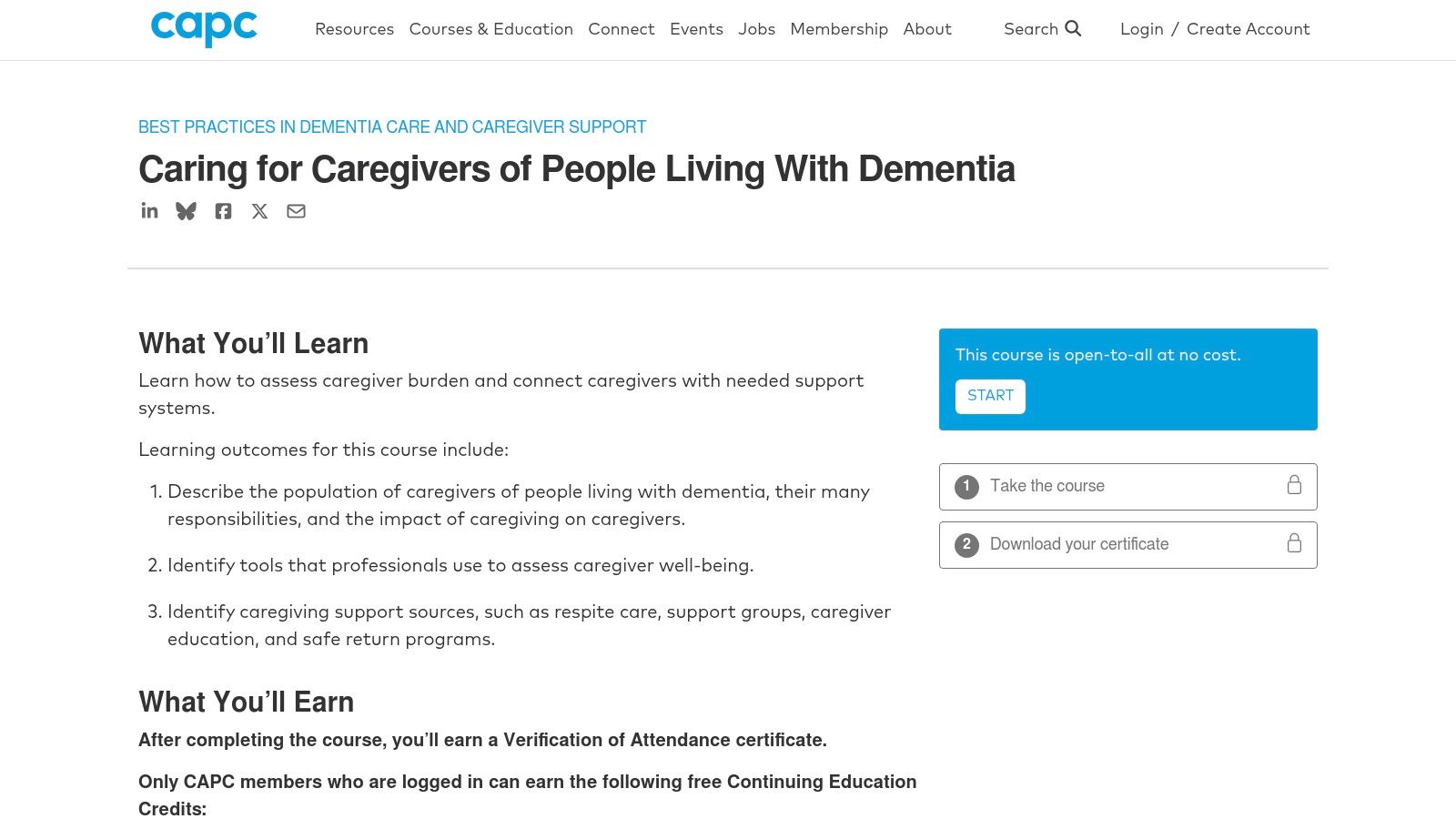
While not a comprehensive skills curriculum for family members, this course is an exceptional tool for professionals in the New Jersey healthcare system. It provides the frameworks and language needed to identify and address caregiver burnout. The high-quality content, updated tools, and certificate of attendance make it an excellent professional development resource. For organizations aiming to build robust caregiver support programs, this module offers a solid, evidence-based foundation.
Key Details and Use Cases
| Feature | Description |
|---|---|
| Target Audience | Clinicians, social workers, case managers, and healthcare teams supporting families of dementia patients. |
| Duration & Format | Short, self-paced online module. |
| Cost | Free and open access for the course content and certificate of attendance. |
| Accreditation | Continuing Education (CE) credits are available for CAPC members. |
Best For:
- Healthcare professionals in Mercer County looking to enhance their support for family caregivers.
- Home health agency managers seeking to train staff on assessing caregiver needs and preventing burnout.
- Organizations that want to implement a structured program for supporting the families they serve.
Enrollment: Access the course directly on the CAPC website.
12. Caredemy (U.S.)
Caredemy offers affordable, self-paced online caregiver training courses designed for quick and accessible learning. It stands out for its straightforward model, which provides immediate access to course materials, a downloadable workbook, and a printable certificate upon passing an exam. This platform is ideal for individuals seeking foundational knowledge or needing a certificate of completion quickly, such as new family caregivers or those looking to satisfy a potential employer's basic training suggestion.
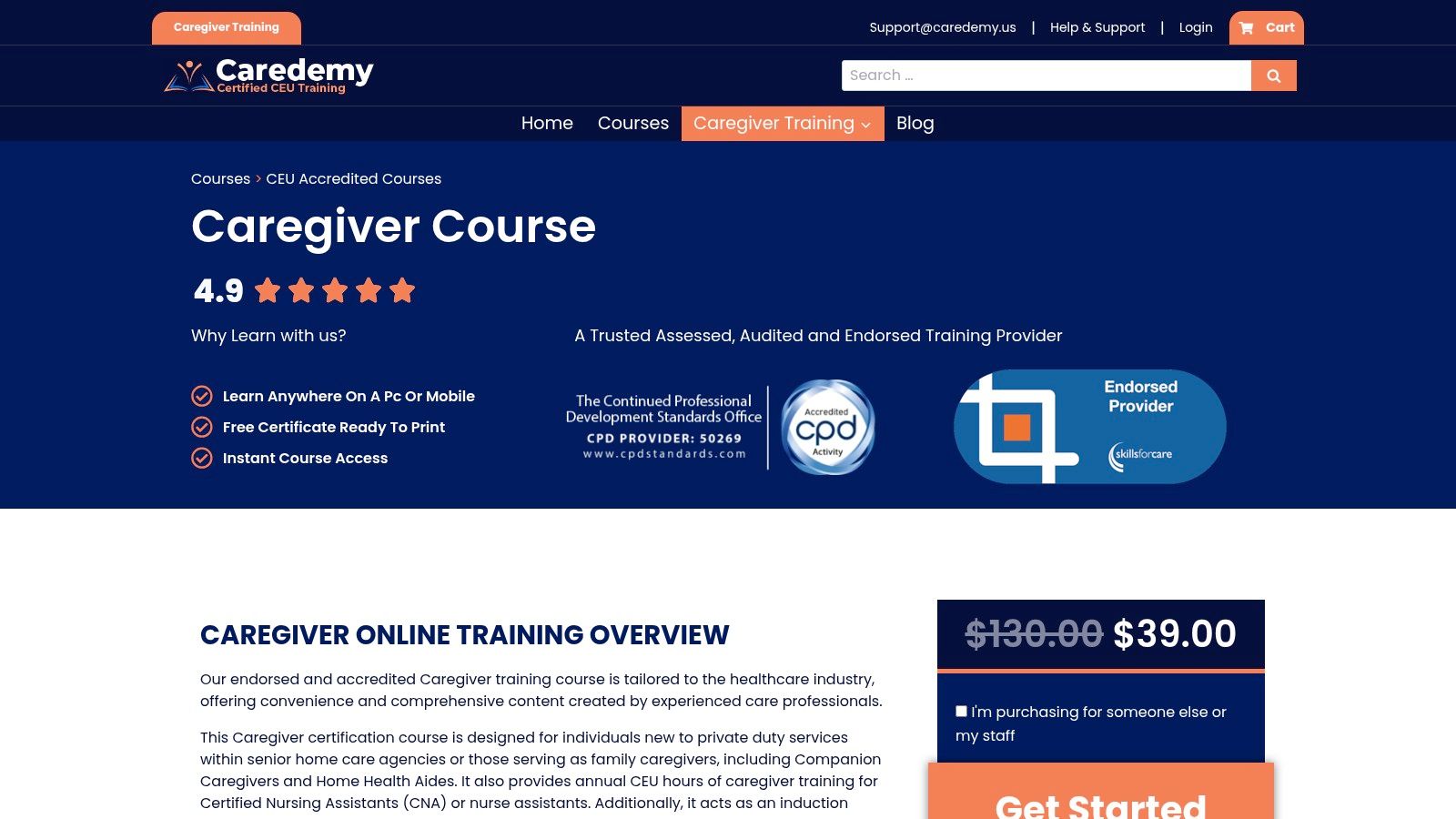
The curriculum covers essential topics like Activities of Daily Living (ADLs), infection prevention, and safety, making it a solid introductory resource. While its low cost and instant access are major advantages, its primary limitation is that its certificates are not a substitute for state-approved programs like CNA or HHA, which require hands-on clinical hours. Caregivers in New Jersey should always verify with their employer or agency if a Caredemy certificate will be accepted before purchasing.
Key Details and Use Cases
| Feature | Description |
|---|---|
| Target Audience | Aspiring entry-level caregivers, family caregivers, and individuals needing a fast, basic training certificate. |
| Duration & Format | Self-paced online modules; includes exam, workbook, and 12-month access. |
| Cost | Low one-time fee per course. |
| Accreditation | Provides a certificate of completion; not a state-certified CNA/HHA program. Recognition varies by employer. |
Best For:
- Individuals needing a low-cost, foundational caregiver training course to build basic skills.
- Family caregivers who want a structured introduction to essential caregiving topics.
- Job seekers who want to add a basic training certificate to their resume, pending employer approval.
Enrollment: Purchase the desired course directly on the Caredemy U.S. website.
Comparison of 12 Caregiver Training Courses
| Training Program | Core features | Experience & quality | Value & price | Target audience | Unique selling point(s) |
|---|---|---|---|---|---|
| Alzheimer’s Association — essentiALZ Dementia Care Training and Certification | Self‑paced modules + proctored cert; 5 dementia topics; CE | ★★★★ — evidence‑based, brand trust | 💰 Moderate; 2‑yr cert; org discounts | 👥 Professional & family caregivers focused on dementia | ✨ Aligned to Dementia Care Practice Recommendations; 🏆 recognized standard |
| Relias Academy | Large catalog; streaming video; instant certificates; a‑la‑carte | ★★★★ — practical, bite‑sized lessons | 💰 Variable — pay per course or bundles | 👥 Direct care workers, aides, clinicians, agencies | ✨ Broad topic coverage; quick, modular learning |
| Positive Approach to Care (Teepa Snow) | On‑demand videos + live Champion courses; certification pathways | ★★★★★ — highly practical interaction techniques | 💰 Moderate–High; pricing varies by component | 👥 Dementia caregivers, trainers, mentors | ✨🏆 Teepa Snow methods (e.g., Hand‑under‑Hand); live skills focus |
| American Red Cross — Online Caregiver Training (Child & Infant) | Self‑paced child/infant care; optional CPR/First Aid; app | ★★★★ — trusted national provider | 💰 Low–Moderate; add‑ons extra | 👥 Babysitters, child caregivers, parents | ✨ CPR/First Aid add‑ons + child care reference app |
| Family Caregiver Alliance — Learn.Caregiver.org | Free & paid CE versions; short videos & case studies | ★★★★ — nonprofit, family‑focused quality | 💰 Low / Free; CE options (NASW for select courses) | 👥 Family caregivers & professionals | ✨ Free high‑quality content; NASW‑approved CE available |
| Coursera — "Supporting Families and Caregivers" (Stanford) | University‑level self‑paced course; audit or certificate options | ★★★★ — academic rigor; learner ratings | 💰 Low (audit) to Moderate (certificate/Coursera Plus) | 👥 Family caregivers, clinicians, interdisciplinary teams | ✨ Stanford‑backed, evidence‑based curriculum |
| U.S. Career Institute — Online Caregiver Training Program | DEAC‑accredited, 2–4 month self‑paced program; career coaching | ★★★ — structured school experience | 💰 Moderate; transparent tuition & refund window | 👥 Entry‑level non‑medical caregivers seeking formal training | ✨ Career coaching, resume help, instructor support |
| Caregiver Training University (CTU) | State‑specific courses; exam & downloadable certificate; registry listing | ★★★ — affordable baseline certs | 💰 Low — quick, 24/7 access | 👥 Job‑seeking non‑medical caregivers & employers | ✨ State‑specific catalog + optional registry listing |
| Home Care Pulse (HCP Training) | Individual paths; 8‑hr "Become a Care Professional"; 50+ CE; LMS/app | ★★★★ — mobile LMS, clear beginner path | 💰 Moderate — pricing at checkout; CE bundles | 👥 New caregivers, CE‑seeking caregivers, agencies | ✨ App + LMS + CE bundles; clear on‑ramp for newcomers |
| NCCDP — CDP Pathway | CDP cert via ADDC seminar + application; live seminars | ★★★★★ — employer‑recognized dementia credential | 💰 High — multi‑step costs & renewals | 👥 Dementia care professionals and employers | ✨🏆 Structured, widely recognized CDP certification ladder |
| CAPC — Caring for Caregivers of People Living With Dementia | Free module on caregiver burden; tools & resources; certificate | ★★★★ — clinician‑focused, up‑to‑date | 💰 Free (CE for members) | 👥 Clinicians & care teams supporting family caregivers | ✨ Free clinical tools for assessing caregiver burden |
| Caredemy (U.S.) | Self‑paced state‑labeled modules; 12‑month access; exam & printable cert | ★★★ — low‑cost, immediate access | 💰 Low — instant certificate and workbook | 👥 New caregivers needing foundational training | ✨ Instant start, printable certificate & downloadable workbook |
Your Next Step Towards a Fulfilling Caregiving Career
Embarking on a caregiving journey, whether for a family member or as a professional, is a profound commitment. Navigating the landscape of caregiver training courses can feel overwhelming, but this guide has laid out a clear map. We have explored a diverse range of options, from the specialized dementia care expertise offered by the Alzheimer’s Association and Teepa Snow’s Positive Approach to Care, to the broad, foundational knowledge provided by platforms like Relias Academy and Caregiver Training University. Your ideal path is unique, and selecting the right program is the most critical decision you will make at this stage.
Recapping Your Training Options
The key takeaway is that no single course fits every aspiring caregiver. Your choice must be a strategic one, directly aligned with your personal and professional goals.
- For Family Caregivers: If you are caring for a loved one at home, resources from the Family Caregiver Alliance and the Alzheimer's Association provide invaluable, specific skills without the commitment of a full professional certification. They focus on practical, immediate application, building your confidence in managing daily challenges, especially those related to dementia or chronic illness.
- For Aspiring Professionals in New Jersey: If your goal is to launch a career, your focus should be on state-recognized certifications. Programs that prepare you for the Certified Nursing Assistant (CNA) or Certified Home Health Aide (CHHA) exams are essential for employment with licensed agencies. These courses provide the credentials that employers, and state regulations, require.
- For Career Advancement and Specialization: For current caregivers looking to deepen their expertise, advanced certifications are the answer. Pursuing a Certified Dementia Practitioner (CDP) credential or completing specialized modules through Relias Academy or the Center to Advance Palliative Care (CAPC) can unlock higher-paying roles and positions of greater responsibility.
How to Choose the Right Path
Making a decision requires self-reflection. Before enrolling in any of the caregiver training courses we’ve detailed, ask yourself these critical questions:
- What is my primary motivation? Am I seeking to improve care for a family member, or am I building a professional career? The answer will immediately narrow your options.
- What is my budget and time commitment? Be realistic about what you can invest. Free resources like Coursera's offerings can be a great starting point, while intensive certification programs represent a more significant, but often necessary, financial and time investment.
- What specific skills do I need most? If you are caring for someone with advanced dementia, a program like Teepa Snow’s is far more relevant than a generalist course. If you anticipate needing to perform medical-adjacent tasks like medication reminders and mobility assistance, a CHHA program is non-negotiable.
- Does this program align with New Jersey requirements? For professional caregivers, this is the most important question. Verify that any certification you pursue is recognized by the New Jersey Board of Nursing and valued by local home care agencies.
Ultimately, the right training is not just about a certificate on the wall. It is about acquiring the confidence, competence, and compassion to provide the highest standard of care. The knowledge you gain will empower you to handle difficult situations with grace, advocate effectively for your care recipient, and protect your own well-being. This investment in your education is an investment in the quality of life for those you will serve. It is the foundation upon which a truly rewarding and impactful caregiving experience is built.
Ready to put your training into practice with an employer that values your skills and supports your growth? NJ Caregiving is dedicated to building a team of the most compassionate and well-trained professionals in the state. We actively seek out individuals who have invested in their education through reputable caregiver training courses and provide a supportive environment where you can thrive. Visit us at NJ Caregiving to learn about our career opportunities and how you can join our mission to deliver exceptional in-home care.
