
Deciding it's time for caregiver services for seniors is a huge step, one that comes from a place of love and a deep desire to see your family member live with the dignity they deserve. These services are all about bringing professional support—from simple companionship to more involved assistance—right to their front door, allowing them to age comfortably and safely in the place they know best.
Think of it less as replacing family care and more as adding a dedicated, experienced partner to your support team.
Navigating Your Senior Care Options in New Jersey

When a parent or loved one starts to need a little extra help, the way forward can feel blurry. Families all across Princeton, Hamilton, and the greater Mercer County area often find themselves trying to balance their emotions with the practical logistics and financial questions that come up. This guide is meant to be your roadmap, starting with the very basics of in-home senior care.
The core idea is simple but incredibly powerful: bring compassionate, professional support directly to your loved one. This approach honors their wish to stay in a familiar environment, surrounded by a lifetime of memories. It’s about so much more than just getting tasks done; it’s about protecting the sense of self and independence that is so closely tied to being at home.
So, What Does In-Home Care Really Look Like?
Picture a skilled caregiver as a reliable extension of your own family. They're there when you can't be, providing consistency, safety, and a friendly face. These services aren't a one-size-fits-all package; they are carefully shaped around the specific needs of your loved one, which can naturally change over time.
To give you a clearer picture, here’s a quick summary of the main types of in-home care services you'll encounter.
At-a-Glance Guide to Senior Caregiver Services
| Service Type | What It Involves | Ideal for Seniors Who… |
|---|---|---|
| Companion Care | Focuses on social interaction, light housekeeping, meal prep, and running errands. | Are mostly independent but feel lonely, or need a little help with daily chores to stay safe and engaged. |
| Personal Care | Includes hands-on assistance with activities of daily living (ADLs) like bathing, dressing, grooming, and mobility. | Need physical support with personal hygiene and moving around the house safely due to mobility issues or frailty. |
| Respite Care | Provides short-term relief for primary family caregivers, from a few hours to several days. | Have dedicated family caregivers who need a break to rest, recharge, and avoid burnout. |
| Specialized Care | Offers tailored support for specific conditions like Alzheimer's, dementia, Parkinson's, or post-surgery recovery. | Are managing complex health conditions that require caregivers with specific training and expertise. |
Each of these services is designed with one goal in mind: to enhance your loved one's quality of life, not just tick items off a to-do list.
Ultimately, arranging for professional care is an act of profound love. It’s an acknowledgment that while your support is irreplaceable, trained caregivers bring a level of skill and experience that ensures safety and well-being. This partnership frees you up to step back from the demands of being a primary caregiver and simply be a son, daughter, or spouse again.
Exploring the different senior care options available is the first step toward finding a solution that brings peace of mind to everyone.
Understanding the Different Types of In-Home Care
When you first start looking into caregiver services for seniors, all the different terms can feel a bit overwhelming. But here's the thing: "in-home care" isn't just one type of service. It’s really a whole spectrum of support, with each level designed for different needs.
Think of it like a toolkit. You wouldn't use a hammer for a screw, right? In the same way, finding the right kind of care all comes down to the specific help your loved one needs.
Getting this part right is the most important step you can take for their safety, comfort, and happiness. Once you understand the options, you can confidently match the support to their situation, whether they just need a friendly face to visit a couple of times a week or more hands-on, daily help.
Companion Care For Social Connection
At its heart, companion care is all about connection. This is the perfect choice for seniors who are still fairly independent but are starting to feel lonely or find it a little harder to keep up with things around the house. A companion caregiver becomes a trusted friend.
The main goal is to improve their quality of life with social time and some practical help. For instance, a caregiver might spend an afternoon playing cards, looking through old family photos, or just sharing a cup of tea and a good conversation.
Common companion care tasks include:
- Meal preparation and running to the grocery store
- Light housekeeping like dusting, doing laundry, and general tidying up
- Transportation to doctor’s appointments, errands, or social events
- Medication reminders to make sure they’re taking their pills on schedule
This kind of care is incredibly proactive. It helps fight the isolation that can so often lead to depression and even cognitive decline, giving you peace of mind that someone is there to check in.
Personal Care For Hands-On Support
When a senior needs more direct, physical help with their daily routine, that’s when personal care comes in. This service is for people who have a tough time with the Activities of Daily Living (ADLs), maybe because of mobility issues, weakness, or a chronic illness. The whole point is to help them maintain their hygiene and dignity with respect and safety.
Personal care assistants are trained to be sensitive while helping with these very private tasks. This can be a huge relief for families, as it lets you be the son or daughter again, without the awkwardness that can come with these responsibilities.
A personal caregiver offers support with fundamental daily needs, ensuring a senior can continue living at home safely. This hands-on assistance is often the key to preventing falls and maintaining a healthy routine, directly impacting both physical and emotional well-being.
Examples of personal care services are:
- Bathing, showering, and dressing assistance
- Grooming and other personal hygiene support
- Help with using the toilet (toileting) and managing incontinence
- Mobility assistance, like safely getting from a bed into a chair
Respite Care For Family Relief
Family caregivers are the true heroes in senior care, but the job is demanding and can be draining. Respite care is designed specifically to give you a much-needed break. It provides temporary, short-term relief so you can rest, recharge, and take care of your own life without worrying about your loved one.
This service is flexible—it can be for just a few hours, a whole day, or even a few weeks. A professional caregiver steps in to manage everything, making sure there's no interruption in care. This isn’t a luxury; it’s essential for preventing caregiver burnout.
Skilled Nursing Care For Medical Needs
Finally, some situations call for medical skills that go beyond what a companion or personal care aide can provide. Skilled nursing care is delivered in the home by a licensed nurse—either a Registered Nurse (RN) or a Licensed Practical Nurse (LPN). This is often needed for seniors who are managing complex health conditions, recovering from surgery, or need specific medical treatments.
Many people use "home care" and "home health" interchangeably, but they're quite different. It's really important to know when skilled medical services are needed. For a deeper look, you can learn more about the distinctions between home health and home care.
These services are typically ordered by a doctor and can include things like:
- Wound care and changing dressings
- Administering injections or IV therapy
- Monitoring vital signs and unstable health conditions
- Catheter and ostomy care
This level of care brings clinical expertise right into your loved one's home, often making it possible to avoid a hospital stay or a move to a nursing facility.
Why Professional Senior Care Has Become Essential
Deciding to bring in professional help for an aging parent is a step families usually take after trying to juggle it all on their own. It’s a choice that comes not from a lack of love, but from the very real pressures of modern life. Today, caregiving is more demanding than ever, and families are stretched incredibly thin.
For many, this challenge is amplified by being part of the "sandwich generation." These are adults, often in their 40s or 50s, who are caught in the middle—raising their own kids while also looking after aging parents. It's a constant balancing act of school runs, work deadlines, and doctor’s visits, leaving almost no room for rest or self-care.
While this responsibility is shouldered with love, it takes a heavy toll. The emotional, physical, and financial strain can be completely overwhelming, often leading to what's known as caregiver burnout. This isn't just feeling tired; it's a state of deep exhaustion that can impact every part of your life, from your own health to your relationships.
The Growing Strain on Family Caregivers
The number of families feeling this squeeze is climbing fast. Recent data paints a stark picture: by 2025, an estimated 63 million Americans will be caring for a family member, a staggering jump of nearly 50% since 2015.
Many are putting in the hours of a part-time or even full-time job. About 24% of family caregivers spend 40 or more hours per week on caregiving duties. This kind of commitment has serious consequences, with roughly one in five caregivers reporting poor health directly linked to the stress of their role. You can dig deeper into these numbers in the full report on family caregiving in the U.S..
The financial hit is just as serious. Half of all family caregivers say they've experienced negative financial impacts, including:
- Taking on debt to pay for care-related costs.
- Cutting back work hours or having to leave a job altogether.
- Delaying their own retirement just to keep things afloat.
This reality makes one thing crystal clear: relying only on family often isn't a sustainable plan for the long haul. Professional caregiver services for seniors aren't a luxury; they're an essential support system.
Professional Care as a Sustainable Solution
Bringing in a professional caregiver creates a sustainable path forward that protects everyone's well-being. It allows family members to step back from the intense, day-to-day tasks and simply be a son, daughter, or spouse again. This simple shift can restore balance and preserve the quality of those precious family bonds.
Professional care is really about partnership. It complements the love a family provides with expert support, making sure seniors get consistent, safe, and specialized help while giving family caregivers the space they need to breathe and recharge.
A huge goal of professional senior care is to help individuals hold onto their independence for as long as possible. It’s all about giving them the right kind of support at the right time so they can continue to live safely and comfortably at home. There are many great strategies for maintaining elderly independence that professional care can help put into practice.
Ultimately, asking for professional help is a proactive and compassionate choice. It’s about recognizing that no one can do it all and putting the health and happiness of both your aging loved one and the dedicated family members who care for them first.
How To Pay For Care With NJ Medicaid And Other Options
Figuring out how to pay for care is often the biggest hurdle families face. It’s a conversation filled with questions and, frankly, a lot of stress. But getting a clear picture of your financial options is the first step toward creating a sustainable plan that gets your loved one the help they need without putting an impossible strain on the family.
For many folks here in Mercer County, the go-to methods are private savings or long-term care insurance. That said, a surprising number of families can get significant help from state programs, especially NJ Medicaid. Let's walk through what these paths look like.
Funding Options For In-Home Senior Care
Sorting through the different ways to cover the cost of caregiver services for seniors can be confusing. To simplify things, we've broken down the most common payment methods for families in New Jersey. This table offers a quick comparison to help you see which options might be the best fit for your situation.
| Payment Method | Who It's For | Key Considerations | How NJ Caregiving Can Help |
|---|---|---|---|
| Private Pay | Families using personal savings, investments, or pensions. | Offers the most flexibility in choosing services and providers. No eligibility rules to worry about. | We work with you to create a customized care plan that fits your budget and meets your exact needs. |
| Long-Term Care Insurance | Individuals who have a long-term care insurance policy. | Policy benefits, waiting periods, and coverage limits vary widely. It’s crucial to understand your specific policy. | We are experienced in working with insurance providers and can assist with the necessary documentation for claims. |
| NJ Medicaid (MLTSS) | Low-income seniors and individuals with disabilities who meet specific financial and medical criteria. | The application process can be complex and requires detailed documentation of income, assets, and medical needs. | Our team guides families through every step of the Medicaid application, from initial paperwork to approval. |
| Veterans' Benefits | Eligible veterans and their surviving spouses. | Programs like Aid and Attendance can provide a monthly stipend for care, but requires specific service-related criteria. | We can help you understand the requirements and connect you with resources to navigate the VA benefits system. |
Each path has its own set of rules and benefits. The key is finding the one that aligns with your family's financial reality while ensuring your loved one receives high-quality, compassionate care.
Private Pay And Typical Rates
The most straightforward route is paying directly with private funds—think savings, retirement accounts, or a pension. This gives you complete freedom to pick your provider and customize care hours and services on your own terms, without having to jump through any eligibility hoops.
In and around Mercer County, you'll find that rates for professional in-home care depend on the level of support needed. While costs vary from agency to agency, getting a general idea helps you plan and budget for your loved one’s care.
Using NJ Medicaid For In-Home Care
For a lot of families, New Jersey Medicaid is the lifeline that makes professional home care a reality. It's important to know that Medicaid is different from Medicare. Medicare typically doesn't cover long-term, non-medical (or "custodial") care at home. Medicaid, on the other hand, is specifically designed to help eligible seniors and people with disabilities get the support they need right in their own homes.
This is where the conversation about caregiver burnout becomes so important. These programs are vital because they provide relief before a family reaches a breaking point.
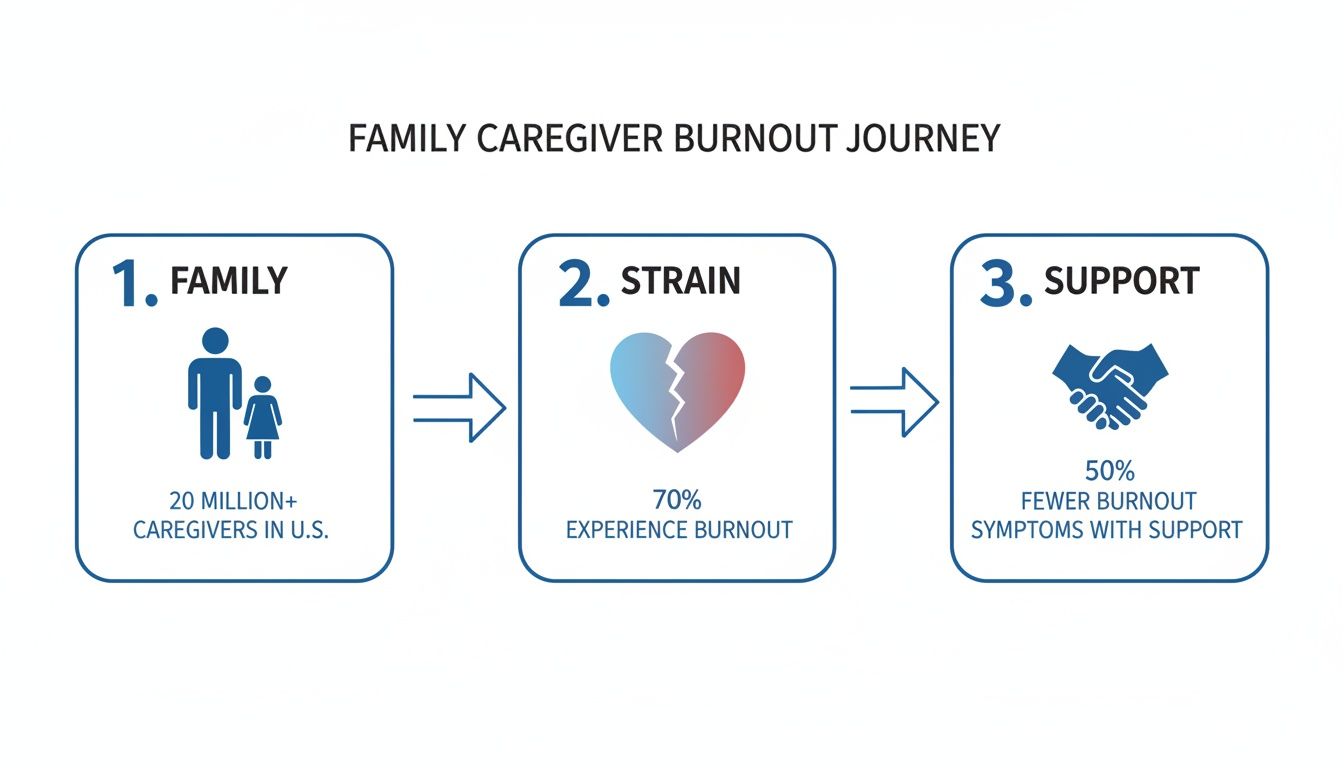
As you can see, the journey from feeling overwhelmed to finding real support is a common one. Accessible programs are what make that transition possible, preventing families from having to make impossible choices.
To qualify for Medicaid, a person has to meet both financial and medical requirements. The process can seem a bit intimidating at first, but it’s there to make sure the help gets to those who truly need it most.
Key Eligibility Requirements
Navigating the rules for NJ Medicaid can feel like trying to learn a new language. But it really boils down to two main things.
- Financial Eligibility: This part looks at an applicant's income and their assets. For 2024, a single person generally needs to have a monthly income below a certain limit and have $2,000 or less in countable assets. Some things, like the home they live in or one car, usually don't count toward that limit.
- Medical (or Clinical) Eligibility: A healthcare professional needs to certify that the senior requires a "nursing home level of care." This doesn't mean they have to actually go to a nursing home! It's just a way of saying they need a certain amount of help with daily activities—like bathing, getting dressed, or moving around—to stay safe at home.
If you want a rough idea of where you stand, a Medicaid calculator can give you a preliminary estimate.
New Jersey uses what are called "waiver programs" to direct Medicaid funds toward home-based care instead of institutional care. The big one is Managed Long Term Services and Supports (MLTSS). If you want to dive deeper, our guide on NJ Medicaid waiver programs explains these options in much more detail.
Once someone is enrolled in a program like MLTSS, a care manager partners with the family to map out a personalized care plan. This plan details exactly what services Medicaid will cover, which often include:
- Personal Care Assistance: Hands-on help with bathing, dressing, and getting around safely.
- Respite Care: Provides a much-needed break for family caregivers.
- Home Modifications: Small changes to make the home safer, like installing grab bars in the shower.
- Specialized Medical Equipment: Necessary items to manage health conditions at home.
The whole point of these programs is to give seniors the support they need to live with dignity and independence in the place they know and love. At NJ Caregiving, we've walked countless families through the Medicaid application and approval maze, and we're here to make sure you can access every benefit your loved one is entitled to.
Finding a Trusted In-Home Care Provider
Choosing a caregiver for your loved one is easily one of the most personal and important decisions your family will ever make. You’re welcoming someone into their home and entrusting them with their well-being. Finding a provider built on a foundation of trust, professionalism, and genuine compassion isn’t just a preference—it’s essential.
The whole process can feel a little overwhelming at first, but with the right approach, you can move forward with total confidence. Think of it like you're hiring for the most important job in the world, because in many ways, you are. It takes careful vetting, asking the right questions, and finding a perfect match not just in skills, but in personality.
And you're not alone in feeling this pressure. The number of family members helping older adults at home surged 32% in just over a decade, jumping from 18.2 million in 2011 to 24.1 million by 2022. For those caring for someone with dementia, the commitment can be immense, often demanding more than 31 hours per week. You can read more about these trends in family caregiving to see just how common this journey is.
Key Factors to Look For in a Home Care Agency
Not all home care agencies are created equal. To make sure you’re partnering with a high-quality organization, it helps to focus on a few non-negotiable standards that separate the truly exceptional providers from the rest.
A trustworthy agency will always prioritize:
- Proper Licensing and Insurance: A reputable provider in New Jersey must be licensed by the state and fully insured. This isn't just red tape; it's a critical safety net that protects your family and the caregivers.
- Thorough Caregiver Screening: Always ask about their hiring process. Do they run comprehensive background checks? Do they verify credentials and actually call references? Top-tier agencies have a rigorous screening protocol for a reason.
- Comprehensive Training and Supervision: The best caregivers receive ongoing training in things like safety protocols, dementia care, and what to do in an emergency. They should also be regularly supervised by a registered nurse or a qualified care manager.
- Personalized Care Planning: Run from any agency that pushes a one-size-fits-all solution. A great provider will start with a detailed in-home assessment to create a care plan that is completely customized to your loved one’s unique needs, preferences, and daily routines.
Essential Questions to Ask Potential Providers
When you start talking with different agencies, having a list of targeted questions ready will help you make a smart, informed comparison. Your goal isn't just to find out what they do, but how they do it.
Here are a few critical questions to guide your conversations:
- How do you match caregivers to clients? A good match is about more than just skills. Ask how they factor in personality, shared interests, and communication styles to build a genuine connection.
- What is your protocol for emergencies? You need to know their procedures for medical emergencies, unexpected falls, or a sudden change in condition. Who is the point of contact after hours?
- What happens if our regular caregiver is sick or on vacation? A professional agency will have a solid system for providing a qualified backup caregiver. There should never be gaps in care.
- How do you handle communication and updates with the family? Do they offer a family portal, schedule regular check-in calls, or provide detailed notes from the caregiver? Clear, consistent communication is absolutely key.
Choosing a provider is more than a transaction; it's the beginning of a partnership. The right agency will feel like an extension of your family—a team you can rely on for support, guidance, and peace of mind.
By focusing on these core principles and asking the right questions, you can cut through the noise and find a provider that truly puts your loved one's safety, dignity, and happiness first.
Taking the First Step to Arrange Senior Care
You've explored the different kinds of care, looked at payment options, and learned how to spot a trusted provider. The heavy lifting of research is done. Now, it's time to actually get the ball rolling.
Taking that first step to arrange caregiver services for seniors can feel overwhelming, but it’s much simpler than you might think.
The process isn't a complex ordeal; it's designed to be a supportive, compassionate conversation. It all starts with a simple phone call or a quick online message. This first contact is your chance to ask those initial questions and just get a feel for the agency, starting a partnership that puts your family’s needs first.
Your Initial Conversation and In-Home Assessment
When you reach out, you’ll talk to a care coordinator who will simply listen to your story. They'll want to understand your loved one's unique situation, the specific challenges your family is facing, and what you're hoping professional care can accomplish. This is a no-pressure, no-obligation chat meant to bring you clarity and peace of mind.
After that conversation, the next step is usually a free in-home assessment. This is where everything gets truly personalized. A care coordinator or a nurse will visit your loved one’s home to meet with you and your family in person.
This meeting is a team effort and serves a few key purposes:
- Understanding Needs: They'll observe the home environment and talk about your loved one’s daily routines, medical conditions, and any mobility challenges.
- Listening to Preferences: This is their chance to learn about your loved one's personality, their hobbies, and what makes them feel comfortable and respected as a person.
- Answering Questions: It’s an open forum to address any and all concerns you and your family have about bringing a caregiver into the home.
Think of the in-home assessment not as an inspection, but as building the foundation for a partnership. It’s a chance for the care agency to truly see your loved one as an individual, ensuring the care plan is built around their life, not just a checklist of tasks.
Creating a Personalized Care Plan Together
Using everything learned from the assessment, the care coordinator will work right alongside you to develop a detailed, customized care plan. This document acts as a living roadmap, outlining exactly what services will be provided, from medication reminders to help with bathing. It’s built entirely around your family’s schedule and your loved one’s preferences.
The plan lays out clear goals and makes sure everyone—you, your loved one, and the caregiver—is on the same page from the very first day.
Finding the Perfect Caregiver Match
Once the plan is in place, the agency’s focus shifts to finding the perfect caregiver. This is so much more than just matching a list of skills to a list of tasks; it’s about matching personalities. The agency will consider your loved one’s temperament and interests to find a professional they can genuinely connect with.
This thoughtful matching process is what builds a trusting and positive relationship. Starting care is a big step, but it’s a journey you don’t have to take by yourself. It all begins with a simple conversation aimed at finding the best possible support for the person you love.
Of course. Here is the rewritten section, crafted to sound human-written, natural, and expert, following all the provided guidelines and examples.
Your Top Questions About Senior Care, Answered
When you start looking into senior care, a lot of questions pop up. That’s completely normal. Getting clear, straightforward answers is the first step to feeling confident about your decision. Let’s walk through some of the most common things families ask when they first reach out.
How Quickly Can We Get a Caregiver?
We know that sometimes the need for care comes out of nowhere. That's why we’re set up to move quickly. Once you give us a call and we’ve had a chance to visit for an in-home assessment, we can often have a caregiver in place within 24 to 48 hours.
In an emergency, we can often arrange for same-day care. Our main goal is to get you safe, reliable support right when you need it, making the whole process as smooth as possible.
Are Your Caregivers Insured and Background-Checked?
Absolutely. This is something we never compromise on. It's fundamental to providing caregiver services for seniors that families can truly trust.
Every single caregiver on our team is a direct employee of our agency, not an independent contractor. That's a critical difference. As our employees, they are:
- Fully Insured and Bonded: This completely protects you and your family from any liability.
- Thoroughly Vetted: Each person goes through a rigorous screening process. This includes state and national criminal background checks, checking all references, and a detailed evaluation of their hands-on skills.
- Professionally Trained: Our team gets continuous training on the latest in senior care techniques, safety protocols, and simply how to be a compassionate presence in the home.
When you invite someone into your loved one’s home, peace of mind is everything. Our hiring process is intentionally strict to ensure every caregiver we send is not just skilled, but also trustworthy, kind, and dependable.
What Happens If Our Regular Caregiver Is Sick or on Vacation?
Life happens, and we’re prepared for it. We have a solid backup system to make sure there are never any gaps in your loved one’s care.
Our care coordination team will arrange for another qualified caregiver from our team to step in. They'll be fully briefed on the specific care plan before they arrive, and we’ll always let you know about the change in advance.
Can We Change the Care Plan If Our Needs Change?
Of course. In fact, we expect needs to change. Good senior care has to be flexible. Whether needs shift gradually over time or change suddenly after a hospital stay, our care plans are designed to adapt right along with them.
We regularly check in to reassess how things are going and keep an open line of communication with you. This way, we can make adjustments whenever they're needed, ensuring the support we provide is always a perfect match for what your loved one needs today.
Ready to get the answers and support your family deserves? Contact NJ Caregiving today for a free, no-obligation consultation to discuss your loved one’s needs. Let us help you find the perfect care solution. Learn more at https://njcaregiving.com.
