
It often starts small. Maybe it's a stack of unopened mail on the counter, a missed doctor's appointment, or just a quiet, persistent worry about a loved one living alone. The journey to considering a caregiver for a family member is rarely a single event. It’s more of a gradual realization that things are changing, and a little extra support might be what's needed.
Knowing When It Is Time for Professional Help
Acknowledging that you might need outside help is one of the toughest—and most important—steps a family can take. You're trying to balance respecting your loved one’s independence with making sure they're safe and well. This decision is often clouded by feelings of guilt or the sense that you should be able to handle it all on your own.
But the reality is, seeking professional support is a sign of proactive love, not failure. By 2025, an estimated 63 million Americans will be family caregivers, putting in an average of 27 hours per week of unpaid care. Many are also juggling kids and careers, making the strain immense.
Recognizing the Subtle Signs
The clues that more support is needed aren't always dramatic. They're usually a pattern of small changes that, when you put them all together, paint a clear picture of a loved one’s declining ability to manage on their own.
Keep an eye out for these common indicators:
- Changes in Physical Appearance: Has Mom or Dad lost a noticeable amount of weight? You might also see signs of poor hygiene or notice they're wearing the same clothes for days, which can signal trouble with personal care.
- Neglected Household: An unkempt home, spoiled food in the fridge, or piles of laundry can mean daily chores have just become too overwhelming.
- Social Withdrawal: A once-social parent who now avoids friends, family gatherings, or old hobbies might be struggling with depression, mobility issues, or cognitive decline.
- Financial Mismanagement: Are you finding unpaid bills, seeing unusual purchases, or getting calls from collections agencies? This can be a red flag for memory issues or an inability to manage finances.
Assessing the Level of Care Needed
Once you’ve spotted the signs, the next step is to figure out the specific type of help required. This is really about understanding the challenges your loved one is facing with their Activities of Daily Living (ADLs)—the fundamental skills needed to live independently. You can learn more about these in our detailed guide on what are the 12 activities of daily living: https://njcaregiving.com/what-are-the-12-activities-of-daily-living/
"Moving from 'I'm worried' to 'We need a plan' is the pivotal moment. It's about shifting the focus from the problem to the solution, ensuring your loved one can age safely and with dignity."
Think about the specific tasks where your family member needs a hand. Is it mainly companionship and help with errands a few hours a week? Or do they need more hands-on help with personal care, like bathing and dressing? Maybe there are more complex medical needs, such as medication management or wound care, that call for a skilled professional.
The Impact on the Family Caregiver
The decision to hire help isn't just about the person getting the care; it's also about the health of the family members providing it. Caregiver burnout is a serious risk, leading to physical exhaustion and emotional distress. It's crucial to recognize the signs of strain on yourself or another family caregiver when thinking about professional help. For more on this, consider reading about the 8 Overlooked Signs of Caregiver Burnout in Texas Families. When a primary family caregiver gets overwhelmed, their ability to provide effective support drops significantly.
Comparing Your Care Options: Family vs. Professional Care

Once you've determined your loved one needs help at home, you hit another major fork in the road. Do you or another family member step in, or is it time to hire a professional? This is a huge decision, and it goes so much deeper than just money—it’s about the emotional, physical, and relational costs that often get overlooked in the moment.
Many families naturally lean toward handling it themselves. It feels like the right thing to do, the most loving choice. But the day-to-day reality of being a full-time caregiver for a family member can be more demanding than anyone anticipates.
The Realities of Family Caregiving
Stepping into a caregiving role for a parent or spouse can fundamentally change your relationship. Suddenly, you're not just a daughter, son, or partner; you're also the manager of medications, appointments, and personal care. That shift can be emotionally jarring for everyone.
The hidden costs are very real. We see it all the time—family caregivers have to reduce their work hours, pass up promotions, or even leave their jobs entirely. That lost income, on top of paying out-of-pocket for supplies, can create a serious financial squeeze.
And that doesn't even touch on the physical and mental toll. The constant worry, the sleepless nights, and the emotional weight of watching someone you love decline lead straight to caregiver burnout. When you're burned out, it's not just your own health that suffers; the quality of care you can provide is at risk, too.
Watching a loved one slowly lose their independence is a heart-wrenching experience. Many caregivers feel overwhelmed by the changes in their family member, which can lead to feelings of sadness, frustration, and helplessness.
The Advantages of Professional In-Home Care
Hiring a professional caregiver brings a trained, objective expert into your home. These aren't just kind helpers; they are skilled professionals with specific knowledge for conditions like dementia or post-surgery recovery. They know what to do and how to do it safely.
One of the biggest benefits is reliability. When you work with an agency, caregivers are vetted, background-checked, and insured. If your regular caregiver gets sick, the agency sends a qualified replacement. There are no gaps in care, which is a massive relief for families.
This professional boundary also lets you be a family again. You can go back to being a loving son or daughter, enjoying quality time without the stress of managing daily care tasks. It creates a much healthier and more sustainable situation for everyone. To explore this further, you might find our guide comparing in-home care vs assisted living facilities helpful.
Family Caregiver vs. Professional Caregiver: A Comparison
Making the right choice means taking an honest look at what each path truly involves. It’s not about one option being "better" than the other, but about finding the best fit for your family's unique circumstances, resources, and emotional bandwidth. This table breaks down some of the key differences to consider.
| Consideration | Family Member as Caregiver | Professional In-Home Caregiver |
|---|---|---|
| Cost | Often seen as "free," but has significant hidden costs like lost wages and career impact. | Involves a direct financial cost, but is often predictable and can sometimes be offset by programs like Medicaid. |
| Training & Skills | Limited to personal experience; may lack training for specific medical needs like dementia or mobility support. | Professionally trained, certified, and experienced in various care situations, ensuring proper techniques and safety. |
| Emotional Impact | High risk of burnout, stress, guilt, and strained family relationships. | Preserves family dynamics by allowing you to remain in your role as a loved one, not a primary caregiver. |
| Reliability | Dependent on one person's health and availability. An illness or emergency can disrupt care entirely. | Backup care is provided by the agency, ensuring consistent and uninterrupted support for your family member. |
| Legal & Insurance | The family bears all responsibility and liability for accidents or injuries. | The agency handles payroll, taxes, liability insurance, and workers' compensation, protecting the family. |
Ultimately, whether you choose to provide care yourself or hire a professional, the goal is to ensure your loved one receives the best support possible in a way that protects the well-being of the entire family.
Finding and Vetting the Right Caregiver
Bringing someone into your home to care for a family member is one of the most important decisions you'll ever make. It's about more than just finding help; it's about finding the right person. Getting this right from the start means having a clear, diligent strategy.
There are really two main paths you can take: going through a professional home care agency or getting a personal referral.
Agencies do a lot of the heavy lifting for you. They handle the initial screening, background checks, insurance, and all the payroll headaches. This gives you a serious layer of security. If your regular caregiver gets sick or has an emergency, the agency sends a qualified replacement, so you’re never left in a lurch.
On the other hand, personal referrals from friends, neighbors, or people in your community can be fantastic. You often get candidates who come highly recommended by people you trust. But remember, when you hire independently, you become the employer. That means you’re on the hook for the entire vetting process, background checks, taxes, and liability.
Structuring the Interview Process
Once you have a few promising candidates, the interview is where you really get to see beyond the resume. A piece of paper can list skills and certifications, but it can’t tell you if someone is patient, a good listener, or truly compassionate. You have to dig for that.
Move past the basic questions about their work history. Instead, ask behavioral questions that get them talking about real-world situations they’ve handled. This is the best way to see how they think on their feet and manage stressful moments.
Try asking questions like these:
- "Tell me about a time you had to handle a really challenging care situation. What was going on, and what did you do?"
- "What would you do if my father was having a bad day and refused to take his medication?"
- "Can you share an example of a time you needed to bring up a concern with a family you were working for?"
These kinds of questions force them to give you more than a simple "yes" or "no." They open a window into their problem-solving skills and professional character. For a more complete list of what to ask, our guide on essential caregiver interview questions is a great resource to help you prepare.
The Non-Negotiables: Background and Reference Checks
This is the one step you absolutely cannot skip, no matter how great someone seems in an interview. Thoroughly vetting a candidate is critical for your loved one’s safety and your peace of mind. A comprehensive background check isn't just a good idea—it's essential.
At a bare minimum, a proper background check needs to cover a national criminal record search, a check of the sex offender registry, and a review of their driving record if they'll be driving your family member.
A reputable agency will have already done this for every single caregiver on their team. If you're hiring on your own, you'll need to use a reliable third-party service to run these checks yourself.
References are just as crucial. Don't just call to confirm they worked there. Ask the tough questions that give you real insight into their reliability and character.
- "Was she always on time?"
- "How did he react in stressful situations?"
- "Would you hire this person again to care for your own parent?"
The answers you get here are incredibly telling. When a former employer enthusiastically vouches for a caregiver's skill, patience, and compassion, it's one of the strongest signs you've found a winner. This careful, step-by-step process—from finding good candidates to deep-diving in interviews and being meticulous with checks—is the surest way to find a trustworthy professional you can count on.
Designing a Clear and Comprehensive Care Plan
You've done the hard work of hiring a skilled, compassionate caregiver. That's a huge step. But their ability to provide fantastic care really comes down to one thing: a clear roadmap. That roadmap is the care plan.
Think of it as more than just a to-do list. It’s the central communication hub that ensures everyone provides consistent, safe, and truly personalized support for your family member. It doesn't matter who is on duty—the plan keeps the care seamless.
Without a written plan, crucial details get lost. One caregiver might know your dad prefers just a splash of milk in his coffee, but the next one won't. A documented plan gets rid of the guesswork. It empowers the caregiver to step in confidently from day one by turning all that unspoken family knowledge into professional, actionable instructions.
The Core Components of Your Care Plan
Your care plan should be the single source of truth for your loved one’s daily life. It’s a living document, so you’ll want to update it as needs inevitably change. Start by outlining the absolute essentials—the information a caregiver needs to manage the day safely and smoothly.
Make sure your plan nails these key areas:
- Medical Information: This has to be thorough. Include a full list of medications with dosages and schedules, all known allergies, and contact information for doctors and pharmacies.
- Emergency Protocols: List all emergency contacts, clear instructions for specific situations like a fall or sudden illness, and show where the first-aid supplies are kept.
- Daily Routines: Document preferred wake-up times, meal schedules, and bedtime routines. Consistency is incredibly comforting, particularly for anyone living with cognitive decline.
Having this information clearly laid out gives any professional a solid foundation to build from.
A well-structured care plan is the ultimate tool for peace of mind. It ensures that every detail, from medication timing to favorite activities, is clearly communicated, creating a seamless and supportive environment for your loved one.
The infographic below shows the simple, three-step process of vetting a caregiver that happens before you even get to building this detailed plan.
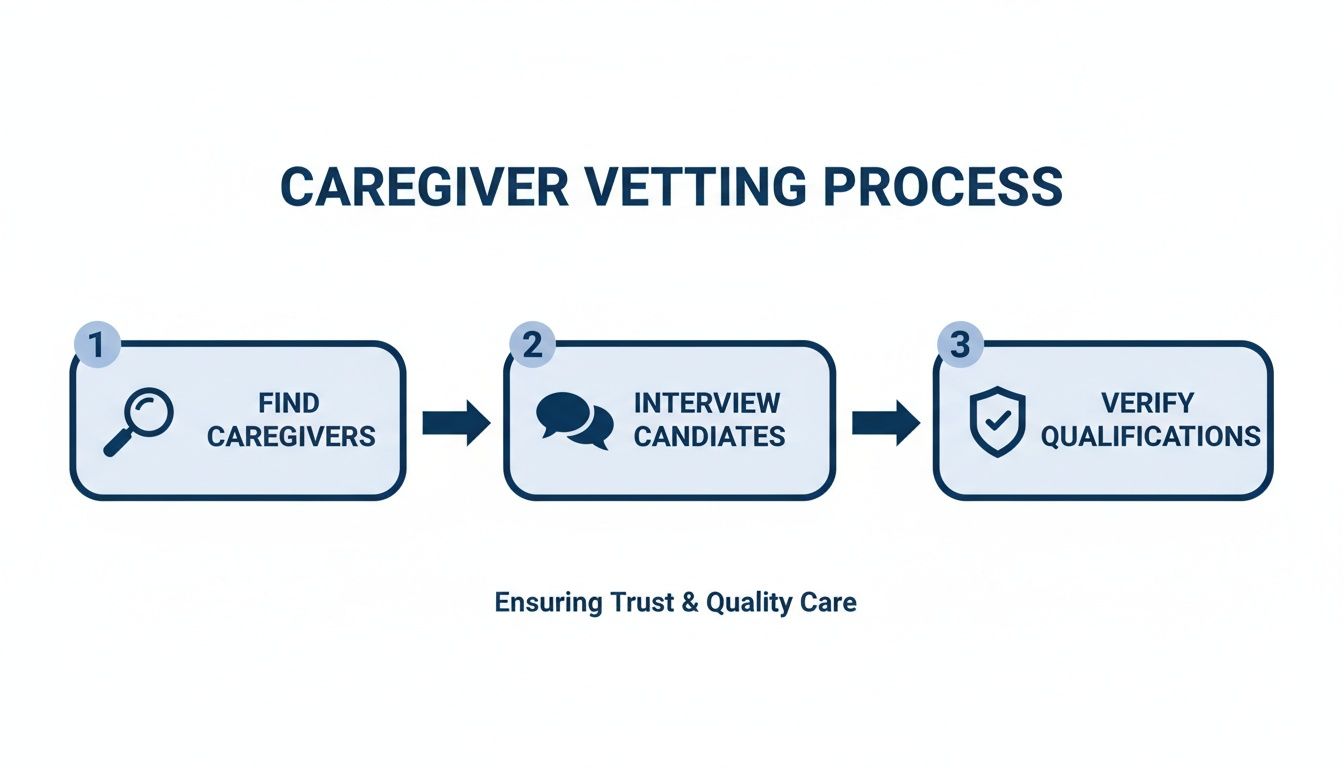
This Find, Interview, Verify flow is the foundation of a successful partnership, ensuring you've done the essential checks before entrusting someone with your family's care.
Detailing Activities of Daily Living and Preferences
Beyond the basics, a truly great care plan gets into the nitty-gritty of daily life. This is where you bring your loved one's personality to the forefront, making them feel seen, heard, and respected.
Get personal and include these elements:
- Dietary Needs and Preferences: Don't just list allergies. Note favorite meals, foods they can't stand, any swallowing difficulties (dysphagia), and whether they need help eating.
- Mobility and Safety: Describe exactly how much help they need to stand, walk, or move from a bed to a chair. Mention walkers, grab bars, or any other required equipment.
- Personal Care Routine: Detail their preferences. Do they prefer showers or baths? What are their specific grooming habits? Do they use special skin products?
- Social and Emotional Needs: Does your mom love listening to classical music in the afternoon? Does your dad look forward to his daily walk, no matter what? Including these details helps a caregiver build a real connection.
It's also a great idea to explore strategies for effective pain management without medication, which can be a game-changer for improving their overall quality of life.
Creating a Practical Schedule
A schedule is what brings the care plan to life. It translates all that information into a manageable, day-to-day timeline, providing structure for both the caregiver and your loved one.
For someone with memory issues, a highly detailed schedule can be incredibly grounding.
Example Schedule for Dementia Care
- 8:00 AM: Assist with dressing and morning hygiene.
- 8:30 AM: Prepare oatmeal and tea; give morning medications.
- 10:00 AM: Gentle seated exercises and listen to favorite music.
- 12:30 PM: Lunch (soup and sandwich, cut into small pieces).
- 2:00 PM: Quiet time, maybe looking through old photo albums.
On the other hand, a schedule for someone recovering from surgery will be more focused on rehabilitation and monitoring their progress.
Example Schedule for Post-Surgery Recovery
- 9:00 AM: Assist with mobility exercises from the physical therapist.
- 11:00 AM: Prepare a high-protein snack and make sure they're hydrating.
- 1:00 PM: Accompany to a follow-up doctor’s appointment.
- 4:00 PM: Check the incision site for any signs of infection.
Remember, this document isn’t just for the caregiver—it’s for the whole family. It keeps everyone on the same page, cuts down on miscommunication, and establishes a clear standard of care. It’s your best tool for ensuring your loved one receives consistent, thoughtful support, day in and day out.
Navigating Payments, Contracts, and Medicaid
Once you've found the right person, it's time to tackle the business side of things. This part can feel a little daunting—we're talking contracts, payments, and legal stuff—but getting it right from the start is crucial. It’s all about creating a clear, professional, and sustainable arrangement that protects both your family and the caregiver.
The first big question is whether you’ll hire the caregiver directly or go through a home care agency. Your choice here has a huge impact on how payments, legal duties, and contracts are handled.
Independent Contractor vs. Agency Employee
Hiring a caregiver on your own, maybe someone you found through a friend, often looks like the cheaper option. And while the hourly rate might be lower, it immediately turns you into an employer in the eyes of the law. That comes with a whole new set of responsibilities you might not be prepared for.
If you hire independently, you're on the hook for:
- Payroll and Taxes: This means withholding and paying Social Security, Medicare, and unemployment taxes. It’s a lot to manage.
- Legal Compliance: You have to verify their legal right to work in the U.S. and follow all labor laws, both state and federal.
- Liability: What if they get hurt on the job? You'll need to secure workers' compensation insurance to cover any accidents.
Working with a trusted agency like NJ Caregiving completely changes the game. The agency is the employer. They handle every bit of the payroll, taxes, insurance, and legal paperwork. You get a single, straightforward bill, and they take care of everything else. It’s a layer of protection that brings incredible peace of mind.
Structuring a Caregiver Contract
No matter which path you take, a written agreement is absolutely essential. A solid contract, sometimes called a personal care agreement, eliminates confusion and establishes professional boundaries right away.
This isn't just a simple document about pay. It’s a detailed roadmap for the entire working relationship, ensuring everyone is on the same page from day one.
A strong caregiver contract is the foundation of a successful working relationship. It turns assumptions into clear agreements, protecting both your family and the dedicated professional providing care.
Your contract should clearly spell out:
- Scope of Duties: Be specific. List everything from personal care and meal prep to running errands and providing companionship.
- Work Schedule: Define the exact days and hours. Don't forget to include policies for breaks and how overtime works.
- Compensation Details: State the hourly rate, when they'll be paid (weekly, bi-weekly), and how overtime pay is calculated.
- Confidentiality and Privacy: Add a clause to protect your family’s personal information.
- Termination Policy: Outline the process for ending the agreement, including how much notice either party needs to give.
Putting this all in writing prevents misunderstandings and gives you a professional framework to rely on.
Exploring Payment and Funding Options
Figuring out how to pay for in-home care is often the biggest challenge. The costs add up quickly, but you don't have to rely solely on your own savings. While private pay is the most common route, it's worth exploring programs that can offer significant financial help.
The economic value of unpaid care provided by family members is staggering—an estimated $873.5 billion a year in the U.S. Alzheimer’s and dementia care alone make up $346.6 billion of that. This burden takes a real toll: half of family caregivers report negative financial impacts, 25% go into debt, and one in five say their own health has declined. These caregiving statistics show just how vital it is to find sustainable funding solutions.
This is where programs like Medicaid are a lifeline. In New Jersey, Medicaid has several waiver programs designed specifically to help eligible seniors and people with disabilities get the care they need at home, instead of in a facility.
These programs, known as Home and Community-Based Services (HCBS), can cover personal care assistance, respite for family caregivers, and other supports that help someone live independently. Eligibility usually depends on both medical needs and financial status. The application process can be a maze, which is why partnering with an agency that knows the local Medicaid system inside and out is a huge plus. They can help you figure out if you're eligible and walk you through the entire process.
Common Questions About Hiring a Caregiver
When you start looking for a caregiver, the big questions pop up pretty quickly. It's a journey filled with details, and even with a solid plan, you're bound to have specific concerns. Let's tackle some of the most common things families ask when they get to this point.
How Much Does In-Home Care Typically Cost?
There's no single answer to this, as the cost of in-home care really depends on your location, what level of support is needed, and whether you hire independently or through an agency.
Generally, you'll see an hourly rate that matches the caregiver's skills. Simple, non-medical companionship is one thing, but care that requires a Certified Nursing Assistant (CNA) or someone with specialized dementia training will naturally be higher.
But don't just look at the hourly number. When you partner with a professional agency, that rate is doing a lot more work than just paying for the caregiver's time. It also covers:
- Comprehensive liability insurance and workers' compensation.
- In-depth background checks and credential verifications.
- Ongoing training and professional supervision for the caregiver.
- The guarantee of a qualified backup caregiver if your primary one can't make it.
Think of it as a built-in safety net. That structure brings a level of professionalism and protection for your family that's hard to put a price on.
What Happens If My Caregiver Is Sick or Needs a Vacation?
This is probably one of the biggest sources of anxiety for families who hire on their own. But when you work with a good agency, it's something you never have to worry about.
A huge part of what an agency does is ensure care is seamless and uninterrupted. If your regular caregiver calls out sick or has a planned vacation, the agency immediately gets to work, arranging for a qualified and fully vetted replacement to step right in.
Peace of mind comes from knowing your loved one will receive consistent, reliable care, no matter what. An agency’s ability to provide backup support is one of its most valuable services, eliminating last-minute scrambles and caregiving gaps.
It means you don't have to cancel your own plans or miss a day of work to cover a shift. The agency handles all the logistics and makes sure the substitute caregiver is brought up to speed on your family member’s care plan before they even walk through the door.
What Is the Difference Between a Companion and a Home Health Aide?
Getting the roles straight is crucial for hiring the right person. While people sometimes use these terms interchangeably, they represent two very different levels of care and training.
Companion Care
A companion is all about social and emotional support. Think of their role as enriching your loved one's day. They're there for conversation, going on errands or to appointments, helping with light housekeeping, and preparing meals. Their main job is to combat loneliness and keep an eye on general well-being, but they don't provide hands-on personal care.
Home Health Aide (HHA)
A Home Health Aide (HHA) or Certified Nursing Assistant (CNA) has gone through formal training and holds a certification to provide hands-on personal care. Their responsibilities include everything a companion does, plus direct assistance with Activities of Daily Living (ADLs).
This includes personal tasks like:
- Bathing, dressing, and grooming
- Toileting and incontinence care
- Help with mobility, like transferring from a bed to a chair
- Monitoring vital signs as directed by a nurse
If your family member needs physical help with these kinds of personal tasks, you need a certified HHA or CNA. It's not just a preference; it's about ensuring they get safe, knowledgeable, and dignified support for their most essential needs.
At NJ Caregiving, we understand these questions are just the beginning. Our team is here to provide the clear answers and compassionate support you need to make the best decision for your family. To learn more about our personalized in-home care services in Mercer County, visit us at https://njcaregiving.com.
