

At its heart, home respite care is simple: it’s when a professional caregiver comes into your home to temporarily take over for you, giving you a much-needed break from your caregiving responsibilities. This service is a lifeline, allowing family caregivers to rest and recharge, knowing their loved one is receiving continuous, compassionate support right where they feel most comfortable.
What Home Respite Care Really Means for Families

Think of being a family caregiver like being the captain of a ship. You're constantly at the helm, navigating the often-choppy waters of a loved one's health. It’s a demanding and relentless journey. Home respite care is like having a skilled co-captain step in for a while. You get to rest and refuel, but the ship never goes off course.
This isn’t about replacing you. It's a partnership designed to make the whole caregiving journey sustainable for the long haul. Your loved one gets to stay in their familiar, comfortable home, sticking to the routines that bring them a sense of normalcy.
To give you a quick snapshot, here’s a simple breakdown of what home respite care involves.
Home Respite Care At a Glance
| Key Aspect | Description |
|---|---|
| Location of Care | Directly in the senior's own home, ensuring comfort and familiarity. |
| Primary Goal | To provide temporary relief for the primary family caregiver. |
| Care Provider | A professional, trained caregiver or home health aide. |
| Duration | Flexible scheduling, from a few hours a week to several days. |
| Core Benefit | Prevents caregiver burnout while maintaining high-quality care. |
This table highlights the fundamental nature of the service—it's flexible, professional support centered around the well-being of both the caregiver and the person they care for.
The Core Purpose of In-Home Relief
The main goal is to head off caregiver burnout before it starts. Burnout is a state of physical, emotional, and mental exhaustion that can seriously impact the quality of care you're able to provide. By giving you a scheduled break—whether it’s just for a few hours a week or a few days a month—respite care protects your health, which is just as vital as the health of the person you're supporting.
This need for structured support is growing everywhere. The global market for elderly respite care is expected to hit USD 504.02 million by 2032. With the number of people aged 60 and over projected to double to 2.1 billion by 2050, the demand for services that help family caregivers is only going to get more critical.
Who Benefits from This Support System
Ultimately, home respite care is a win-win for everyone involved. It strengthens the entire family unit by acknowledging a simple truth: no one can, or should have to, do it all alone.
- The Family Caregiver: You get essential time back to manage your own health, run errands, focus on work, or just take a breather. This break cuts down on stress, prevents burnout, and helps you maintain a positive relationship with your loved one.
- The Care Recipient: They receive top-notch, professional care without the stress of leaving home. They also get to enjoy new social interactions and feel secure knowing their needs are met even when you’re not there.
- The Broader Family: Everyone gets peace of mind. Knowing your loved one is safe and the primary caregiver is supported reduces stress across the board and leads to healthier family dynamics.
Home respite care isn't a luxury; it's a fundamental part of a healthy, long-term care strategy. It empowers families to provide the best possible support by first taking care of themselves.
To really see its value, it helps to know all the different forms this relief can take. You can learn more about the core principles of respite care for the elderly in our detailed guide. This type of care adapts to fit what your family needs, from simple companionship to more hands-on personal assistance, ensuring the experience is seamless and positive for everyone.
The True Benefits for Caregivers and Seniors
The impact of home respite care goes so much deeper than just getting a temporary break. It creates a positive ripple effect, improving the well-being of both the dedicated family caregiver and the senior they support. This isn't about finding a replacement; it’s about adding a valuable, compassionate professional to your support system.
For the caregiver, this service is a lifeline. It’s the permission slip you might not give yourself—a chance to step away without guilt, tend to your own health, or simply rest. For the senior, it means getting professional, friendly support without the disruption of leaving the comfort and routine of home.
Ultimately, accepting this kind of help is a strategic act of love. It ensures the care you provide remains patient, sustainable, and effective for the long haul.
A Lifeline for the Family Caregiver
Caregiving is a marathon, not a sprint. Without designated rest stops, burnout becomes a very real risk, impacting your physical health, your emotional stability, and the quality of care you can provide. Home respite care delivers that essential pause.
Think about someone like Sarah, a marketing director in Princeton juggling a demanding career, two school-aged kids, and daily care for her father, who has early-stage dementia. For months, she felt pulled in a million directions, her stress levels through the roof.
Arranging for a respite caregiver just two afternoons a week changed everything. She could finally attend her kids' soccer games without worry, catch up on critical projects, or even just enjoy a quiet coffee. That small window of relief allowed her to be a more present and patient daughter, employee, and mother.
This isn't an isolated story. The pressure on family caregivers is immense. In the US, the number of unpaid caregivers jumped by 32%, from 18.2 million to 24.1 million, with many dedicating around 17 hours weekly on top of jobs and other family duties.
Taking a break isn't a sign of weakness; it is a fundamental requirement for providing sustainable, loving care. By prioritizing your own well-being, you directly enhance the quality of support your loved one receives.
These scheduled breaks are vital for maintaining your balance. Our detailed guide on respite care for caregivers offers more insight into preventing burnout before it starts.
Enhanced Well-being for the Senior
While the caregiver gets a much-needed break, the senior receives benefits that go far beyond basic supervision. The advantages are deeply personal and add significantly to their overall quality of life.
One of the most important benefits is continuity of routine. Seniors, especially those with cognitive conditions like dementia, thrive on familiarity. A professional caregiver comes into their home and adapts to their schedule—from mealtimes to favorite TV shows—which minimizes confusion and stress.
A new caregiver also introduces fresh social interaction. This one-on-one engagement can be a powerful antidote to loneliness and isolation, providing stimulating conversation, companionship during hobbies, or just a new friendly face to share the day with. It enriches their social life without them ever having to leave home.
Key benefits for the senior include:
- Maintaining Independence: Remaining at home allows them to keep a sense of control and autonomy over their daily lives.
- Personalized Attention: A professional caregiver provides dedicated, one-on-one support tailored specifically to their needs and personality.
- Enhanced Safety: A trained professional can spot and mitigate household risks, ensuring a safer living environment.
- Social Stimulation: Meaningful interaction with a caregiver helps keep them mentally engaged and emotionally connected.
Beyond direct care, families often face other challenges. For instance, resources like a good moving for seniors guide can be invaluable during major life transitions, ensuring all aspects of a senior's well-being are considered.
A Look at Common Respite Care Services
When you arrange for home respite care, you’re not just getting a "sitter." You're bringing in a trained professional who knows how to handle a wide range of needs with both skill and compassion. The goal is a seamless transition, allowing your loved one's daily routine to continue without a hitch while you get that much-needed time away.
Every family’s situation is different, so the specific services are always personalized. Think of it like a custom-tailored suit versus one off the rack—every detail is adjusted to ensure a perfect fit for your loved one’s care plan. This way, the support is practical, respectful, and genuinely helpful.
Services generally fall into a few key categories. Understanding what these are can help you picture exactly how a professional caregiver can step in and make a real difference.
Personal Care and Daily Living Assistance
This is the foundation of much of in-home care, focusing on the Activities of Daily Living (ADLs) that may have become difficult for your loved one. A caregiver’s role here is to provide dignified assistance, helping maintain personal hygiene and comfort.
This kind of hands-on support isn't just about checking tasks off a list; it’s about helping seniors feel their best, both physically and emotionally.
Common personal care services include:
- Bathing and Grooming: Providing safe assistance with showers, baths, and personal routines like shaving or hair care.
- Dressing and Mobility: Helping your loved one get dressed for the day and move safely around the home, which is crucial for reducing fall risks.
- Toileting and Incontinence Care: Offering discreet and compassionate help with personal needs to maintain hygiene and comfort.
A professional caregiver handles these sensitive tasks with the utmost professionalism, preserving your loved one's sense of independence and dignity.
Companionship and Social Engagement
Beyond physical help, emotional well-being is absolutely critical. Loneliness can take a serious toll on a senior's health, and respite caregivers play a huge role in providing meaningful social interaction.
A respite caregiver is more than just a helper; they are a friendly face, a listening ear, and a source of positive engagement, helping to brighten your loved one's day.
This part of respite care is all about enriching a senior's daily life through conversation and shared activities. It’s about building a genuine connection that pushes back against feelings of isolation.
For example, a caregiver might:
- Engage in heartfelt conversations about current events, family history, or personal interests.
- Join in on favorite hobbies, like playing cards, doing puzzles, or tending to a small garden.
- Go on short walks or simple outings to get some fresh air and a change of pace.
- Read books, magazines, or the newspaper aloud to keep them entertained and connected.
Homemaking and Household Support
Keeping a home safe, clean, and organized is essential for well-being, but it can become overwhelming for seniors. A respite caregiver can provide light housekeeping to ensure the environment stays comfortable and orderly.
This support takes the pressure of daily chores off both you and your loved one, freeing up more time for quality interaction. It’s not about deep cleaning, but rather managing the day-to-day tasks that keep a home running smoothly.
This often includes planning and preparing nutritious meals that fit specific dietary needs or preferences—a vital service for maintaining good health. It can also involve light tidying, doing the dishes, or managing laundry, all contributing to a more pleasant and functional living space. A well-kept home directly supports a higher quality of life.
Navigating Payment for Respite Care in New Jersey
One of the first questions that comes up when families consider home respite care is, "How are we going to pay for this?" It's a completely valid concern. Figuring out the financial side is a huge step in getting the support you need without adding a layer of financial stress.
The good news is that for families here in New Jersey, there are several ways to cover the cost, from private funds to state-funded programs. Let's walk through the primary ways families pay for these essential services so you can move forward with confidence.
Understanding Private Pay Options
The most straightforward way to arrange for respite care is through private pay. This option offers the most flexibility—you can choose any provider you like and customize the services without needing to qualify for an insurance or government program.
Private pay just means using your own money, whether it's from savings, retirement funds, or other personal assets. Many families go this route because it's simple and gives them immediate access to the help they need.
Another common private option is Long-Term Care (LTC) Insurance. If your loved one has an LTC policy, it will almost certainly cover respite care. These policies are designed specifically for this kind of support. The key is to read the policy documents carefully to understand the coverage limits, daily benefit amounts, and if there's any waiting period before the benefits start.
Government Programs Supporting New Jersey Families
For many families, government programs are the key that unlocks access to affordable home respite care. In New Jersey, Medicaid is a major source of support, helping eligible seniors and individuals with disabilities get the care they need right in their own homes.
Medicaid plays a massive role in senior support. It currently serves 5.1 million enrollees with home care, which includes respite services for low-income seniors and those with disabilities. The demand is only growing—the U.S. home care market is expected to hit $155.9 billion in 2025, with over 500,000 providers stepping up to meet the need.
Here in New Jersey, the main program that covers these services is called Managed Long Term Services and Supports, or MLTSS.
MLTSS is designed to help Medicaid beneficiaries live in their homes and communities for as long as possible. It bundles health and long-term care services into a single plan managed by a Managed Care Organization (MCO).
Under the MLTSS program, eligible individuals get a personalized care plan that can include a whole range of home-based services, including home respite care. This is what gives family caregivers the official green light to take those much-needed breaks, knowing a professional is there to provide support.
Navigating Medicaid Eligibility and Applications
Figuring out if you or your loved one is eligible for New Jersey Medicaid and the MLTSS program can feel a bit overwhelming. The process involves meeting specific financial and medical criteria, and it's often where families get stuck. But you don't have to go through it alone.
Generally, to qualify for MLTSS, a person must:
- Be a New Jersey resident who is 65 or older, or between 21 and 64 and determined to be disabled by the Social Security Administration.
- Meet specific financial limits for both income and assets.
- Meet clinical requirements, which means they need a level of care typically provided in a nursing facility but can safely receive that care at home.
The application itself requires a lot of paperwork—financial records, proof of identity, medical assessments, you name it. Because the requirements are so strict, even a small mistake can cause delays or even a denial.
This is where working with an experienced agency like NJ Caregiving can make all the difference. Our team knows the New Jersey Medicaid system inside and out. We can walk you through every step, from figuring out if you're likely eligible to helping you complete the application correctly. Our goal is to take that administrative weight off your shoulders so you can focus on what really matters: your loved one.
To get a better sense of how it all works, check out our guide on Medicaid respite care and learn how to access these vital benefits. By using the programs available, you can make sure your family gets the high-quality, affordable home respite care it deserves.
How to Arrange Home Respite Care
Taking that first step toward getting help can often feel like the hardest part. The idea of arranging home respite care might seem overwhelming at first, but it really boils down to a few clear, manageable steps. With a simple roadmap, you can feel confident finding the right support for your family.
This visual decision tree gives you a bird's-eye view of the key stages, from figuring out your needs to putting a solid care plan in motion.
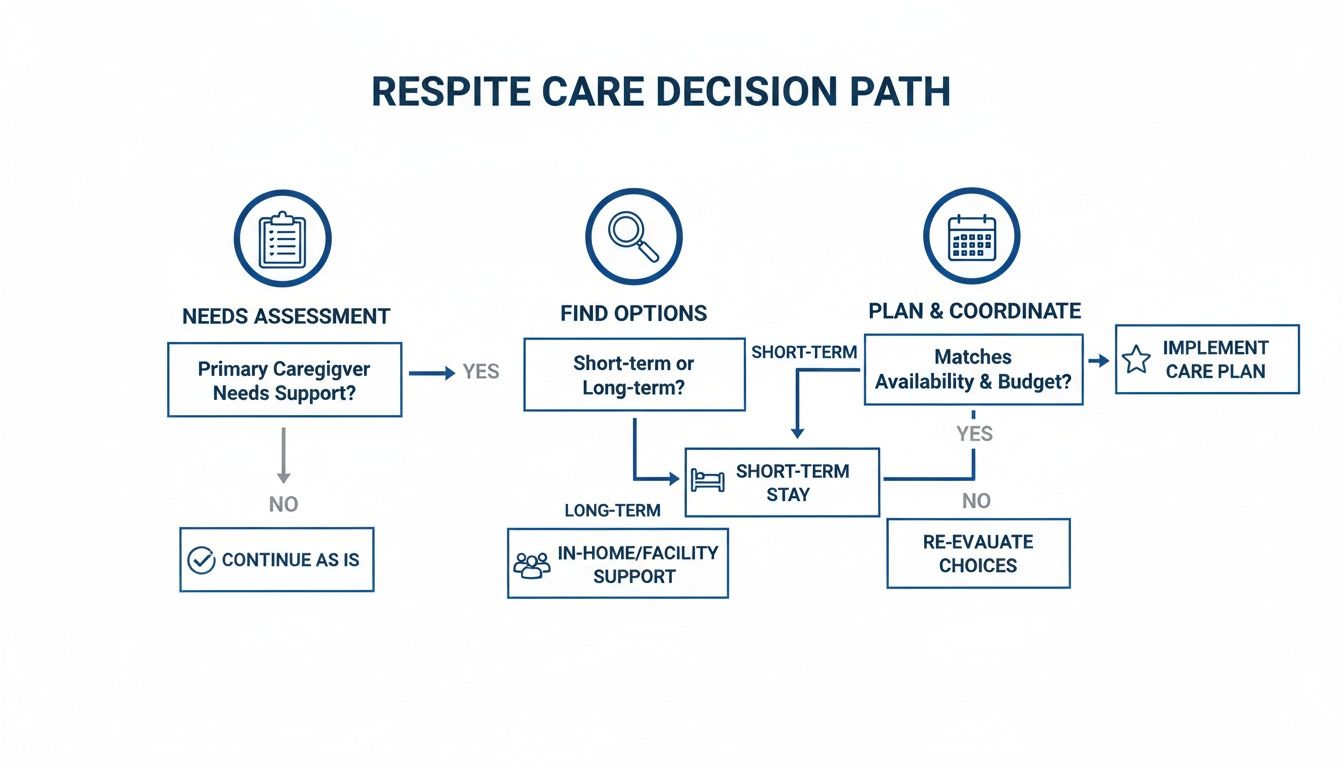
As you can see, it's a logical path: getting crystal clear on what you need is the foundation for finding the right provider and creating a plan that actually works. Let's walk through each step together.
Step 1: Clearly Define Your Needs
Before you can find the right solution, you need a sharp picture of the problem. This means thinking through the specifics of your situation. It's not just about needing "a break"—it's about understanding what kind of support will make that break truly restful and effective for you.
To get started, ask yourself a few key questions:
- How often and for how long? Are you looking for a few hours each week to run errands and catch your breath? Or do you need a full weekend off once a month to truly recharge?
- What kind of help is needed? Make a list. Does your loved one need help with personal care like bathing or dressing? Or is it more about companionship, meal prep, and medication reminders?
- Are there special requirements? If your loved one has a specific condition like dementia or limited mobility, you'll need a caregiver with specialized training and experience.
Jotting these details down transforms a vague feeling of being overwhelmed into a concrete list of requirements. It makes the whole search process much more focused.
Step 2: Find and Vet Local Providers
Once you have your list, the next step is finding a reputable home care agency. Your best bet is to look for providers right in your local area, like here in Mercer County, that have a strong track record and happy clients.
Start by asking for recommendations from your doctor, friends, or local support groups—word-of-mouth is powerful. Online searches are great too, but be sure to dig deeper than the homepage. Read reviews and testimonials to get a real feel for other families' experiences.
When you're checking out an agency, zero in on their credentials, how they screen their caregivers, and their insurance coverage. A professional agency will be completely transparent about their hiring practices and safety protocols, which is key for your peace of mind.
Step 3: Prepare for a Consultation
After you've narrowed it down to a few agencies, it's time to schedule some consultations. This is your chance to interview them and see if they're the right fit for your family. Any good agency will offer a free, no-obligation meeting to discuss your situation.
To get the most out of this chat, come prepared. Bring your list of needs, your loved one's basic medical history, and any questions you’ve been thinking about.
Here are a few important things to ask:
- How do you match caregivers with clients to ensure a good personality fit?
- What does your training and background check process for caregivers look like?
- What are your procedures for handling an emergency?
- Can you provide references from other families you've helped?
Remember, this conversation is a two-way street. It helps the agency understand exactly what you need while you get a sense of their professionalism and compassion. It’s the final step before you can build a detailed care plan and welcome a new, supportive member to your team.
Comparing Your Respite Care Options
Deciding on the right kind of support for a loved one is a huge decision. While home respite care gives you a deeply personal and convenient option, it helps to see how it stacks up against other choices. The "best" fit always comes down to your family’s unique situation, your loved one's personality, and exactly what kind of break you need.
There’s no one-size-fits-all answer here. The goal is to find an environment and level of support that will make your loved one feel comfortable and safe. For some, the social buzz of an adult day center is a perfect fit. For others, the familiar, uninterrupted routine of staying at home is simply non-negotiable.
This preference for staying put is a clear trend. In fact, in-home respite care is projected to command a massive 42.1% share of the global elderly respite market in 2025. It’s a testament to how much families value care delivered right in a familiar setting. The biggest draw is how personal it is—caregivers can tailor their services to an individual's routine, which goes a long way in preserving a senior's dignity and emotional well-being. You can explore more industry reports to see this growing preference for at-home care.
Home Care vs. Other Settings
To really break it down, let's compare the main options side-by-side. Thinking about these key differences will help you weigh the pros and cons based on what matters most to your family.
Comparison of Respite Care Options
This table lays out the core features of each type of respite care, from the environment to the level of flexibility you can expect.
| Feature | Home Respite Care | Adult Day Care | Facility-Based Respite |
|---|---|---|---|
| Environment | The comfort and familiarity of the senior's own home. | A structured, supervised group setting outside the home. | A temporary stay in an assisted living or nursing facility. |
| Personalization | One-on-one attention with a care plan fully tailored to the individual. | Group activities and general supervision with less individual focus. | Professional care, but less personalized than at home. |
| Flexibility | Highly flexible scheduling, from a few hours to 24/7 care. | Operates on a fixed schedule, typically during business hours. | Usually requires booking for a minimum period, like a weekend or week. |
| Socialization | Focused, one-on-one social interaction with the caregiver. | High level of social engagement with peers in a group setting. | Opportunities for social interaction with other residents. |
Looking at the table, you can see how each option serves a very different need.
Finding the Right Fit for Your Family
Each of these choices has its place. Adult day care is fantastic for seniors who are still mobile and get a real boost from being around other people. It offers them structured activities and a chance to make new friends.
On the other hand, facility-based respite can be a lifesaver when a caregiver needs a longer break—maybe for a vacation or to recover from surgery. It provides that round-the-clock professional supervision in a secure, dedicated environment.
But home respite care truly shines when it comes to maintaining a senior's cherished routine without any disruption. For someone with memory issues or who gets anxious in new places, staying home is priceless. It provides the highest level of personal, one-on-one attention, making sure their specific needs and preferences always come first.
The most important thing is your loved one’s comfort and well-being. Home respite care puts this first by bringing professional, compassionate support right to their door, preserving their sense of normalcy and independence.
Your Questions About Respite Care, Answered
When you're thinking about bringing a respite caregiver into your home, it’s only natural to have a few questions. Making sure you have clear, straightforward answers is the best way to feel confident about your decision. Let's walk through some of the most common questions we hear from families just like yours here in New Jersey.
How Flexible Is the Scheduling?
One of the biggest worries for families is whether respite care will fit into their already packed lives. The short answer is: yes, it’s incredibly flexible.
The entire service is built around your schedule, not the other way around. You can arrange for a caregiver to come for just a couple of hours so you can finally make that dentist appointment, for a full day to attend a wedding, or even for an entire weekend so you can take a much-needed break. We work with you to create a plan that fits your life, whether that’s a regular weekly visit you can depend on or occasional support when life gets hectic.
How Do You Find the Right Caregiver for My Loved One?
This is probably the most important question of all. Finding someone with the right skills is one thing, but finding the right personality is what truly matters.
Reputable agencies have a detailed matching process that goes way beyond a simple checklist. We take the time to understand your loved one's personality, their hobbies, and what makes them tick. The goal is to find a caregiver they can genuinely connect with and look forward to seeing.
A great relationship between a client and a caregiver is the heart of successful home care. It’s what turns a service into a true partnership built on trust, respect, and companionship.
We always arrange a "meet-and-greet" before the first official visit. This gives everyone—you, your loved one, and the caregiver—a chance to get to know each other in a relaxed way. It ensures your loved one feels comfortable and you feel confident from day one.
What Happens in an Emergency?
Knowing your loved one is safe is non-negotiable. Professional caregivers are trained to handle unexpected situations calmly and correctly.
During the initial setup, we create a detailed care plan that covers everything: emergency contacts, medical history, and specific instructions for various what-if scenarios. In an emergency, the caregiver’s first responsibility is to ensure your loved one's immediate safety and call for medical help if needed. They will then immediately notify you and the agency, following the exact protocol laid out in the care plan.
At NJ Caregiving, we're here to answer all your questions and help you find the perfect respite care solution for your family in Mercer County. Contact us today to schedule a free, no-obligation consultation.
